C lture and Gender
What is Culture?
Shared by a large group
and transmitted across
generations, ideas,
attitudes, behaviors and
traditions.
“ CULTURE CYCLE”
•People create culture in which they later
adapt
• Culture shape people so that they act in
ways that perpetuate their cultures
Culture is the lifeblood of a vibrant
society, expressed in the many ways we
tell our stories, celebrate, remember the
past, entertain ourselves, and imagine
the future.
IMPORTANCE OF CULTURE
WHAT IS GENDER?
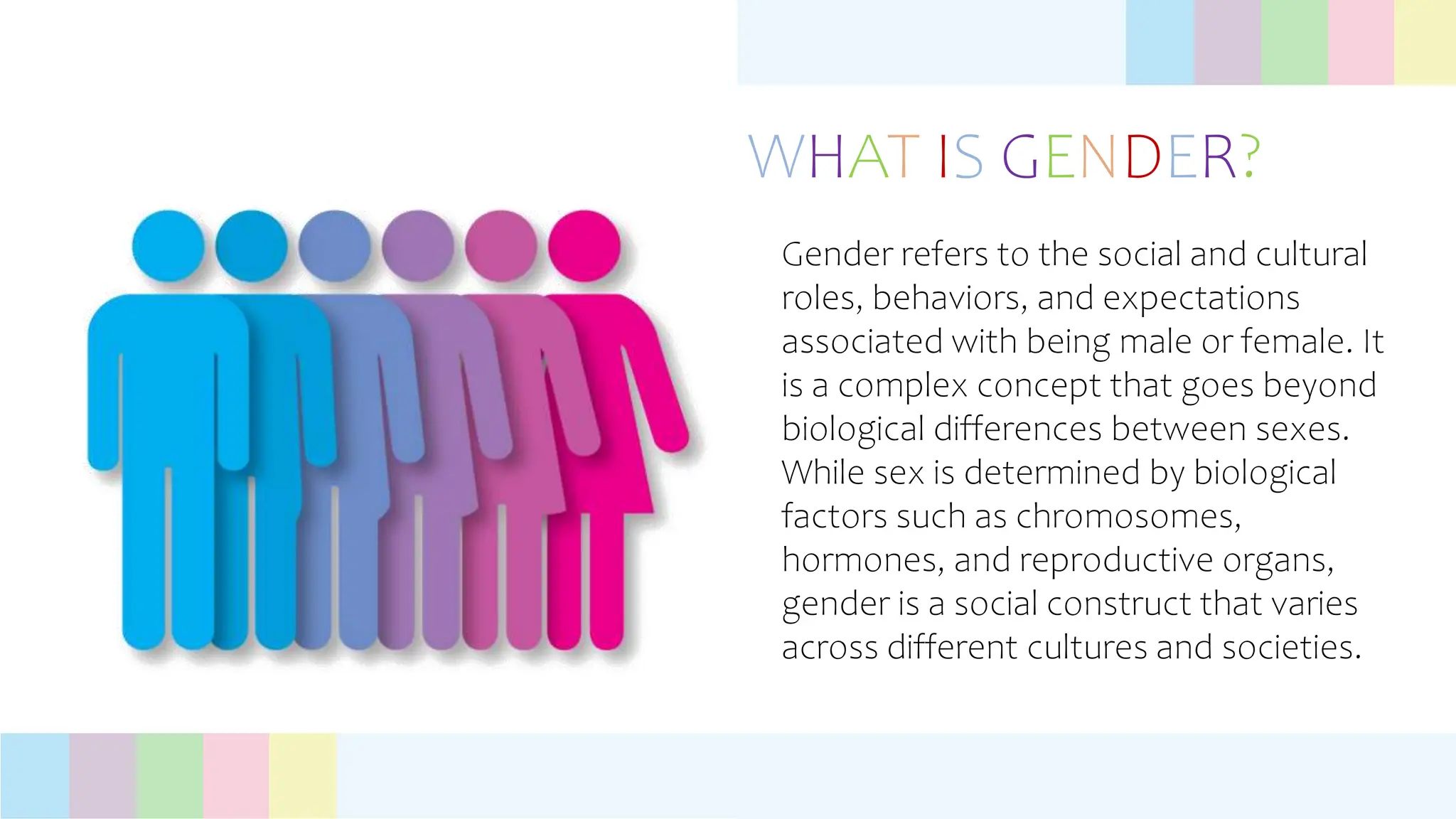
Gender refers to the social and cultural
roles, behaviors, and expectations
associated with being male or female. It
is a complex concept that goes beyond
biological differences between sexes.
While sex is determined by biological
factors such as chromosomes,
hormones, and reproductive organs,
gender is a social construct that varies
across different cultures and societies.
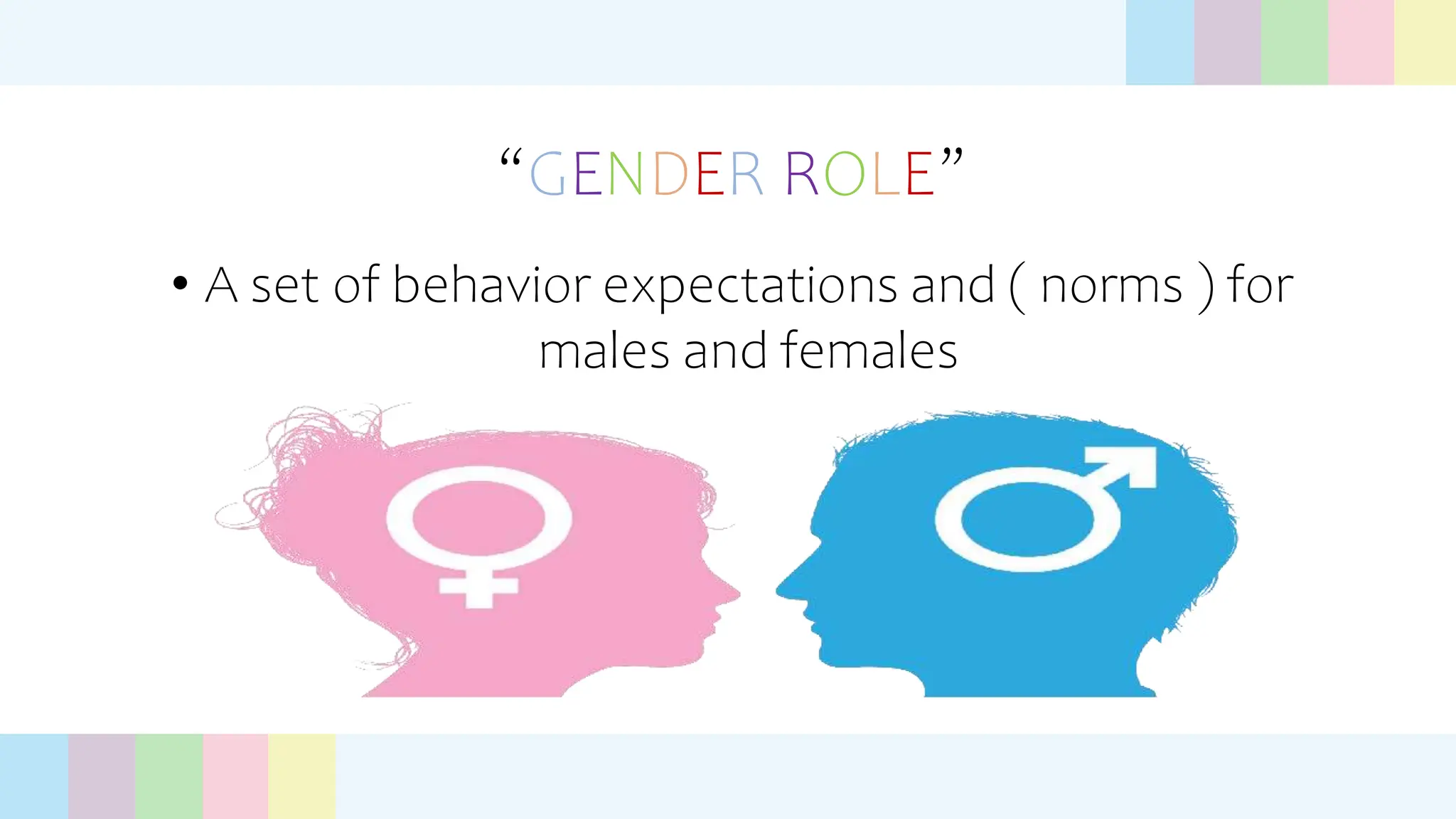
“GENDER ROLE”
• A set of behavior expectations and ( norms ) for
males and females
2024/3/13
IMPORTANCE OF GENDER
 Gender is of key importance in defining
the power, privilege and posobilities
that some people have and some
people do not have in a given society
WOMEN SHOULD STAY HOME AND CARE FOR THE
CHILDREN WHILE THE HUSBAND PROVIDE
In modern cultures, Gender roles are not so important
as time passed by
DIFFERENCE OF CULTURE AND GENDER
• Culture: Culture refers to the shared beliefs, values, customs, traditions, behaviors, and artifacts that
characterize a particular group of people. It encompasses the knowledge, practices, and social
norms that are passed down from one generation to another.
• Gender: Gender refers to the social and cultural roles, behaviors, and expectations associated with
being male or female. It is a social construct that varies across different cultures and societies.
• While culture and gender are distinct concepts, they intersect and influence each other. Gender roles
and expectations are often shaped by cultural norms and values. Understanding the relationship
between culture and gender is important for promoting inclusivity, challenging stereotypes, and
fostering cultural sensitivity.
CONCLUSION
 The complex and dynamic phenomena of the junction of culture and gender profoundly impacts
people's identities, experiences, and opportunities. Gender norms and expectations impact
everything from career prospects to family structures, and they differ greatly throughout countries.
Globally, gender-based discrimination and inequality continue despite numerous advancements,
frequently reinforced by deeply ingrained cultural norms and beliefs. Cultural diversity also present
chances for growth and learning since it makes the human experience more rich and meaningful.
Through promoting communication, comprehension, and appreciation of various cultural
viewpoints, we can endeavor to establish more welcoming communities in which people of all
genders are respected and enabled to realize their greatest potential. It is critical to keep
combating damaging preconceptions and promoting laws and procedures that advance gender
equality in cultural contexts. We can make the world more fair and just for everyone if we accept
the complexity of gender and culture.
Cabrera Mavel
Mancol Echelle
Biong Jamy
THANKS FOR YOUR LISTENING!!!

culture-and-gender sensitivity -ppt.pptx

  • 1.
  • 2.
    What is Culture? Sharedby a large group and transmitted across generations, ideas, attitudes, behaviors and traditions.
  • 3.
    “ CULTURE CYCLE” •Peoplecreate culture in which they later adapt • Culture shape people so that they act in ways that perpetuate their cultures
  • 4.
    Culture is thelifeblood of a vibrant society, expressed in the many ways we tell our stories, celebrate, remember the past, entertain ourselves, and imagine the future. IMPORTANCE OF CULTURE
  • 5.
    WHAT IS GENDER? Genderrefers to the social and cultural roles, behaviors, and expectations associated with being male or female. It is a complex concept that goes beyond biological differences between sexes. While sex is determined by biological factors such as chromosomes, hormones, and reproductive organs, gender is a social construct that varies across different cultures and societies.
  • 6.
    “GENDER ROLE” • Aset of behavior expectations and ( norms ) for males and females
  • 7.
    2024/3/13 IMPORTANCE OF GENDER Gender is of key importance in defining the power, privilege and posobilities that some people have and some people do not have in a given society
  • 8.
    WOMEN SHOULD STAYHOME AND CARE FOR THE CHILDREN WHILE THE HUSBAND PROVIDE
  • 9.
    In modern cultures,Gender roles are not so important as time passed by
  • 10.
    DIFFERENCE OF CULTUREAND GENDER • Culture: Culture refers to the shared beliefs, values, customs, traditions, behaviors, and artifacts that characterize a particular group of people. It encompasses the knowledge, practices, and social norms that are passed down from one generation to another. • Gender: Gender refers to the social and cultural roles, behaviors, and expectations associated with being male or female. It is a social construct that varies across different cultures and societies. • While culture and gender are distinct concepts, they intersect and influence each other. Gender roles and expectations are often shaped by cultural norms and values. Understanding the relationship between culture and gender is important for promoting inclusivity, challenging stereotypes, and fostering cultural sensitivity.
  • 11.
    CONCLUSION  The complexand dynamic phenomena of the junction of culture and gender profoundly impacts people's identities, experiences, and opportunities. Gender norms and expectations impact everything from career prospects to family structures, and they differ greatly throughout countries. Globally, gender-based discrimination and inequality continue despite numerous advancements, frequently reinforced by deeply ingrained cultural norms and beliefs. Cultural diversity also present chances for growth and learning since it makes the human experience more rich and meaningful. Through promoting communication, comprehension, and appreciation of various cultural viewpoints, we can endeavor to establish more welcoming communities in which people of all genders are respected and enabled to realize their greatest potential. It is critical to keep combating damaging preconceptions and promoting laws and procedures that advance gender equality in cultural contexts. We can make the world more fair and just for everyone if we accept the complexity of gender and culture.
  • 12.
    Cabrera Mavel Mancol Echelle BiongJamy THANKS FOR YOUR LISTENING!!!