Prepared By: Banwan Ali Karim
University College Of Goizha Fourth Year Of English Department
Culture shock
Definition
Cultural shock is the trauma you experience when we move into a culture
different from your home culture.
Can be defined as the fear a person goes through when he or she leaves a
familiar culture to experiencing a new culture or living in a new
environment. It’s the feeling of being lost in an unfamiliar and unsettling
environment that bears no resemblance to your own country and culture.
6 Culture Shocks You May Face When Studying Abroad
1. Language
If you decide to study in Africa, depending on the area you may have to speak
English, French or the local language. Most North African countries speak
French or Arabic. If you decide to study in South America, you may have to
learn Spanish or Portuguese. In addition, if you decide to study in Europe you
might have to learn the local language, which differs from one country to the
other. The spoken language is not the only difference when referring to
language.
2. Body Language
Another type is body language, which refers to the way people interact with each other.
This is different in every culture. For example, in the Middle East it is normal for men to
greet each other with kisses on the cheek. This is always a major shock for foreigners who
see this for the first time! In countries such as the UK and US, locals do not generally
engage in greetings where such familiar touching is involved. Body language also
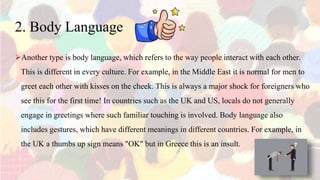
includes gestures, which have different meanings in different countries. For example, in
the UK a thumbs up sign means "OK" but in Greece this is an insult.
3. Time
Another behavior that also differs is the concept of time. Time means
different things to different countries. Time refers to whether people are
punctual or not. UK is known for its punctuality. When someone says be
there at 10:00 a.m., they mean 10:00 a.m. exactly. Not 10.30 a.m. or 11:00
a.m.
4. Celebrations And Holidays
Moreover, there is another factor to culture shock. This may surprise you,
but not all countries celebrate all holidays. This can cause you to feel
homesick. For example, in Malaysia, there are holidays given for
celebrations of Chinese New Year, Deepavali, Christmas and Eid. However,
there are countries that do not give public holidays for these events and you
might have to go to university. This may make you miss home even more.
5. Dress for Culture and Weather
Additionally, when living in a foreign country you may need to consider
what is appropriate or inappropriate. Some areas require you to wear
conservative clothes, such as Saudi Arabia. Living in a foreign country may
require you to experience different types of weather. Some areas experience
extremely cold weather such as Europe, U.K, some states in U.S. which
would require you to wear bulky and heavy clothes for winter.
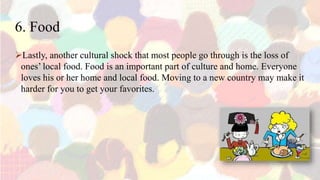
6. Food
Lastly, another cultural shock that most people go through is the loss of
ones’ local food. Food is an important part of culture and home. Everyone
loves his or her home and local food. Moving to a new country may make it
harder for you to get your favorites.
Thanks for listening!

Culture shock.pptx

  • 1.
    Prepared By: BanwanAli Karim University College Of Goizha Fourth Year Of English Department Culture shock
  • 2.
    Definition Cultural shock isthe trauma you experience when we move into a culture different from your home culture. Can be defined as the fear a person goes through when he or she leaves a familiar culture to experiencing a new culture or living in a new environment. It’s the feeling of being lost in an unfamiliar and unsettling environment that bears no resemblance to your own country and culture.
  • 3.
    6 Culture ShocksYou May Face When Studying Abroad 1. Language If you decide to study in Africa, depending on the area you may have to speak English, French or the local language. Most North African countries speak French or Arabic. If you decide to study in South America, you may have to learn Spanish or Portuguese. In addition, if you decide to study in Europe you might have to learn the local language, which differs from one country to the other. The spoken language is not the only difference when referring to language.
  • 4.
    2. Body Language Anothertype is body language, which refers to the way people interact with each other. This is different in every culture. For example, in the Middle East it is normal for men to greet each other with kisses on the cheek. This is always a major shock for foreigners who see this for the first time! In countries such as the UK and US, locals do not generally engage in greetings where such familiar touching is involved. Body language also includes gestures, which have different meanings in different countries. For example, in the UK a thumbs up sign means "OK" but in Greece this is an insult.
  • 5.
    3. Time Another behaviorthat also differs is the concept of time. Time means different things to different countries. Time refers to whether people are punctual or not. UK is known for its punctuality. When someone says be there at 10:00 a.m., they mean 10:00 a.m. exactly. Not 10.30 a.m. or 11:00 a.m.
  • 6.
    4. Celebrations AndHolidays Moreover, there is another factor to culture shock. This may surprise you, but not all countries celebrate all holidays. This can cause you to feel homesick. For example, in Malaysia, there are holidays given for celebrations of Chinese New Year, Deepavali, Christmas and Eid. However, there are countries that do not give public holidays for these events and you might have to go to university. This may make you miss home even more.
  • 7.
    5. Dress forCulture and Weather Additionally, when living in a foreign country you may need to consider what is appropriate or inappropriate. Some areas require you to wear conservative clothes, such as Saudi Arabia. Living in a foreign country may require you to experience different types of weather. Some areas experience extremely cold weather such as Europe, U.K, some states in U.S. which would require you to wear bulky and heavy clothes for winter.
  • 8.
    6. Food Lastly, anothercultural shock that most people go through is the loss of ones’ local food. Food is an important part of culture and home. Everyone loves his or her home and local food. Moving to a new country may make it harder for you to get your favorites.
  • 9.