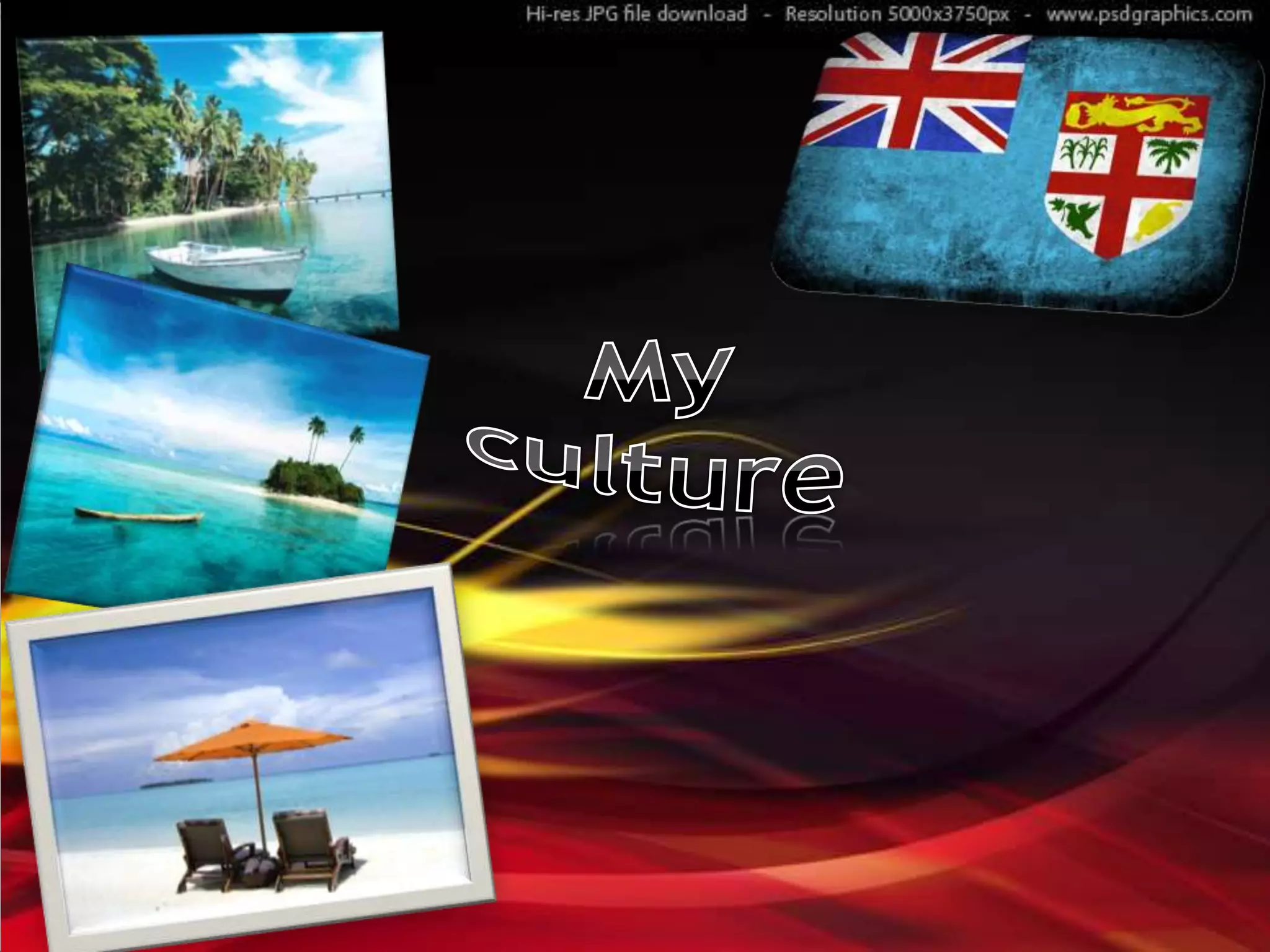
   Population: 944,720 (July 2009 estimate)

   Capital: Suva

   Area: 7,055 square miles (18,274 sq km)

   Coastline: 702 miles (1,129 km)

   Highest Point: Mount Tomanivi at 4,344 feet (1,324 m)
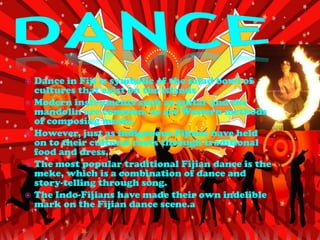
   Dance in Fiji is symbolic of the salad bowl of
    cultures that exist on the islands
   Modern instruments such as guitar and the
    mandolin are common, as are Western methods
    of composing music.
   However, just as indigenous Fijians have held
    on to their cultural roots through traditional
    food and dress,
   The most popular traditional Fijian dance is the
    meke, which is a combination of dance and
    story-telling through song.
   The Indo-Fijians have made their own indelible
    mark on the Fijian dance scene.a
   Fijian music combines the traditional Melanesian
    and Polynesian styles.
   Folk music, traditional dances and different
    instruments are also largely involved with this type
    of music
   Fijian folk music includes a variety of instruments
    that give the music its unique and beautiful sound,
   The Meke is a complex traditional Fijian spiritual
    folk dance that is combined with voices. The various
    types of Meke include the war dance, men’s or
    women’s fan dance
   The derua, which is made up of tubes of bamboo
    stamped onto mats or on the ground, is another
    Fijian percussion instrument.
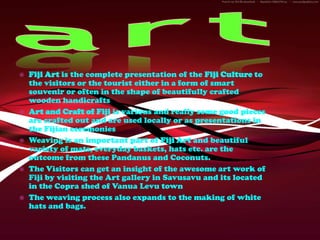
   Fiji Art is the complete presentation of the Fiji Culture to
    the visitors or the tourist either in a form of smart
    souvenir or often in the shape of beautifully crafted
    wooden handicrafts
   Art and Craft of Fiji is various and really some good pieces
    are crafted out and are used locally or as presentations in
    the Fijian ceremonies
   Weaving is an important part of Fiji Art and beautiful
    variety of mats, everyday baskets, hats etc. are the
    outcome from these Pandanus and Coconuts.
   The Visitors can get an insight of the awesome art work of
    Fiji by visiting the Art gallery in Savusavu and its located
    in the Copra shed of Vanua Levu town
   The weaving process also expands to the making of white
    hats and bags.
   Fijian food has a wonderful mix of the spicy curries that
    are influenced by the Indian people and the coconut, fish,
    sweet potato, cassava and other vegetables that the
    Fijians bring to the culture.
   Over time this food has developed and evolved to the
    current mix of flavours we experience now
   For special occasions including weddings and funerals the
    Fijian’s perform a Lovo.
   It is a feast for the whole family of traditional Fijian food
    which is cooked in the ground.
   In ancient cooking they also used handmade clay pots to
    cook their food in.
Culture
Culture

Culture

  • 2.
    Population: 944,720 (July 2009 estimate)  Capital: Suva  Area: 7,055 square miles (18,274 sq km)  Coastline: 702 miles (1,129 km)  Highest Point: Mount Tomanivi at 4,344 feet (1,324 m)
  • 3.
    Dance in Fiji is symbolic of the salad bowl of cultures that exist on the islands  Modern instruments such as guitar and the mandolin are common, as are Western methods of composing music.  However, just as indigenous Fijians have held on to their cultural roots through traditional food and dress,  The most popular traditional Fijian dance is the meke, which is a combination of dance and story-telling through song.  The Indo-Fijians have made their own indelible mark on the Fijian dance scene.a
  • 4.
    Fijian music combines the traditional Melanesian and Polynesian styles.  Folk music, traditional dances and different instruments are also largely involved with this type of music  Fijian folk music includes a variety of instruments that give the music its unique and beautiful sound,  The Meke is a complex traditional Fijian spiritual folk dance that is combined with voices. The various types of Meke include the war dance, men’s or women’s fan dance  The derua, which is made up of tubes of bamboo stamped onto mats or on the ground, is another Fijian percussion instrument.
  • 5.
    Fiji Art is the complete presentation of the Fiji Culture to the visitors or the tourist either in a form of smart souvenir or often in the shape of beautifully crafted wooden handicrafts  Art and Craft of Fiji is various and really some good pieces are crafted out and are used locally or as presentations in the Fijian ceremonies  Weaving is an important part of Fiji Art and beautiful variety of mats, everyday baskets, hats etc. are the outcome from these Pandanus and Coconuts.  The Visitors can get an insight of the awesome art work of Fiji by visiting the Art gallery in Savusavu and its located in the Copra shed of Vanua Levu town  The weaving process also expands to the making of white hats and bags.
  • 6.
    Fijian food has a wonderful mix of the spicy curries that are influenced by the Indian people and the coconut, fish, sweet potato, cassava and other vegetables that the Fijians bring to the culture.  Over time this food has developed and evolved to the current mix of flavours we experience now  For special occasions including weddings and funerals the Fijian’s perform a Lovo.  It is a feast for the whole family of traditional Fijian food which is cooked in the ground.  In ancient cooking they also used handmade clay pots to cook their food in.