R.SHANTHI PRABHA M.Sc., M.Phil.,
ASSISTANT PROFESSOR
DEPARTMENT OF COMPUTER SCIENCE
SACWC, CUMBUM
 Information Security requirements have changed in recent
times
 traditionally provided by physical and administrative
mechanisms
 computer use requires automated tools to protect files and
other stored information
 use of networks and communications links requires
measures to protect data during transmission
 Computer Security - generic name for the
collection of tools designed to protect data and
to thwart hackers
 Network Security - measures to protect data
during their transmission
 Internet Security - measures to protect data
during their transmission over a collection of
interconnected networks
 our focus is on Internet Security
 which consists of measures to deter, prevent,
detect, and correct security violations that
involve the transmission & storage of information
 ITU-T X.800 “Security Architecture for OSI”
 defines a systematic way of defining and providing
security requirements
 for us it provides a useful, if abstract, overview of
concepts we will study
 consider 3 aspects of information security:
 security attack
 security mechanism
 security service
 any action that compromises the security of information
owned by an organization
 information security is about how to prevent attacks, or
failing that, to detect attacks on information-based
systems
 often threat & attack used to mean same thing
 have a wide range of attacks
 can focus of generic types of attacks
 passive
 active
 enhance security of data processing systems and
information transfers of an organization
 intended to counter security attacks
 using one or more security mechanisms
 often replicates functions normally associated with
physical documents
 which, for example, have signatures, dates; need protection
from disclosure, tampering, or destruction; be notarized or
witnessed; be recorded or licensed
 X.800:
“a service provided by a protocol layer of communicating
open systems, which ensures adequate security of the
systems or of data transfers”
 RFC 2828:
“a processing or communication service provided by a
system to give a specific kind of protection to system
resources”
 Authentication - assurance that the
communicating entity is the one claimed
 Access Control - prevention of the unauthorized
use of a resource
 Data Confidentiality –protection of data from
unauthorized disclosure
 Data Integrity - assurance that data received is
as sent by an authorized entity
 Non-Repudiation - protection against denial by
one of the parties in a communication
 feature designed to detect, prevent, or recover
from a security attack
 no single mechanism that will support all
services required
 however one particular element underlies many
of the security mechanisms in use:
 cryptographic techniques
 hence our focus on this topic
specific security mechanisms:
 encipherment, digital signatures, access controls, data
integrity, authentication exchange, traffic padding,
routing control, notarization
pervasive security mechanisms:
 trusted functionality, security labels, event detection,
security audit trails, security recovery
 using this model requires us to:
1. design a suitable algorithm for the security
transformation
2. generate the secret information (keys) used
by the algorithm
3. develop methods to distribute and share the
secret information
4. specify a protocol enabling the principals to
use the transformation and secret
information for a security service
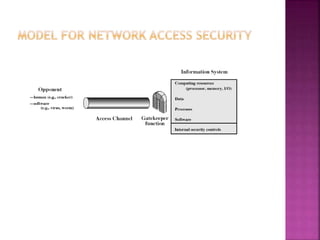
 using this model requires us to:
1. select appropriate gatekeeper functions to
identify users
2. implement security controls to ensure only
authorised users access designated
information or resources
 trusted computer systems may be useful to
help implement this model
 have considered:
 definitions for:
 computer, network, internet security
 X.800 standard
 security attacks, services, mechanisms
 models for network (access) security
Cryptography and Network Security_Chapter 1.ppt

Cryptography and Network Security_Chapter 1.ppt

  • 1.
    R.SHANTHI PRABHA M.Sc.,M.Phil., ASSISTANT PROFESSOR DEPARTMENT OF COMPUTER SCIENCE SACWC, CUMBUM
  • 2.
     Information Securityrequirements have changed in recent times  traditionally provided by physical and administrative mechanisms  computer use requires automated tools to protect files and other stored information  use of networks and communications links requires measures to protect data during transmission
  • 3.
     Computer Security- generic name for the collection of tools designed to protect data and to thwart hackers  Network Security - measures to protect data during their transmission  Internet Security - measures to protect data during their transmission over a collection of interconnected networks
  • 4.
     our focusis on Internet Security  which consists of measures to deter, prevent, detect, and correct security violations that involve the transmission & storage of information
  • 6.
     ITU-T X.800“Security Architecture for OSI”  defines a systematic way of defining and providing security requirements  for us it provides a useful, if abstract, overview of concepts we will study
  • 7.
     consider 3aspects of information security:  security attack  security mechanism  security service
  • 8.
     any actionthat compromises the security of information owned by an organization  information security is about how to prevent attacks, or failing that, to detect attacks on information-based systems  often threat & attack used to mean same thing  have a wide range of attacks  can focus of generic types of attacks  passive  active
  • 11.
     enhance securityof data processing systems and information transfers of an organization  intended to counter security attacks  using one or more security mechanisms  often replicates functions normally associated with physical documents  which, for example, have signatures, dates; need protection from disclosure, tampering, or destruction; be notarized or witnessed; be recorded or licensed
  • 12.
     X.800: “a serviceprovided by a protocol layer of communicating open systems, which ensures adequate security of the systems or of data transfers”  RFC 2828: “a processing or communication service provided by a system to give a specific kind of protection to system resources”
  • 13.
     Authentication -assurance that the communicating entity is the one claimed  Access Control - prevention of the unauthorized use of a resource  Data Confidentiality –protection of data from unauthorized disclosure  Data Integrity - assurance that data received is as sent by an authorized entity  Non-Repudiation - protection against denial by one of the parties in a communication
  • 14.
     feature designedto detect, prevent, or recover from a security attack  no single mechanism that will support all services required  however one particular element underlies many of the security mechanisms in use:  cryptographic techniques  hence our focus on this topic
  • 15.
    specific security mechanisms: encipherment, digital signatures, access controls, data integrity, authentication exchange, traffic padding, routing control, notarization pervasive security mechanisms:  trusted functionality, security labels, event detection, security audit trails, security recovery
  • 17.
     using thismodel requires us to: 1. design a suitable algorithm for the security transformation 2. generate the secret information (keys) used by the algorithm 3. develop methods to distribute and share the secret information 4. specify a protocol enabling the principals to use the transformation and secret information for a security service
  • 19.
     using thismodel requires us to: 1. select appropriate gatekeeper functions to identify users 2. implement security controls to ensure only authorised users access designated information or resources  trusted computer systems may be useful to help implement this model
  • 20.
     have considered: definitions for:  computer, network, internet security  X.800 standard  security attacks, services, mechanisms  models for network (access) security