CRYPTOCURRENCY
• .
Introduction
 A cryptocurrency is a medium of exchange like normal
Currencies such as USD, but designed for the purpose of
Exchanging digital information through a process made
Possible by certain principles of cryptography
Fully decentralized
History
• In 1998, Wei Dai published a description of "b-money", an anonymous,
distributed electronic cash A.
• Nick Szabo created Bit Gold was an electronic currency system which
required users to complete a proof of work function with solutions being
cryptographically put together and published
Decentralized
• The first decentralized cryptocurrency, bitcoin, was created
in 2009 by pseudonymous developer Satoshi Nakamoto.
• In case of decentralized cryptocurrency, companies or
governments cannot produce new units, and have not so far
provided backing for other firms, banks or corporate entities
which hold asset value measured in it. The underlying
technical system upon which decentralized cryptocurrencies
are based was created by the group or individual known
as Satoshi Nakamoto.
Normal currencies & cryptocurrencies
For normal currencies the government controls the value
of currency.
But cryptocurrency are fully decentralized
 Low transaction fees to transfer money all over the world.
The fee is same independent of distance, country, borders.
Most crypto currencies are produced is controlled by an
algorithm that no single person or company or country can
change
Major Crypto-currencies
• Bitcoin
• Litecoin
• Peercoin
• Namecoin
• Megacoin
• Edinarcoin
• Worldcoin
• Quarkcoin
• Primecoin
• CryptogenicBullion
• Zetacoin
• Stablecoin
Bitcoin - BTC
 Peer-to-Peer technology and no central authority or banks
 Transaction fees are lower
 Manufacturing transactions and issuing of bitcoins is carried out collectively
by the network
 Open-source, design in public, nobody owns of controls Bitcoin
 21 Million Bitcoins to be issued
 Market Capital - $12 Bolloin
Cryptocurrency Mining
o Minig is a process by which a computer solves a complex math problem in
the hopes of uncovering a new crypto coin.
o Cryptocurrency algorithms are used to mine coins. There are two different
algorithms used for almost all the coins that is inexistance today. Which is
the SHA-256 and Scrypy algorithmns
o Anyone can mine with their computers processor, more advanced graphics
card (GPUs or “gaming cards” ), and specialized hardware ( ASIC system )
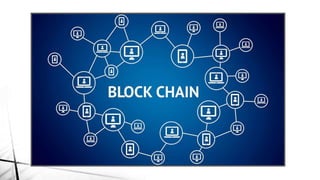
Block chain
A blockchain is a transaction database shard by all nodes participating in a
system based on the Bitcoin protocol
It works like a ledger and is shared by everyone
All Bitcoin transactions, without exeption, are rcorded here
Once it is recorded, it cannot be reversed
Everyone will have the same blockchain and therefore the access to the
recorded history transactions.
E-wallet
• A digital wallet refers to an electronic device that allows an individual to
make electronic transactions. This can include purchasing items on-line
with a computer or using a smartphone to purchase something at a store.
An individual's bank account can also be linked to the digital wallet. They
might also have their driver’s license, health card, loyalty card(s) and other
ID documents stored on the phone. The credentials can be passed to a
merchant’s terminal wirelessly via near field communication (NFC).
Increasingly, digital wallets are being made not just for basic financial
transactions but to also authenticate the holder's credentials. For example,
a digital wallet could verify the age of the buyer to the store while
purchasing alcohol. The system has already gained popularity in Japan,
where digital wallets are known as "wallet mobiles". A cryptocurrency
wallet is a digital wallet where private keys are stored for cryptocurrencies
like bitcoin.
•
Converting to normal currencies
• www.btc-e.com and bitstamp.com
• You then send the currency from your wallet to
the exchange, convert it to whatever currency
you desire (USD, Euro, or Rupees )
• You can send itto your bank accountthrough a
wire transfer,
Legality and taxes
• Cryptocurenncy are legal in most countries except
Iceland, Vietnam
• Iceland mainly due to their freez on foreign exchange
they are not free from regulations and restrictions
• China has banned financial institutions from handling
bitcoins.
• In US bitcoins treated as property for tax purpose.
Future
• More retailers will begin to accept BTC
• Used in international trading to avoid currency
exchanges
• Become as common place as credit card
• Less volatility in hard currency value
• Reduces the limitations of crypto currency Presently
face
Conclusion
Cryptocurrency is an impressive technical
achievement, but it remains a monetary experiment.
Even if cryptocurrencies survive, they may not fully
displace flat currencies
We should use cryptocurrencies since it is a step in
the right direction for global trade where everyone
can be involved
To neglect the idea of Cyptocurrencies on a
decentralized netork today is like neglecting the idea
of internet and the Hypertext Transfer Protocol (http)
back in the early ninties.

Cryptocurrency

  • 1.
  • 2.
  • 3.
    Introduction  A cryptocurrencyis a medium of exchange like normal Currencies such as USD, but designed for the purpose of Exchanging digital information through a process made Possible by certain principles of cryptography Fully decentralized
  • 4.
    History • In 1998,Wei Dai published a description of "b-money", an anonymous, distributed electronic cash A. • Nick Szabo created Bit Gold was an electronic currency system which required users to complete a proof of work function with solutions being cryptographically put together and published
  • 5.
    Decentralized • The firstdecentralized cryptocurrency, bitcoin, was created in 2009 by pseudonymous developer Satoshi Nakamoto. • In case of decentralized cryptocurrency, companies or governments cannot produce new units, and have not so far provided backing for other firms, banks or corporate entities which hold asset value measured in it. The underlying technical system upon which decentralized cryptocurrencies are based was created by the group or individual known as Satoshi Nakamoto.
  • 6.
    Normal currencies &cryptocurrencies For normal currencies the government controls the value of currency. But cryptocurrency are fully decentralized  Low transaction fees to transfer money all over the world. The fee is same independent of distance, country, borders. Most crypto currencies are produced is controlled by an algorithm that no single person or company or country can change
  • 7.
    Major Crypto-currencies • Bitcoin •Litecoin • Peercoin • Namecoin • Megacoin • Edinarcoin • Worldcoin • Quarkcoin • Primecoin • CryptogenicBullion • Zetacoin • Stablecoin
  • 8.
    Bitcoin - BTC Peer-to-Peer technology and no central authority or banks  Transaction fees are lower  Manufacturing transactions and issuing of bitcoins is carried out collectively by the network  Open-source, design in public, nobody owns of controls Bitcoin  21 Million Bitcoins to be issued  Market Capital - $12 Bolloin
  • 9.
    Cryptocurrency Mining o Minigis a process by which a computer solves a complex math problem in the hopes of uncovering a new crypto coin. o Cryptocurrency algorithms are used to mine coins. There are two different algorithms used for almost all the coins that is inexistance today. Which is the SHA-256 and Scrypy algorithmns o Anyone can mine with their computers processor, more advanced graphics card (GPUs or “gaming cards” ), and specialized hardware ( ASIC system )
  • 10.
    Block chain A blockchainis a transaction database shard by all nodes participating in a system based on the Bitcoin protocol It works like a ledger and is shared by everyone All Bitcoin transactions, without exeption, are rcorded here Once it is recorded, it cannot be reversed Everyone will have the same blockchain and therefore the access to the recorded history transactions.
  • 12.
    E-wallet • A digitalwallet refers to an electronic device that allows an individual to make electronic transactions. This can include purchasing items on-line with a computer or using a smartphone to purchase something at a store. An individual's bank account can also be linked to the digital wallet. They might also have their driver’s license, health card, loyalty card(s) and other ID documents stored on the phone. The credentials can be passed to a merchant’s terminal wirelessly via near field communication (NFC). Increasingly, digital wallets are being made not just for basic financial transactions but to also authenticate the holder's credentials. For example, a digital wallet could verify the age of the buyer to the store while purchasing alcohol. The system has already gained popularity in Japan, where digital wallets are known as "wallet mobiles". A cryptocurrency wallet is a digital wallet where private keys are stored for cryptocurrencies like bitcoin. •
  • 13.
    Converting to normalcurrencies • www.btc-e.com and bitstamp.com • You then send the currency from your wallet to the exchange, convert it to whatever currency you desire (USD, Euro, or Rupees ) • You can send itto your bank accountthrough a wire transfer,
  • 14.
    Legality and taxes •Cryptocurenncy are legal in most countries except Iceland, Vietnam • Iceland mainly due to their freez on foreign exchange they are not free from regulations and restrictions • China has banned financial institutions from handling bitcoins. • In US bitcoins treated as property for tax purpose.
  • 15.
    Future • More retailerswill begin to accept BTC • Used in international trading to avoid currency exchanges • Become as common place as credit card • Less volatility in hard currency value • Reduces the limitations of crypto currency Presently face
  • 16.
    Conclusion Cryptocurrency is animpressive technical achievement, but it remains a monetary experiment. Even if cryptocurrencies survive, they may not fully displace flat currencies We should use cryptocurrencies since it is a step in the right direction for global trade where everyone can be involved To neglect the idea of Cyptocurrencies on a decentralized netork today is like neglecting the idea of internet and the Hypertext Transfer Protocol (http) back in the early ninties.