1
Executive Summary
The increasing use of smart phones, sensors and social media is a reality across many
industries today. It is not just where and how business is conducted that is changing, but the
speed and scope of the business decision-making process is also transforming because of
several emerging technologies – Cloud, High Performance Computing (HPC), Analytics,
Social, Mobile and the Internet of Things (IoT). These trends are very data centric.
But the sheer volume, velocity and variety of data is an obstacle to cross the performance
barrier in almost every industry. To meet this challenge, organizations must deploy a cost-
effective, high-performance, reliable and agile IT infrastructure to deliver the best possible
business outcomes. This is the goal of IBM’s data-centric design of Power Systems and
solutions from the OpenPOWER Foundation for HPC.
Businesses are investing in HPC to improve customer experience and loyalty, discover new
revenue opportunities, detect fraud and breaches, optimize oil and gas exploration and
production, improve patient outcomes, mitigate financial risks, and more. HPC also helps
governments respond faster to emergencies, analyze terrorist threats better and more
accurately predict the weather – all of which are vital for national security, public safety and
the environment. The economic and social value of HPC is immense.
A key underlying belief driving the OpenPOWER Foundation is that focusing solely on
microprocessors is insufficient to help organizations cross performance barriers. System
stack (processors, memory, storage, networking, file systems, systems management,
application development environments, accelerators, workload optimization, etc.)
innovations are required to improve performance and cost/performance. IBM’s data-centric
design minimizes data motion, enables compute capabilities across the system stack, provides
a modular, scalable architecture and is optimized for HPC.
Real world examples of innovations and performance enhancements resulting from IBM’s
data-centric design of Power Systems and the OpenPOWER Foundation are discussed here.
These span financial services, life sciences, oil and gas and other HPC workloads. These
examples highlight the need for clients (and the industry) to evaluate HPC systems
performance at the solution/workflow level rather than just on narrow synthetic point
benchmarks such as LINPACK that have long dominated the industry’s discussion.
Clients who invest in IBM Power Systems for HPC could lower the total cost of ownership
(TCO) with fewer more reliable servers compared to alternatives. More importantly, these
customers will also be able to cross performance barriers leveraging high-value offerings
delivered by the OpenPOWER Foundation for many real life HPC workflows.
Copyright®
2015. Cabot Partners Group. Inc. All rights reserved. Other companies’ product names, trademarks, or service marks are used herein for identification only and belong to their
respective owner. All images and supporting data were obtained from IBM, NVIDIA, Mellanox or from public sources. The information and product recommendations made by the Cabot
Partners Group are based upon public information and sources and may also include personal opinions both of the Cabot Partners Group and others, all of which we believe to be accurate
and reliable. However, as market conditions change and not within our control, the information and recommendations are made without warranty of any kind. The Cabot Partners Group,
Inc. assumes no responsibility or liability for any damages whatsoever (including incidental, consequential or otherwise), caused by your or your client’s use of, or reliance upon, the
information and recommendations presented herein, nor for any inadvertent errors which may appear in this document. This paper was developed with IBM funding. Although the paper
may utilize publicly available material from various vendors, including IBM, it does not necessarily reflect the positions of such vendors on the issues addressed in this document.
Crossing the Performance Chasm with OpenPOWER
Sponsored by IBM
Srini Chari, Ph.D., MBA mailto:chari@cabotpartners.com
March, 2015
Cabot
PartnersOptimizing Business Value
CabotPartnersGroup,Inc.100WoodcrestLane,DanburyCT06810,www.cabotpartners.com
2
Key Technology Trends Creating Data Deluge …
The relentless rate and pace of technology-enabled business transformation and innovation
are stunning. Several fast-growing intertwined technology trends – Cloud, High Performance
Computing (HPC), Analytics, Social, Mobile and the Internet of Things (IoT) – continue to be
profoundly disruptive; reshaping the economics and the needs of the information technology
(IT) industry:
Enterprise clouds are poised for significant growth. Between 2014 and 2017, the
enterprise cloud market is expected to grow from $70 billion to over $250 billion.1
Smart phone subscribers are growing over 20% and Tablets over 52% annually, with
greatest growth in underpenetrated emerging markets. Mobile data traffic growth is
accelerating annually at 81% with images and videos as the strongest drivers.2
Sensors, actuators, and other connected things (IoT) are proliferating at astounding
rates; with over 12 billion devices connected to the Internet today, and expected to
increase dramatically to over a trillion in the next decade. 3
In 2014, the number of social media users is estimated to be 1.79 billion and growing to
about 2.44 billion by 2018.4
While Social Business (business use of social media)
continues to play an increasing role in marketing and sales, other potential use cases –
collaboration and coordination within the enterprise and with partners to drive
innovation and efficiencies – are embryonic but with high untapped value.3
More than 2.5 exabytes (1018
bytes) of data are created daily. Individuals generate about
70% of this data and enterprises store and manage 80% of this data. Spending on Data
is growing annually at 30% and is expected to reach $114 billion in 2018.5
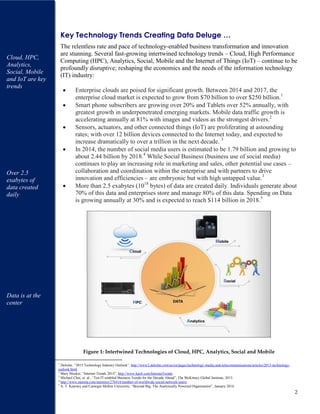
Figure 1: Intertwined Technologies of Cloud, HPC, Analytics, Social and Mobile
1
Deloitte, “2015 Technology Industry Outlook”, http://www2.deloitte.com/us/en/pages/technology-media-and-telecommunications/articles/2015-technology-
outlook.html
2
Mary Meeker, “Internet Trends 2014”, http://www.kpcb.com/InternetTrends
3
Michael Chui, et. al., “Ten IT-enabled Business Trends for the Decade Ahead”, The McKinsey Global Institute, 2013.
4
http://www.statista.com/statistics/278414/number-of-worldwide-social-network-users/
5
A. T. Kearney and Carnegie Mellon University, “Beyond Big: The Analytically Powered Organization”, January 2014.
Cloud, HPC,
Analytics,
Social, Mobile
and IoT are key
trends
Over 2.5
exabytes of
data created
daily
Data is at the
center
3
… Open Innovation Key to Generate Value from Data
These transformative technologies enable new opportunities for enterprises across multiple
industries to deliver innovative products, increase revenues and profits, enhance customer
experience, improve operational performance and outflank competitors.
But this requires organizations to better align strategy, culture and technology to maximize
value from these emerging trends. In short, IT infrastructure matters.6
Companies are
increasingly investing in high-performance infrastructure (servers, storage, networking,
accelerators, software, etc.) to get the best business outcomes.
Consequently, HPC server revenues are expected to grow at a healthy rate of about 6.4
percent annually to a bit over $14 billion7
in 2018, despite the decreasing cost/performance of
servers, storage and networking.2
This growth is because of increasing use of Analytics in
HPC – poised to be the fastest growing part of the HPC market, with server revenues
expected to grow about 23.5 percent annually.7
To maximize value from infrastructure investments, clients must evaluate the performance
and costs of HPC systems holistically. Evaluations based on a narrow focus on point
benchmarks such as High Performance LINPACK (HPL)8
, which primarily depend on
processor Flops (floating point operations per second)/core and number of cores, are
inadequate for many real life HPC workloads, particularly Analytics. In addition to processor
performance, the performance of HPC workflows also depends on other system attributes
such as memory, networks and storage – larger data sets make this dependency greater.
Clients who rely solely on point benchmarks to make purchasing decisions are at risk of
deploying an ineffective HPC environment for their specific workflows.
One key goal of the OpenPOWER Foundation is to address the unique challenges of HPC.
An underlying belief driving the OpenPOWER Foundation is that microprocessors alone can
no longer drive performance and cost/performance improvements to help organizations cross
performance barriers. System stack innovations at all levels are required.
Initial performance proof-points indicate that the data-centric design of the IBM Power
System is perfectly poised to be the anchor for members of the OpenPOWER Foundation to
jointly innovate and build market momentum to “Cross the Chasm”.9
Extracting Value using High Performance Computing
The boundaries between HPC and Analytics continue to blur as organizations seek to extract
value from the data that is exploding in velocity, variety, and volume. Today, data in many
sectors range from a few dozen terabytes (TB) to multiple petabytes (PB). It is not just the
volume of data that’s important but also the variety, velocity, veracity and vulnerability.
Further, the ability to virtualize and visualize data is becoming equally important to extract
insights and value.
6
http://www.ibm.com/systems/infrastructure/us/en/it-infrastructure-matters/it-infrastructure-report.html
7
Earl Joseph, et. al., “IDC’s Top Ten HPC Market Predictions for 2015, January, 2015.
8
http://www.netlib.org/benchmark/hpl/
9
Geoffrey Moore, “Crossing the Chasm: Marketing and Selling High-Tech Products to Mainstream Customers”, Harper Collins Publishers, 1991.
Transformative
technologies
enable value
creation
HPC becoming
more data-
centric;
purchasing
decisions made
solely on point
benchmarks
are inadequate
and risky
Data exploding
in volume,
velocity and
variety
4
Data can be structured or unstructured.10
Structured data is data that has been clearly formed,
formatted, modeled, and organized so that it is easy to work with and manage (e.g., relational
databases, spreadsheets, vectors and matrices), typically found in many traditional HPC
applications. Unstructured data covers most of the world’s information but does not fit into
the existing databases for structured data. Further, unstructured data consists of language-
based data (e.g., emails, Twitter messages, books) as well as non-language based data (e.g.,
images, slides, sensor data, audios, videos). An estimated 85% of data is unstructured.11
Figure 2: HPC Extracts Value from Structured and Unstructured Data
Many traditional HPC applications (seismic analysis, life sciences, financial services, climate
modelling, design optimization, etc.) are becoming more data-intensive with higher fidelity
models and more interdisciplinary analyses. These HPC applications are also increasingly
leveraging unstructured data to glean deeper insights. There is also a need for more near-real-
time analytics in many industries, such as telecommunications, retail and financial services.
Newer HPC and Analytics applications are also being used for cybersecurity, fraud detection,
social analytics, emergency response, national security, and more. Many high value use cases
automating iterative critical thinking processes with learning are also emerging. Cognitive
computing could be the next killer application that leverages HPC.
But these data-intensive applications require a reliable high-performance infrastructure that
deals effectively with the data deluge and overcomes obstacles related to slow data
movement, large network latencies and low system reliability and utilization. Further, the
costs and complexities of managing this distributed HPC infrastructure must be competitive.
This is the goal of IBM’s data-centric systems design and the OpenPOWER Foundation.
What Clients Must Consider When Evaluating HPC Systems
HPC clients have always demanded computing solutions that have the best mix of
functionality, performance, and price/performance. HPC workloads are limited by several key
performance-bottlenecking kernels that stress different aspects of an HPC system, particularly
the microprocessor and memory architectures within a server node, the server-to-server
communication subsystem, and I/O.
10
Big Data, Bigger Opportunities, Jean Yan, President Management Council Inter-agency Rotation Program, Cohort 2, April 2013.
11
http://www.dataenthusiast.com/2011/05/85-unstructured-data-15-what-the-hell-is-going-on/
85% of data is
unstructured
HPC key to
extract value
from data
Solutions from
OpenPOWER
Foundation key
for data-centric
HPC
workflows
5
Evaluating HPC systems and making purchasing decisions solely on single hardware
specifications, very simplistic point benchmarks (ping-pong latency), or even standard
benchmarks such as High Performance LINPACK (HPL) are inadequate. These benchmarks
are not fully indicative of the broad diversity of HPC workflows across multiple industries
and applications. Clients who rely solely on point benchmarks to make IT decisions are at risk
of deploying an ineffective HPC environment for their workflows.
What’s needed is a framework of inter-related drivers and associated metrics that examine the
total costs incurred and the value delivered by HPC solutions for client-specific workflows.
Value Delivered
Business Value: e.g. customer revenues, new business models, compliance regulations,
better products, increased business insight, faster time to market, and new breakthrough
capability
Operational Value: e.g. faster time to results, more accurate analyses, more users supported,
improved user productivity, better capacity planning
IT Value: e.g. improved system utilization, manageability, administration, and
provisioning, scalability, reduced downtime, access to robust proven technology and
expertise.
Costs Incurred
IT /Data Center Capital e.g. new servers, storage, networks, power distribution units,
chillers, etc.
Data Center Facilities e.g. land, buildings, containers, etc.
Operational Costs: e.g. labor, energy, maintenance, software license, etc.
Other Costs: e.g. system management, deployment and training, downtime, migration, etc.
Beyond specific workflow and cost-benefit analyses, prospective clients must also examine
the roadmaps of various high performance systems including the capabilities of the ecosystem
relevant to their industry.
System Attributes Impacting Real Life Application Performance
In the last several decades, application developers, academic institutions, government
laboratories and other HPC solution providers have made substantial investments to optimize
and tune HPC applications to take advantage of clusters and parallel systems. Substantial
performance improvements have been achieved by careful load balancing, maximizing single
socket performance, maintaining data locality, minimizing cache misses, improving I/O
performance, and maximizing the computation-to-communication ratio.
End-to-end HPC workflow performance is further enhanced with scalable networking of
servers and storage, accelerators - Graphics Processing Units (GPUs) and field-programmable
gate arrays (FPGAs), workload and cluster management software and parallel file systems.
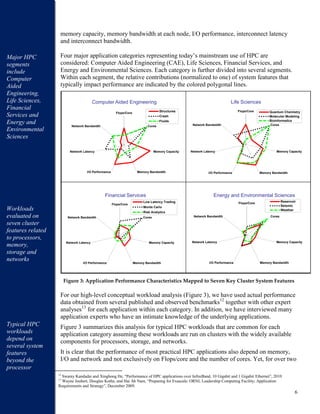
Figure 3 depicts performance characteristics for a range of HPC applications mapped to seven
key cluster system features that influence performance: Flops/core, number of cores, node
Making HPC
purchasing
decisions just
on point
benchmarks
are inadequate
and risky
Total Value of
Ownership
framework
needed for
client-specific
workflows
Many system
components –
processors,
memory,
storage,
networks and
software
impact HPC
performance
6
memory capacity, memory bandwidth at each node, I/O performance, interconnect latency
and interconnect bandwidth.
Four major application categories representing today’s mainstream use of HPC are
considered: Computer Aided Engineering (CAE), Life Sciences, Financial Services, and
Energy and Environmental Sciences. Each category is further divided into several segments.
Within each segment, the relative contributions (normalized to one) of system features that
typically impact performance are indicated by the colored polygonal lines.
Figure 3: Application Performance Characteristics Mapped to Seven Key Cluster System Features
For our high-level conceptual workload analysis (Figure 3), we have used actual performance
data obtained from several published and observed benchmarks12
together with other expert
analyses13
for each application within each category. In addition, we have interviewed many
application experts who have an intimate knowledge of the underlying applications.
Figure 3 summarizes this analysis for typical HPC workloads that are common for each
application category assuming these workloads are run on clusters with the widely available
components for processors, storage, and networks.
It is clear that the performance of most practical HPC applications also depend on memory,
I/O and network and not exclusively on Flops/core and the number of cores. Yet, for over two
12
Swamy Kandadai and Xinghong He, “Performance of HPC applications over InfiniBand, 10 Gigabit and 1 Gigabit Ethernet”, 2010
13
Wayne Joubert, Douglas Kothe, and Hai Ah Nam, “Preparing for Exascale: ORNL Leadership Computing Facility; Application
Requirements and Strategy”, December 2009.
0
Flops/Core
Cores
Memory Capacity
Memory BandwidthI/O Performance
Network Latency
Network Bandwidth
Structures
Crash
Fluids
Computer Aided Engineering
0
Flops/Core
Cores
Memory Capacity
Memory BandwidthI/O Performance
Network Latency
Network Bandwidth
Quantum Chemistry
Molecular Modeling
Bioinformatics
Life Sciences
0
Flops/Core
Cores
Memory Capacity
Memory BandwidthI/O Performance
Network Latency
Network Bandwidth
Low Latency Trading
Monte Carlo
Risk Analytics
Financial Services
0
Flops/Core
Cores
Memory Capacity
Memory BandwidthI/O Performance
Network Latency
Network Bandwidth
Reservoir
Seismic
Weather
Energy and Environmental Sciences
Major HPC
segments
include
Computer
Aided
Engineering,
Life Sciences,
Financial
Services and
Energy and
Environmental
Sciences
Workloads
evaluated on
seven cluster
features related
to processors,
memory,
storage and
networks
Typical HPC
workloads
depend on
several system
features
beyond the
processor
7
decades, the High Performance LINPACK (HPL) benchmark is the most frequently metric
used to evaluate the performance of HPC systems.
HPL (LINPACK) Benchmark not indicative of Analytics Workloads
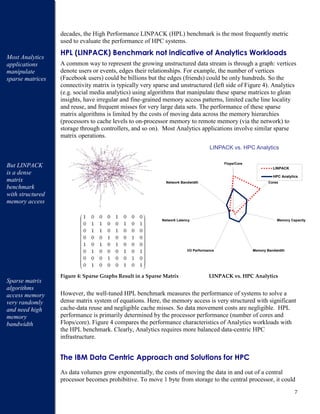
A common way to represent the growing unstructured data stream is through a graph: vertices
denote users or events, edges their relationships. For example, the number of vertices
(Facebook users) could be billions but the edges (friends) could be only hundreds. So the
connectivity matrix is typically very sparse and unstructured (left side of Figure 4). Analytics
(e.g. social media analytics) using algorithms that manipulate these sparse matrices to glean
insights, have irregular and fine-grained memory access patterns, limited cache line locality
and reuse, and frequent misses for very large data sets. The performance of these sparse
matrix algorithms is limited by the costs of moving data across the memory hierarchies
(processors to cache levels to on-processor memory to remote memory (via the network) to
storage through controllers, and so on). Most Analytics applications involve similar sparse
matrix operations.
Figure 4: Sparse Graphs Result in a Sparse Matrix LINPACK vs. HPC Analytics
However, the well-tuned HPL benchmark measures the performance of systems to solve a
dense matrix system of equations. Here, the memory access is very structured with significant
cache-data reuse and negligible cache misses. So data movement costs are negligible. HPL
performance is primarily determined by the processor performance (number of cores and
Flops/core). Figure 4 compares the performance characteristics of Analytics workloads with
the HPL benchmark. Clearly, Analytics requires more balanced data-centric HPC
infrastructure.
The IBM Data Centric Approach and Solutions for HPC
As data volumes grow exponentially, the costs of moving the data in and out of a central
processor becomes prohibitive. To move 1 byte from storage to the central processor, it could
0
Flops/Core
Cores
Memory Capacity
Memory BandwidthI/O Performance
Network Latency
Network Bandwidth
LINPACK
HPC Analytics
LINPACK vs. HPC Analytics
Most Analytics
applications
manipulate
sparse matrices
But LINPACK
is a dense
matrix
benchmark
with structured
memory access
Sparse matrix
algorithms
access memory
very randomly
and need high
memory
bandwidth
8
cost 3-10 times the cost of one floating point operation (flop).14
So why not move data less by
running workloads where the data resides? This requires “computing” at all levels of the
system stack including network, memory and storage. This is, in essence, IBM’s Data Centric
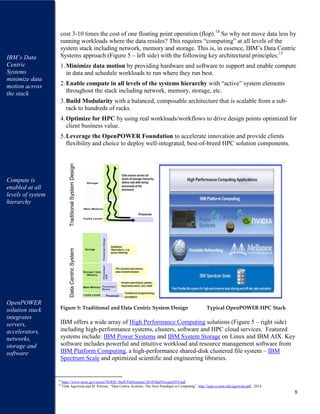
Systems approach (Figure 5 – left side) with the following key architectural principles:15
1.Minimize data motion by providing hardware and software to support and enable compute
in data and schedule workloads to run where they run best.
2.Enable compute in all levels of the systems hierarchy with “active” system elements
throughout the stack including network, memory, storage, etc.
3.Build Modularity with a balanced, composable architecture that is scalable from a sub-
rack to hundreds of racks.
4.Optimize for HPC by using real workloads/workflows to drive design points optimized for
client business value.
5.Leverage the OpenPOWER Foundation to accelerate innovation and provide clients
flexibility and choice to deploy well-integrated, best-of-breed HPC solution components.
Figure 5: Traditional and Data Centric System Design Typical OpenPOWER HPC Stack
IBM offers a wide array of High Performance Computing solutions (Figure 5 – right side)
including high-performance systems, clusters, software and HPC cloud services. Featured
systems include: IBM Power Systems and IBM System Storage on Linux and IBM AIX. Key
software includes powerful and intuitive workload and resource management software from
IBM Platform Computing, a high-performance shared-disk clustered file system – IBM
Spectrum Scale and optimized scientific and engineering libraries.
14
https://www.nersc.gov/assets/NERSC-Staff-Publications/2010/ShalfVecpar2010.pdf
15
Tilak Agerwala and M. Perrone, “Data Centric Systems: The Next Paradigm in Computing”, http://icpp.cs.umn.edu/agerwala.pdf , 2014.
TraditionalSystemDesignDataCentricSystem
IBM’s Data
Centric
Systems
minimize data
motion across
the stack
Compute is
enabled at all
levels of system
hierarchy
OpenPOWER
solution stack
integrates
servers,
accelerators,
networks,
storage and
software
9
Additional innovative offerings include IBM InfoSphere BigInsights – a comprehensive,
enterprise-grade full-featured Hadoop platform for Analytics; middleware and business
partner applications and service providers with deep proven expertise in HPC. In addition,
IBM (particularly IBM Research) has a worldwide technical staff of domain experts to
collaborate with clients to migrate and optimize their applications on IBM systems and
software to solve their largest and most challenging HPC problems.
IBM Power Systems (with POWER8 processors) offer a tightly-integrated and
performance-optimized infrastructure for HPC workloads with the following benefits:
1. Massive Threads: Each POWER8 core is capable of handling eight hardware threads
simultaneously for a total of 96 threads executed simultaneously on a 12-core chip.
2. Large Memory Bandwidth: Very large amounts of on- and off-chip eDRAM caches and
on-chip memory controllers enable very high bandwidth to memory and system I/O.
3. High Performance Processor: POWER8 is capable of clock speeds around 4.15GHz,
with a Thermal Design Power (TDP) in the neighborhood of 250 watts.
4. Excellent RAS: Many studies16,17
across a range of enterprises have indicated that IBM
Power Systems perform better than x86 systems in Reliability, Availability and
Serviceability (RAS), performance, TCO, security and overall satisfaction.
5. Game-Changing Performance with Coherent Accelerator Processor Interface
(CAPI): CAPI, a direct link into the CPU, allows peripherals and coprocessors to
communicate directly with the CPU, substantially bypassing operating system and driver
overheads. IBM has developed CAPI to be open to third party vendors and even offers
design enablement kits. In the case of flash memory attached via CAPI, the overhead is
reduced by a factor of 24:1. More importantly though, CAPI can be used to attach
accelerators like FPGAs — directly to the POWER8 CPU for significant workload-
specific performance boosts.
6. Open Partner Ecosystem with the OpenPOWER Foundation.
Optimizing for HPC with the OpenPOWER Foundation
IBM has opened up the technology surrounding Power Systems architecture offerings, such as
processor specifications, firmware and software. IBM offers this on a liberal license basis and
uses a collaborative development model with partners. The goal is to enable the server vendor
ecosystem to build their own customized server, networking and storage hardware for HPC,
cloud computing and future data centers.
The Foundation – representing over 100 global technology leaders and growing – was
founded by NVIDIA, Mellanox, IBM, Google and Tyan. The group has announced an
innovation roadmap detailing planned contributions from several of its members, with IBM
Power Systems as the first servers to take advantage of the OpenPOWER technology.
16
Edison Group, “ Better Performance, Lower Costs The Advantages of IBM PowerLinux 7R2 with PowerVM versus HP DL380p G8 with vSphere 5.1,
http://public.dhe.ibm.com/common/ssi/ecm/en/pol03161usen/POL03161USEN.PDF
17
Solitaire Interglobal, “Power Boost Your Big Data Analytics Strategy”, http://www.ibm.com/systems/power/solutions/assets/bigdata-analytics.html
IBM Research
leads industry
in data-centric
computing
Power Systems
have massive
threads, large
memory
bandwidth,
high frequency,
excellent RAS
and CAPI
OpenPOWER
Foundation
with over 100
members and
growing key to
drive stack
innovation
10
NVIDIA: The NVIDIA Tesla Accelerated Computing Platform is the leading platform for
accelerating deep learning and scientific HPC workloads. The platform combines the world's
fastest GPU accelerators, the widely used CUDA parallel computing model, and a
comprehensive ecosystem of software developers and Independent Software Vendors (ISVs).
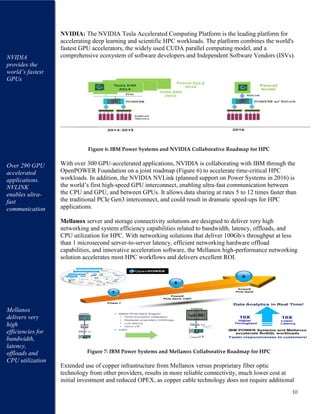
Figure 6: IBM Power Systems and NVIDIA Collaborative Roadmap for HPC
With over 300 GPU-accelerated applications, NVIDIA is collaborating with IBM through the
OpenPOWER Foundation on a joint roadmap (Figure 6) to accelerate time-critical HPC
workloads. In addition, the NVIDIA NVLink (planned support on Power Systems in 2016) is
the world’s first high-speed GPU interconnect, enabling ultra-fast communication between
the CPU and GPU, and between GPUs. It allows data sharing at rates 5 to 12 times faster than
the traditional PCIe Gen3 interconnect, and could result in dramatic speed-ups for HPC
applications.
Mellanox server and storage connectivity solutions are designed to deliver very high
networking and system efficiency capabilities related to bandwidth, latency, offloads, and
CPU utilization for HPC. With networking solutions that deliver 100Gb/s throughput at less
than 1 microsecond server-to-server latency, efficient networking hardware offload
capabilities, and innovative acceleration software, the Mellanox high-performance networking
solution accelerates most HPC workflows and delivers excellent ROI.
Figure 7: IBM Power Systems and Mellanox Collaborative Roadmap for HPC
Extended use of copper infrastructure from Mellanox versus proprietary fiber optic
technology from other providers, results in more reliable connectivity, much lower cost at
initial investment and reduced OPEX, as copper cable technology does not require additional
Power 7
Power8
PCIe Gen3, CAPI
Power9
PCIe Gen4
 Native PCIe Gen3 Support
• Direct processor integration
• Replaces proprietary GX/Bridge
• Low latency
• Gen3 x16
 CAPI
7
8
9
Faster responsiveness to customers!
IBM POWER Systems and Mellanox
accelerate NoSQL workloads
10X
Higher
Throughput
10X
Lower
Latency
Data Analytics in Real Time!
NVIDIA
provides the
world’s fastest
GPUs
Over 290 GPU
accelerated
applications.
NVLINK
enables ultra-
fast
communication
Mellanox
delivers very
high
efficiencies for
bandwidth,
latency,
offloads and
CPU utilization
11
power. Mellanox solutions also provide industry standard interoperability and protection of
investment with guaranteed forward and backwards compatibility across generations.
Mellanox is collaborating with IBM and NVIDIA through the OpenPOWER Foundation on a
joint roadmap (Figure 7) to significantly accelerate time-critical HPC workflows. CAPI and
PCIe Gen3 are supported today on POWER8 with planned PCIe Gen4 support for POWER9.
There are already several real world examples of innovations and performance enhancements
for HPC resulting from the OpenPOWER Foundation and these span the business spectrum
ranging from financial services, seismic processing, life sciences and other applications.
Performance Examples Highlighting Advantage of OpenPOWER
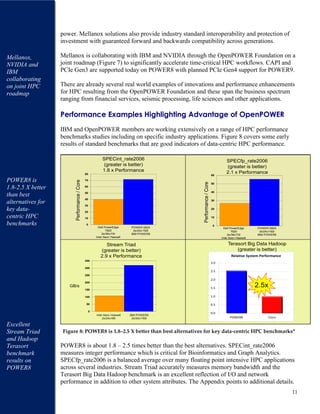
IBM and OpenPOWER members are working extensively on a range of HPC performance
benchmarks studies including on specific industry applications. Figure 8 covers some early
results of standard benchmarks that are good indicators of data-centric HPC performance.
Figure 8: POWER8 is 1.8–2.5 X better than best alternatives for key data-centric HPC benchmarks*
POWER8 is about 1.8 – 2.5 times better than the best alternatives. SPECint_rate2006
measures integer performance which is critical for Bioinformatics and Graph Analytics.
SPECfp_rate2006 is a balanced average over many floating point intensive HPC applications
across several industries. Stream Triad accurately measures memory bandwidth and the
Terasort Big Data Hadoop benchmark is an excellent reflection of I/O and network
performance in addition to other system attributes. The Appendix points to additional details.
SPECint_rate2006
(greater is better)
1.8 x Performance
0
10
20
30
40
50
60
70
80
Dell PowerEdge
T620
2s/36c/72t
Intel Xeon Haswell
POWER S824
2s/24c/192t
IBM POWER8
Dell PowerEdge
T620
2s/36c/72t
Intel Xeon Haswell
POWER S824
2s/24c/192t
IBM POWER8
0
10
20
30
40
50
60
SPECfp_rate2006
(greater is better)
2.1 x Performance
0.0
0.5
1.0
1.5
2.0
2.5
3.0
POWER8 Cisco
Relative System Performance
Terasort Big Data Hadoop
(greater is better)
2.5x
0
50
100
150
200
250
300
350
Stream Triad
(greater is better)
2.9 x Performance
GB/s
Intel Xeon Haswell
2s/24c/48t
IBM POWER8
2s/24c/192t
Performance/Core
Performance/Core
Mellanox,
NVIDIA and
IBM
collaborating
on joint HPC
roadmap
POWER8 is
1.8-2.5 X better
than best
alternatives for
key data-
centric HPC
benchmarks
Excellent
Stream Triad
and Hadoop
Terasort
benchmark
results on
POWER8
12
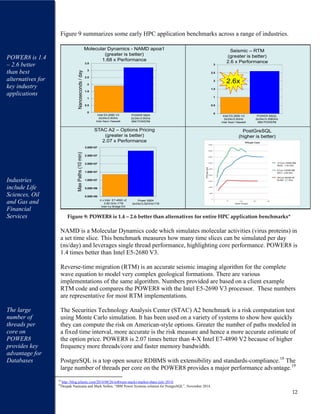
Figure 9 summarizes some early HPC application benchmarks across a range of industries.
Figure 9: POWER8 is 1.4 – 2.6 better than alternatives for entire HPC application benchmarks*
NAMD is a Molecular Dynamics code which simulates molecular activities (virus proteins) in
a set time slice. This benchmark measures how many time slices can be simulated per day
(ns/day) and leverages single thread performance, highlighting core performance. POWER8 is
1.4 times better than Intel E5-2680 V3.
Reverse-time migration (RTM) is an accurate seismic imaging algorithm for the complete
wave equation to model very complex geological formations. There are various
implementations of the same algorithm. Numbers provided are based on a client example
RTM code and compares the POWER8 with the Intel E5-2690 V3 processor. These numbers
are representative for most RTM implementations.
The Securities Technology Analysis Center (STAC) A2 benchmark is a risk computation test
using Monte Carlo simulation. It has been used on a variety of systems to show how quickly
they can compute the risk on American-style options. Greater the number of paths modeled in
a fixed time interval, more accurate is the risk measure and hence a more accurate estimate of
the option price. POWER8 is 2.07 times better than 4-X Intel E7-4890 V2 because of higher
frequency more threads/core and faster memory bandwidth.
PostgreSQL is a top open source RDBMS with extensibility and standards-compliance.18
The
large number of threads per core on the POWER8 provides a major performance advantage.19
18
http://blog.jelastic.com/2014/08/28/software-stacks-market-share-july-2014/
19
Deepak Narayana and Mark Nellen, “IBM Power Systems solution for PostgreSQL”, November 2014.
Molecular Dynamics - NAMD apoa1
(greater is better)
1.68 x Performance
0
0.5
1
1.5
2
2.5
3
3.5
Intel E5-2690 V3
2s/24c/2.6GHz
Intel Xeon Haswell
POWER S824
2s/24c/3.9GHz
IBM POWER8
Intel E5-2690 V3
2s/24c/2.6GHz
Intel Xeon Haswell
POWER S822L
2s/24c/3.358GHz
IBM POWER8
0
0.5
1
1.5
2
2.5
3
Seismic – RTM
(greater is better)
2.6 x Performance
PostGreSQL
(higher is better)
2.6x
0.00E+00
5.00E+06
1.00E+07
1.50E+07
2.00E+07
2.50E+07
3.00E+07
STAC A2 – Options Pricing
(greater is better)
2.07 x Performance
MaxPaths(10min)
4 x Intel E7-4890 v2
2.80 GHz /1TB
Intel Ivy Bridge EX
Power S824
2s/24c/3.52GHz/1TB
Nanoseconds/day
POWER8 is 1.4
– 2.6 better
than best
alternatives for
key industry
applications
Industries
include Life
Sciences, Oil
and Gas and
Financial
Services
The large
number of
threads per
core on
POWER8
provides key
advantage for
Databases
13
Conclusions: Crossing the Performance Chasm with OpenPOWER
With the ever increasing volume, velocity and variety of data, the boundaries between HPC
and Analytics continue to blur. Analytics is growing about 3 – 4 times the rate of traditional
HPC. Many HPC-savvy enterprises evaluating HPC systems are realizing that assessments
based on traditional point compute-intensive benchmarks such as LINPACK are inadequate.
Clients who rely solely on point benchmarks to make purchasing decisions are at risk of
deploying an ineffective HPC environment for their workflows.
What’s needed is a cost-benefit framework that examines the total costs incurred and the
value delivered by HPC solutions for specific workflows.
As the OpenPOWER Foundation continues to grow with new capabilities and proof points to
address the challenges HPC workflows, organizations should actively consider investing in
IBM Power Systems and data-centric offerings from the OpenPOWER Foundation:
Provides flexibility and choice to deploy well-integrated, best-of-breed HPC solution
components in an open architecture.
Minimizes costly data-motion across the entire workflow resulting in better performance
for the entire HPC business process.
Accelerates compute and data intensive tasks several fold.
Lowers total cost of ownership (TCO) with fewer servers with improved utilization, lower
application software license costs and less storage and data bottlenecks because of
consolidation, fewer redundant copies, novel compression algorithms and efficient data-
aware scheduling.
Protects current IT investments in people, processes, platforms and applications while
providing a seamless and cost-effective path to scale to meet the demands of newer data-
centric HPC workloads.
With the value provided by OpenPOWER, organizations can now expect to Cross the
Performance Chasm for their specific HPC workflows. In fact, a team of several
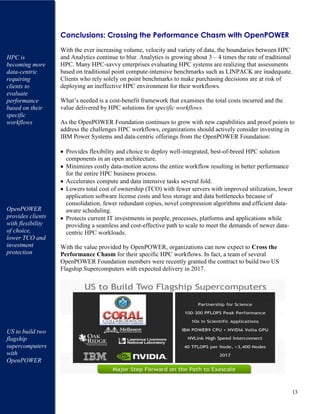
OpenPOWER Foundation members were recently granted the contract to build two US
Flagship Supercomputers with expected delivery in 2017.
HPC is
becoming more
data-centric
requiring
clients to
evaluate
performance
based on their
specific
workflows
OpenPOWER
provides clients
with flexibility
of choice,
lower TCO and
investment
protection
US to build two
flagship
supercomputers
with
OpenPOWER
14
*Appendix: Links to Performance Details
SPECcpu (int_rate & fp_rate)
SPECcpu2006 results are based on best published results on E5-2699 v3 from the top 5 Intel system
vendors (HP, Oracle, Lenovo, Dell, Fujitsu) submitted as of 9/8/2014. For more information go to
http://www.specbench.org/cpu2006/results/ . The IBM POWER8 published data is based on Power
S824 2s/24c/3.5GHz POWER8. The x86 Xeon published data is based on Dell PowerEdge T620
2s/36c/2.3GHz E5-2699 v3.
Hadoop Tersort
IBM Analytics Stack: IBM Power System S822L; 8 nodes each with 24 cores / 192 threads, POWER8;
3.0GHz, 512 GB memory, RHEL 6.5, InfoSphere BigInsights 3.0
Cisco Stack: 16 high-density Cisco UCS C240 M3 Rack Servers each with 16 cores / 32 threads, Intel
Xeon E5-2665; 2.4 GHz, 256 GB of memory, Cisco UCS VIC 1225, and LSI 9266 8i with 24 1-TB SATA
7200-rpm disk running Apache Hadoop open source distribution.
Stream Triad
The Stream Triad results are based on results reported in published papers.
IBM POWER8:
http://www.dcs.warwick.ac.uk/~sdh/pmbs14/PMBS14/Workshop_Schedule_files/2-
PerformancePower8.pdf
Intel Xeon E5-2600 v3
http://www.google.com/url?sa=t&rct=j&q=&esrc=s&source=web&cd=1&ved=0CB8QFjAA&url=http%3A
%2F%2Fdownload.boston.co.uk%2Fdownloads%2F9%2F3%2Fc%2F93c022fd-0d6d-46a4-9124-
28c9e32f2533%2FIntel-Whitepaper.pdf&ei=mLgBVbysL8KrggT774CICw&usg=AFQjCNFal5q5Vz2-
ly6ZbsaKZ2QPPad1fg&sig2=3LzktTXeKPvS2QW9ndXgfQ&bvm=bv.87920726,d.eXY
STAC and all STAC names are trademarks or registered trademarks of Securities Technology Analysis
Center LLC.
https://stacresearch.com/system/files/asset/files/STAC-A2%20Intel%20Composer%20on%204%20x%20IVT%20EX%20-
%20INTC140509.pdf
Cabot Partners is a collaborative consultancy and an independent IT analyst firm. We specialize in advising
technology companies and their clients on how to build and grow a customer base, how to achieve desired
revenue and profitability results, and how to make effective use of emerging technologies including HPC, Cloud
Computing, and Analytics. To find out more, please go to www.cabotpartners.com.

Crossing the performance chasm with open power - IBM

  • 1.
    1 Executive Summary The increasinguse of smart phones, sensors and social media is a reality across many industries today. It is not just where and how business is conducted that is changing, but the speed and scope of the business decision-making process is also transforming because of several emerging technologies – Cloud, High Performance Computing (HPC), Analytics, Social, Mobile and the Internet of Things (IoT). These trends are very data centric. But the sheer volume, velocity and variety of data is an obstacle to cross the performance barrier in almost every industry. To meet this challenge, organizations must deploy a cost- effective, high-performance, reliable and agile IT infrastructure to deliver the best possible business outcomes. This is the goal of IBM’s data-centric design of Power Systems and solutions from the OpenPOWER Foundation for HPC. Businesses are investing in HPC to improve customer experience and loyalty, discover new revenue opportunities, detect fraud and breaches, optimize oil and gas exploration and production, improve patient outcomes, mitigate financial risks, and more. HPC also helps governments respond faster to emergencies, analyze terrorist threats better and more accurately predict the weather – all of which are vital for national security, public safety and the environment. The economic and social value of HPC is immense. A key underlying belief driving the OpenPOWER Foundation is that focusing solely on microprocessors is insufficient to help organizations cross performance barriers. System stack (processors, memory, storage, networking, file systems, systems management, application development environments, accelerators, workload optimization, etc.) innovations are required to improve performance and cost/performance. IBM’s data-centric design minimizes data motion, enables compute capabilities across the system stack, provides a modular, scalable architecture and is optimized for HPC. Real world examples of innovations and performance enhancements resulting from IBM’s data-centric design of Power Systems and the OpenPOWER Foundation are discussed here. These span financial services, life sciences, oil and gas and other HPC workloads. These examples highlight the need for clients (and the industry) to evaluate HPC systems performance at the solution/workflow level rather than just on narrow synthetic point benchmarks such as LINPACK that have long dominated the industry’s discussion. Clients who invest in IBM Power Systems for HPC could lower the total cost of ownership (TCO) with fewer more reliable servers compared to alternatives. More importantly, these customers will also be able to cross performance barriers leveraging high-value offerings delivered by the OpenPOWER Foundation for many real life HPC workflows. Copyright® 2015. Cabot Partners Group. Inc. All rights reserved. Other companies’ product names, trademarks, or service marks are used herein for identification only and belong to their respective owner. All images and supporting data were obtained from IBM, NVIDIA, Mellanox or from public sources. The information and product recommendations made by the Cabot Partners Group are based upon public information and sources and may also include personal opinions both of the Cabot Partners Group and others, all of which we believe to be accurate and reliable. However, as market conditions change and not within our control, the information and recommendations are made without warranty of any kind. The Cabot Partners Group, Inc. assumes no responsibility or liability for any damages whatsoever (including incidental, consequential or otherwise), caused by your or your client’s use of, or reliance upon, the information and recommendations presented herein, nor for any inadvertent errors which may appear in this document. This paper was developed with IBM funding. Although the paper may utilize publicly available material from various vendors, including IBM, it does not necessarily reflect the positions of such vendors on the issues addressed in this document. Crossing the Performance Chasm with OpenPOWER Sponsored by IBM Srini Chari, Ph.D., MBA mailto:chari@cabotpartners.com March, 2015 Cabot PartnersOptimizing Business Value CabotPartnersGroup,Inc.100WoodcrestLane,DanburyCT06810,www.cabotpartners.com
  • 2.
    2 Key Technology TrendsCreating Data Deluge … The relentless rate and pace of technology-enabled business transformation and innovation are stunning. Several fast-growing intertwined technology trends – Cloud, High Performance Computing (HPC), Analytics, Social, Mobile and the Internet of Things (IoT) – continue to be profoundly disruptive; reshaping the economics and the needs of the information technology (IT) industry: Enterprise clouds are poised for significant growth. Between 2014 and 2017, the enterprise cloud market is expected to grow from $70 billion to over $250 billion.1 Smart phone subscribers are growing over 20% and Tablets over 52% annually, with greatest growth in underpenetrated emerging markets. Mobile data traffic growth is accelerating annually at 81% with images and videos as the strongest drivers.2 Sensors, actuators, and other connected things (IoT) are proliferating at astounding rates; with over 12 billion devices connected to the Internet today, and expected to increase dramatically to over a trillion in the next decade. 3 In 2014, the number of social media users is estimated to be 1.79 billion and growing to about 2.44 billion by 2018.4 While Social Business (business use of social media) continues to play an increasing role in marketing and sales, other potential use cases – collaboration and coordination within the enterprise and with partners to drive innovation and efficiencies – are embryonic but with high untapped value.3 More than 2.5 exabytes (1018 bytes) of data are created daily. Individuals generate about 70% of this data and enterprises store and manage 80% of this data. Spending on Data is growing annually at 30% and is expected to reach $114 billion in 2018.5 Figure 1: Intertwined Technologies of Cloud, HPC, Analytics, Social and Mobile 1 Deloitte, “2015 Technology Industry Outlook”, http://www2.deloitte.com/us/en/pages/technology-media-and-telecommunications/articles/2015-technology- outlook.html 2 Mary Meeker, “Internet Trends 2014”, http://www.kpcb.com/InternetTrends 3 Michael Chui, et. al., “Ten IT-enabled Business Trends for the Decade Ahead”, The McKinsey Global Institute, 2013. 4 http://www.statista.com/statistics/278414/number-of-worldwide-social-network-users/ 5 A. T. Kearney and Carnegie Mellon University, “Beyond Big: The Analytically Powered Organization”, January 2014. Cloud, HPC, Analytics, Social, Mobile and IoT are key trends Over 2.5 exabytes of data created daily Data is at the center
  • 3.
    3 … Open InnovationKey to Generate Value from Data These transformative technologies enable new opportunities for enterprises across multiple industries to deliver innovative products, increase revenues and profits, enhance customer experience, improve operational performance and outflank competitors. But this requires organizations to better align strategy, culture and technology to maximize value from these emerging trends. In short, IT infrastructure matters.6 Companies are increasingly investing in high-performance infrastructure (servers, storage, networking, accelerators, software, etc.) to get the best business outcomes. Consequently, HPC server revenues are expected to grow at a healthy rate of about 6.4 percent annually to a bit over $14 billion7 in 2018, despite the decreasing cost/performance of servers, storage and networking.2 This growth is because of increasing use of Analytics in HPC – poised to be the fastest growing part of the HPC market, with server revenues expected to grow about 23.5 percent annually.7 To maximize value from infrastructure investments, clients must evaluate the performance and costs of HPC systems holistically. Evaluations based on a narrow focus on point benchmarks such as High Performance LINPACK (HPL)8 , which primarily depend on processor Flops (floating point operations per second)/core and number of cores, are inadequate for many real life HPC workloads, particularly Analytics. In addition to processor performance, the performance of HPC workflows also depends on other system attributes such as memory, networks and storage – larger data sets make this dependency greater. Clients who rely solely on point benchmarks to make purchasing decisions are at risk of deploying an ineffective HPC environment for their specific workflows. One key goal of the OpenPOWER Foundation is to address the unique challenges of HPC. An underlying belief driving the OpenPOWER Foundation is that microprocessors alone can no longer drive performance and cost/performance improvements to help organizations cross performance barriers. System stack innovations at all levels are required. Initial performance proof-points indicate that the data-centric design of the IBM Power System is perfectly poised to be the anchor for members of the OpenPOWER Foundation to jointly innovate and build market momentum to “Cross the Chasm”.9 Extracting Value using High Performance Computing The boundaries between HPC and Analytics continue to blur as organizations seek to extract value from the data that is exploding in velocity, variety, and volume. Today, data in many sectors range from a few dozen terabytes (TB) to multiple petabytes (PB). It is not just the volume of data that’s important but also the variety, velocity, veracity and vulnerability. Further, the ability to virtualize and visualize data is becoming equally important to extract insights and value. 6 http://www.ibm.com/systems/infrastructure/us/en/it-infrastructure-matters/it-infrastructure-report.html 7 Earl Joseph, et. al., “IDC’s Top Ten HPC Market Predictions for 2015, January, 2015. 8 http://www.netlib.org/benchmark/hpl/ 9 Geoffrey Moore, “Crossing the Chasm: Marketing and Selling High-Tech Products to Mainstream Customers”, Harper Collins Publishers, 1991. Transformative technologies enable value creation HPC becoming more data- centric; purchasing decisions made solely on point benchmarks are inadequate and risky Data exploding in volume, velocity and variety
  • 4.
    4 Data can bestructured or unstructured.10 Structured data is data that has been clearly formed, formatted, modeled, and organized so that it is easy to work with and manage (e.g., relational databases, spreadsheets, vectors and matrices), typically found in many traditional HPC applications. Unstructured data covers most of the world’s information but does not fit into the existing databases for structured data. Further, unstructured data consists of language- based data (e.g., emails, Twitter messages, books) as well as non-language based data (e.g., images, slides, sensor data, audios, videos). An estimated 85% of data is unstructured.11 Figure 2: HPC Extracts Value from Structured and Unstructured Data Many traditional HPC applications (seismic analysis, life sciences, financial services, climate modelling, design optimization, etc.) are becoming more data-intensive with higher fidelity models and more interdisciplinary analyses. These HPC applications are also increasingly leveraging unstructured data to glean deeper insights. There is also a need for more near-real- time analytics in many industries, such as telecommunications, retail and financial services. Newer HPC and Analytics applications are also being used for cybersecurity, fraud detection, social analytics, emergency response, national security, and more. Many high value use cases automating iterative critical thinking processes with learning are also emerging. Cognitive computing could be the next killer application that leverages HPC. But these data-intensive applications require a reliable high-performance infrastructure that deals effectively with the data deluge and overcomes obstacles related to slow data movement, large network latencies and low system reliability and utilization. Further, the costs and complexities of managing this distributed HPC infrastructure must be competitive. This is the goal of IBM’s data-centric systems design and the OpenPOWER Foundation. What Clients Must Consider When Evaluating HPC Systems HPC clients have always demanded computing solutions that have the best mix of functionality, performance, and price/performance. HPC workloads are limited by several key performance-bottlenecking kernels that stress different aspects of an HPC system, particularly the microprocessor and memory architectures within a server node, the server-to-server communication subsystem, and I/O. 10 Big Data, Bigger Opportunities, Jean Yan, President Management Council Inter-agency Rotation Program, Cohort 2, April 2013. 11 http://www.dataenthusiast.com/2011/05/85-unstructured-data-15-what-the-hell-is-going-on/ 85% of data is unstructured HPC key to extract value from data Solutions from OpenPOWER Foundation key for data-centric HPC workflows
  • 5.
    5 Evaluating HPC systemsand making purchasing decisions solely on single hardware specifications, very simplistic point benchmarks (ping-pong latency), or even standard benchmarks such as High Performance LINPACK (HPL) are inadequate. These benchmarks are not fully indicative of the broad diversity of HPC workflows across multiple industries and applications. Clients who rely solely on point benchmarks to make IT decisions are at risk of deploying an ineffective HPC environment for their workflows. What’s needed is a framework of inter-related drivers and associated metrics that examine the total costs incurred and the value delivered by HPC solutions for client-specific workflows. Value Delivered Business Value: e.g. customer revenues, new business models, compliance regulations, better products, increased business insight, faster time to market, and new breakthrough capability Operational Value: e.g. faster time to results, more accurate analyses, more users supported, improved user productivity, better capacity planning IT Value: e.g. improved system utilization, manageability, administration, and provisioning, scalability, reduced downtime, access to robust proven technology and expertise. Costs Incurred IT /Data Center Capital e.g. new servers, storage, networks, power distribution units, chillers, etc. Data Center Facilities e.g. land, buildings, containers, etc. Operational Costs: e.g. labor, energy, maintenance, software license, etc. Other Costs: e.g. system management, deployment and training, downtime, migration, etc. Beyond specific workflow and cost-benefit analyses, prospective clients must also examine the roadmaps of various high performance systems including the capabilities of the ecosystem relevant to their industry. System Attributes Impacting Real Life Application Performance In the last several decades, application developers, academic institutions, government laboratories and other HPC solution providers have made substantial investments to optimize and tune HPC applications to take advantage of clusters and parallel systems. Substantial performance improvements have been achieved by careful load balancing, maximizing single socket performance, maintaining data locality, minimizing cache misses, improving I/O performance, and maximizing the computation-to-communication ratio. End-to-end HPC workflow performance is further enhanced with scalable networking of servers and storage, accelerators - Graphics Processing Units (GPUs) and field-programmable gate arrays (FPGAs), workload and cluster management software and parallel file systems. Figure 3 depicts performance characteristics for a range of HPC applications mapped to seven key cluster system features that influence performance: Flops/core, number of cores, node Making HPC purchasing decisions just on point benchmarks are inadequate and risky Total Value of Ownership framework needed for client-specific workflows Many system components – processors, memory, storage, networks and software impact HPC performance
  • 6.
    6 memory capacity, memorybandwidth at each node, I/O performance, interconnect latency and interconnect bandwidth. Four major application categories representing today’s mainstream use of HPC are considered: Computer Aided Engineering (CAE), Life Sciences, Financial Services, and Energy and Environmental Sciences. Each category is further divided into several segments. Within each segment, the relative contributions (normalized to one) of system features that typically impact performance are indicated by the colored polygonal lines. Figure 3: Application Performance Characteristics Mapped to Seven Key Cluster System Features For our high-level conceptual workload analysis (Figure 3), we have used actual performance data obtained from several published and observed benchmarks12 together with other expert analyses13 for each application within each category. In addition, we have interviewed many application experts who have an intimate knowledge of the underlying applications. Figure 3 summarizes this analysis for typical HPC workloads that are common for each application category assuming these workloads are run on clusters with the widely available components for processors, storage, and networks. It is clear that the performance of most practical HPC applications also depend on memory, I/O and network and not exclusively on Flops/core and the number of cores. Yet, for over two 12 Swamy Kandadai and Xinghong He, “Performance of HPC applications over InfiniBand, 10 Gigabit and 1 Gigabit Ethernet”, 2010 13 Wayne Joubert, Douglas Kothe, and Hai Ah Nam, “Preparing for Exascale: ORNL Leadership Computing Facility; Application Requirements and Strategy”, December 2009. 0 Flops/Core Cores Memory Capacity Memory BandwidthI/O Performance Network Latency Network Bandwidth Structures Crash Fluids Computer Aided Engineering 0 Flops/Core Cores Memory Capacity Memory BandwidthI/O Performance Network Latency Network Bandwidth Quantum Chemistry Molecular Modeling Bioinformatics Life Sciences 0 Flops/Core Cores Memory Capacity Memory BandwidthI/O Performance Network Latency Network Bandwidth Low Latency Trading Monte Carlo Risk Analytics Financial Services 0 Flops/Core Cores Memory Capacity Memory BandwidthI/O Performance Network Latency Network Bandwidth Reservoir Seismic Weather Energy and Environmental Sciences Major HPC segments include Computer Aided Engineering, Life Sciences, Financial Services and Energy and Environmental Sciences Workloads evaluated on seven cluster features related to processors, memory, storage and networks Typical HPC workloads depend on several system features beyond the processor
  • 7.
    7 decades, the HighPerformance LINPACK (HPL) benchmark is the most frequently metric used to evaluate the performance of HPC systems. HPL (LINPACK) Benchmark not indicative of Analytics Workloads A common way to represent the growing unstructured data stream is through a graph: vertices denote users or events, edges their relationships. For example, the number of vertices (Facebook users) could be billions but the edges (friends) could be only hundreds. So the connectivity matrix is typically very sparse and unstructured (left side of Figure 4). Analytics (e.g. social media analytics) using algorithms that manipulate these sparse matrices to glean insights, have irregular and fine-grained memory access patterns, limited cache line locality and reuse, and frequent misses for very large data sets. The performance of these sparse matrix algorithms is limited by the costs of moving data across the memory hierarchies (processors to cache levels to on-processor memory to remote memory (via the network) to storage through controllers, and so on). Most Analytics applications involve similar sparse matrix operations. Figure 4: Sparse Graphs Result in a Sparse Matrix LINPACK vs. HPC Analytics However, the well-tuned HPL benchmark measures the performance of systems to solve a dense matrix system of equations. Here, the memory access is very structured with significant cache-data reuse and negligible cache misses. So data movement costs are negligible. HPL performance is primarily determined by the processor performance (number of cores and Flops/core). Figure 4 compares the performance characteristics of Analytics workloads with the HPL benchmark. Clearly, Analytics requires more balanced data-centric HPC infrastructure. The IBM Data Centric Approach and Solutions for HPC As data volumes grow exponentially, the costs of moving the data in and out of a central processor becomes prohibitive. To move 1 byte from storage to the central processor, it could 0 Flops/Core Cores Memory Capacity Memory BandwidthI/O Performance Network Latency Network Bandwidth LINPACK HPC Analytics LINPACK vs. HPC Analytics Most Analytics applications manipulate sparse matrices But LINPACK is a dense matrix benchmark with structured memory access Sparse matrix algorithms access memory very randomly and need high memory bandwidth
  • 8.
    8 cost 3-10 timesthe cost of one floating point operation (flop).14 So why not move data less by running workloads where the data resides? This requires “computing” at all levels of the system stack including network, memory and storage. This is, in essence, IBM’s Data Centric Systems approach (Figure 5 – left side) with the following key architectural principles:15 1.Minimize data motion by providing hardware and software to support and enable compute in data and schedule workloads to run where they run best. 2.Enable compute in all levels of the systems hierarchy with “active” system elements throughout the stack including network, memory, storage, etc. 3.Build Modularity with a balanced, composable architecture that is scalable from a sub- rack to hundreds of racks. 4.Optimize for HPC by using real workloads/workflows to drive design points optimized for client business value. 5.Leverage the OpenPOWER Foundation to accelerate innovation and provide clients flexibility and choice to deploy well-integrated, best-of-breed HPC solution components. Figure 5: Traditional and Data Centric System Design Typical OpenPOWER HPC Stack IBM offers a wide array of High Performance Computing solutions (Figure 5 – right side) including high-performance systems, clusters, software and HPC cloud services. Featured systems include: IBM Power Systems and IBM System Storage on Linux and IBM AIX. Key software includes powerful and intuitive workload and resource management software from IBM Platform Computing, a high-performance shared-disk clustered file system – IBM Spectrum Scale and optimized scientific and engineering libraries. 14 https://www.nersc.gov/assets/NERSC-Staff-Publications/2010/ShalfVecpar2010.pdf 15 Tilak Agerwala and M. Perrone, “Data Centric Systems: The Next Paradigm in Computing”, http://icpp.cs.umn.edu/agerwala.pdf , 2014. TraditionalSystemDesignDataCentricSystem IBM’s Data Centric Systems minimize data motion across the stack Compute is enabled at all levels of system hierarchy OpenPOWER solution stack integrates servers, accelerators, networks, storage and software
  • 9.
    9 Additional innovative offeringsinclude IBM InfoSphere BigInsights – a comprehensive, enterprise-grade full-featured Hadoop platform for Analytics; middleware and business partner applications and service providers with deep proven expertise in HPC. In addition, IBM (particularly IBM Research) has a worldwide technical staff of domain experts to collaborate with clients to migrate and optimize their applications on IBM systems and software to solve their largest and most challenging HPC problems. IBM Power Systems (with POWER8 processors) offer a tightly-integrated and performance-optimized infrastructure for HPC workloads with the following benefits: 1. Massive Threads: Each POWER8 core is capable of handling eight hardware threads simultaneously for a total of 96 threads executed simultaneously on a 12-core chip. 2. Large Memory Bandwidth: Very large amounts of on- and off-chip eDRAM caches and on-chip memory controllers enable very high bandwidth to memory and system I/O. 3. High Performance Processor: POWER8 is capable of clock speeds around 4.15GHz, with a Thermal Design Power (TDP) in the neighborhood of 250 watts. 4. Excellent RAS: Many studies16,17 across a range of enterprises have indicated that IBM Power Systems perform better than x86 systems in Reliability, Availability and Serviceability (RAS), performance, TCO, security and overall satisfaction. 5. Game-Changing Performance with Coherent Accelerator Processor Interface (CAPI): CAPI, a direct link into the CPU, allows peripherals and coprocessors to communicate directly with the CPU, substantially bypassing operating system and driver overheads. IBM has developed CAPI to be open to third party vendors and even offers design enablement kits. In the case of flash memory attached via CAPI, the overhead is reduced by a factor of 24:1. More importantly though, CAPI can be used to attach accelerators like FPGAs — directly to the POWER8 CPU for significant workload- specific performance boosts. 6. Open Partner Ecosystem with the OpenPOWER Foundation. Optimizing for HPC with the OpenPOWER Foundation IBM has opened up the technology surrounding Power Systems architecture offerings, such as processor specifications, firmware and software. IBM offers this on a liberal license basis and uses a collaborative development model with partners. The goal is to enable the server vendor ecosystem to build their own customized server, networking and storage hardware for HPC, cloud computing and future data centers. The Foundation – representing over 100 global technology leaders and growing – was founded by NVIDIA, Mellanox, IBM, Google and Tyan. The group has announced an innovation roadmap detailing planned contributions from several of its members, with IBM Power Systems as the first servers to take advantage of the OpenPOWER technology. 16 Edison Group, “ Better Performance, Lower Costs The Advantages of IBM PowerLinux 7R2 with PowerVM versus HP DL380p G8 with vSphere 5.1, http://public.dhe.ibm.com/common/ssi/ecm/en/pol03161usen/POL03161USEN.PDF 17 Solitaire Interglobal, “Power Boost Your Big Data Analytics Strategy”, http://www.ibm.com/systems/power/solutions/assets/bigdata-analytics.html IBM Research leads industry in data-centric computing Power Systems have massive threads, large memory bandwidth, high frequency, excellent RAS and CAPI OpenPOWER Foundation with over 100 members and growing key to drive stack innovation
  • 10.
    10 NVIDIA: The NVIDIATesla Accelerated Computing Platform is the leading platform for accelerating deep learning and scientific HPC workloads. The platform combines the world's fastest GPU accelerators, the widely used CUDA parallel computing model, and a comprehensive ecosystem of software developers and Independent Software Vendors (ISVs). Figure 6: IBM Power Systems and NVIDIA Collaborative Roadmap for HPC With over 300 GPU-accelerated applications, NVIDIA is collaborating with IBM through the OpenPOWER Foundation on a joint roadmap (Figure 6) to accelerate time-critical HPC workloads. In addition, the NVIDIA NVLink (planned support on Power Systems in 2016) is the world’s first high-speed GPU interconnect, enabling ultra-fast communication between the CPU and GPU, and between GPUs. It allows data sharing at rates 5 to 12 times faster than the traditional PCIe Gen3 interconnect, and could result in dramatic speed-ups for HPC applications. Mellanox server and storage connectivity solutions are designed to deliver very high networking and system efficiency capabilities related to bandwidth, latency, offloads, and CPU utilization for HPC. With networking solutions that deliver 100Gb/s throughput at less than 1 microsecond server-to-server latency, efficient networking hardware offload capabilities, and innovative acceleration software, the Mellanox high-performance networking solution accelerates most HPC workflows and delivers excellent ROI. Figure 7: IBM Power Systems and Mellanox Collaborative Roadmap for HPC Extended use of copper infrastructure from Mellanox versus proprietary fiber optic technology from other providers, results in more reliable connectivity, much lower cost at initial investment and reduced OPEX, as copper cable technology does not require additional Power 7 Power8 PCIe Gen3, CAPI Power9 PCIe Gen4  Native PCIe Gen3 Support • Direct processor integration • Replaces proprietary GX/Bridge • Low latency • Gen3 x16  CAPI 7 8 9 Faster responsiveness to customers! IBM POWER Systems and Mellanox accelerate NoSQL workloads 10X Higher Throughput 10X Lower Latency Data Analytics in Real Time! NVIDIA provides the world’s fastest GPUs Over 290 GPU accelerated applications. NVLINK enables ultra- fast communication Mellanox delivers very high efficiencies for bandwidth, latency, offloads and CPU utilization
  • 11.
    11 power. Mellanox solutionsalso provide industry standard interoperability and protection of investment with guaranteed forward and backwards compatibility across generations. Mellanox is collaborating with IBM and NVIDIA through the OpenPOWER Foundation on a joint roadmap (Figure 7) to significantly accelerate time-critical HPC workflows. CAPI and PCIe Gen3 are supported today on POWER8 with planned PCIe Gen4 support for POWER9. There are already several real world examples of innovations and performance enhancements for HPC resulting from the OpenPOWER Foundation and these span the business spectrum ranging from financial services, seismic processing, life sciences and other applications. Performance Examples Highlighting Advantage of OpenPOWER IBM and OpenPOWER members are working extensively on a range of HPC performance benchmarks studies including on specific industry applications. Figure 8 covers some early results of standard benchmarks that are good indicators of data-centric HPC performance. Figure 8: POWER8 is 1.8–2.5 X better than best alternatives for key data-centric HPC benchmarks* POWER8 is about 1.8 – 2.5 times better than the best alternatives. SPECint_rate2006 measures integer performance which is critical for Bioinformatics and Graph Analytics. SPECfp_rate2006 is a balanced average over many floating point intensive HPC applications across several industries. Stream Triad accurately measures memory bandwidth and the Terasort Big Data Hadoop benchmark is an excellent reflection of I/O and network performance in addition to other system attributes. The Appendix points to additional details. SPECint_rate2006 (greater is better) 1.8 x Performance 0 10 20 30 40 50 60 70 80 Dell PowerEdge T620 2s/36c/72t Intel Xeon Haswell POWER S824 2s/24c/192t IBM POWER8 Dell PowerEdge T620 2s/36c/72t Intel Xeon Haswell POWER S824 2s/24c/192t IBM POWER8 0 10 20 30 40 50 60 SPECfp_rate2006 (greater is better) 2.1 x Performance 0.0 0.5 1.0 1.5 2.0 2.5 3.0 POWER8 Cisco Relative System Performance Terasort Big Data Hadoop (greater is better) 2.5x 0 50 100 150 200 250 300 350 Stream Triad (greater is better) 2.9 x Performance GB/s Intel Xeon Haswell 2s/24c/48t IBM POWER8 2s/24c/192t Performance/Core Performance/Core Mellanox, NVIDIA and IBM collaborating on joint HPC roadmap POWER8 is 1.8-2.5 X better than best alternatives for key data- centric HPC benchmarks Excellent Stream Triad and Hadoop Terasort benchmark results on POWER8
  • 12.
    12 Figure 9 summarizessome early HPC application benchmarks across a range of industries. Figure 9: POWER8 is 1.4 – 2.6 better than alternatives for entire HPC application benchmarks* NAMD is a Molecular Dynamics code which simulates molecular activities (virus proteins) in a set time slice. This benchmark measures how many time slices can be simulated per day (ns/day) and leverages single thread performance, highlighting core performance. POWER8 is 1.4 times better than Intel E5-2680 V3. Reverse-time migration (RTM) is an accurate seismic imaging algorithm for the complete wave equation to model very complex geological formations. There are various implementations of the same algorithm. Numbers provided are based on a client example RTM code and compares the POWER8 with the Intel E5-2690 V3 processor. These numbers are representative for most RTM implementations. The Securities Technology Analysis Center (STAC) A2 benchmark is a risk computation test using Monte Carlo simulation. It has been used on a variety of systems to show how quickly they can compute the risk on American-style options. Greater the number of paths modeled in a fixed time interval, more accurate is the risk measure and hence a more accurate estimate of the option price. POWER8 is 2.07 times better than 4-X Intel E7-4890 V2 because of higher frequency more threads/core and faster memory bandwidth. PostgreSQL is a top open source RDBMS with extensibility and standards-compliance.18 The large number of threads per core on the POWER8 provides a major performance advantage.19 18 http://blog.jelastic.com/2014/08/28/software-stacks-market-share-july-2014/ 19 Deepak Narayana and Mark Nellen, “IBM Power Systems solution for PostgreSQL”, November 2014. Molecular Dynamics - NAMD apoa1 (greater is better) 1.68 x Performance 0 0.5 1 1.5 2 2.5 3 3.5 Intel E5-2690 V3 2s/24c/2.6GHz Intel Xeon Haswell POWER S824 2s/24c/3.9GHz IBM POWER8 Intel E5-2690 V3 2s/24c/2.6GHz Intel Xeon Haswell POWER S822L 2s/24c/3.358GHz IBM POWER8 0 0.5 1 1.5 2 2.5 3 Seismic – RTM (greater is better) 2.6 x Performance PostGreSQL (higher is better) 2.6x 0.00E+00 5.00E+06 1.00E+07 1.50E+07 2.00E+07 2.50E+07 3.00E+07 STAC A2 – Options Pricing (greater is better) 2.07 x Performance MaxPaths(10min) 4 x Intel E7-4890 v2 2.80 GHz /1TB Intel Ivy Bridge EX Power S824 2s/24c/3.52GHz/1TB Nanoseconds/day POWER8 is 1.4 – 2.6 better than best alternatives for key industry applications Industries include Life Sciences, Oil and Gas and Financial Services The large number of threads per core on POWER8 provides key advantage for Databases
  • 13.
    13 Conclusions: Crossing thePerformance Chasm with OpenPOWER With the ever increasing volume, velocity and variety of data, the boundaries between HPC and Analytics continue to blur. Analytics is growing about 3 – 4 times the rate of traditional HPC. Many HPC-savvy enterprises evaluating HPC systems are realizing that assessments based on traditional point compute-intensive benchmarks such as LINPACK are inadequate. Clients who rely solely on point benchmarks to make purchasing decisions are at risk of deploying an ineffective HPC environment for their workflows. What’s needed is a cost-benefit framework that examines the total costs incurred and the value delivered by HPC solutions for specific workflows. As the OpenPOWER Foundation continues to grow with new capabilities and proof points to address the challenges HPC workflows, organizations should actively consider investing in IBM Power Systems and data-centric offerings from the OpenPOWER Foundation: Provides flexibility and choice to deploy well-integrated, best-of-breed HPC solution components in an open architecture. Minimizes costly data-motion across the entire workflow resulting in better performance for the entire HPC business process. Accelerates compute and data intensive tasks several fold. Lowers total cost of ownership (TCO) with fewer servers with improved utilization, lower application software license costs and less storage and data bottlenecks because of consolidation, fewer redundant copies, novel compression algorithms and efficient data- aware scheduling. Protects current IT investments in people, processes, platforms and applications while providing a seamless and cost-effective path to scale to meet the demands of newer data- centric HPC workloads. With the value provided by OpenPOWER, organizations can now expect to Cross the Performance Chasm for their specific HPC workflows. In fact, a team of several OpenPOWER Foundation members were recently granted the contract to build two US Flagship Supercomputers with expected delivery in 2017. HPC is becoming more data-centric requiring clients to evaluate performance based on their specific workflows OpenPOWER provides clients with flexibility of choice, lower TCO and investment protection US to build two flagship supercomputers with OpenPOWER
  • 14.
    14 *Appendix: Links toPerformance Details SPECcpu (int_rate & fp_rate) SPECcpu2006 results are based on best published results on E5-2699 v3 from the top 5 Intel system vendors (HP, Oracle, Lenovo, Dell, Fujitsu) submitted as of 9/8/2014. For more information go to http://www.specbench.org/cpu2006/results/ . The IBM POWER8 published data is based on Power S824 2s/24c/3.5GHz POWER8. The x86 Xeon published data is based on Dell PowerEdge T620 2s/36c/2.3GHz E5-2699 v3. Hadoop Tersort IBM Analytics Stack: IBM Power System S822L; 8 nodes each with 24 cores / 192 threads, POWER8; 3.0GHz, 512 GB memory, RHEL 6.5, InfoSphere BigInsights 3.0 Cisco Stack: 16 high-density Cisco UCS C240 M3 Rack Servers each with 16 cores / 32 threads, Intel Xeon E5-2665; 2.4 GHz, 256 GB of memory, Cisco UCS VIC 1225, and LSI 9266 8i with 24 1-TB SATA 7200-rpm disk running Apache Hadoop open source distribution. Stream Triad The Stream Triad results are based on results reported in published papers. IBM POWER8: http://www.dcs.warwick.ac.uk/~sdh/pmbs14/PMBS14/Workshop_Schedule_files/2- PerformancePower8.pdf Intel Xeon E5-2600 v3 http://www.google.com/url?sa=t&rct=j&q=&esrc=s&source=web&cd=1&ved=0CB8QFjAA&url=http%3A %2F%2Fdownload.boston.co.uk%2Fdownloads%2F9%2F3%2Fc%2F93c022fd-0d6d-46a4-9124- 28c9e32f2533%2FIntel-Whitepaper.pdf&ei=mLgBVbysL8KrggT774CICw&usg=AFQjCNFal5q5Vz2- ly6ZbsaKZ2QPPad1fg&sig2=3LzktTXeKPvS2QW9ndXgfQ&bvm=bv.87920726,d.eXY STAC and all STAC names are trademarks or registered trademarks of Securities Technology Analysis Center LLC. https://stacresearch.com/system/files/asset/files/STAC-A2%20Intel%20Composer%20on%204%20x%20IVT%20EX%20- %20INTC140509.pdf Cabot Partners is a collaborative consultancy and an independent IT analyst firm. We specialize in advising technology companies and their clients on how to build and grow a customer base, how to achieve desired revenue and profitability results, and how to make effective use of emerging technologies including HPC, Cloud Computing, and Analytics. To find out more, please go to www.cabotpartners.com.