Criminal Law II
Difference between Theft and Criminal Misappropriation
Theft can be defined as an act of taking any movable property out of the possession of any
person without that person’s consent, moves that property for taking its possession.
Whereas, Criminal Misappropriation can be defined as an act of converting or
misappropriating any movable property with dishonest intention for his own use. Both the
offences deal with the movable property.
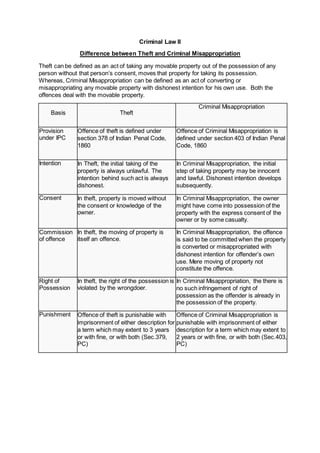
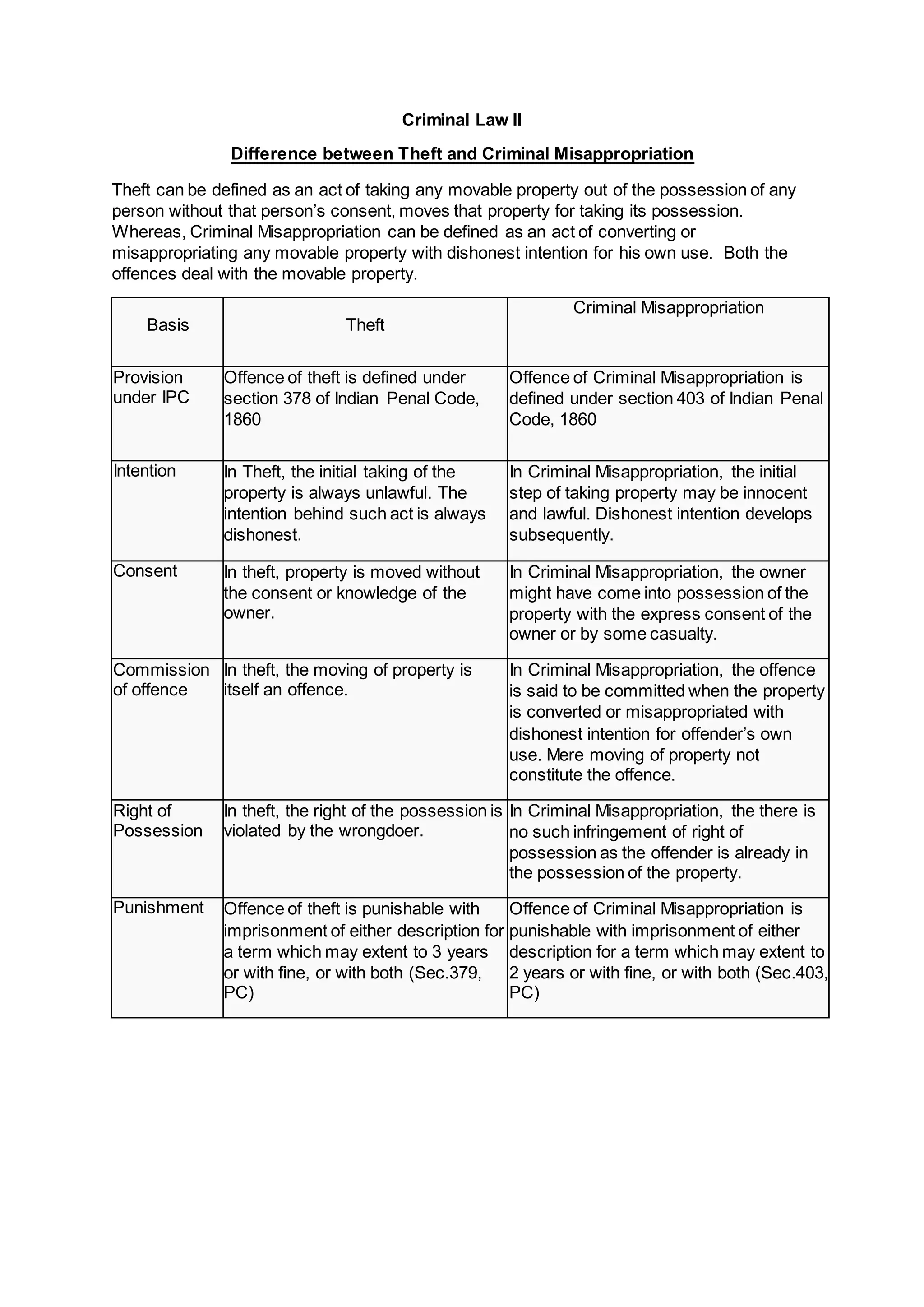
Basis Theft
Criminal Misappropriation
Provision
under IPC
Offence of theft is defined under
section 378 of Indian Penal Code,
1860
Offence of Criminal Misappropriation is
defined under section 403 of Indian Penal
Code, 1860
Intention In Theft, the initial taking of the
property is always unlawful. The
intention behind such act is always
dishonest.
In Criminal Misappropriation, the initial
step of taking property may be innocent
and lawful. Dishonest intention develops
subsequently.
Consent In theft, property is moved without
the consent or knowledge of the
owner.
In Criminal Misappropriation, the owner
might have come into possession of the
property with the express consent of the
owner or by some casualty.
Commission
of offence
In theft, the moving of property is
itself an offence.
In Criminal Misappropriation, the offence
is said to be committed when the property
is converted or misappropriated with
dishonest intention for offender’s own
use. Mere moving of property not
constitute the offence.
Right of
Possession
In theft, the right of the possession is
violated by the wrongdoer.
In Criminal Misappropriation, the there is
no such infringement of right of
possession as the offender is already in
the possession of the property.
Punishment Offence of theft is punishable with
imprisonment of either description for
a term which may extent to 3 years
or with fine, or with both (Sec.379,
PC)
Offence of Criminal Misappropriation is
punishable with imprisonment of either
description for a term which may extent to
2 years or with fine, or with both (Sec.403,
PC)

Criminal Law - Difference between criminal misappropriation and theft

  • 1.
    Criminal Law II Differencebetween Theft and Criminal Misappropriation Theft can be defined as an act of taking any movable property out of the possession of any person without that person’s consent, moves that property for taking its possession. Whereas, Criminal Misappropriation can be defined as an act of converting or misappropriating any movable property with dishonest intention for his own use. Both the offences deal with the movable property. Basis Theft Criminal Misappropriation Provision under IPC Offence of theft is defined under section 378 of Indian Penal Code, 1860 Offence of Criminal Misappropriation is defined under section 403 of Indian Penal Code, 1860 Intention In Theft, the initial taking of the property is always unlawful. The intention behind such act is always dishonest. In Criminal Misappropriation, the initial step of taking property may be innocent and lawful. Dishonest intention develops subsequently. Consent In theft, property is moved without the consent or knowledge of the owner. In Criminal Misappropriation, the owner might have come into possession of the property with the express consent of the owner or by some casualty. Commission of offence In theft, the moving of property is itself an offence. In Criminal Misappropriation, the offence is said to be committed when the property is converted or misappropriated with dishonest intention for offender’s own use. Mere moving of property not constitute the offence. Right of Possession In theft, the right of the possession is violated by the wrongdoer. In Criminal Misappropriation, the there is no such infringement of right of possession as the offender is already in the possession of the property. Punishment Offence of theft is punishable with imprisonment of either description for a term which may extent to 3 years or with fine, or with both (Sec.379, PC) Offence of Criminal Misappropriation is punishable with imprisonment of either description for a term which may extent to 2 years or with fine, or with both (Sec.403, PC)