Creative Partnerships In Practice Developing Creative Learners David Parker
Creative Partnerships In Practice Developing Creative Learners David Parker
Creative Partnerships In Practice Developing Creative Learners David Parker
Creative Partnerships In Practice Developing Creative Learners David Parker
Creative Partnerships In Practice Developing Creative Learners David Parker
1.
Creative Partnerships InPractice Developing
Creative Learners David Parker download
https://ebookbell.com/product/creative-partnerships-in-practice-
developing-creative-learners-david-parker-50616912
Explore and download more ebooks at ebookbell.com
2.
Here are somerecommended products that we believe you will be
interested in. You can click the link to download.
Strategies For Collaborating With Children Creating Partnerships In
Occupational Therapy And Research 1st Edition Clare Curtin
https://ebookbell.com/product/strategies-for-collaborating-with-
children-creating-partnerships-in-occupational-therapy-and-
research-1st-edition-clare-curtin-51578840
Partnerships In Education Research Creating Knowledge That Matters
Michael Anderson Kelly Freebody
https://ebookbell.com/product/partnerships-in-education-research-
creating-knowledge-that-matters-michael-anderson-kelly-
freebody-50218858
30 Days To The Cotaught Classroom How To Create An Amazing Nearly
Miraculous Frankly Earthshattering Partnership In One Month Or Less
Causton
https://ebookbell.com/product/30-days-to-the-cotaught-classroom-how-
to-create-an-amazing-nearly-miraculous-frankly-earthshattering-
partnership-in-one-month-or-less-causton-11374858
Creating Gender In The Garden The Inconstant Partnership Of Eve And
Adam Barbara Deutschmann
https://ebookbell.com/product/creating-gender-in-the-garden-the-
inconstant-partnership-of-eve-and-adam-barbara-deutschmann-50224806
3.
The Creation OfA Federal Partnership The Role Of The States In
Affordable Housing Margaret M Brassil
https://ebookbell.com/product/the-creation-of-a-federal-partnership-
the-role-of-the-states-in-affordable-housing-margaret-m-
brassil-4982508
More Than A Muse Creative Partnerships That Sold Talented Women Short
Katie Mccabe
https://ebookbell.com/product/more-than-a-muse-creative-partnerships-
that-sold-talented-women-short-katie-mccabe-49198516
Writing Wild Forming A Creative Partnership With Nature Tina Welling
https://ebookbell.com/product/writing-wild-forming-a-creative-
partnership-with-nature-tina-welling-48878460
Plato And The Nerd The Creative Partnership Of Humans And Technology
Lee
https://ebookbell.com/product/plato-and-the-nerd-the-creative-
partnership-of-humans-and-technology-lee-11876044
Plato And The Nerd The Creative Partnership Of Humans And Technology
Edward Ashford Lee
https://ebookbell.com/product/plato-and-the-nerd-the-creative-
partnership-of-humans-and-technology-edward-ashford-lee-56636846
Contents
Acknowledgements vi
Introduction 1
1Creative Planning and Evaluating – Change Processes or
Change Arts Projects? 13
Questions, questions, questions 14
Why evaluate anyway? 14
The four phase evaluation model 16
‘Ways in’ with planning and evaluation 28
Examples of noteworthy aspects of this model of planning and evaluating 31
Reflection – useful thoughts to keep in mind during the reflection phase 33
What you will achieve by asking these questions 33
2 School Stories – How Did Creative Partnerships Work in
Practice? 35
The Arnold Centre, Rotherham 35
Lancasterian Special School, West Didsbury 43
Minterne Community Junior School, Sittingbourne 50
3 Creative School Ethos 58
Background – why is ethos important? 58
Types of creative school ethos 59
The School Ethos Research Project: Case studies of how types of ethos
evolved in schools 62
4 Creative Learning – Pupil Impact 80
What the numbers say: statistical analyses of Creative Partnerships’
impact on pupil attainment and attendance 80
9781441109224_txt_print.indd 3 09/09/2013 15:27
9.
iv Contents
Creativity andpupil well-being – how does a creative approach help? 86
Impacts on student learning – the case of visual learning and literacy skills 90
Summary: The outcomes of Creative Partnerships 94
5 Creative Professional Development for Teachers 96
The impacts of Creative Partnerships on teachers and school staff 102
6 Creative Artists and Their Practice – Do They Really Add Value? 107
Case Study: Signature Pedagogies 108
Pedagogic practices of creative practitioners 112
Benefits of creative practitioners to creative learning 118
7 Creativity in Schools and Parental Involvement 124
Parental influence on children’s learning 124
Children talking about school in the home – why is this important to
parents? 126
How creativity helps shift parents’ views on children’s learning and the
role of the curriculum 129
Parent’s views on the long-term benefits of creative learning 130
Parents as learners 131
Parents joining the creative learning journey 133
Connecting schools and communities 134
Summary: The benefits of creative learning for parents and how schools
can embed this in their practice 136
8 Creative Assessment and Progression 143
Assessing creativity – what are the choices? 144
Developing a new assessment tool 147
Five creative ‘habits’ of the creative mind 150
Using the new model in your school or learning site 153
End of book notes 156
9781441109224_txt_print.indd 4 09/09/2013 15:27
10.
Contents
v
Afterword: Creative Partnerships– The Future 157
References 163
Appendix 1 Creative Partnerships 2002 – 2011: Key Facts and Figures 166
Appendix 2 Discussing the Rhetorics of Creativity – Prompt Questions from
Banaji et al. (2010) 167
Appendix 3 Creative Learning – Big Paper Training Exercise and Examples of
Outcomes 170
Appendix 4 Evaluation – Creative Learning Forms 178
Appendix 5 Discussing Well-being and Learning – Prompt questions from
McLellan et al. (2012) 210
Appendix 6 Progression in Creativity – Field Trial 1 Notes to Teachers 213
Index 219
9781441109224_txt_print.indd 5 09/09/2013 15:27
11.
Acknowledgements
Creative Partnerships wasa large-scale undertaking and involved many thousands
of people – far too many to list individually. This book, similarly, draws on work that
is truly a collective effort and it is difficult to single out individuals and particular
groups to acknowledge.
However, it would be remiss not to acknowledge the combined efforts of all the
head teachers, teachers, teaching assistants, artists, creative workers, parents and, of
course, children and young people that collectively made Creative Partnerships the
great success it was. Their efforts helped make thousands of classrooms more creative
and guided hundreds of thousands of learners towards more fulfilling experiences
in school.
All of the researchers and evaluators who helped inform and develop Creative
Partnerships as it evolved over the decade it was running also deserve thanks. Their
thoughtfulness and objectivity certainly helped improve the quality of the projects in
schools and through an array of research reports, published articles and provocative
essays they continue to contribute to the legacy of the programme. Particular thanks
are due to those researchers whose projects helped contribute to understanding
particular thematic impacts such as well-being, school ethos, learning progression
and staff development, many of which form the focus for chapters in this book.
Finally, the Creative Partnerships staff themselves, those in the local offices that
stretched from Cornwall to Northumberland and all points in between, all the
national office staff, particularly the national director, Paul Collard, who helped
shape the programme from 2005 onwards as well as Anna Cutler and Chris May
who invested so much time and effort around programme evaluation along with
Naranee Ruthra-Rajan and Julian Sefton-Green who helped keep the research
programme robust and integral to the development and improvement of the whole
programme, thanks are due to this very special group of people whose motivation
and commitment to creativity in schools was both inspiring and unwavering in equal
measure.
9781441109224_txt_print.indd 6 09/09/2013 15:27
12.
Introduction
Creative Partnerships wasa government-funded initiative put in place during 2001
by the Arts Council England. It operated across all nine English regions and it ran
for a decade, closing in the summer of 2011. This book aims to draw on experi-
ences from this programme, which was the largest creative education programme
of its kind in the world. It will reflect on learning outcomes from this initiative, and
is based on a unique body of research in order to provide points of reflection, and
suggestions for embedding creative learning in any school and in any classroom.
The ambition to nurture creativity in young people through their experiences at
school is an area of significant interest to educators and has been an important aspect
of progressive, child-centred approaches to learning for many years. There has also
been a good deal of interest at policy level over recent years, although there is much
less consensus about what a ‘creative education’ might be in this regard. Is it about
preparation for jobs in the creative industries? Is it about innovation and entrepre-
neurial skills? Is it just about good learning or is it about getting better results in
exams? Is it about a set of habits or attributes that might be thought of as ‘creative’
and which might be fostered through particular pedagogical approaches? Might it be
a blend of all of the above, and more?
Clearly, ‘creativity’ is a concept open to a wide variety of interpretations and is
often used in a generic sense, rather than with precision. Particularly since the turn
of the millennium, it has come to represent an important element within the basket
of skills, behaviours and attitudes required to meet some of the pressing challenges
that we, and the next generation, will face in the twenty-first century (Trilling and
Fadel, 2009). The logic here is that since we cannot hope to predict the kinds of
societies our children will grow up in or what jobs they might undertake as adults,
the kinds of flexible, resilient and imaginative minds creative education develops
could offer the best available preparation in our changing times.
Today, the ongoing challenges in the education sector are in fact a replay of long-
standing debates about the purpose of schooling and the needs of young people
(NACCCE, 1999). The frequent policy shifts and inflections – Creative Partnerships
being just one example – often push and pull education between reform for fitness
for contemporary and future societies, and a ‘return’ to an imagined educational
high-point where the ‘basics’ were taught with greater rigour and the whole of
9781441109224_txt_print.indd 1 09/09/2013 15:27
13.
2 Creative Partnershipsin Practice
society directly benefited as a result.1
With such a loaded set of terms at its heart,
and with a decades-old debate as yet unresolved still rumbling behind it, you might
imagine that a national initiative such as Creative Partnerships would have struggled
to make itself understood and that it might have fallen into the trap of being ‘all
things to all people’.
However, through careful planning and thanks to a network of dedicated profes-
sionals committed to connecting the worlds of the arts and creative practice with
those of education and child development, this government-funded programme
(2002–2011) not only managed to retain focus and coherence as it grew to work with
over 5,000 schools, but also began to define more sharply, through applied practice in
a wide variety of classrooms, some of the elusive concepts at the heart of creative work.
This book aims to set out and reflect on the main elements of the programme
as they were seen through a number of research and evaluative projects, but rather
than do so in a purely retrospective manner it attempts to extend an invitation to
embed creative practice in schools to all teachers by offering a blend of thematic
description and practical advice. Each chapter will look at a particular aspect of
creative education and consider, from the perspective of the Creative Partnerships
programme, what lessons might be drawn from the experience, what thinking points
emerge that could inform practice in classrooms, and how the principles might be
carried forward in schools not connected to a creative programme of any kind. It
assumes no prior knowledge of Creative Partnerships and builds towards an essential
set of transferable principles for any teacher or any school with ambitions to put
creativity at the heart of their curriculum.
In this introduction I will briefly describe the Creative Partnerships programme;
its roots in prior arts practice and various forms of progressive education, and the
way it came to be structured and operated nationally. I will give a sense of how
it transformed over time, from being a new policy idea to a programme and to
something that could be applied day-to-day as sets of practices for teachers, artists
and children. This will set the context for the main chapters that follow and it is
hoped it will give the reader a clear understanding of the backstory that shapes the
principles and themes explored later in the book.
What was Creative Partnerships and how did it work?
The government-funded initiative Creative Partnerships was an approach to working
with schools that aimed to develop creativity in young people and improve their
learning generally. It set out to achieve this by fostering partnerships between
9781441109224_txt_print.indd 2 09/09/2013 15:27
14.
Introduction 3
teachers andartists or other creative workers – from poets and dancers through
to scientists and architects. The central hypothesis was that working and thinking
practices in arts and creative professions would help unlock the full creative potential
of teachers and their pupils. These partnerships would last for a significant period of
time, typically between one and three years, sometimes longer. There was a leverage
principle at the heart of the programme, namely, that through partnerships between
the education sector and the arts and creative sector a richer learning yield might
result. While teachers are already creative and flexible in many ways, it was thought
that there were particular ways of thinking and working which were habitual to
artists and other creative workers that might boost learning if they could be brought
into schools in engaging ways. It was hoped that children would do better in terms
of attainment, but would also develop the kinds of skills necessary for a rapidly
shifting economic and social landscape. This was a response to a number of reports,
for example, the report of the committee chaired by Sir Ken Robinson (NACCCE,
1999) and the DEMOS report, The Creative Age (1999), but also, and perhaps this
is less-widely acknowledged, it was a broader sector-wide response to debates about
the role and effectiveness of arts education and place of culture in the lives of young
people. At the time, there was a growing sense that young people needed the chance
to repeat arts and creative learning activities, rather than be offered a series of
‘one-off’ opportunities sometimes many months, or even years apart. In this sense,
Creative Partnerships developed out of political will and an ongoing development of
arts education.
Creative Partnerships was always a relatively well-funded initiative, but it began
with modest numbers of schools, and from 2004 to 2011 it grew to be a very large
programme indeed (see Appendix 1 for numbers of schools, teachers and young
people who took part). In 2002, the initiative began in 16 areas across England2
and each area was expected to work with between 15 and 20 schools. Many areas
quickly moved on to work informally with more schools than this, often as a way of
cementing relationships with Local Authorities and responding to varying levels of
demand for the kinds of opportunities Creative Partnerships was offering. A second
and third wave of Creative Partnerships areas were gradually introduced over 2004/5
and led to a total of 36 areas in all, four in each of the nine English regions.3
An intensive programme of research and evaluation helped the programme
administrators, initially based within the Arts Council England, to understand the
key elements of the programme. Over time, these insights led to a series of redefi-
nitions of the approach, which in turn led to the formation of a revised Creative
Partnerships programme in 2008. Key to this was the establishment of the role of
9781441109224_txt_print.indd 3 09/09/2013 15:27
15.
4 Creative Partnershipsin Practice
‘creative agent’, which will be explained below, and the creation of a network of
independent delivery organisations, separate from the Arts Council England. At
this stage the programme grew to reach larger numbers of schools through three
programme strands – Enquiry Schools, Change Schools and Schools of Creativity.
All of this gives a flavour as to the size and spread of the programme and the
pace of growth nationally. But what was actually happening in classrooms? The most
effective Creative Partnerships work in schools was recognisable from the earliest
days of the initiative. The challenge was how best to ensure that effective practice was
happening in as many classrooms as possible. In order to do this it was important to
reflect on how the most impactful projects were set up. But what did such work even
look like in the schools?
Normally, a successful project would begin with some acknowledgement of the
school’s particular needs or pressing issues. Typically, this would reference back to
the school’s ongoing Improvement or Development Plan. By linking up with the
long-term plans for the school, all the planning for Creative Partnerships activities
would be relevant to the school’s wider ambitions. From this basis, particular project
ideas could be formed and would take their focus from the priority action areas for
the school – it might be boys and literacy, developing outdoor learning spaces, devel-
oping questioning skills and risk-taking amongst teachers, or improving engagement
and attendance amongst those pupils most disengaged from school. The list of focus
areas for projects was as detailed and varied as school’s individual sets of priorities
and needs. It was not, by any means, a ‘one-size-fits-all’ programme.
With the project focus determined (and there might on average be two or three
projects per year) the participants would begin a period of joint planning. Typically,
this would involve teachers, artists and young people, overseen by a designated
creative agent. The aim of the planning process was to be clear about roles, to set
down expectations that were shared, understandable by all and which were felt to
be achievable. During this phase the right kind of artist or creative worker would be
matched to the school’s needs, where the young people would get the opportunity to
shape the experience they were about to embark upon and where the teacher could
be clear about how the partnership with the artist(s) would be active, not passive.
Planning in this way also allows for a shared definition of creativity to emerge, based
on a framework provided by the programme, and for particular sorts of creative skill
to be prioritised for development.
It is worth pausing here to describe the role of the creative agent in particular.
Creative agents were professionals whose backgrounds were usually in the creative
and cultural industries. As mentioned, schools to Creative Partnerships having
9781441109224_txt_print.indd 4 09/09/2013 15:27
16.
Introduction 5
already identifieda specific issue or need that they would have liked the programme
to help improve or develop. If the application was successful a creative agent
would begin to work with school to extend the initial application. They worked in
partnership with staff from senior teachers through to classroom assistants, helping
to flesh out the early idea into a series of possible projects or programmes of work.
From this more developed set of ideas the creative agent was able to work with
schools to recruit the most appropriate creative practitioners who then worked with
teachers and pupils on the projects.
Why was this seemingly protracted early process of planning and refining ideas
actually needed, and why were creative agents required to play a role at this stage?
We found that in the initial stages of a school’s work it was vital to have a person in
a position to be able to moderate the inevitable tensions that arose. These tensions
occurred when a project based on principles of creative practice needed to be
embedded within a school where the high level priorities for education, established
nationally, had profoundly shaped the way the school operates and run counter
to the kinds of creative values the school wants to develop for itself. Encouraging
schools to identify the issues Creative Partnerships should focus on – which we did
through a framework of evidence gathering called the Creative School Development
Framework (CSDF)4
– we felt we achieved a much higher level of engagement from
school staff and they subsequently sought to embed changes in their practice long
term. However, that level of commitment was something the creative agent was open
about at the earliest stages and, in effect, it opened a Pandora’s box of issues that
were in fact points of tension between a centralised set of aims, and a localised set of
needs. The creative agent was able to help keep these in balance.5
Additionally, schools in the programme seemed to us to require constructive
challenge and support to help change occur. The creative agent was in a position
to get to know the school and, in partnership with the teacher, to sensitively
programme a series of projects that were constructed to suit the specific require-
ments and contexts that particular school had. This process, like the initial planning,
is one that required a measure of balance and proportion – there must be attention
to the character of the school and an acknowledgement of their unique ‘start-line’;
this is set against a programme of work that will create momentum and a move to a
new way of doing things.
Later in this book we’ll get a flavour of the kinds of projects that took place and the
sorts of developments that arose from them, but for now it is enough to just keep in
mind that the spine of the Creative Partnerships relationship with schools was based
on the basic premise of an initial audit of needs and a phase of joint planning. We will
9781441109224_txt_print.indd 5 09/09/2013 15:27
17.
6 Creative Partnershipsin Practice
also discuss in detail these important ‘audit’ and ‘planning’ phases and address the
question of reflection and evaluation which was crucial to effective creative work.
What influenced Creative Partnerships?
Creative Partnerships was not a completely new idea. It was larger in scale and
longer in duration than many prior arts-rich interventions in schools in England,
but it drew, consciously or not, on a set of practices and histories developed through
earlier work6
and was staffed by people who in many cases felt that the programme
encapsulated a good deal of what they were already doing.
However, as we shall see in later chapters, there were also times when perhaps
the perceived fit between programme and pre-existing practices in the eyes of artists
and teachers was not so neat. But at the outset it is important to note that in many
respects the programme intuitively and implicitly drew inspiration and purpose
from sets of loosely defined rhetorics.7
Some of these were woven within policy and
delivery agreements with government, others were manifest in the ways individual
teachers and artists spoke about their approach and their intended outcomes with
and for young people. As the programme developed it became evident that the most
often asked question raised by people involved in the programme was: ‘What do you
mean by “creativity”?’ As it is often unhelpful to have a fixed and single definition
of a term that has such a wide range of interpretations and influences and so, rather
than rule out the majority, we felt it was important to be explicit about as many ‘takes’
on creativity as we could. This would then allow everyone involved to explicitly
orientate themselves in relation to one another’s sense of what creativity was, to
find a fit, or to keep looking for the right partners until a fit emerged. The first in a
series of Creative Partnerships literature reviews focused on the multiple stances and
meanings the term creativity (Banaji et al., 2006) and set out nine main claims made
on behalf of the term. We found these to be a useful way of encouraging individuals
to distinguish between types of creativity and to more explicitly locate themselves
somewhere within these typologies. Reproduced from the review published by
Creativity, Culture and Education, they are set out opposite (Reproduced from
Banaji et al., 2010, pp. 69–71 with permission from CCE.)
9781441109224_txt_print.indd 6 09/09/2013 15:27
18.
Introduction 7
1 Creativegenius
This is a post-romantic rhetoric that dismisses modernity and popular culture as
vulgar, and argues for creativity as a special quality of a few individuals, either
highly educated and disciplined, or inspired in some way, or both. Culture here is
defined by a particular discourse about aesthetic judgment and value, manners,
civilisation and the attempt to establish literary, artistic and musical canons. It
can be traced back through certain aspects of the Romantic period to strands
of European Enlightenment thought, in particular Kant’s Critique of Judgment.
2 Democratic and political creativity
This rhetoric provides an explicitly anti-elitist conceptualisation of creativity as
inherent in the everyday cultural and symbolic practices of all human beings.
It focuses particularly on the meanings made from and with popular cultural
products. In its strongest formulations, it sees the creative work of young people
as politically challenging. In one respect, it proceeds from empiricist traditions
in which the material experiences of the individual in society lead to creative
transformations. In an apparent contradiction, however, it also has roots in
radical Romantic thinkers such as Blake, for whom children were agents of a
revolutionary imagination, posing a political critique of church and state.
3 Ubiquitous creativity
This entails the notion that creativity is not just about consumption and
production of artistic products, whether popular or elite, but involves a skill in
having the flexibility to respond to problems and changes in the modern world
and one’s personal life. While it is now commonly invoked alongside discussions
of creativity as a social process and an ethical choice, the foundation of this
rhetoric lies partly in early years education and the notion of providing young
children with the tools to function successfully in the world.
4 Creativity for social good
Seeing individual creativity as linked to social structures, this rhetoric is charac-
terised by its emphasis on the importance for educational policy of the arts
as tools for personal empowerment and ultimately for social regeneration.
It stresses the integration of communities and individuals who have become
‘socially excluded’ (for example, by virtue of race, location or poverty) and
invokes educational and economic concerns as the basis for generating policy
interest in creativity. This rhetoric emerges largely from contemporary social
democratic discourses of inclusion and multiculturalism.
5 Creativity as economic imperative
The future of a competitive national economy is seen to depend, in this rhetoric,
on the knowledge, flexibility, personal responsibility and problem-solving skills
of workers and their managers. These are, apparently, fostered and encouraged
9781441109224_txt_print.indd 7 09/09/2013 15:27
19.
8 Creative Partnershipsin Practice
by creative methods in business, education and industry. There is a particular
focus here on the contribution of the ‘creative industries’. This rhetoric annexes
the concept of creativity in the service of a neo-liberal economic programme and
discourse.
6 Play and creativity
A persistent strand in writing about creativity, this rhetoric turns on the notion
that childhood play is the origin of adult problem-solving and creative thought.
It explores the functions of play in relation to both creative production and
cultural consumption. Like aspects of the ‘democratic’ rhetoric, this notion
of creativity as play, and its relation to education, emerges from strands of
Romantic thought, in this case originating with Rousseau. There are important
parallels between contemporary arguments for the role of creativity and the role
of play in education.
7 Creativity and cognition
Ranging from theories of multiple intelligences and the testing of mental
creativity levels, through explorations of the potential of artificial intelligence
to demonstrate creative thought and production, to cultural psychology, this
rhetoric frames creativity in psychological and scientific terms. Its emphasis
at one extreme is on the internal production of creativity by the mind, and at
the other extreme on external contexts and cultures. Its trajectory in education
derives on the one hand from the Piagetian tradition; and on the other hand
from the more culturally situated notions of creative learning expounded by
Vygotsky, Dewey and Bruner.
8 The creative affordances of technology
If creativity is not inherent in human mental powers and is, in fact, social and
situational, then technological developments may well be linked to advances
in the creativity of individual users. This rhetoric covers a range of positions,
from those who applaud all technology as inherently improving, to those who
welcome it cautiously and see creativity as residing in an, as yet, under-theorised
relationship between contexts, users and applications.
9 The creative classroom
Placing itself squarely at the heart of educational practice, this rhetoric focuses
on connections between spirituality, knowledge, skills, creativity, teaching and
learning and the place of creativity in an increasingly regulated and monitored
curriculum. The focal point of this rhetoric is frequently practical advice to
educators. This rhetoric locates itself in pragmatic accounts of ‘the craft of the’
classroom’, rather than in academic theories of mind or culture.
9781441109224_txt_print.indd 8 09/09/2013 15:27
20.
Introduction 9
While theserhetorics are explained in greater detail in the full literature review,
they are summarised here to indicate how Creative Partnerships was interested in
encouraging participants to clearly identify their own roots regarding creativity and
to use the rhetorics as a means of more sharply delineating what ‘type’ of creativity
participants are engaged in and committed to within their particular project. In this
way, the categories act as a kind of filtration device for such a complex term. Of
course, it is the case that they will often manifest themselves in varied combinations
and arguably in ways that may contradict one another from time to time. Setting
them out in explicit terms was one way the Creative Partnerships initiative aimed
to promote a framework for debate rather than drift along with the assumption that
we all meant the same thing by creativity all of the time. However, I do not want to
suggest that these varied ‘stances’ are quite so neatly demarcated in the real world
as they are in the list above. In the literature review, Banaji et al. (2010) provided
useful prompt questions to promote this kind of debate; these are included in
Appendix 2.
Creative Partnerships was also influenced by other initiatives, most recently
the Arts Education Interface (AEI), a project based in Bristol and Corby that was
described by the evaluators as comprising a ‘mutual learning triangle’ (Harland et
al., 2005), a process of negotiated practice involving teachers, pupils and artists in
arts-rich approaches to education. The evaluation warned against arts education
being subsumed by ‘creative and cultural education’, which at the time was beginning
to emerge as a policy concept. Additionally, it placed an emphasis on the importance
of matching the right artistic skills with the particular learning needs of pupils rather
than assuming that the ‘arts’ in a broader sense would indiscriminately add value to
education. Both these ideas were current during the early development of Creative
Partnerships, as we’ll see in later chapters.
It is also worth noting that Creative Partnerships was a departure from the norm
in as much as arts education and artists-in-schools programmes (which in general
terms might be considered its precursor) received little attention from government
since the advent of state education from 1870 onwards. The attention such work did
receive was from the standpoint of arts as a palliative form of activity; it was a way
of gaining some respite from the rigours of the curriculum ‘proper’ (Fleming, 2010,
p. 23). Creative Partnerships was a departure from this view and, from the outset,
focused on developing particular skills and enhancing curriculum attainment in a
range of subject areas, not only the arts. In so doing it was, perhaps unknowingly,
attempting to reconcile a series of post-war debates about the role and place of
culture and creativity that revolved around three main beliefs, set out by Ken Jones:
9781441109224_txt_print.indd 9 09/09/2013 15:27
21.
10 Creative Partnershipsin Practice
1 a cultural conservatism for which tradition and authority are important
reference points;
2 a progressivism concerned with child-centred learning;
3 and a tendency whose belief that ‘culture is ordinary’ [which] led to an
insistence that working-class and popular culture should be represented in
the classroom.
(Jones, 2009 p. 7)
Creative Partnerships was certainly drawing on these histories and philosophies
tacitly but it was itself created at a particular moment in response to an emerging
policy concern. So there was a strong political dimension to the programme. It was
funded by two ‘New Labour’ government departments (the Department for Culture
Media and Sport and the Department for Education) and was couched in a policy
rhetoric which suggested it was both a means of boosting standards while being
about more than just subject knowledge and a way of helping provide the sorts of
skills necessary for the twenty-first century. A fuller account of the possibilities and
tensions afforded by this kind of departmental joint-ownership of a programme is
explored more fully elsewhere (Parker and Ruthra-Rajan, 2011, pp. 448–458) but for
now it is enough to note that while Creative Partnerships was generously funded as
a programme, and had very strong initial support within government, it was also
borne of a long a complex history and professional practices and was subject to the
usual agendas that come to the fore in any large-scale programme looking to change
ways of teaching in school.
Initially, navigating through this terrain was the task of teams of Creative
Partnerships staff, national and local, employed by the Arts Council England.
Then, from 2009 onwards, it became the responsibility of Creativity, Culture and
Education (CCE), which continued to manage the programme once the Arts
Council England had let it go. There was a high level of continuity of staff between
both phases. The experiences and learning developed through the time CCE were
custodians of the Creative Partnerships form the substance of the chapters that
follow.
9781441109224_txt_print.indd 10 09/09/2013 15:27
22.
Introduction 11
Notes
1 http://www.independent.co.uk/news/education/education-news/outcry-as-
michael-gove-issues-education-reform-warning–7274827.html
2Phase 1 – began 2002: Cornwall, Bristol, London East, London South, Norfolk,
Nottingham, Birmingham, Manchester/Salford, Durham/Sunderland, Tees
Valley, Merseyside, Black Country, Kent, Slough, Hull and Barnsley, Doncaster
and Rotherham.
Phase 2 – began 2004: Coventry, Derby, London North, Southampton/Isle of
Wight, Plymouth, North/South Tyneside, Cumbria, Bradford, Basildon.
Phase 3 – began 2005: Thurrock, Tendring, Bolsover, Ashfield and Mansfield,
Leicester, East Lancashire, London West, Northumberland, Hastings and East
Sussex, Forest of Dean, Stoke-on-Trent and Sheffield.
3 East, East Midlands, London, North East, North West, South East, South West,
West Midlands and Yorkshire and Humber.
4 For an analysis of a sample of completed CSDFs see the ‘Synoptic Survey’
undertaken by David Wood Consultants: Creative Partnerships, Change School
Programme Synoptic Evaluation (2011).
5 The genesis of the Creative School Development Framework lay in work and
development by Chris May, director of Creative Partnerships East Lancashire.
Chris was keen to understand for himself, and to be able to reflect back to
participating schools, internal perceptions on strengths, weaknesses and overall
capacity to take on the challenges of setting up a programme of creative learning.
6 The most recent initiative that fed into the development of Creative Partnerships
was the Arts Education Interface (AEI) (Harland, et al. 2005). But there were a
range of other policies and initiatives that influenced Creative Partnerships in
more subtle ways. Education Action Zones, which emerged in the late 1990s
(Ofsted, 2001), for example, with their focus on regeneration and ‘reaching the
hardest to reach’ showed how a range of social benefits might be fostered by
innovative education work. The All Our Futures report (1999) was composed in
part to help refine the national curriculum, a process led by the Qualifications
and Curriculum Authority, and in contrast to earlier reports, particularly the
Gulbenkian report (1982). All Our Futures foregrounded the role of the arts
in advancing learning across all subjects, not just those with overt arts content.
Earlier policies that influenced the education ecology Creative Partnerships was
set up to service also include the Plowden Report (1967) with its focus on child-
centred progressivism. Although it is also interesting to reflect that the strong
9781441109224_txt_print.indd 11 09/09/2013 15:27
23.
12 Creative Partnershipsin Practice
focus on self-expression within this report arguably created a swing back to a
sense of a ‘core curriculum’. A division between expression and learning “the
basics” endures to this day.
7 My use of the term ‘rhetorics’ borrows from Banaji et al. (2006) and refers to a
series of different ‘claims’ made for creativity each of which develops out of a
distinct philosophical, political, educational and/or psychological position.
9781441109224_txt_print.indd 12 09/09/2013 15:27
24.
1 Creative Planningand
Evaluating – Change Processes
or Change Arts Projects?
This chapter provides a summary of how Creative Partnerships set about assessing
start points for participating schools. There were particular systems we used which
helped guide the thinking of all those people involved in making the work happen
in classrooms and they will be described here. This chapter will show how it is
important to give some thought about the kinds of expertise and the sorts of value
creative partners might add when working in partnership with teachers.
Partnerships in any line of work can be immensely productive, bringing additional
resources and expertise to bear on a given task; but it would also be true to say partner-
ships can increase the chances of confusion or misinterpretation. By definition, with
a multiplication of viewpoints and agendas, there is an increased need to understand
what work is to be embarked on, to understand it from a range of perspectives, to
be clear why it is better to do it as a collaboration, and what the particular skills and
advantages each partner might bring to achieve the desired outcome. At times, it
might be best to be flexible about the ways to achieve the particular outcome. But
whatever the agreed activities, and whatever the intended outcomes are understood
to be, they should be shared and roles should be clear. In essence, to successfully
work in partnership we are faced with a choice: we can carry sets of assumptions and
hope they are not going to be exposed down the line or we can ask questions of one
another up front and establish clear roles and open communication from the outset.
Yet, this also raises several questions. Why is it better that we embark upon this work
together, rather than apart? And what do we get out of it? Are they the same benefits
or different altogether?
Creative Partnerships could only work effectively when these basic questions were
first addressed. This can be a surprise for people who feel that creativity is all about
improvisation and nothing to do with planning. In this case, in our experience, it is
better to go to the trouble to set out initial thoughts and expectations for everyone
involved, even if they may change and deviate later. In this chapter, I want to describe
how in the Creative Partnerships programme, we set about building partnerships by
going through a staged process of asking key questions, and I want to explain why
9781441109224_txt_print.indd 13 09/09/2013 15:27
25.
14 Creative Partnershipsin Practice
this was such an important thing to do. I will summarise the key principles and set
out a broad framework so that you can take a similar approach in your own educa-
tional setting.
Questions, questions, questions
Of course creativity is very much about spontaneity, fun and improvisation. So
having to pause at the very early stages of a project to set out what you might want
to achieve might seem contradictory. A common question is why the need for all
this planning if we find ourselves veering off course quite naturally soon after we
begin?
There are a number of reasons why building a foundation through initial
questioning and planning is a good thing but above all else, having some kind of
initial reference point to reflect back on is a great aid to evaluation. It was for this
reason that within Creative Partnerships, planning and evaluation were strongly
linked.
Why evaluate anyway?
Evaluation is often used as a summative activity to describe a project, regardless of
its quality, after the event. In other words, it is a mechanism for simply reporting that
something happened, usually because it was paid for by an organisation that must
account for the distribution of funds. Many of us have probably used evaluation in
this way as part of our professional lives at some point, but in so doing it is easy
to neglect the on-going critique that is actually key to developing and improving
practice while a project is still ‘live’. Good evaluation systems that encourage on-going
critical reflection are best not thought of as historical documents, but rather as tools
for ensuring that the activity we do is of quality, has focus, is rigorous and can offer
findings that help us all improve in our work quickly with an explanation of why and
how this is the case. In other words, if evaluation is not interwoven with project or
lesson management it probably isn’t working as well as it could.
The Creative Partnerships approach to planning and evaluation approach aimed
to offer evidence that might be used in final reports, but much more importantly, it
aspired to give all those participating in a project the kind of feedback they might
use to fine tune projects while they were still in progress. So how was the Creative
Partnerships approach devised?
What was required was a model that could systematically assess if, and how,
children, teachers, schools and practitioners were changing and being changed by the
9781441109224_txt_print.indd 14 09/09/2013 15:27
26.
Creative Planning andEvaluating – Change Processes or Change Arts Projects? 15
process of creative learning through cultural practice. At the time, no model existed
that was appropriate to our needs and as a result, a fresh way of assessing creative
learning was developed and put in to practice. After several years of application and
refinement the final Creative Partnerships evaluation model is still being used in new
programmes at the time of writing and promises to offer teacher-friendly tools by
which to assess the progression of creative habits and skills.
When it was first developed, the evaluation worked as a set of distinct phases over
the lifetime of a project, be it a week or a year, and was used to facilitate the evalu-
ation process in a manageable and productive way.
The first version of the Creative Partnerships evaluation model was generated not
simply from our own field research and observations, but from a range of academic
sources that I will set out below.
The overview offered by Cropley (2001) in Creativity in Education and Learning,
in particular his synthesis of the properties of a creative person (pp. 124 and 148),
offered a starting point for the evaluation approach that Creative Partnerships
developed. We began by exploring the properties set out by Cropley in the
approach taken by practitioners, teachers and young people in the classroom, to
see if they emerged through Creative Partnerships practice. Many of these features
were noted, but when we looked across a significant number of projects some
appeared more prevalent than others. The Creative Partnerships area that really
led the development of this model was Kent, and much of the energy and thought
required to get the evaluation approach off the ground was due to the then Director
of Creative Partnerships, Anna Cutler. When Creative Partnerships first began
research, commissioned by Cutler, it ‘showed that these recurrent features could
possibly be learned rather than be considered innate personal qualities. Anna Cutler
also commissioned research that began to deconstruct the ‘properties’ to reveal the
kinds of practice that generates such creative features (Blunt, 2004). These practices
were then further distilled to arrive at a smaller number of core recurrent features in
Creative Partnerships work.
The work of Anna Cutler and her team in Creative Partnerships, Kent, did most to
bring form and clarity to the evaluation approach through ongoing practical assess-
ments of projects. However, there were also several key texts and schools of thought
that helped develop the approach to evaluation adopted by all Creative Partnerships
areas from 2005 onwards. Ken Robinson’s Out of Our Minds (2001) and Richard
Florida’s The Rise of the Creative Class helped give a shape for a broader context of
the features of creativity in the twenty-first century, whilst practice already available
such as that of Reggio Emilia and Steve Seidal’s Making Learning Visible, Children as
9781441109224_txt_print.indd 15 09/09/2013 15:27
27.
16 Creative Partnershipsin Practice
Individual and Group Learners was informative in terms of the detail of what ongoing
practice we needed to observe and record in any evaluation model.
The work of Shirley Brice Heath, Ways with Words, Visual Learning in the
Community School and Made for Each Other (the latter two co-authored with
Shelby Wolf and Elke Paul Boekne respectively) were highly influential in under-
standing the importance of language input and impacts in creativity. Extended
discussions with Heath on organisational learning and creative practice also helped
shape Creative Partnerships’ understanding of the core features of creative learning
through the arts.
Tom Bentley and Kimberley Seltzer’s The Creative Age (1999) informed and
distilled several definitions and ideas around aspects of creativity itself and the
methods of approach (see also Learning Beyond the Classroom, Assessment in
Context page 144). The Creative Age introduces creativity as something that can
be learned and that it is not an individual characteristic or innate talent but that:
‘creativity is the application of knowledge and skills in new ways to achieve a valued
goal.’ (p. 10). This understanding is one that was supported by our own observa-
tions and we hope, is reflected in our model. Similar ideas are also apparent in Ken
Robinson’s definition offered in Out of Our Minds as well as the Qualifications and
Curriculum Authority’s (formerly QCA, currently known as the Qualifications and
Curriculum Development Agency) document Creativity: Find it, Promote it, though
each come with distinct perspectives.
There are many other sources that were drawn upon such as the work of CAPE
(Chicago Arts Partnership in Education), and Professor Anna Craft, but those
mentioned above were the key influences used to set up the evaluation structure and
method of approach that resulted in the initial evaluation approach used by Creative
Partnerships: a four phase evaluation model. This model has been designed to be
used specifically to evaluate work based on partnership principles – it attempts to get
a feel for the contributions of all participants and changes and impacts that occur for
them as a result. However, it also offers a good breakdown of how to think about the
sorts of inputs required if you are planning for creative learning within a project, or
as way of teaching across a range of curriculum subjects.
The four phase evaluation model
This evaluation process will provide:
l
l Identifiable features of creative learning to look for within a project.
9781441109224_txt_print.indd 16 09/09/2013 15:27
28.
Creative Planning andEvaluating – Change Processes or Change Arts Projects? 17
l
l A planning tool for your project or scheme of work relevant to the particu-
larities of creativity.
l
l The basis of a common language with which to discuss creative learning with
other teachers, practitioners and pupils.1
l
l A basic analysis of what helps to generate change.
l
l The ability to compare across effects of very different projects – i.e. different
arts or creative practices that are united by common principles at the level of
input
l
l Information for the purposes of monitoring if required.
l
l Data that is both quantitative and qualitative.
l
l Evidence of what works and why.
l
l Evidence of what doesn’t work and why.
l
l A measurement of how things have changed.
l
l Confidence to articulate your observations coherently.
l
l The identification of anomalies that may require further detailed research.
l
l Patterns that indicate important features about creative learning.
l
l A better knowledge and understanding of the creative work you are under-
taking with pupils.
l
l A structured, manageable and flexible system for monitoring all creative
learning lessons or projects.
l
l Quality assurance and reasons to reject a project idea or revise it.
l
l For an initial investment of time and thought, more time saved down the line
by better delivery and outcomes.
Four phase progression
Figure 1.1 represents the four phases of a self-evaluation process: Input, Doing,
Showing and Reflection. This diagram, in its original form, was the basis of training
and workshops led and devised by Anna Cutler and the idea is developed further
in an article for the Tate (Cutler, 2010). The features in each phase have been
carefully selected from the literature and experience from the Creative Partnerships
programme as crucial aspects key to creative learning. Each phase will be defined
and its terms will be identified and explained.
Phase 1: Input
Early observations within the Creative Partnerships programme suggested that there
were five ‘inputs’ that were most noted and apparent in successful creative learning
9781441109224_txt_print.indd 17 09/09/2013 15:27
29.
18 Creative Partnershipsin Practice
Figure 1.1 Creative Partnerships Four Phase Progression Model of Evaluation
Idea
Language
Environment
Resources
Qualities and values
1. Input
Identifying problems
Divergent thinking
Co-learning
Fascination
Risk-taking
Skills and challenges
Refinement
2. Doing
Four Phase Progression
Input (all features)
Doing (all features)
Showing (all features)
4. Reflection
Solving problems
New ideas
Capacity to learn
Engagement
Confidence
New skills
Purposeful
Learning/outcomes
3. Showing
What has changed for the
school, the practitioner and
the young people? In terms of:
Unexpected outcomes?
9781441109224_txt_print.indd 18 09/09/2013 15:27
30.
Creative Planning andEvaluating – Change Processes or Change Arts Projects? 19
practices and projects. These were: the quality of ideas, the use of language, the
challenge to the known environment and the quality of the resources as well as the
qualities and values of the practitioner. Each of these are examined in detail below.
These elements are worth prioritising in your own planning for lessons and projects.
In Creative Partnerships the Input phase related to the different ways of working,
thinking and doing of the individual, team or organisation that was entering the
education environment. An easy shorthand term might be ‘added value’: what are
the particular aspects of your project, scheme of work or lesson that was new or
different in some way to the usual environment and that would otherwise not exist?
Asking such questions early on gets teachers, artists and if possible young people
thinking about what sorts of skills or processes they might draw upon to enrich
their learning. It is important to ask the questions straightforwardly and of course,
to answer honestly. If there is no perceived added value of an individual or organi-
sation going in to a school, if there will be no real difference to the way things are
already happening, it is worth rethinking the general premise of the project. It is far
better to realise this at an early stage, than much later down the line. Of course, it
would be possible consider this phase without creative practitioners coming in as
external partners, but if you are attempting to develop teaching in creative ways and
do so without recourse to partnerships with artists and others, the early questions
might revolve around how the teaching staff are consciously planning to do things
differently – new ways of teaching and assessing, mobilising new resources, using
different vocabularies and terminologies for example – to the exclusion of the artists
and creative practitioners.
The five inputs identified by Creative Partnerships were:
l
l Idea.Thisinvolvesconceptualquality,scaleandoriginalityoftheideadeveloped
for the project, (and, if appropriate, with particular reference to the part played
by the creative practitioner in developing the idea whilst understanding that
ideas are often generated by the young people and teachers too). Is the concept
at the heart of the project different to the norm, is there scope for it to offer
learners opportunities to improvise and take risks, to take on ownership of
the idea? Many schools are expert at offering very focused curriculum-linked
ideas for projects, and are used to working along these lines. Such ideas might
be incorporated too, but if at the early stage the idea is too tightly focused, too
linked to targets and levels, recognisable as the kind of learning already at the
heart of pedagogy in the school, and if an external partner is expected to simply
‘deliver’ it differently, then based on the experience of Creative Partnerships, it
9781441109224_txt_print.indd 19 09/09/2013 15:27
31.
20 Creative Partnershipsin Practice
is time to rethink. This is because, in essence, it situates the creative element to
the side, or treats it as something to be bolted on, rather than a way of funda-
mentally reframing the learning journey.
l
l Language. This refers to the use of professional language introduced by
the practitioner as well as the way in which they speak to children/educa-
tional staff and others. This was a crucial aspect in the Creative Partnerships
programme as external partners often bring with them a new vocabulary
and discourse, and powerful ways to unlock creative behaviours of children.
Language does not simply refer the ways in which creative practitioners have
a set of different technical terminologies to describe their work, but it is also
the ways in which they use language in modes that admit emotion to a greater
degree. Not to generalise but they will often talk in the first person, which may
seem a banal point, but is often a stark contrast to the ways educators have
been encouraged to remain impersonal and detached in the classroom. Of
course there will be exceptions to this, but it was a feature we noted across the
whole of the Creative Partnerships initiative and it will be alluded to often in
the chapters to come, particularly those focused on ethos, well-being and the
unique approach taken by creative practitioners.
l
l Environment.Thisreferstotheway(s)inwhichtheusuallearningenvironment
is changed or challenged by the practitioner/project. Although schools in
Englandareoftenexpectedtorespondtoawholeraftofagendas,fromchildren’s
health, parental engagement, through to attainment in core subjects, and the
fact that the inspection system is continually looking for improvement, there
are still many stable features within school and the environment is often the
most fixed of these. The way classroom spaces are used physically and the way
outdoor areas are designed to stimulate learning, are often underwhelming
and indeed unchanged for decades in many cases, while technical kit such
as computers are upgraded, or whiteboards installed. Creative learning often
begins by taking a fresh look at the learning environment, indoors and out,
and can offer a fresh perspective on how to make use of the environment that
go back to first principles.
l
l Resources. This refers to any new materials taken in to the educational
environment and their quality/appropriateness when considered in relation
to those usually found in the educational environment. This might be new
technical equipment, or different sorts of pens or brushes, or a new use for
existing equipment that reveals a hidden potential. Again, this is of particular
interest when creative practitioners are working on projects as they draw on
9781441109224_txt_print.indd 20 09/09/2013 15:27
32.
Creative Planning andEvaluating – Change Processes or Change Arts Projects? 21
repertoires of skill and experience that often bring teachers and students into
contact with new materials or artefacts that have a different quality about
them.
l
l Qualities and values [of the practitioners]. Before a project begins, if you
are planning on working with an external partner, it is worth reflecting on
what kinds of values and qualities such a partner brings when they go in
to a school and whether it is possible to have particular sorts of quality
and value in mind when choosing a project partner. If you are not working
with an external artist, this would be an opportunity to reflect on your own
qualities and values. Sometimes gender is a key issue, at other times age or
ethnicity. It may simply be that the challenging nature of the individual is
the important factor – what in Creative Partnerships was often spoken of
as the ‘grit in the oyster’ – that key added ingredient that helps something
extra special occur.
The way these different elements work within the self-evaluation process is as follows:
l
l Inputs can be given a value BEFORE the creative work starts in full (this may
be after a practitioner has been working to devise a programme with staff and
students)
l
l Inputs can then be given a value DURING the work if long-term (certainly it
should be work that is more sustained than a day session and if lasting change
is to be developed, the longer the better)
l
l And inputs can be given a value AFTER the project, when the sessions/
lessons/workshops have been completed.
In the Creative Partnerships programme we asked participants to give their values
at each stage using a 0–3 scale for each aspect. The forms used to do this during the
first year of using this model are in Appendix 4.
If you are working with an external partner, then the practitioner (the external
organisation/individual) and the school (usually the class teacher involved) are
asked to do this individually (this is more time-consuming, but we found people to
be more candid when reflecting on these matters separately than when together, and
this made for more interesting points of learning after the programmes of work). We
ask the staff and practitioners to discuss this with the young people, covering each
aspect in an appropriate way. Clearly this will depend on age and the nature of the
projects taking place.
9781441109224_txt_print.indd 21 09/09/2013 15:27
33.
22 Creative Partnershipsin Practice
If the values score less than 2 from the outset, it throws into question the expected
quality and purpose of the project. Since this process of evaluation has built into it
joint planning for the project we are not being asked to consider, ‘how do you think
you’ll feel about x or y?’, which may lead to sets of low expectations for all sorts
of valid reasons, including disappointment from past experiences. Instead, we are
asking people to say how they want it to be, and to take an active role in shaping
that process. The partnership element is key here. If all participants are not looking
to generate something between them that has a high expected value, why should we
expect the work to have any significant impact on creativity or learning?
Phase 2: Doing
After extensive reading and observation of practice, seven features of creativity in
learning situations were selected as the most frequently recurring and necessary
aspects required for creative learning to take place. These features were important in
establishing high quality Creative Partnerships practice and may be useful to bear in
mind whether working in partnership with an external provider or planning a series
lessons with other teachers.
This phase relates to the experience of the project for young people, practitioners
and teachers while it is ‘live’, i.e. being delivered in school. The seven features of
creative learning are outlined below.
l
l Identifying problems. Does proposed work seek to challenge any issues? How
will it promote questioning and problem finding? What kinds of problems
might the project focus on and will this be an important part of the experience
for everyone? Examples may be as diverse as bullying in a school, the low
level of boys’ language development in Year 1, or students trying out lots of
different approaches to find a ‘way in’ to learning a particular concept. Projects
that encourage problem identification are important if we have ambitions for
young people to also develop problem-solving skills. Both are key aspects of
creative learning.
l
l Divergent thinking. This relates to the ways the project offers opportunities
for different and original ways of thinking, and admits different perspec-
tives. It also covers the notion of a plurality of ideas and possibilities within a
project, that they might be generated and made use of and chances to make
novel use of the imagination. It also refers to experiences that allow unusual
elements/ideas to be put together in new configurations and allow people to
9781441109224_txt_print.indd 22 09/09/2013 15:27
34.
Creative Planning andEvaluating – Change Processes or Change Arts Projects? 23
test them out. Creative learning creates the climate for such thinking and this
is a chance to consider the extent to which the project is offering ways of doing
this. If the project is failing to do this, and there may be good reasons for it, it
is a chance to be explicit about what those reasons are.
l
l Co-learning. This refers to the ways creative practitioners work with the
students and staff in a situation where all participants are learning something
new together, or where teachers are learning with the pupils in respect of
skills or specific knowledge the practitioners share. Creative learning (and
characteristic of many artists’ approaches to working with young people) is
often about being the ‘guide on the side’ not the ‘sage on the stage’. (Galton,
2012) ‘Co-learning’ is a process that can ‘flatten’ hierarchical relationships and
can link back to the ways language is used and the way the environment is set
up. Our hypothesis was that creative practitioners would bring practices that
encouraged co-learning, and established conditions whereby this mode of
learning became productive and comfortable for all involved.
l
l Fascination. This term focuses on the degree of engagement and interest
shown by those involved and how this might be generated by the activity
(for example, by explicitly planning for preferred learning styles). It is worth
noting whether fascination in your project is sustained beyond the project
hours. Much anecdotal evidence of the effectiveness of Creative Partnerships
projects centred on this sense of new found fascination in participants, an
almost irrepressible need to model inquisitive behaviours in other lessons, or
other areas of life, or a desire to explore something new long after the project
had ended. Creative learning engages the individual in rewarding activities
that stimulate a deep motivation and persistent interest. It is important to
consider whether your project offers an opportunity for this to happen.
l
l Risk-taking. Risk-taking here is intended to indicate the degree to which
participants are able to move beyond their comfort zones, to take a chance
and to be prepared to fail – all within the spirit of finding things out and
exploring alternatives. ‘High stakes’ risks, which sometimes inspire a sense
of nervousness – a performance or a final product – while not being an over-
dominating end in itself, can be important. These public performances or
events can be an effective vehicle for creative opportunities to achieve a valued
and communicable goal and to create emotional engagement. However,
what counts as ‘risk’ for people is relative. As we will see, for example, in the
chapter dealing with parental engagement, for many in Creative Partnerships
seemingly small changes of viewpoint or steps towards trying new pastimes
9781441109224_txt_print.indd 23 09/09/2013 15:27
35.
24 Creative Partnershipsin Practice
or activities were often seen as big risks. One of the skills of schools and artists
within Creative Partnerships was to effectively create a mixture of activities,
sometimes offering low-risk ‘invitations’ which initially were calibrated up
over time to help people feel less and less uncomfortable about the notion of
risk in learning and thereby developing a willingness to try something new.
l
l Skills and challenges. This aspect relates to the balance between skills and
new challenges. Does the project effectively use the skills of those involved and
stretch them? Or are they kept within the limits of what they can already do?
Are they thrown too quickly into a complex new challenge without adequate
resources to get themselves through it? In terms of educational theory it
might be thought of as analogous to the notion of scaffolding, creating a
designed and planned for degree of extension and growth that helps learners
to use known skills, acquire some new knowledge in the process, and in some
respects meet the challenge set.
l
l Refinement. This refers to the discipline of practice, repetition and fine-
tuning in creative work and creative learning. Creative Partnerships projects
attempted to give people the opportunity to get better at something by trying
it out and refining their process, through repeated opportunities, over an
extended period of time. While it was not the only programme to try to do
this, it was comparatively rare in the arts and cultural sector where shorter-
term work has tended to be the norm. Does your learning opportunity provide
chances to do this? Will you have the opportunity to have more than one run
at something? Are you prepared for some attempts to fail, and for that to be
positively encouraged as a purposeful creative act?
As part of the Creative Partnerships programme, sometimes during and occasionally
soon after a project had finished (depending on logistics and availability of all
involved), a series of brief questionnaires was sent out to schools and to practitioners
to ask them to identify, on a scale of 0–3, if and how exactly the project incorporated
the features of creative learning as described above and to what extent this seemed
to be a change from their usual mode of learning.
Questionnaires were often not used with children in classrooms. In many
instances an alternative format was devised for collecting information from young
people, activities that generated responses in keeping with the broad categories
above. A notebook in the style of a reflective journal to capture viewpoints and
evidence was often found to be useful by teachers and artists. Very often artists and
other creative professionals made regular use of such journals anyway, and were able
9781441109224_txt_print.indd 24 09/09/2013 15:27
36.
Creative Planning andEvaluating – Change Processes or Change Arts Projects? 25
to offer insights into ways such journals might be set up and made use of in reflective
practice.
Phase 3: Showing
These aspects of what we thought of as the ‘Showing’ phase in a creative learning
experience relate back to most of the objectives relevant to children and teachers that
are delivered during the prior ‘Doing’ phase. This also includes the impacts that the
experience has on the children, for example, increasing confidence.
l
l Solving problems. This relates back to ‘Identifying problems’ in the Doing
phase, but here in the Showing phase we want to be able to point to evidence
that this has happened for learners. Namely, the ability, having identified a
problem for oneself, to resolve it to one’s own, and others’ satisfaction and be
able to move forwards.
l
l New ideas. Originality is a very difficult concept for creative learning to
wrestle with. There is always the debate as to what ‘original’ and ‘new’ mean in
the context of learning – does it mean novel to those involved and new for the
context they happen to be in, or new to the world? In Creative Partnerships,
it was generally the case that originality considered as the kind of novelty that
was confined to specific situations and groups of people, although there were
some projects that were strikingly original and sufficiently large in scale to
grab media attention.2
This aspect also indicates the capacity for learners to offer up new ideas
in learning situations. It is a sign that learning is considered a process of
generation as much as one of reception – so that as well as fact-finding and
knowledge transmission, one might also expect to find a growing ability to
explore, discover and test out the plausibility of concept through the creation
of new ideas. This may also be manifest through, for example, inventive
language, drawing or dance.
l
l Capacity for learning. This refers to the ways in which participants’ ability to
learn and overall interest in learning is manifest. Have dispositions towards
learning become more positive? Is there a need among learners to follow up
on activities? Is there spillover from interest in one subject to others, or after
school activities? Are learners making links and connections between subjects
more often? Is the appetite for learning growing in such a way as to be self-
sustaining beyond the classroom?
9781441109224_txt_print.indd 25 09/09/2013 15:27
37.
26 Creative Partnershipsin Practice
l
l Engagement. Following on from ‘Fascination’ in the previous phase,
this aspect refers to the strength and depth of involvement in a project
or programme. This is often manifest through, for example, improved
attendance, where children stay later to finish off tasks or even simply show
a desire to do so; taking on supplementary tasks to enrich the main work of
the project and the learning related to it; or committing to developing some
aspect of the skills or aptitudes developed in school through an out-of-school
pursuit of some kind.
l
l Confidence. One of the most important, and often one of the earliest impacts
of creative work with young people is a growth in confidence. In Creative
Partnerships we took this to be the capacity to have self-belief, and to be able
to share this with others. The opportunity to take risks in the prior phase of the
project was often a strong predictor for learners developing a more confident
approach to learning and presenting their own understanding back to groups
or audiences.
l
l New skills. New skills developed for those involved are frequently a direct
result of the project. These might be particular sorts of creative skills (Creativity
Culture and Education (CCE) has commissioned a research project, still
ongoing at the time of writing, which seeks to build a model of learning
progression and assessment just around creative skills and behaviours and
this will feature in Chapter 8). They might also be arts skills or the acquisition
of knowledge in specific curriculum areas. For teachers, too, this is an inter-
esting aspect to reflect on in terms of teaching skills and might include the
development of a broader repertoire of approaches to teaching and learning,
the experience of partnership working, from joint-planning through to shared
reflection and an ability to more sharply define the needs of the school and
the learner and how that might be matched by the affordances and specific
capacities of the creative and cultural sector.
l
l Purposeful learning/outcomes. As well as the skills developed, creative
and otherwise, there will often be some targeted aspect of curriculum-based
learning that is worthwhile keeping track of so that you can assess the impact
of the project in this. This might be subject-based knowledge and skills, or the
kinds of meta-cognitive skills that overlap with individual creative skills that
we will come on to consider in Chapter 8. It might also include unexpected
by-products that emerge from the project and which can be noted here – all
those unexpected outcomes that may be surprising, but still have a clear
purpose and are of value. These may range from a shift in classroom discourse,
9781441109224_txt_print.indd 26 09/09/2013 15:27
38.
Creative Planning andEvaluating – Change Processes or Change Arts Projects? 27
an increase in the use of open-ended questioning, or a new inclusive language
of learning where the teacher refers back to their own development explicitly,
through to the SATs results improving or children developing an awareness
that their learning needs are the most significant aspect in learning, leading to
changed teaching practice.
As part of the Creative Partnerships programme, as a way of marking participant’s
perceptions during this phase, both during and sometimes soon after a project had
completed, a series of questionnaires were sent out to schools and practitioners to ask
them to identify on a scale of 0–3 the extent to which the project enabled the above
features of creative learning phases and whether this was felt to be a change from the
norm. As previously stated, a questionnaire would not necessarily be appropriate to
gather evidence in an individual school or classroom. But a format for logging and
referring back to the aspects outlined above, as the basis for reflection and learning
can be a very useful thing – be it using journals or notebooks, comment-boards and
photos to document learning. The way the comments look is not as important as the
fact that they are anchored to the aspects and principles outlined above. You must
be inventive in your approach and devise fit-for-purpose mechanisms for discussion
and notation. You should be genuinely reflective in practice, welcoming of different
viewpoints and use difference and commonality equally, as points of learning and
joint reflection. It is a rewarding process, but it does require a significant commitment
and a good deal of effort.
Phase 4: Reflection
This phase relates not only to a reflection of the whole experience, a consideration
of how things might be planned and delivered differently next time, but also to
meta-cognition: understanding how we know what we know about the experience
of creative learning. This often involves application of any unexpected outcomes in
the next phase of activity.
By reflection we refer to a process of critique and consideration as to the quality
and impact of creative learning, motivated by the desire to build a culture of
improvement and development in relation to this approach to education. While
CCE was aware of and very much appreciated the opportunity this phase of a project
offered participants to celebrate, to persuade, to report back to a range of interested
constituencies (Local Authority contacts, governing bodies, parents and others)
about the benefits of creative practice, we wanted to emphasise that these things
9781441109224_txt_print.indd 27 09/09/2013 15:27
39.
28 Creative Partnershipsin Practice
were important by-products of a more objective assessment about the overall quality
of the project and a longer-term reflective process about learning that was hoped to
build some commitment to. This approach to planning and evaluation was always
intended to be a recursive experience of deep reflection followed the re-application
of practice in classrooms. This may well be a CCE-inflected description of a mode of
reflection already well known to committed teachers and widely practised by them.
There is no intention to suggest otherwise. However, it was anecdotally reported
by many involved in the Creative Partnerships programme that the novelty of the
projects, the fun nature of many of the activities, or, to borrow a term from Anne
Bamford, the ‘Wow Factor’ they seemed to carry with them, sometimes led people
to take a perspective of uncritical celebration of the outcomes rather than to reflect
on specific reasons why they might have occurred. It is worth guarding against the
temptation to collude in a belief that things always went smoothly, or the outcomes
were always positive, even if the motives for so doing are based on the desire to
advocate the principles of creative learning.
Participants in creative projects or lessons will generate examples that relate back
to aspects in both the ‘doing’ and ‘showing’ phases in varied ways throughout every
project. The reality is often a very rich, fast-paced, often quite messy process so it
takes some skill to notice, capture, disaggregate and reflect on significant elements
every time the project takes place. But it is possible, and in our experience it is richly
rewarding.
‘Ways in’ with planning and evaluation
Getting started
There are a number of good ways to begin working with this approach to evaluating
creative projects. One is to distribute hypothetical projects amongst your peers and
then go through the evaluation from start to finish, interviewing each other. This
was an approach used very effectively in the Creative Partnerships Kent area, in the
South-East region of England. This approach builds a collective understanding of the
process and the terms involved and what may or may not stand as good evidence of
effects.
Another way in for groups looking to develop this approach is to undertake a
‘big paper exercise’. This involves securing large sheets of flip chart paper on a wall
around a room or on tables. The key is to set out the sheets in such a way that the
group can circulate and write on them comfortably. For each of the creative aspects
in the Input, Doing and Showing phases, invite all members of the group to write
9781441109224_txt_print.indd 28 09/09/2013 15:27
40.
Creative Planning andEvaluating – Change Processes or Change Arts Projects? 29
a one-line definition of that aspect. Do not discourage people from reading one
another’s work, but also suggest that there is no need for them to be particularly ‘led’
by definitions that are already emerging if they feel a different one is more appro-
priate. When this is completed the list generated under each heading should prove
to be a good discussion point, and from our experience of Creative Partnerships,
there tends to be a good deal of consensus about each term. This also builds a strong
collective sense of what is meant by these terms and stands the group in good stead
for evaluating the creative work when it happens in classrooms.
Capturing the information
As part of the Creative Partnerships programme we used a creative learning Record
Sheet (Appendix 4) and this gave a clear indication of what to ask and a key to the
value to be assigned to each aspect of the project. (0=no value 1=some value 2=good
value and 3=significant value.)
Of course, you may have better ways to capture this information but the main
thing is to keep the features of each stage outlined above in focus and to tie discus-
sions and evidence back to them.
The 0–3 values were not designed by Creative Partnerships to be a proper metric
where one might infer empirical shifts toward creativity in schools, they were
intended to serve more as a general indicator of the overall direction of the project.
It was another way of helping to promote discussion, to avoid a lowest-common
denominator agreement or unconscious ‘fence-sitting’. It was always useful to have
genuine differences of opinion aired and discussed as this generated learning and
reflection. The numerical values were useful as a formative tool, a device for signalling
where and what was needed next. Final project values were always considered with
interest, but we kept in mind that there would be varied interpretations of the facets
in the planning, doing and showing stages across all of the Creative Partnerships
projects borne of a necessary subjectivism that resisted national aggregation.
If you are an individual teacher trying out creative approaches to teaching and
learning, you may decide not to use sheets, since there may be other tools more
suited to your needs. Some teachers, artists and children kept a project log, an
annotated notebook, journal or some other similar format that allowed them to
note and capture comments while continuing to move on with the project. In our
view it is advisable to structure any journal you use along the lines of the phases and
creative aspects as shown in the model described above, rather than keep a series of
diary entries which will require more time to organise and categorise down the line.
9781441109224_txt_print.indd 29 09/09/2013 15:27
41.
30 Creative Partnershipsin Practice
Ultimately, the net you use to capture the evidence is as varied as your own needs
and preferences; the important point of commonality is that the features we are
looking to catch in the net, and the evidence that stands for each, are broadly similar
in quality and in definition.
Making sense of it all
Evaluation demands judgement. There is no point collecting evidence and reflections
unless they will be put to use, and in the case of creative projects this will always
involve judgements as to value. Whether you have used questionnaires, semi-struc-
tured conversations and/or your own observations and notes about how a project is
developing, this rich material puts you in a very strong position to make informed
calls about the value and suitability of particular approaches for your pupils. Just
collating the information without analysing it will give you or, more importantly,
those wanting to understand and build on what you’ve done, a descriptive record of
what happened without any reasoned thoughts as to why.
Here are some examples of questions that may need to be answered through
analysis of the evidence you using your preferred process.
l
l Which projects or series of lessons ‘scored’ the highest and why?
l
l Are there common features of all the projects that seem to be most successful?
l
l Which projects scored the lowest and why?
l
l Does this make them a poorly planned project or is there something positively
challenging about them that prompts, in a sense, a ‘false negative’ score?
l
l Are there common features in those that scored the lowest?
l
l Do the Inputs for the most successful projects also score highly?
l
l What kinds of practitioners or practices are gaining the highest score in the
input and why?
l
l Are there any anomalies, what are these and why do you think they are
occurring?
l
l Do the children’s responses echo those of the teachers and practitioners; is
there any reason why, or why not?
l
l What types of projects seem to be achieving most change in primary schools?
l
l What types of projects seem to be achieving most change in secondary
schools?
l
l Are there any diversity issues that impact on the quality of input?
l
l What kinds of projects seem to best improve behaviour/attendance/
communication?
9781441109224_txt_print.indd 30 09/09/2013 15:27
42.
Creative Planning andEvaluating – Change Processes or Change Arts Projects? 31
Examples of noteworthy aspects of this model of
planning and evaluating
In the Creative Partnerships programme we found some aspects of this model of
planning and evaluating more valuable than others. Some examples of these are
outlined below.
Identifying problems/solving problems
The ability to identify and solve problems, we found, required space for more
questions and additional time for thinking independently. It also involved a process
of ‘showing one’s workings’, whereby participants gave reasons for judgements when
making decisions. The broad observation here is that if we want children to be
better at solving problems we first need to give them the opportunity to ask lots of
questions with confidence. When planning for projects, lessons or workshops it is
important to build in such opportunities.
Divergent thinking/new ideas
We noted that the development of divergent thinking skills seemed to be fuelled by
a rich supply of new information, fresh stimuli, opportunities to make connections
and a freedom to things to try out and be prepared for these ‘try outs’ to sometimes
fail. This worked well when there was adequate space and time to properly explore
alternatives. It is worth keeping in mind that projects that incorporate the oppor-
tunity to be stimulated by new experiences and new knowledge can lead to this
outcome and to plan accordingly.
Co-learning/capacity to learn
We observed that co-learning appeared to offer a positive shared experience for
adults and young people alike. Many participants suggested that moments in class-
rooms where teacher-pupil roles were reversed or put into a more equitable balance
were pivotal in helping them to build real momentum in terms of creative change in
classrooms and sometimes across the whole school (this will be explored further in
the chapter focusing on ‘ethos’). In Creative Partnerships, co-learning appeared to
generate a greater sense of ‘ease’ and well-being amongst pupils; the status of ‘learner’
being shared by pupils, teachers and artists in the project helped to clearly demarcate
the experience as being less about achieving a grade, and more a process of joint
9781441109224_txt_print.indd 31 09/09/2013 15:27
43.
32 Creative Partnershipsin Practice
discovery. This seemed to be helpful to pupils. Practitioners generally modelled this
principle through the kind of discourse they employed, generally using language that
was inclusive. It is worthwhile encouraging artists (where it is needed; it often isn’t)
not to mimic or approximate their own discourse to that of the school. Part of the
value they bring is to help everyone involved enjoy learning and to do so using the
specific skills, language and ways of thinking that have become habituated through
their non-education practice.
Fascination/engagement
In implementing Creative Partnerships, we noted that fascination and engagement
was evidenced most often through highly-motivated, happy young people and adults
who clearly enjoyed what they were doing. The pleasure of finding things out and
making things happen independently, and in ways that were felt to have authenticity,
usually led to a sense of engagement and the persistent attention we associate with
fascination. It is worth keeping in mind examples of learner motivation that extend
beyond the project. Are children following on with work or exploration of new
themes outside of the classroom? It is worth considering which projects rated the
highest in this area and what it was about the resources, language and other Inputs
that may have led to this outcome.
Risk-taking/confidence
We often found risk was expressed through a proliferation of conditional language
in the projects we observed across Creative Partnerships. The ‘what if…’ questions
increased in number, and were encouraged by teachers and artists. We were inter-
ested in what kinds of projects gave rise to what types of risk-taking (emotional,
physical, intellectual etc.), and as we will see from later chapters, this was one of
the areas where artists were able to add a lot of value. Their discourse, their uses of
space and materials, their way of approaching tasks by trying things out, rather than
following set rules, were all-important enablers of risk. In your own work it is worth
reflecting on whether patterns emerging that might suggest certain types/forms of
educational practice give rise to productive risk-taking.
Refinement/purposeful outcomes
We observed that opportunities to practise and improve, especially during the early
stages of the project when the principle of ‘freeplay’ was invoked (rather than after
9781441109224_txt_print.indd 32 09/09/2013 15:27
44.
Creative Planning andEvaluating – Change Processes or Change Arts Projects? 33
the project is finished, as is often the case, as a form of reward) was a precursor of the
most purposeful outcomes later. We came to the view that in projects that run over a
significant duration refinement, discipline and craft were always important features
and gave rise to attributes of persistence and resilience in young people.
Reflection – useful thoughts to keep in mind during
the reflection phase
l
l What has changed in terms of the ideas of the school, practitioner and young
people? What was the catalyst for this change within the project? How is it
repeatable?
l
l What has changed in terms of the language used in the school, and by the
practitioner and young people? What was the catalyst for this change within
the project? How is it repeatable?
l
l What has changed in terms of the environment of the school? What was the
catalyst for this change within the project? How is it repeatable?
l
l What has changed in terms of the resources of the school? What was the
catalyst for this change within the project? How is it repeatable?
l
l What has changed in terms of the qualities and values of the school, practi-
tioner and young people? What was the catalyst for this change within the
project? How is it repeatable?
What you will achieve by asking these questions
Raising these questions will lead to a more focused reflection when the project or
series of lessons is complete or about to move onto a new phase. It will encourage
consideration of all four stages of the creative project and how outcomes developed
in relation to inputs. It will offer you an overview of the characteristics of change that
may not be directly evident in the detail of evaluation. It will give you some sense of
control of process that can at times feel chaotic, and provides the impetus for making
sense of what you see.
Looking for answers to these questions offers clues about groups of ideas or
actions that together result in change within a particular project. It is through this
analysis that one can begin to see emerging patterns and ways of increasing success
for learners. Bentley refers to these as ‘ladders of generality’ (1999, p. 155) and they
are the important footholds we look for when gaining mastery or competence in our
profession.
9781441109224_txt_print.indd 33 09/09/2013 15:27
45.
34 Creative Partnershipsin Practice
Setting out this approach to planning and evaluation outlines how Creative
Partnerships attempted to help build a programme across large numbers of schools
in ways that could be unique to each classroom but broadly similar in terms of the
main facets underpinning that variety. It gives a flavour of the key concepts we were
focusing on and the ways we hoped to encourage all participants to have a shared
understanding of what they were jointly attempting to achieve. In the chapters that
follow, we will see how these concepts translated to work in schools, how that work
was interpreted by teams of researchers, which, in time, allowed Creativity Culture
and Education and its members to build a rich understanding of the main elements
of the programme.
9781441109224_txt_print.indd 34 09/09/2013 15:27
46.
2 School Stories– How Did Creative
Partnerships Work in Practice?
Having set out the basic elements of the Creative Partnerships programme, this
chapter begins to look at how it worked in practice. Many schools got involved in
the programme because of their ambitions to ‘change’. Sometimes this was manifest
through alterations to the learning environment – for example, the transformation
of outdoor spaces – at other times through development of staff or changes to
curriculum planning, and sometimes through a blend of all these and more. Using
a series of school ‘snapshots’ from the publication Changing Young Lives (BOP
Consulting, 2012), this chapter tries to describe what change looked and felt like in
schools who implemented the Creative Partnerships programme, and what scale of
transformation was possible.3
Each snapshot will summarise the context each school
operated in, their ambitions and goals for their Creative Partnerships work, how each
project took shape and the kinds of outcomes it led to.
The Arnold Centre, Rotherham
School background
Arnold Nursery School is a part of The Arnold Centre, which provides education
and childcare for children from birth to five years. It gained Early Excellence status
in 2002 and was recognised by the Department for Education as a Children’s Centre
in 2006. It is located in a socially and economically deprived part of Rotherham
in South Yorkshire, in the middle of three council estates. The children’s standards
when they enter the nursery are well below average, particularly in language and
communication. Most of the children come from white British backgrounds, with an
increasing proportion from Asian backgrounds. A few children are asylum seekers.
A high proportion of children have identified learning difficulties or disabilities.
9781441109224_txt_print.indd 35 09/09/2013 15:27
47.
36 Creative Partnershipsin Practice
Why did the school first apply to Creative Partnerships?
Prior to involvement with Creative Partnerships for an Enquiry project, the school
had occasionally worked with artists on an ad-hoc basis, but (they adopted the
Creative Partnerships programme in 2007) this was the first time it had worked with
artists to pursue some of the aims of their whole-school plan.
Many pupils enter the nursery with low levels of language and communica-
tions skills, and many have little experience of the local community or the wider
environment, a lack of richness of experience that hampers the development of
communication skills. The school therefore prioritises the development of language,
communication and literacy in its School Development Plan and this project was
specifically planned to assist this.
One of the main outcomes from the Creative Partnerships Programme that the
school wanted to achieve was to develop language skills through an inspiring explo-
ration of environment and by involving parents: in this school parents were often
little engaged in their children’s learning. They wanted to give families experiences
that they would not normally have. It was important to draw in parents in ways
that were non-threatening, and a participative creative project was considered to be
perfect for this. The hope was that parents would recognise the value of supporting
their children’s learning and continue to be involved with their children’s education
and with the nursery after the project finished.
In theory, the Enquiry project chosen would enable children and their parents to
create pieces of work together, drawing language out of the children and drawing
parents into their children’s education and school experiences. Language skills would
be developed through planning and discussion and through the shared experience of
visits to look at art and sculpture.
The enquiry question chosen by the school to encapsulate this project was: ‘What
effect does parental involvement have on a child’s ability to work creatively, and
how does it impact on levels of communication, self-esteem and achievement?’
What was the project?
The Enquiry project chosen had three phases, all exploring sculpture, environment
and art which were all connected through the story of ‘Goldilocks and the Three Bears’.
The Goldilocks story proved a valuable linking theme, familiar and comfortable to
all the families, with opportunities to engage in a language-based discussion about
comparative size (small, medium and large). The three phases also enabled the
school to target different groups of children and to attract different groups of parents,
9781441109224_txt_print.indd 36 09/09/2013 15:27
48.
School Stories –How Did Creative Partnerships Work in Practice? 37
through their varying emphases, and the skills and qualities of the three artists who
led each phase.
First, the school took a group of children and their parents to Yorkshire Sculpture
Park to see the work of the artist Sophie Ryder, which involved an exhibition of a
number of immense animal sculptures. The families looked at a variety of sculpture
and even made their own sculptures while at the park, and once back at school
continued the work in the nursery with an artist, using the same kinds of large-scale
natural materials as the sculpture park.
The second phase targeted fathers, who are often more difficult to engage than
mothers. The school wanted fathers to be casually pulled in by curiosity, and
so commissioned a sculptor to produce a large-scale sculpture in wood in the
playground. Although the head teacher and creative agent were aware that this was
perhaps a stereotyping of gender interests, it was certainly a successful strategy.
Fathers who would probably not have actively volunteered to come into school were
drawn in by the sight of the chainsaw, the noise and the scale of the project, and the
children loved the spectacle and the play potential of the sawdust. This project also
enabled the school to make progress on another of its priorities: to integrate indoor
and outdoor spaces, providing the same quality of learning environments in each
space. The area with the sculpture is now used as a storytelling space and a meeting
point, giving the work a lasting legacy.
In the third phase, an artist worked intensively with a group of parents and
children. In some ways the work was low key, without large-scale products or
outputs, but the quality of work and of discussion was very high. Carrying on the
Goldilocks theme, children and parents made small, medium and large books,
cushions and hands of friendship.
What were the impacts of the project?
Impact on parents
Each of the three phases attracted parents in different ways chiefly because of
the different ways the artists worked and the various opportunities parents were
provided with to contribute. Many parents were profoundly influenced by their
involvement. One parent began to come in regularly to talk to staff, two or three
mums set up their own group to do similar work without an artist to support them,
which continued until their children moved on to primary school, and a parents’
group was set up. The school also planned to consolidate this enthusiasm with a
creative day for children and parents and regular Saturday activities. In the longer
9781441109224_txt_print.indd 37 09/09/2013 15:27
49.
38 Creative Partnershipsin Practice
term, the school aspired to have a permanent ‘atelier’ resource: materials perma-
nently on hand for making sculptural work such as wood, rope, cogs, clay, and so
on. The creative agent described all of these as ‘little nuggets of starting points’. For
her, ‘Enquiry projects are all about this: not incredible resolutions, but starting the
questioning.’
It is worth emphasising the different roles adopted by creative agents in the
programme as opposed to artists. Creative agents were overseers of projects in schools
and acted as brokers and interpreters between educators and artists, ensuring the
needs of the school were met by the specific skills and attributes of particular artists.
Creative agents would also work with senior staff in schools to help embed learning
across the curriculum and build future projects into long-term planning cycles. The
artists themselves were focused on specific project outcomes and were expected
to bring their artform specialisms to bear on defined questions and challenges the
school had previously identified with the help of the creative agent.
The nursery head teacher, Margaret Hague, felt that creative work was particu-
larly good to engage parents, simply because it was unthreatening, enjoyable,
relaxing: it made parents want to have a go themselves, and unlike maths or science,
no one could feel there were right and wrong ways to do it.
Impact on young people
Most of the children at The Arnold Centre not only arrive with poor language, but
often with a paucity of experience on which to use their language skills. One of
the key impacts of the project was that at all stages produced more sophisticated
language from the children, such as developing an ability to use mathematical terms
related to size and scale, and to discuss their work using creative technical terms.
Teachers observed that children had real understanding of the concepts they were
using. However, perhaps the most valuable language improvement was in commu-
nication between children and their parents. Families had to negotiate exactly how
projects would be undertaken, who would do what and how to resolve problems that
arose. The feeling of the school was that this was a much richer exchange than these
families might usually engage in.
Impact on the school
The school had extensive plans to build on the gains made here: as previously
mentioned, the parents set up a Saturday activity group, and they collected sculp-
tural materials so that more sculpture could be made by children and their families.
Overall, the approach proved a very successful way of bringing parents into the
9781441109224_txt_print.indd 38 09/09/2013 15:27
50.
School Stories –How Did Creative Partnerships Work in Practice? 39
life of the school. Staff also learnt to use wider approaches and different creative
techniques from each of the three artists involved.
Impact on creative providers
The four artists involved in this project varied in their experience of working in
these contexts. For instance, the creative agent, who had worked with Creative
Partnerships for several years, felt that her learning curve on this project was not
steep, while one of the artists involved had to change their initially over-ambitious
plans and re-gauge the work to fit the circumstances.
What made the project successful?
After an initial meticulous planning process the creative agent handed most of the
responsibility for the project to the school itself. She felt it was important that they
were in charge of what happened and she also thought that schools had become more
demanding over the years in what they wanted from working with creative practi-
tioners. This confidence and equal partnership is an important factor in the success
of all Creative Partnership projects.
The variety of approaches and media chosen by different artists in each of the
three phases also enabled everybody to get something out of some part of the work,
but the strong connecting threads of the environmental theme and the Goldilocks
story gave the project an overarching and simple cohesion.
What followed the project at this school?
The project was highly successful in bringing parents into a partnership with their
children’s school, and led to exciting plans to harness this new enthusiasm and build
on the relationships. Perhaps what was most encouraging about these plans was that
they originated not with the school itself, but with the parents’ own enthusiasm and
desire to continue engagement.
Three years later
Activities at The Arnold Centre
Since taking part in the Creative Partnerships project described above, The Arnold
Centre has increasingly integrated creativity into their school. This was done by
focusing on the development of what head teacher Margaret Hague called a ‘more
holistic creative approach’ within the whole school’s curriculum, based on supporting
children’s creative development.
9781441109224_txt_print.indd 39 09/09/2013 15:27
51.
40 Creative Partnershipsin Practice
Whilst The Arnold Centre did not engage in new projects supported by Creative
Partnerships, they have continued to use the ideas and skills gained during the initial
project and have run many similar projects since then. As in their original project,
these have focused on integrating the pupils’ parents, and have included activities
both in the school’s inside and outside areas.
As the large-scale model work created with the creative practitioners during the
Enquiry project was so successful, this has been repeated several times, resulting in
the building of large objects such as a spaceship, a dragon and similar objects which
now decorate the school grounds as ‘outside land art’. These were created during
regular Saturday and holiday group activities, which heavily involve the pupils’
parents, who often bring their own ideas. By using scrap metal and collected junk
for the sculptures, the school can ensure it uses the funds available for such projects
carefully, with the aim of running as many projects as possible. The school has also
introduced ‘Stay, Play and Make-days’, which take place at least once every half term.
They are based on a variety of themes, again involve the parents who come in to take
part in creative activities with their children. As planned, workshop areas have been
established in all the nursery rooms, which the children are able to use independently
and which are used for joint activities with the parents. The school has invested in
a moveable unit that can be pushed between classrooms, carrying a variety of craft
materials for the pupils to create collages, pictures, picture frames and more.
Long-term impact of the project
As head teacher Margaret Hague noted, the expertise of the Creative Partnership
practitioners who supported the initial projects clearly sparked an interest within
the school staff; with three different artists involved in the projects each giving staff
different inspirations and ideas. Through providing a choice of different artistic
forms, everyone could identify with a project. Teachers have since then become
visibly more confident in using the experiences gained, transferring them to other
curriculum areas and trying out new creative activities. They have also been able to
pass their new knowledge on to other staff at the Centre.
In this way, the idea of a more creative approach to teaching has permeated
through the entire staff at The Arnold Centre, making it an institution-wide
approach to teaching. As a nursery school within a children’s centre, other areas of
the centre are also included in this. The centre’s community outreach worker now
arranges weekly events for parents and children and offers creative weekend and
holiday activities. This ensures that the centre is open with creative activities readily
accessible to pupils and parents all year round.
9781441109224_txt_print.indd 40 09/09/2013 15:27
52.
School Stories –How Did Creative Partnerships Work in Practice? 41
Staff are also continuing to look into new ways of bringing creative and cross-
cutting approaches to the curriculum. For example, they use a wide range of creative
activities on a large and small scale, particularly drawing and painting, to develop
children’s fine and gross motor skills. From this strong base children quickly learn
their first writing skills which form the foundation for learning to write in the future.
A further important aim that The Arnold Centre is focusing on through their
creative activities is the development of their pupils’ independence. For example,
children have independent access to the nursery room workshop areas and are
given the choice of which materials they would like to work with, thus encouraging
and developing their ability to make decisions for themselves. As a nursery school,
children only stay at The Arnold Centre for one year, before going on to primary
school. Whilst this leaves little room to assess the long-term impact these activities
have on the pupils, the above examples show that activities are clearly geared towards
this situation. As Margaret Hague explained, the overall teaching focus is not only
based on knowledge, but also on providing children with new transferrable skills
which will form a valuable basis for their learning in the future.
As the initial project focused on improving parents’ involvement in their children’s
school activities, this aspect has continued to play an important part in all The Arnold
Centre’s creative work. Margaret Hague again stressed the importance of creative
activities in encouraging parents to be more involved in their children’s school life.
As she commented, the families do not feel threatened by the idea of ‘making things’
in a way they might if they were asked to take part in ‘numeracy skills’ activities or
similar, and are thus much more likely to participate in creative activities. The school
continues to run their Saturday morning ‘dads’ groups’, which are regularly attended
by around ten fathers. Here, participants are encouraged to engage in more ‘tactile,
messy’ work with their children – one recent example included ‘den-building’.
Parents enthusiastically bring in their own ideas and skills, are becoming more
confident and are taking an active part in ensuring the continuation of these events.
Crucially, it seems that once parents engage in these activities with their children
within the school environment, they are much more likely to take these new skills
and ideas home with them and use them in the family environment. As the head
teacher observed, this continues to be the case and children regularly tell their
teachers about the activities they engage in with their parents at home. This is also
transferred to the pupils’ siblings, who are often brought along to participate in the
activities at the school. This means that, in effect, children often benefit from The
Arnold Centre’s activities for longer than they are actually pupils there. Another
more indirect impact on the parents is that through taking part in the activities at
9781441109224_txt_print.indd 41 09/09/2013 15:27
53.
42 Creative Partnershipsin Practice
The Arnold Centre, they are becoming more used to the school environment and
have less reservation about engaging with schools and teachers. As a result, parents
are also more likely to take an active interest in their children’s school life once they
have moved on to primary school.
Future plans
The Arnold Centre’s creative activities are set to continue in the future and are
clearly very much supported by the head teacher, who stressed the importance of
providing children with ‘creative ways to get them involved in the environment
and in learning’. Whilst staff have already become visibly more skilled in devel-
oping creative ideas, the school is nevertheless keen to continue developing their
skills and is looking at different ways of including the arts and creativity in the
curriculum. As part of this, there are plans for further relevant training days in the
next year for both staff and parents, seeking to provide as many people as possible
with the insights and experiences in creative teaching which have already been
gained. Furthermore, The Arnold Centre welcomes the opportunity to share ideas
with other local infant and nursery schools, some of which took part in Creative
Partnerships projects themselves. They are thus part of a ‘learning community’ in
which new ideas and activities are exchanged and schools benefit from each others’
experiences. The Arnold Centre also frequently receives visitors from early years
practitioners or neighbouring Local Authorities who are keen to learn about the
approaches taken at the school in particular in respect to their creative activities.
It seems that The Arnold Centre has developed a reputation for creative teaching
within the teaching community – not least supported by the fact that they were
awarded the Quality Mark by the Alliance for Lifelong Learning, an acknowl-
edgement of good practice in literacy, language and numeracy for children and
young people.
Future creative activities are already being planned, such as a Christmas event,
which will include performances of traditional stories and the building of a ‘garden
room’ to provide children with an outside creative learning space. Whilst the school
has not yet explored possible alternative sources of funding, this is something they
are planning to do in the future, seeking to supplement a school budget that has
already become noticeably tighter. Nevertheless, Margaret Hague stressed that The
Arnold Centre has well adapted to stretch their funds as far as possible. Moreover,
the school has a good adult-child ratio based on the keen enthusiasm shown by both
teachers and parents, who often volunteer to participate in the activities. This, in the
9781441109224_txt_print.indd 42 09/09/2013 15:27
54.
School Stories –How Did Creative Partnerships Work in Practice? 43
end, is the best proof of the success of The Arnold Centre’s activities – and provides
confidence that they will be able to continue with their activities in the future.
Lancasterian Special School, West Didsbury
School background
Lancasterian School is a special school that caters for pupils with a wide range of
physical disabilities and severe medical conditions. Many of the pupils have complex
needs including learning and communication difficulties. The school offers provision
for children and young people up to 16 years old through foundation, into primary
and up to secondary school.
They pride themselves on offering comprehensive speech and language therapy,
occupational therapy, physical therapy and medical support within the school
alongside the normal school life. The team of dedicated staff have a range of expertise
and are committed to support the learning needs of the pupils. Lancasterian believes
every pupil has the right to a voice to express their opinions and views.
The pupils follow the national curriculum at their own specific level. Their
learning and access to the curriculum is enhanced by specialist resources. These
include sophisticated communication aids and other equipment which support the
pupils’ physical access needs. They also aim to provide opportunities for pupils to
learn about and begin to understand the diversity of beliefs and cultures, including
minority cultures present in modern Britain. The school encourages pupils to
acquire independence, self-control and to take responsibility for their learning and
development.
Although the school had no prior involvement with Creative Partnerships before
it engaged in its project it has had an ongoing commitment to creativity and creative
learning for many years.
Why did the school apply to Creative Partnerships?
In 2007, the school had just developed an ‘environment control room’; this was a
space that contained a range of programmable lights, sounds and effects. The idea
was for this to be a fully accessible environment where pupils could engage in the
curriculum. However, although the room had a lot of potential, neither staff nor
pupils had experienced its full capabilities so far.
The assistant head teacher was given the remit to improve creativity within the
school as well as oversee the School Development Plan. One of the main priorities
9781441109224_txt_print.indd 43 09/09/2013 15:27
kuumetta. Jos eikestäisi. — Juhoko ei kestäisi!
Mutta vaikka hän kuin koetti reipastua, tunkeusivat kyyneleet
silmiin. Jo sukeltausi esiin synkkä kuva: Juho ruumiina, hän orvon
lapsen kanssa arkun ääressä…
Lapsen! Poloisen!
Jälleen hän kuitenkin tuntee rohkeutensa kasvavan, kun suuri
elämäntehtävä avautuu hänen eteensä.
Sekavin tuntein hän työskentelee iltapäivään saakka ja lähtee
iltavastaanotolle sairaalaan.
Eivät toki ole asiat huonoimmin, lohdutteli Juho. Rohkeutta
vaan,
Katriseni! Kyllä tästä pian noustaan.
Ja Juho koettaa Katrin mielen kääntää muualle kertomalla, mitä
täällä on hänelle nyt tehty tänä päivänä, kuinka on lastoitettu, miten
on kääritty ja nyt vaan annetaan rauhassa parantua kiinni.
Vielä sillä omalla mökillä kuokan ja lapion vartta puristetaan.
Kaikkea sinä haaveilet! Kyllähän se on mahdotonta.
Elähän ole epätoivoinen, kun en minäkään ole. Minä tässä olen
joutilaana ollessani suuria suunnitelmia laatinut. Saatpahan nähdä,
että pian meillä Kesälässä oma tupa pohottaa. Minä jo sitä koivikkoa
pidän aivan kuin omanani.
Juhon tekee mieli kysyä, miten kotona nyt jaksetaan, onko siellä
mitään elämisen keinoa, mutta ei raski, kun näkee Katrin vähän
57.
tyyntyneen hänen suunnitelmistaan.
Jakun Katri on mennyt, koettaa hän kuvitellen seurata hänen
toimiaan, unehuttaa kaikki ympärillä ja niin voimakkaasti kuin suinkin
vaikuttaa, että Katri tuntisi hänen näkymättömän läsnäolonsa.
Juho todellakin aivan uskoo, että hän taitaa valaa voimaa ja
rohkeutta Katrin mieleen. Hän koettaa oikein haihduttaa pois kaikki
ikävät kuvittelut mielestään ja rohkaista itseään ajatuksella, kuinka
kaikki saattaisi olla paljoa huonommin. Silloin näyttääkin tulevaisuus
valoisammalta, ja tuon mielialansa hän tahtoo säilyttää kaikin
mokomin.
Ystävät koettivat tehdä Katrin oloa huokeammaksi. He kävivät
usein hänen luonansa ja toivat aina jotakin lahjaa tullessaan sekä
auttoivat häntä taloustoimissa, jotka olivat jääneet takapajulle nyt
kun hän oli koettanut käydä työssäkin.
Teki niin hyvää, kun Annakin kävi. Oli aivan kuin paljon ikävää ja
mieltä raskauttavaa olisi korjautunut entiselle sopusointuisemmalle
tolalle.
Aivan siinä mieleen johtui kotimökki ja ahertelut siellä.
Olisipa ollut äiti elossa vielä, niin hätäkö tässä olisi ottaa
huonokuntoisuudenkaan päiviä vastaan. Katsoisi lasta, jonka hän
voisi luottaen hänelle heittää.
Katri oli toki siksi ymmärtäväinen vaimo, ettei hän heittäytynyt
yksistään sairasmaksujen varaan, vaan koetti ansaita siihen lisäksi
nyt kun vielä jotenkuten kykeni. Ei se kuitenkaan helppoa ollut. Se
58.
kävi päivä päivältäyhä raskaammaksi, sillä synnyttämisen ajat
lähenivät.
Työtä hänellä kuitenkin oli. Liisa oli puhunut Katrista muutamille
rouville, joita hän tunsi, ja hän pääsi heille työhön. Näin pyhien
lähestyessä oli kiirettä kaikkialla. Huoneita oli puhdistettava ja
siivoojanaisista oli kova kysyntä. Katri oli iloinen, että hänellekin riitti
työtä niin paljon kuin tehdä kerkesi.
Nämä päivät kuitenkin rasittivat häntä kovasti. Ei suinkaan ollut
helppoa olla turjustettuna paksuihin vaatteisiin, niin kuin piti olla,
että tarkeni vetoisissa huoneissa, joiden akkunat olivat auki
tomuttamisen aikana. Tahtoipa siitä huolimatta kylmä kuitenkin
karsia.
Kuinka saattoikaan hän kestää kaikkia venytyksiä, kiipeilemisiä ja
konttaamisia, ettei niistä mitään kommelluksia aiheutunut!
Niin kuitenkin päivä toisensa jälkeen kului.
Juho sillä välin oli paranemaan päin. Lääkärin määräämä aika alkoi
olla jo loppuun kulunut.
Jouluksi pääsi hän kotiin, mutta työhön ei kuitenkaan saanut vielä
mennä. Kuitenkin oli hyvä nyt jo näinkin, ja juhla tuntui oikein
juhlalta tässä köyhässä kodissa. Rahavähillään he hankkivat
joulukuusen, joka valaistiin viimevuotisilla kynttilänpäillä lyhyt hetki.
Katri oli säästänyt vähän ryynejäkin, että saatiin keittää joulupuuro.
He olivat jo vuosikausia syöneet yhteisen jouluaterian Juhon kotona,
eikä siitä kodikkaasta tavasta voitu nytkään luopua.
59.
Mutta ennen kuinoli vielä loppuunkaan päästy, alkoi kynttilä
toisensa jälkeen nukahtaa sammuksiin ja kuusi jäädä huoneen
pimentoon.
Heistä molemmista tuntui kynttilän sammuminen kuvaavan koko
heidän elämänsä vaappumista tällä hetkellä. Heillä oli molemmilla
salaisena pelkona: mitä tämä talvi vielä mukanansa tuo, mitä
arvaamattomia kokemuksia antaa.
Katri koetti salata kyyneliään, ettei saattaisi Juhon mieltä
raskaaksi. Juho näki ja tunsi siitä huolimatta kaiken ja itki hänkin
salaa sydämessään. Eivät he olleet kumpikaan osanneet aavistaa,
kuinka elämä saattoi koetella vastoin toiveita.
* * * * *
Juho asetettiin tehtaassa toistaiseksi yövartijaksi.
Kun työväki poistui illalla, koneet pysähtyivät ja lamput
sammutettiin sekä voiman jättiläiset seisoivat mykistyneinä ja
elottomina pimeissä huoneissa, käyskenteli Juho yön pimeydessä
yökellon hihna yli olan heitettynä rakennuksesta ja osastosta toiseen.
Jokaisen neljännestunnin kuluttua oli hänen milloin missäkin
kerroksessa väännettävä avaimella merkki kellon sisällä olevaan
paperiliuskareeseen. Hän käveli yhtä mittaa edes ja takaisin, ylös ja
alas, merkaten kaikilla kahdellatoista avaimella, jotka olivat pienissä
säiliöissä seinillä. Sitä hän teki aamuun saakka, kunnes taasen
työväki saapui, huoneet valaistiin ja lukemattomat veivit ja akselit,
pyörät ja hihnat alkoivat säännöllisen liikuntansa.
Mutta isännistön ei kannattanut maksaa yövartijan toimesta sitä
palkkaa kuin ammattilaiselle. Sitä paitsi ei hän ollut voinut olla
60.
säännöllisesti työssä ensialussa. Siitäpä syystä ei hän ollut voinut
saada säännöllistä viikkopalkkaa pitkään aikaan. Tehtaan kassa oli
niin kovin herkkätuntoinen, tilikirjat niin kylmän todelliset. Tosin ei
penniäkään jäänyt vaille, mutta ei vahingossakaan tullut liikaakaan.
Ei pienintäkään korkoa tuottanut vuosien työ tekijälleen. Kaikki kävi
niin tarkalleen kuin kello tai mikä muu koneisto hyvänsä, joka käy
silloin, kun käyntiin pannaan, ja kun pysähtyy, ei käy ollenkaan…
Eräänä yönä sydäntalvella olivat Juhon kellon viisarit kuin tervaan
tarttuneet. Jo monastikin oli hän ajantiedon nostanut korvalleen, kun
hänen mielestään se oli pysähtynyt. Kunkin avaimen luokse hän tuli
liian aikaisin.
Illalla, aivan työhön lähtiessään oli hän vienyt Katrin
synnytyslaitokselle ja oli nyt epätietoinen, miten oli käynyt.
Mieli väikkyi toivon ja epätoivon välillä. Hän olisi niin mielellään
tahtonut olla lähellä tällä hetkellä. Olihan hän jo kauvan sitten, kun
oli uskaltanut joskus kuvitella edessä olevaa mahdollisuutta, iloinnut
tästä tapahtumasta. Ja hän oli salaa ylpeillyt siitä kotinsa kolkasta,
joka oli pyhitetty uudelle elämälle.
Kuitenkin sen oli täytynyt käydä näin. Tämän salaa jäytävän
puutteen takia oli ollut pakko viedä Katri laitokselle. Hän ei ollut
jaksanut palkata ketään kotimieheksi.
Tunteiden ristiriidat kiihdyttivät hänen askeleitansa.
Mutta tämä yö antoi heidän elämällensä siksi paljon sisältöä, että
he saattoivat monta murheen kohtaa unehuttaa. Olihan kaikki käynyt
onnellisesti. Katri ja poika olivat hyvissä voimissa.
61.
Laitoksen johtajatar, jotamonen vaikean palvelusvuotensa varrella
oli elähyttänyt ihmisten onnellisuus, vietti vaan lyhyen hetken heidän
seurassaan ja heitti heidät kahden. Eivätkä he huomanneet ketään
muita samassa huoneessa, jossa kuitenkin oli vuode vuoteen
vieressä.
Katsopas nyt, sanoi Katri onnellisena. Siinä on sinulle
kuokkamies omalle mökille.
Sellaista lahjaa ei joka päivä saakaan.
Eihän toki, sanoi Katri vastaukseksi.
Ja Juho silitti hellästi hänen niin kovin, kovin kalpeata poskeansa
ja laihaa kättänsä sekä kaivoi pikku vuoteesta valkoisten vaateiden
sisältä esille niin hennon, hennon kuokkamiehen käden ja suuteli
sitä.
Sädehti Katrin katse, hymyilivät onnelliset äidit viereisissä
vuoteissa.
Ei ollut kumma, jos laitoksen johtajatar olikin voinut kestää vuosia
toisensa jälkeen…
Pitkän pitkät olivat Juholle ne kymmenen vuorokautta, jotka Katri
viipyi laitoksella. Vaikka tämä elämä oli ollut sellaista nilkuttamista
näinä viime aikoina, tuntui nyt kuin kaikki pyörät olisivat olleet poissa
paikoiltaan. Ei hän tahtonut ymmärtää, miten viettäisi päivät. Ei
oikein saattanut levähtääkään, kun tiesi, että Katrikin siellä
päiväsydämellä valvoi.
Mutta vuorokaudet kuluivat sentään vähitellen.
62.
Juho olisi terveelläkäsivarrellaan kantanut poikansa kotiin, mutta
Liisapa olikin kerjennyt tilata hevosen.
Eipä kai sitä nyt miestä sillä tavalla kotiin tuoda, sanoi hän.
Eikä Juholla oikeastaan ollut mitään sitä vastaan, kun sisar niin
tahtoi. Muutenkinhan he häätyivät pyytämään Liisan apua ainakin
aluksi. Nytkin oli Juhon, melkein heti kun kotiin saapuivat, lähdettävä
vetämään kelloaan.
Tässä on nyt kotisi, pikku raukkani, puheli Katri pienoiselleen.
Eipä tuotu sinua suinkaan mihinkään komeaan taloon, vaan
tällaiseen matalaan majaan, puutteeseen ja kurjuuteen. Mutta mitä
muutkin täällä, sen saat sinäkin. Saatpa enempikin. Paras on paikka
vierelläni, ruokanasi äidin maito. Ja eipä sitä vielä tiedä, mitä isän
kanssa puuhailet, kun korva korvan tasalle ylenee. Kyllä kai silloin
korpi kaatuu, jahka nuokin kädet kuokkaan tarttuvat.
Näetkö, kun katsoo niin kuin ymmärtäisi, sanoi Liisa, vaikkei
suinkaan silmänsä erota mitään, jos ovatkin auki.
Eihän sitä ymmärrä, kun on vielä niin kovin vähäinen, leperteli
Katri ja pyyhki hellästi pehmoista hiussuortuvaa otsalla. Kovin, kovin
on vähäinen vielä äidin nuppu. Niin, ihan munasta puhjennut linnun
poikanen sitä on vielä. Kuuletko sinä: ihan, ihan…
Lapsi oli hyvin heikko. Kyllähän vanhemmat sen arvasivat, sillä niin
epäedullisessa asemassa oli ollut äiti kantaessaan. Nyt sen lisäksi ei
tahtonut olla ruokaa hänelle. Mitäpä saattoi muodostua niin laihoista
aterioista kuin heillä oli näinä aikoina. He olivat vähän velkaantuneet
ja koettivat idartaa sitä maksetuksi. Eipä heillä kaikesti ollut muuta
kuin leipää ja maito tilkka.
63.
Katri koetti kuitenkinjärjestää niin, että sai joskus ostetuksi läskin
murenen ja sen kanssa kiehautti sitten leipää. Saivat myös joskus
ostetuksi perunakapan. Ja vaihteeksi pani hän maidon sekaan
suolaa, johon sitten kastettiin leipää…
Jo aikaisin koetti Katri lähteä työhön. Parin viikon vanha oli hänen
pienoisensa, kun hän lähti pesutupaan. Tarvitsihan Juhon tosin
levätä yön työssä oltuaan, mutta he ottivat vieraan tyttösen vähän
avuksi, ja Liisakin koetti kerjetä, jos suuri hätä uhkasi.
Ne olivat oikeastaan kovimpia hetkiä hänen elämässään.
Ei hän tuntenut niitä ruumiillisia vaikutuksia, joita kovassa työssä
raataminen hänelle tuotti, vaan ainainen pelko pienoisensa puolesta
vaivasi kauheasti.
Hän säpsähti joka kerta, kun ovi aukeni, luullen jonkun
hirmuviestin kotoa saapuvan.
Jokaisessa välissä, missä suinkin voi, hän juoksi kotiin hoitamaan
pienoista ja sitten taasen juoksujalkaa takaisin.
Ja sekin tuntui niin kuin hän olisi varastanut työnantajiltaan.
Hänen oli pidettävä kiinni niistä työpaikoista, mitä suinkin oli
saatavana, sillä Juhon paranemisen ehtona oli säännöllinen
hierottaminen, ettei käsi jäisi kankeaksi, ja siihen tarvittiin rahaa.
Täytyipä joskus siitäkin luopua.
Suurinta surua tuotti vanhemmille, kun he jostakin saivat sen
käsityksen, ettei lapsi edistykään. Jos joku puhui siihen suuntaan,
vahvisti se heidän olettamustaan, ja jos toinen puhui päinvastaista,
uskoivat he hänen vaan lohduttavan heitä.
64.
Usein istui Katripitkät ajat kehdon ääressä, seuraten lapsen
kasvojen ilmeitä.
Herra Jumala, kuinka se raukka kärsikään… Suuret silmät katsoivat
ylös äitiin. Ne kysyivät… kysyivät…
Eikä äiti voinut vastata kuin kyynelillä…
Turhaan hän tarjosi tyhjää rintaansa. Riistetty oli häneltä ilo, jota
äiti saa tuntea, kun lapsi lepää hänen rinnoillaan ja saa siitä
ravintonsa. Poissa oli autuus, tilalla tuska… äidin tuska, jonka
vertaista, jota syvempää ei voi maan päällä olla. Mitä olisi hän
antanutkaan, jos olisi voinut estää, ettei puute ja köyhyys olisi
koskenut viatonta raukkaa!
65.
X.
Kuulepas, Kerttu! sanoiAnna lauvantaina juonittelevalle
tyttärelleen, jos olet kiltti tänä päivänä, niin illalla pääset…
Mihinkähän sinä pääset illalla?
Tyttö unehutti oikkunsa siihen paikkaan ja hyppäsi äidin luokse.
Varmaankin…! Mihinkä minä pääsen?
Koetapas nyt arvata!
Iltamaan! Vai pääsenkö, pääsenkö taasen?
Se riippuu siitä, jos olet kilttinä.
Voi, voi, pääsen! huudahti tyttö, löi käsiään yhteen ja hyppeli
ilosta. Ostetaanko makeisia niin kuin viime kerrallakin?
Sepähän nähdään sitten.
Voi, voi, ostetaan! Ostetaanhan?
Tyttö riensi leikkikalujensa ääreen ja siinä alkoi nukkien kasvojen
pesu, hiuksien sukiminen ja pukujen muutto jokaiselle. Siinä
66.
leimauksessa oli iltamaleikkikäynnissä.
Anna unehtui katsomaan tyttärensä leikkiä. Hän näki kuin
imeyteneenä lapseensa oman itsensä. Noin sitä oli touhuttu. Ja hän
jo jossakin välissä ryhtyi hupattamaan Kertun kanssa. Nämä tässä
menevät näyttelemään, ja täällä ovat katsojat, touhusi hän. Nyt
vedetään esirippu auki… nyt kiinni. Nyt puhuu joku, ja tuossa on
runon lausuja. Lopuksi tuolit seinille ja kaikki tanssimaan!
Anna sieppasi Kertun syliinsä ja polki polkan käyntiin sekä vei niin,
että tytön palmikko suorana sojotti. Tyttö kirkui ja värisi sylissä.
Siihen heräsi riippusängyssä nukkuva nuorin lapsi, puolentoista
vuoden vanha Laila.
Laila-polonen, heräsitkö sinä hupakon äidin hullutteluihin?
Pikku kätöset teutuivat vuoteessa, jossa märkien ja syötinpullosta
valuneesta maidosta hapantuneiden vaatteiden välissä kyhjötti
kalpea tyttönen. Se ei vieläkään oikein jaksanut ottaa jaloilleen. Mikä
sillä lienee, oli Anna monta kertaa arvellut. On niin vaikea osata
arvata niiden vaivoja, kun eivät osaa mitään sanoa. Jalat vaan
näkyvät väkistenkin painuvan vääriksi, vaikka on kai pidetty
kapalossa, että luulisi toista tietä vääriksi painuneen.
Pienoinen pyrki ylös ja ojensi kiihkeästi käsiään, kun äiti läheni
vuodetta. Kalpeille kasvoille levisi jännitys, kun hän koetti
kohottautua, ja sitten ilon himmeähkö ilme, kun pääsi pystyyn ja
äidin sylistä katselemaan Kerttu-siskon leikkiä, kissaa sängyn päällä,
kipsistä koiraa piirongin kannella ja kuvaansa peilistä…
67.
Tutta, tutta, tutta.Äitä, äitä, äitä! jokeltelee pienoinen peilikuville
kankeasti ja tapaillen.
Jo se on kummaa, kun ei tuon tytön puhe ala selvetä, puhelee
äiti itsekseen. Toisethan nuo ovat niin pian oppineet.
Hän asettaa Lailan jälleen riippusänkyyn ja tukee tyynyillä. Sitten
ottaa hän esille pyhävaatteensa, katselee ja korjailee niitä illaksi
valmiiksi ja istuu hetken joutilaana, kun ei muutamien minuuttien
aikana ehtisi kuitenkaan mitään kunnollisesti alottaakaan.
Yrjö saapui näin lauvantai-iltana nyt uuden päiväjärjestyksen
mukaan aikaisemmin kuin muina päivinä. Hän pieni pyhäpuut
rakennuksen alla olevassa puusuojassa.
Veisitkö tuon likavesiämpärin? sanoi Anna. Yrjö vei sen ja toi
ämpärin täyden pienityitä puita tullessaan.
Tapahtui siellä onnettomuuskin taasen tehtaassa, sanoi Yrjö
kahvia juodessaan.
Herranen aika, eikä puhu mitään! Sinulleko?
Ei, ei minulle ole mitään tapahtunut, mutta Päkkilälle. Miten
lienee mennyt korjaamaan jotakin paperikoneessa ja sormet
joutuivat sylinterien väliin, litistyen aivan muodottomiksi liuskareiksi.
Siinä oli käydä aivan pahasti, ehkä olisi seuraavissa
silmänräpäyksissä ollut koko mies yhtä litteänä mutta aivan
sattumalta osuin toisesta päästä kalanterin luota lähtemään liikkeelle
ja johduin juuri siihen, missä pysähdytetään.
Oi kauhea! Eikö hän ollut perheellinen mies?
68.
Viisi lasta kainiillä on.
Hyvä Jumala, mitä siitä elämästä tulee?
Eihän hänestä nyt enää entisen kaltaista miestä tule, sillä
luultavasti käsi pitää leikata; mutta onhan hänestä johonkin
toimeen.
Ajattele, jos sinullekin joskus tapahtuisi sellaista!
Ei kai se mikään mahdottomuus olisi. Tuskin menee päivää, ettei
aina joku onnettomuus kohtaa jossakin tehtaassa. Voihan tulla
jotakin odottamatonta, vaikka olisi kuin varovainen.
Se olisi kauheaa!
Mikäpä tietää, kenen vuoro milloinkin tulee. Ihmeesti monet
säilyvät, mutta useat saavat jonkun vamman elämässään. Onhan
noista sanomalehdissäkin aina. Tuntuu se toisinaan niin
tympäsevältä, nytkin. Oikein mieli janoaa jotakin vaihtelua.
Kerttua koetettiin houkutella nukkumaan, että hän jaksaisi sitten
illalla valvoa myöhempään. Mutta siitäpä ei tullutkaan mitään. Tyttö
penäsi vastaan:
Heitätte vielä ja itse menette. Sitäkin oli joskus tapahtunut,
luvattu ja sitten jätetty. Nytpä hän arvasi olla varuillaan eikä
nukkunut uhallakaan, puuhasi vaan iltamaleikissään vieläkin, kyseli
ja uteli kaikkea.
Sepähän on merkillistä, ettei tuo tyttö vielä näyttele tässä
maailmassa, ihasteli äiti. Haluaisitko sinä tulla näyttelijäksi?
69.
Tietysti tyttö halusija näytteli kohta, että vanhemmat saivat
nauraa henkihieverissä.
Siitä sitten vähitellen jouduttiin lähtemään. Hentilän leski, joka
asui samassa pihassa ja oli aina ollut kotimiehenä, milloin he lähtivät
iltamiin tai johonkin muuhun, mihin ei voinut kaikkein pienimpiä
ottaa, saapui nytkin. Hänen haltuunsa saattoi lapset heittää niin
turvallisesti. Hän oli aivan kuin omiaan juuri siihen. Jos rupesi
painostuttamaan, saattoi hän köllähtää pitkällensä sohvalle tai
kiehauttaa kahvin huvikseen.
Leveä yhdistyksen huoneuston ovi loukkuu auki ja kiinni. Sisälle
kulkevien kengistä varisee lumi kynnyksen syvennykseen, joten ovi
jää yhä enemmän auki, ja kylmä ilmavirta syöksyy sisälle. Lumi on
sulanut porraskäytävän alalattialla, ja jalkineiden sekä katukäytäviltä
kantautuneen hiedan kanssa hankautuvat kirjavat lattiakivet
puhtaiksi.
Seinävierustoilla on huomenna näytäntöjään alottavan
teatteriseurueen kulisseja.
Eteisessä painautuu joukko pilettiluukkua kohden. Joku jo
purkautuu jonosta ulos ja nousee porraskäytävään.
Ovi käy käymistään. Väkeä virtaa sisälle. Tulee joku yksinänsä,
tulevat parittain, tulee ryhmiä nauraen ja ilakoiden, poikia savukkeet
hampaissa, ja sylkeä roiskivat liukkaille lattiakiville. Joillakin on jo
ennen ostetut piletit, ja kaikkikin he vihdoin kohoavat portaita
toiseen kerrokseen, katoavat käänteessä sinervään savuun, joka
laskeutuu puoliväliin porrasten käänteeseen, ikään kuin ei ylhäällä
enää olisi tilaa.
70.
Eikähän sitä olekaan,sillä kohta portaitten päässä oleva eteinen,
pukuhuone ja ravintola ovat samaa tupakkahuonetta. Ravintolan
seinällä on tosin julistus, jossa tupakan poltto kielletään, mutta ovet
ovat auki käytävään, ja siitä virtaa savu sisälle. Vaikka yhdistyksen
huoneustoa on muutamia vuosia taaksepäin isonnettu, on ahtaus
kuitenkin aivan sietämätön. Yleisön käynti on viime aikoina
lisääntynyt tavattomasti.
Eteisen nurkassa on erityinen ryhmä, jonka keskeltä aina löytää
Toivosen Eemelin. Heillä on milloin tammilauta, milloin dominot, ja
he pelaavat omena- ja sokerileivoksista, teestä, kahvista tai
savukkeista ja virvotusvesistä. Keskeltä kohoaa sammumaton
uhrisavu irvistelevistä ikenistä. Toiset ovat jääneet katsomaan pelin
kulkua ja kuuntelemaan Eemelin hauskaa ilonpitoa. Ovat
unehuttaneet päällysvaatteetkin päällensä.
Ammattinsa leimaamaa väkeä huljuilee savun seassa: kenellä
hartiat kumarat niin kuin istumatyössä olevilla yleensä, kenellä
kämmenet halkeamissa ja happojen ruskettamina, kynnet ainaisessa
sini- tai punavärissä, reumatismin patit nivelissä, kangistuneet jalat,
luisevat kasvot. Toisissa on katkera, mätänevien nahkain tai
satulatavarain löyhkä. Yleensä kaikki ovat verettömiä ja elähtäneen
näköisiä.
Heleijaa! Sieltähän tulee Rinteen herrasväkikin, tervehti joku
ystävällisesti. Minäpä en ole sattunut näkemään isoon aikaan.
Olemmehan me olleet täällä sentään aika usein, sanoi Anna.
Ja Kerttu mukana.
71.
Kerttu mukana. Vähätpäse kotiin jää, kun vaan saa kuulla, että
ollaan iltamaan lähdössä.
Ei kai sitä. Pitäähän toki Kertunkin, saada olla muiden mukana.
No missä ne ovat toiset?
Sinne jäivät kotiin nukkumaan Hentilän lesken hoitoon. Eihän
niitä voi kaikkia mukaan, ottaa.
Paitsi kesäjuhlaan.
Niin, kun saattaa vaunuilla kuljettaa. Mutta Kerttuhan juosta
reppasee jo mukana.
Minusta sinä olet muuttunut sitten viime näkemän. Odotappas,
miten se on tuo ylähuuli niin laskeutunut? Oletko sinä hakenut
maistraatista fasaadin muutosta ja…? Naurettiin.
Tulkaahan meille, niin tippuvat ne huulen pönkät teidänkin
suustanne. Hammas joka lapselle.
Sellaisia te olette, sanoi Anna sitten kuin päätökseksi ja pisti
paperista päästämänsä makeisen Kertun suuhun. Hampaat ja kaikki
viette äiti-rukalta.
Ja vapauden! Kyllä sitä sinäkin lensit ennen.
Mitäs niistä entisistä. Joka vanhoja muistelee, sille tikku silmään.
Kyllä se luonto laskeutuu, kun pyöräyttää joitakin tällaisia
maailmaan, pesee ja paikkaa aamusta iltaan, laittaa ruokaa, laukkaa
asiat. Tahtoopa jo maistua puulta. Tekee mieli toisinaan lähteä vähän
hummailemaan.
72.
Ei se olekumma.
Torvien pauhina oli jo alkanut salissa, johon yleisö vähitellen
soiton aikana keräysi. Harva kuunteli soittoa, vaan puheen sorakka
täytti laajan ja korkean huoneen. Ihmiset keskustelivat toisistaan.
Kaikkien huomion esineenä oli aivan äsken myömäpöydän takana
palvellut nuori, laulajattareksi yrittelevä torikauppiaan tytär, joka oli
usein totuttu näkemään näyttämöllä näin iltamatilaisuuksissa tai
työväen teatterissa. Hänellä oli pieni, sievä ääni, ja hän oli nyt ollut
puoli vuotta musiikkiopistossa pääkaupungissa. Hänellä oli nyt
tukkalaite muuttunut sillä matkalla ja puku oli myöskin vähän
erilainen kuin täällä vielä pidettiin. Hän puhui myöskin suuremmalla
äänellä kuin ennen ja teetteli jonkunlaista huoletonta vapautta, joka
on niin taiteilijoille ominaista. Usean mielestä hän oli vähän lihonut
sillä matkalla, mutta sievä hän oli vieläkin. Ilmeisiin oli tullut jotakin
maamme huomattavaa taiteilijatarta jäljittelevää. Joku joukosta
vähän ylpeilikin tästä keskuudestaan kohoamassa olevasta nuoresta
laulajattaresta, mutta eipä hän suinkaan jäänyt myöskään ilman
pilapuhetta. Useat muistivat, minkälainen räpäkkö hän oli aivan
äsken ollut.
Useilla oli lapsia mukana. Metallisorvari Lindkin tuli vaimonsa ja
poikansa kanssa. Vaimo oli väljässä pukimessa, silmät kuopalla ja
kasvot täpläisinä. Nuori väki kiipesi parvekkeelle ja katseli yli
kaidepuun alhaalla vähitellen kerääntyvää joukkoa.
Näyttämön esirippu liikahteli, ja näkyi, kuinka sen raosta aina joku
kävi pilkistelemässä alas katsomoon. Esiripun takaa kuului puhetta ja
kulissien naulaamista. Tuskin oli heillä aikaa lakkauttaa se
avajaispuheen ajaksi.
73.
Aivan Rinteitten eteenoli asettunut maalari Heikkinen pienen
poikansa kanssa. Tuolla etäämpänä näkyi tehtaan entinen seppä
Ponkala. Useat pitivät ihmeellisenä, että hän oli vielä mahtunut
tulemaan tänne, sillä hänhän oli kuuleman mukaan käynyt hyvin
porvarilliseksi, päästyään Dahlin lesken naituaan talon omistajaksi.
Mutta sielläpäs vaan istui, molemmat punatukkaiset tytärpuolensa
seuranaan. Ja leski, joka oli sellainen tossukka, on niin komistunut.
Tietäähän sen.
Ennen pitkää alkoivat lapset väsyä. Siellä he istuivat hento vartalo
kokoon kutistuneena myöhäiseen iltaan saakka, pää painuneena
hartioitten väliin, olkapäät koholla. He nuokkuivat ja olivat pudota
tuoleilta. Maalari Heikkisen poikakin torkahteli ja onki kiiskiä. Se oli
Kertusta niin hirveän hauskaa, että hän nauraa kiherteli yhtä mittaa.
Nauruun yhtyi äitikin, ja kappaleen ajan kuluttua kaikki läheisessä
ympäristössä olevat alkoivat olla huvitettuja pikku miehestä, joka
taisteli unta vastaan. Viimein huomasi pojan isä asian ja veti lapsen
puoleensa. Pian nukkui pienokainen lieheellä suin isänsä kylkeä
vasten, ja univesi valahti auki jääneestä suusta isän takille.
Kertustakin alkoi jo tuntua ikävältä. Puheen sorakka hänen
ympärillään aina väliajoilla oli niin nukuttavaa. Turhaan hän koetti
lukea kirjoituksia näyttämön otsikosta, lamppuja katosta, harjanteita
rautakamiinin kyljestä. Silmäluomia kuitenkin alkoi pakottaa ja
tahtoivat ne painautua väkistenkin kiinni. Hän katsoi pikku poikaa,
joka nukkui edessä olevalla penkillä, ja hänestäkin olisi ollut niin
mukavaa nojata isään taikka äitiin. Mutta ei hän uskaltanut sitä
tehdä. Sehän oli piiskojen uhalla kielletty. Hän koetti esiripun
poimujen välistä löytää jotakin… Ahaa, tuossapa on tuollainen katu
ja siinä niin kuin nukke mukamasten! Mutta sitten sekin häipyi. Mihin
lienee kadonnut?
74.
Välillä kävi jokusanomassa aina jotakin. Eräs harmajassa puvussa
oleva setä, jolla oli pitkä tukka, mikä pyrkii silmille hänen runoa
lausuessaan, jäi enimmin Kertun mieleen. Hänellä olivat silmät niin
kummalliset. Ja hän luki kirjasta ja kiroilikin kirjasta ja sanoi
tulevansa väkisten. Kertoikohan hän siitä miehestä, joka eräänä yönä
pyrki väkisten heidän kotiinsa ja örisi juovuksissa, ja jota isä sitten
tyrkkäsi leukaan, että hän kaatui selälleen jäätikköön. Kerttua
vieläkin pelotti.
Toimittajan pitkän puheen aikana pyrki uni tulemaan aivan
ehdottomasti. Hän kuuli puheen äänen kuin seinän takaa ja näki
kaiken kuin paksun usvan läpi. Puhujalava, seinät, sähkölamput,
lämmityslaitokset, punaiset esiriput, mustat akkunaverhot, kaikki
sekaantuivat keskenään. Viimein ei hän nähnyt mitään. Pää painui
äidin käsivarteen.
Kerttu! Nukutko sinä? Et saa nukkua! hätisteli äiti.
Kerttu raotti silmiään, koetti kohottaa päätänsä, katseli vähän
aikaa ympärilleen, mutta jälleen sekaantuivat kaikki, ja hän painautui
äitiä vastaan.
Kuuletko sinä, Kerttu, et saa nukkua!
Äiti töykki tyttöään, usahteli sille, niin että ympärillä istujat jo
alkoivat hermostuneesti pyörähdellä heihin päin.
Katso nyt, kuinka kaikki sinua ihmeissään katsovat, kuinka sinä
olet paha tyttö, kun rupeat kesken kaiken nukkumaan. Saat tuosta
makeista, kun et nuku.
75.
Äidiltä saatu makeinenhetkeksi virkisti Kerttua. Hän jaksoi hetken
taistella unta vastaan, semminkin kun äiti näytti niin pahantuuliselta
ja toruvalta.
* * * * *
Hyvät toverit, jatkaa puhuja, kuinka kauvan me jaksamme
kärsiä tällaista kieroa asian tilaa? Joka hetki, joka paikassa, kaikkialla
näemme kalpeita, nälkiintyneitä, näivettyneitä työnorjia. Nälkäruoska
heiluu kaikkialla. Sen kirvelevät haavat tunnemme selässämme. Koko
työnnorjajoukon veri vuotaa näistä. Ei sääliä, ei armoa, — lyöntejä,
hosumisia, polkemisia! Ja koko maa huokaa ahdistuksissaan…
Kohaus käy juhlivassa yleisössä. Kiinteästi katsovat he puhujaan.
Jännitys kuvastuu heidän kasvoillaan. Ja sitä mukaa kuin puhuja
heiluttaa sanansa säilää, puristautuvat hampaat yhteen, ja
kiihkeimpien huulilta jo purkautuu:
Kylläpä… saa…! Antaapa… iskeepä…!
Pikku Kerttu ei uskallakaan nukkua enää. Hänestä näyttää kuin
tulisi ankara setä yli puhujalavan, kuin tavoittelisi häntä käsillään.
Hän puristautuu äitinsä käsivarresta kiinni.
Puhuja levittää syltänsä ja huutaa niin paljon kuin jaksaa. Hän lyö
nyrkkinsä lavan rintapuuhun, niin että vesilasi hyppii lautasella.
Kerttu kirkaisee ja pillahtaa itkemään.
Minä kuulen täällä lasten ääniä, jatkaa puhuja. Näen kalpeita
raukkoja vanhempainsa mukana. Mitä puhuvat he, mitä ilmaisevat
heidän itkunsa? Puutetta, kärsimyksiä! Ne kertovat iltalevon
häiriöistä ja väsymyksestä. — Mutta kuinka voisi toisin olla? Mihin
76.
me ne panemme?Taitaapa olla varaa proletaarilla palkata talon täysi
palvelijoita lasten hoitajiksi, silloin kun itse lähtee ilonpitohon,
saamaan jotakin nälkäiselle hengellensä. Uni vuoteelta meidän on ne
repiminen mukaamme. — Kaikki nämä puhuvat suoraa puhetta…
kääntää puhuja uusille urille.
Koko yleisö on kuin hypnotisoitu. Jokainen mieliala kuvastuu sen
kasvoilta. Puhuja on sen suu, joka syytää sanoja, — sen kautta
purkautuu sen sydämen kyllyydet, jotka joka hetki tuntuvat kasvavan
yhä suuremmiksi. He käsittävät hänen puhuvan heidän
kohtaloistansa, lukevan kuin kirjaa heidän kärsimystensä historiaa.
Heidän ympärillänsä unehtuu kaikki. He kääntelevät tuskaisina
tuoleillansa. He eivät voi olla puhkeamatta äänekkäihin
mielenosotuksiin kesken kaiken.
Tästä puhuja vaan kiihtyy, huutaa äänensä käheäksi, tyhjentää
lasin yhdellä siemauksella, ja kun äänen käheys ei luovu, lopettaa.
Syntyy melu huoneessa. Jalkoja poljetaan, hyvähuutoja karjutaan,
käsiä hakataan toisiinsa, ja penkkien päässä istujat puristelevat
puhujan käsiä, vakuuttaen ettei niin totista sanaa ole kuultu moneen
aikaan. Vahinko vaan, etteivät täällä olleet heidän pomonsa ja
herransa kuulemassa suoraa totuutta.
Kyllä he tulevat, jahka puukenkäarmeija astuu heidän
ilolinnojensa porteille, ryntäävät siitä sisälle ja vaativat heidät tilille,
ryhtyy puhuja selittämään.
Käytävässä kiehuu ihmisjoukko, puhuen suurella pauhinalla.
Savukkeet pöllyävät, silmät loistavat ja posket mielivät hehkumaan.
77.
Ravintolahuoneen myömäpöydän ympärilläon tungos. Lippujen
myöjä jakaa, minkä kerkiää, ja hopeakerros kasvaa rahalaatikon
pohjalle. Suurin osa juo kahvia tai teetä leivosten kanssa, että on
samalla illalliseksikin, kun monikaan, jolla ei ole omaa taloutta, ei ole
joutanut käymään syömässä iltamaan joutumisen takia. Vanhemmat
ostavat lapsillensa, mille voileivän, mille sokerileivän. Monet lapset
ovat tottuneet saamaan, kun isällä on tilipäivä, makeisrahaa tai
suorastaan makeisia. Nyt sekin asia kuittautuu samalla kertaa.
Äänekäs puheen sorakka ja paksu tupakan savu täyttää koko
huoneen. Seassa huljuilee väkeä puhuen suu ruokaa täynnä, huitoen
käsillään, muutamassa kohden jo väitellenkin.
Yrjö ja Anna onnistuivat Kertun kanssa pääsemään jonkun pöydän
ääreen akkunan edessä. Se oli pyöreässä kulmauksessa oleva
akkuna, josta sopi näkemään kahdelle kadulle. Akkunat olivat
märkinä hiestä, paperit ruskehtuneet, lionneet irti ja repeilleet,
laudalla tuhkaa ja savukkeiden päitä. Alaspäin kulkevissa hikijuovissa
taittui nurkassa olevan katulyhdyn valo.
Kerttu pyyhki kädellään hikoontunutta lasia ja katseli alas kadulle.
Vastassa olevankin rakennuksen alikerrassa oli kahvila, jonka
edustalla seisoa kärvötti viluisia ihmisiä, vaihdellen lakkiaan vuoroin
toiselle ja toiselle korvalliselle sekä tuuppien toisiaan lämpimikseen.
Vieressä, ihan katujen risteyksessä, seisoi poliisi järkähtämättömän
rauhallisena. Ovi aukesi tuolloin tällöin, ja silloin syöksähti joukkoa
ulos tai sisälle ja ylös ilmaan harmaja lösy kuin kiehuvasta padasta.
Gramofoonin kiihkeä soitto, jota säesti rummun kumea jymähtely,
kuului läpi akkunain, ja Kerttu muisti kuinka oli kesällä ollut muiden
lasten mukana katsomassa, kun pelastusarmeijalaiset olivat tuolla
78.
puistossa, jonka koivutnäkyivät seuraavasta risteyksestä, pitäneet
kokoustaan, olleet avopäin, silmät ummessa, soittaneet ja laulaneet.
Sähkökello soi, ja yleisö alkoi taasen siirtyä juhlasaliin. Tupakan
polttajat kiskoivat viimeiset savut, heittivät savukkeenpätkät uunia
kohden sylkiastialle päin, vilkaisivat silmäpuolellaan ovensuussa
olevaan vääristelevään peiliin sekä tukkaansa sivellen, kaulustaan,
rusettiaan ja takkiaan kohennellen riensivät juhlasaliin.
Valot olivat jo sammutetut, kun viimeiset tulivat. Esirippu oli jo
auki ja näyttelijät lausuivat ensimmäisiä vuorosanoja, kun saapui
vielä nuoria miehiä kovaäänisesti puhuen ja täysipainoisesti astuen
paukkuvia ja rasahtelevia kohokekäytäviä.
Viimein kuitenkin rauhoittui katsomo ja esitystä seurattiin.
Yleisön suosikki Martta Kivelä näytteli taasenkin hyvin, vaikka
hänen vastapelaajansa Eino Anttila oli ihan mahdoton. Eino ei edes
muistanut osaansa ja vilkuili hermostuneesti kuiskauskoppiin. Kerran
hän myöhästyikin, kun piti tulla esille, mutta niin taitavasti Martta
senkin paikan täytti toiminnallaan ja tuulesta temmatuilla sanoilla,
ettei sitä huomannut kukaan muu kuin ne, joille kappale oli
ennestään tuttu. Se tyttö oli ihan verraton!
Eino sai osallansa aikaan aivan toista, mitä näytelmän kirjoittaja oli
tarkoittanut. Monta alkoivat huvittaa kaikki ne kompastukset, joita
hän teki; he nauroivat ihan makeasti sopivissa ja sopimattomissa
kohdissa. Mutta sehän juuri olikin heille mieleistä: saada
jolloinkinkaan oikein nauraa.
Esiripun kiinni mentyä paukutettiin käsiä oikein vimmatusti.
79.
Kertun silmät vaaneivät tahtoneet pysyä enää ollenkaan auki.
Turhaan koetti äiti pitää heralla, työntää suuhun makeisen toisensa
jälkeen. Viimein ei ollut enää kuin yksi jäljellä. Sen hän puraisi kahtia
ja säästi toisen puolen suurimpaan hätään.
Kuvaelman aikana, jolloin kaikki oli niin hiljaista ja pimeää,
näyttämö hämärä ja sen punertava valaistus silmiin koskevaa, ei
Kerttu enää voinut katsoa.
Silmiä karvastelee! kuului kesken arinta kohtaa.
Koko heidän puoli katsomoa suhitti tyttöä vaikenemaan,
vanhemmat enimmin. Kerttu yltyi itkeä kurisemaan.
Koetappas ruveta siinä! torui äiti, puraisi puolet makeisen
puolikkaasta ja työnsi sen tytön suuhun. Anna toinenkin! kärisi
Kerttu. Oletko hiljaa siinä!
Pitää antaa toinenkin! Äiti antoi viimeisenkin. Nukuttaa!
Ole hiljaa siinä! — Äiti pui nyrkkiään Kertulle. Tyttö oli hetken
ääneti, mutta alotti ennen kuvaelman loppua uudestaan, tällä kertaa
pyytäen. Pääsisinkö minä jo nukkumaan? Sekä isän että äidin
huomio on kiintynyt lavalle. Minua niin nukuttaa, isä!
Vähitellen valkenee näyttämö, kuvaten aamuauringon nousua.
Lähdetään jo kotiin!
Kohta lapsi, kohta…
On hetken taasen hiljaista. Pikku Kertun hento vartalo ei enää
näytä kestävän. Pää ikään kuin painuu hartioitten väliin. Hän on
80.
kalpea ja uupuneennäköinen. Silmät ovat kiinni, ja hän on vähällä
pudota tuolilta. Isä! — Äiti!
Kertun kuiskaus on kuin rukous ilonjanoisille vanhemmille. — Iloa,
lepoa minullekin! värisee hento ääni kuuroille korville.
Kerttu nukkui enää sinä iltana heräämättä. Senkin tyttö! Noin nyt
kävi, kun ei saanut sitä päivällä nukkumaan! pahoitteli Anna.
Isä otti lapsen syliinsä nojalleen. Vaatteet soluivat siinä ylemmäksi,
niin että polvet tulivat näkyviin. Sukan sääressä oli polven kohdalla
reikä, josta näkyi paljas iho…
Jälleen kiehui ihmisjoukko väliajalla. Tuoleja siirrettiin joutuin pois,
sillä tanssi alkoi tuossa tuokiossa. Yrjön ja Annan iltahuvi tuli
häirityksi, sillä heidän täytyi lähteä viemään Kerttua kotiin. Isä kantoi
häntä.
Ulkona oli yltynyt lumimyrsky. Vihaisesti kiskoi itätuuli, juoksutti
lunta pitkin katuja ja kaasi kinoksia alas rakennuksien katoilta.
Isä koetti suojata ohuesti vaatetettuja jalkoja vihaiselta viimalta…
He saapuivat kotiin mielissä tyhjyyden tunne ja tyytymättömyys…
81.
XI.
Kevät!
Mikä ihmeellinen vuodenaika!Aivan äskenhän oli pakkasen valta
vahvimmillaan, huurreturkki metsän yllä, ilmassa soiva heleys,
hangella ja oksilla kuroutunut kuura, pimeyden vallassa koko luonto.
Tuskin keskipäivällä vähäinen päivän piirto etelän taivahalla näkyi,
mutta kohta taasen hämärään peittyi vuoret, laaksot, vaarat,
lakeudet.
Ja yön pimeyden aikana puristi tammipakkanen kiinteästi,
helläämättä ainoanakaan päivänä, ja samoin teki helmikuun, pikku
tammen alkupuoli.
Mutta tuskin oli huomattu, mitä oli tapahtunut päivän palauksen
jälkeen. Illasta ja aamusta oli pitennyt päivä. Joka vuorokausi kiersi
päivän pyörä yhä korkeampaa kaarta.
Eilen näkyi sen yläsyrjä metsän latvojen tasalla, tänään helotti jo
melkein puoli palloa ja ylihuomenna ehkä jo kokonaan.
Toisella viikolla ylettyivät kaaren päät kotipellon laidasta toiseen,
tällä viikolla keskivainiolta rantavainiolle, tulevalla luultavasti jo
82.
takalistosta järven selälle.
Sevasta varmaa nousua, vastustamatonta alueen valtausta!
Saapui maalimaiden näyttäjä. Jo juoksivat norot seinävierillä, jo
paljastuivat kanervat ja marjan varret kankaiden päivänpuoleisilla
rinteillä. Sulivat lumilaipat puiden oksilla.
Mutta milloin kallistui aurinko lännen kultaan, silloinpa jo
pakkanen, joka oli saanut päiväkaudet piillä varjossa metsän sisällä
ja takana, kiirehti jäädyttämään oksilta tippuvat kyyneleet — ilon
kyyneleet, vapauden riemun hetteet.
Silloin taas aamun koista yleni lämmön lähde. Sen säteet räytivät
jäihin, kiteytymiin, ja kahleet laukesivat.
Näin sadoissa, tuhansissa, lukemattomissa kohdissa luonnon
suuressa salissa!
Koko metsän pylvästö elää. Painon alaiset oksat vapautuvat
lumilaipoistaan, ojentautuvat suoriksi. Ylemmät ovat jo päässeet,
mutta alemmissa on vielä talven valta kiinni. On kuin joku vetäisi
niitä alaspäin, niin kuin syvällä hangen sisällä näkymättömät kädet
kiskoisivat niitä puoleensa. Mutta toinen toisensa jälkeen heltiää irti,
riipoutuu vapaaksi, pääsee puhtaaksi jäästä ja lumesta ja ojentautuu
kohti kultaista kumoa, välistä toisten oksien, sivu puiden tutkaimien,
kohti valoa valoa…
Ja on kuin valon ja lämmön lähde oikein tällä tavalla vangituita
hakisikin. Eilen katsoi tuosta välistä, tänään jo ylempää, suoraan ja
viistoon, puolelta ja toiselta. Milloin sattuu runko tai muu este tielle,
niin siihen keihästyvät säteet, polttavat ja paistavat, kuin tahtoisivat
83.
läpi tunkeutua, päästäkseenetsimään ja vapauttamaan puiden oksia
jäisistä kahleistansa.
Eräänä iltana sitten kävi pakkanen oikein epätoivon vimmalla
sulavan luonnon kimppuun. Sen ote oli niin vihlovan kylmä, ettei
vielä yhtenäkään yönä koko keväänä. Pian olivat jäässä norojen ja
purojen reunat, ja kelmeä riitta vetäytyi vapaan veden yli. Sen alla
luikerteli välkkyvä vesi yhä ahtaammassa välissä, kunnes ennen
aamua oli puro pohjaa myöten jäässä.
Sattui sitten tuulinen päivä, lennättäen pilven taivaalle auringon
eteen. Silloinpa pakkanen kävi pikku purojen jäljestä suurempien
kimppuun, löi rannat kiintojäähän, kurkotellen jo umpikannen
reunasta toiseen. Ja sitten kohti pohjaa… Vangiksi kaikki!
On kuin tuskan vallassa koko riemun alkuun päässyt luomakunta.
Mykkä on kevään ensi lintukin, oksaa etsii, mihin auringon säde
paistaisi. Ei löydä… ei löydä… Puut paukkuvat puristuksesta.
Kankeina törröttävät niiden oksat ja huojuvat kömpelöinä viiman
vihoissa, kevätahavan käsissä. Joko tähän loppuikin koko
vapautumisen riemu, sillä päivä tulee toisensa jälkeen, eikä hellity
ollenkaan kylmän valta?
Ei, ei…! Yön perästä päivä taasen! Uusi päivä! Sen jo latvoilta
linnut ilmoittivat varhaisena aamuhetkenä. Ne lauloivat aamun
koista, riemuitsivat auringon vallasta, syöksyivät päivänpuoleisille
oksille, korkeimmin versoille. Joka kulkku kultaisena, joka rinta
riemastuen! Oi, kuinka metsä soi!
Mikä ilo siellä ylhäällä? Tuleeko, tuleeko se tänään? Joko näkyvät
kultaiset vaunut vaaran takaa?
84.
Jo näkyvät, jonäkyvät! helähtää alas maan puoleen.
Kuuleehan sen…!
Ja pilvien vastarinta painuu pois! Kumma herpautuminen
vallitsee latvojen alla. Monta päivää, viikkokauden odotettu tulee
taasen, pilkistää tuosta, katsoo, että tyrmistyy. Hetkinen vielä, ja
silloin se on täällä.
Äh!
Sieltäkö se tuleekin! Sieltäkö se tuleekin? Toisia teitä, ennen
kulkemattomia, viime keväisiä!
Oi sitä päivää, mikä siitä yleni! Minkälainen lämmön ja valon
kosketus! Millä vastustamattomalla voimalla tunkeusivat säteet
metsän kätköihin! Mihin ei päässyt suorastaan, sen varalle koko
ilman lämmitti ja laski sen varjoihin ja pimentoihin. Räytävä lämpö
tunkeusi joka paikkaan, oksien alle, hangen sisään. Ja vasta tullut
lumi suli siihen paikkaan.
Tuskin oli päivä puoleen kerjennyt ennen kuin purot olivat jo
vapaina, repaleina riitat, vetenä jäät, hyhmänä hangen alus,
heiluvana hetteenä koko maan valkoinen peite, sohjuna
sojottamassa.
Se vasta tulva, mikä siitä syntyy! Mäkien ja vaarojen rinteiltä,
kummuilta, kiviltä, joka paikasta, mistä on vähänkään alaspäin
viettävää, tirahtaa vettä, lorisee pikku puroja, kiirehtii kasavesiä.
Niitä yhtyy sata, tuhat kokoon, tuolta ja täältä, ristiin, rastiin, kiviä
kiertäen, kantoja ja mättäitä kaartaen… alaspäin, alaspäin…
laaksoon, pohjakouruun ja siitä yhä eteenpäin.
85.
Pikku purot kaivautuvathankien alta, porautuvat läpi sohjun ja
hyhmän.
Koko valkoinen vaippa liikkuu, aaltoaa, laskeutuu, notkahtelee,
lysmähtelee alas.
Jostakin rinteen jyrkimmästä kohdasta lähtee lumipallo pyörimään
alas, kasvaa ja vauhdilla paiskautuu pohjakourun puroon, tukkien
sen.
Hetki on tyyntä, vaikenee virta, heikkenee kuohu. Ylhäältä
rinteeltä kuuluu kuin tukahdutettuja huokauksia, kun hanget
kohahtavat alas, ja lintujen tuhatkulta liverrys soi metsän latvoilla.
Kasavesi nousee. Tuolla jo kuultaa läpi hangen, kiipeää rinteille
takaisin, tasaisena pintana nousten. Hukkuu pohjakourun hanki.
Sulaveden pinnassa kuvastuu naavakuusimetsä, pälviset rinteet,
taivahan sini, suuri ja ihmeellinen lämmön lähde…
Mitä? Mikä kohina siellä? Mikä pyörre padon luona? Mikä kiivas
virran käynti?
Se on murtunut… murtunut! Sinne kaikki! Joka pisara! Hanget
mukaan pohjia myöten! Sammalet ja marjanvarret! Kaikki mitä tielle
sattuu! Kuohu kukkuraan! Kumu taivaalle! —
Yhtenä ryöppynä on koko viisto pohjakouru, joka metsästä
laskeutuu kohti jokea. Kaikki, mitä tielle sattuu, riipoutuu mukaan,
turpeet, oksat, latvat. Ei ole asettumista poikkiteloin tielle!
Nurin niskoin paiskautuvat vihdoin rajupäiset ryöpyt joen uomaan,
johon jo satoja tuhansia muita on saapunut ja yhä saapuu, yhtä
suuria ja suurempiakin, ja jossa hommataan suuria läksiäisiä: joen
86.
kannen kohottamista poispaikoiltaan, irti rannoista ja pohjasta,
mihin pakkanen on sen valtavasti kiinni jäätänyt, ja sen kuljettamista
pois sydänmailta.
* * * * *
Kesälän tilalla, kolmisen kilometriä kaupungista, järveen laskevan,
syrjäreitin vesiä juoksuttavan joen rannalla on uusi torppa,
kaksihuoneinen. Ranta-aukeamassa avautuu pienoinen pellonpala,
jonka laitaan koivujen alle kuin talteen pistettynä on rakennettu
punainen tupa kamarineen.
On keväinen lauvantai-ilta. Torpan nuori emäntä on juuri
sytyttänyt tulen saunan pesään. Savu tunkeutuu seinässä olevasta
reijästä ja vähän auki heitetystä oviaukosta sekä laskeutuu pitkin
takapihaa, painuen metsään vihdoin.
Nuorikko poimaisee varisseen oksan pihalta, taittelee mennessään
sen käsissään ja heittää puuvajaan pienittyjen risujen ja puiden
sekaan. Sitten ottaa hän luudan tikapuiden nojalta sekä ryhtyy
lakaisemaan pihaa, jossa jo paikoin nuori heinä näkyy.
Ihana on keväinen iltapäivä. Tyyneys ja rauha lepää luonnon yli;
ainoastaan pellon takana pauhaavan virran ääni tuntuu toisinaan
häiritsevän. Mutta siihen on jo korva tottunut. Se kuuluu samaan
kokonaisuuteen.
Ovat saapuneet linnut jo ja asettuneet aidan taakse sekametsään.
Tuhannet äänet soivat sieltä halki vuorokausien. Toisinaan
pyrähtävät laulajat pihakoivuihin tai käyvät maassa, nokkasevat
jotakin ja kiireesti lentävät metsään jälleen.
87.
Pihan lakaistuaan kiirehtiiKatri aidan takaa taittelemaan jonkun
kuusen oksan ja asettaa ne porrasten eteen. Ja kun hän näin on
saanut ulkopuolet pyhäkuntoon, rientää hän sisälle.
Tahallaan on hän heittänyt huoneiden siivoamisen iltapuolelle
päivää, sillä lauvantai hänestä tuntuu aina muita pitemmältä. Siitäpä
syystä on hän ahkeroinut käsitöiden ääressä mahdollisimman
pitkään, että tulisi kiire ja sen mukana kuluisi aika.
Ja nopeasti käy nyt häneltä työ. Puhtaus ja järjestys asettuu joka
paikkaan. Pian hymyilee huone, hymyilee akkuna puhtaine
ruutuineen ja vuode lumivalkoisine peitteineen.
Hymyilee myöskin nuori vaimo näin järjestelyssään omassa
kodissaan, ja työn tuottama lämmin punaa posken vielä.
Mutta onpa siihen muukin syy. Sillä aina työnsä äärestä vilkaisee
hän pihalle, missä lapset leikkivät. Kuinka ne pienoiset nauttivat
vapaudesta ja väljyydestä! Siinäpä on ruohoinen tanner temmeltää,
puhdas ilma hengittää. Muistuu mieleen oman lapsuusajan viattomat
leikit, taloskivet, oksakiikut, ja hän on niin iloinen ja onnellinen,
kun saa nämä luonnon lahjat lapsilleenkin antaa.
Kuinka monen mutkan takaa olikin sentään avautunut eteen
onnen ja viihtymyksen päiväpaisteinen kenttä!
Metsäpolkua kiirehti Juho kotiinsa. Nopeasti astui hän kuivaa
kangastietä. Huomasipa hän tien ohessa kuivan oksan tai kannon ja
otti sen mukaansa. Saihan siitä vähäisen puuta keittopadan alle.
Tiellä tapasi hän appensa, jonka Katri oli lähettänyt
sunnuntaiostoksille.
88.
Täälläpä te puohdatteeteenpäin, sanoi Juho.
Olen tässä hiljalleen astua latostellut, kun on niin sievä ilmakin
eikä ole erikoista kiirettä. Ja olen itsekseni ajatellut, että kyllähän se
Anna-Kaisakin mahtaisi mielellään tännepäin kulkea. Tahtoi jo niin
viime aikoina kyllästyä hänkin.
Ei ollut minulla rohkeutta ruveta aikaisemmin näihin puuhiin.
Tässähän olisimme kaikin eläneet hiljaisesti ja vaatimattomasti niin
kuin nytkin.
Eipä sitä ihminen arvaa. Kuitenkin sinä olet nuori mies ja perhe-
elämä on vasta alulla, siksipä seiso vakavasti kannallasi. Minä
koettelemuksien hetkellä tein vähänharkitun päätöksen, ja on sitä
saanut katua — ei tietystikään sitä, mikä nyt on kohdalleni tullut
sinun kauttasi, mutta pitkin matkaa, pitkin matkaa on ollut yhtä ja
toista, jota ei olisi tarvinnut olla — Minäkin sieppaan tuosta kannon.
Juhosta tuntui niin kuin appi olisi mielellään halunnut olla yksin
tällä kertaa, ja hän lähti astumaan nopeammin.
Ennen pitkää alkoikin näkyä punainen seinä ojelmuksen päästä.
Tiellä riensivät vastaan Katri ja lapset. Kylläpä sinä viivyit
kauvan.
En suinkaan. Olenhan tullut, minkä olen kerjennyt.
Niin kai, mutta minusta on tuntunut niin pitkältä tämä aika. —
Anna osa minullekin! Siitäpä saapuivat he pihalla.
Kyllä on täällä puhdasta ja somaa, sanoi Juho kiitokseksi
puolisollensa.
89.
Ja se tuntuiKatrista niin sanomattoman hauskalta, kun Juho noin
huomasi hänen työnsä.
Sisälle tultua oli Katrilla tarjottavana kahvia, ja sitä juoden he
istuivat avatun akkunan edessä sekä katselivat lastensa huoletonta
ja iloista touhuamista.
Mutta vielä ennen kylpyä laittelivat he peltotilkullansa maata
kylvökuntoon, eikä väsymystä tuntunut, vaikka kuin olisi raatanut.
Siinä olivat lapsetkin mukana kunnes uupumus voitti ja äiti toimitti
heidät kylpyyn ja sitten nukkumaan.
Näin puuhailivat perheen jäsenet työviikon päätyttyä, ja heidän
ylitsensä kaukaisuuteen hälveten kiirivät pyhärauhan sanomakellot.
Juhlallisina vyörähtelivät kumahtelut, ja onnekas rauha täytti
kuulijain mielet…
Kyllä meidän työmme tähän saakka on ollut kovin toivotonta,
puhkesi Juho puhumaan. Olemmeko me todellakaan ennen
tunteneet sitä tyytyväisyyttä ja rauhaa kuin täällä? Tuskinpa vaan,
jos laskemme pois pikku hetket. Mutta sellaiseksi se ei voi enää
muodostua, sillä maahan kiinni, tähän pieneen palaseen ensi aluksi,
olemme nyt jo lujin sitein tarttuneet. Tässä on meidän
ponnistuslautamme, ja ehkäpä koittaa vielä se hetki, jolloin saamme
kokonaan irtautua kaupungin holhouksesta ja tuntea, että olemme
vapaita ja riippumattomia. Ja mikä onkaan tämä oma tanner tässä
lastemme leikkiä lyödä! —
Katri tarttui Juhon käteen, ja Juho painoi hellästi puolisonsa pään
olkaansa vasten…
Welcome to ourwebsite – the perfect destination for book lovers and
knowledge seekers. We believe that every book holds a new world,
offering opportunities for learning, discovery, and personal growth.
That’s why we are dedicated to bringing you a diverse collection of
books, ranging from classic literature and specialized publications to
self-development guides and children's books.
More than just a book-buying platform, we strive to be a bridge
connecting you with timeless cultural and intellectual values. With an
elegant, user-friendly interface and a smart search system, you can
quickly find the books that best suit your interests. Additionally,
our special promotions and home delivery services help you save time
and fully enjoy the joy of reading.
Join us on a journey of knowledge exploration, passion nurturing, and
personal growth every day!
ebookbell.com

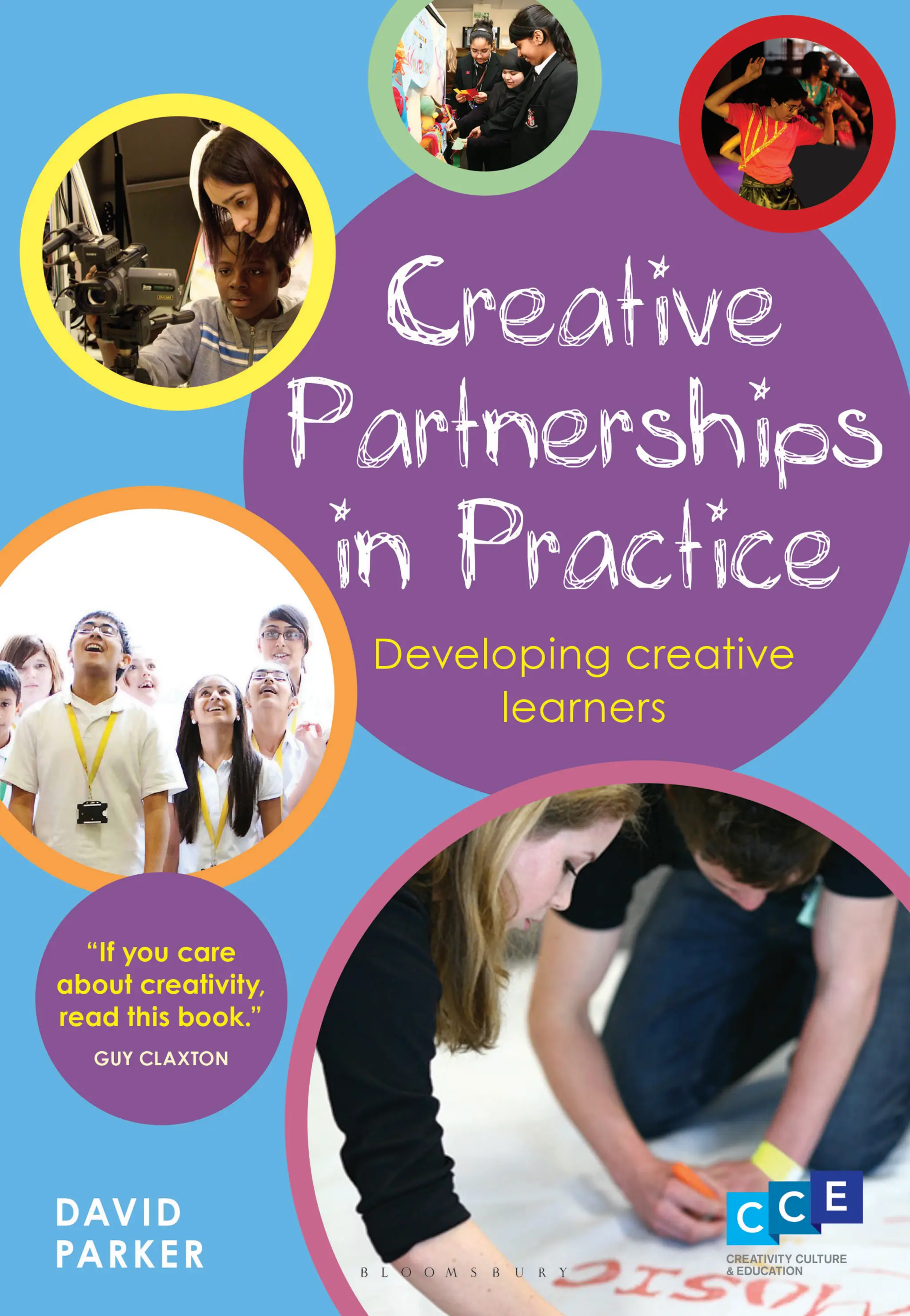
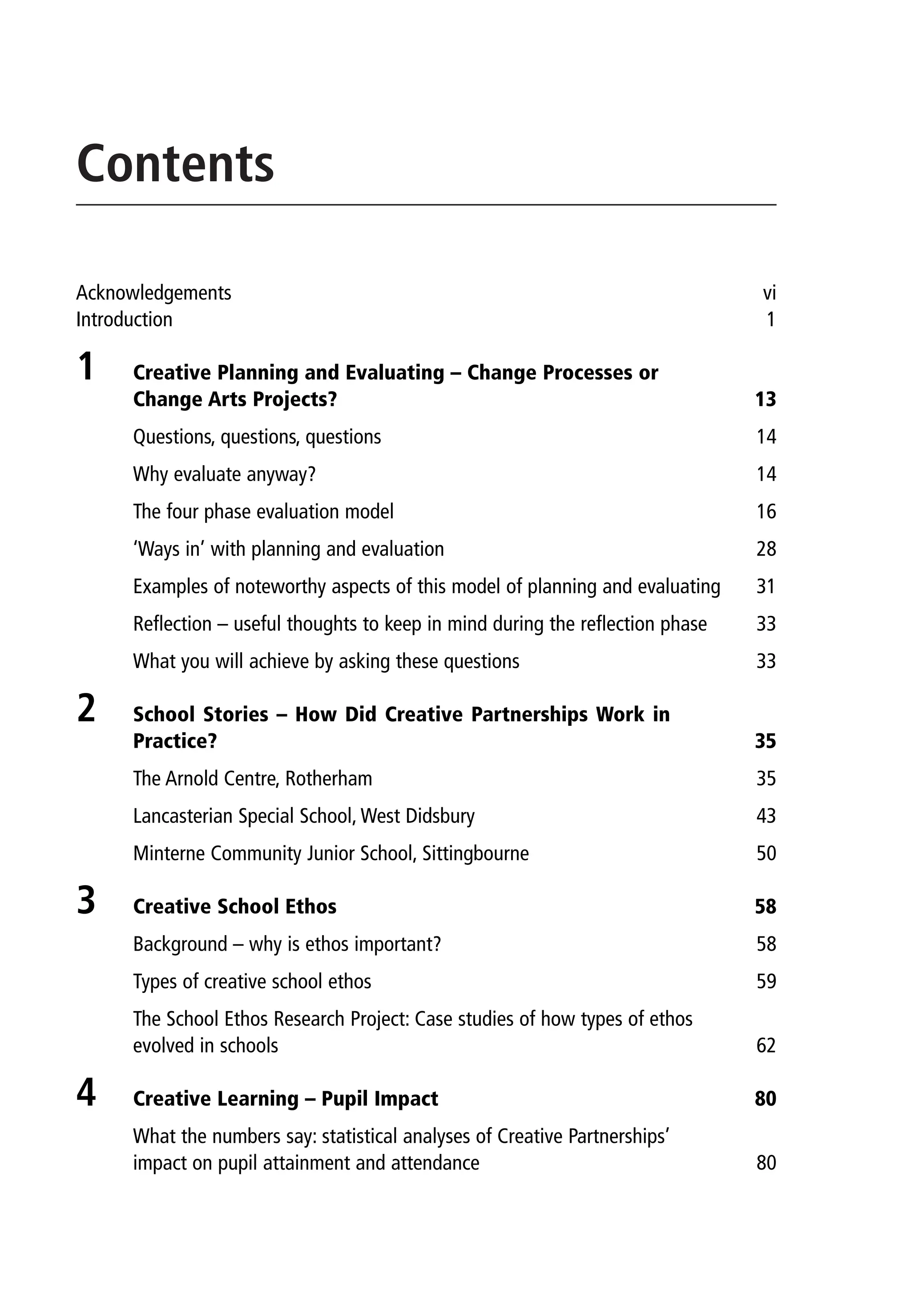
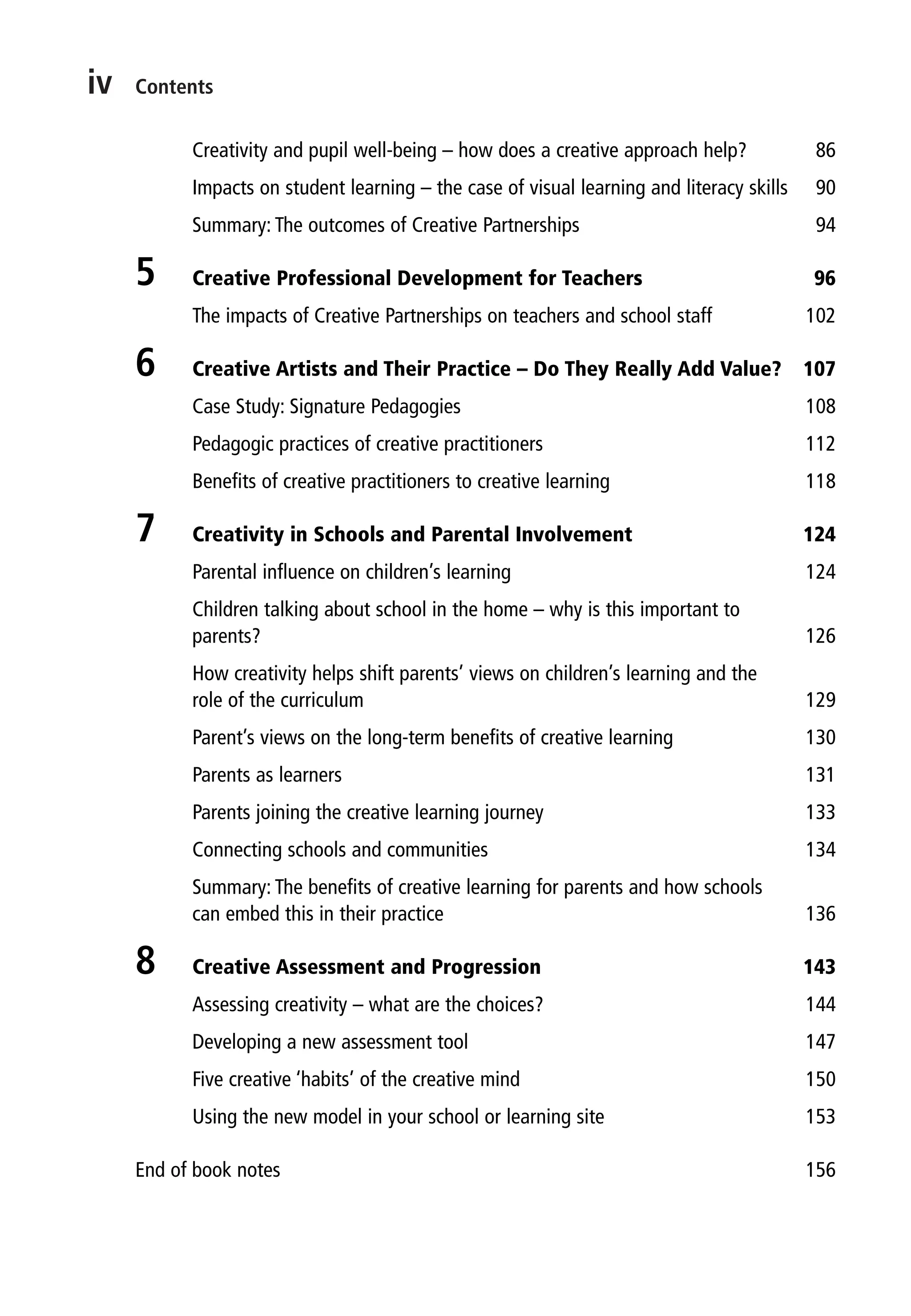

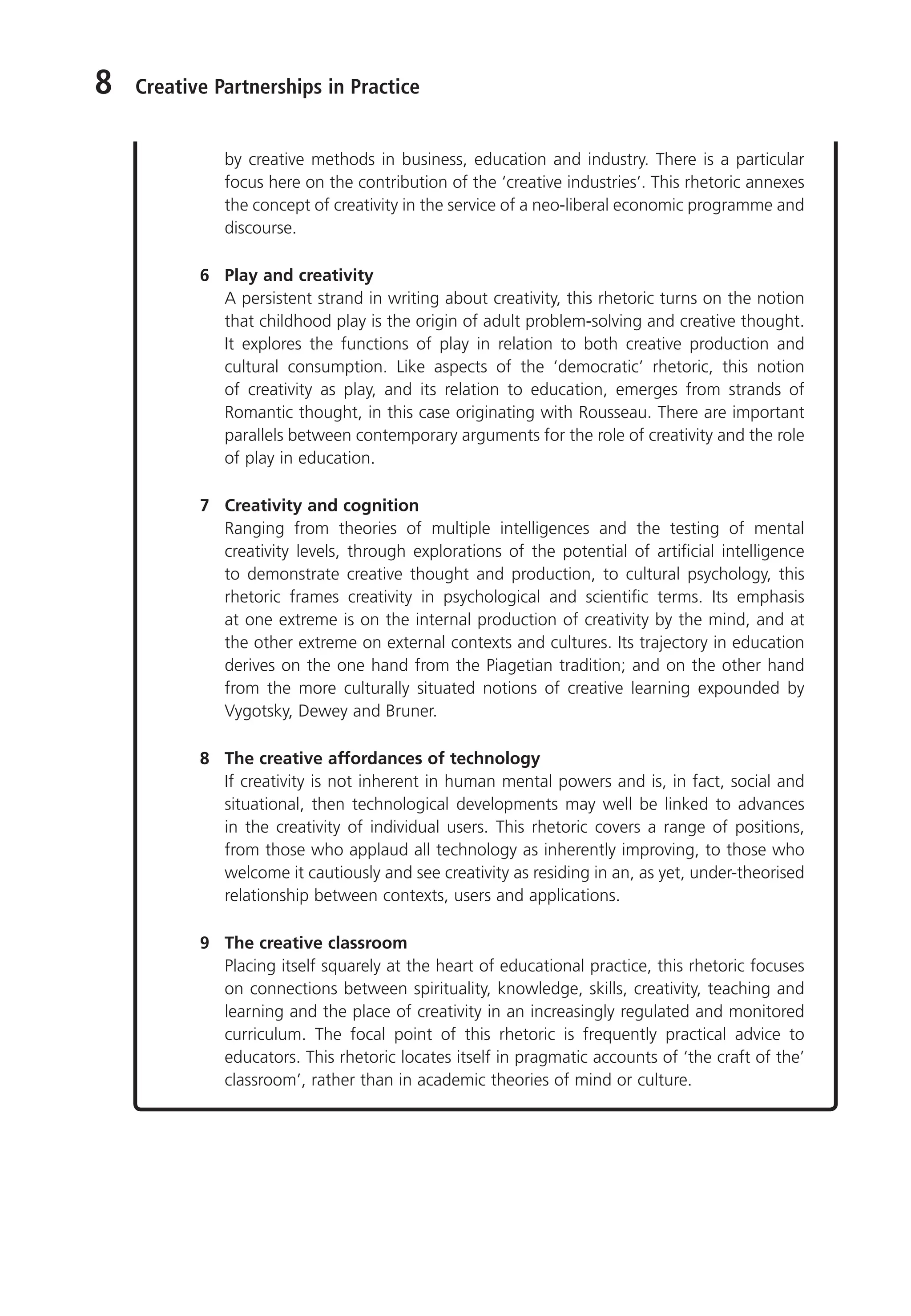
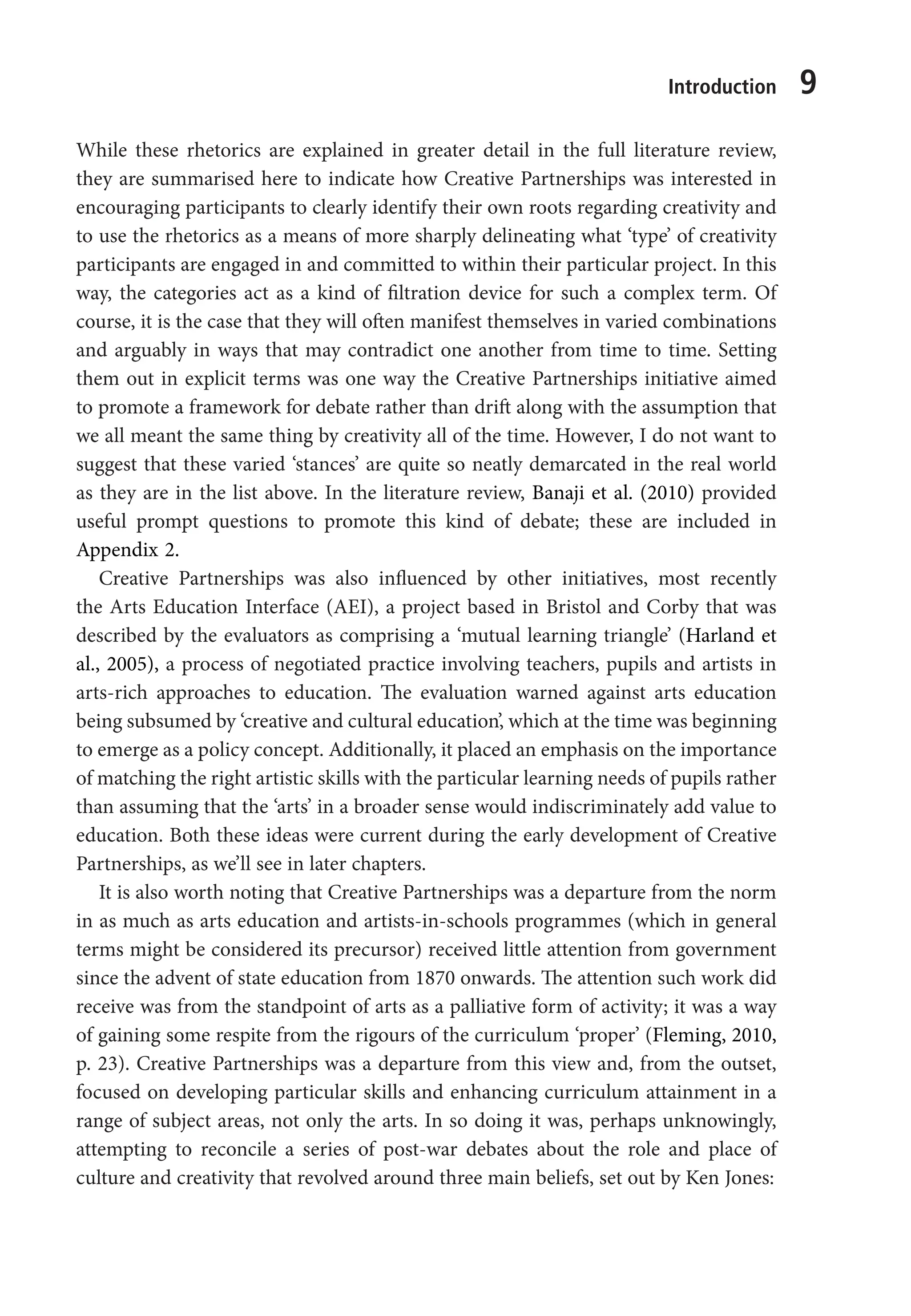
![10 Creative Partnerships in Practice
1 a cultural conservatism for which tradition and authority are important
reference points;
2 a progressivism concerned with child-centred learning;
3 and a tendency whose belief that ‘culture is ordinary’ [which] led to an
insistence that working-class and popular culture should be represented in
the classroom.
(Jones, 2009 p. 7)
Creative Partnerships was certainly drawing on these histories and philosophies
tacitly but it was itself created at a particular moment in response to an emerging
policy concern. So there was a strong political dimension to the programme. It was
funded by two ‘New Labour’ government departments (the Department for Culture
Media and Sport and the Department for Education) and was couched in a policy
rhetoric which suggested it was both a means of boosting standards while being
about more than just subject knowledge and a way of helping provide the sorts of
skills necessary for the twenty-first century. A fuller account of the possibilities and
tensions afforded by this kind of departmental joint-ownership of a programme is
explored more fully elsewhere (Parker and Ruthra-Rajan, 2011, pp. 448–458) but for
now it is enough to note that while Creative Partnerships was generously funded as
a programme, and had very strong initial support within government, it was also
borne of a long a complex history and professional practices and was subject to the
usual agendas that come to the fore in any large-scale programme looking to change
ways of teaching in school.
Initially, navigating through this terrain was the task of teams of Creative
Partnerships staff, national and local, employed by the Arts Council England.
Then, from 2009 onwards, it became the responsibility of Creativity, Culture and
Education (CCE), which continued to manage the programme once the Arts
Council England had let it go. There was a high level of continuity of staff between
both phases. The experiences and learning developed through the time CCE were
custodians of the Creative Partnerships form the substance of the chapters that
follow.
9781441109224_txt_print.indd 10 09/09/2013 15:27](https://image.slidesharecdn.com/25308456-250523202730-4eb58449/75/Creative-Partnerships-In-Practice-Developing-Creative-Learners-David-Parker-21-2048.jpg)
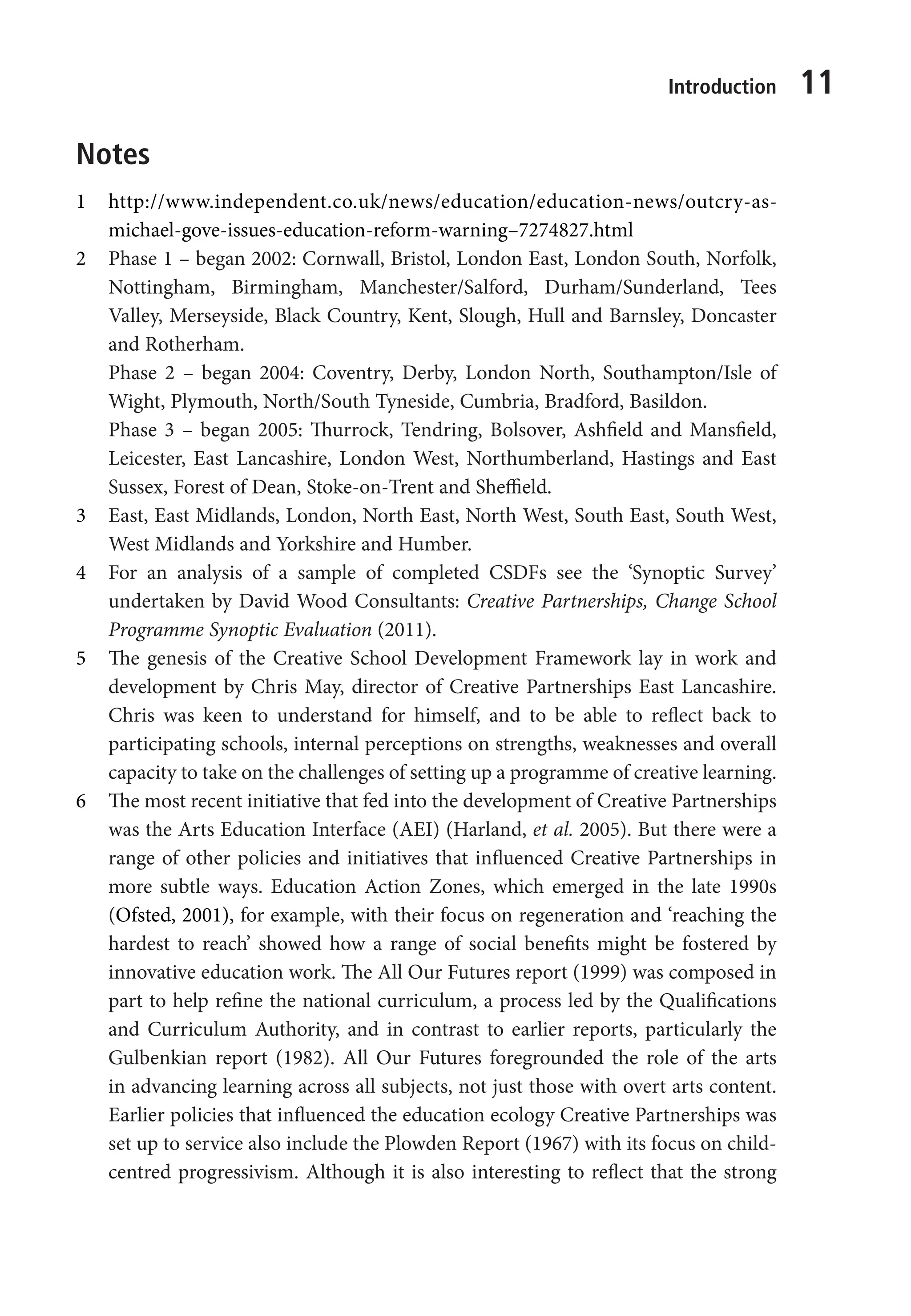
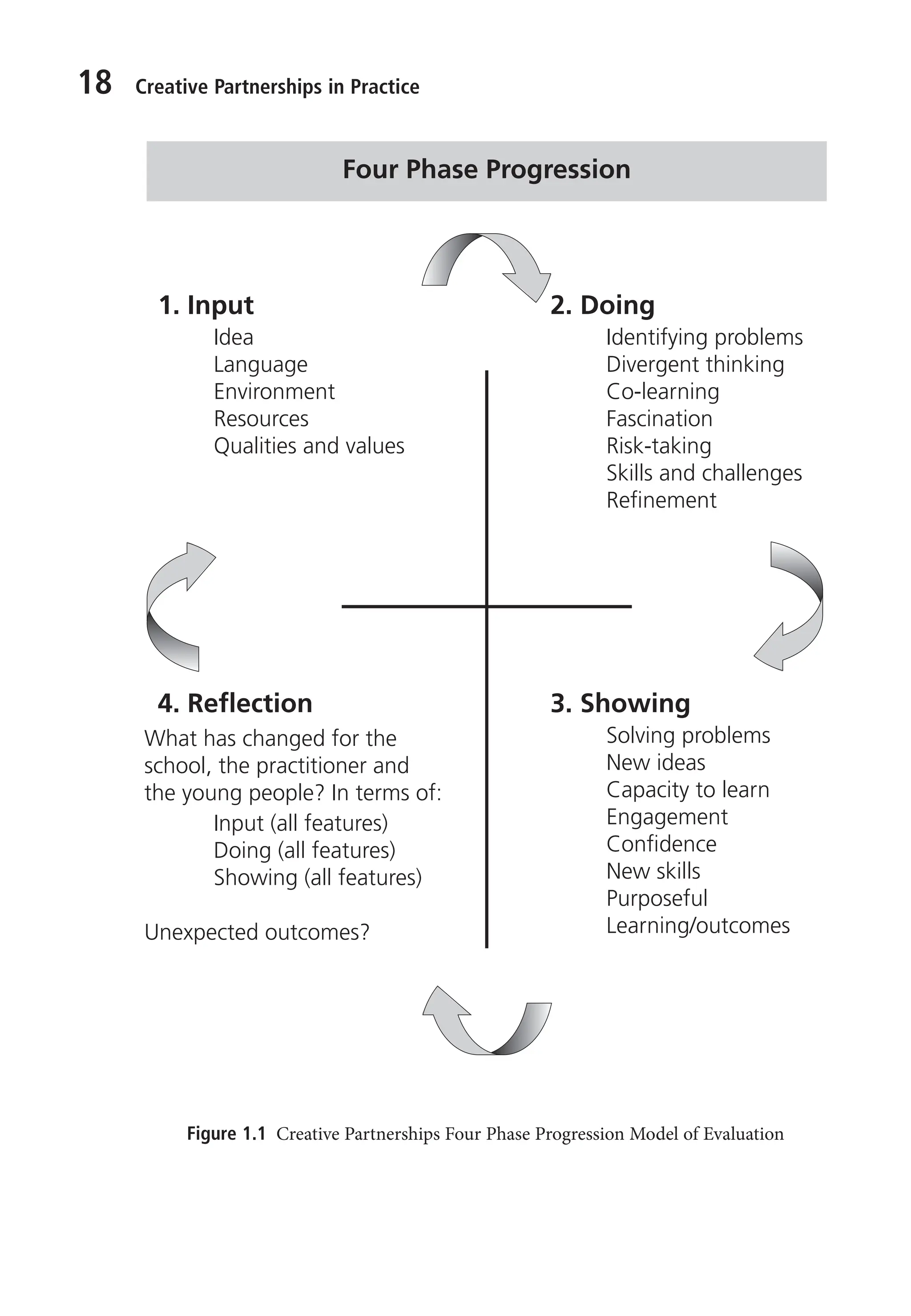
![Creative Planning and Evaluating – Change Processes or Change Arts Projects? 21
repertoires of skill and experience that often bring teachers and students into
contact with new materials or artefacts that have a different quality about
them.
l
l Qualities and values [of the practitioners]. Before a project begins, if you
are planning on working with an external partner, it is worth reflecting on
what kinds of values and qualities such a partner brings when they go in
to a school and whether it is possible to have particular sorts of quality
and value in mind when choosing a project partner. If you are not working
with an external artist, this would be an opportunity to reflect on your own
qualities and values. Sometimes gender is a key issue, at other times age or
ethnicity. It may simply be that the challenging nature of the individual is
the important factor – what in Creative Partnerships was often spoken of
as the ‘grit in the oyster’ – that key added ingredient that helps something
extra special occur.
The way these different elements work within the self-evaluation process is as follows:
l
l Inputs can be given a value BEFORE the creative work starts in full (this may
be after a practitioner has been working to devise a programme with staff and
students)
l
l Inputs can then be given a value DURING the work if long-term (certainly it
should be work that is more sustained than a day session and if lasting change
is to be developed, the longer the better)
l
l And inputs can be given a value AFTER the project, when the sessions/
lessons/workshops have been completed.
In the Creative Partnerships programme we asked participants to give their values
at each stage using a 0–3 scale for each aspect. The forms used to do this during the
first year of using this model are in Appendix 4.
If you are working with an external partner, then the practitioner (the external
organisation/individual) and the school (usually the class teacher involved) are
asked to do this individually (this is more time-consuming, but we found people to
be more candid when reflecting on these matters separately than when together, and
this made for more interesting points of learning after the programmes of work). We
ask the staff and practitioners to discuss this with the young people, covering each
aspect in an appropriate way. Clearly this will depend on age and the nature of the
projects taking place.
9781441109224_txt_print.indd 21 09/09/2013 15:27](https://image.slidesharecdn.com/25308456-250523202730-4eb58449/75/Creative-Partnerships-In-Practice-Developing-Creative-Learners-David-Parker-32-2048.jpg)