ECE 417 – Learning Designs in Early Childhood
Education
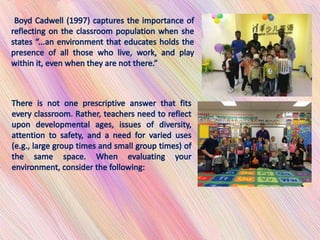
Does the environment reflect tendencies of the developmental age
level of the children that are going to use the environment?
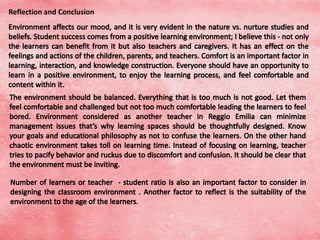
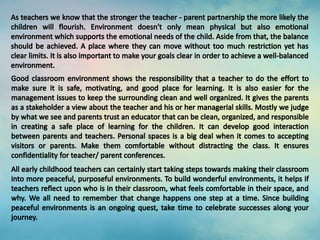
Reflection and Conclusion
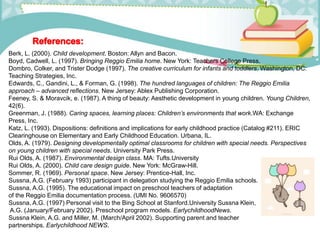
Berk, L. (2000). Child development. Boston: Allyn and Bacon.
Boyd, Cadwell, L. (1997). Bringing Reggio Emilia home. New York: Teachers College Press.
Dombro, Colker, and Trister Dodge (1997). The creative curriculum for infants and toddlers. Washington, DC:
Teaching Strategies, Inc.
Edwards, C., Gandini, L., & Forman, G. (1998). The hundred languages of children: The Reggio Emilia
approach – advanced reflections. New Jersey: Ablex Publishing Corporation.
Feeney, S. & Moravcik, e. (1987). A thing of beauty: Aesthetic development in young children. Young Children,
42(6).
Greenman, J. (1988). Caring spaces, learning places: Children’s environments that work.WA: Exchange
Press, Inc.
Katz, L. (1993). Dispositions: definitions and implications for early childhood practice (Catalog #211). ERIC
Clearinghouse on Elementary and Early Childhood Education. Urbana, IL.
Olds, A. (1979). Designing developmentally optimal classrooms for children with special needs. Perspectives
on young children with special needs. University Park Press.
Rui Olds, A. (1987). Environmental design class. MA: Tufts.University
Rui Olds, A. (2000). Child care design guide. New York: McGraw-Hill.
Sommer, R. (1969). Personal space. New Jersey: Prentice-Hall, Inc.
Sussna, A.G. (February 1993) participant in delegation studying the Reggio Emilia schools.
Sussna, A.G. (1995). The educational impact on preschool teachers of adaptation
of the Reggio Emilia documentation process. (UMI No. 9606570)
Sussna, A.G. (1997) Personal visit to the Bing School at Stanford.University Sussna Klein,
A.G. (January/February 2002). Preschool program models. EarlychildhoodNews.
Sussna Klein, A.G. and Miller, M. (March/April 2002). Supporting parent and teacher
partnerships. Earlychildhood NEWS.

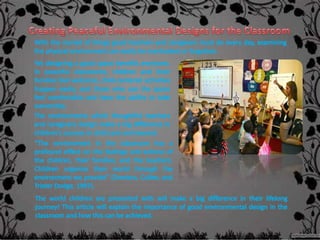
Creating Peaceful Environmental Designs for the Classroom

  • 1.
    ECE 417 –Learning Designs in Early Childhood Education
  • 12.
    Does the environmentreflect tendencies of the developmental age level of the children that are going to use the environment?
  • 16.
  • 18.
    Berk, L. (2000).Child development. Boston: Allyn and Bacon. Boyd, Cadwell, L. (1997). Bringing Reggio Emilia home. New York: Teachers College Press. Dombro, Colker, and Trister Dodge (1997). The creative curriculum for infants and toddlers. Washington, DC: Teaching Strategies, Inc. Edwards, C., Gandini, L., & Forman, G. (1998). The hundred languages of children: The Reggio Emilia approach – advanced reflections. New Jersey: Ablex Publishing Corporation. Feeney, S. & Moravcik, e. (1987). A thing of beauty: Aesthetic development in young children. Young Children, 42(6). Greenman, J. (1988). Caring spaces, learning places: Children’s environments that work.WA: Exchange Press, Inc. Katz, L. (1993). Dispositions: definitions and implications for early childhood practice (Catalog #211). ERIC Clearinghouse on Elementary and Early Childhood Education. Urbana, IL. Olds, A. (1979). Designing developmentally optimal classrooms for children with special needs. Perspectives on young children with special needs. University Park Press. Rui Olds, A. (1987). Environmental design class. MA: Tufts.University Rui Olds, A. (2000). Child care design guide. New York: McGraw-Hill. Sommer, R. (1969). Personal space. New Jersey: Prentice-Hall, Inc. Sussna, A.G. (February 1993) participant in delegation studying the Reggio Emilia schools. Sussna, A.G. (1995). The educational impact on preschool teachers of adaptation of the Reggio Emilia documentation process. (UMI No. 9606570) Sussna, A.G. (1997) Personal visit to the Bing School at Stanford.University Sussna Klein, A.G. (January/February 2002). Preschool program models. EarlychildhoodNews. Sussna Klein, A.G. and Miller, M. (March/April 2002). Supporting parent and teacher partnerships. Earlychildhood NEWS.