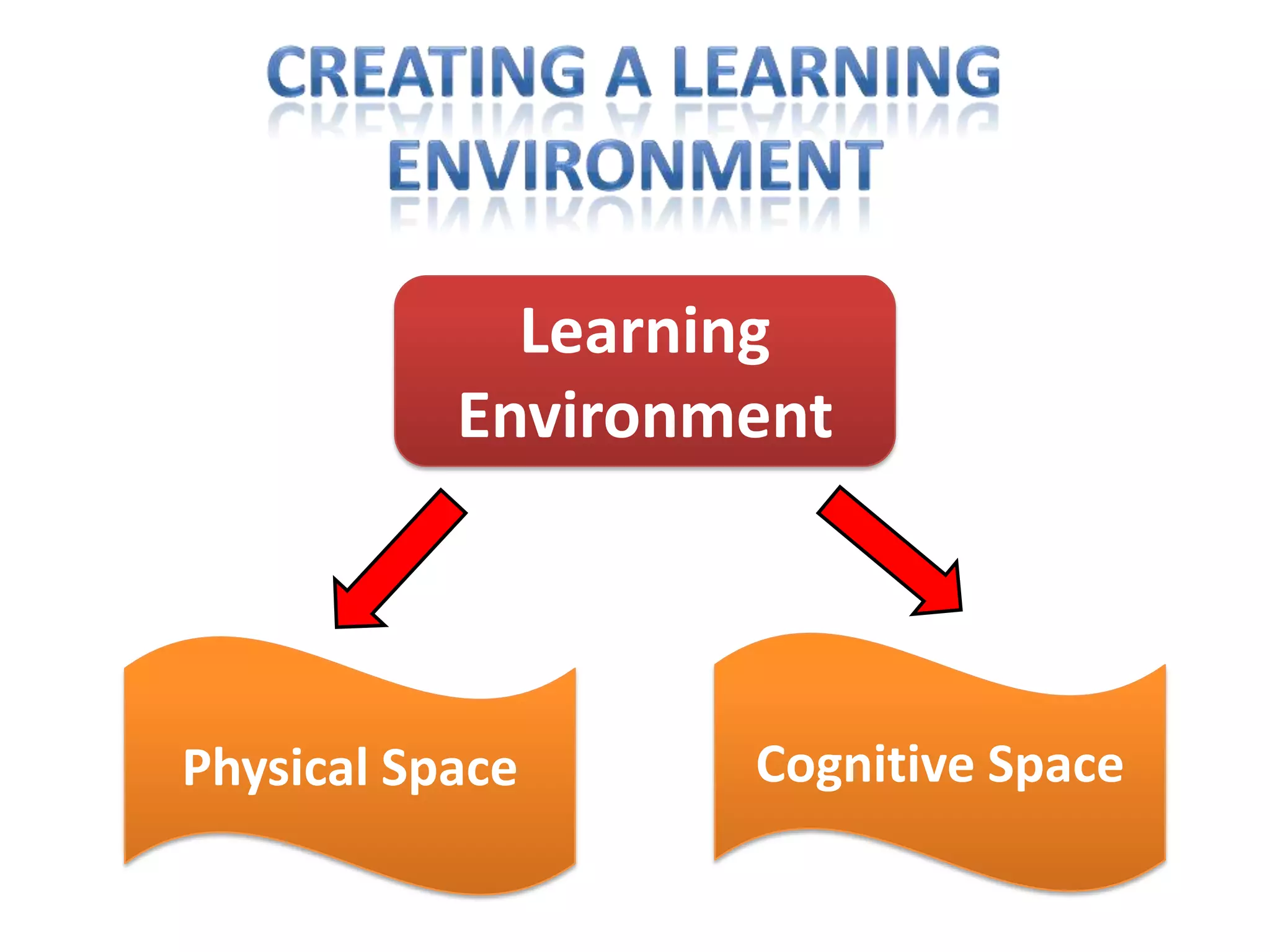
Learning
Environment

Physical Space

Cognitive Space
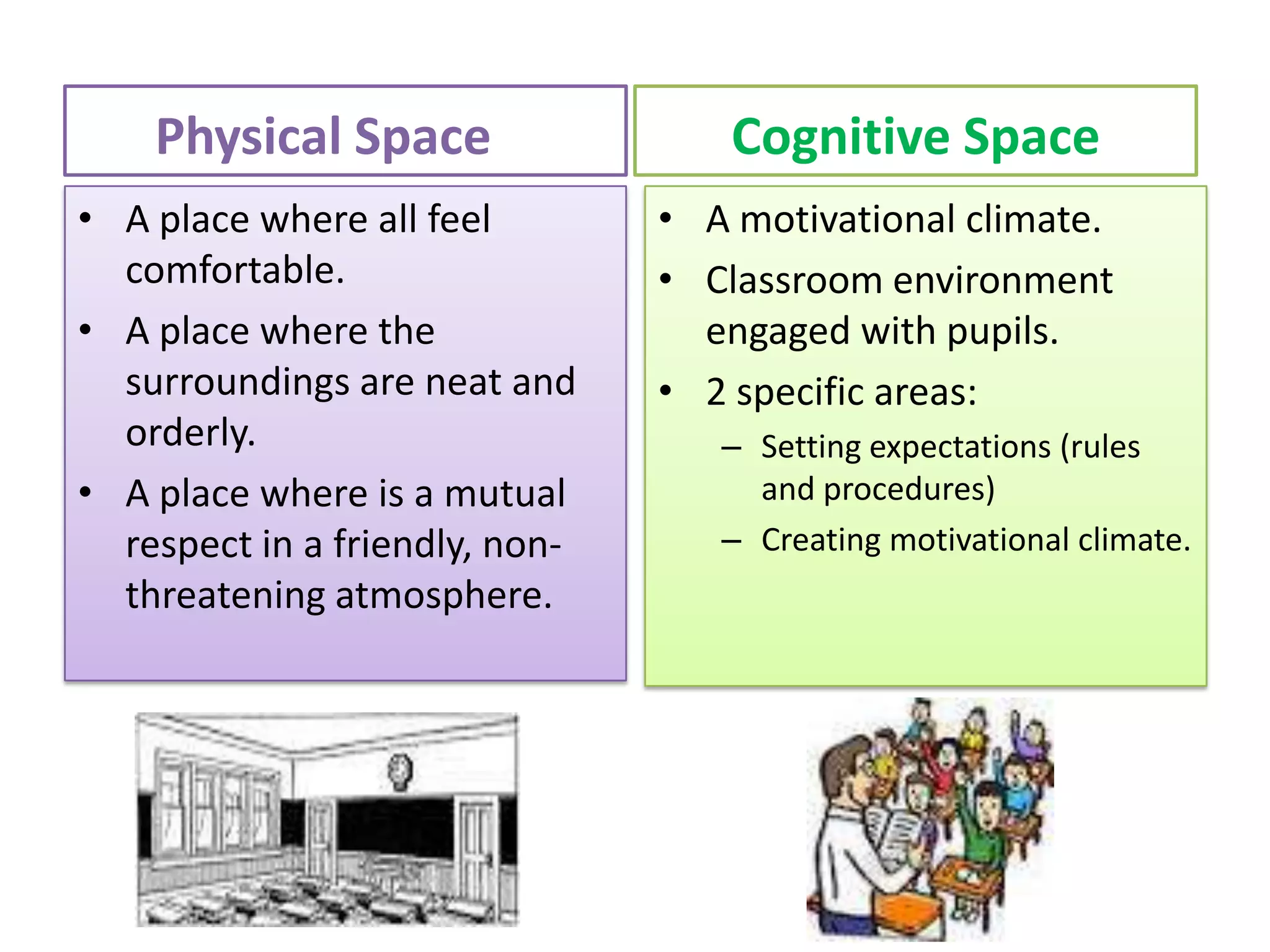
Physical Space
• A place where all feel
comfortable.
• A place where the
surroundings are neat and
orderly.
• A place where is a mutual
respect in a friendly, nonthreatening atmosphere.

Cognitive Space
• A motivational climate.
• Classroom environment
engaged with pupils.
• 2 specific areas:
– Setting expectations (rules
and procedures)
– Creating motivational climate.
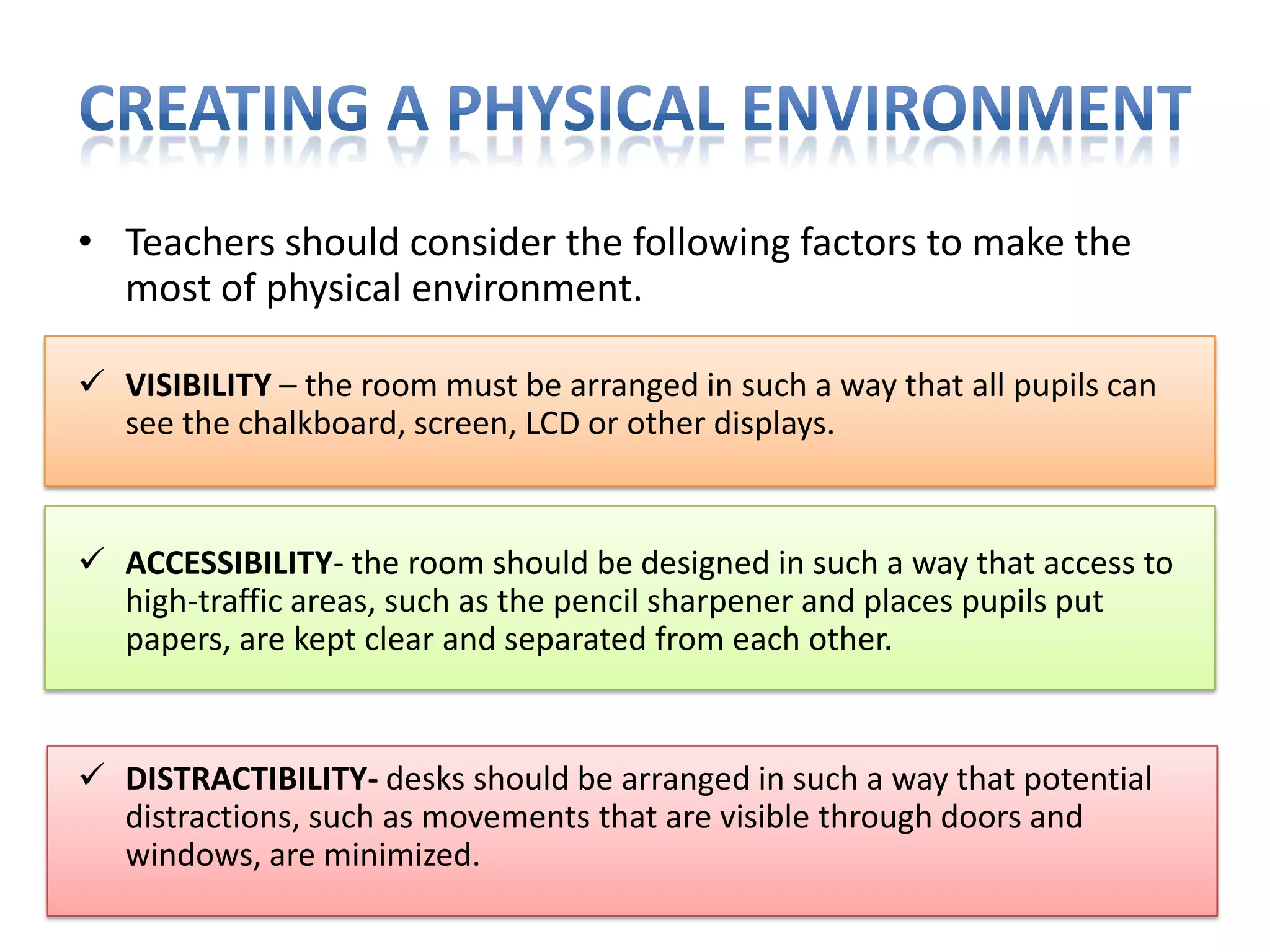
• Teachers should consider the following factors to make the
most of physical environment.
 VISIBILITY – the room must be arranged in such a way that all pupils can
see the chalkboard, screen, LCD or other displays.

 ACCESSIBILITY- the room should be designed in such a way that access to
high-traffic areas, such as the pencil sharpener and places pupils put
papers, are kept clear and separated from each other.

 DISTRACTIBILITY- desks should be arranged in such a way that potential
distractions, such as movements that are visible through doors and
windows, are minimized.
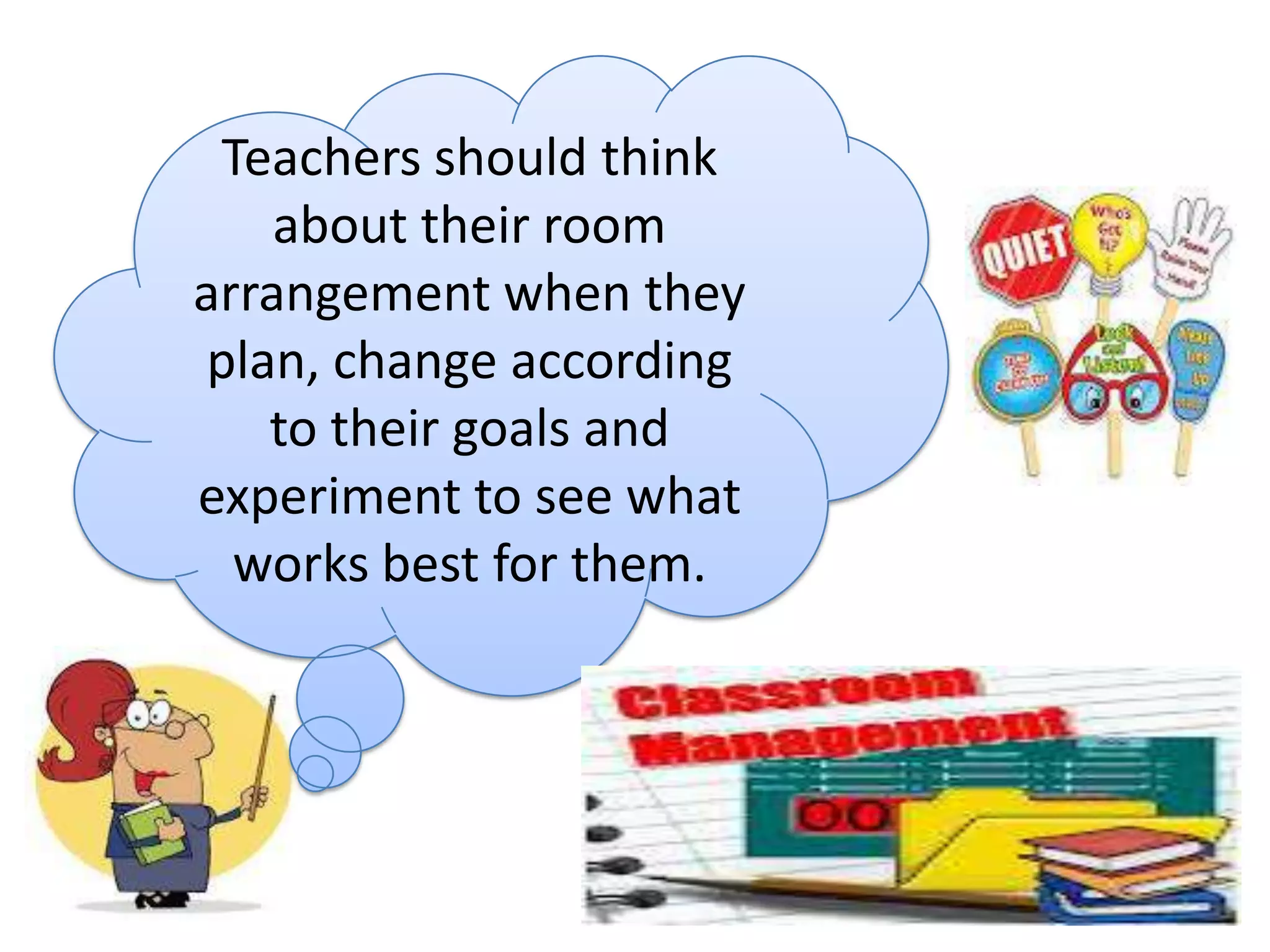
Teachers should think
about their room
arrangement when they
plan, change according
to their goals and
experiment to see what
works best for them.

Creating a learning n physical environment farhanah

  • 1.
  • 2.
    Physical Space • Aplace where all feel comfortable. • A place where the surroundings are neat and orderly. • A place where is a mutual respect in a friendly, nonthreatening atmosphere. Cognitive Space • A motivational climate. • Classroom environment engaged with pupils. • 2 specific areas: – Setting expectations (rules and procedures) – Creating motivational climate.
  • 3.
    • Teachers shouldconsider the following factors to make the most of physical environment.  VISIBILITY – the room must be arranged in such a way that all pupils can see the chalkboard, screen, LCD or other displays.  ACCESSIBILITY- the room should be designed in such a way that access to high-traffic areas, such as the pencil sharpener and places pupils put papers, are kept clear and separated from each other.  DISTRACTIBILITY- desks should be arranged in such a way that potential distractions, such as movements that are visible through doors and windows, are minimized.
  • 4.
    Teachers should think abouttheir room arrangement when they plan, change according to their goals and experiment to see what works best for them.