Implementation
Creating and Presenting Strategic Plans
Part 1
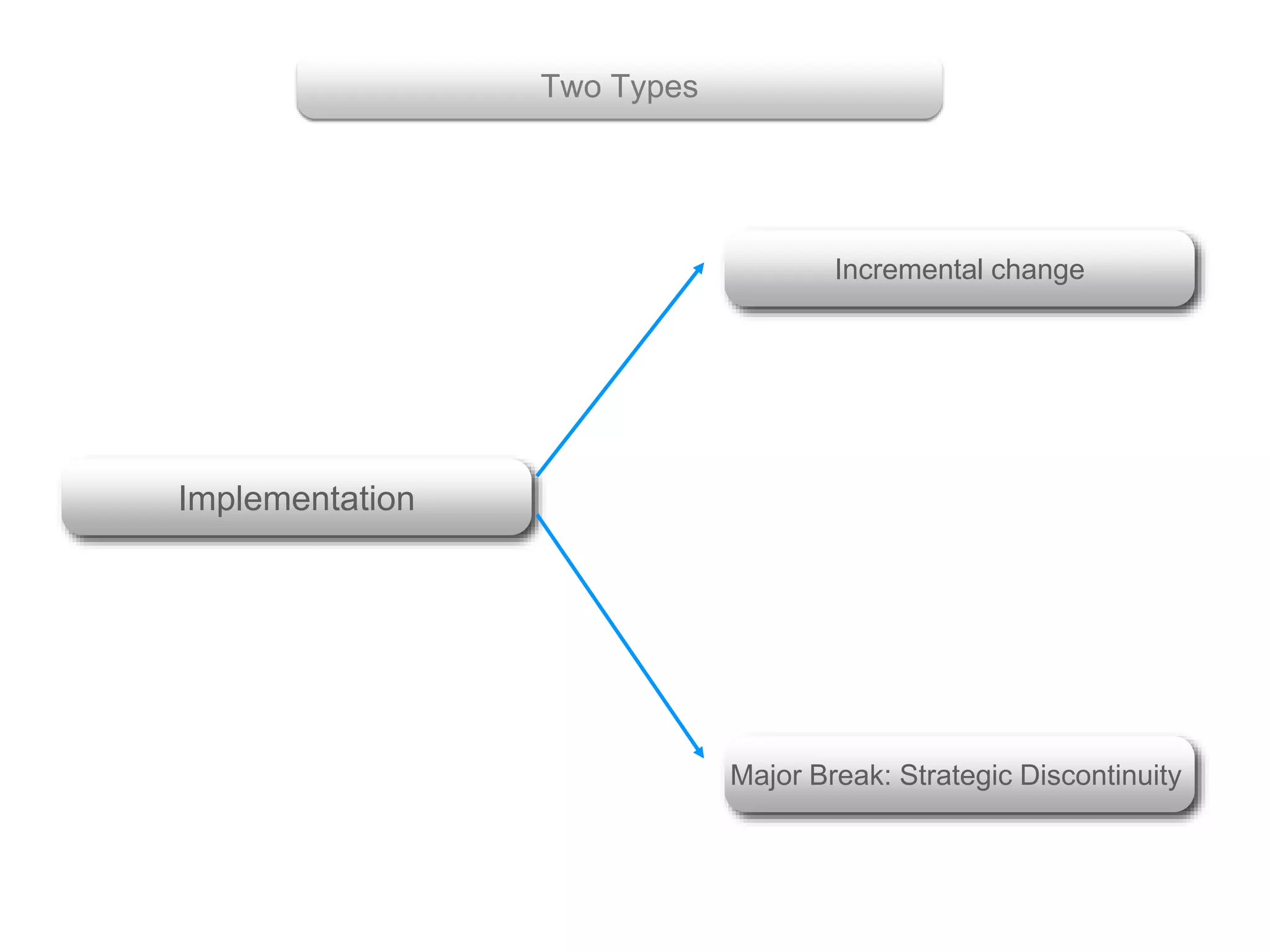
Two Types
Implementation
Major Break: Strategic Discontinuity
Incremental change
Incremental change
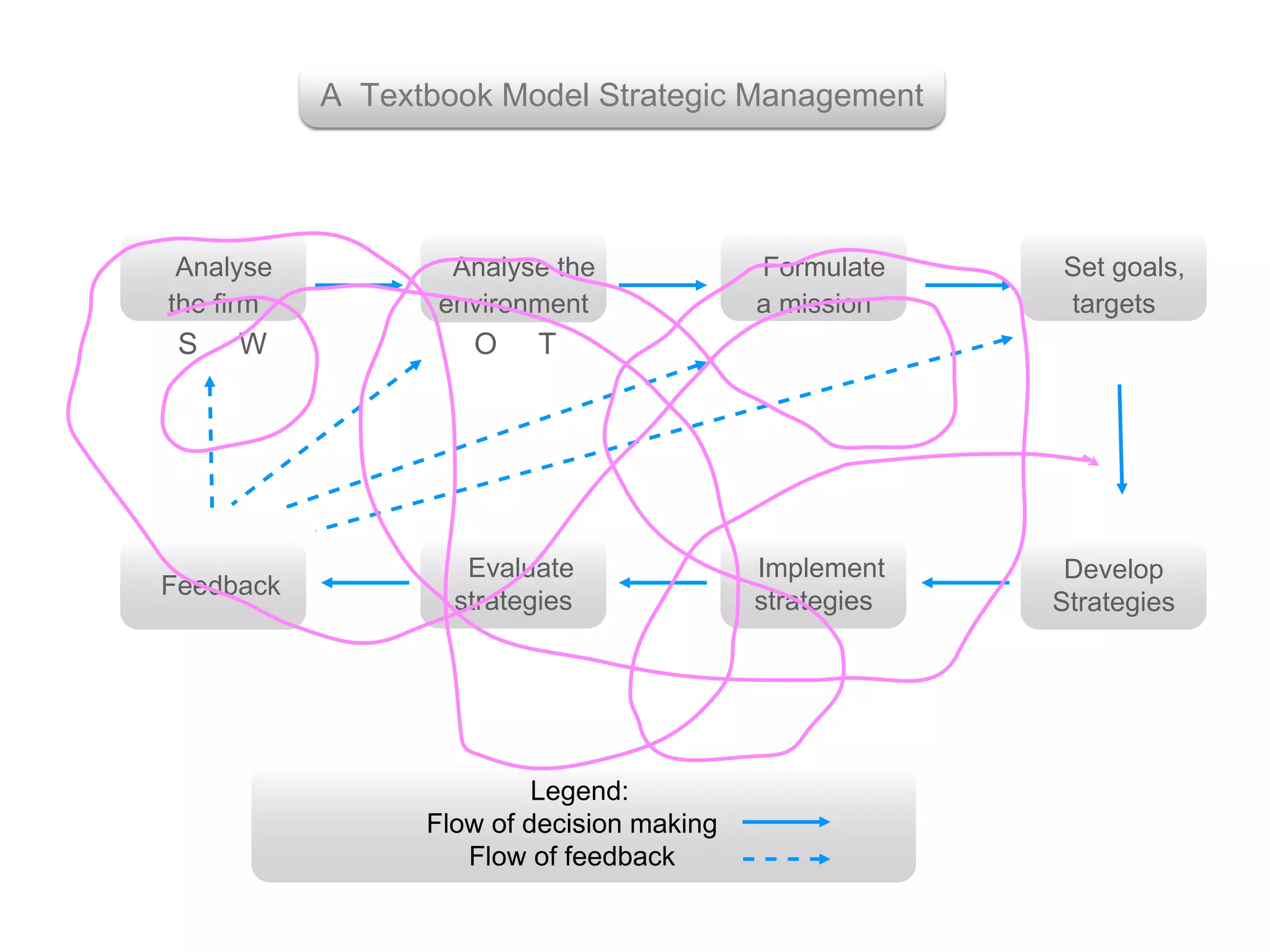
Implement
strategies
Develop
Strategies
Evaluate
strategies
Feedback
Legend:
Flow of decision making
Flow of feedback
Set goals,
targets
Formulate
a mission
Analyse
the firm
S W
Analyse the
environment
O T
A Textbook Model Strategic Management
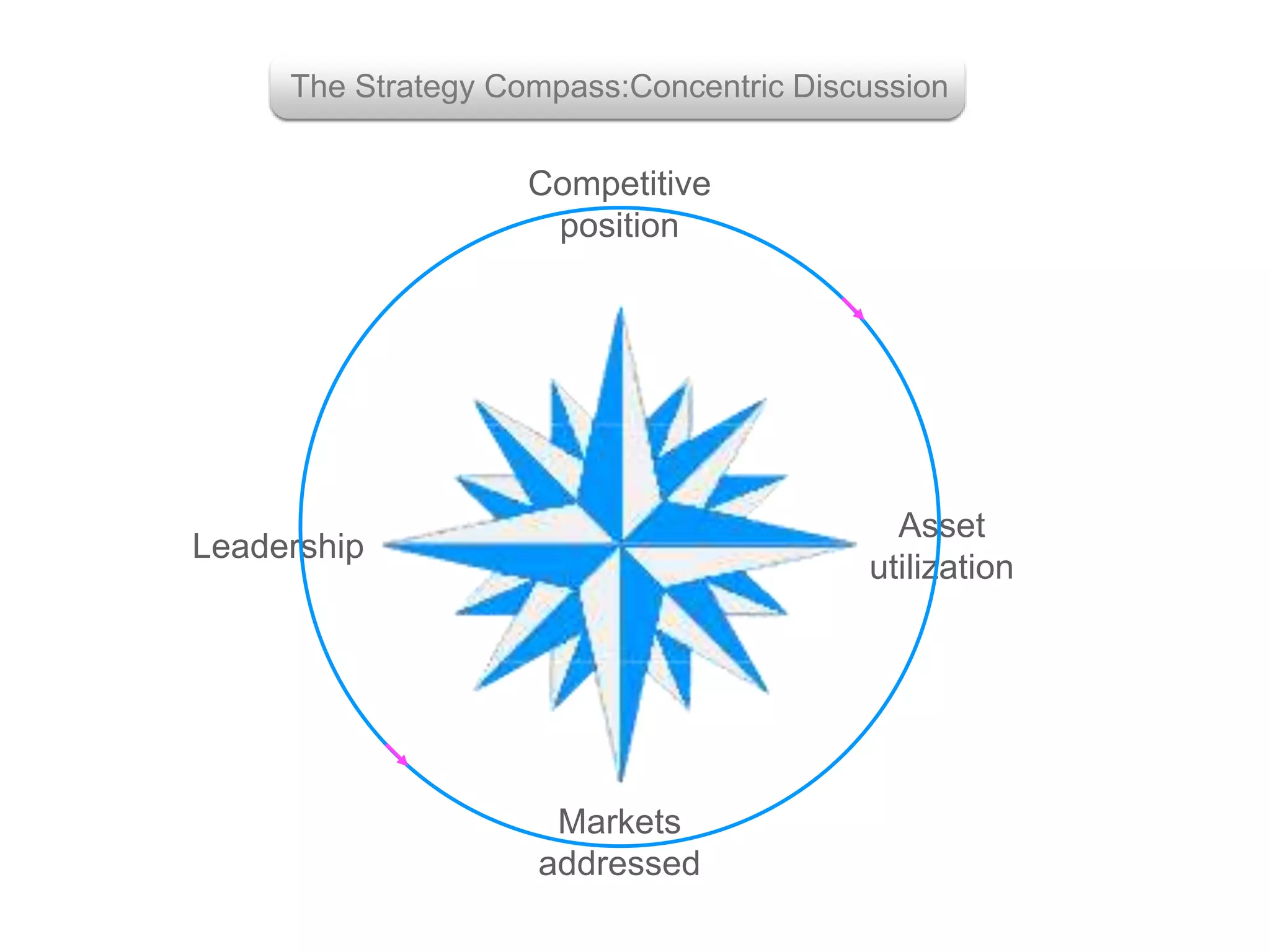
Competitive
position
Asset
utilization
Markets
addressed
Leadership
The Strategy Compass:Concentric Discussion
Rigorous explicit numerical targets
Flexible vague areas of intention
Versus
Two Types
• Rigour versus flexibility
• Learn from life - strategic planning for children
A Balanced Approach
A balance between
The long term strategy: non-explicit and verbal:
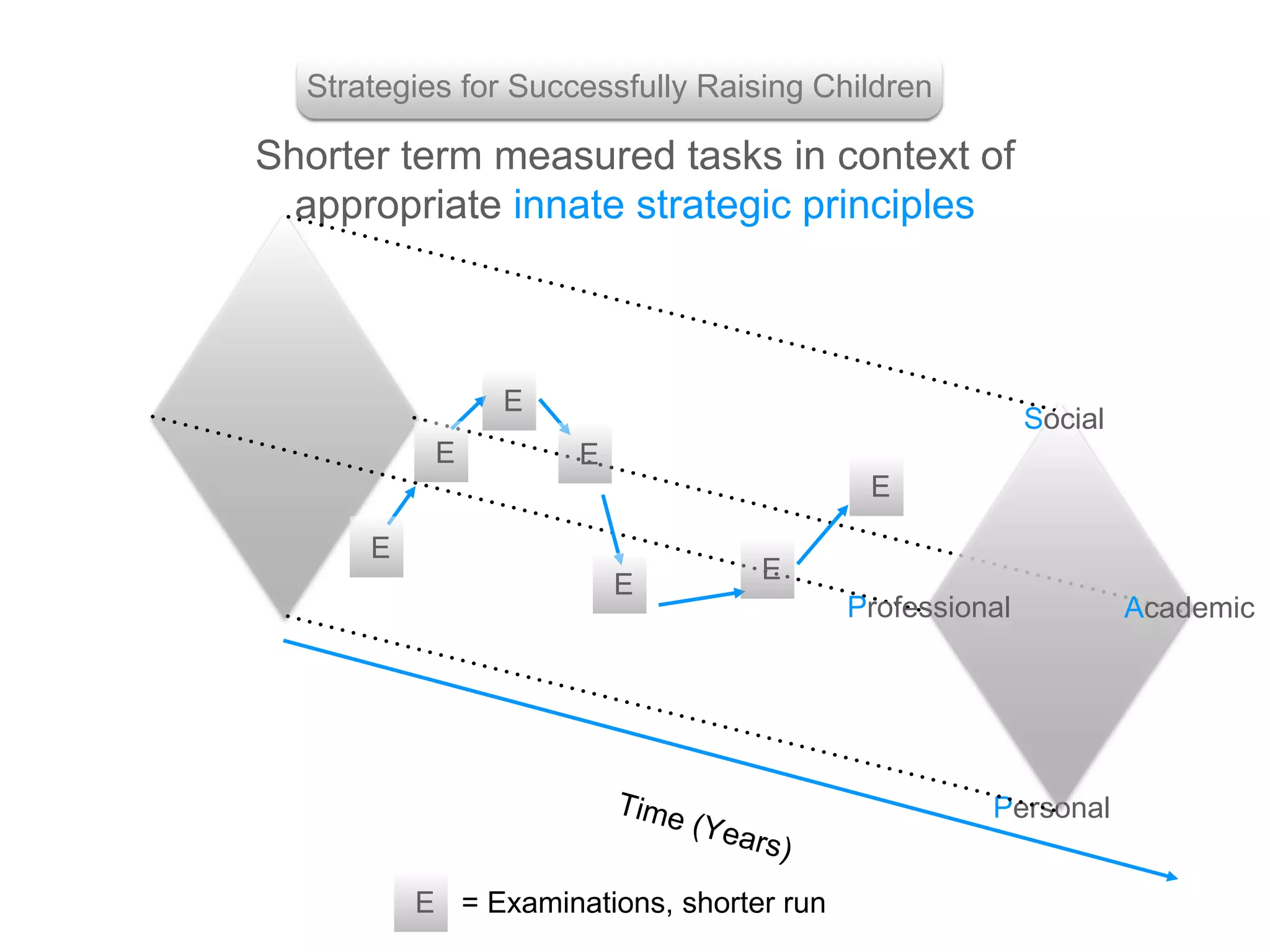
Strategies for Successfully Raising Children
•Social success
•Professional success
•Personal success
•Academic success
Shorter-term strategies: explicit and measured:
•Sports competitions etc
•School examinations
Shorter term measured tasks in context of
appropriate innate strategic principles
Strategies for Successfully Raising Children
Personal
Professional Academic
Social
= Examinations, shorter runE
E
E
E
E
E
E
E
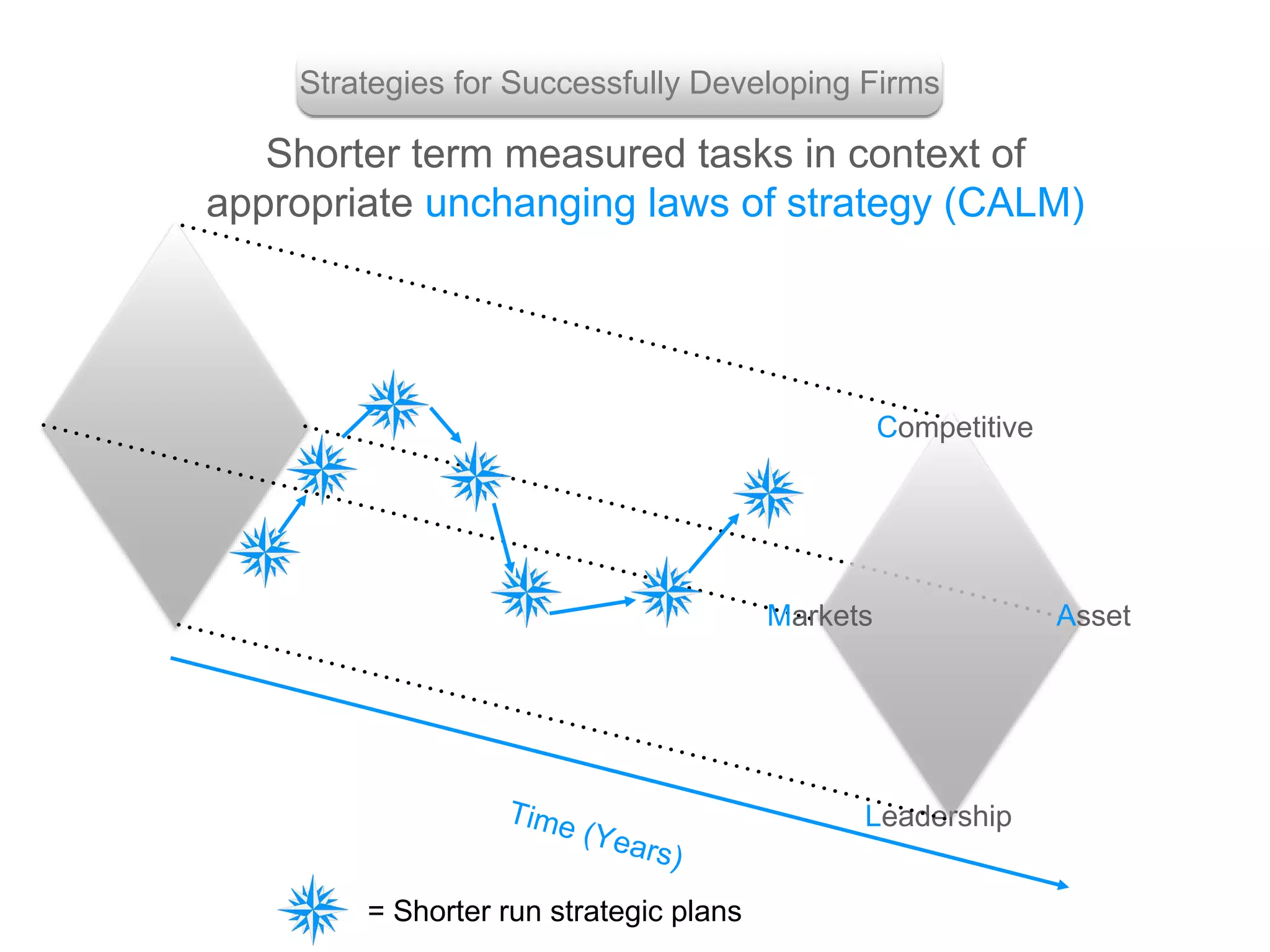
Shorter term measured tasks in context of
appropriate unchanging laws of strategy (CALM)
Strategies for Successfully Developing Firms
Leadership
Markets Asset
Competitive
= Shorter run strategic plans
Individual products or projects are less important
than
adhering to the innate strategic principles
Innate strategic principles in which
shorter run strategies are always set
Habitually Successful Firms
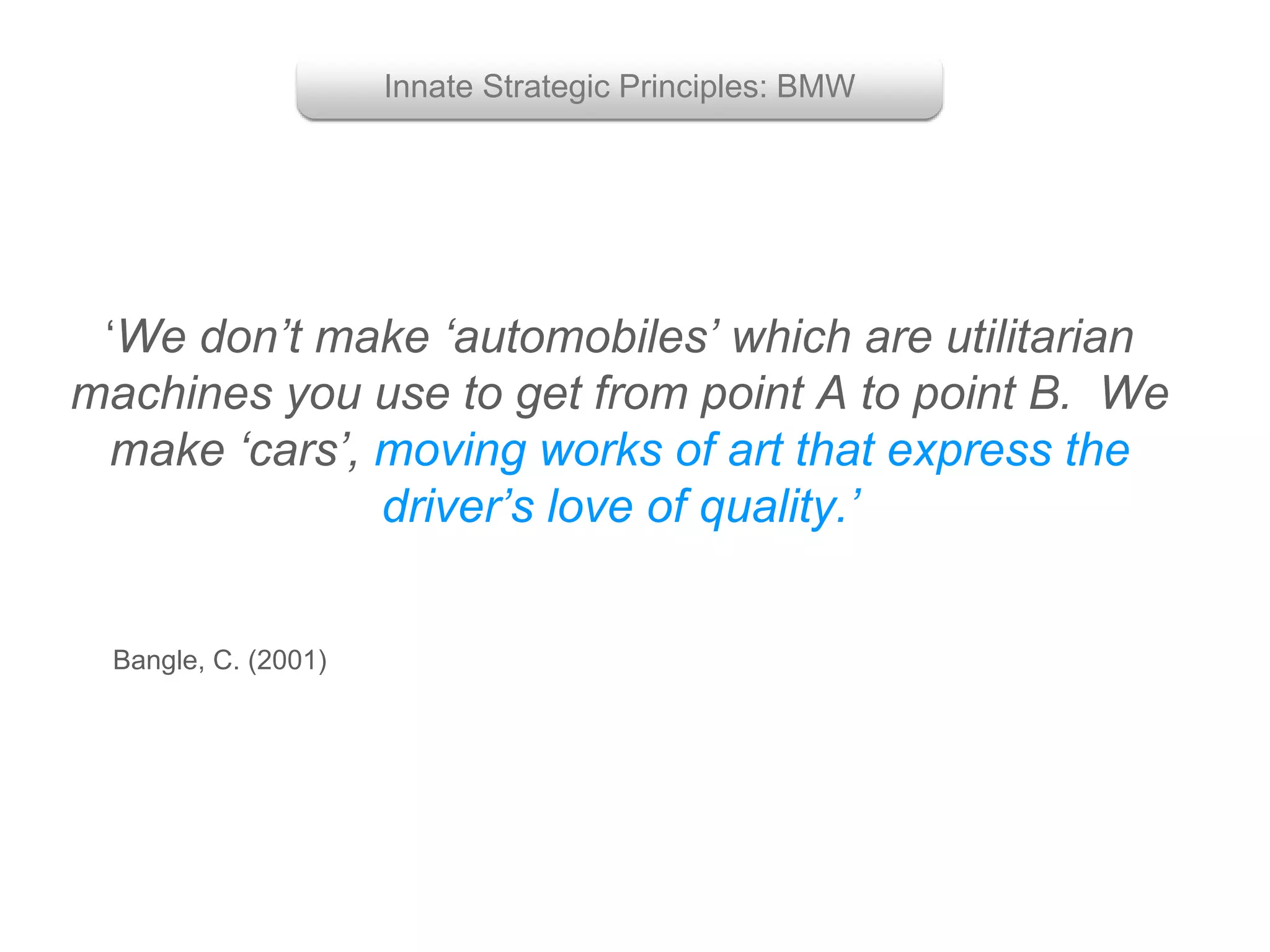
‘We don’t make ‘automobiles’ which are utilitarian
machines you use to get from point A to point B. We
make ‘cars’, moving works of art that express the
driver’s love of quality.’
Bangle, C. (2001)
Innate Strategic Principles: BMW
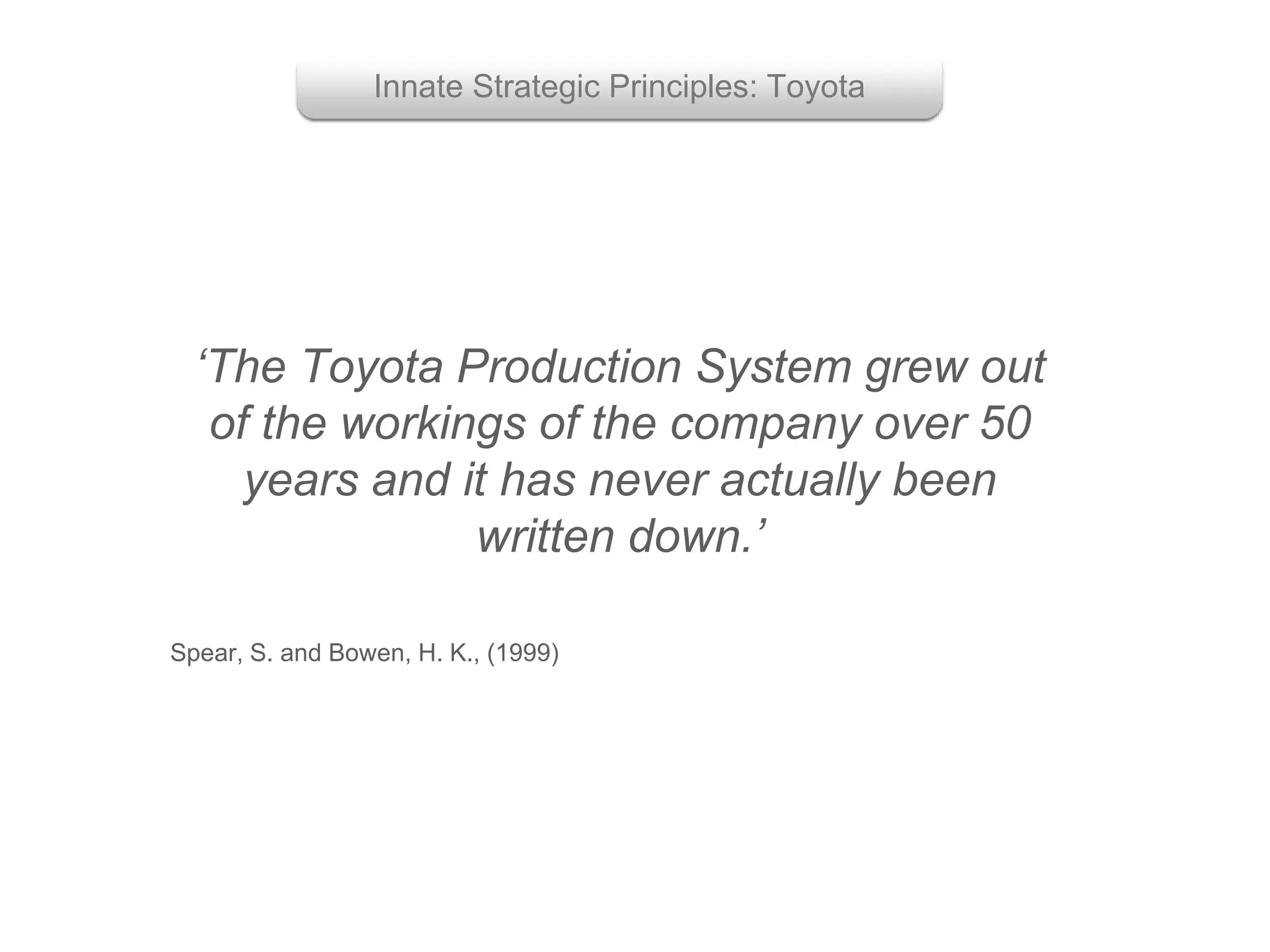
‘The Toyota Production System grew out
of the workings of the company over 50
years and it has never actually been
written down.’
Spear, S. and Bowen, H. K., (1999)
Innate Strategic Principles: Toyota
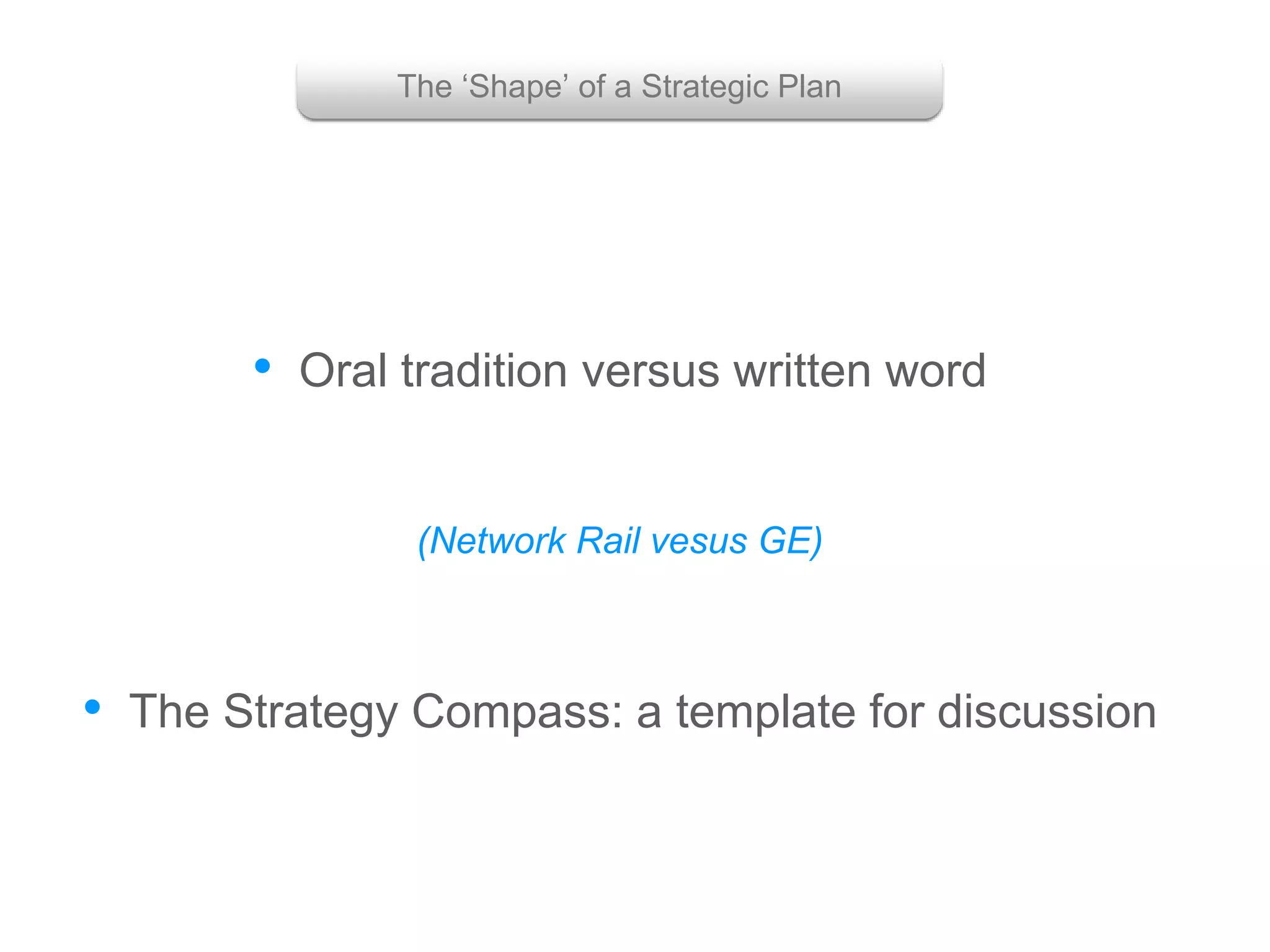
• Oral tradition versus written word
• The Strategy Compass: a template for discussion
(Network Rail vesus GE)
The ‘Shape’ of a Strategic Plan
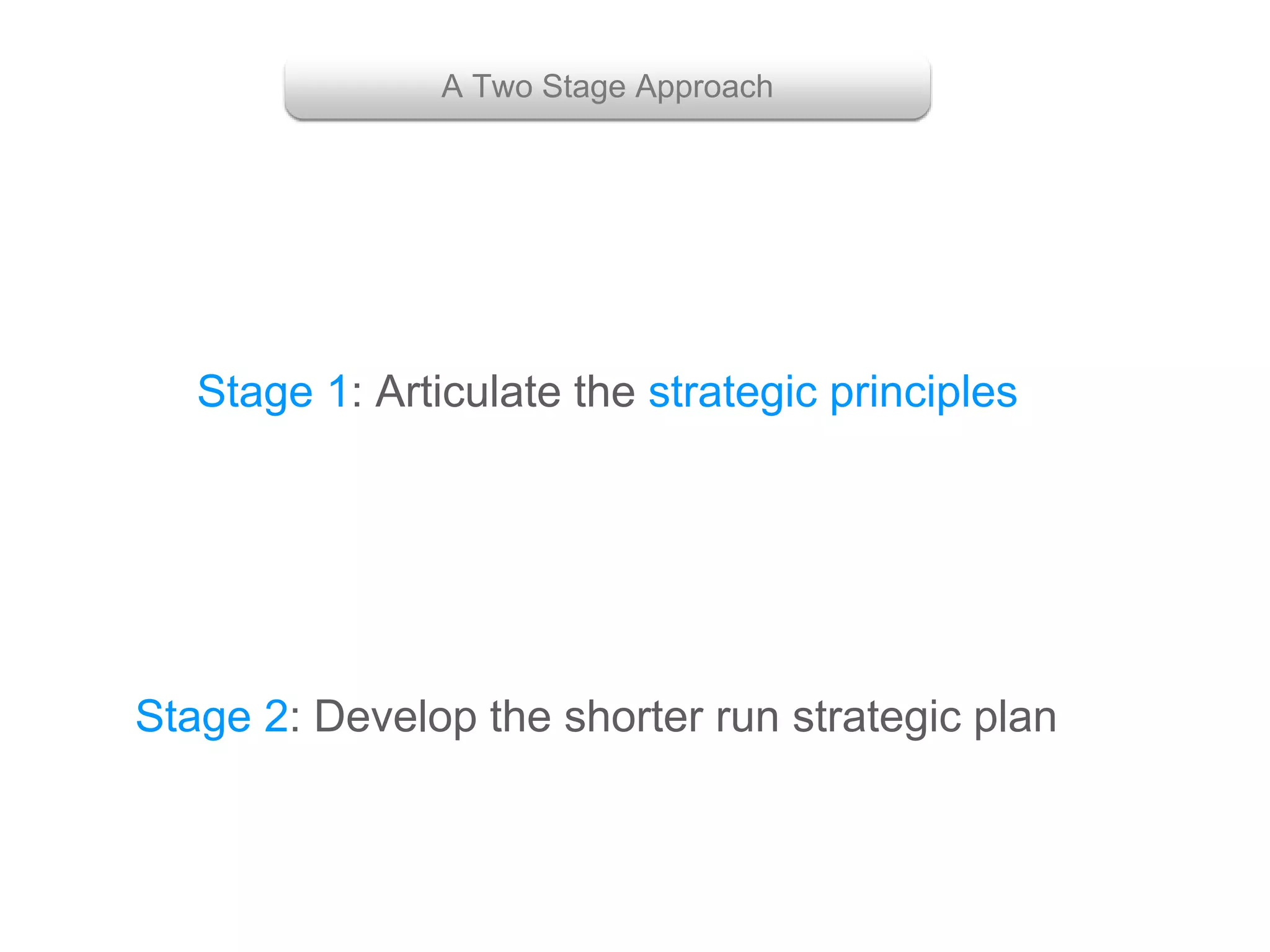
Stage 1: Articulate the strategic principles
Stage 2: Develop the shorter run strategic plan
A Two Stage Approach
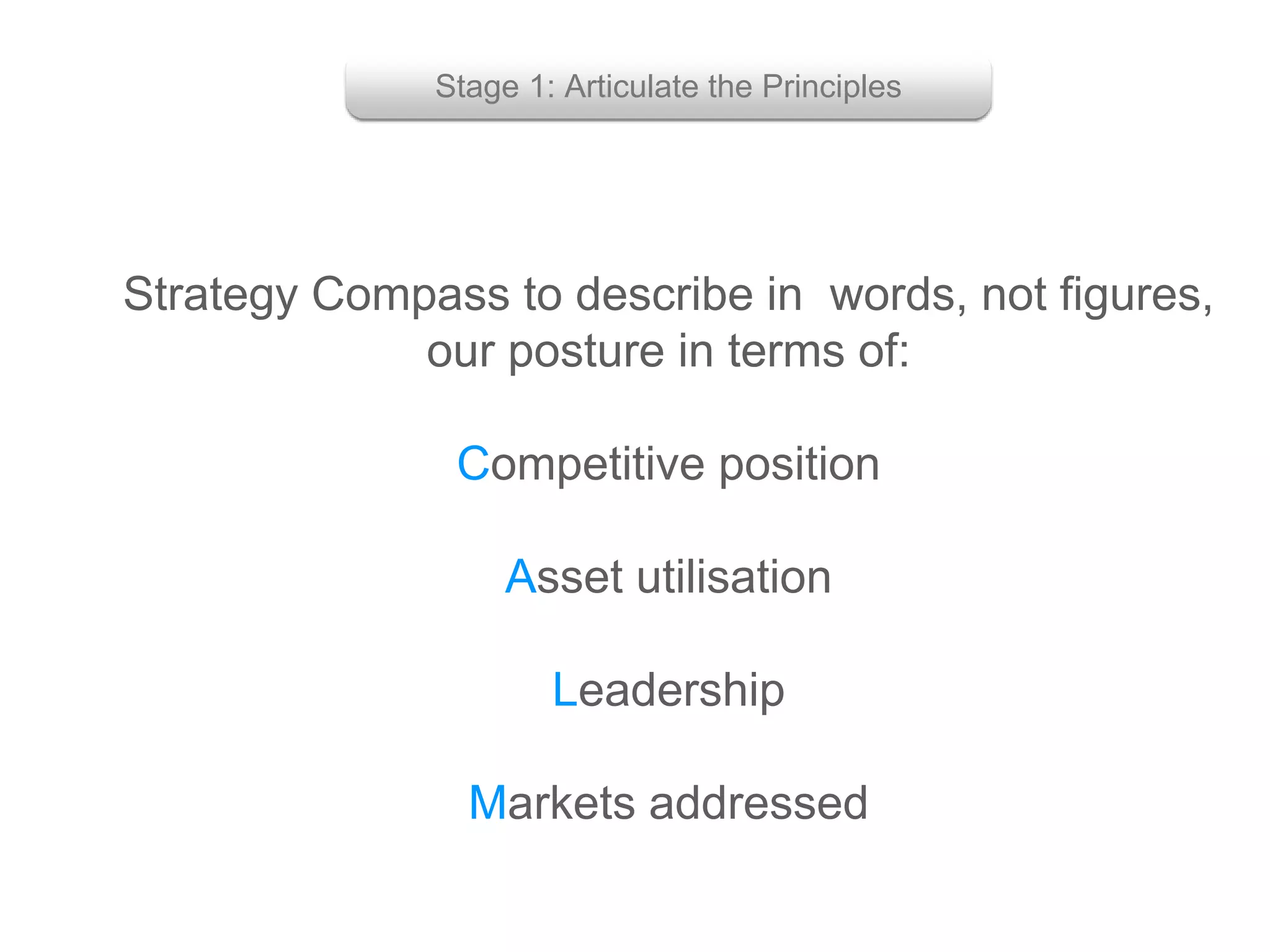
Strategy Compass to describe in words, not figures,
our posture in terms of:
Competitive position
Asset utilisation
Leadership
Markets addressed
Stage 1: Articulate the Principles
Complete the skeleton strategic plan
Stage 2: Fill in the detail
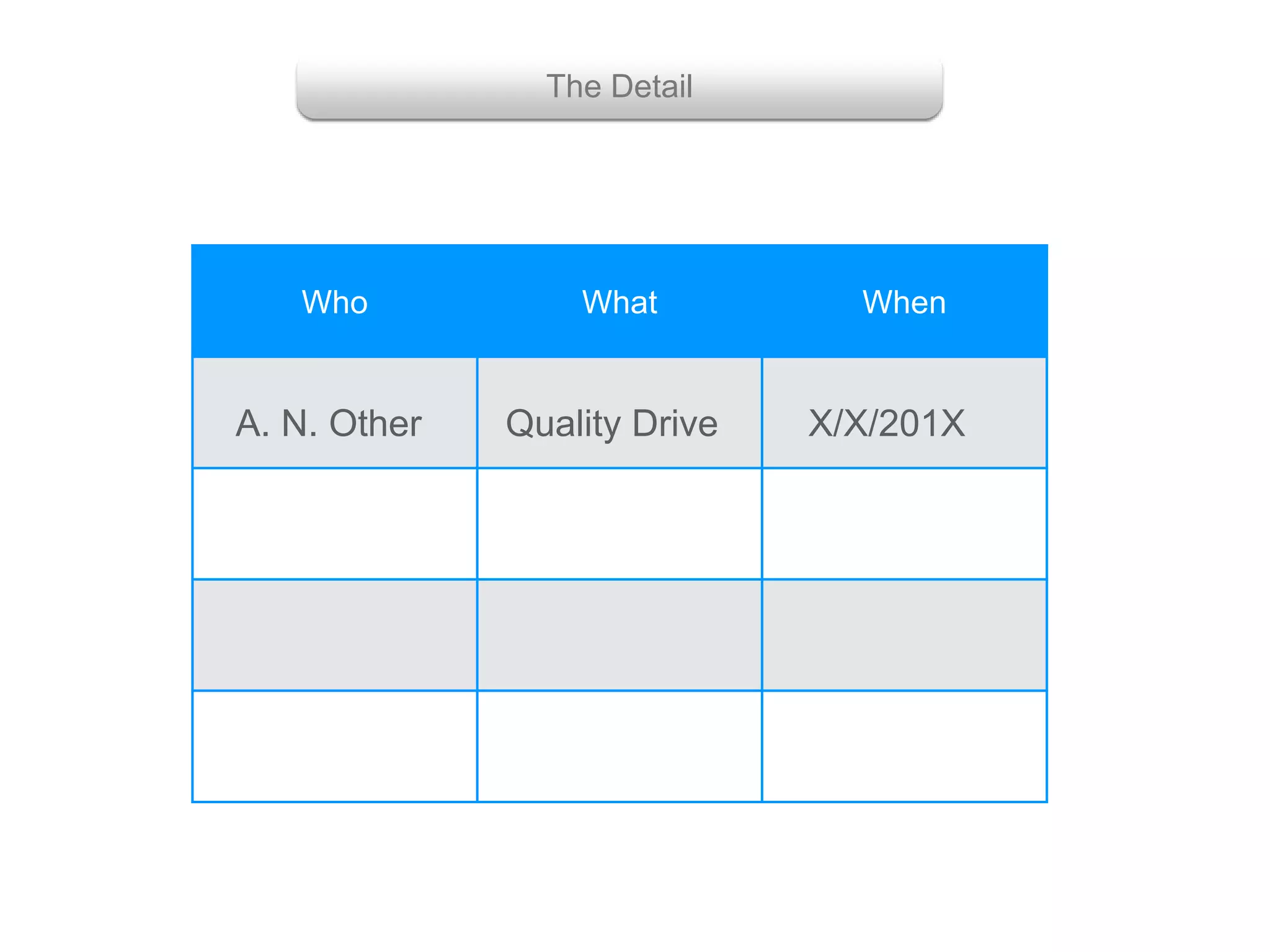
The Detail
Who What When
Quality DriveA. N. Other X/X/201X
The End

Cpsp implementation part 1