Covid-19 and Heart : What do we know so far?
Dr Syed Raza , MD,MRCP, FRCP, CCT, FACC, FESC
Consultant Cardiologist
Awali Hospital , Bahrain
Objectives
• Overview
• Patho-physiology
• Management strategy
• Key learning points
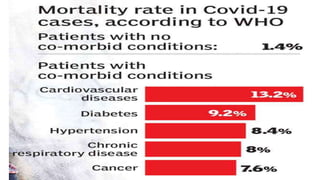
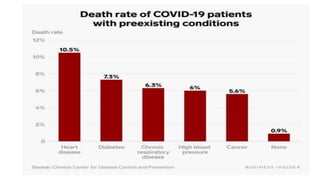
Large-scale epidemiological data from China has identified that patients
with cardiovascular disease have a higher mortality rate from COVID-19
(10.5% vs 0.9% for those without any comorbid conditions, [China CDC,
2020])
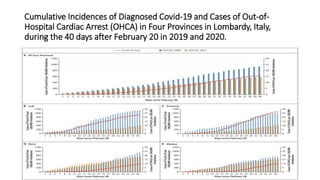
Cumulative Incidences of Diagnosed Covid-19 and Cases of Out-of-
Hospital Cardiac Arrest (OHCA) in Four Provinces in Lombardy, Italy,
during the 40 days after February 20 in 2019 and 2020.
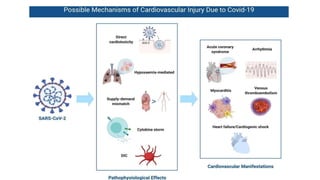
Patho-physiology
• 1. Hypoxia due to lung involvement – cardiac ischemia
• 2. Systemic hyperinflammation
a. alter cardiac pump function – cardiogenic shock
b. rapture of vulnerable atherosclerotic plaque -ACS
c. micro and macrovascular thrombosis – ACS
3. Direct cardiac muscle involvement – myocarditis
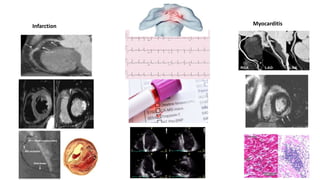
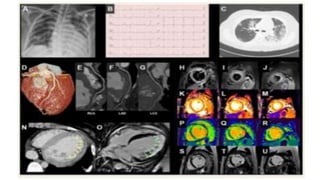
Myocarditis
Infarction
Why young and healthy patients are dying of
COVID-19 ?
• 1. Genetic predisposition
• 2. Poor immunity
• 3. Inherited lung condition,
Asthma
• 4. Smoker
• 5. High viral load
• 1. Acute fulminant myocarditis -
Acute cardiac decompensation &
malignant arrhythmia
• 2. Pro-thrombotic state –
coronary/cerebral/lungs
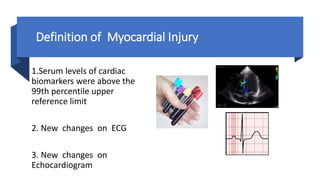
Definition of Myocardial Injury
1.Serum levels of cardiac
biomarkers were above the
99th percentile upper
reference limit
2. New changes on ECG
3. New changes on
Echocardiogram
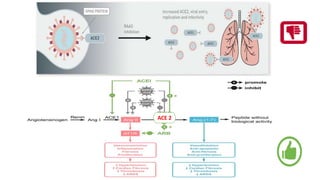
ACE 2
ACE inhibitors and angiotensin receptor blockers
in COVID-19
Based on the uncertainty regarding the overall effect of
RAAS inhibitors (ACE inhibitor (ACEI) and angiotensin
receptor blocker (ARB) therapy) in covid-19, multiple
specialty societies ( ACC/AHA/HFSA/ESC ) currently
recommend that RAAS inhibitors be continued in patients
in otherwise stable condition.
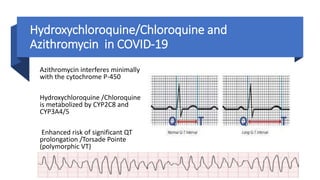
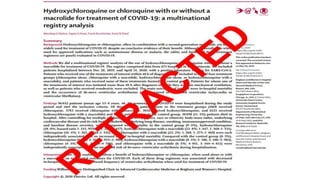
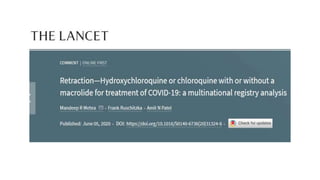
Hydroxychloroquine/Chloroquine and
Azithromycin in COVID-19
Azithromycin interferes minimally
with the cytochrome P-450
Hydroxychloroquine /Chloroquine
is metabolized by CYP2C8 and
CYP3A4/5
Enhanced risk of significant QT
prolongation /Torsade Pointe
(polymorphic VT)
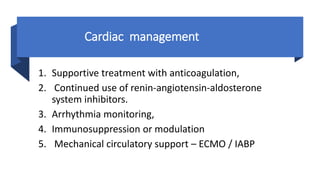
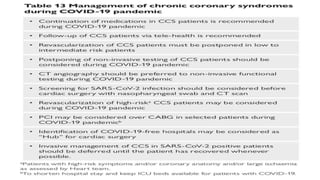
Cardiac management
1. Supportive treatment with anticoagulation,
2. Continued use of renin-angiotensin-aldosterone
system inhibitors.
3. Arrhythmia monitoring,
4. Immunosuppression or modulation
5. Mechanical circulatory support – ECMO / IABP
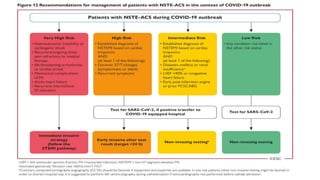
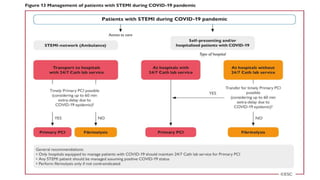
Catheterization Laboratory in the COVID Era
Key Learning Points
• Cardiovascular system is involved in a small proportion of patients.
• CV involvement does lead to increase the mortality.
• Often a cause for sudden death
• Complex patho-physiology
• Treatment is mainly supportive
• Definitive treatment is experimental.
• COVID-19 has had a significant impact on usual Cardiology practice.
• angiotensin receptor blockers (ARBs) and an ACE inhibitor (ACEI) upregulated
ACE2 expression in animal studies,
• here is no clinical or experimental evidence supporting that ARBs and ACEIs
either augment the susceptibility to SARS-CoV-2 or aggravate the severity and
outcomes of COVID-19 at presen
• ACE2 degrades angiotensin II to generate angiotensin 1-7, which activates the
mas oncogene receptor that negatively regulates a variety of angiotensin II
actions mediated by angiotensin II type 1 receptor (AT1R) [26]. Therefore, it is
thought that the ACE2/angiotensin 1-7/mas receptor axis has counteracting
effects against the excessively activated ACE/angiotensin II/AT1R axis, as seen in
hypertension, cardiac hypertrophy, heart failure, and other CVD
• Ang-(1–7) as a vasodilator and anti-trophic peptide in cardiovascular drug therapy
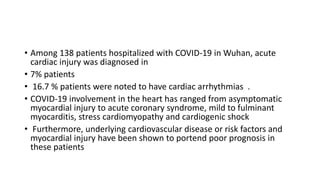
• Among 138 patients hospitalized with COVID-19 in Wuhan, acute
cardiac injury was diagnosed in
• 7% patients
• 16.7 % patients were noted to have cardiac arrhythmias .
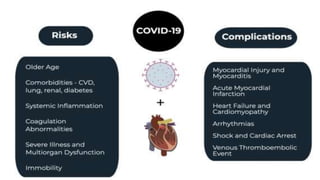
• COVID-19 involvement in the heart has ranged from asymptomatic
myocardial injury to acute coronary syndrome, mild to fulminant
myocarditis, stress cardiomyopathy and cardiogenic shock
• Furthermore, underlying cardiovascular disease or risk factors and
myocardial injury have been shown to portend poor prognosis in
these patients
MYOCARDITIS
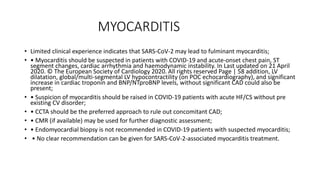
• Limited clinical experience indicates that SARS-CoV-2 may lead to fulminant myocarditis;
• • Myocarditis should be suspected in patients with COVID-19 and acute-onset chest pain, ST
segment changes, cardiac arrhythmia and haemodynamic instability. In Last updated on 21 April
2020. © The European Society of Cardiology 2020. All rights reserved Page | 58 addition, LV
dilatation, global/multi-segmental LV hypocontractility (on POC echocardiography), and significant
increase in cardiac troponin and BNP/NTproBNP levels, without significant CAD could also be
present;
• • Suspicion of myocarditis should be raised in COVID-19 patients with acute HF/CS without pre
existing CV disorder;
• • CCTA should be the preferred approach to rule out concomitant CAD;
• • CMR (if available) may be used for further diagnostic assessment;
• • Endomyocardial biopsy is not recommended in COVID-19 patients with suspected myocarditis;
• • No clear recommendation can be given for SARS-CoV-2-associated myocarditis treatment.
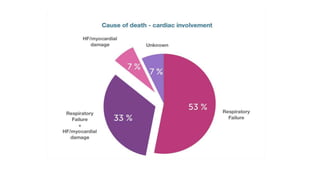
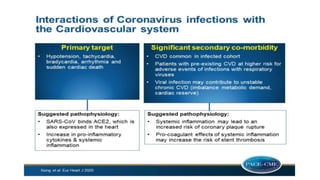
Heart may be affected, and this can occur in individuals with or
without a prior cardiovascular diagnosis. Evidence of myocardial injury,
as defined as an elevated troponin level, is common among patients
hospitalized with COVID-19, with putative causes including stress
cardiomyopathy, hypoxic injury, ischemic injury (caused by cardiac
microvascular damage or epicardial coronary artery disease), and
systemic inflammatory response syndrome (cytokine storm). A minority
of patients with an elevated troponin level present with symptoms and
signs suggestive of an acute coronary syndrome
• Patients with cardiovascular disease, hypertension, obesity, and diabetes are at
increased risk of a poor prognosis.
• Patients infected with the virus SARS-CoV-2 and its clinical disease COVID-19 are
often minimally symptomatic or asymptomatic. More severe presentations
include pneumonia and acute respiratory distress syndrome.
• In some patients, the heart may be affected, and this can occur in individuals with
or without a prior cardiovascular diagnosis. Evidence of myocardial injury, as
defined as an elevated troponin level, is common among patients hospitalized
with COVID-19, with putative causes including stress cardiomyopathy, hypoxic
injury, ischemic injury (caused by cardiac microvascular damage or epicardial
coronary artery disease), and systemic inflammatory response syndrome
(cytokine storm). A minority of patients with an elevated troponin level present
with symptoms and signs suggestive of an acute coronary syndrome.
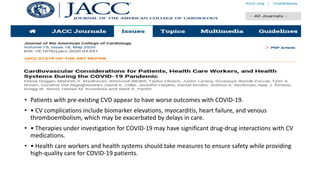
• Patients with pre-existing CVD appear to have worse outcomes with COVID-19.
• • CV complications include biomarker elevations, myocarditis, heart failure, and venous
thromboembolism, which may be exacerbated by delays in care.
• • Therapies under investigation for COVID-19 may have significant drug-drug interactions with CV
medications.
• • Health care workers and health systems should take measures to ensure safety while providing
high-quality care for COVID-19 patients.
• According to available clinical data, ≈15% to 30% of the COVID‐19 patients are with hypertension
and ≈2.5% to 15% are with coronary heart disease.3, 4, 5 Angiotensin‐converting enzyme inhibitors
(ACEIs)/angiotensin receptor blockers (ARBs) are widely used in the treatment of these
cardiovascular diseases. Interestingly, several studies have shown that ACEIs/ARBs exhibit ability
to upregulate ACE2 expression in addition to their main pharmacological effect to inhibit
angiotensin‐converting enzyme 1 (ACE1) or block angiotensin II type 1 receptor.6, 7, 8 Considering
that ACE2 expression might correlate with the susceptibility to SARS‐CoV‐2, intake of ACEIs/ARBs
might predispose patients to the infection of SARS‐CoV‐2. Therefore, some cardiologists
suggested that patients should discontinue ACEIs/ARBs to avoid the potential increased risk of
SARS‐CoV‐2 infection.9
• However, there is evidence demonstrating that the activation of the renin‐angiotensin system
(RAS) and the downregulation of ACE2 expression are involved in the pathological process of lung
injury after SARS‐CoV infection.10 Recently, it has been reported that serum level of angiotensin II
is significantly elevated in COVID‐19 patients and exhibits a linear positive correlation to viral load
and lung injury.11 Activation of the RAS can cause widespread endothelial dysfunction and varying
degrees of multiple organ (heart, kidney, and lung) injuries. Thus, intake of ACEIs/ARBs might
probably relieve the lung injury and absolutely decrease heart and renal damage resulting from
the RAS activat
Potential Heart Injury in COVID‐19
• As with SARS, patients with COVID‐19 also showed potential cardiac injuries. Chen et al reported that among
the 99 confirmed COVID‐19 patients admitted to Wuhan Jinyintan Hospital, 13 (13%) presented elevated
creatine kinase and 75 (76%) showed the elevation of lactate dehydrogenase.3 Wang et al described the
clinical characteristics of 138 hospitalized COVID‐19 patients at Zhongnan Hospital of Wuhan University and
found elevated hypersensitive troponin I in 10 (7.2%), whereas 23 (16.7%) had arrhythmia.4 Besides, Guan
et al extracted the data on 1099 COVID‐19 patients from 552 hospitals in 31 provinces/provincial
municipalities and found that 90 of 675 (13.7%) were with an elevated creatinine kinase level and 277 of 675
(37.2%) showed an increased lactate dehydrogenase level.5 The myocardial dysfunction can be indirect,
caused by reduced oxygen supply, severe lung failure, and the cytokine storm after the SARS‐CoV‐2 infection.
However, there is also the possibility that it might be attributable to the decreased activity of ACE2 in the
heart, just like SARS. Oudit et al18 detected the presence of SARS‐CoV and a marked decreased ACE2
expression in the heart of intranasal SARS‐CoV–infected mice. They also reported that SARS‐CoV was isolated
from 7 of 20 of the human autopsy hearts, and the myocardial damage was accompanied by the decreased
protein expression of myocardial ACE2 as well. Recently, an autopsy case of COVID‐19 was reported in
Chinese.19 Liu et al19 observed a moderate amount of transparent light‐yellow liquid in the pericardial cavity
and mild epicardial edema in an 85‐year‐old man who died from COVID‐19. They also reported that the
myocardial section was gray‐red fish‐like. Considering that this old patient showed a history of coronary
heart disease, whether the myocardial injury was associated with SARS‐CoV‐2 infection is still unclear.
However, direct evidence demonstrating that SARS‐CoV‐2 infects the heart and decreases the ACE2
expression is currently lacking.
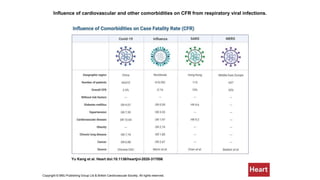
Influence of cardiovascular and other comorbidities on CFR from respiratory viral infections.
Yu Kang et al. Heart doi:10.1136/heartjnl-2020-317056
Copyright © BMJ Publishing Group Ltd & British Cardiovascular Society. All rights reserved.
• ole. Based on epidemiological data, palpitations are present in 7.3% of patients,
and a significantly higher proportion of critically ill patients develop arrhythmias,
although these have not yet been characterized.15,49 Arrhythmias in this patient
population can arise secondary to hypoxemia, metabolic derangements, systemic
inflammation, or myocarditis.
• acute coronary syndromes and acute myocardial infarction (AMI) can occur in
patients with COVID-19, but the incidence of such events is unclear. In principle,
risk for acute coronary syndromes in afflicted patients may be increased due to
heightened thrombotic proclivity, as evidenced by significantly elevated D-dimer
levels.15–17 Underlying this risk are known predisposing factors related to
inflammation: endothelial and smooth muscle cell activation; macrophage
activation, and tissue factor expression in atheromatous plaque; and platelet
activation with further elaboration of inflammatory mediators.50

COVID AND HEART.pptx

  • 1.
    Covid-19 and Heart: What do we know so far? Dr Syed Raza , MD,MRCP, FRCP, CCT, FACC, FESC Consultant Cardiologist Awali Hospital , Bahrain
  • 2.
    Objectives • Overview • Patho-physiology •Management strategy • Key learning points
  • 6.
    Large-scale epidemiological datafrom China has identified that patients with cardiovascular disease have a higher mortality rate from COVID-19 (10.5% vs 0.9% for those without any comorbid conditions, [China CDC, 2020])
  • 8.
    Cumulative Incidences ofDiagnosed Covid-19 and Cases of Out-of- Hospital Cardiac Arrest (OHCA) in Four Provinces in Lombardy, Italy, during the 40 days after February 20 in 2019 and 2020.
  • 10.
    Patho-physiology • 1. Hypoxiadue to lung involvement – cardiac ischemia • 2. Systemic hyperinflammation a. alter cardiac pump function – cardiogenic shock b. rapture of vulnerable atherosclerotic plaque -ACS c. micro and macrovascular thrombosis – ACS 3. Direct cardiac muscle involvement – myocarditis
  • 11.
  • 13.
    Why young andhealthy patients are dying of COVID-19 ? • 1. Genetic predisposition • 2. Poor immunity • 3. Inherited lung condition, Asthma • 4. Smoker • 5. High viral load • 1. Acute fulminant myocarditis - Acute cardiac decompensation & malignant arrhythmia • 2. Pro-thrombotic state – coronary/cerebral/lungs
  • 14.
    Definition of MyocardialInjury 1.Serum levels of cardiac biomarkers were above the 99th percentile upper reference limit 2. New changes on ECG 3. New changes on Echocardiogram
  • 16.
  • 17.
    ACE inhibitors andangiotensin receptor blockers in COVID-19 Based on the uncertainty regarding the overall effect of RAAS inhibitors (ACE inhibitor (ACEI) and angiotensin receptor blocker (ARB) therapy) in covid-19, multiple specialty societies ( ACC/AHA/HFSA/ESC ) currently recommend that RAAS inhibitors be continued in patients in otherwise stable condition.
  • 18.
    Hydroxychloroquine/Chloroquine and Azithromycin inCOVID-19 Azithromycin interferes minimally with the cytochrome P-450 Hydroxychloroquine /Chloroquine is metabolized by CYP2C8 and CYP3A4/5 Enhanced risk of significant QT prolongation /Torsade Pointe (polymorphic VT)
  • 20.
    Cardiac management 1. Supportivetreatment with anticoagulation, 2. Continued use of renin-angiotensin-aldosterone system inhibitors. 3. Arrhythmia monitoring, 4. Immunosuppression or modulation 5. Mechanical circulatory support – ECMO / IABP
  • 23.
  • 25.
    Key Learning Points •Cardiovascular system is involved in a small proportion of patients. • CV involvement does lead to increase the mortality. • Often a cause for sudden death • Complex patho-physiology • Treatment is mainly supportive • Definitive treatment is experimental. • COVID-19 has had a significant impact on usual Cardiology practice.
  • 28.
    • angiotensin receptorblockers (ARBs) and an ACE inhibitor (ACEI) upregulated ACE2 expression in animal studies, • here is no clinical or experimental evidence supporting that ARBs and ACEIs either augment the susceptibility to SARS-CoV-2 or aggravate the severity and outcomes of COVID-19 at presen • ACE2 degrades angiotensin II to generate angiotensin 1-7, which activates the mas oncogene receptor that negatively regulates a variety of angiotensin II actions mediated by angiotensin II type 1 receptor (AT1R) [26]. Therefore, it is thought that the ACE2/angiotensin 1-7/mas receptor axis has counteracting effects against the excessively activated ACE/angiotensin II/AT1R axis, as seen in hypertension, cardiac hypertrophy, heart failure, and other CVD • Ang-(1–7) as a vasodilator and anti-trophic peptide in cardiovascular drug therapy
  • 40.
    • Among 138patients hospitalized with COVID-19 in Wuhan, acute cardiac injury was diagnosed in • 7% patients • 16.7 % patients were noted to have cardiac arrhythmias . • COVID-19 involvement in the heart has ranged from asymptomatic myocardial injury to acute coronary syndrome, mild to fulminant myocarditis, stress cardiomyopathy and cardiogenic shock • Furthermore, underlying cardiovascular disease or risk factors and myocardial injury have been shown to portend poor prognosis in these patients
  • 41.
    MYOCARDITIS • Limited clinicalexperience indicates that SARS-CoV-2 may lead to fulminant myocarditis; • • Myocarditis should be suspected in patients with COVID-19 and acute-onset chest pain, ST segment changes, cardiac arrhythmia and haemodynamic instability. In Last updated on 21 April 2020. © The European Society of Cardiology 2020. All rights reserved Page | 58 addition, LV dilatation, global/multi-segmental LV hypocontractility (on POC echocardiography), and significant increase in cardiac troponin and BNP/NTproBNP levels, without significant CAD could also be present; • • Suspicion of myocarditis should be raised in COVID-19 patients with acute HF/CS without pre existing CV disorder; • • CCTA should be the preferred approach to rule out concomitant CAD; • • CMR (if available) may be used for further diagnostic assessment; • • Endomyocardial biopsy is not recommended in COVID-19 patients with suspected myocarditis; • • No clear recommendation can be given for SARS-CoV-2-associated myocarditis treatment.
  • 42.
    Heart may beaffected, and this can occur in individuals with or without a prior cardiovascular diagnosis. Evidence of myocardial injury, as defined as an elevated troponin level, is common among patients hospitalized with COVID-19, with putative causes including stress cardiomyopathy, hypoxic injury, ischemic injury (caused by cardiac microvascular damage or epicardial coronary artery disease), and systemic inflammatory response syndrome (cytokine storm). A minority of patients with an elevated troponin level present with symptoms and signs suggestive of an acute coronary syndrome
  • 43.
    • Patients withcardiovascular disease, hypertension, obesity, and diabetes are at increased risk of a poor prognosis. • Patients infected with the virus SARS-CoV-2 and its clinical disease COVID-19 are often minimally symptomatic or asymptomatic. More severe presentations include pneumonia and acute respiratory distress syndrome. • In some patients, the heart may be affected, and this can occur in individuals with or without a prior cardiovascular diagnosis. Evidence of myocardial injury, as defined as an elevated troponin level, is common among patients hospitalized with COVID-19, with putative causes including stress cardiomyopathy, hypoxic injury, ischemic injury (caused by cardiac microvascular damage or epicardial coronary artery disease), and systemic inflammatory response syndrome (cytokine storm). A minority of patients with an elevated troponin level present with symptoms and signs suggestive of an acute coronary syndrome.
  • 51.
    • Patients withpre-existing CVD appear to have worse outcomes with COVID-19. • • CV complications include biomarker elevations, myocarditis, heart failure, and venous thromboembolism, which may be exacerbated by delays in care. • • Therapies under investigation for COVID-19 may have significant drug-drug interactions with CV medications. • • Health care workers and health systems should take measures to ensure safety while providing high-quality care for COVID-19 patients.
  • 56.
    • According toavailable clinical data, ≈15% to 30% of the COVID‐19 patients are with hypertension and ≈2.5% to 15% are with coronary heart disease.3, 4, 5 Angiotensin‐converting enzyme inhibitors (ACEIs)/angiotensin receptor blockers (ARBs) are widely used in the treatment of these cardiovascular diseases. Interestingly, several studies have shown that ACEIs/ARBs exhibit ability to upregulate ACE2 expression in addition to their main pharmacological effect to inhibit angiotensin‐converting enzyme 1 (ACE1) or block angiotensin II type 1 receptor.6, 7, 8 Considering that ACE2 expression might correlate with the susceptibility to SARS‐CoV‐2, intake of ACEIs/ARBs might predispose patients to the infection of SARS‐CoV‐2. Therefore, some cardiologists suggested that patients should discontinue ACEIs/ARBs to avoid the potential increased risk of SARS‐CoV‐2 infection.9 • However, there is evidence demonstrating that the activation of the renin‐angiotensin system (RAS) and the downregulation of ACE2 expression are involved in the pathological process of lung injury after SARS‐CoV infection.10 Recently, it has been reported that serum level of angiotensin II is significantly elevated in COVID‐19 patients and exhibits a linear positive correlation to viral load and lung injury.11 Activation of the RAS can cause widespread endothelial dysfunction and varying degrees of multiple organ (heart, kidney, and lung) injuries. Thus, intake of ACEIs/ARBs might probably relieve the lung injury and absolutely decrease heart and renal damage resulting from the RAS activat
  • 57.
    Potential Heart Injuryin COVID‐19 • As with SARS, patients with COVID‐19 also showed potential cardiac injuries. Chen et al reported that among the 99 confirmed COVID‐19 patients admitted to Wuhan Jinyintan Hospital, 13 (13%) presented elevated creatine kinase and 75 (76%) showed the elevation of lactate dehydrogenase.3 Wang et al described the clinical characteristics of 138 hospitalized COVID‐19 patients at Zhongnan Hospital of Wuhan University and found elevated hypersensitive troponin I in 10 (7.2%), whereas 23 (16.7%) had arrhythmia.4 Besides, Guan et al extracted the data on 1099 COVID‐19 patients from 552 hospitals in 31 provinces/provincial municipalities and found that 90 of 675 (13.7%) were with an elevated creatinine kinase level and 277 of 675 (37.2%) showed an increased lactate dehydrogenase level.5 The myocardial dysfunction can be indirect, caused by reduced oxygen supply, severe lung failure, and the cytokine storm after the SARS‐CoV‐2 infection. However, there is also the possibility that it might be attributable to the decreased activity of ACE2 in the heart, just like SARS. Oudit et al18 detected the presence of SARS‐CoV and a marked decreased ACE2 expression in the heart of intranasal SARS‐CoV–infected mice. They also reported that SARS‐CoV was isolated from 7 of 20 of the human autopsy hearts, and the myocardial damage was accompanied by the decreased protein expression of myocardial ACE2 as well. Recently, an autopsy case of COVID‐19 was reported in Chinese.19 Liu et al19 observed a moderate amount of transparent light‐yellow liquid in the pericardial cavity and mild epicardial edema in an 85‐year‐old man who died from COVID‐19. They also reported that the myocardial section was gray‐red fish‐like. Considering that this old patient showed a history of coronary heart disease, whether the myocardial injury was associated with SARS‐CoV‐2 infection is still unclear. However, direct evidence demonstrating that SARS‐CoV‐2 infects the heart and decreases the ACE2 expression is currently lacking.
  • 58.
    Influence of cardiovascularand other comorbidities on CFR from respiratory viral infections. Yu Kang et al. Heart doi:10.1136/heartjnl-2020-317056 Copyright © BMJ Publishing Group Ltd & British Cardiovascular Society. All rights reserved.
  • 60.
    • ole. Basedon epidemiological data, palpitations are present in 7.3% of patients, and a significantly higher proportion of critically ill patients develop arrhythmias, although these have not yet been characterized.15,49 Arrhythmias in this patient population can arise secondary to hypoxemia, metabolic derangements, systemic inflammation, or myocarditis. • acute coronary syndromes and acute myocardial infarction (AMI) can occur in patients with COVID-19, but the incidence of such events is unclear. In principle, risk for acute coronary syndromes in afflicted patients may be increased due to heightened thrombotic proclivity, as evidenced by significantly elevated D-dimer levels.15–17 Underlying this risk are known predisposing factors related to inflammation: endothelial and smooth muscle cell activation; macrophage activation, and tissue factor expression in atheromatous plaque; and platelet activation with further elaboration of inflammatory mediators.50

Editor's Notes

  • #7 imitations of both studies include a retrospective design. In Shi et al., data was missing in 47% of patients with COVID-19, and these were excluded from the cohort, leading to potential bias. Neither study reported the incidence of myocardial infarction, arrhythmia or cardiomyopathy, nor the proportion of patients requiring inotropic support. It may be that any biomarker rise is associated with increased mortality, or that there is a threshold effect, above which risk is greater. Finally, the applicability to cohorts outside of China, and outside of a disease epicentre is unknown.
  • #9 Panel A shows the data for all four provinces, and the other panels show the data for each individual province (Panel B, Lodi; Panel C, Cremona; Panel D, Pavia; and Panel E, Mantua). The vertical blue bars show the cumulative numbers of cases of OHCA per 100,000 inhabitants from February 21 through March 31, 2020, and the vertical orange bars show the cumulative numbers of cases of OHCA per 100,000 inhabitants from February 21 through April 1, 2019. The red line shows the cumulative number of cases of Covid-19 per 100,000 inhabitants in 2020.
  • #12 This is the slide that I have prepared myself to improve your better in differenciating myocardial infarction or ischemia from myocarditis which is crucial to recognize in order to guide correct and optimum management strategy. This has to be adopted right in the beginning . Every assessment in Medicine begins with the basics. In other words to very well understand the initial clinical presentation. You will see here three vertical panels where I have tried to demonstrate the features of infarction on your left and myocarditis on your right. The middle panel is common to both. History of chest pain , ECG changes and rise in Troponin sometimes may not help and may be inadequate to differentiate between the two. Echo cardiogram would show regional wall motion abnormalities in MI and global LV dysfuction in myocarditis . Other imaging modality is cardiac MRI ( mid wall or epicardial LGE in myocarditis while endocardial LGE in iscahema or infarction ) . However, the definitive investigation would be CAG in CAD while it will be EMB in myocarditis , both of which are difficult to obtain very sick COVID patients. To meet this leverage , CT coronary angiogram can be helpful. Will show obstruction of Cas in CAD while they are clear or non obstructive in myocarditis.
  • #18 Since SARS-CoV-2 uses the ACE2 protein for ligand binding before entering the cell,10 there are concerns regarding the use of renin-angiotensin-aldosterone system (RAAS) inhibitors that may increase ACE2 expression.13 48 The relationship between ACE2 expression and SARS-CoV-2 virulence is uncertain. After cell entry via ACE2, SARS-CoV-2 appears to subsequently downregulate ACE2 expression, which is vital to maintenance of cardiac function.49 In mouse models, reduction in ACE2 expression is associated with increased severity of lung injury induced by influenza.50 Whether higher expression of ACE2 increases susceptibility to SARS-CoV-2 infection or confers cardioprotection remains controversial.51 Furthermore, experimental animal models and few studies in humans have yielded conflicting results as to whether RAAS inhibition increases ACE2 expression
  • #19 Hydroxychloroquine is a derivative of Chloroquine being used for treatment and prophylaxis of malaria for decades . It is also being used in SLE and Rheumatoid arthritis. Azithromycin is a ,macrolide antibiotic which showed some effective anti viral properties in vitro against zika and ebola viruses. Hydroxychloroquine as you all know became the most controversial and politized molecule of COVID pandemic. After its initial gain of attention, encouragement as well as promotion , eyes were raised from different corners of scientific arena questioning its safety and this indeed suffered a set back. Each of the mentioned drugs prolong and in particular given in combo can have worst implications. QT interval is the interval from the beginning of q wave on the ECG to the end of T wave. This interval is corrected taking heart rate into consideration. Normal QT is 440 ms in male and 460 ms in female and If the co QT is prolonged more than 500 ms , this predisposes to Torsade pointes which is polymorphic VT that can progress to ventricular fibrillation , cardiac arrest and death.
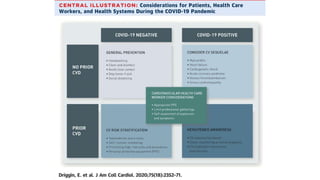
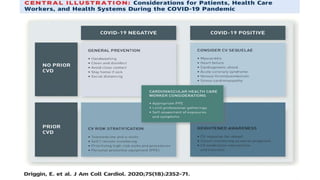
  • #55 Considerations for Patients, Health Care Workers, and Health Systems During the COVID-19 Pandemic Key considerations for patients with established cardiovascular disease (CVD), patients without CVD, and for health care workers and health care systems in the setting of the coronavirus disease 2019 (COVID-19) outbreak. CV = cardiovascular; PPE = personal protective equipment.
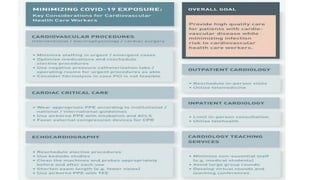
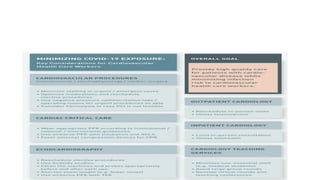
  • #56 Considerations Regarding COVID-19 for Cardiovascular Health Care Workers by Specialty Infographic with important considerations regarding coronavirus disease 2019 (COVID-19) for cardiovascular disease health care workers by specialty. ACLS = advanced cardiac life support; CPR = cardiopulmonary resuscitation; PCI = percutaneous coronary intervention; PPE = personal protective equipment; TEE = transesophageal echocardiography. 5 of 5 « PrevNext » Close
  • #59 Influence of cardiovascular and other comorbidities on CFR from respiratory viral infections. CDC, Center for Disease Control and Prevention; CFR, case fatality rate; MERS, Middle East respiratory syndrome; SARS, severe acute respiratory syndrome. Data are from Chinese CDC,5 Mertz et al,71 Chan et al 72 and Badawi et al. 73
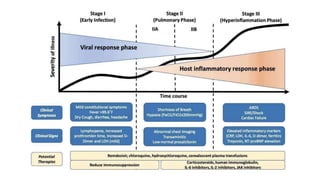
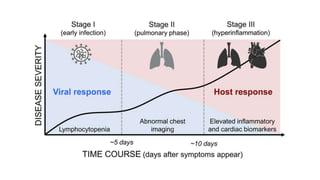
  • #60 Acute disease progression can be divided into 3 distinct phases: an early infection phase, a pulmonary phase, and a severe hyperinflammation phase (Figure 1).9–11 In any given patient, however, there can be significant overlap among the phases. Although most cases are mild or asymptomatic (81%),12 this paradigm of disease progression in critically ill patients with COVID-19 is heuristically instructive in highlighting the role of inflammation and secondary organ involvement. During the early infection phase, the virus infiltrates the lung parenchyma and begins to proliferate. This stage is characterized by mild constitutional symptoms and marks the initial response by innate immunity, namely monocytes and macrophages. Collateral tissue injury and the inflammatory processes that follow—vasodilation, endothelial permeability, leukocyte recruitment—lead to further pulmonary damage, hypoxemia, and cardiovascular stress. In a subset of patients, the host inflammatory response continues to amplify (even with diminishing viral loads) and results in systemic inflammation.11,13 This systemic toxicity, in turn, has the potential to injure distant organs. Reports of myocarditis in COVID-19 without evidence of direct viral infiltration implicate the heart as one such target of systemic inflammation (Figure 2).14The disease progression over time is divided into 3 pathological phases: an early infection phase, a pulmonary phase, and a severe hyperinflammation phase. The early infection phase is characterized by viral infiltration and replication. Lymphocytopenia is a key laboratory finding at this stage. The disease progresses into the pulmonary phase, characterized by respiratory compromise and abnormal chest imaging. An exaggerated inflammatory response driven by the host immunity defines the hyperinflammation phase. Inflammatory markers are elevated at this stage, and secondary organ damage becomes apparent. The present schematic depicts only the acute phase of illness (cf. Figure 7). Adapted from Siddiqi and Mehra9 and Belkaid and Rouse.10