
NOUNS
COUNTABLE UNCOUNTABLE
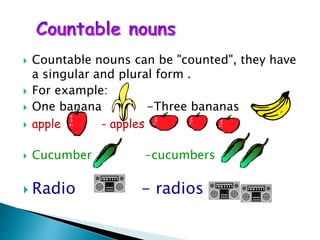
 Countable nouns can be "counted", they have
a singular and plural form .
 For example:
 One banana -Three bananas
 apple - apples
 Cucumber -cucumbers
 Radio - radios
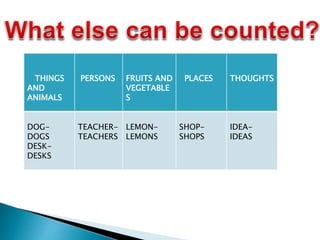
THINGS
AND
ANIMALS
PERSONS FRUITS AND
VEGETABLE
S
PLACES THOUGHTS
DOG-
DOGS
DESK-
DESKS
TEACHER-
TEACHERS
LEMON-
LEMONS
SHOP-
SHOPS
IDEA-
IDEAS
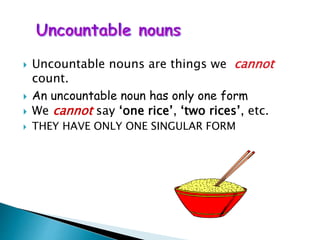
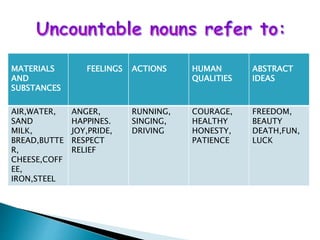
 Uncountable nouns are things we cannot
count.
 An uncountable noun has only one form
 We cannot say ‘one rice’, ‘two rices’, etc.
 THEY HAVE ONLY ONE SINGULAR FORM
MATERIALS
AND
SUBSTANCES
FEELINGS ACTIONS HUMAN
QUALITIES
ABSTRACT
IDEAS
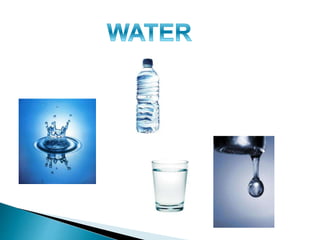
AIR,WATER,
SAND
MILK,
BREAD,BUTTE
R,
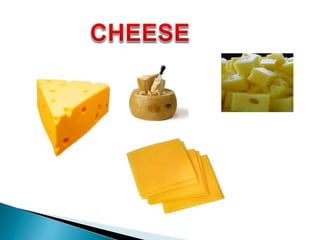
CHEESE,COFF
EE,
IRON,STEEL
ANGER,
HAPPINES.
JOY,PRIDE,
RESPECT
RELIEF
RUNNING,
SINGING,
DRIVING
COURAGE,
HEALTHY
HONESTY,
PATIENCE
FREEDOM,
BEAUTY
DEATH,FUN,
LUCK
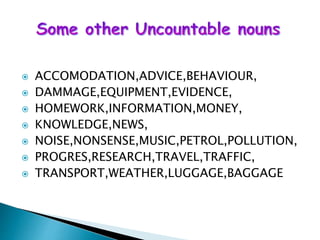
 ACCOMODATION,ADVICE,BEHAVIOUR,
 DAMMAGE,EQUIPMENT,EVIDENCE,
 HOMEWORK,INFORMATION,MONEY,
 KNOWLEDGE,NEWS,
 NOISE,NONSENSE,MUSIC,PETROL,POLLUTION,
 PROGRES,RESEARCH,TRAVEL,TRAFFIC,
 TRANSPORT,WEATHER,LUGGAGE,BAGGAGE
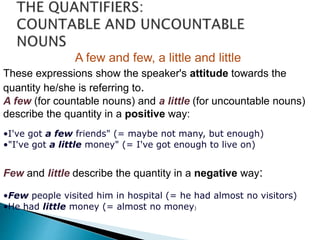
A few and few, a little and little
These expressions show the speaker's attitude towards the
quantity he/she is referring to.
A few (for countable nouns) and a little (for uncountable nouns)
describe the quantity in a positive way:
•I've got a few friends" (= maybe not many, but enough)
•"I've got a little money" (= I've got enough to live on)
Few and little describe the quantity in a negative way:
•Few people visited him in hospital (= he had almost no visitors)
•He had little money (= almost no money)
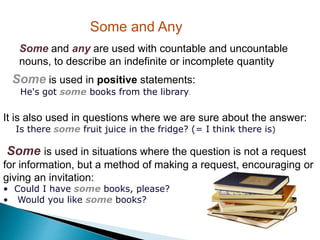
Some and Any
Some and any are used with countable and uncountable
nouns, to describe an indefinite or incomplete quantity
Some is used in positive statements:
He's got some books from the library.
It is also used in questions where we are sure about the answer:
Is there some fruit juice in the fridge? (= I think there is)
Some is used in situations where the question is not a request
for information, but a method of making a request, encouraging or
giving an invitation:
• Could I have some books, please?
• Would you like some books?
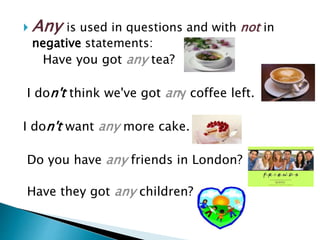
 Any is used in questions and with not in
negative statements:
Have you got any tea?
I don't think we've got any coffee left.
I don't want any more cake.
Do you have any friends in London?
Have they got any children?
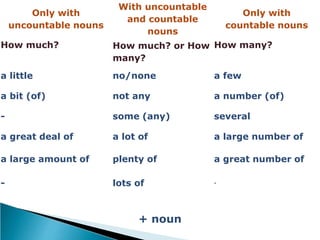
Only with
uncountable nouns
With uncountable
and countable
nouns
Only with
countable nouns
How much? How much? or How
many?
How many?
a little no/none a few
a bit (of) not any a number (of)
- some (any) several
a great deal of a lot of a large number of
a large amount of plenty of a great number of
- lots of -
+ noun
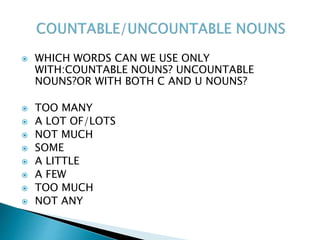
 WHICH WORDS CAN WE USE ONLY
WITH:COUNTABLE NOUNS? UNCOUNTABLE
NOUNS?OR WITH BOTH C AND U NOUNS?
 TOO MANY
 A LOT OF/LOTS
 NOT MUCH
 SOME
 A LITTLE
 A FEW
 TOO MUCH
 NOT ANY
 CHOSE THE CORRECT ITEM.
 A: HOW MUCH/MANY ORANGE JUICE IS THERE IN THE
BOTTLE?
 B: THERE’S ONLY A FEW/LITTLE.
 C: HOW MUCH/MANY SUGAR DO YOU TAKE IN YOUR COFFEE?
 D: JUST A LITTLE/A FEW.
 E: HAS RED MEAT GOT MUCH/MANY PROTEIN?
 F: YES, BUT TOO MANY/MUCH MEAT IS BAD FOR YOU.
 G:THERE ISN’T SOME/ANY CAKE LEFT.
 H: HOW ABOUT SOME/ANY BISCUITS?
 I: WE DON’T HAVE ANY/FEW EGGS TO MAKE AN OMELETTE.
 J: I’LL GO AND GET SOME/ANY.
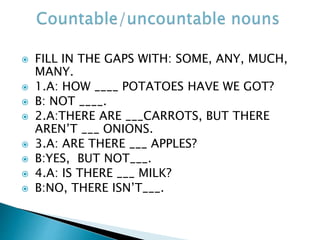
 FILL IN THE GAPS WITH: SOME, ANY, MUCH,
MANY.
 1.A: HOW ____ POTATOES HAVE WE GOT?
 B: NOT ____.
 2.A:THERE ARE ___CARROTS, BUT THERE
AREN’T ___ ONIONS.
 3.A: ARE THERE ___ APPLES?
 B:YES, BUT NOT___.
 4.A: IS THERE ___ MILK?
 B:NO, THERE ISN’T___.
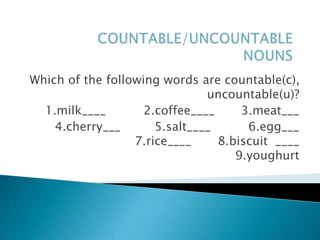
Which of the following words are countable(c),
uncountable(u)?
1.milk____ 2.coffee____ 3.meat___
4.cherry___ 5.salt____ 6.egg___
7.rice____ 8.biscuit ____
9.youghurt
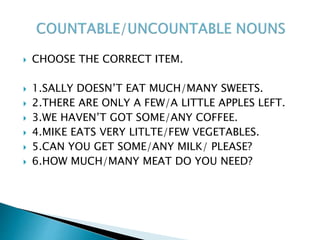
 CHOOSE THE CORRECT ITEM.
 1.SALLY DOESN’T EAT MUCH/MANY SWEETS.
 2.THERE ARE ONLY A FEW/A LITTLE APPLES LEFT.
 3.WE HAVEN’T GOT SOME/ANY COFFEE.
 4.MIKE EATS VERY LITLTE/FEW VEGETABLES.
 5.CAN YOU GET SOME/ANY MILK/ PLEASE?
 6.HOW MUCH/MANY MEAT DO YOU NEED?
Prepared by: Ingrida Capuni
Orsida Sevo
Malvina Marqeshi
THANK YOU

Countable uncountable nouns_ presentation 1_primero medio

  • 2.
  • 3.
     Countable nounscan be "counted", they have a singular and plural form .  For example:  One banana -Three bananas  apple - apples  Cucumber -cucumbers  Radio - radios
  • 4.
    THINGS AND ANIMALS PERSONS FRUITS AND VEGETABLE S PLACESTHOUGHTS DOG- DOGS DESK- DESKS TEACHER- TEACHERS LEMON- LEMONS SHOP- SHOPS IDEA- IDEAS
  • 5.
     Uncountable nounsare things we cannot count.  An uncountable noun has only one form  We cannot say ‘one rice’, ‘two rices’, etc.  THEY HAVE ONLY ONE SINGULAR FORM
  • 6.
  • 7.
     ACCOMODATION,ADVICE,BEHAVIOUR,  DAMMAGE,EQUIPMENT,EVIDENCE, HOMEWORK,INFORMATION,MONEY,  KNOWLEDGE,NEWS,  NOISE,NONSENSE,MUSIC,PETROL,POLLUTION,  PROGRES,RESEARCH,TRAVEL,TRAFFIC,  TRANSPORT,WEATHER,LUGGAGE,BAGGAGE
  • 8.
    A few andfew, a little and little These expressions show the speaker's attitude towards the quantity he/she is referring to. A few (for countable nouns) and a little (for uncountable nouns) describe the quantity in a positive way: •I've got a few friends" (= maybe not many, but enough) •"I've got a little money" (= I've got enough to live on) Few and little describe the quantity in a negative way: •Few people visited him in hospital (= he had almost no visitors) •He had little money (= almost no money)
  • 9.
    Some and Any Someand any are used with countable and uncountable nouns, to describe an indefinite or incomplete quantity Some is used in positive statements: He's got some books from the library. It is also used in questions where we are sure about the answer: Is there some fruit juice in the fridge? (= I think there is) Some is used in situations where the question is not a request for information, but a method of making a request, encouraging or giving an invitation: • Could I have some books, please? • Would you like some books?
  • 10.
     Any isused in questions and with not in negative statements: Have you got any tea? I don't think we've got any coffee left. I don't want any more cake. Do you have any friends in London? Have they got any children?
  • 11.
    Only with uncountable nouns Withuncountable and countable nouns Only with countable nouns How much? How much? or How many? How many? a little no/none a few a bit (of) not any a number (of) - some (any) several a great deal of a lot of a large number of a large amount of plenty of a great number of - lots of - + noun
  • 15.
     WHICH WORDSCAN WE USE ONLY WITH:COUNTABLE NOUNS? UNCOUNTABLE NOUNS?OR WITH BOTH C AND U NOUNS?  TOO MANY  A LOT OF/LOTS  NOT MUCH  SOME  A LITTLE  A FEW  TOO MUCH  NOT ANY
  • 16.
     CHOSE THECORRECT ITEM.  A: HOW MUCH/MANY ORANGE JUICE IS THERE IN THE BOTTLE?  B: THERE’S ONLY A FEW/LITTLE.  C: HOW MUCH/MANY SUGAR DO YOU TAKE IN YOUR COFFEE?  D: JUST A LITTLE/A FEW.  E: HAS RED MEAT GOT MUCH/MANY PROTEIN?  F: YES, BUT TOO MANY/MUCH MEAT IS BAD FOR YOU.  G:THERE ISN’T SOME/ANY CAKE LEFT.  H: HOW ABOUT SOME/ANY BISCUITS?  I: WE DON’T HAVE ANY/FEW EGGS TO MAKE AN OMELETTE.  J: I’LL GO AND GET SOME/ANY.
  • 17.
     FILL INTHE GAPS WITH: SOME, ANY, MUCH, MANY.  1.A: HOW ____ POTATOES HAVE WE GOT?  B: NOT ____.  2.A:THERE ARE ___CARROTS, BUT THERE AREN’T ___ ONIONS.  3.A: ARE THERE ___ APPLES?  B:YES, BUT NOT___.  4.A: IS THERE ___ MILK?  B:NO, THERE ISN’T___.
  • 18.
    Which of thefollowing words are countable(c), uncountable(u)? 1.milk____ 2.coffee____ 3.meat___ 4.cherry___ 5.salt____ 6.egg___ 7.rice____ 8.biscuit ____ 9.youghurt
  • 19.
     CHOOSE THECORRECT ITEM.  1.SALLY DOESN’T EAT MUCH/MANY SWEETS.  2.THERE ARE ONLY A FEW/A LITTLE APPLES LEFT.  3.WE HAVEN’T GOT SOME/ANY COFFEE.  4.MIKE EATS VERY LITLTE/FEW VEGETABLES.  5.CAN YOU GET SOME/ANY MILK/ PLEASE?  6.HOW MUCH/MANY MEAT DO YOU NEED?
  • 20.
    Prepared by: IngridaCapuni Orsida Sevo Malvina Marqeshi THANK YOU