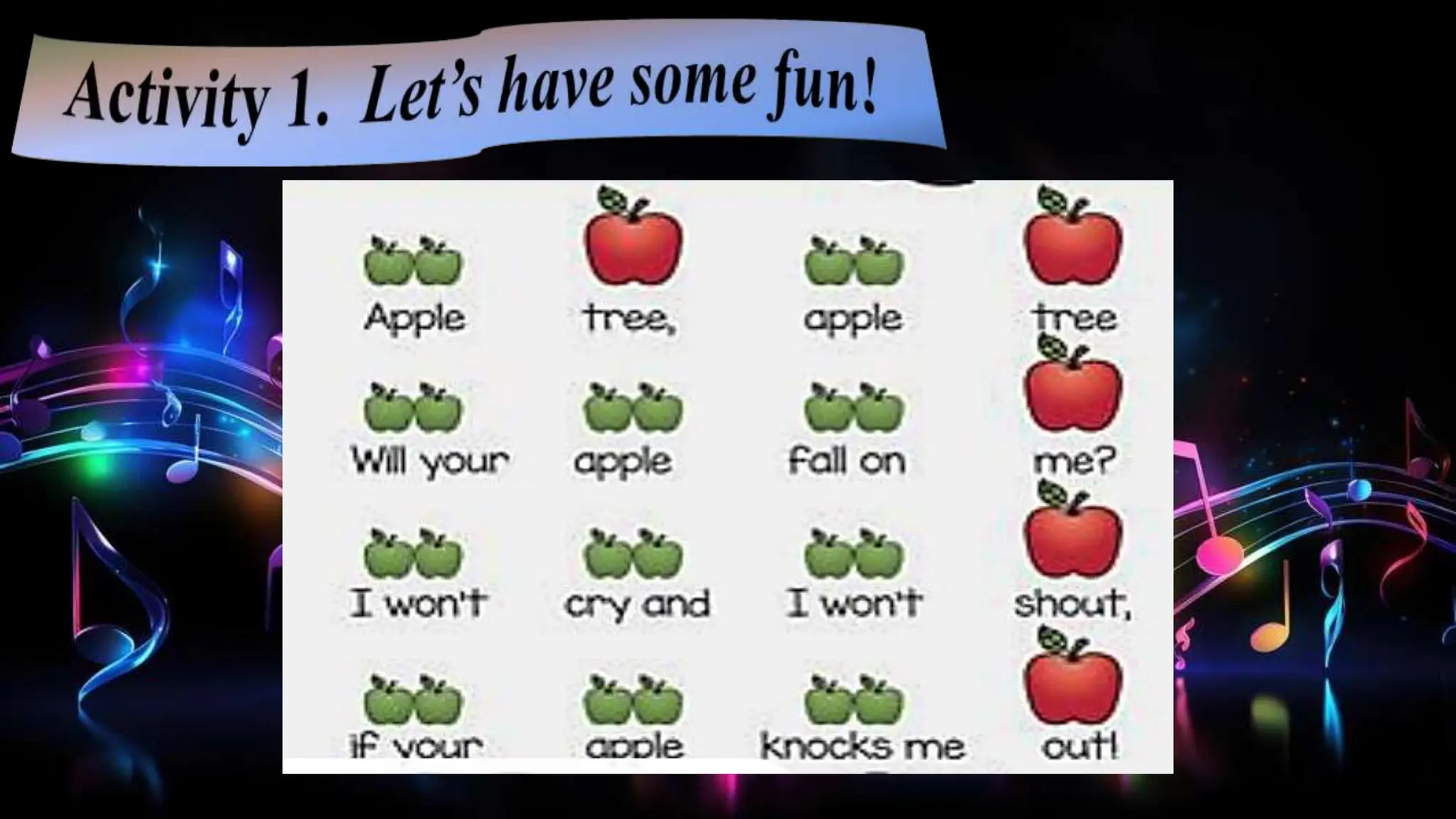
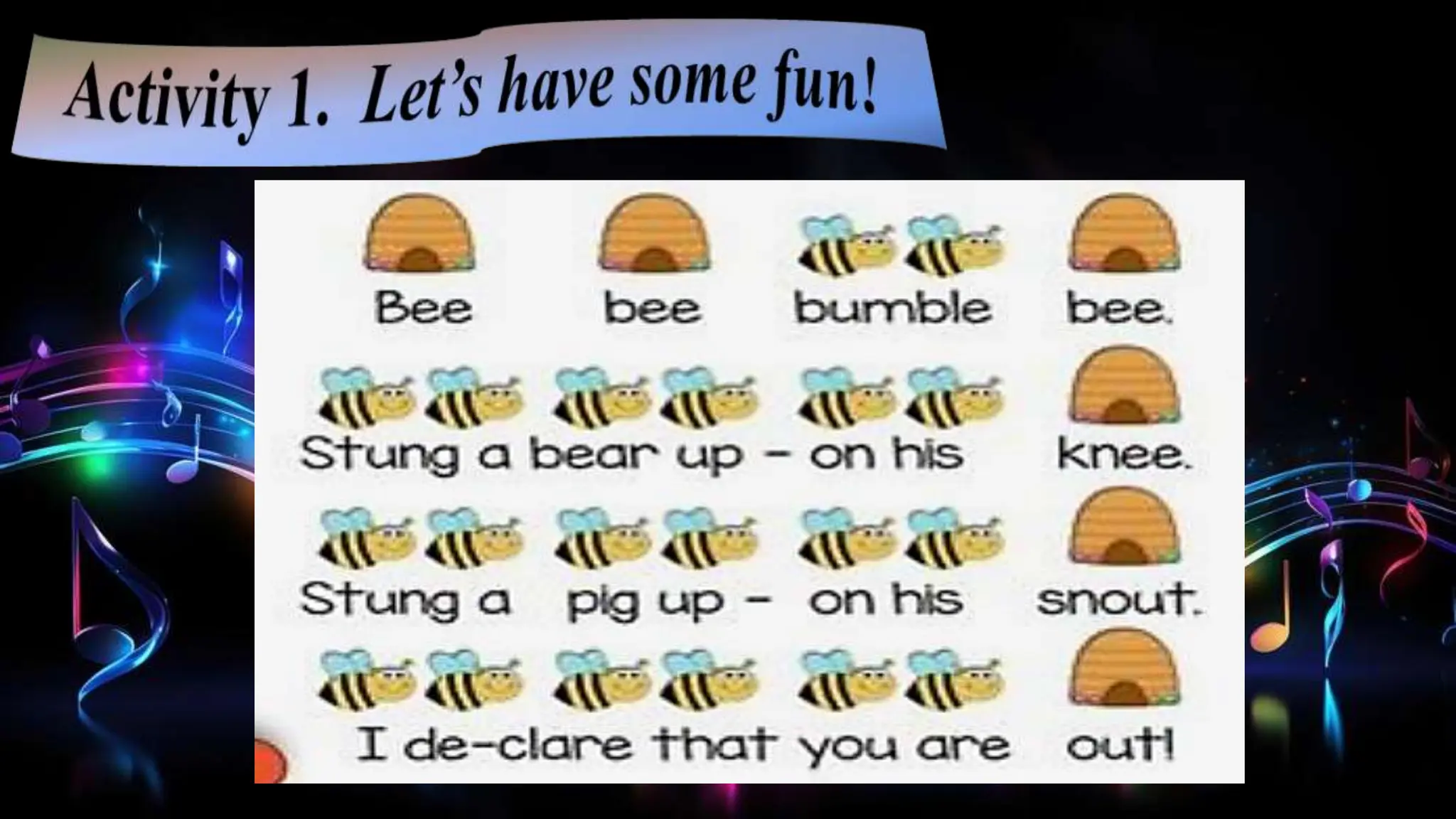
Let’s enjoy singing!
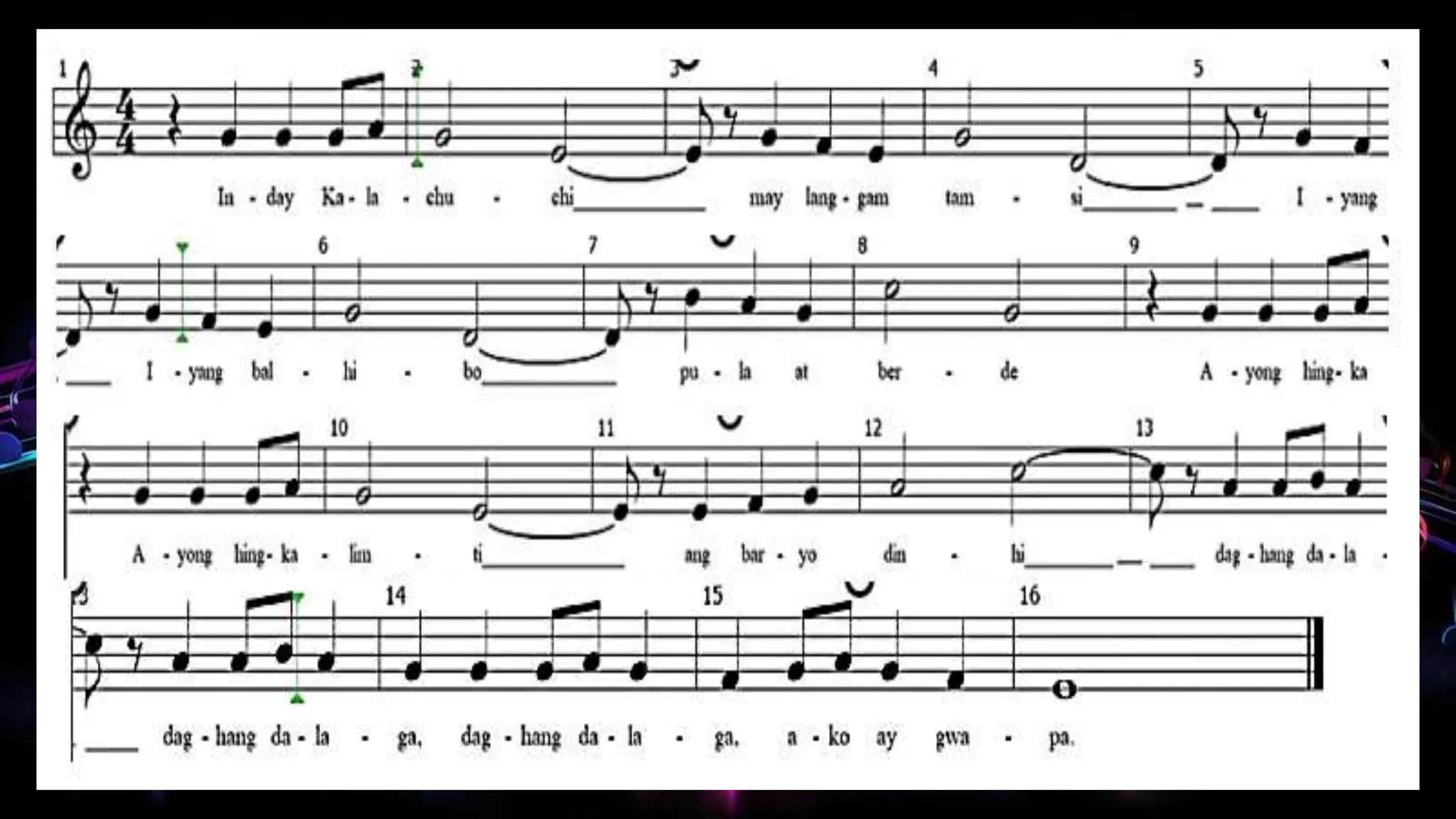
Inday Kalachuchi
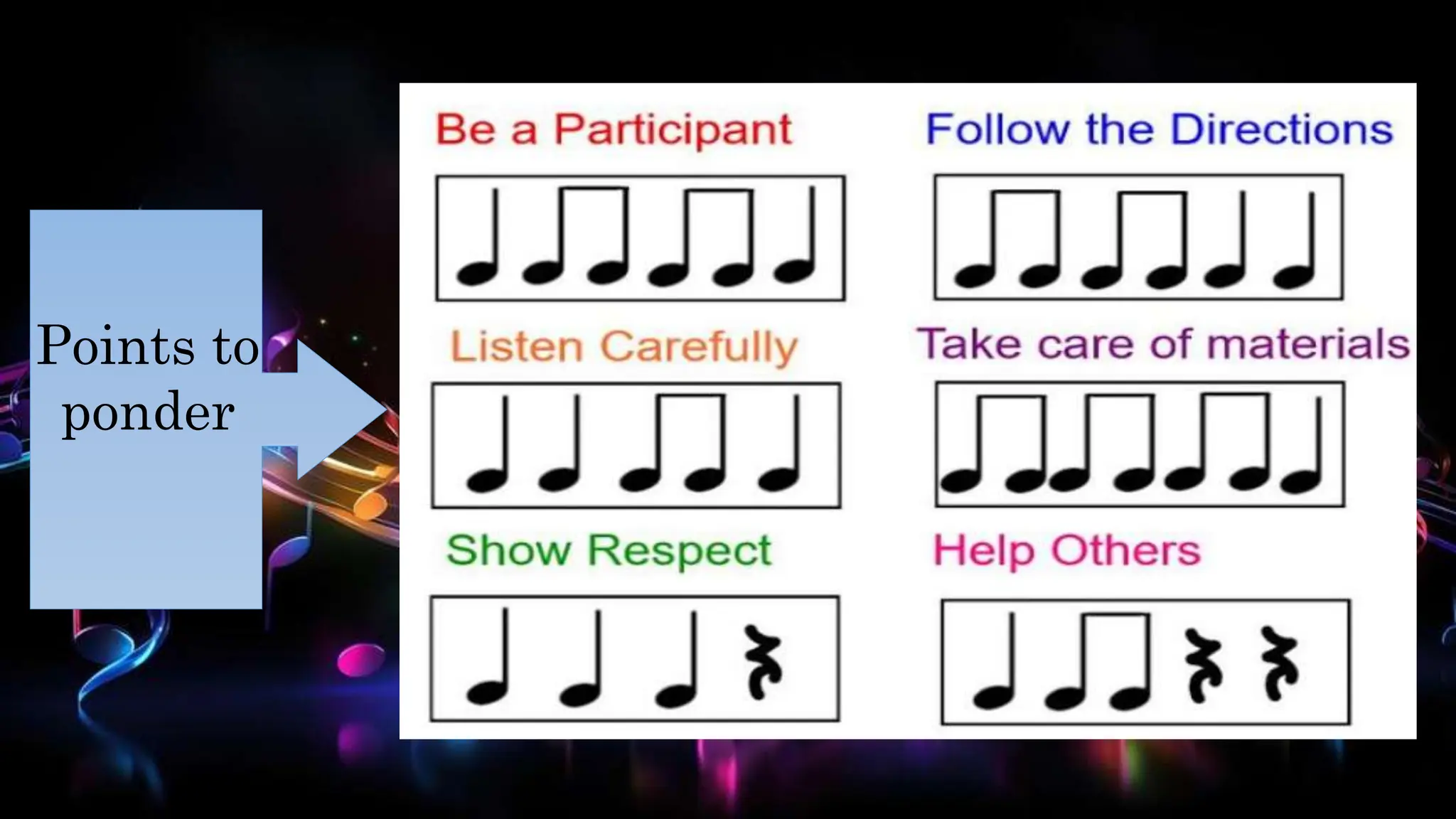
Points to
ponder
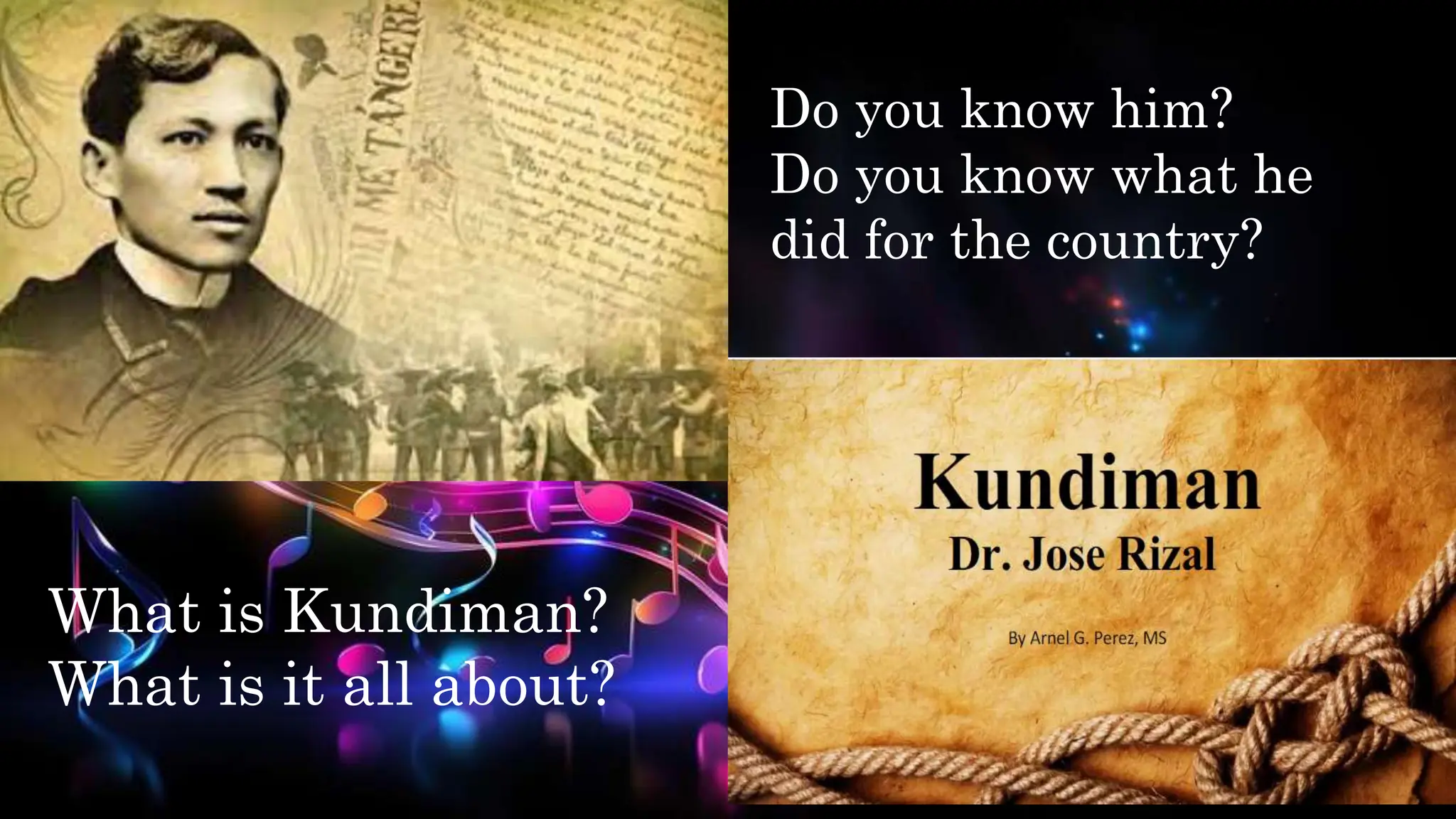
Do you know him?
Do you know what he
did for the country?
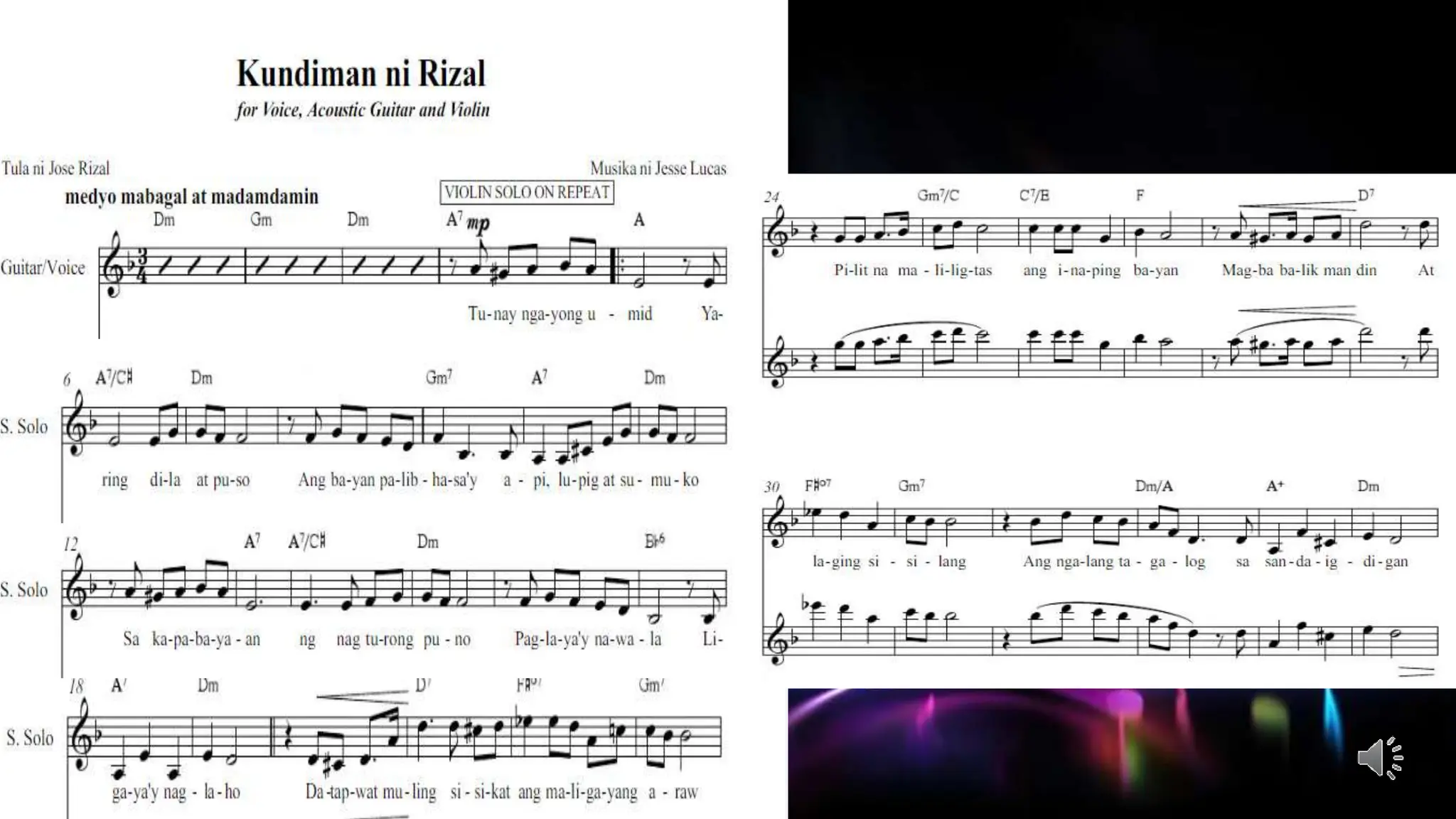
What is Kundiman?
What is it all about?
It is a traditional Filipino love song
used by a young man to serenade
the woman of his love
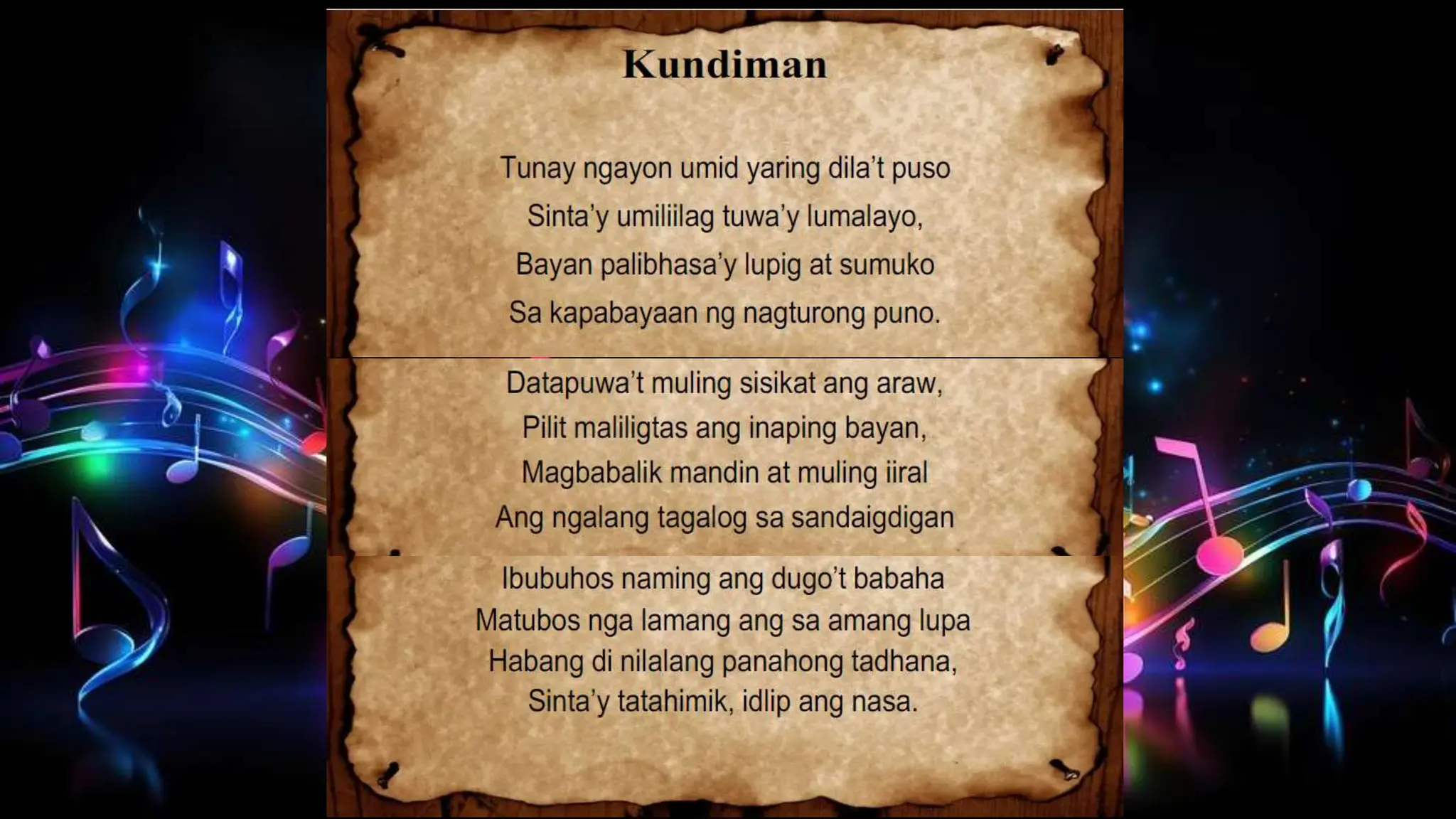
Jose Rizal wrote “Kundiman” in Paris,
France on September 12, 1891
The theme of Rizal’s “Kundiman” is his
intense love for his Motherland
It means “kung hindi man” in
Tagalog
Philippine National Hero
Writes Novels
Writes Poems and Songs
Loves the Philippines
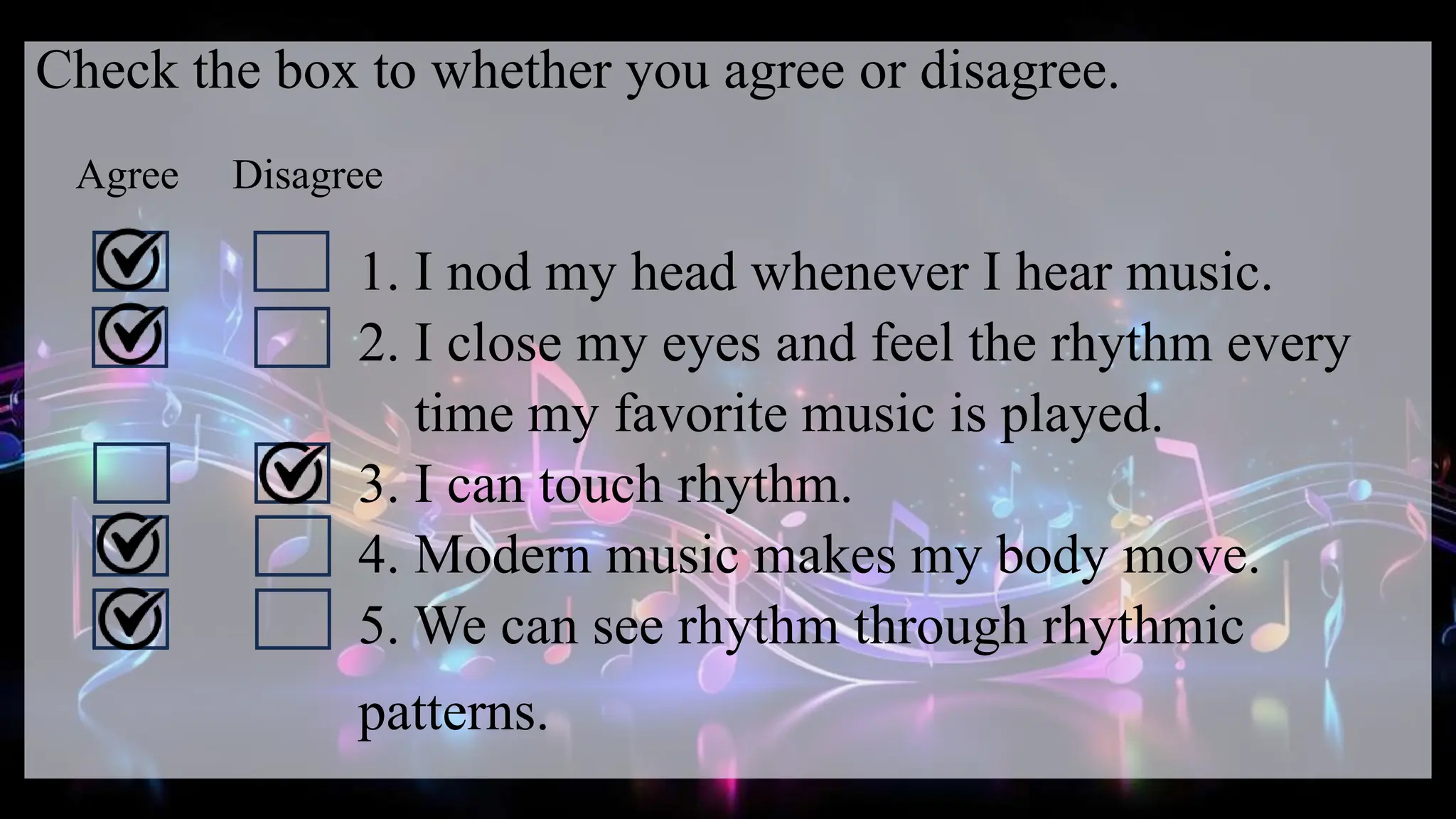
Check the box to whether you agree or disagree.
Agree Disagree
1. I nod my head whenever I hear music.
2. I close my eyes and feel the rhythm every
time my favorite music is played.
3. I can touch rhythm.
4. Modern music makes my body move.
5. We can see rhythm through rhythmic
patterns.
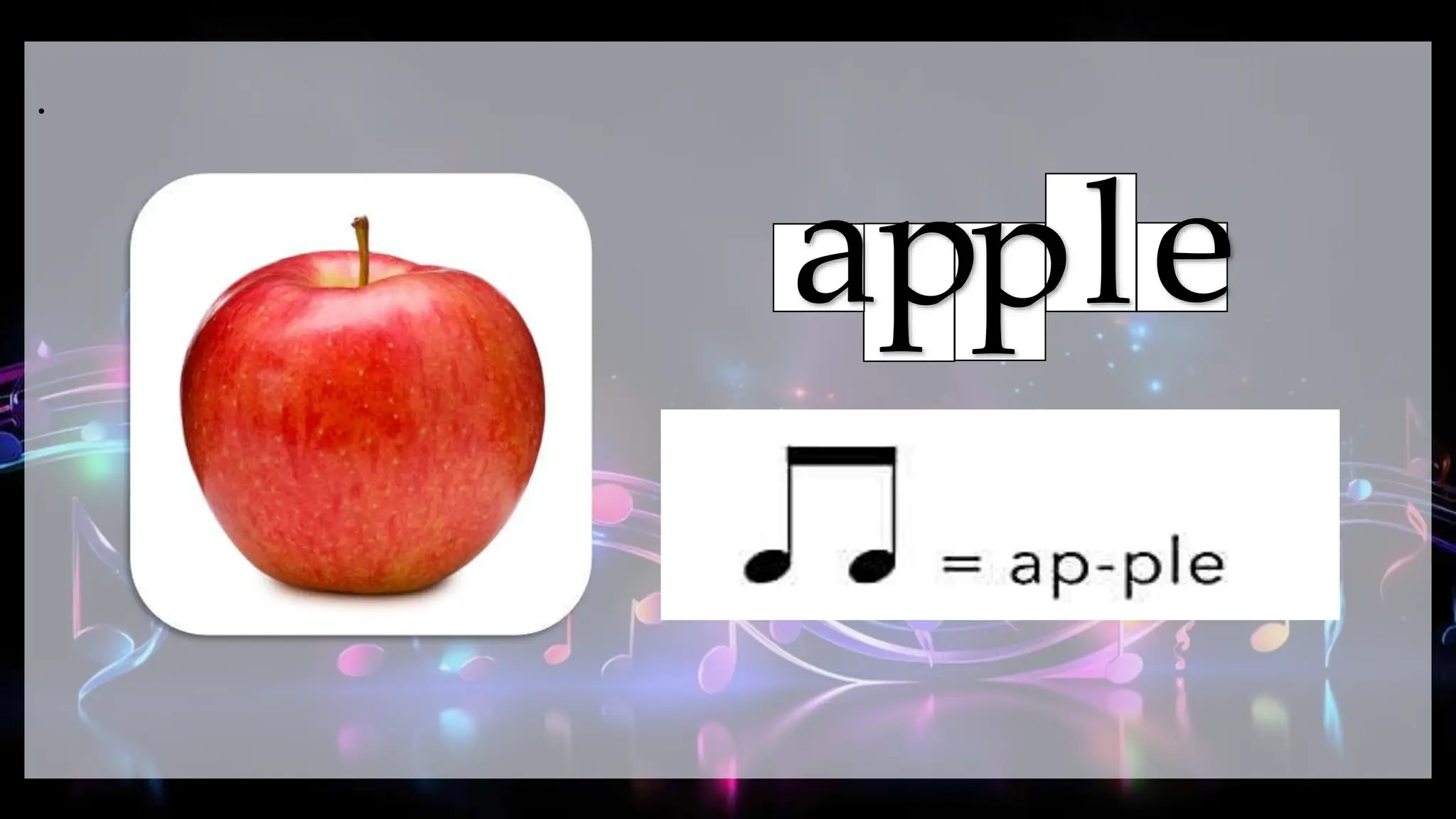
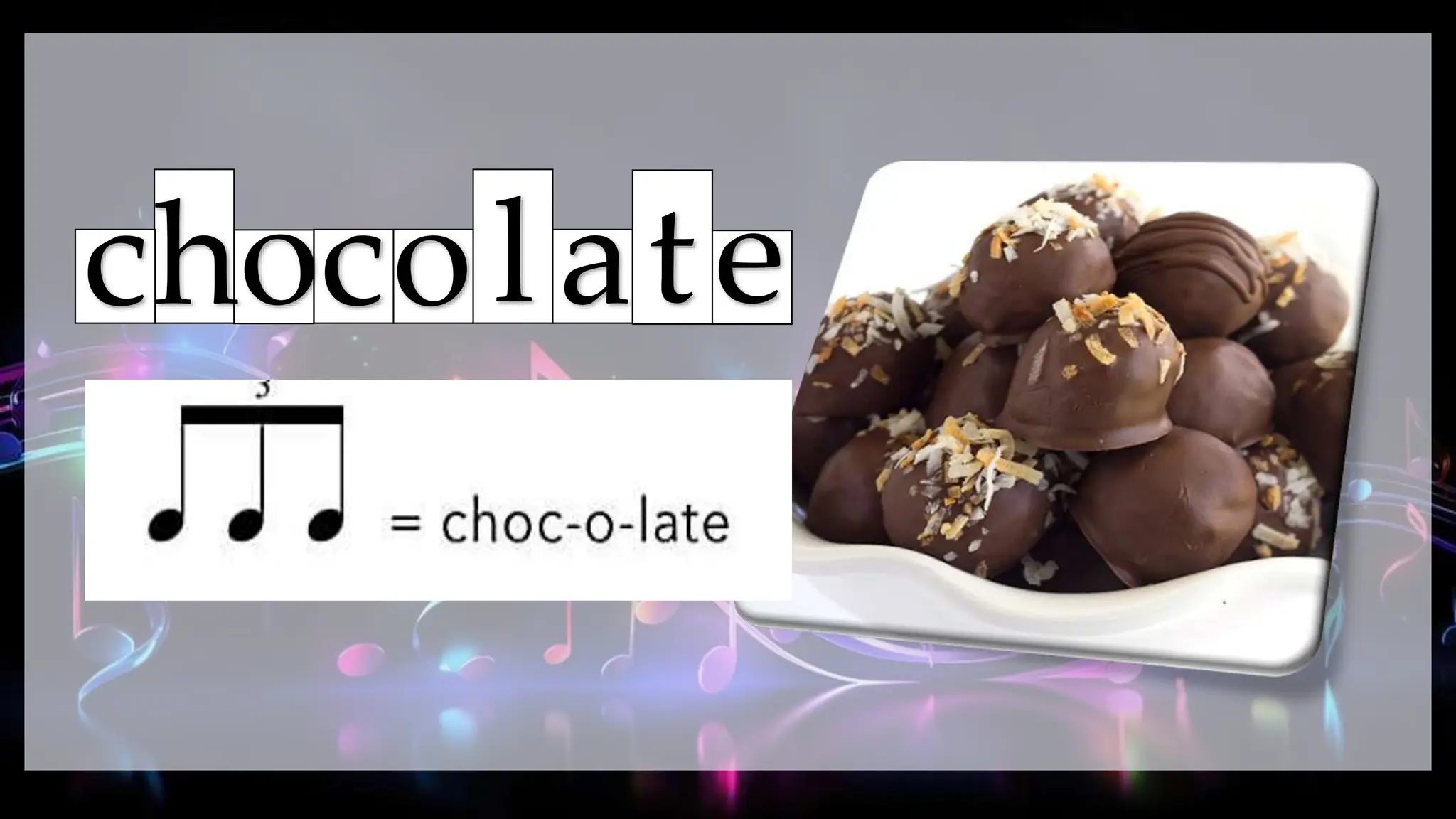
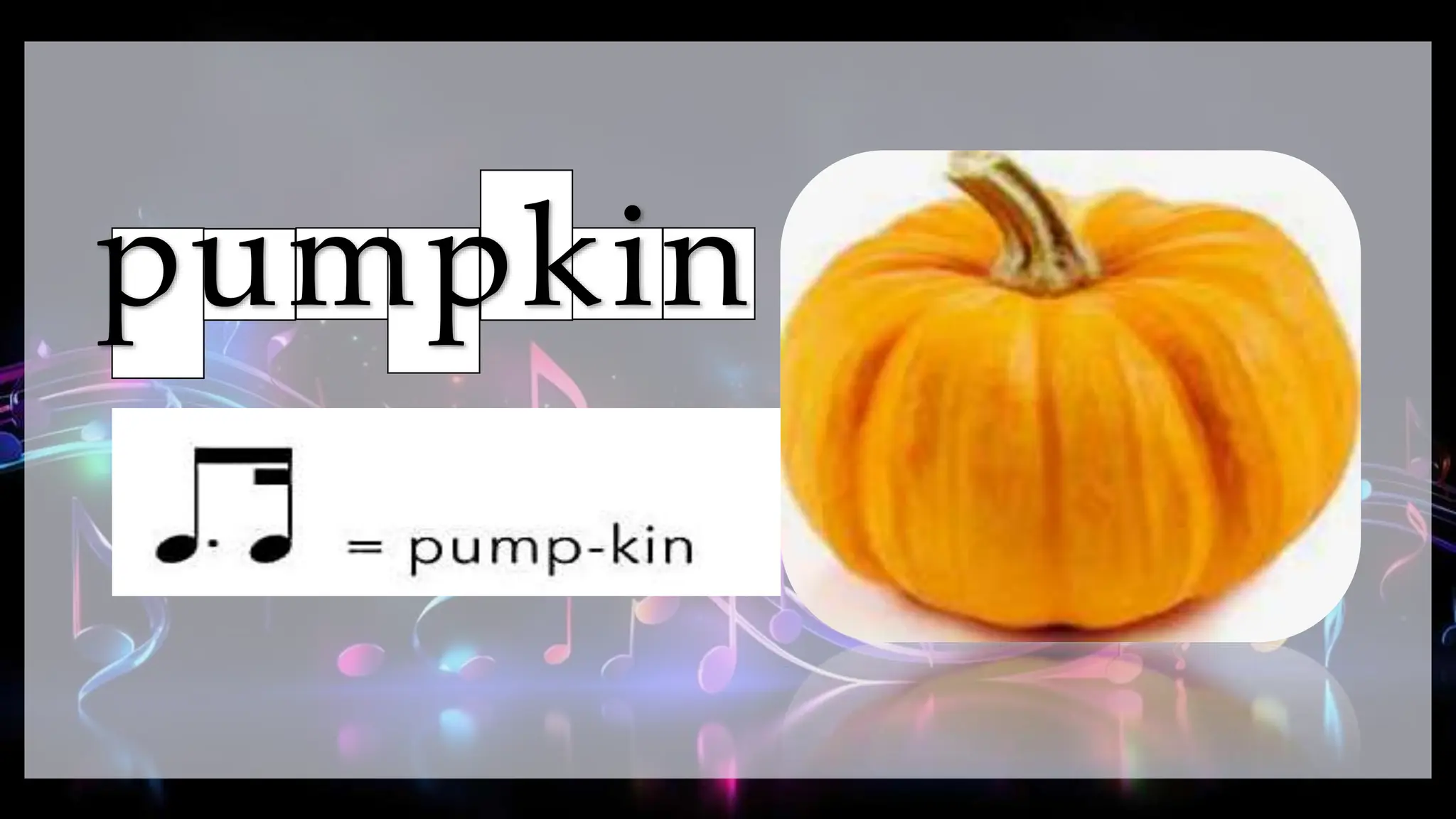
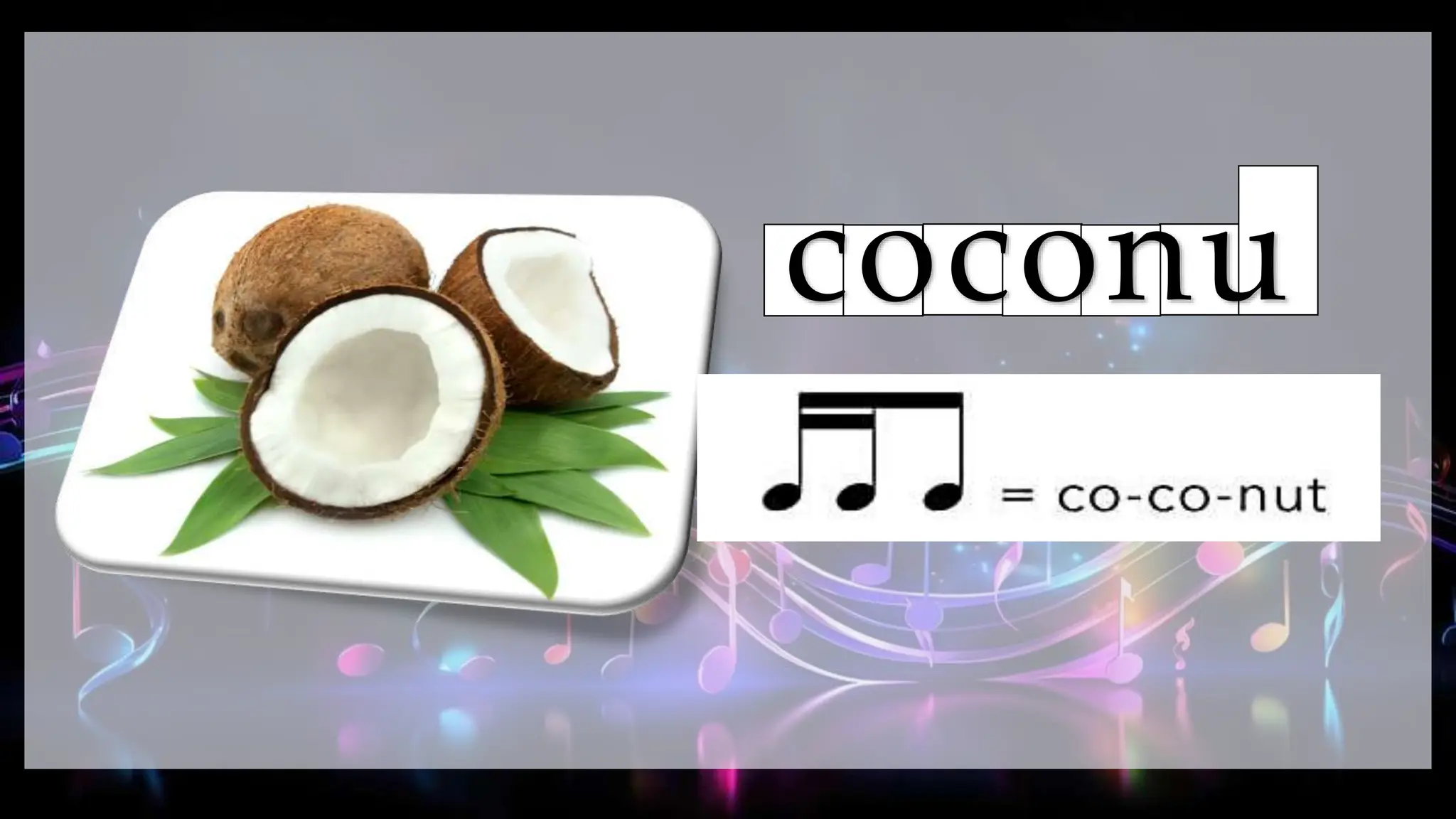
Vocabulary Words with rhythm.
Guess the word through a word shape
puzzle. Then follow the pattern as you read the
word.
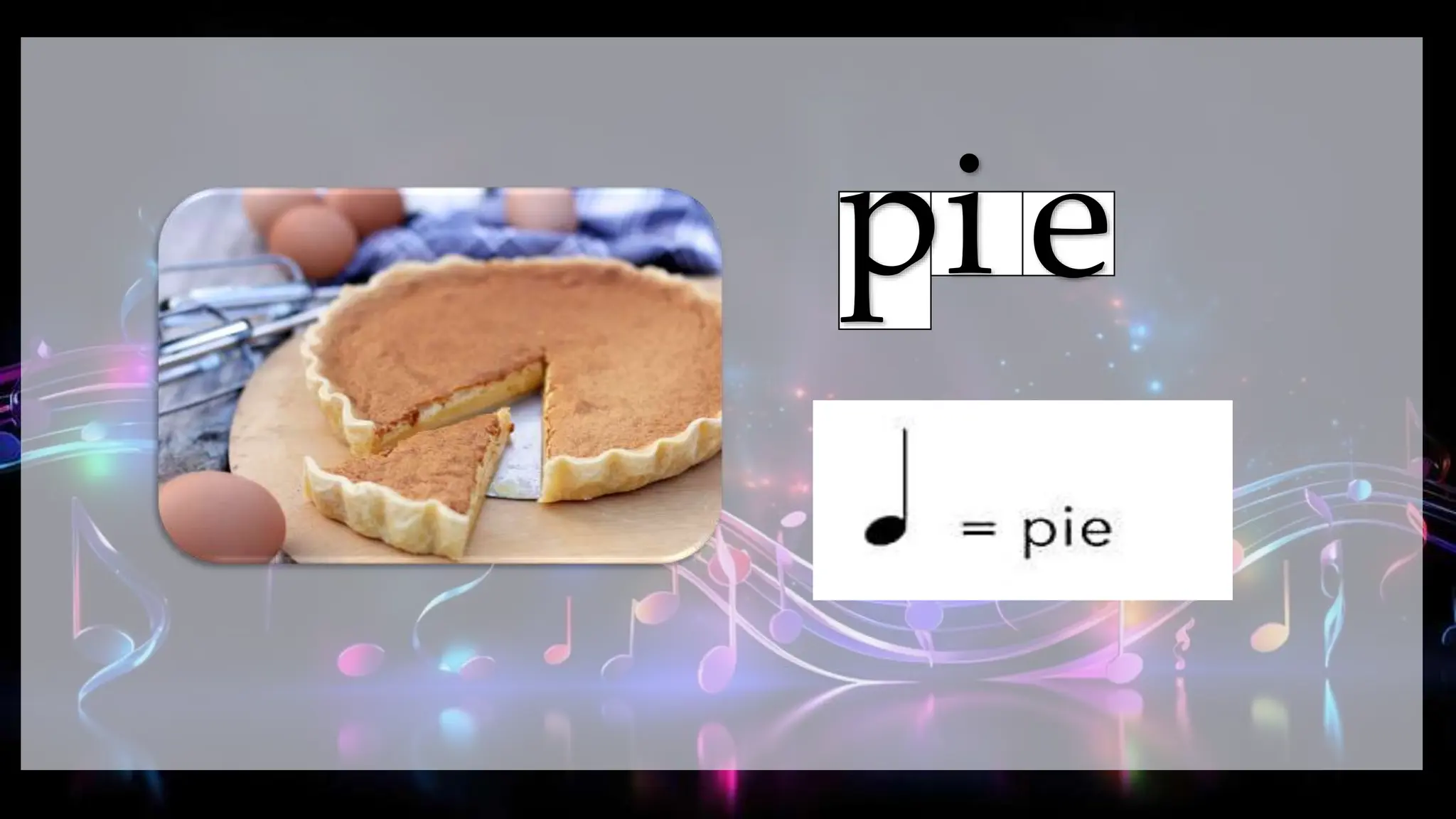
pi e
.
pple
a
h
c ocol ate
pumpkin
coconu
t
t
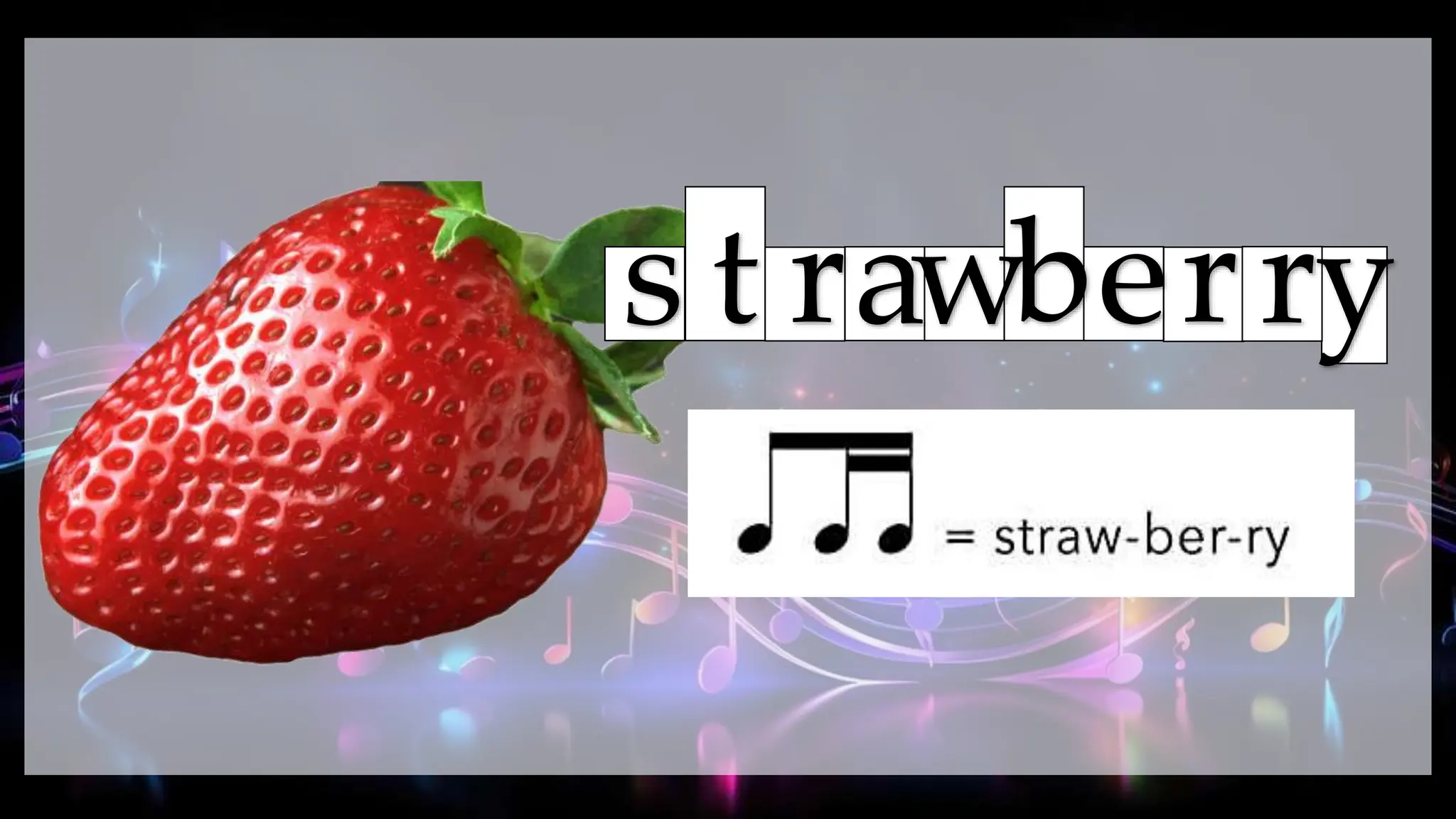
s rawber y
r
huckleberr
y
Reading a situation.
After reading the situation, talk with your
seatmate about the possible solution for
Thalia’s problem. Then, share it in the class.
Let’s help Thalia find solution to her problem.
Think-Pair-Share
Read the situation. Help Thalia find solution to her
problem.
Thalia is having a hard time preparing for her report
about rhythmic patterns. She is knowledgeable about notes
and rests. She already knows that the heartbeat of music is
called beat. She understands that the kinds of meter are
duple, triple and quadruple. It is not possible to know the
time signature of the song if bar is missing. Reading the
rhythmic syllables has become her favorite. But she’s still
upset of not knowing how rhythmic patterns are formed. She
couldn’t find the best solution for her problem. How would
you help her?
Questions:
1. What is Thalia’s problem?
2. How did you manage to find a solution to her
problem?
3. Is it easier to solve the problem with somebody?
Why?
RHYTHMIC PATTERN
Rhythmic patterns are grouped of long and
short sounds in a given meter.
How are they formed?
Rhythmic patterns are formed when notes and rests
are grouped together as a specific meter. Mastery of
beat, meter, measure, and bar lines are important in
constructing and performing rhythmic pattern.
Kinds of Simple Meter
The different kinds of simple meter are duple
meter, triple meter, and quadruple meter.
Important things to consider in
creating a rhythmic pattern
Mastery of beat, meter, measure, and bar lines are
important in constructing and performing rhythmic
pattern.
This mind-blowing activity will help you become alert and
active. It will need your presence of mind and focus because
you will be competing with another group using only your
mind. Each group should have one representative and will
answer the flashcards as fast as they can. You will be
dealing with flashcards with different notes and rests, and
you will tell the equivalent of each note. Group with the
most correct answers will be the winner.
Group Activities
You will be divided into 5 groups. Each
group will be given meta cards. You are be
given 1-2 minutes to answer each the
activity.
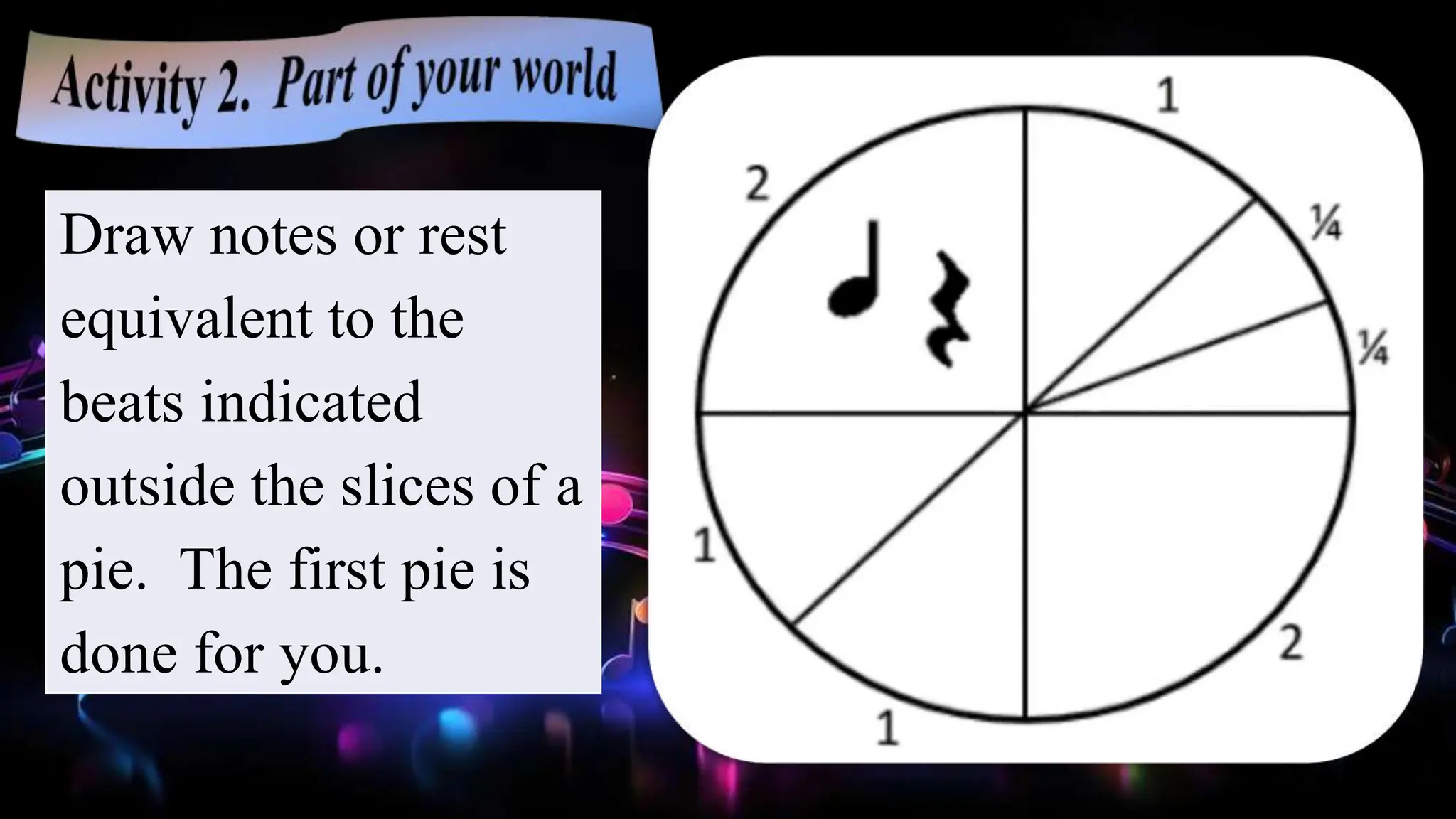
Draw notes or rest
equivalent to the
beats indicated
outside the slices of a
pie. The first pie is
done for you.
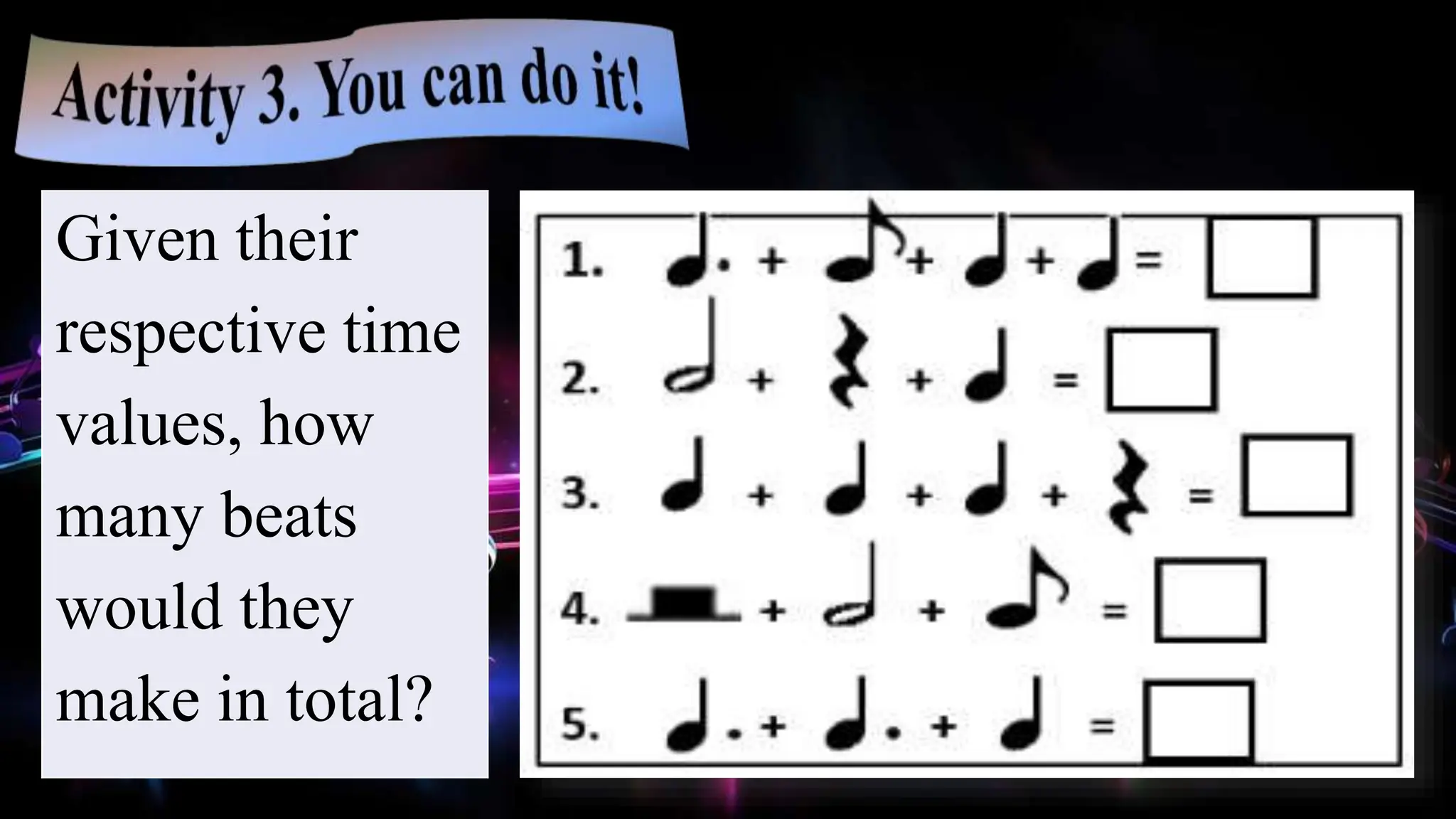
Given their
respective time
values, how
many beats
would they
make in total?
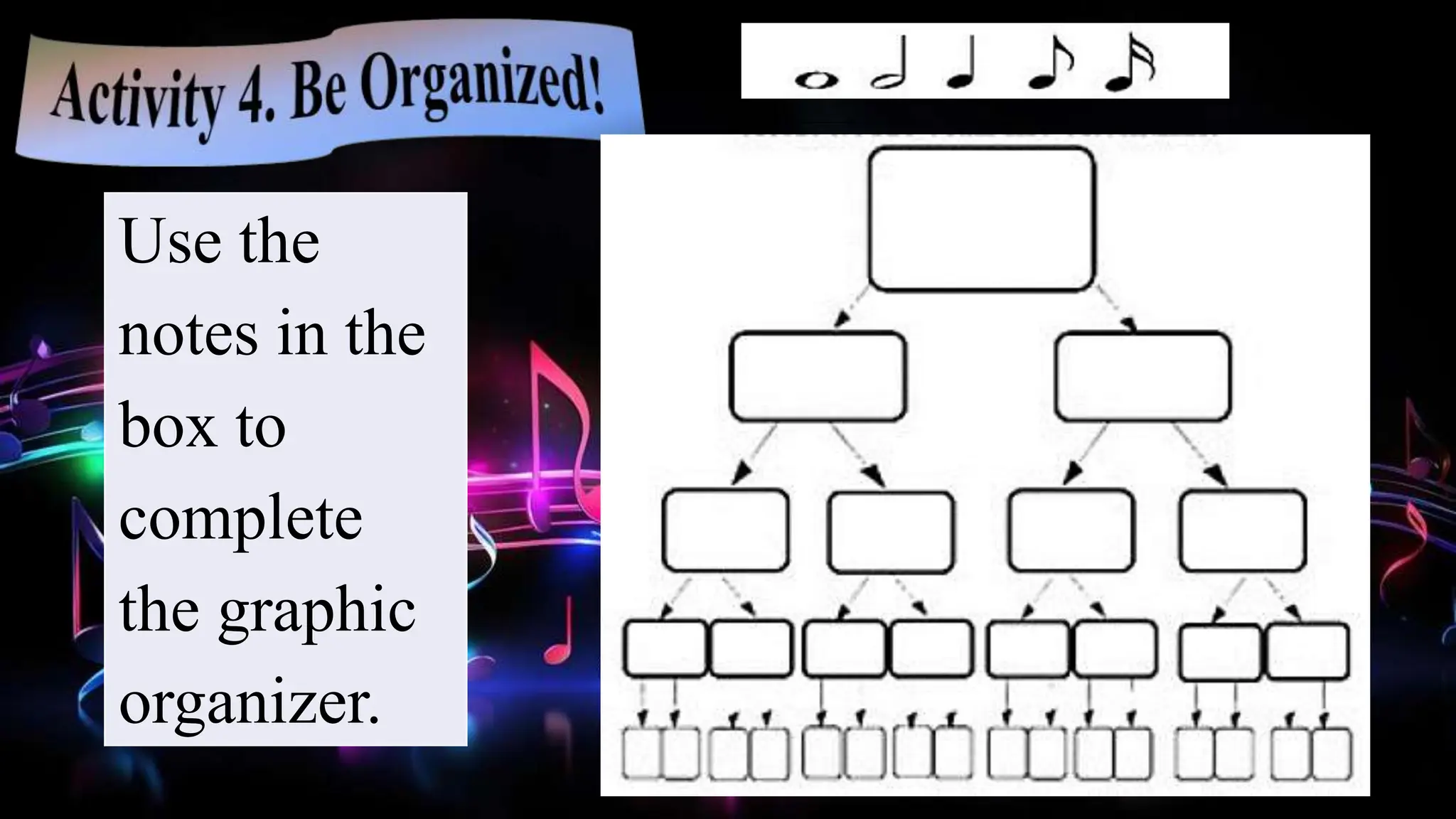
Use the
notes in the
box to
complete
the graphic
organizer.
Using the pattern on the video, sing and clap
together following the given rhythmic syllables.

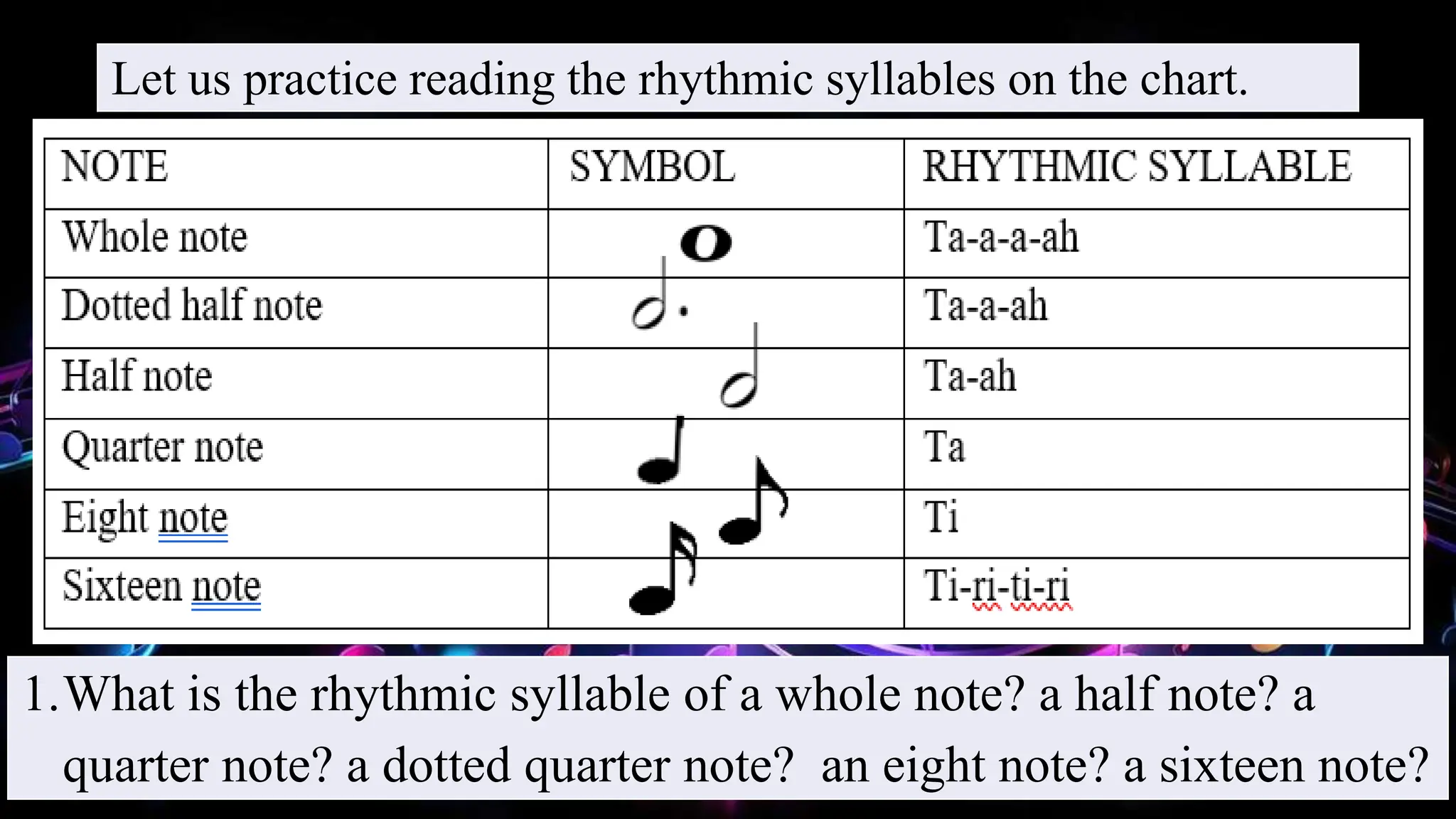
Let us practice reading the rhythmic syllables on the chart.
1.What is the rhythmic syllable of a whole note? a half note? a
quarter note? a dotted quarter note? an eight note? a sixteen note?
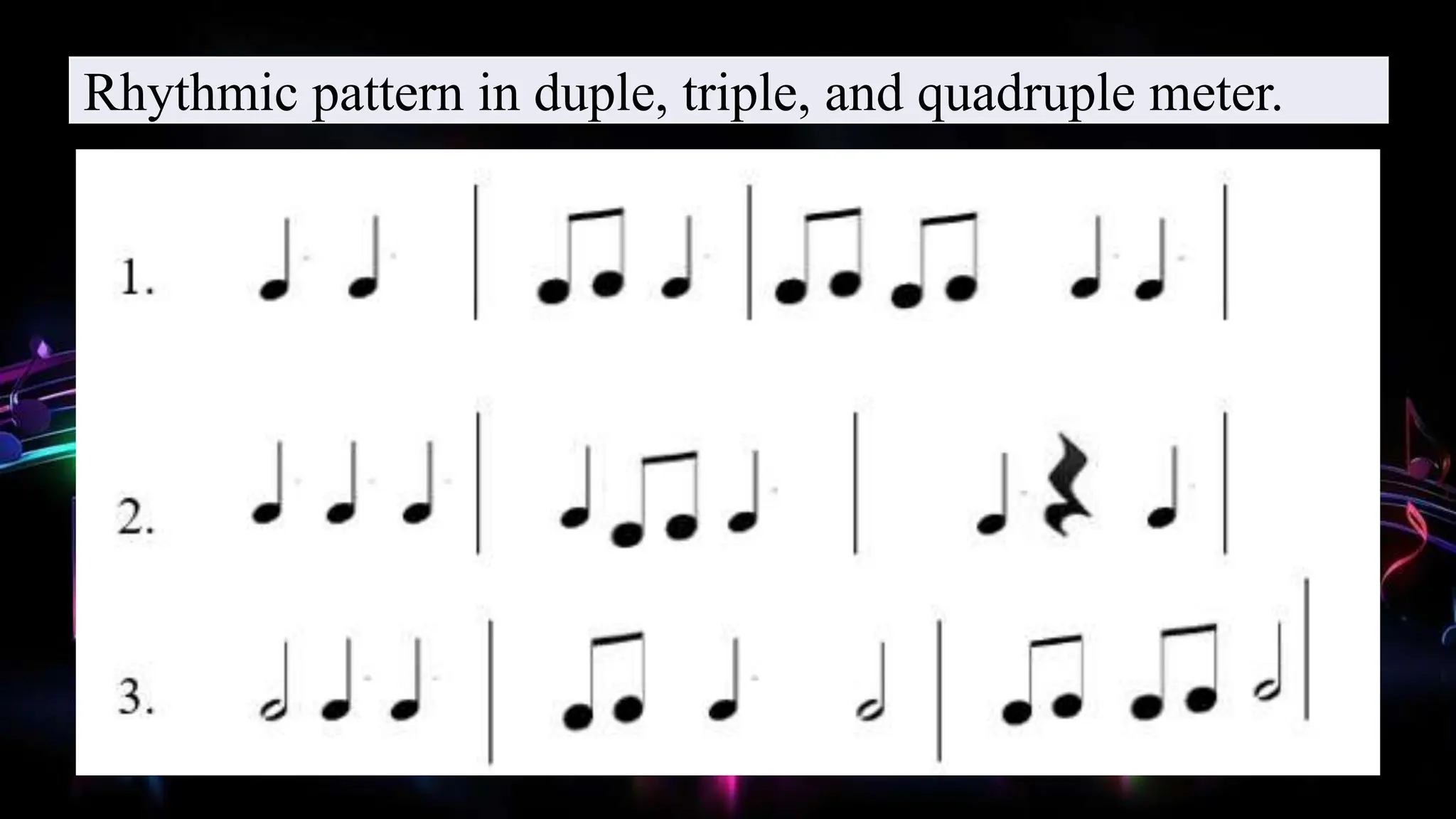
Rhythmic pattern in duple, triple, and quadruple meter.
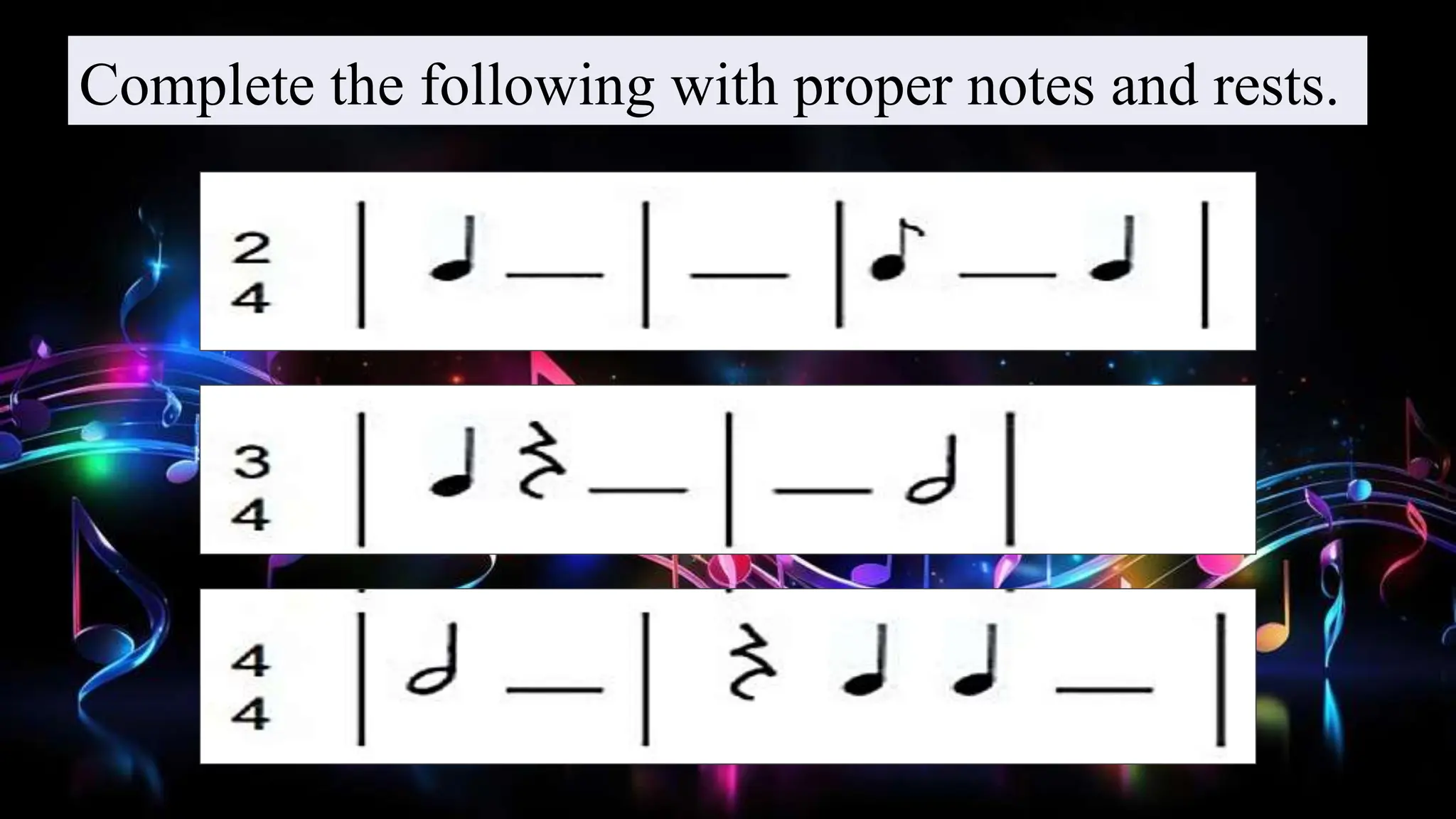
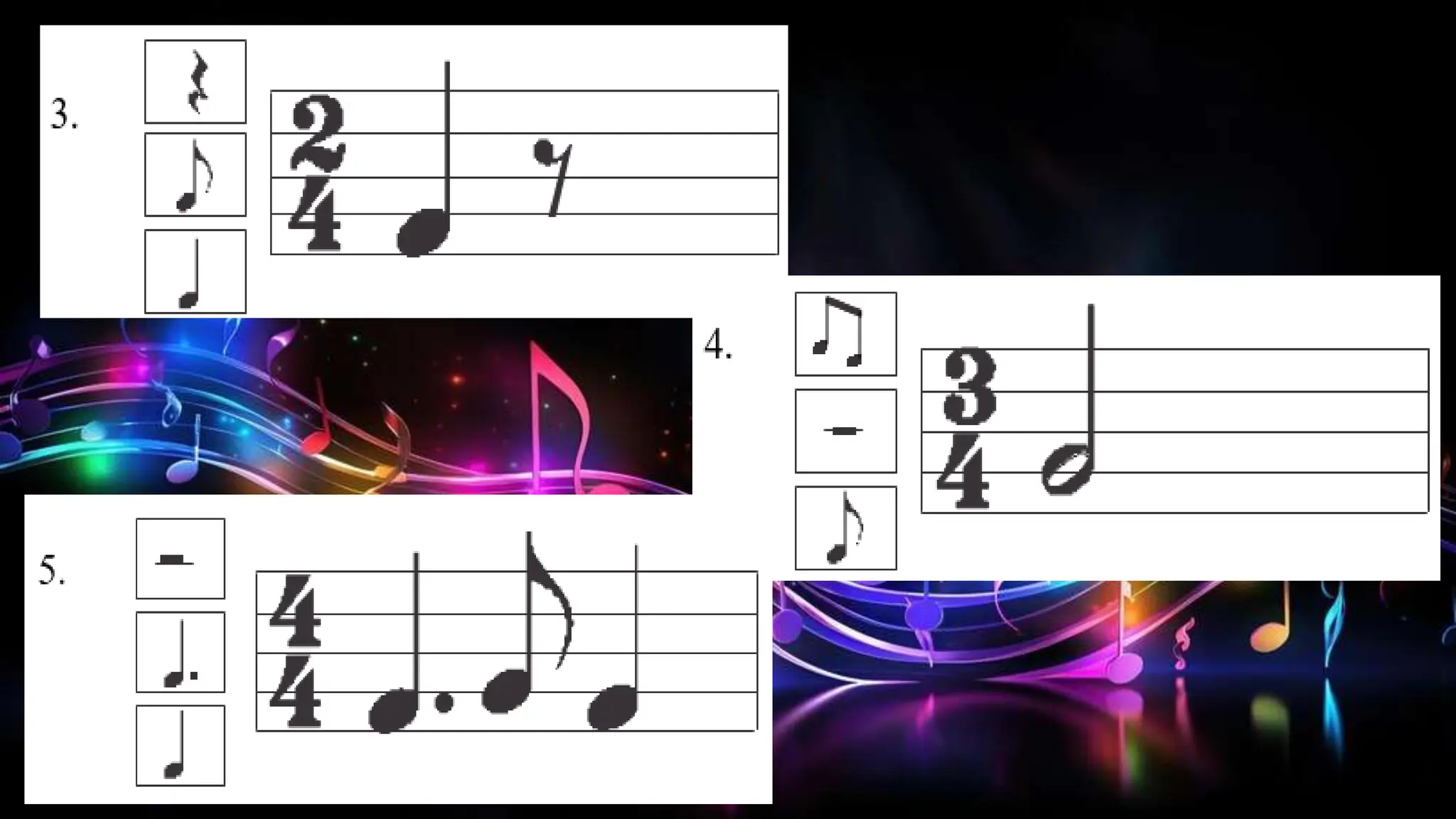
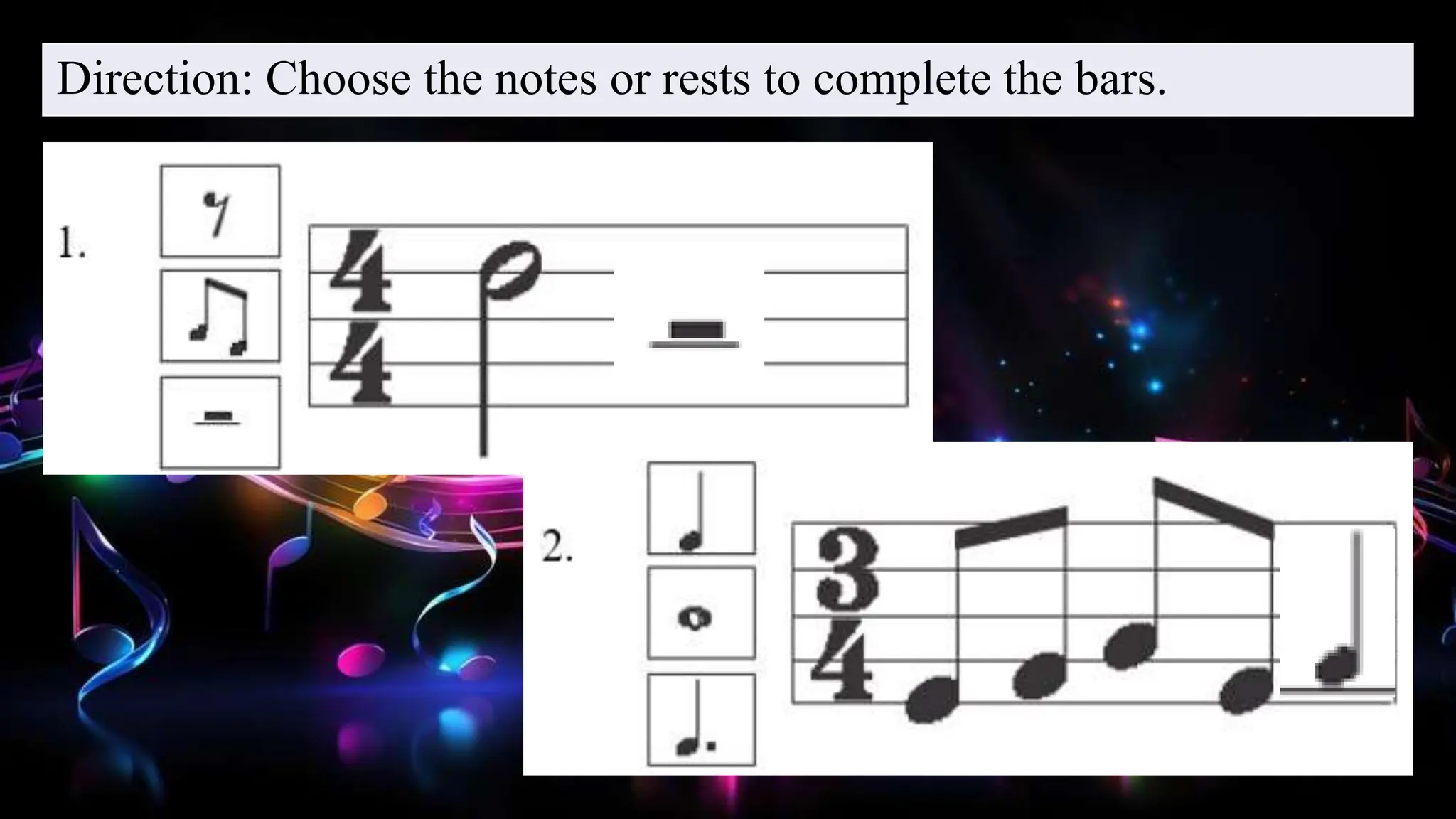
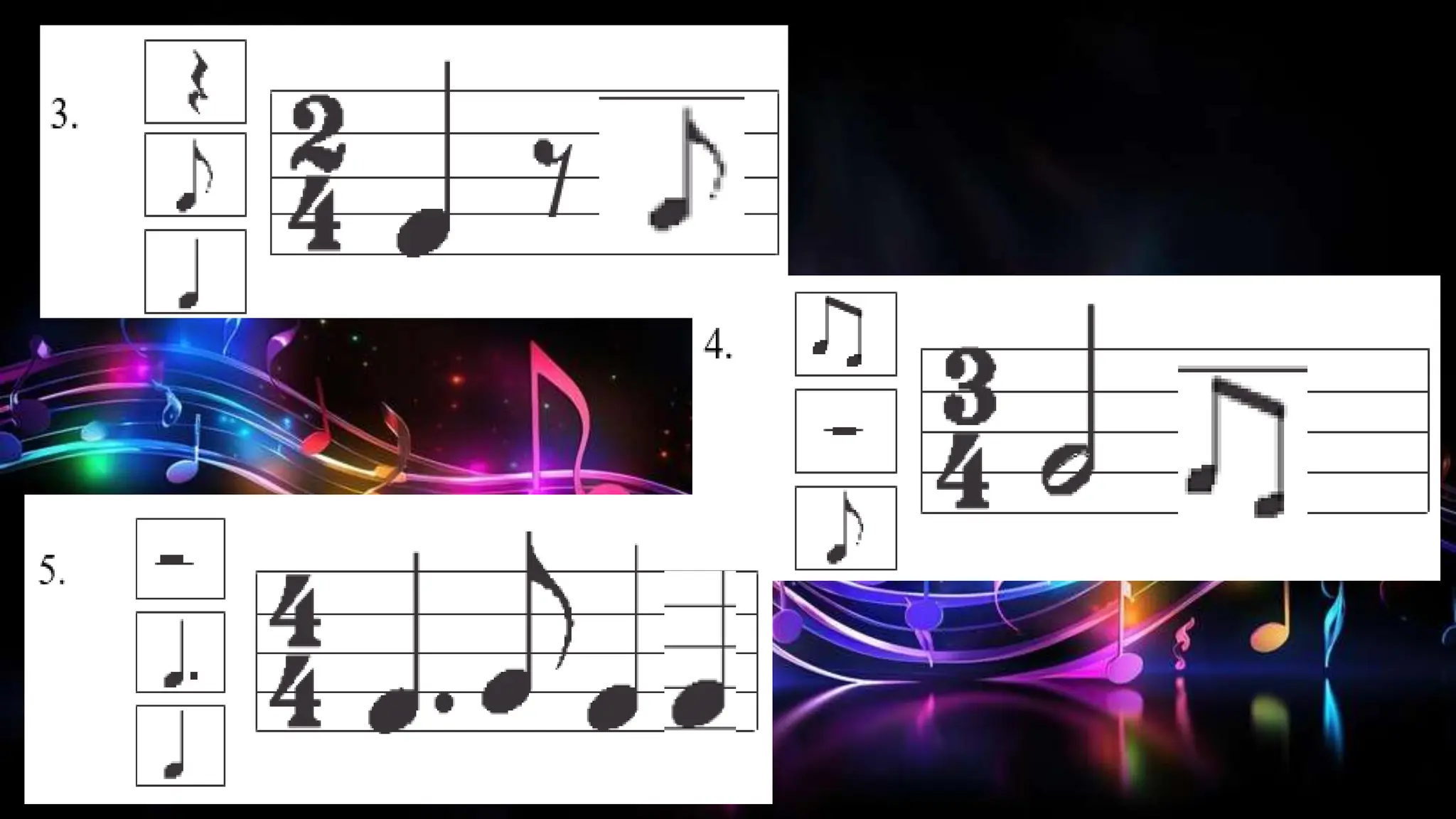
Complete the following with proper notes and rests.
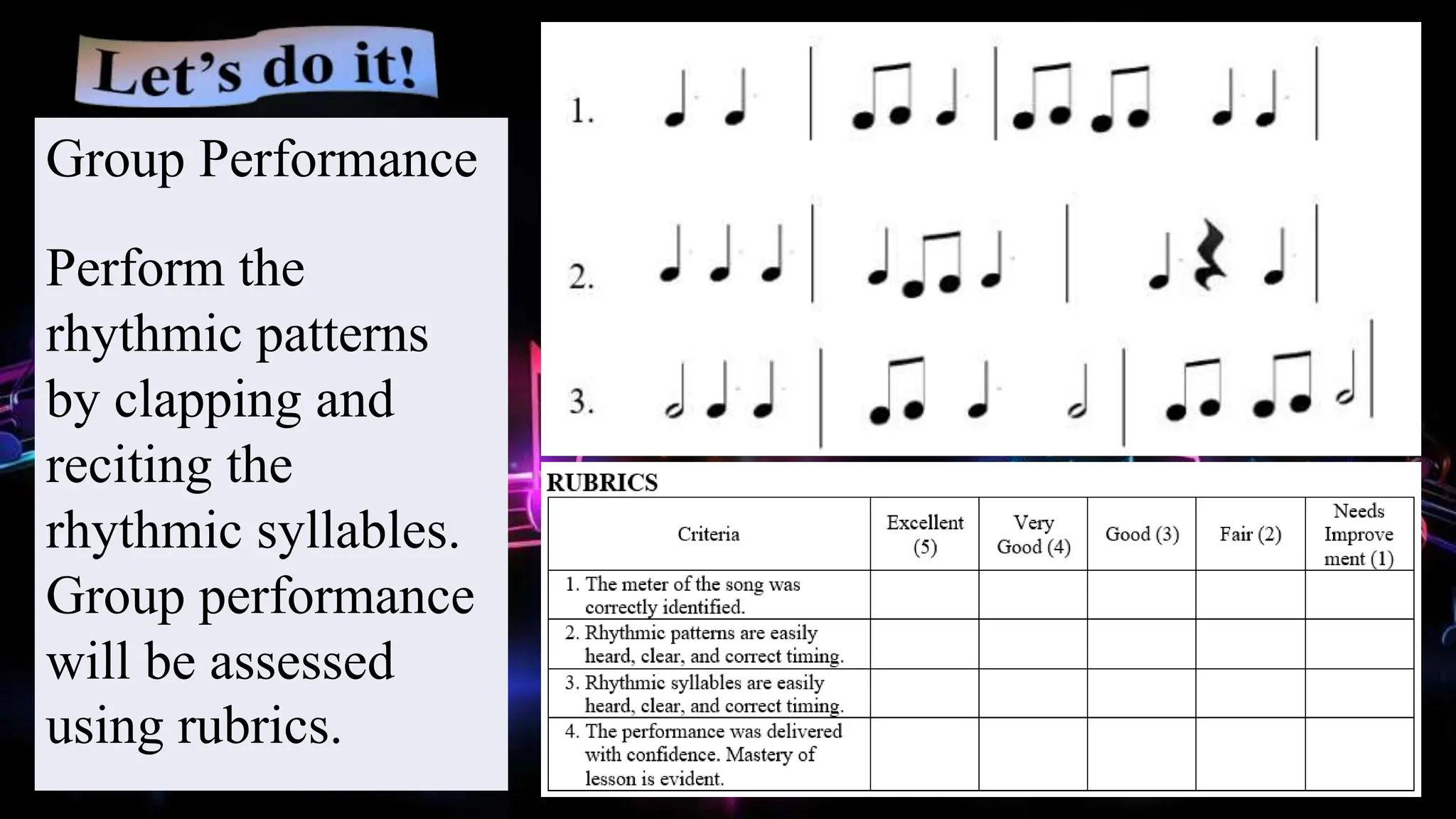
Group Performance
Perform the
rhythmic patterns
by clapping and
reciting the
rhythmic syllables.
Group performance
will be assessed
using rubrics.
1. What simple meter has 2 beats in a measure?
2. What simple meter has 3 beats in a measure?
3. What simple meter has 4 beats in a measure?
4. What is rhythmic pattern?
5. Liza is having a problem creating a rhythmic pattern. How
will you help her? What do you need to remember in
creating rhythmic patterns? She was tasked to fill in the
measures in duple, triple, and quadruple meters.
Answer the following questions.
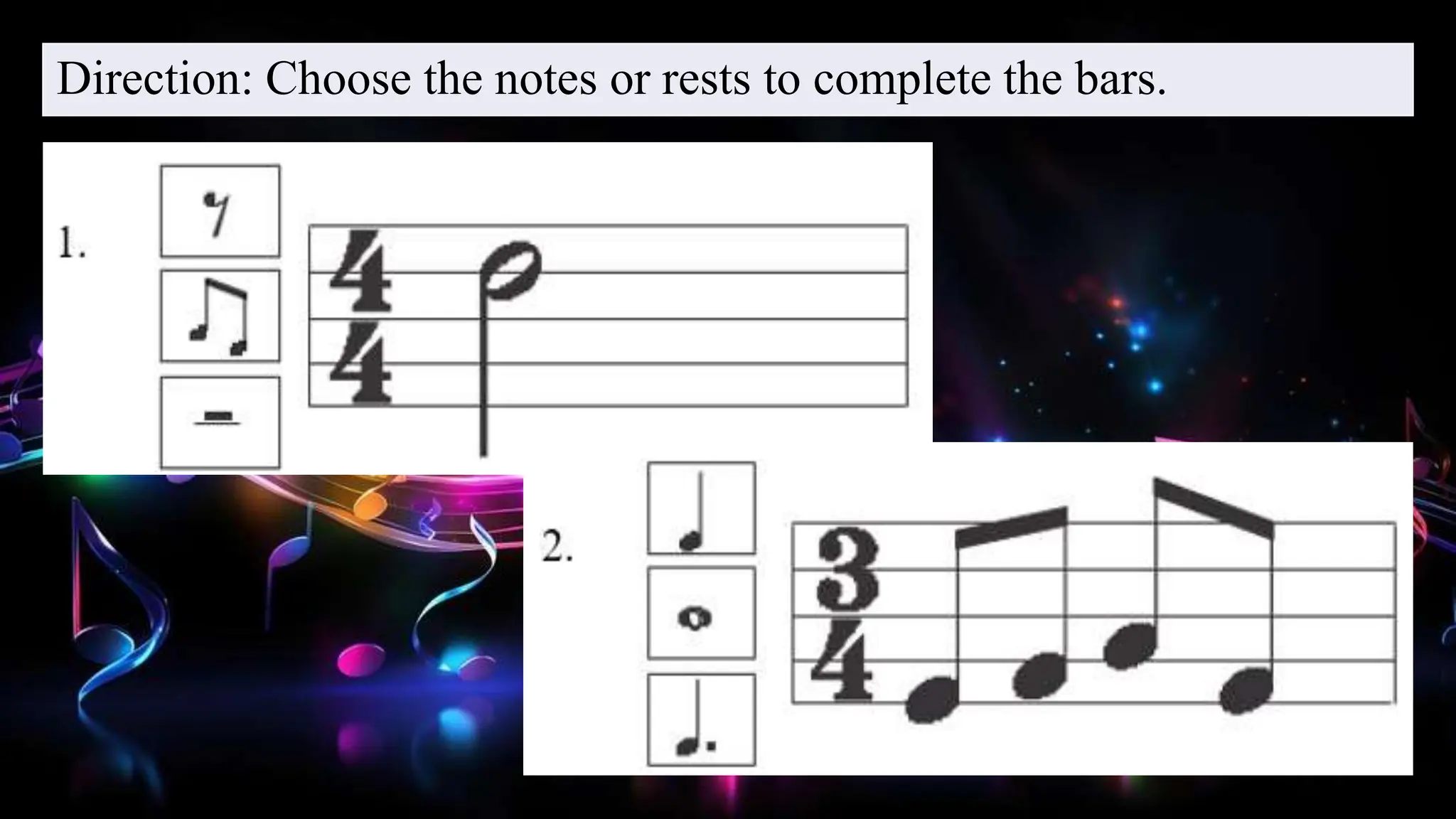
Direction: Choose the notes or rests to complete the bars.
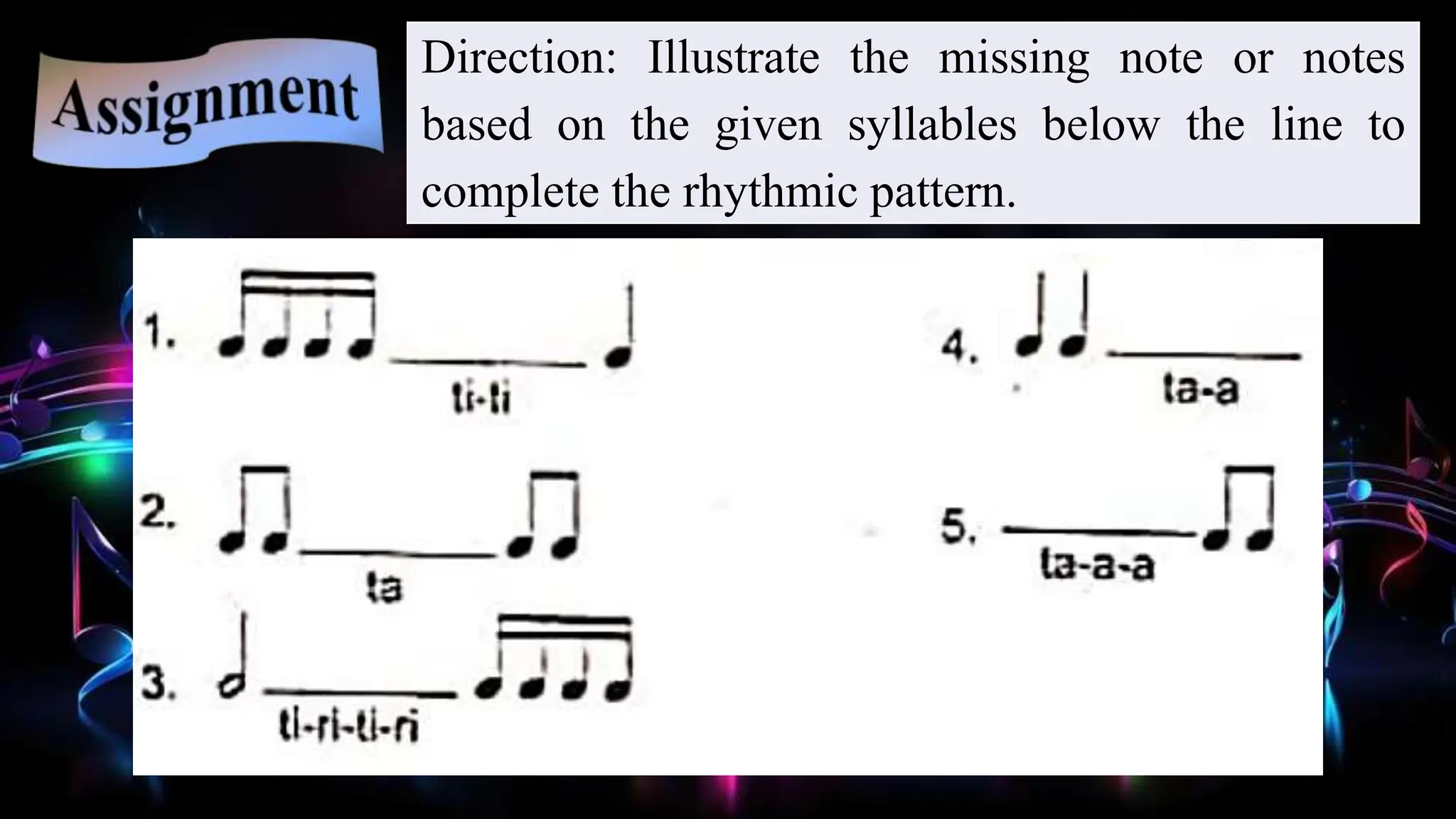
Direction: Illustrate the missing note or notes
based on the given syllables below the line to
complete the rhythmic pattern.
COT Music 6- Quarter 1-Rhythmic Pattern.ppt

COT Music 6- Quarter 1-Rhythmic Pattern.ppt

  • 2.
  • 3.
  • 4.
    Do you knowhim? Do you know what he did for the country? What is Kundiman? What is it all about?
  • 6.
    It is atraditional Filipino love song used by a young man to serenade the woman of his love Jose Rizal wrote “Kundiman” in Paris, France on September 12, 1891 The theme of Rizal’s “Kundiman” is his intense love for his Motherland It means “kung hindi man” in Tagalog Philippine National Hero Writes Novels Writes Poems and Songs Loves the Philippines
  • 8.
    Check the boxto whether you agree or disagree. Agree Disagree 1. I nod my head whenever I hear music. 2. I close my eyes and feel the rhythm every time my favorite music is played. 3. I can touch rhythm. 4. Modern music makes my body move. 5. We can see rhythm through rhythmic patterns.
  • 10.
    Vocabulary Words withrhythm. Guess the word through a word shape puzzle. Then follow the pattern as you read the word.
  • 11.
  • 12.
  • 13.
  • 14.
  • 15.
  • 16.
  • 17.
  • 18.
    Reading a situation. Afterreading the situation, talk with your seatmate about the possible solution for Thalia’s problem. Then, share it in the class. Let’s help Thalia find solution to her problem. Think-Pair-Share
  • 19.
    Read the situation.Help Thalia find solution to her problem. Thalia is having a hard time preparing for her report about rhythmic patterns. She is knowledgeable about notes and rests. She already knows that the heartbeat of music is called beat. She understands that the kinds of meter are duple, triple and quadruple. It is not possible to know the time signature of the song if bar is missing. Reading the rhythmic syllables has become her favorite. But she’s still upset of not knowing how rhythmic patterns are formed. She couldn’t find the best solution for her problem. How would you help her?
  • 20.
    Questions: 1. What isThalia’s problem? 2. How did you manage to find a solution to her problem? 3. Is it easier to solve the problem with somebody? Why?
  • 21.
    RHYTHMIC PATTERN Rhythmic patternsare grouped of long and short sounds in a given meter.
  • 22.
    How are theyformed? Rhythmic patterns are formed when notes and rests are grouped together as a specific meter. Mastery of beat, meter, measure, and bar lines are important in constructing and performing rhythmic pattern.
  • 23.
    Kinds of SimpleMeter The different kinds of simple meter are duple meter, triple meter, and quadruple meter.
  • 24.
    Important things toconsider in creating a rhythmic pattern Mastery of beat, meter, measure, and bar lines are important in constructing and performing rhythmic pattern.
  • 25.
    This mind-blowing activitywill help you become alert and active. It will need your presence of mind and focus because you will be competing with another group using only your mind. Each group should have one representative and will answer the flashcards as fast as they can. You will be dealing with flashcards with different notes and rests, and you will tell the equivalent of each note. Group with the most correct answers will be the winner.
  • 26.
    Group Activities You willbe divided into 5 groups. Each group will be given meta cards. You are be given 1-2 minutes to answer each the activity.
  • 32.
    Draw notes orrest equivalent to the beats indicated outside the slices of a pie. The first pie is done for you.
  • 33.
    Given their respective time values,how many beats would they make in total?
  • 34.
    Use the notes inthe box to complete the graphic organizer.
  • 35.
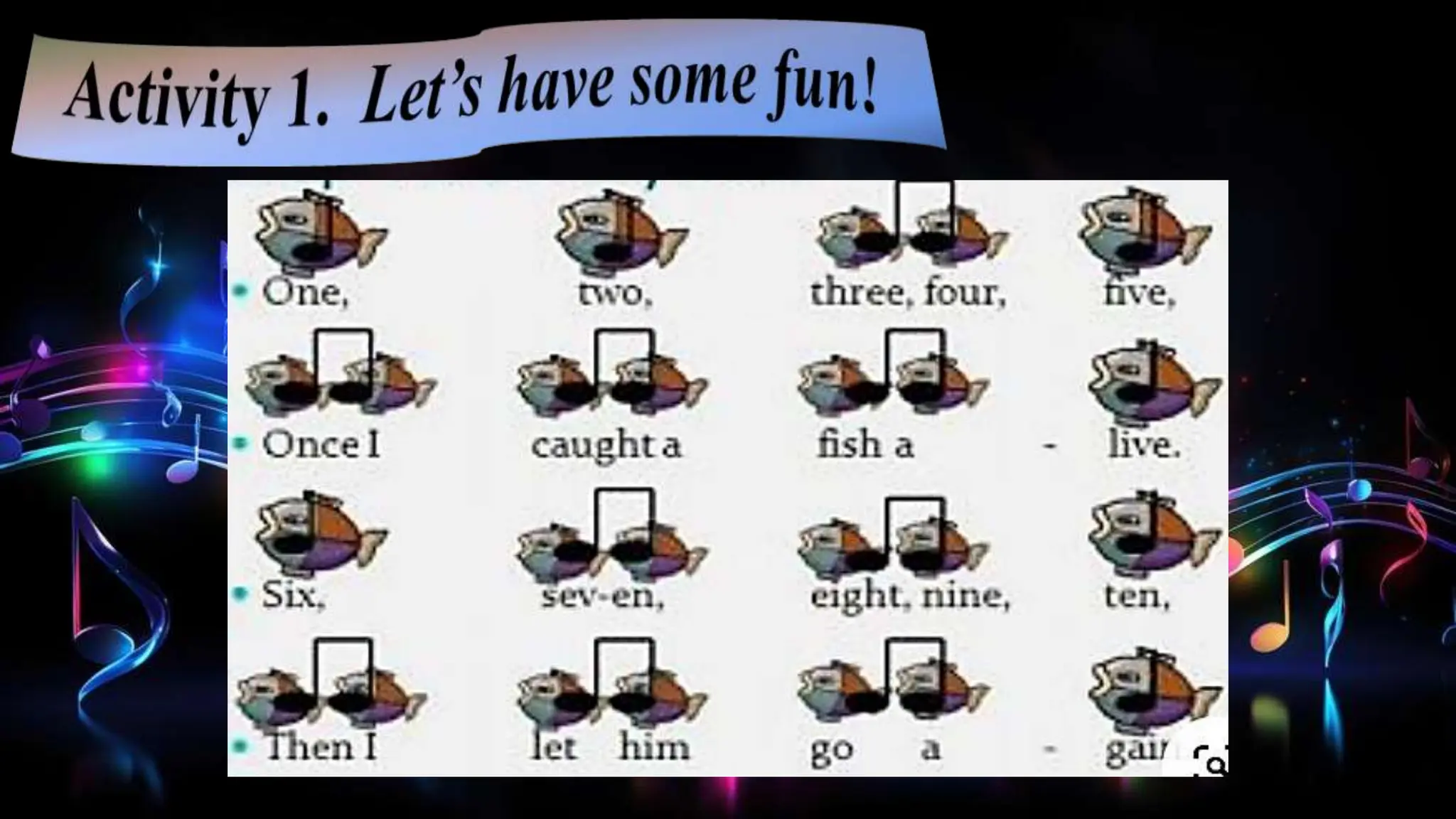
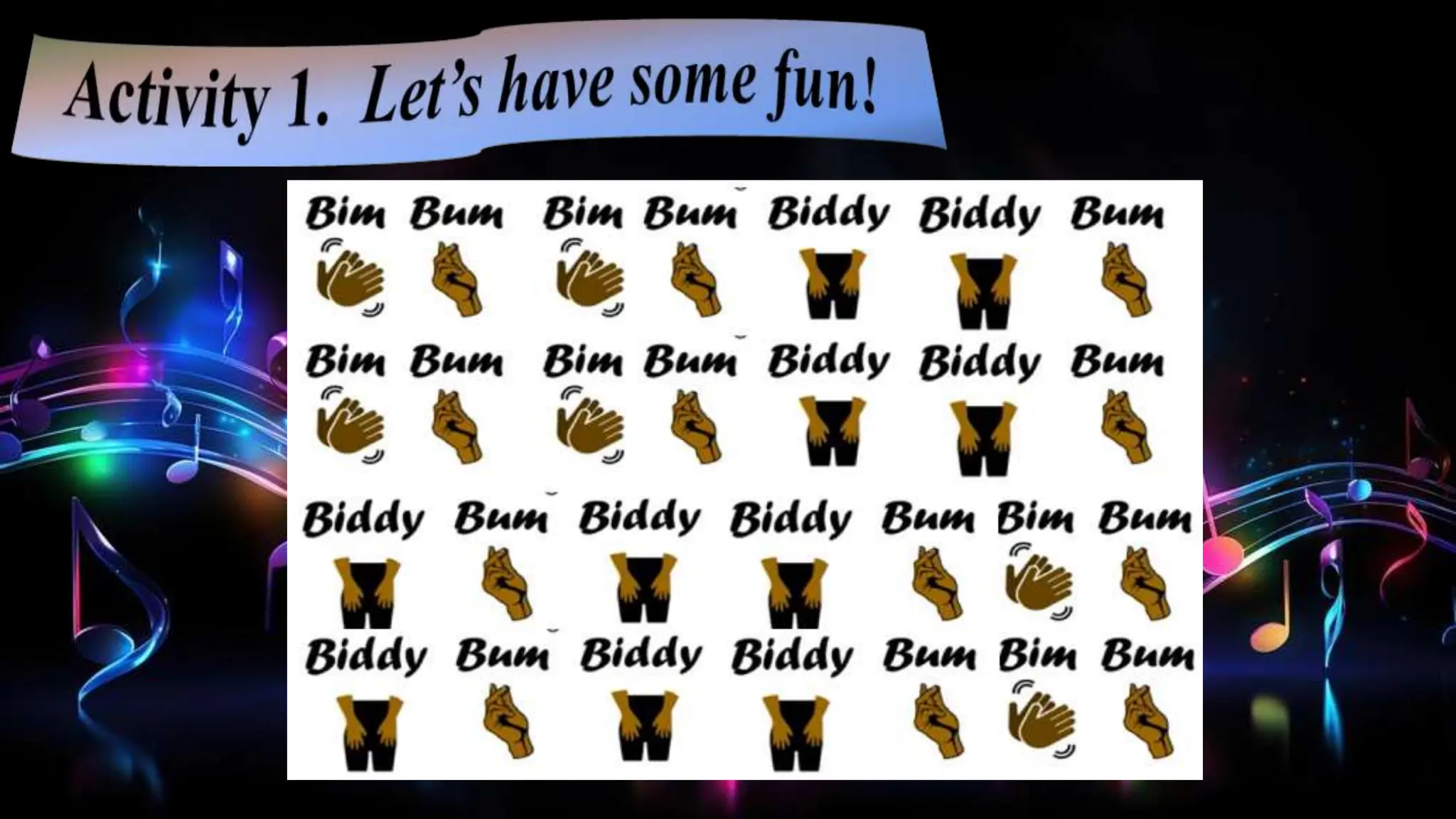
    Using the patternon the video, sing and clap together following the given rhythmic syllables.
  • 36.
    Let us practicereading the rhythmic syllables on the chart. 1.What is the rhythmic syllable of a whole note? a half note? a quarter note? a dotted quarter note? an eight note? a sixteen note?
  • 39.
    Rhythmic pattern induple, triple, and quadruple meter.
  • 40.
    Complete the followingwith proper notes and rests.
  • 41.
    Group Performance Perform the rhythmicpatterns by clapping and reciting the rhythmic syllables. Group performance will be assessed using rubrics.
  • 42.
    1. What simplemeter has 2 beats in a measure? 2. What simple meter has 3 beats in a measure? 3. What simple meter has 4 beats in a measure? 4. What is rhythmic pattern? 5. Liza is having a problem creating a rhythmic pattern. How will you help her? What do you need to remember in creating rhythmic patterns? She was tasked to fill in the measures in duple, triple, and quadruple meters. Answer the following questions.
  • 43.
    Direction: Choose thenotes or rests to complete the bars.
  • 45.
    Direction: Choose thenotes or rests to complete the bars.
  • 47.
    Direction: Illustrate themissing note or notes based on the given syllables below the line to complete the rhythmic pattern.

Editor's Notes

  • #5 Do you know him? Do you know what he did for the country? What is Kundiman?
  • #6 Kundiman is a Tagalog word which means “kung hindi man” What is Kundiman? Who is the writer of the poem? What kind of person is Jose Rizal? What is the poem all about? How did he show his love for his mother land?
  • #8 What did you feel after listening to the song? What is the time signature of the song? Can you tell what notes and rests are in the fourth measure? How many beats are there in each measure? Can you show me how is the “Kundiman” is conducted?
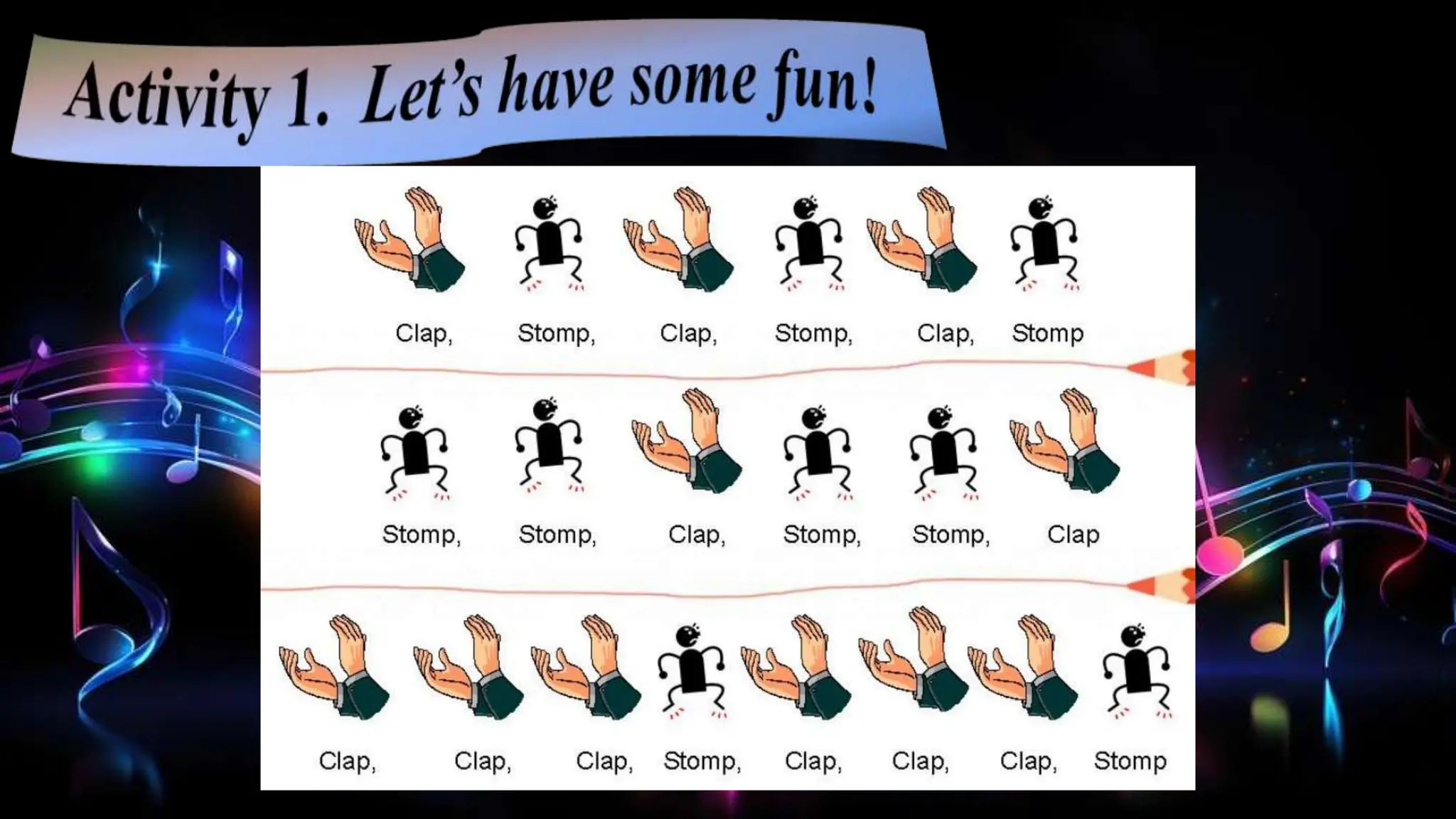
  • #9 -What do you usually do when you listen to music? Do you clap your hands? Or stomp your feet? Nod your head? Snap your fingers? Does your whole body move?   The teacher will play a chair dance video. The pupils will then move their body to the rhythm and beat of music played.
  • #10 The teacher will show the picture of each word and the pupils will guess the word through word shape puzzles.
  • #38 play the video and musical score of the song “Inday Calachuchi”.
  • #39 What is the time signature of the song? What simple meter is present in the song? How many measures are in the first line of “Inday Calachuchi ”? Can you tell the rhythmic syllables of each note? The teacher will call the pupils one by one and have them tell the rhythmic syllables of each note.
  • #40 -How many beats are there in a measure? -How many measures are there? -What do you call the meter that has two beats? Three beats? Four beats? -What is the time signature used in a duple meter? Triple meter? Quadruple meter?