COPYRIGHT
WHAT IS LEGAL....WHAT IS NOT?
Copyright Law
         Today
When you understand it
fully could you please
let me know .....

Current Law is a 300+
page report

This creates a headache
for teachers who are       Image courtesy of The Mary Sue

just trying to make
their instruction better
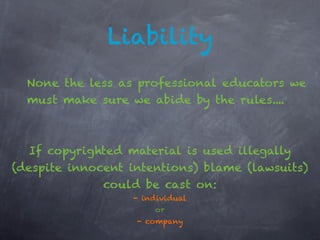
Liability
  None the less as professional educators we
  must make sure we abide by the rules....


   If copyrighted material is used illegally
(despite innocent intentions) blame (lawsuits)
              could be cast on:
                  - individual
                      or
                   - company
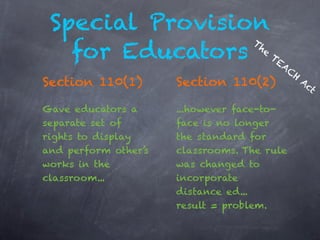
Special Provision
                 Th
   for Educators TEA
                   e

                                         C
                                             H
Section 110(1)        Section 110(2)             Ac
                                                   t

Gave educators a      ...however face-to-
separate set of       face is no longer
rights to display     the standard for
and perform other’s   classrooms. The rule
works in the          was changed to
classroom...          incorporate
                      distance ed...
                      result = problem.
What can you use?
                                           Public Domain
First it is important to understand that just
because you found it online it is not
necessarily free.

Second massive digitization projects are
happening right now to increase public
domain content (free)


                                             resources
Creative Commons
                              Creative Commons Logo


According to their website, the Creative
Commons is a place to share you
creativity and knowledge with the world
Creative Commons
                               Creative Commons Logo


You can search the creative commons for
others’ works on the internet that can be
used safely.

Also should you post anything online
you can attach a creative commons
license so others can use it.
More than likely your school has
   acquired certain licenses that provides
   access to otherwise restricted content


   You can also attempt to get permission
   personally through:

                     Collective rights organizations
                             Image Archives
                     Motion Picture Licensing Corp.
                         Contacting the author


Check out this link to find more ways to obtain permission:
http://copyright.lib.utexas.edu/permissn.html
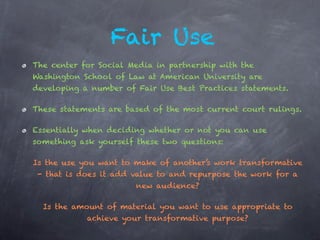
Fair Use
The center for Social Media in partnership with the
Washington School of Law at American University are
developing a number of Fair Use Best Practices statements.

These statements are based of the most current court rulings.

Essentially when deciding whether or not you can use
something ask yourself these two questions:

Is the use you want to make of another’s work transformative
 - that is does it add value to and repurpose the work for a
                       new audience?

  Is the amount of material you want to use appropriate to
            achieve your transformative purpose?
Fair Use
         If for some reason the two questions from the previous slide
         do not give you the peace of mind you are looking for you
         can try to apply the four factors that make up the Fair Use
         policy:
                                                 Favor use            Favor permission
    What is the character of the use?       Criticism, repurposing,        Commercial
                                                 commentary


  What is the nature of the work to be                                     Imaginative,
                                               Fact, Published
                   used?                                                   unpublished

                                                                        More than a small
  How much of the work will you use?            Small amount.
                                                                             amount

                                                                             Use is not
If this kind of use were widespread, what     Original is out of
                                                                      transformative, competes
 effect would it have on the market for       print, unavailable,
                                                                       with original. avoids
    the original or for permissions?        unidentifiable owner
                                                                              payment
Sources


The Mary Sue:     www.themarysue.com


Creative Commons:         creativecommons.org


Copyright Crash Course:
http://copyright.lib.utexas.edu/index.html#build

Copyright

  • 1.
  • 2.
    Copyright Law Today When you understand it fully could you please let me know ..... Current Law is a 300+ page report This creates a headache for teachers who are Image courtesy of The Mary Sue just trying to make their instruction better
  • 3.
    Liability Nonethe less as professional educators we must make sure we abide by the rules.... If copyrighted material is used illegally (despite innocent intentions) blame (lawsuits) could be cast on: - individual or - company
  • 4.
    Special Provision Th for Educators TEA e C H Section 110(1) Section 110(2) Ac t Gave educators a ...however face-to- separate set of face is no longer rights to display the standard for and perform other’s classrooms. The rule works in the was changed to classroom... incorporate distance ed... result = problem.
  • 5.
    What can youuse? Public Domain First it is important to understand that just because you found it online it is not necessarily free. Second massive digitization projects are happening right now to increase public domain content (free) resources
  • 6.
    Creative Commons Creative Commons Logo According to their website, the Creative Commons is a place to share you creativity and knowledge with the world
  • 7.
    Creative Commons Creative Commons Logo You can search the creative commons for others’ works on the internet that can be used safely. Also should you post anything online you can attach a creative commons license so others can use it.
  • 8.
    More than likelyyour school has acquired certain licenses that provides access to otherwise restricted content You can also attempt to get permission personally through: Collective rights organizations Image Archives Motion Picture Licensing Corp. Contacting the author Check out this link to find more ways to obtain permission: http://copyright.lib.utexas.edu/permissn.html
  • 9.
    Fair Use The centerfor Social Media in partnership with the Washington School of Law at American University are developing a number of Fair Use Best Practices statements. These statements are based of the most current court rulings. Essentially when deciding whether or not you can use something ask yourself these two questions: Is the use you want to make of another’s work transformative - that is does it add value to and repurpose the work for a new audience? Is the amount of material you want to use appropriate to achieve your transformative purpose?
  • 10.
    Fair Use If for some reason the two questions from the previous slide do not give you the peace of mind you are looking for you can try to apply the four factors that make up the Fair Use policy: Favor use Favor permission What is the character of the use? Criticism, repurposing, Commercial commentary What is the nature of the work to be Imaginative, Fact, Published used? unpublished More than a small How much of the work will you use? Small amount. amount Use is not If this kind of use were widespread, what Original is out of transformative, competes effect would it have on the market for print, unavailable, with original. avoids the original or for permissions? unidentifiable owner payment
  • 11.
    Sources The Mary Sue: www.themarysue.com Creative Commons: creativecommons.org Copyright Crash Course: http://copyright.lib.utexas.edu/index.html#build

Editor's Notes