Conventions of Factual
Programmes & Documentaries
Jonathan Vianello
What is a factual programme?
Factual television is a genre of non-fiction television
Documents actual events and people
Educates/informs or explores a topic/issue or
situation
Contains the use of FACTS or OPINION to justify and
support arguments/information
Factual programme conventions
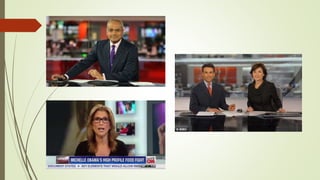
Anchor/Newsreader or Studio Reader
 Is the person who reads out the news
 Is also involved in the researching and writing of the news
(not just a pretty face)
 Will use specific language and should always appear impartial
 Keep eye contact with the camera and appear professional at
all times
Field Reporters
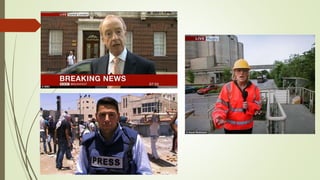
 Report from a location outside of the main studio
 Usually called a Correspondent
 Will provide more detail on the story they are reporting
 Spend their time living in the location or close to it in order
to be able to present back to the studio
 Are qualified journalists
 Are sometimes involved in dangerous situations
Links to Studio
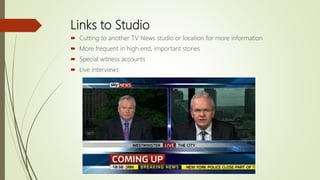
 Cutting to another TV News studio or location for more information
 More frequent in high end, important stories
 Special witness accounts
 Live interviews
Mode of Address to the Viewer
 How is the information communicated to the audience
 Unbiased and impartial
 Tone of voice
 Language used
 Speed of delivery
 Construction of show (Overview of headlines, greeting,
progress into each story, sign off)
 Hard news then soft news
 Domestic vs International
 Local news branch after national news
BBC News at 10pm 09/06/14
https://www.youtube.com/watch?v=Pt_uvf9Xq3M
Interviews with Experts & Witnesses
Help support a point or comment in a story
Allows the story to become more real/serious
Important to allow stories to have justification and
standing
Allows different sides of the story to be presented
Can explain difficult issues or topics
Actuality footage
Allows viewers ‘to see’ what's happening
Makes stories seem more real
Can allow specific elements of a story to be
understood
Is sometimes the only way to explain a story
Engages the viewer more
Documentary Programme Conventions
Hand Held Camera
Realism and truth
Shaky cam
Very common in documentaries
Heighten tension
Allows access to areas/situation and people
easier
Narrative Voice Over
Acts as a guide/lead to the documentary
Is sometimes a character from within the
documentary or a known celebrity
Allows certain pieces of information to be explained
Thoughts and feelings can be expressed
Sometimes required in order to help documentary
story progress
Louis Theroux in Vegas
https://www.youtube.com/watch?v=eNAqNwD8BJ4
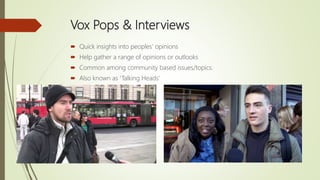
Vox Pops & Interviews
 Quick insights into peoples’ opinions
 Help gather a range of opinions or outlooks
 Common among community based issues/topics.
 Also known as ‘Talking Heads’
Archive Footage & Still Images
 Some documentaries rely on archive footage as the issue/subject/topic is in the
past
 Often brings new light onto evets/people
 Needs permission to be used
 https://www.youtube.com/watch?v=nGsczwEKnOI
Editing
Editing is vital to the delivery of a documentary
The collision of shots (editing) can change the
meaning of information
Tend to be more creative as technology develops
Cutting can be rough and not so clean, to add
impact
It’s what creates the story
Excerpt from ‘Bowling for Columbine’
https://www.youtube.com/watch?v=cYApo2d8o_A
U27A2
 Consider all the previous slides when discussing the
convention of factual programmes.
 You may use the examples in this presentation within your
discussion
 Try and locate your own examples as well
 To achieve distinction you must explain COMPREHENSIVELY
the convention within factual programmes.

Conventions of Factual Programs and Documentaries

  • 1.
    Conventions of Factual Programmes& Documentaries Jonathan Vianello
  • 2.
    What is afactual programme? Factual television is a genre of non-fiction television Documents actual events and people Educates/informs or explores a topic/issue or situation Contains the use of FACTS or OPINION to justify and support arguments/information
  • 3.
    Factual programme conventions Anchor/Newsreaderor Studio Reader  Is the person who reads out the news  Is also involved in the researching and writing of the news (not just a pretty face)  Will use specific language and should always appear impartial  Keep eye contact with the camera and appear professional at all times
  • 5.
    Field Reporters  Reportfrom a location outside of the main studio  Usually called a Correspondent  Will provide more detail on the story they are reporting  Spend their time living in the location or close to it in order to be able to present back to the studio  Are qualified journalists  Are sometimes involved in dangerous situations
  • 7.
    Links to Studio Cutting to another TV News studio or location for more information  More frequent in high end, important stories  Special witness accounts  Live interviews
  • 8.
    Mode of Addressto the Viewer  How is the information communicated to the audience  Unbiased and impartial  Tone of voice  Language used  Speed of delivery  Construction of show (Overview of headlines, greeting, progress into each story, sign off)  Hard news then soft news  Domestic vs International  Local news branch after national news
  • 9.
    BBC News at10pm 09/06/14 https://www.youtube.com/watch?v=Pt_uvf9Xq3M
  • 10.
    Interviews with Experts& Witnesses Help support a point or comment in a story Allows the story to become more real/serious Important to allow stories to have justification and standing Allows different sides of the story to be presented Can explain difficult issues or topics
  • 11.
    Actuality footage Allows viewers‘to see’ what's happening Makes stories seem more real Can allow specific elements of a story to be understood Is sometimes the only way to explain a story Engages the viewer more
  • 12.
    Documentary Programme Conventions HandHeld Camera Realism and truth Shaky cam Very common in documentaries Heighten tension Allows access to areas/situation and people easier
  • 13.
    Narrative Voice Over Actsas a guide/lead to the documentary Is sometimes a character from within the documentary or a known celebrity Allows certain pieces of information to be explained Thoughts and feelings can be expressed Sometimes required in order to help documentary story progress
  • 14.
    Louis Theroux inVegas https://www.youtube.com/watch?v=eNAqNwD8BJ4
  • 15.
    Vox Pops &Interviews  Quick insights into peoples’ opinions  Help gather a range of opinions or outlooks  Common among community based issues/topics.  Also known as ‘Talking Heads’
  • 16.
    Archive Footage &Still Images  Some documentaries rely on archive footage as the issue/subject/topic is in the past  Often brings new light onto evets/people  Needs permission to be used  https://www.youtube.com/watch?v=nGsczwEKnOI
  • 17.
    Editing Editing is vitalto the delivery of a documentary The collision of shots (editing) can change the meaning of information Tend to be more creative as technology develops Cutting can be rough and not so clean, to add impact It’s what creates the story
  • 18.
    Excerpt from ‘Bowlingfor Columbine’ https://www.youtube.com/watch?v=cYApo2d8o_A
  • 19.
    U27A2  Consider allthe previous slides when discussing the convention of factual programmes.  You may use the examples in this presentation within your discussion  Try and locate your own examples as well  To achieve distinction you must explain COMPREHENSIVELY the convention within factual programmes.