Contextual Elements for Geoscience Standards
Adoption and Development in SA
Status of Geoscience Information Systems
Berlin 2010
Germany
Gabriel Asato
CGI-IUGS
Geological and Mining Survey of Argentina
Presentation Outline
Aims:
Give and idea of the current regional level geo-information system development and
provide some strategies for know how transferece to developing countries.

One Geology Status in SA

Information System Developments

Outreach Activities in SA

Some notes about Know How Trasference to Developing Countries

Importance of NSDI and Hazard Prevention and Management System in technology
transference.
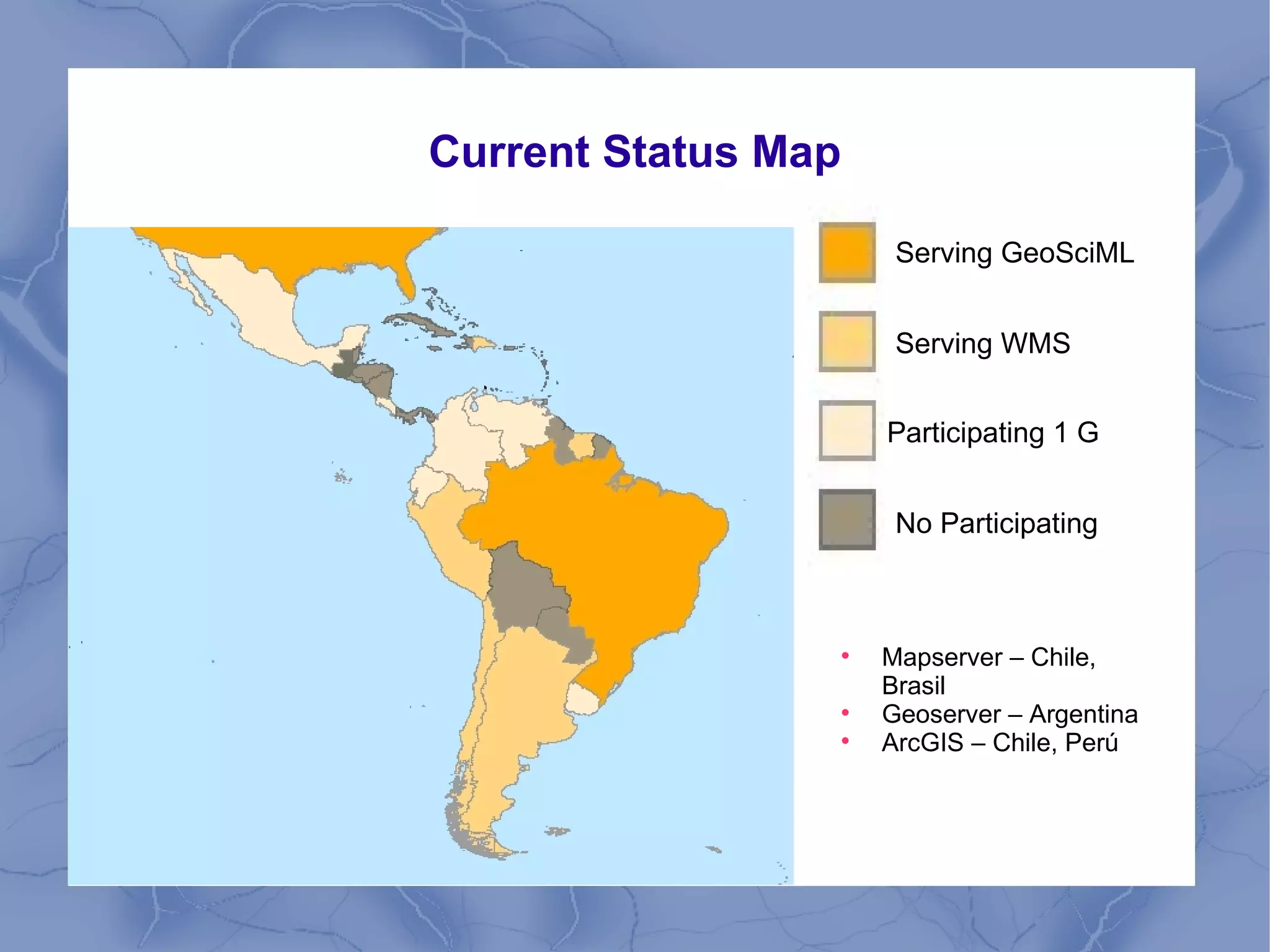
Current Status Map
Serving GeoSciML
Serving WMS
Participating 1 G
No Participating

Mapserver – Chile,
Brasil

Geoserver – Argentina

ArcGIS – Chile, Perú
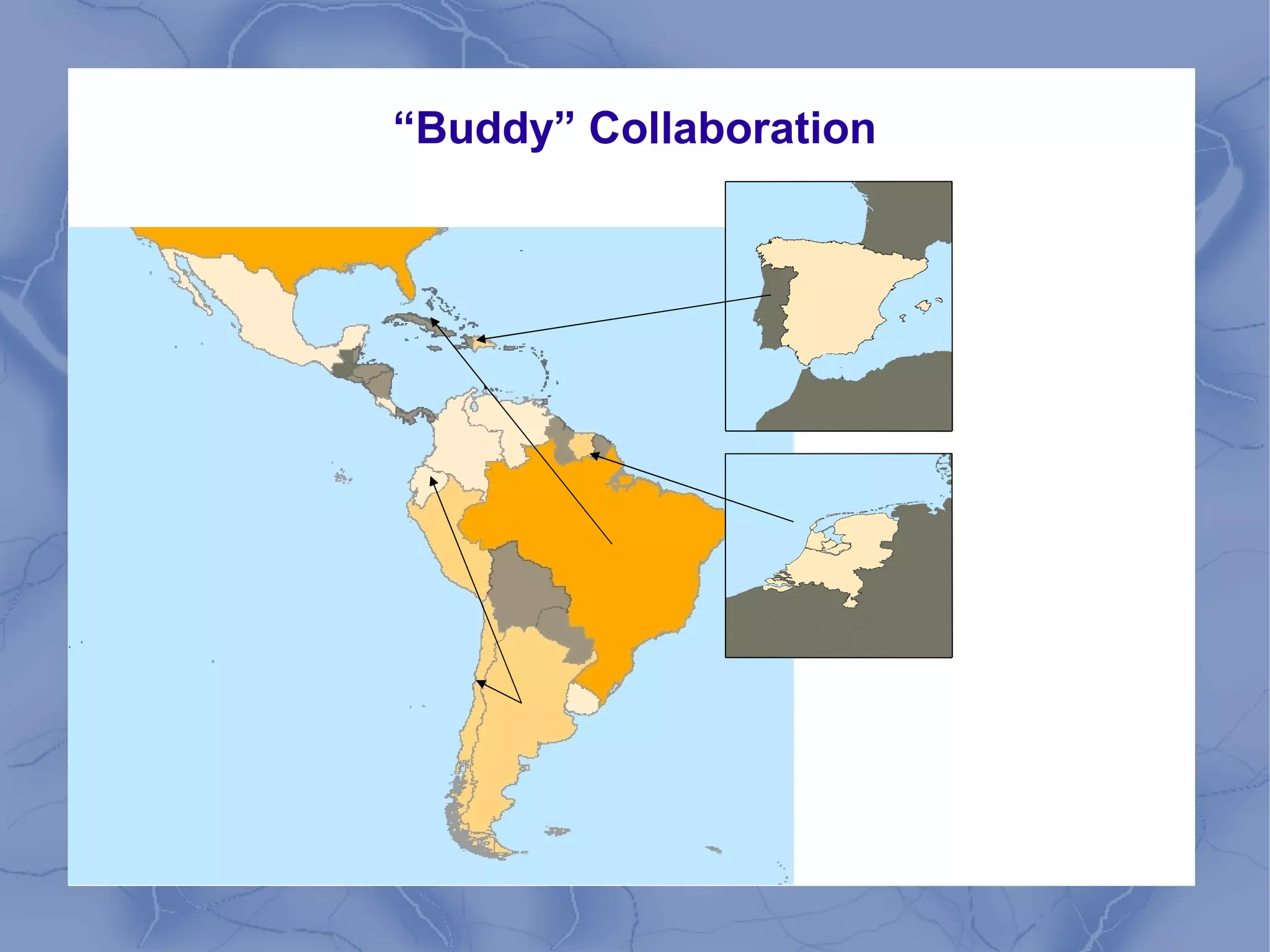
“Buddy” Collaboration
Regional Geo-Information Development

Previous Developments
− GeoSemantica Map-GAC Project. GSC. 2002-2008
− Canada, Argentina, Bolivia, Chile, Colombia, Ecuador,
Perú, Venezuela
− Disaster Management and Vulnerability
− Information Platform: Phoenix
− Support WMS, Z39.50, document sharing system. A kind
of early social network.
− ArcGIS On-Line will probably have similar utilities.
Corporate Geoscience Information System
Development

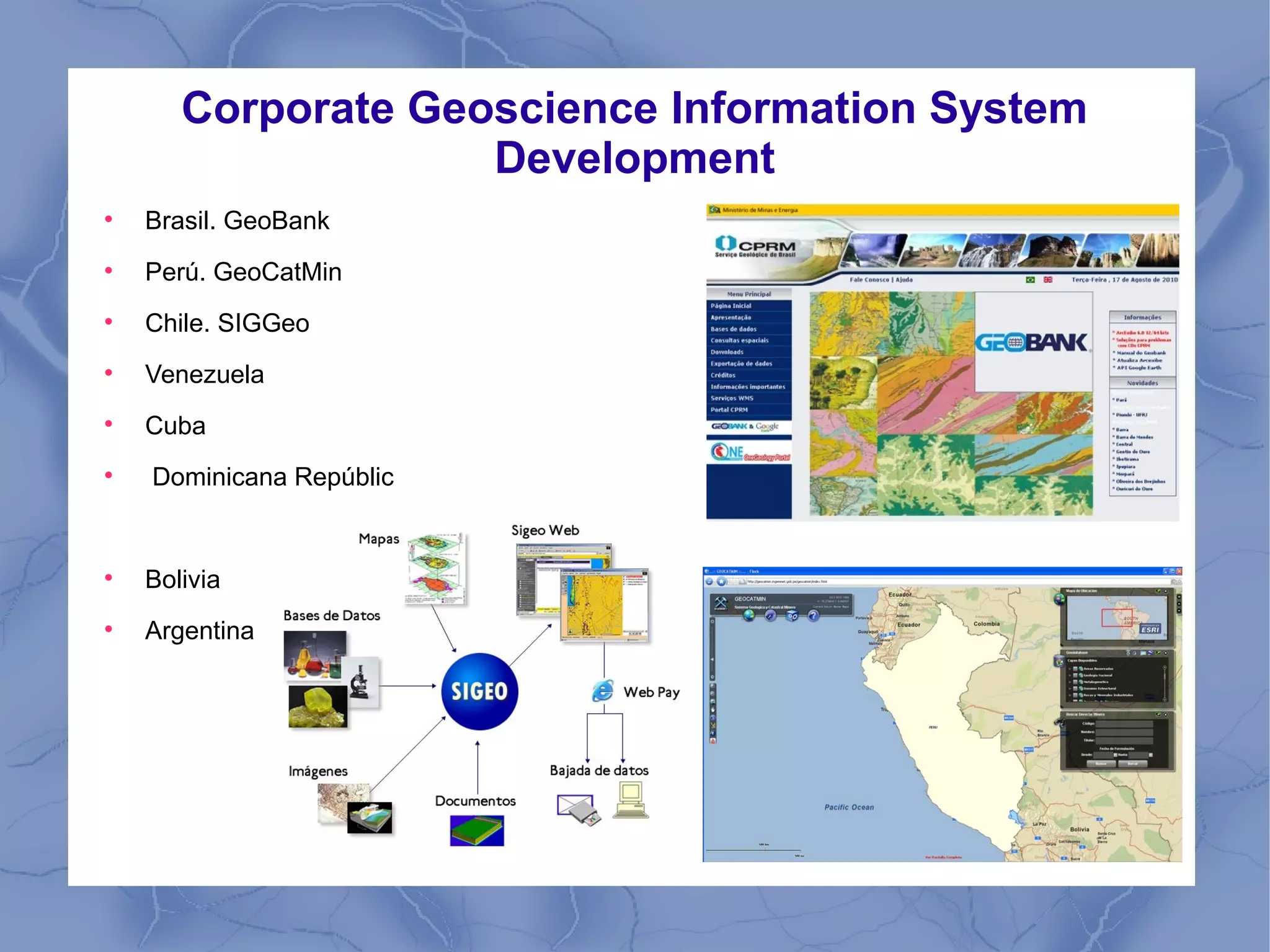
Brasil. GeoBank

Perú. GeoCatMin

Chile. SIGGeo

Venezuela

Cuba

Dominicana Repúblic

Bolivia

Argentina
Other Information Initiatives

PREDECAN (Bolivia, Colombia,
Ecuador, Perú Venezuela)
− GeoRiesgo
− DesInventar

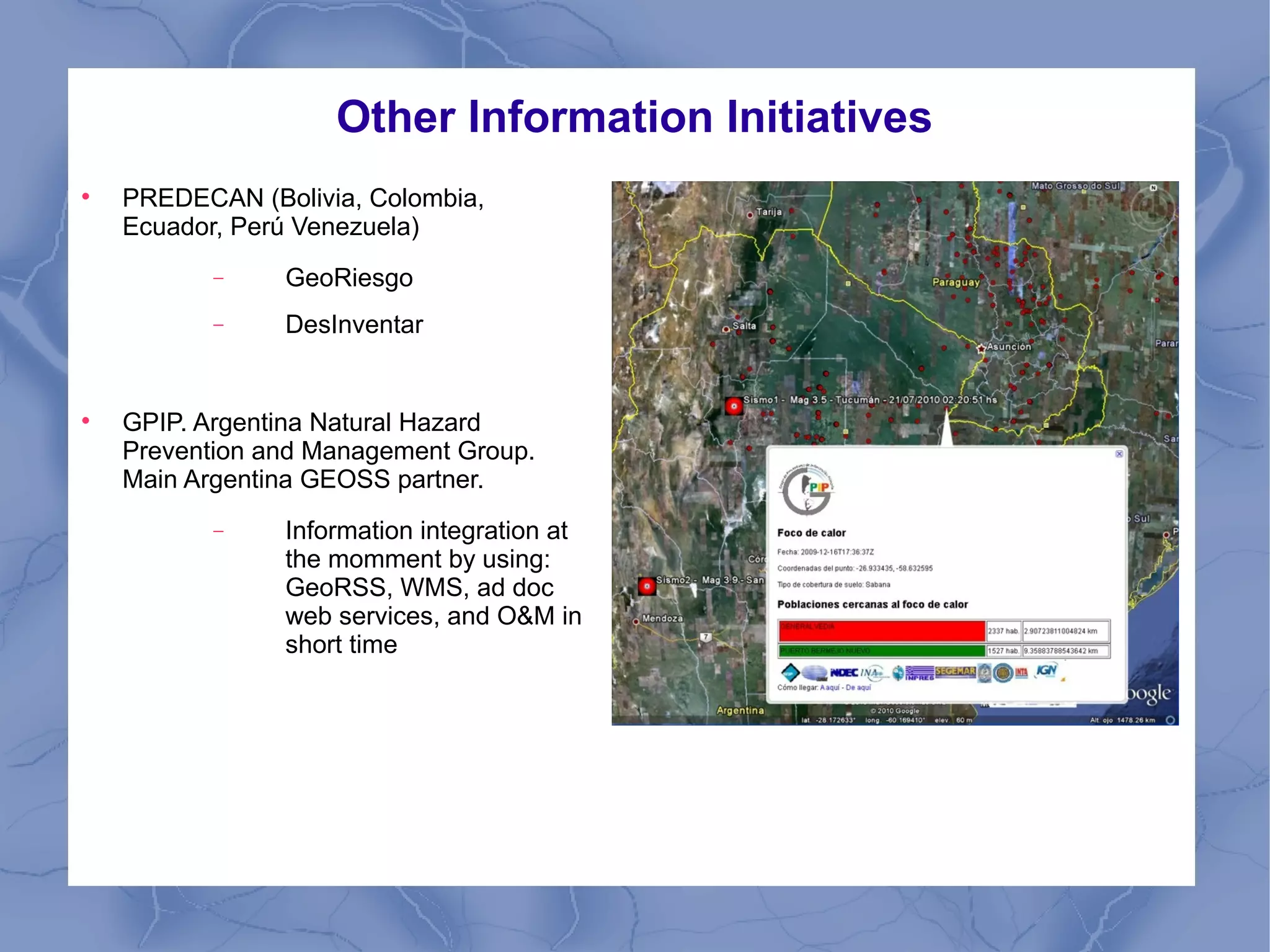
GPIP. Argentina Natural Hazard
Prevention and Management Group.
Main Argentina GEOSS partner.
− Information integration at
the momment by using:
GeoRSS, WMS, ad doc
web services, and O&M in
short time
One Geology Outreach Activities

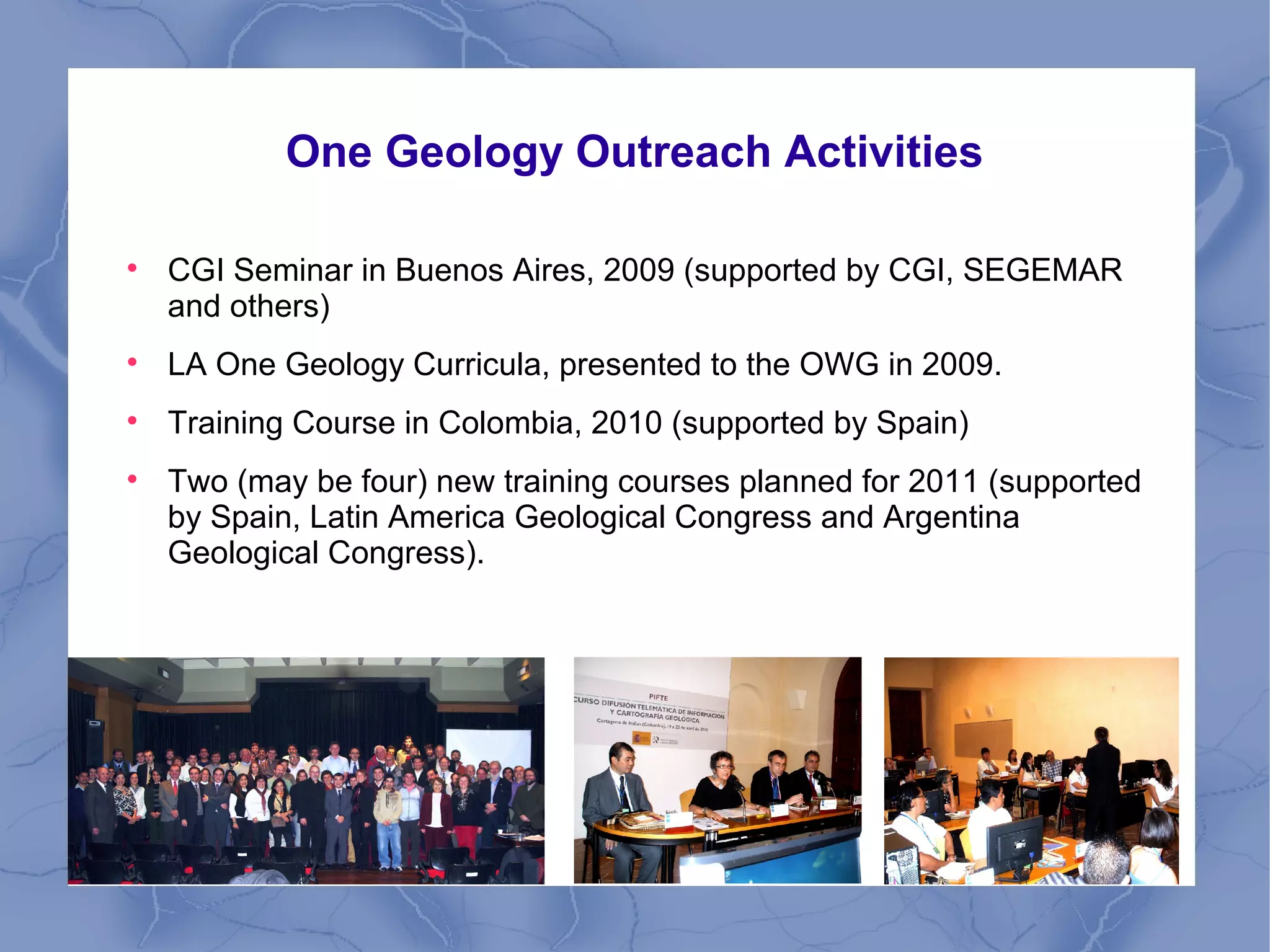
CGI Seminar in Buenos Aires, 2009 (supported by CGI, SEGEMAR
and others)

LA One Geology Curricula, presented to the OWG in 2009.

Training Course in Colombia, 2010 (supported by Spain)

Two (may be four) new training courses planned for 2011 (supported
by Spain, Latin America Geological Congress and Argentina
Geological Congress).
One Geology Curricula for South America

Aims
− A guide for mastering interoperable information tools
− Create awarenes about how SA countries have to manage their
people training

Contents
− Html, xhtml, css.
− Xml, xpath, xquery, xslt, etc.
− UML
− OGC Standards
− GeoSciML
Notes About
Know How Transference
for Developing Countries
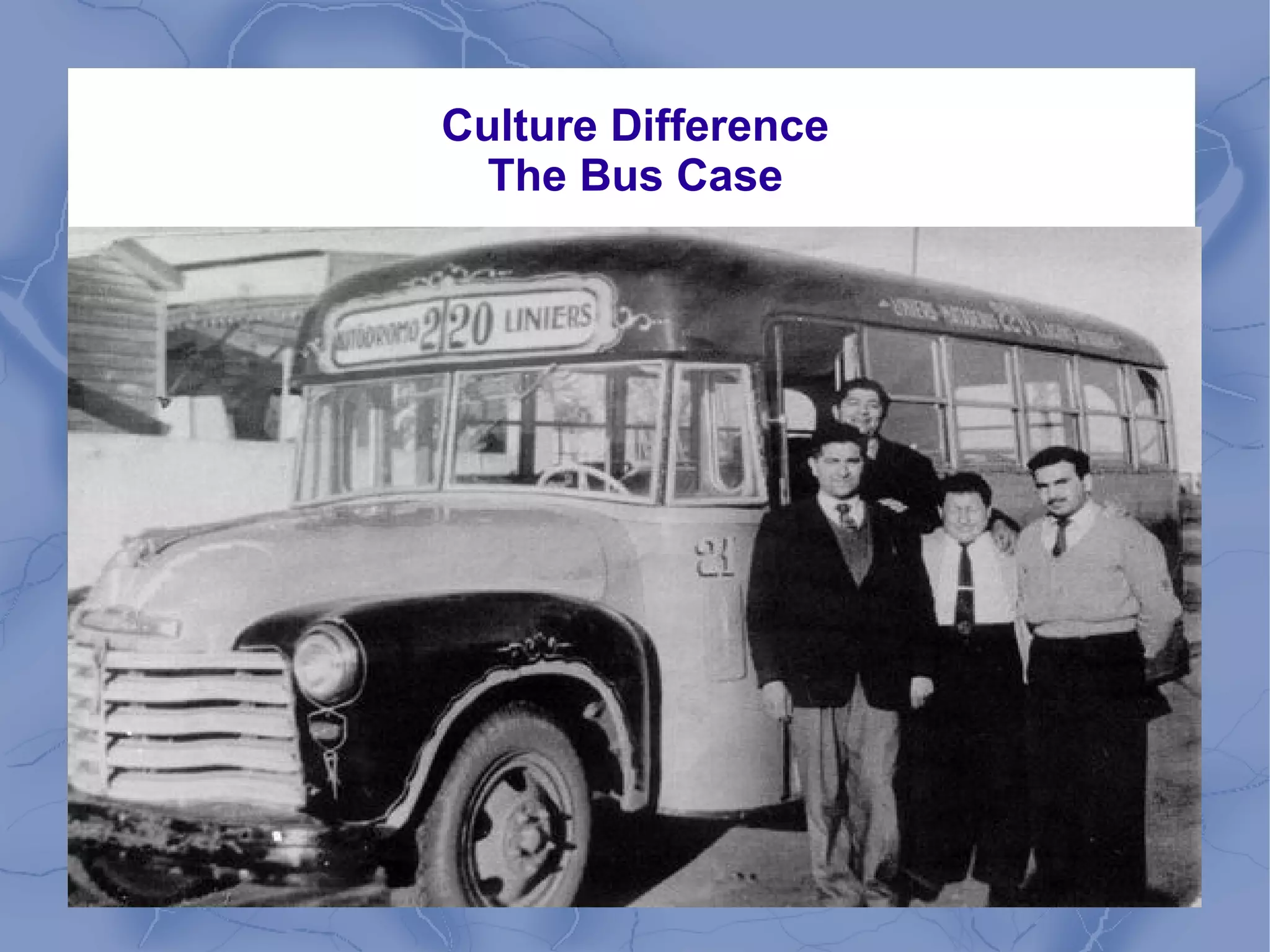
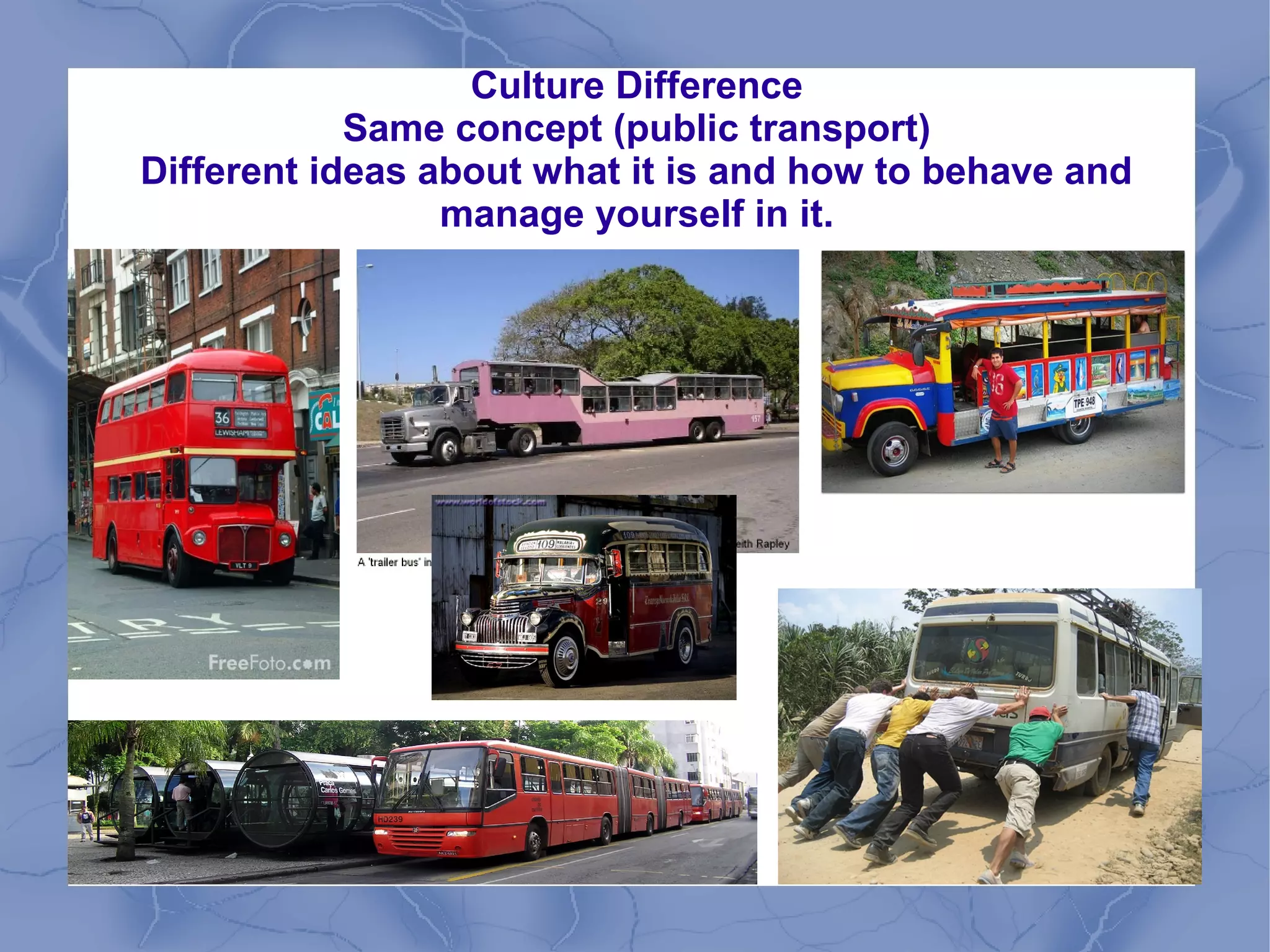
Culture Difference
The Bus Case
Culture Difference
the Warning Banner and Bus Driver Joke

U.S.A.:
"Don't speak to the bus driver."

Germany:
"It is strictly forbidden for passengers to speak to the driver."

England:
"You are requested to refrain from speaking to the driver."

Scotland:
"What have you got to gain by speaking to the driver?"

Italy:
"Don't answer the driver."
Culture Difference
Same concept (public transport)
Different ideas about what it is and how to behave and
manage yourself in it.
And What About Technology?
Culture Difference and Information Systems

Is a study matter of:
Project Management and Capacity Building
Why?
Due to cultural difference have a strong impact in the
development and success of information system
projects.
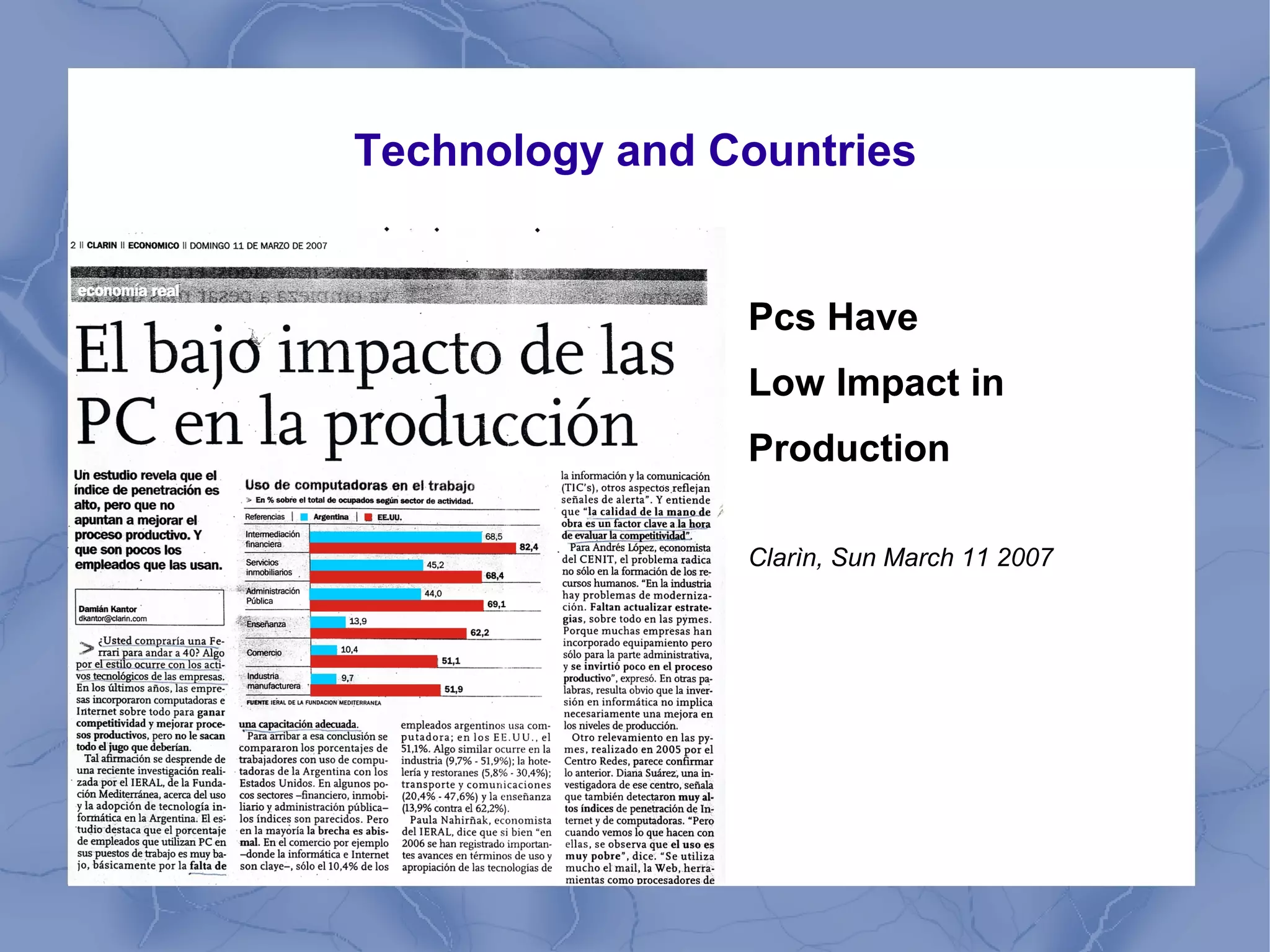
Technology and Countries
Pcs Have
Low Impact in
Production
Clarìn, Sun March 11 2007
The Social Science and
Information Projects

Culture Understanding
− Different approaches

Human Capital vs Social Capital

Social and Government organization

Education Framework

Traditions and customs

Etc, etc, etc.
So, Have we learn about social science?
Problem Approach

Try to fill the gap between old and new practices (do things in connection with the past).

Make proposals about how to enhance old (or replace bad) practices (use path of least
resistance principle).

Follow the Congruency Task Principle. Respect local practices (learn about local practices)

Create knowledge and tradition by promoting community of practice (group of interest,
autonomous)

Give Contexts. Create Social Capital Awareness. Promote relationships with stakeholders

Teach about how to learn

Etc. etc.
How Umbrella Information Projects Push Forward
Geo-Science Information Systems in LA
International and General Interest Projects

Electronic Goverment initiatives

Global and National Spatial Data Infrastructure Initiatives

Hazard Prevention and Mangement Systems

GEOSS, One Geology, other global geoscience international projects.
Specific Regional Projects

1 Millon map and GIS of South America

PREDECAN
Promote the development of consistent and sustainable information developments
Conclusions

In order to fullfill the One Geology requirements, SA countries need technological
support. In that way trainning program are in developing.

Know How Transference projects are not easy tasks.

People who are involved in international projects have to know that cultural
communication problems among countries exists.

Projects Managers should know how to handle culture differences.

Despite of cultural and communication differences, global projects like NSDI, One
Geology, etc. give a good way to contruct technology in developing countries in a
consistent manner, because they recognize the importance of those kind of projects.

Despite the culture difference, SA countries are very happy to participate and
collaborate!!

Contextual Elements for Geoscience Standards Adoption and Development in SA Status of Geoscience Information Systems

  • 1.
    Contextual Elements forGeoscience Standards Adoption and Development in SA Status of Geoscience Information Systems Berlin 2010 Germany Gabriel Asato CGI-IUGS Geological and Mining Survey of Argentina
  • 2.
    Presentation Outline Aims: Give andidea of the current regional level geo-information system development and provide some strategies for know how transferece to developing countries.  One Geology Status in SA  Information System Developments  Outreach Activities in SA  Some notes about Know How Trasference to Developing Countries  Importance of NSDI and Hazard Prevention and Management System in technology transference.
  • 3.
    Current Status Map ServingGeoSciML Serving WMS Participating 1 G No Participating  Mapserver – Chile, Brasil  Geoserver – Argentina  ArcGIS – Chile, Perú
  • 4.
  • 5.
    Regional Geo-Information Development  PreviousDevelopments − GeoSemantica Map-GAC Project. GSC. 2002-2008 − Canada, Argentina, Bolivia, Chile, Colombia, Ecuador, Perú, Venezuela − Disaster Management and Vulnerability − Information Platform: Phoenix − Support WMS, Z39.50, document sharing system. A kind of early social network. − ArcGIS On-Line will probably have similar utilities.
  • 6.
    Corporate Geoscience InformationSystem Development  Brasil. GeoBank  Perú. GeoCatMin  Chile. SIGGeo  Venezuela  Cuba  Dominicana Repúblic  Bolivia  Argentina
  • 7.
    Other Information Initiatives  PREDECAN(Bolivia, Colombia, Ecuador, Perú Venezuela) − GeoRiesgo − DesInventar  GPIP. Argentina Natural Hazard Prevention and Management Group. Main Argentina GEOSS partner. − Information integration at the momment by using: GeoRSS, WMS, ad doc web services, and O&M in short time
  • 8.
    One Geology OutreachActivities  CGI Seminar in Buenos Aires, 2009 (supported by CGI, SEGEMAR and others)  LA One Geology Curricula, presented to the OWG in 2009.  Training Course in Colombia, 2010 (supported by Spain)  Two (may be four) new training courses planned for 2011 (supported by Spain, Latin America Geological Congress and Argentina Geological Congress).
  • 9.
    One Geology Curriculafor South America  Aims − A guide for mastering interoperable information tools − Create awarenes about how SA countries have to manage their people training  Contents − Html, xhtml, css. − Xml, xpath, xquery, xslt, etc. − UML − OGC Standards − GeoSciML
  • 10.
    Notes About Know HowTransference for Developing Countries
  • 11.
  • 12.
    Culture Difference the WarningBanner and Bus Driver Joke  U.S.A.: "Don't speak to the bus driver."  Germany: "It is strictly forbidden for passengers to speak to the driver."  England: "You are requested to refrain from speaking to the driver."  Scotland: "What have you got to gain by speaking to the driver?"  Italy: "Don't answer the driver."
  • 13.
    Culture Difference Same concept(public transport) Different ideas about what it is and how to behave and manage yourself in it.
  • 14.
    And What AboutTechnology?
  • 15.
    Culture Difference andInformation Systems  Is a study matter of: Project Management and Capacity Building Why? Due to cultural difference have a strong impact in the development and success of information system projects.
  • 16.
    Technology and Countries PcsHave Low Impact in Production Clarìn, Sun March 11 2007
  • 17.
    The Social Scienceand Information Projects  Culture Understanding − Different approaches  Human Capital vs Social Capital  Social and Government organization  Education Framework  Traditions and customs  Etc, etc, etc. So, Have we learn about social science?
  • 18.
    Problem Approach  Try tofill the gap between old and new practices (do things in connection with the past).  Make proposals about how to enhance old (or replace bad) practices (use path of least resistance principle).  Follow the Congruency Task Principle. Respect local practices (learn about local practices)  Create knowledge and tradition by promoting community of practice (group of interest, autonomous)  Give Contexts. Create Social Capital Awareness. Promote relationships with stakeholders  Teach about how to learn  Etc. etc.
  • 19.
    How Umbrella InformationProjects Push Forward Geo-Science Information Systems in LA International and General Interest Projects  Electronic Goverment initiatives  Global and National Spatial Data Infrastructure Initiatives  Hazard Prevention and Mangement Systems  GEOSS, One Geology, other global geoscience international projects. Specific Regional Projects  1 Millon map and GIS of South America  PREDECAN Promote the development of consistent and sustainable information developments
  • 20.
    Conclusions  In order tofullfill the One Geology requirements, SA countries need technological support. In that way trainning program are in developing.  Know How Transference projects are not easy tasks.  People who are involved in international projects have to know that cultural communication problems among countries exists.  Projects Managers should know how to handle culture differences.  Despite of cultural and communication differences, global projects like NSDI, One Geology, etc. give a good way to contruct technology in developing countries in a consistent manner, because they recognize the importance of those kind of projects.  Despite the culture difference, SA countries are very happy to participate and collaborate!!