Division of Agricultural Economics & ABM
 The maximum amount that a
buyer will pay for a good.
 It measures how much the
buyer values the good or
service.
 A buyer’s willingness to pay
minus the amount the buyer
actually pays.
Buyer Willingness to pay
in($)
Vrish 100
Arsalan 80
Ajay 70
Aijaz 50
Price Buyers Quantity
demanded
More than $100 None 0
$80 to $100 Vrish 1
$70 to $80 Vrish, Arsalan 2
$50 to $70 Vrish, Arsalan, Ajay 3
$50 or less Vrish, Arsalan, Ajay, Aijaz 4
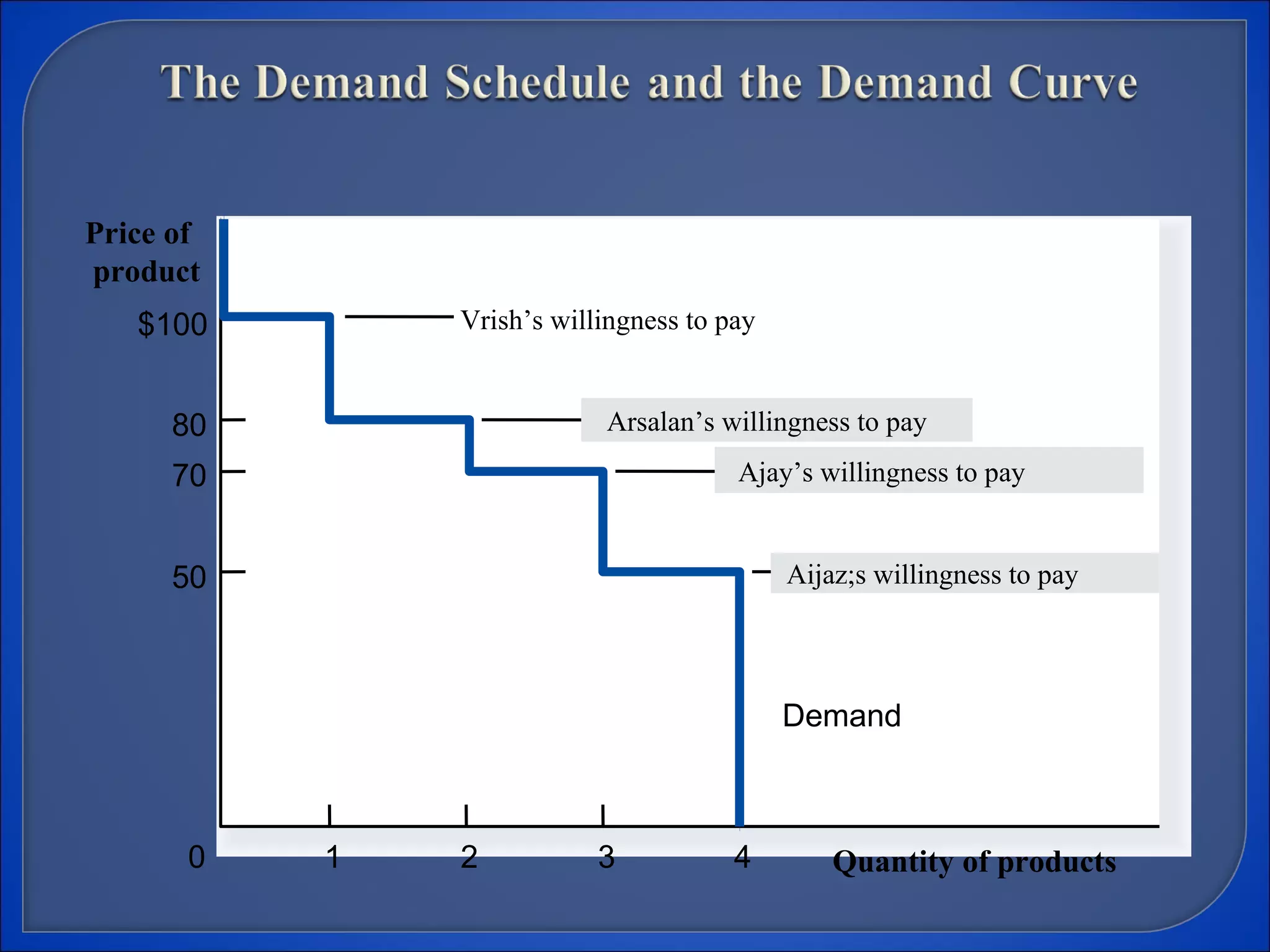
Price of
product
0 Quantity of products
Demand
1 2 3 4
$100 Vrish’s willingness to pay
80 Arsalan’s willingness to pay
70 Ajay’s willingness to pay
50 Aijaz;s willingness to pay
(a) Price = $80
Price of
product
50
70
80
0
$100
Demand
1 2 3 4 Quantity of
product
’Vrish’s consumer surplus ($20)
(b) Price = $70
Price of
Product
50
70
80
0
$100
Demand
1 2 3 4
Total
consumer
surplus ($40)
Quantity of
Product
Vrish’s consumer surplus ($30)
Arsalan’s consumer surplus($10)
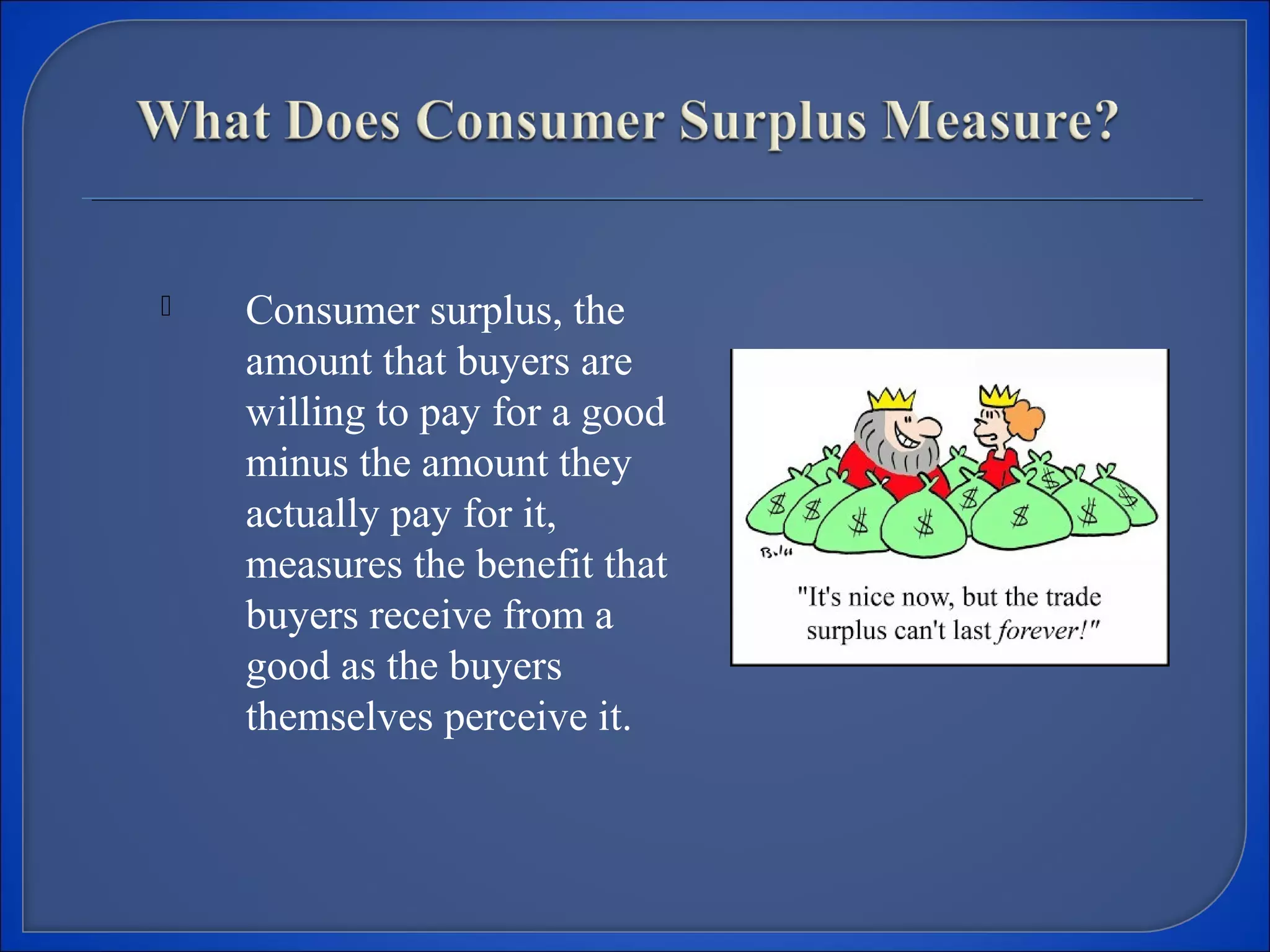
 Consumer surplus, the
amount that buyers are
willing to pay for a good
minus the amount they
actually pay for it,
measures the benefit that
buyers receive from a
good as the buyers
themselves perceive it.
 Consumer surplus equals buyers’
willingness to pay for a good
minus the amount they actually
pay for it.
 Consumer surplus measures the
benefit buyers get from
participating in a market.
 A marketable surplus can be the
result of an accumulation of unsold
goods or an instance of
overproduction.
 A market surplus occurs when there
is excess supply.
 Marketable surplus has lasting value & that can be sold or used
in a way that was not originally intended.
 It has value for someone, somewhere & high quality can help
to maintain its relevancy.
 Secondary market
 Wholesale opportunities
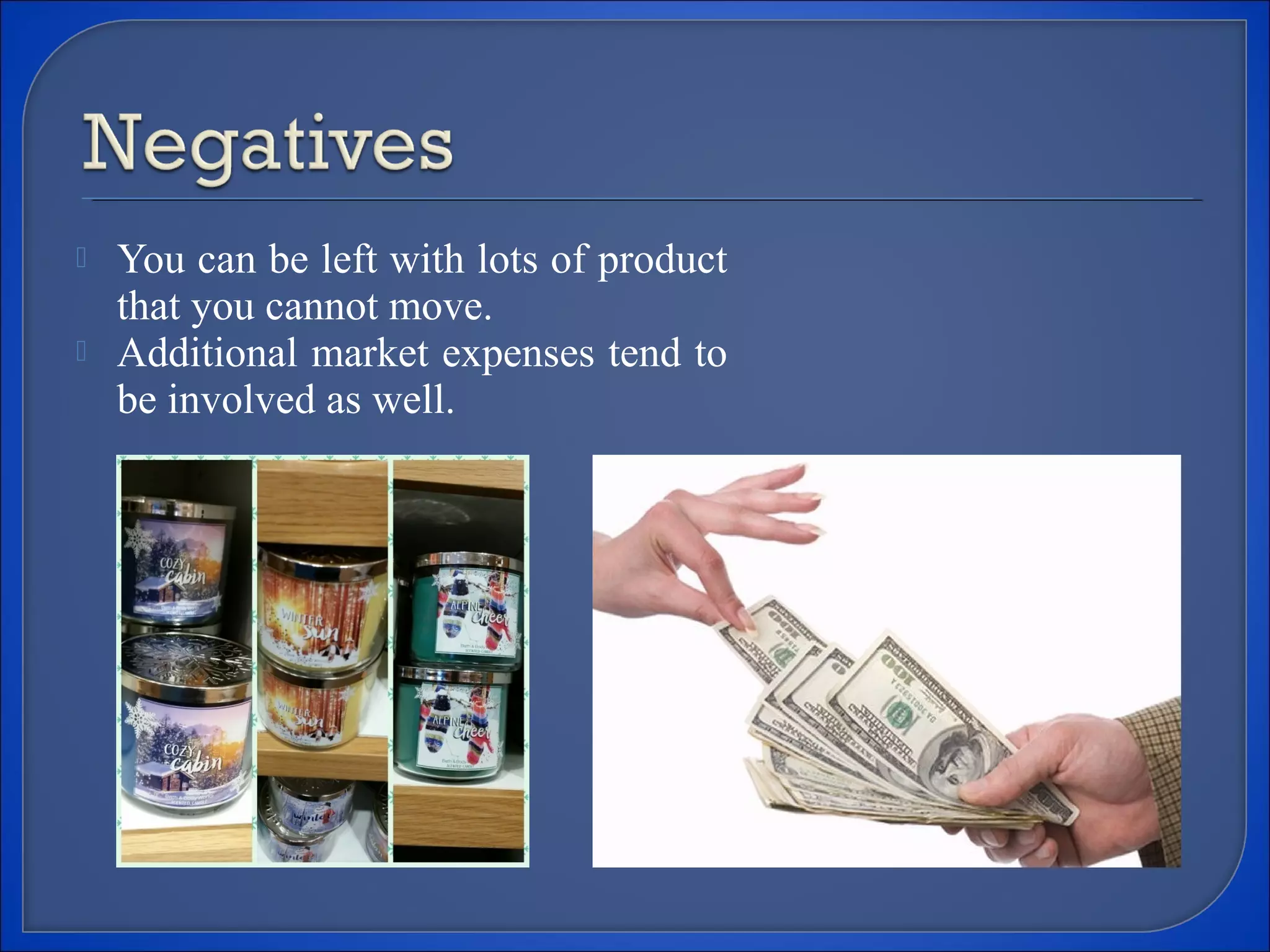
 You can be left with lots of product
that you cannot move.
 Additional market expenses tend to
be involved as well.
consumer surplus

consumer surplus

  • 1.
    Division of AgriculturalEconomics & ABM
  • 3.
     The maximumamount that a buyer will pay for a good.  It measures how much the buyer values the good or service.  A buyer’s willingness to pay minus the amount the buyer actually pays.
  • 4.
    Buyer Willingness topay in($) Vrish 100 Arsalan 80 Ajay 70 Aijaz 50
  • 5.
    Price Buyers Quantity demanded Morethan $100 None 0 $80 to $100 Vrish 1 $70 to $80 Vrish, Arsalan 2 $50 to $70 Vrish, Arsalan, Ajay 3 $50 or less Vrish, Arsalan, Ajay, Aijaz 4
  • 6.
    Price of product 0 Quantityof products Demand 1 2 3 4 $100 Vrish’s willingness to pay 80 Arsalan’s willingness to pay 70 Ajay’s willingness to pay 50 Aijaz;s willingness to pay
  • 7.
    (a) Price =$80 Price of product 50 70 80 0 $100 Demand 1 2 3 4 Quantity of product ’Vrish’s consumer surplus ($20)
  • 8.
    (b) Price =$70 Price of Product 50 70 80 0 $100 Demand 1 2 3 4 Total consumer surplus ($40) Quantity of Product Vrish’s consumer surplus ($30) Arsalan’s consumer surplus($10)
  • 9.
     Consumer surplus,the amount that buyers are willing to pay for a good minus the amount they actually pay for it, measures the benefit that buyers receive from a good as the buyers themselves perceive it.
  • 10.
     Consumer surplusequals buyers’ willingness to pay for a good minus the amount they actually pay for it.  Consumer surplus measures the benefit buyers get from participating in a market.
  • 11.
     A marketablesurplus can be the result of an accumulation of unsold goods or an instance of overproduction.  A market surplus occurs when there is excess supply.
  • 12.
     Marketable surplushas lasting value & that can be sold or used in a way that was not originally intended.  It has value for someone, somewhere & high quality can help to maintain its relevancy.
  • 13.
     Secondary market Wholesale opportunities
  • 14.
     You canbe left with lots of product that you cannot move.  Additional market expenses tend to be involved as well.