CONSUMER BASKET
  IN THE PAST AND TODAY


Project managers: Helena Oštrić, prof.
                  Andrijana Poljak, prof.
PROJECT OBJECTIVE
 Methodological preparation of teaching units:

  1.“Proper nutrition and eating habits”- teaching unit “Man
   as a biological being and part of the community” (5th
   grade - biology)

  2. “Energy saving” and “Danger to biosphere” (6th grade -
   biology)

  3. “Nutrients” and “Proper nutrition” (8th grade - biology)
TOPIC OBJECTIVE:
 Exploring the groceries available to consumers in the past
  and today
 Introducing eating habits of past and present generations of
  our district
 Developing the responsibility in the choice of groceries and
  therefore one’s own health
 Educating pupils for a positive attitude towards the
  environment, primarily towards the prevention of the
  accumulation of unnecessary waste and waste storage
 Training pupils and residents to accept the responsibility for
  good management and sustainable development of our
  region
Activities:
 Finding elderly people and learning where and what they
  used to buy - an interview
 Exploring what and where the average family buys today –
  a survey
 Examining the influence of media and publicity materials
  on buying habits – survey
 Checking and photographing the deployment of groceries
  in large supermarkets, and considering the effects it has on
  the buyer’s choices
 Photographing vegetable and fish markets, old customs and
  ways of cooking food
 Finding traditional and healthy recipes
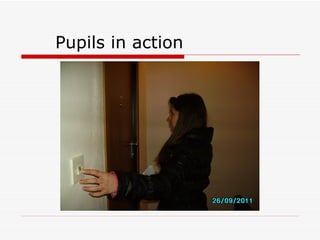
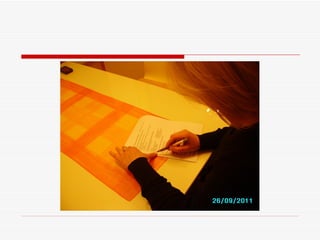
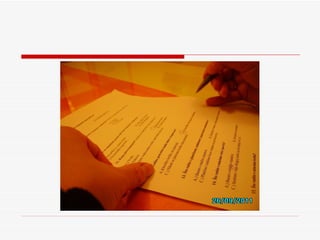
Pupils in action
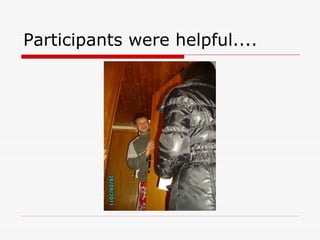
Participants were helpful....
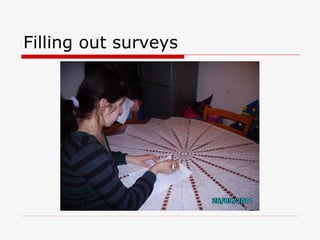
Filling out surveys
Results of the survey
The survey was conducted on 50 subjects aged 24-60 years

A SURVEY - WHAT DO WE BUY AND HOW
Here are some more important questions of the total fifteen.

2. The choice of shops is affected by the quality and freshness of the
    product (28%), the cheapest price (24%), and proximity (22%)
4. The reason why a certain brand name products are purchased is
    mostly their quality (63%), and then the cheapest price (20%). The
    rest is negligible.
5. and 6. Vegetables, fruits and especially meat and fish are mostly
     bought at the market (58%), ie. the butcher shop and fish market
     (68%). However the rest (20%), of fruits and vegetables are bought
     in supermarkets, because of people's inability to go to the market
     due to distance, working hours etc. while meat and fish are bought
     in large shopping malls (18%)-in the so-called. "Large
     procurement".
8. Of randomly purchased goods, 47% of people use all of it, 43% use
     only about a half of it and 10% use less than half. This, however,
     shows that there is a phenomenon or "scourge" of excesive buying due
     to advertisements, shopping centers, deployment of products ...)
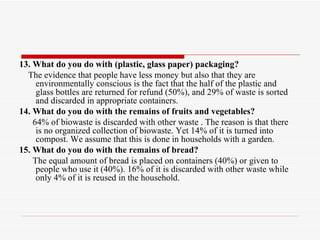
13. What do you do with (plastic, glass paper) packaging?
  The evidence that people have less money but also that they are
     environmentally conscious is the fact that the half of the plastic and
     glass bottles are returned for refund (50%), and 29% of waste is sorted
     and discarded in appropriate containers.
14. What do you do with the remains of fruits and vegetables?
    64% of biowaste is discarded with other waste . The reason is that there
     is no organized collection of biowaste. Yet 14% of it is turned into
     compost. We assume that this is done in households with a garden.
15. What do you do with the remains of bread?
    The equal amount of bread is placed on containers (40%) or given to
     people who use it (40%). 16% of it is discarded with other waste while
     only 4% of it is reused in the household.
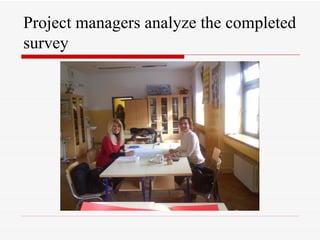
Project managers analyze the completed
survey
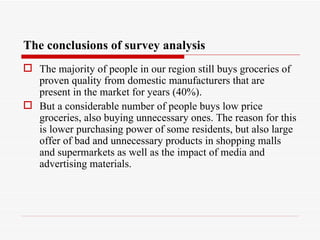
The conclusions of survey analysis
 The majority of people in our region still buys groceries of
  proven quality from domestic manufacturers that are
  present in the market for years (40%).
 But a considerable number of people buys low price
  groceries, also buying unnecessary ones. The reason for this
  is lower purchasing power of some residents, but also large
  offer of bad and unnecessary products in shopping malls
  and supermarkets as well as the impact of media and
  advertising materials.
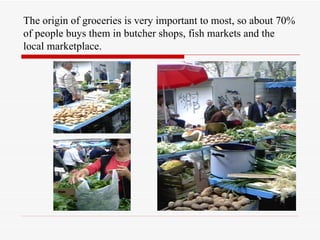
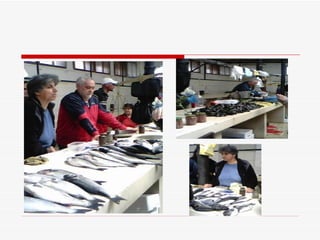
The origin of groceries is very important to most, so about 70%
of people buys them in butcher shops, fish markets and the
local marketplace.
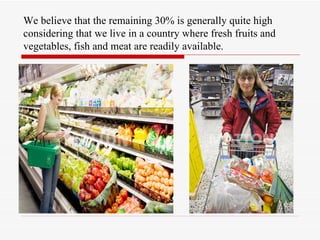
We believe that the remaining 30% is generally quite high
considering that we live in a country where fresh fruits and
vegetables, fish and meat are readily available.
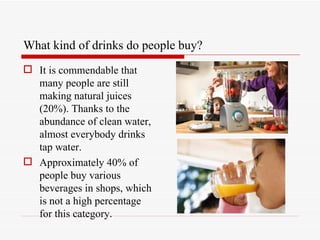
What kind of drinks do people buy?
 It is commendable that
  many people are still
  making natural juices
  (20%). Thanks to the
  abundance of clean water,
  almost everybody drinks
  tap water.
 Approximately 40% of
  people buy various
  beverages in shops, which
  is not a high percentage
  for this category.
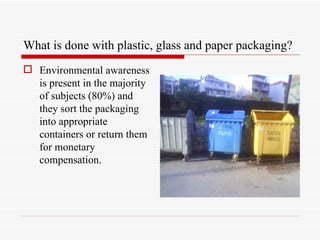
What is done with plastic, glass and paper packaging?
 Environmental awareness
  is present in the majority
  of subjects (80%) and
  they sort the packaging
  into appropriate
  containers or return them
  for monetary
  compensation.
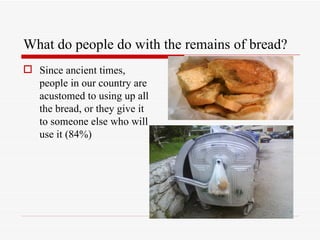
What do people do with the remains of bread?
 Since ancient times,
  people in our country are
  acustomed to using up all
  the bread, or they give it
  to someone else who will
  use it (84%)
Good old traditions

 Holidays

 Food preparation

 Harvest and preparation of wild growing
  herbs…….
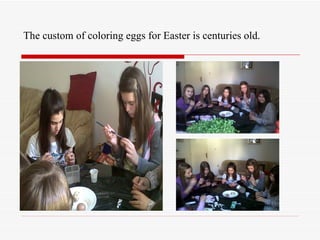
The custom of coloring eggs for Easter is centuries old.
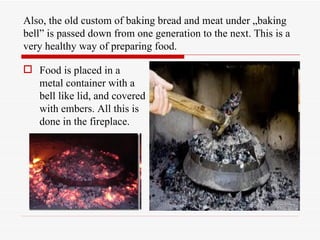
Also, the old custom of baking bread and meat under „baking
bell” is passed down from one generation to the next. This is a
very healthy way of preparing food.

 Food is placed in a
  metal container with a
  bell like lid, and covered
  with embers. All this is
  done in the fireplace.
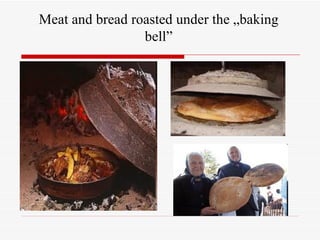
Meat and bread roasted under the „baking
                 bell”
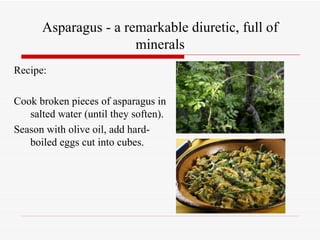
Asparagus - a remarkable diuretic, full of
                      minerals
Recipe:

Cook broken pieces of asparagus in
   salted water (until they soften).
Season with olive oil, add hard-
   boiled eggs cut into cubes.
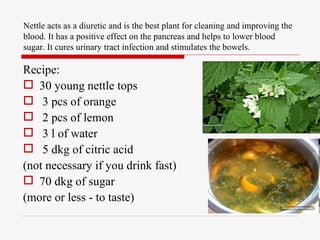
Nettle acts as a diuretic and is the best plant for cleaning and improving the
blood. It has a positive effect on the pancreas and helps to lower blood
sugar. It cures urinary tract infection and stimulates the bowels.

Recipe:
 30 young nettle tops
 3 pcs of orange
 2 pcs of lemon
 3 l of water
 5 dkg of citric acid
(not necessary if you drink fast)
 70 dkg of sugar
(more or less - to taste)
Shop like people did before!

 Only for one or two days ahead

 Buy fresh and avoid packaged and canned
  foods
EAT LIKE PEOPLE ATE BEFORE IN
       THE MEDITERRANEAN


All research on healthy eating, healthy types of
   foods and good ways of food preparation
           LEADS TO THE ABOVE.

Consumer basket

  • 1.
    CONSUMER BASKET IN THE PAST AND TODAY Project managers: Helena Oštrić, prof. Andrijana Poljak, prof.
  • 2.
    PROJECT OBJECTIVE  Methodologicalpreparation of teaching units: 1.“Proper nutrition and eating habits”- teaching unit “Man as a biological being and part of the community” (5th grade - biology) 2. “Energy saving” and “Danger to biosphere” (6th grade - biology) 3. “Nutrients” and “Proper nutrition” (8th grade - biology)
  • 3.
    TOPIC OBJECTIVE:  Exploringthe groceries available to consumers in the past and today  Introducing eating habits of past and present generations of our district  Developing the responsibility in the choice of groceries and therefore one’s own health  Educating pupils for a positive attitude towards the environment, primarily towards the prevention of the accumulation of unnecessary waste and waste storage  Training pupils and residents to accept the responsibility for good management and sustainable development of our region
  • 4.
    Activities:  Finding elderlypeople and learning where and what they used to buy - an interview  Exploring what and where the average family buys today – a survey  Examining the influence of media and publicity materials on buying habits – survey  Checking and photographing the deployment of groceries in large supermarkets, and considering the effects it has on the buyer’s choices  Photographing vegetable and fish markets, old customs and ways of cooking food  Finding traditional and healthy recipes
  • 5.
  • 6.
  • 7.
  • 10.
    Results of thesurvey The survey was conducted on 50 subjects aged 24-60 years A SURVEY - WHAT DO WE BUY AND HOW Here are some more important questions of the total fifteen. 2. The choice of shops is affected by the quality and freshness of the product (28%), the cheapest price (24%), and proximity (22%) 4. The reason why a certain brand name products are purchased is mostly their quality (63%), and then the cheapest price (20%). The rest is negligible.
  • 11.
    5. and 6.Vegetables, fruits and especially meat and fish are mostly bought at the market (58%), ie. the butcher shop and fish market (68%). However the rest (20%), of fruits and vegetables are bought in supermarkets, because of people's inability to go to the market due to distance, working hours etc. while meat and fish are bought in large shopping malls (18%)-in the so-called. "Large procurement". 8. Of randomly purchased goods, 47% of people use all of it, 43% use only about a half of it and 10% use less than half. This, however, shows that there is a phenomenon or "scourge" of excesive buying due to advertisements, shopping centers, deployment of products ...)
  • 12.
    13. What doyou do with (plastic, glass paper) packaging? The evidence that people have less money but also that they are environmentally conscious is the fact that the half of the plastic and glass bottles are returned for refund (50%), and 29% of waste is sorted and discarded in appropriate containers. 14. What do you do with the remains of fruits and vegetables? 64% of biowaste is discarded with other waste . The reason is that there is no organized collection of biowaste. Yet 14% of it is turned into compost. We assume that this is done in households with a garden. 15. What do you do with the remains of bread? The equal amount of bread is placed on containers (40%) or given to people who use it (40%). 16% of it is discarded with other waste while only 4% of it is reused in the household.
  • 13.
    Project managers analyzethe completed survey
  • 15.
    The conclusions ofsurvey analysis  The majority of people in our region still buys groceries of proven quality from domestic manufacturers that are present in the market for years (40%).  But a considerable number of people buys low price groceries, also buying unnecessary ones. The reason for this is lower purchasing power of some residents, but also large offer of bad and unnecessary products in shopping malls and supermarkets as well as the impact of media and advertising materials.
  • 16.
    The origin ofgroceries is very important to most, so about 70% of people buys them in butcher shops, fish markets and the local marketplace.
  • 18.
    We believe thatthe remaining 30% is generally quite high considering that we live in a country where fresh fruits and vegetables, fish and meat are readily available.
  • 19.
    What kind ofdrinks do people buy?  It is commendable that many people are still making natural juices (20%). Thanks to the abundance of clean water, almost everybody drinks tap water.  Approximately 40% of people buy various beverages in shops, which is not a high percentage for this category.
  • 20.
    What is donewith plastic, glass and paper packaging?  Environmental awareness is present in the majority of subjects (80%) and they sort the packaging into appropriate containers or return them for monetary compensation.
  • 21.
    What do peopledo with the remains of bread?  Since ancient times, people in our country are acustomed to using up all the bread, or they give it to someone else who will use it (84%)
  • 22.
    Good old traditions Holidays  Food preparation  Harvest and preparation of wild growing herbs…….
  • 23.
    The custom ofcoloring eggs for Easter is centuries old.
  • 24.
    Also, the oldcustom of baking bread and meat under „baking bell” is passed down from one generation to the next. This is a very healthy way of preparing food.  Food is placed in a metal container with a bell like lid, and covered with embers. All this is done in the fireplace.
  • 25.
    Meat and breadroasted under the „baking bell”
  • 26.
    Asparagus - aremarkable diuretic, full of minerals Recipe: Cook broken pieces of asparagus in salted water (until they soften). Season with olive oil, add hard- boiled eggs cut into cubes.
  • 27.
    Nettle acts asa diuretic and is the best plant for cleaning and improving the blood. It has a positive effect on the pancreas and helps to lower blood sugar. It cures urinary tract infection and stimulates the bowels. Recipe:  30 young nettle tops  3 pcs of orange  2 pcs of lemon  3 l of water  5 dkg of citric acid (not necessary if you drink fast)  70 dkg of sugar (more or less - to taste)
  • 28.
    Shop like peopledid before!  Only for one or two days ahead  Buy fresh and avoid packaged and canned foods
  • 29.
    EAT LIKE PEOPLEATE BEFORE IN THE MEDITERRANEAN All research on healthy eating, healthy types of foods and good ways of food preparation LEADS TO THE ABOVE.