The Conjuring 3: Opening
Sequence Analysis
By Phoebe Little
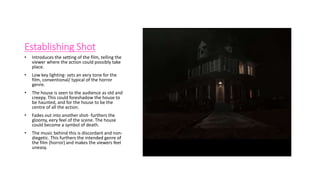
Establishing Shot
• Introduces the setting of the film, telling the
viewer where the action could possibly take
place.
• Low key lighting- sets an eery tone for the
film, conventional/ typical of the horror
genre.
• The house is seen to the audience as old and
creepy. This could foreshadow the house to
be haunted, and for the house to be the
centre of all the action.
• Fades out into another shot- furthers the
gloomy, eery feel of the scene. The house
could become a symbol of death.
• The music behind this is discordant and non-
diegetic. This furthers the intended genre of
the film (horror) and makes the viewers feel
uneasy.
Track into exorcism
• Gradual track into the main action of the
scene allows for sufficient tension to be built
and lets the viewer know that what is
happening is significant to the narrative.
• Low-key lighting- again, this is a common
convention in the genre of horror. Creates
an spooky, haunting atmosphere and allows
the audience to wonder what is going on
(ritualistic, séance-like, exorcism)
• Shallow Focus- The family photo is in focus,
whereas the action happening behind is out
of focus. This connotes that the photo is
important to the plot. It also juxtaposes the
frightening, tense ritual happening in the
background.
• Superimposition- Information for the
audience, educating and letting them know
the backstory of the film. Especially useful if
you haven’t watched the previous films
(since this film is part of a series).
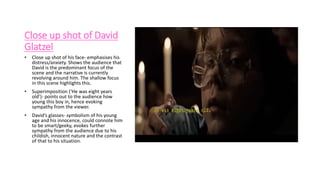
Close up shot of David
Glatzel
• Close up shot of his face- emphasises his
distress/anxiety. Shows the audience that
David is the predominant focus of the
scene and the narrative is currently
revolving around him. The shallow focus
in this scene highlights this.
• Superimposition (‘He was eight years
old’)- points out to the audience how
young this boy in, hence evoking
sympathy from the viewer.
• David’s glasses- symbolism of his young
age and his innocence, could connote him
to be smart/geeky, evokes further
sympathy from the audience due to his
childish, innocent nature and the contrast
of that to his situation.
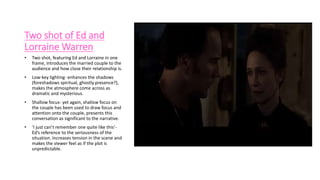
Two shot of Ed and
Lorraine Warren
• Two shot, featuring Ed and Lorraine in one
frame, introduces the married couple to the
audience and how close their relationship is.
• Low-key lighting- enhances the shadows
(foreshadows spiritual, ghostly presence?),
makes the atmosphere come across as
dramatic and mysterious.
• Shallow focus- yet again, shallow focus on
the couple has been used to draw focus and
attention onto the couple, presents this
conversation as significant to the narrative.
• ‘I just can’t remember one quite like this’-
Ed’s reference to the seriousness of the
situation. Increases tension in the scene and
makes the viewer feel as if the plot is
unpredictable.
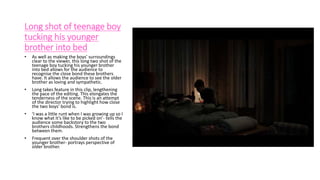
Long shot of teenage boy
tucking his younger
brother into bed
• As well as making the boys’ surroundings
clear to the viewer, this long two shot of the
teenage boy tucking his younger brother
into bed allows for the audience to
recognise the close bond these brothers
have. It allows the audience to see the older
brother as loving and sympathetic.
• Long takes feature in this clip, lengthening
the pace of the editing. This elongates the
tenderness of the scene. This is an attempt
of the director trying to highlight how close
the two boys’ bond is.
• ‘I was a little runt when I was growing up so I
know what it’s like to be picked on’- tells the
audience some backstory to the two
brothers childhoods. Strengthens the bond
between them.
• Frequent over the shoulder shots of the
younger brother- portrays perspective of
older brother.
Long shot of priest in
front of house
• This long shot shows the audience the
extent of this priest’s isolation and how
frightened/scared/anxious he is about the
forthcoming situation.
• Non-diegetic sound- a high pitched,
tremolo strings note fades in, connoting a
scared reaction (of the priest) towards
the house. Connotations of ghosts.
• Deep focus- lets audience see the whole
frame in detail. Perhaps this is to evoke
anxiety from the viewer towards the shot,
making them wonder what will happen
next in this house?
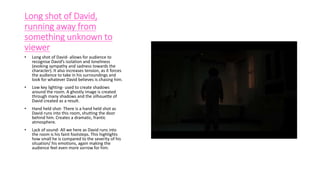
Long shot of David,
running away from
something unknown to
viewer
• Long shot of David- allows for audience to
recognise David’s isolation and loneliness
(evoking sympathy and sadness towards the
character). It also increases tension, as it forces
the audience to take in his surroundings and
look for whatever David believes is chasing him.
• Low key lighting- used to create shadows
around the room. A ghostly image is created
through many shadows and the silhouette of
David created as a result.
• Hand held shot- There is a hand held shot as
David runs into this room, shutting the door
behind him. Creates a dramatic, frantic
atmosphere.
• Lack of sound- All we here as David runs into
the room is his faint footsteps. This highlights
how small he is compared to the severity of his
situation/ his emotions, again making the
audience feel even more sorrow for him.
Medium shot of David,
getting covered in
blood
• A slight high angle is shown here, to
portray David’s weakness and inability to
fight the demons.
• Mix of non diegetic and diegetic sound-
David’s screaming is predominantly heard
in this section of the clip, highlighting just
how terrified he is. The non diegetic,
tense and fast tempo music over the top
dramatizes the scene and makes it appear
more frantic and horrific.
• Blood- the colour red connotes hell,
death and the devil (perhaps
foreshadowing possible causes to David’s
situation). The blood makes the audience
feel uneasy.

conjuring 3 opening scene analysis.pptx

  • 1.
    The Conjuring 3:Opening Sequence Analysis By Phoebe Little
  • 2.
    Establishing Shot • Introducesthe setting of the film, telling the viewer where the action could possibly take place. • Low key lighting- sets an eery tone for the film, conventional/ typical of the horror genre. • The house is seen to the audience as old and creepy. This could foreshadow the house to be haunted, and for the house to be the centre of all the action. • Fades out into another shot- furthers the gloomy, eery feel of the scene. The house could become a symbol of death. • The music behind this is discordant and non- diegetic. This furthers the intended genre of the film (horror) and makes the viewers feel uneasy.
  • 3.
    Track into exorcism •Gradual track into the main action of the scene allows for sufficient tension to be built and lets the viewer know that what is happening is significant to the narrative. • Low-key lighting- again, this is a common convention in the genre of horror. Creates an spooky, haunting atmosphere and allows the audience to wonder what is going on (ritualistic, séance-like, exorcism) • Shallow Focus- The family photo is in focus, whereas the action happening behind is out of focus. This connotes that the photo is important to the plot. It also juxtaposes the frightening, tense ritual happening in the background. • Superimposition- Information for the audience, educating and letting them know the backstory of the film. Especially useful if you haven’t watched the previous films (since this film is part of a series).
  • 4.
    Close up shotof David Glatzel • Close up shot of his face- emphasises his distress/anxiety. Shows the audience that David is the predominant focus of the scene and the narrative is currently revolving around him. The shallow focus in this scene highlights this. • Superimposition (‘He was eight years old’)- points out to the audience how young this boy in, hence evoking sympathy from the viewer. • David’s glasses- symbolism of his young age and his innocence, could connote him to be smart/geeky, evokes further sympathy from the audience due to his childish, innocent nature and the contrast of that to his situation.
  • 5.
    Two shot ofEd and Lorraine Warren • Two shot, featuring Ed and Lorraine in one frame, introduces the married couple to the audience and how close their relationship is. • Low-key lighting- enhances the shadows (foreshadows spiritual, ghostly presence?), makes the atmosphere come across as dramatic and mysterious. • Shallow focus- yet again, shallow focus on the couple has been used to draw focus and attention onto the couple, presents this conversation as significant to the narrative. • ‘I just can’t remember one quite like this’- Ed’s reference to the seriousness of the situation. Increases tension in the scene and makes the viewer feel as if the plot is unpredictable.
  • 6.
    Long shot ofteenage boy tucking his younger brother into bed • As well as making the boys’ surroundings clear to the viewer, this long two shot of the teenage boy tucking his younger brother into bed allows for the audience to recognise the close bond these brothers have. It allows the audience to see the older brother as loving and sympathetic. • Long takes feature in this clip, lengthening the pace of the editing. This elongates the tenderness of the scene. This is an attempt of the director trying to highlight how close the two boys’ bond is. • ‘I was a little runt when I was growing up so I know what it’s like to be picked on’- tells the audience some backstory to the two brothers childhoods. Strengthens the bond between them. • Frequent over the shoulder shots of the younger brother- portrays perspective of older brother.
  • 7.
    Long shot ofpriest in front of house • This long shot shows the audience the extent of this priest’s isolation and how frightened/scared/anxious he is about the forthcoming situation. • Non-diegetic sound- a high pitched, tremolo strings note fades in, connoting a scared reaction (of the priest) towards the house. Connotations of ghosts. • Deep focus- lets audience see the whole frame in detail. Perhaps this is to evoke anxiety from the viewer towards the shot, making them wonder what will happen next in this house?
  • 8.
    Long shot ofDavid, running away from something unknown to viewer • Long shot of David- allows for audience to recognise David’s isolation and loneliness (evoking sympathy and sadness towards the character). It also increases tension, as it forces the audience to take in his surroundings and look for whatever David believes is chasing him. • Low key lighting- used to create shadows around the room. A ghostly image is created through many shadows and the silhouette of David created as a result. • Hand held shot- There is a hand held shot as David runs into this room, shutting the door behind him. Creates a dramatic, frantic atmosphere. • Lack of sound- All we here as David runs into the room is his faint footsteps. This highlights how small he is compared to the severity of his situation/ his emotions, again making the audience feel even more sorrow for him.
  • 9.
    Medium shot ofDavid, getting covered in blood • A slight high angle is shown here, to portray David’s weakness and inability to fight the demons. • Mix of non diegetic and diegetic sound- David’s screaming is predominantly heard in this section of the clip, highlighting just how terrified he is. The non diegetic, tense and fast tempo music over the top dramatizes the scene and makes it appear more frantic and horrific. • Blood- the colour red connotes hell, death and the devil (perhaps foreshadowing possible causes to David’s situation). The blood makes the audience feel uneasy.