CONCEPT OF CONSTITUTION
The constitution refers to “that body of rules and principles in accordance with which the powers of sovereignty are regularly exercised”
Nature and Purpose or Function of the Constitution Serves as the supreme fundamental law Establishes basic framework and underlying principles of government
Kinds of Constitution Origin and History: a. conventional of enacted b. cumulative or evolved Form: a. written b. unwritten
Manner of amending: a. rigid or inelastic b. flexible or elastic
What do you think is a better constitution? Advantage and disadvantage of a written constitution: Clearness and definiteness; stable Difficult to amend
What makes a good written constitution? Requisites… I. form: -brief -broad -definite
Contents: -constitution of government -constitution of liberty -constitution of sovereignty
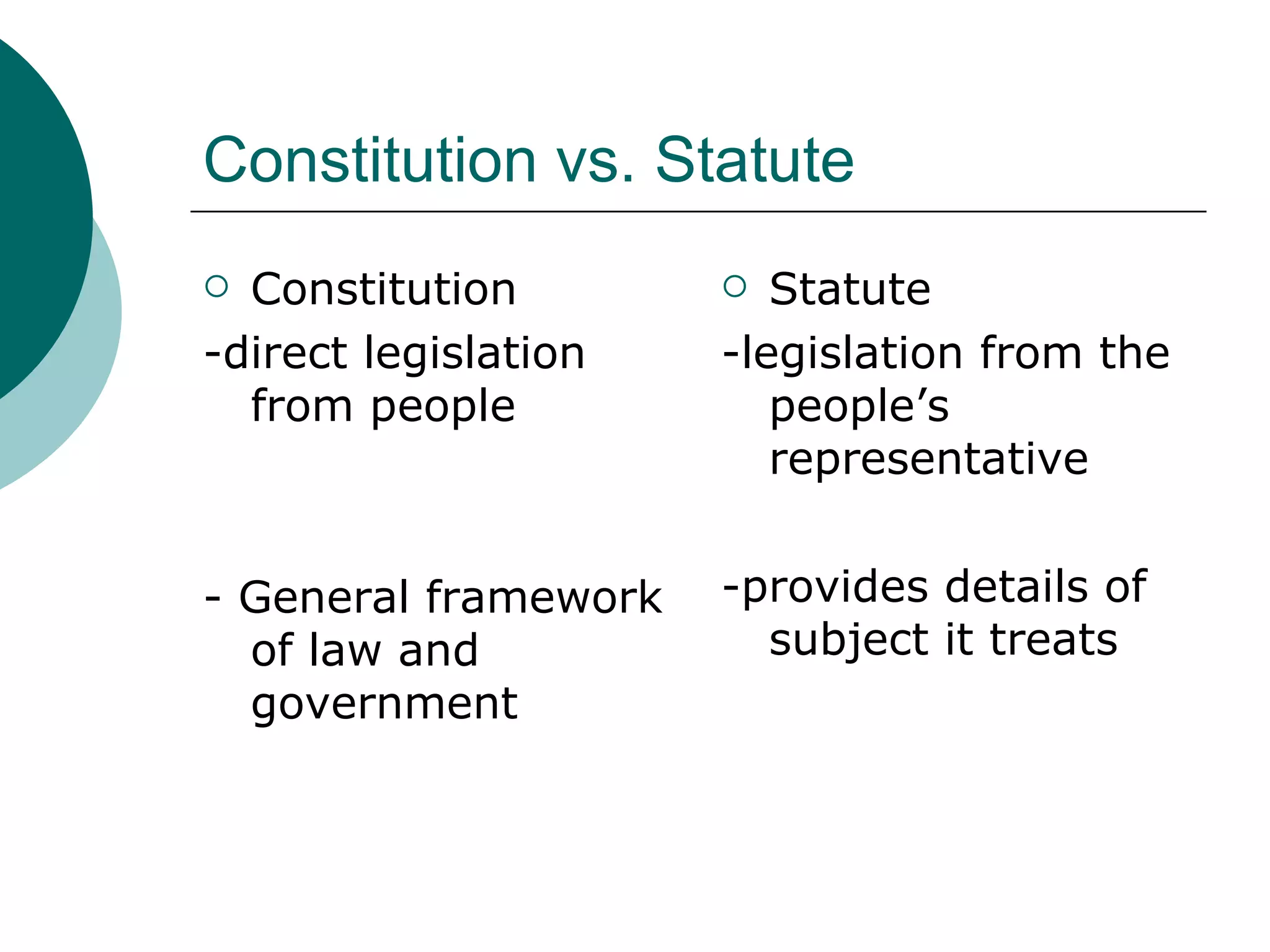
Constitution vs. Statute Constitution -direct legislation from people - General framework of law and government Statute -legislation from the people’s representative -provides details of subject it treats
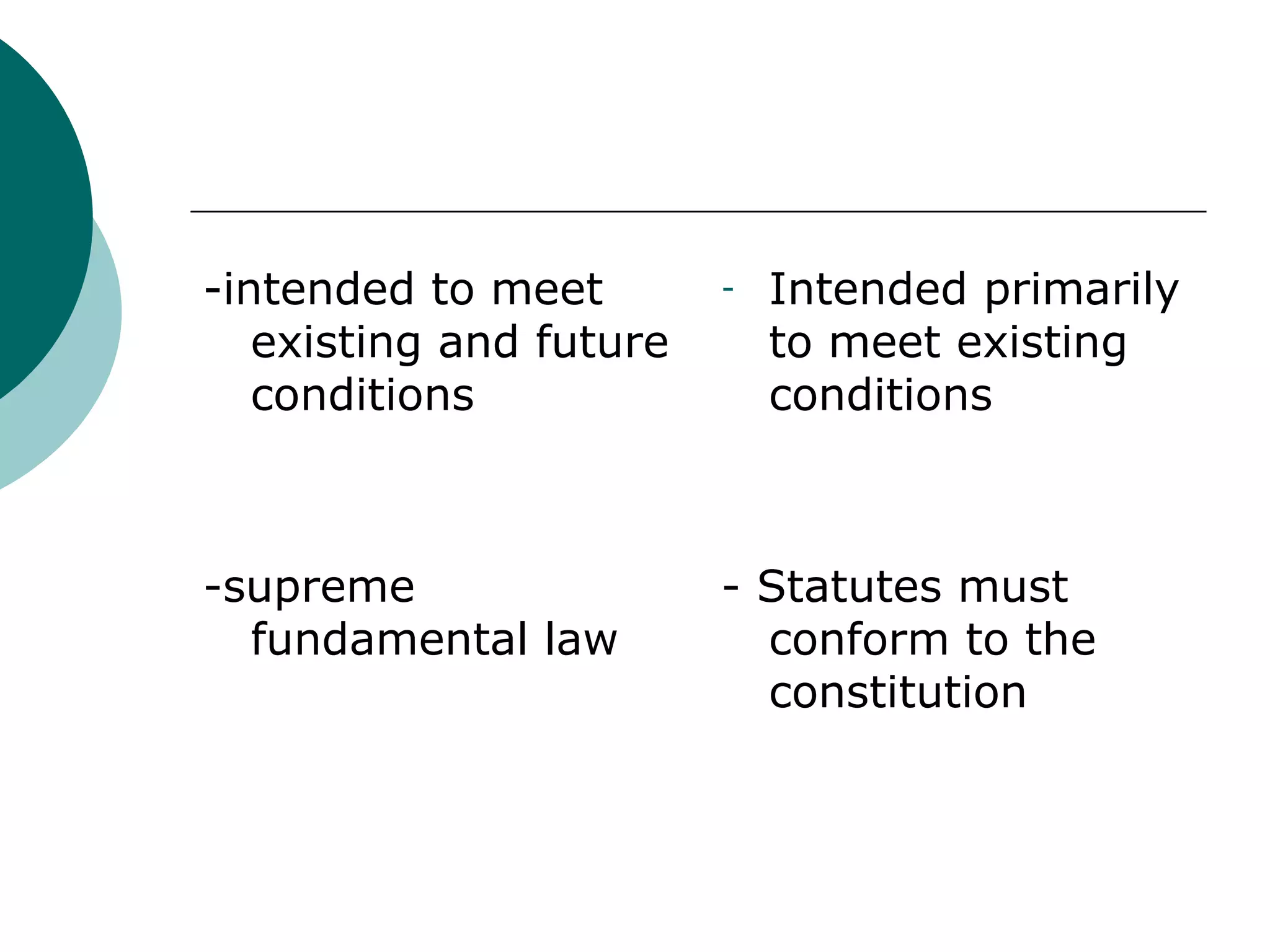
-intended to meet existing and future conditions -supreme fundamental law Intended primarily to meet existing conditions - Statutes must conform to the constitution
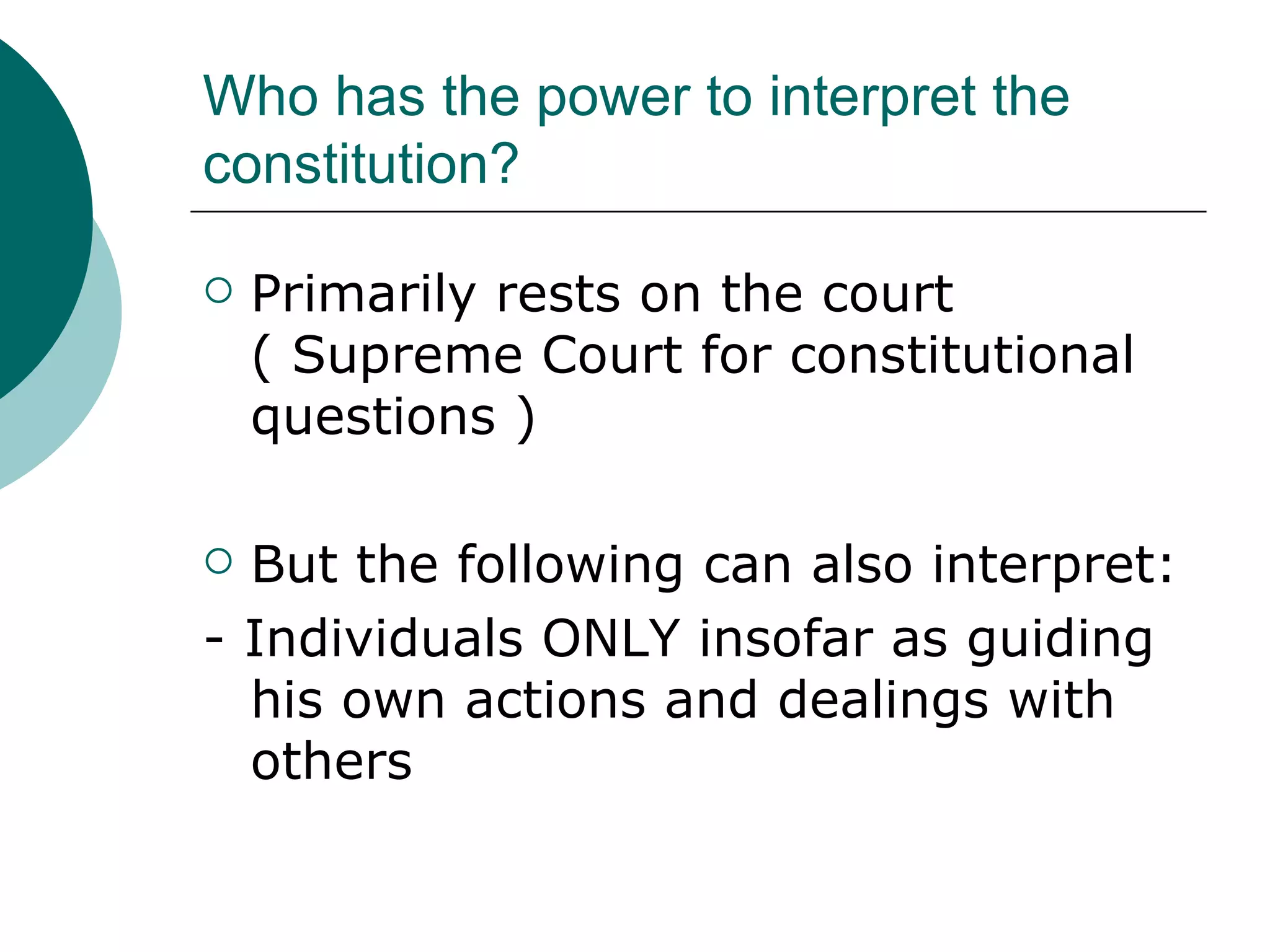
Who has the power to interpret the constitution? Primarily rests on the court ( Supreme Court for constitutional questions ) But the following can also interpret: - Individuals ONLY insofar as guiding his own actions and dealings with others
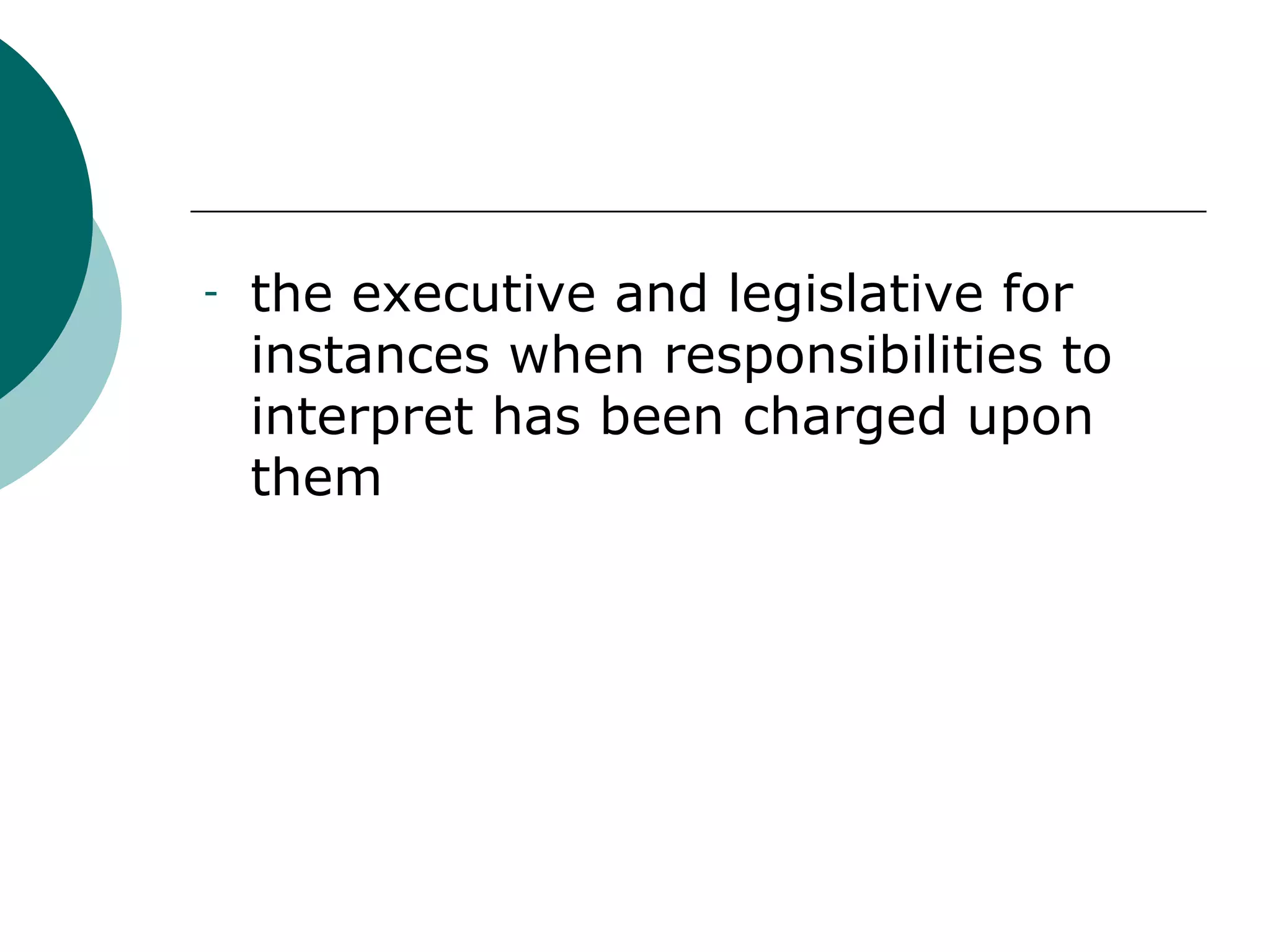
the executive and legislative for instances when responsibilities to interpret has been charged upon them
Why interpret the constitution? To ascertain and give effect to the INTENT of the framers and of the people who adopted or approved it or its amendments
Constitutions of the Philippines The 1935 constitution The 1973 constitution The 1987 constitution ( this is what is enforced/effective right now!)

Concept of Constitution

  • 1.
  • 2.
    The constitution refersto “that body of rules and principles in accordance with which the powers of sovereignty are regularly exercised”
  • 3.
    Nature and Purposeor Function of the Constitution Serves as the supreme fundamental law Establishes basic framework and underlying principles of government
  • 4.
    Kinds of ConstitutionOrigin and History: a. conventional of enacted b. cumulative or evolved Form: a. written b. unwritten
  • 5.
    Manner of amending:a. rigid or inelastic b. flexible or elastic
  • 6.
    What do youthink is a better constitution? Advantage and disadvantage of a written constitution: Clearness and definiteness; stable Difficult to amend
  • 7.
    What makes agood written constitution? Requisites… I. form: -brief -broad -definite
  • 8.
    Contents: -constitution ofgovernment -constitution of liberty -constitution of sovereignty
  • 9.
    Constitution vs. StatuteConstitution -direct legislation from people - General framework of law and government Statute -legislation from the people’s representative -provides details of subject it treats
  • 10.
    -intended to meetexisting and future conditions -supreme fundamental law Intended primarily to meet existing conditions - Statutes must conform to the constitution
  • 11.
    Who has thepower to interpret the constitution? Primarily rests on the court ( Supreme Court for constitutional questions ) But the following can also interpret: - Individuals ONLY insofar as guiding his own actions and dealings with others
  • 12.
    the executive andlegislative for instances when responsibilities to interpret has been charged upon them
  • 13.
    Why interpret theconstitution? To ascertain and give effect to the INTENT of the framers and of the people who adopted or approved it or its amendments
  • 14.
    Constitutions of thePhilippines The 1935 constitution The 1973 constitution The 1987 constitution ( this is what is enforced/effective right now!)