


COMPUTER SCIENCE AND ENGINEERING
M . Raja Reddy, Ph.D.
Engineering Definitions
 Engineering is the science, skill, and profession of acquiring
and applying scientific, economic, social, and practical
knowledge, in order to design and also build systems.
 The Computer Science and Engineering you will learn the
computer science principles that are critical to development
of software, hardware and networking of computer
systems.
 From that background, engineering concepts and methods
are added to give you exposure to circuit design, network
design and digital signal processing.
Why study CSE?
 Best paid jobs, comfortable life and respect in the society
 Job satisfaction
• Global career – works with different worlds on common flatform
• Important to find a career you enjoy.
 Variety of career opportunities
 Challenging work
• Problems will be open-ended
• No single answer to solve complex problems
• No answer in the back of the book
• No teacher to tell you that you are right or wrong
• You find a solution and persuade others that yours is the best one.
 Respect
• People know that engineering requires hard work and strong
technical skills. As a member of this profession, you will receive a
high amount of respect
Why study CSE?
 Intellectual development
• Develops your ability to think logically and to solve problems
 Benefit to society
• You can choose projects that benefit society
• Cleaning the environment – safe carbon free
• Developing prosthetic aids for disabled persons
• Finding new sources of energy
 Financial security
• You will be well paid and Engineering graduates receive the highest
starting salary of any discipline
 Prestige
• Sustain our nation's international competitiveness
• Maintain our standard of living
• Ensure a strong national security
• Protect public safety.
Why study CSE?
 Professional environment
• You will work in a professional environment in which you will be
treated with respect and have some freedom in choosing your work.
 Creative thinking
• We are in a time of rapid technological changes, therefore, the need
for engineers to think creatively is greater than ever before.
 Technological and scientific discovery
• Do you know why the computer technology changing so fast?
• You have multiple problems to solve?
• Do you know why software is developing rapidly?
• An engineering education can help you understand many things in
the world computer science.
Where you will get the job?
 Aerospace industry
 Automotive industry
 computer industry
 Defence industry
 Electronics industry
 Consumer goods industry
 Marine industry
 Oil and gas industry
 Pharmaceuticals industry
 Power generation industry
 Rail industry
 Telecoms
 communication industry,
 Other industries like steel, cement, petroleum and chemical industry,
directing control and testing production process.
Different jobs and Different roles
 Programming and Software Development
• Systems analyst
• Systems consultant
• Software engineer
• Systems programmer
• Database analyst
• Artificial Intelligence programmer
• Scientific applications programmer
• Embedded systems application programmer
 Information Systems Operation and Management
• Electronic data processing (EDP) auditor
• Database administrator
• Systems administrator
• Computer security specialist
• Management/IT consultants
• Information systems manager
Different jobs and Different roles
 Telecommunications and Networking
• Network engineer/consultant
• Network administrator
 Computer Science Research
• Computer scientist/researcher
• Computer science professor
• Artificial Intelligence researcher
• Data miner
• Bioinformatics specialist
• Medical imaging specialist
 Web and Internet
• Internet applications programmer
• Internet consultant
• Webmaster
• Internet advertising designer
Different jobs and Different roles
 Graphics and Multimedia
• Animation/Special effects developer
• Multimedia developer
• Computer game designer/programmer
• Electronic sound producer
 Training and Support
• Technical support representative
• Trainer, software applications
• Technical writer
 Computer Industry Specialists
• Systems integrator
• IT recruitment consultant
• IT sales professional
• Journalist, computer-related publications
Non-engineering jobs
 Logistics
 Operations management
 Patent law and intellectual property
 Procurement, purchasing and buying
 Supply chain management
 Teaching, academia and lecturing
 Technical consulting
 Technical sales, marketing, business development
 Technical training
Top organizations - Government
 DRDO- Defense and Research Development Organization.
 BEL-Bharat Electronics Ltd.
 HAL-Hindustan Aeronautics Ltd.
 ECIL- Electronic Corporation of India Ltd.
 ISRO-Indian Space & Research Organization.
 ITI – Indian Telephone Industry
 BHEL-Bharat Heavy Electrical Limited.
 Railways
 Ministry Information technology
 BSNL/MTNL
 Many more
Top Companies - private
• Google
• Microsoft
• Yahoo
• Hewlett-Packard
• IBM
• Toshiba Corporation
• Dell Inc
• NEC Corporation
• Canon Inc
• Apple Inc
• ASUSTEK Computer Inc
• Acer Inc
• SAIC
• Sun Microsystem
• TCS
• Infosys
• HCL
• Wipro
• Techmahindra
• Qualcomm
• Broad comm
• I gate
• Accenture
• Mindtree
• Camgemini
• Oracle
• SAP
• L&T
• GE
• ABB
• Siemen
• NXP semiconductors
• LSI logic
• Intel
• Many more
Pay Packet
 CSE graduates fetch salaries from Rs 15,000 – 25,000 in the beginning.
 After gaining +2 years of work experience, you can get a salary of Rs
40000 - 60000.
 Candidates who get opportunities to work in overseas project get
numerous benefits and incentives which may even go to six figures.
 However, the salary depends upon some factors such as the state of the
industry, work experience, qualifications and ability of the candidate,
etc. amongst others.
 CSE graduates who are in teaching can fetch a salary of Rs 20000 plus
dearness allowances and other benefits.
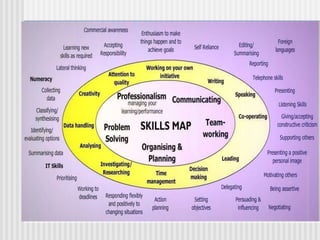
Skills requirement
 Ability to quickly learn new concepts, languages,
technologies, best practices.
 –Problem solving ability.
 –Communication skills.
 –Team work.
 –Solid Data Structures and Algorithms.
 –Strong in OOPS.
 –Good understanding of OS, DBMS, Networks.
 –Ability to write well structured and efficient code.
Why focus on practical knowledge?
 There is a gap between engineering course content and the
requirements of the engineering services industry
 Engineering education system imparts knowledge on various
technical/non-technical areas, it often falls short of meeting the
expectations of the real world.
 One reason for this gap is a fundamental lacuna in the engineering
education framework. This is the only profession where an individual
goes from an academic programme directly into a job, with no prior on-
the-job training.
 “Getting fresh graduates ramped up quickly to productivity is a key
concern across the industry, graduates sometimes take six months to a
year to become productive.
 When fresh graduates enter the working environment, they have lots of
theoretical knowledge which is redundant, rather than the necessary
practical knowledge.”
 Most of our institutions and universities lag behind the rest of the world
in research output.”
Why Do an Internship?
 Gain Work Experience: First and foremost, internships and co-ops help you
gain experience. Classroom knowledge is important and makes you
competitive for internships, but practical knowledge in an industry is what
attracts employers.
 Create a Competitive Edge in the Job Market: This is probably the biggest
advantage. The experience you gain will give you a very competitive edge
when you start your job search. You will have concrete examples of work
experience to discuss during your interview. A guaranteed question during an
interview will be about your work history and internship experience.
 Networking Opportunities: One of the most popular ways of finding a job
is through networking. Doing an internship significantly increases your
networking opportunities by connecting you with professionals in your
chosen field. Networking also allows you to develop references who can
attest to your abilities.
 Job Transition: What better way is there for an employer to test a potential
employee than through an internship? This “try-before-you-buy” approach is
a significant advantage for the employer and can easily lead to a full-time job.
Successful interns are frequently offered permanent employment at their
internship site after graduation.
Why Do an Internship?
 Decide if a Field is Right for You: You can research the industry, but
there is no more effective way of finding out if you like something than
actually doing it. You also get all of your questions answered by industry
professionals while being immersed in the field.
 Apply Classroom Knowledge to the Real World: Preparing
academically for your career shows your intelligence and ability to learn,
but internships give you the opportunity to apply your knowledge to the
real world and develop your qualifications.
 Develop your Resume and Build Confidence: A robust application
(often a resume and cover letter) and a powerful interview are ultimately
what set successful candidates apart in the job search process. Internships
help you prepare both by giving you the experience and skills to build a
strong resume and the confidence to give an outstanding interview. When
you discuss your knowledge, skills and abilities, you will speak from
experience, not conjecture.
Scope for Higher Education
 Computer Science and engineering, software engineering
 Master of Technology in Information Technology & Information
security
 Software Engineering
 Distributed Computing
 Image Processing
 Industrial Management
 Network Engineering
 Electronics (Embedded, Automotive & Aerospace)
 VLSI System Design
 Robotics
 Nano Technology
 Signal Processing
 Master of Business Application (MBA)
 M.Phil
 Doctor of Philosophy (Ph.D)
Final advise
 Many opportunities – plan your focused area
 Work on both mini and major projects
 Get the deep insight of the technology
 Write papers for reviewed journals, conferences
 Volunteer speaking on your specialized area
 Read, Read and Read
 Do not postpone the activity and try to finish on the defined
date.
 Work in the team for the project and share the ideas
 Be sincere, hard work and with good attitude
 Look for clarification if you have doubt.
 Get one or two internship projects with industry
All the best

Computer science Engineering

  • 1.
    COMPUTER SCIENCE ANDENGINEERING M . Raja Reddy, Ph.D.
  • 2.
    Engineering Definitions  Engineeringis the science, skill, and profession of acquiring and applying scientific, economic, social, and practical knowledge, in order to design and also build systems.  The Computer Science and Engineering you will learn the computer science principles that are critical to development of software, hardware and networking of computer systems.  From that background, engineering concepts and methods are added to give you exposure to circuit design, network design and digital signal processing.
  • 3.
    Why study CSE? Best paid jobs, comfortable life and respect in the society  Job satisfaction • Global career – works with different worlds on common flatform • Important to find a career you enjoy.  Variety of career opportunities  Challenging work • Problems will be open-ended • No single answer to solve complex problems • No answer in the back of the book • No teacher to tell you that you are right or wrong • You find a solution and persuade others that yours is the best one.  Respect • People know that engineering requires hard work and strong technical skills. As a member of this profession, you will receive a high amount of respect
  • 4.
    Why study CSE? Intellectual development • Develops your ability to think logically and to solve problems  Benefit to society • You can choose projects that benefit society • Cleaning the environment – safe carbon free • Developing prosthetic aids for disabled persons • Finding new sources of energy  Financial security • You will be well paid and Engineering graduates receive the highest starting salary of any discipline  Prestige • Sustain our nation's international competitiveness • Maintain our standard of living • Ensure a strong national security • Protect public safety.
  • 5.
    Why study CSE? Professional environment • You will work in a professional environment in which you will be treated with respect and have some freedom in choosing your work.  Creative thinking • We are in a time of rapid technological changes, therefore, the need for engineers to think creatively is greater than ever before.  Technological and scientific discovery • Do you know why the computer technology changing so fast? • You have multiple problems to solve? • Do you know why software is developing rapidly? • An engineering education can help you understand many things in the world computer science.
  • 7.
    Where you willget the job?  Aerospace industry  Automotive industry  computer industry  Defence industry  Electronics industry  Consumer goods industry  Marine industry  Oil and gas industry  Pharmaceuticals industry  Power generation industry  Rail industry  Telecoms  communication industry,  Other industries like steel, cement, petroleum and chemical industry, directing control and testing production process.
  • 8.
    Different jobs andDifferent roles  Programming and Software Development • Systems analyst • Systems consultant • Software engineer • Systems programmer • Database analyst • Artificial Intelligence programmer • Scientific applications programmer • Embedded systems application programmer  Information Systems Operation and Management • Electronic data processing (EDP) auditor • Database administrator • Systems administrator • Computer security specialist • Management/IT consultants • Information systems manager
  • 9.
    Different jobs andDifferent roles  Telecommunications and Networking • Network engineer/consultant • Network administrator  Computer Science Research • Computer scientist/researcher • Computer science professor • Artificial Intelligence researcher • Data miner • Bioinformatics specialist • Medical imaging specialist  Web and Internet • Internet applications programmer • Internet consultant • Webmaster • Internet advertising designer
  • 10.
    Different jobs andDifferent roles  Graphics and Multimedia • Animation/Special effects developer • Multimedia developer • Computer game designer/programmer • Electronic sound producer  Training and Support • Technical support representative • Trainer, software applications • Technical writer  Computer Industry Specialists • Systems integrator • IT recruitment consultant • IT sales professional • Journalist, computer-related publications
  • 11.
    Non-engineering jobs  Logistics Operations management  Patent law and intellectual property  Procurement, purchasing and buying  Supply chain management  Teaching, academia and lecturing  Technical consulting  Technical sales, marketing, business development  Technical training
  • 12.
    Top organizations -Government  DRDO- Defense and Research Development Organization.  BEL-Bharat Electronics Ltd.  HAL-Hindustan Aeronautics Ltd.  ECIL- Electronic Corporation of India Ltd.  ISRO-Indian Space & Research Organization.  ITI – Indian Telephone Industry  BHEL-Bharat Heavy Electrical Limited.  Railways  Ministry Information technology  BSNL/MTNL  Many more
  • 13.
    Top Companies -private • Google • Microsoft • Yahoo • Hewlett-Packard • IBM • Toshiba Corporation • Dell Inc • NEC Corporation • Canon Inc • Apple Inc • ASUSTEK Computer Inc • Acer Inc • SAIC • Sun Microsystem • TCS • Infosys • HCL • Wipro • Techmahindra • Qualcomm • Broad comm • I gate • Accenture • Mindtree • Camgemini • Oracle • SAP • L&T • GE • ABB • Siemen • NXP semiconductors • LSI logic • Intel • Many more
  • 14.
    Pay Packet  CSEgraduates fetch salaries from Rs 15,000 – 25,000 in the beginning.  After gaining +2 years of work experience, you can get a salary of Rs 40000 - 60000.  Candidates who get opportunities to work in overseas project get numerous benefits and incentives which may even go to six figures.  However, the salary depends upon some factors such as the state of the industry, work experience, qualifications and ability of the candidate, etc. amongst others.  CSE graduates who are in teaching can fetch a salary of Rs 20000 plus dearness allowances and other benefits.
  • 15.
    Skills requirement  Abilityto quickly learn new concepts, languages, technologies, best practices.  –Problem solving ability.  –Communication skills.  –Team work.  –Solid Data Structures and Algorithms.  –Strong in OOPS.  –Good understanding of OS, DBMS, Networks.  –Ability to write well structured and efficient code.
  • 17.
    Why focus onpractical knowledge?  There is a gap between engineering course content and the requirements of the engineering services industry  Engineering education system imparts knowledge on various technical/non-technical areas, it often falls short of meeting the expectations of the real world.  One reason for this gap is a fundamental lacuna in the engineering education framework. This is the only profession where an individual goes from an academic programme directly into a job, with no prior on- the-job training.  “Getting fresh graduates ramped up quickly to productivity is a key concern across the industry, graduates sometimes take six months to a year to become productive.  When fresh graduates enter the working environment, they have lots of theoretical knowledge which is redundant, rather than the necessary practical knowledge.”  Most of our institutions and universities lag behind the rest of the world in research output.”
  • 18.
    Why Do anInternship?  Gain Work Experience: First and foremost, internships and co-ops help you gain experience. Classroom knowledge is important and makes you competitive for internships, but practical knowledge in an industry is what attracts employers.  Create a Competitive Edge in the Job Market: This is probably the biggest advantage. The experience you gain will give you a very competitive edge when you start your job search. You will have concrete examples of work experience to discuss during your interview. A guaranteed question during an interview will be about your work history and internship experience.  Networking Opportunities: One of the most popular ways of finding a job is through networking. Doing an internship significantly increases your networking opportunities by connecting you with professionals in your chosen field. Networking also allows you to develop references who can attest to your abilities.  Job Transition: What better way is there for an employer to test a potential employee than through an internship? This “try-before-you-buy” approach is a significant advantage for the employer and can easily lead to a full-time job. Successful interns are frequently offered permanent employment at their internship site after graduation.
  • 19.
    Why Do anInternship?  Decide if a Field is Right for You: You can research the industry, but there is no more effective way of finding out if you like something than actually doing it. You also get all of your questions answered by industry professionals while being immersed in the field.  Apply Classroom Knowledge to the Real World: Preparing academically for your career shows your intelligence and ability to learn, but internships give you the opportunity to apply your knowledge to the real world and develop your qualifications.  Develop your Resume and Build Confidence: A robust application (often a resume and cover letter) and a powerful interview are ultimately what set successful candidates apart in the job search process. Internships help you prepare both by giving you the experience and skills to build a strong resume and the confidence to give an outstanding interview. When you discuss your knowledge, skills and abilities, you will speak from experience, not conjecture.
  • 20.
    Scope for HigherEducation  Computer Science and engineering, software engineering  Master of Technology in Information Technology & Information security  Software Engineering  Distributed Computing  Image Processing  Industrial Management  Network Engineering  Electronics (Embedded, Automotive & Aerospace)  VLSI System Design  Robotics  Nano Technology  Signal Processing  Master of Business Application (MBA)  M.Phil  Doctor of Philosophy (Ph.D)
  • 21.
    Final advise  Manyopportunities – plan your focused area  Work on both mini and major projects  Get the deep insight of the technology  Write papers for reviewed journals, conferences  Volunteer speaking on your specialized area  Read, Read and Read  Do not postpone the activity and try to finish on the defined date.  Work in the team for the project and share the ideas  Be sincere, hard work and with good attitude  Look for clarification if you have doubt.  Get one or two internship projects with industry
  • 22.