Done By: Fadhel Alhamli
Grade 10.A.B
Computer Network
Networking
• Computer network A collection of
computing devices that are connected in
various ways in order to communicate and
share resources
• The generic term node or host refers to any device on
a network
• Data transfer rate The speed with which data is
moved from one place on a network to another
• Data transfer rate is a key issue in computer networks
Networking
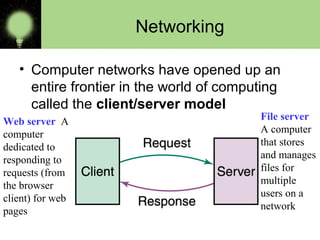
• Computer networks have opened up an
entire frontier in the world of computing
called the client/server model
Web server A
computer
dedicated to
responding to
requests (from
the browser
client) for web
pages
File server
A computer
that stores
and manages
files for
multiple
users on a
network
Types of Networks
• Local-area network (LAN) A network
that connects a relatively small number of
machines in a relatively close
geographical area
Types of Networks
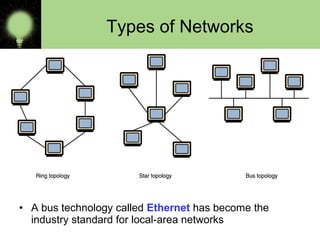
• Various configurations, called topologies, have
been used to administer LANs
– Ring topology A configuration that connects all
nodes in a closed loop on which messages travel in
one direction
– Star topology A configuration that centers around
one node to which all others are connected and
through which all messages are sent
– Bus topology All nodes are connected to a single
communication line that carries messages in both
directions
Types of Networks
• A bus technology called Ethernet has become the
industry standard for local-area networks
Types of Networks
• Wide-area network (WAN) A network that
connects two or more local-area networks over a
potentially large geographic distance
Often one particular node on a LAN is set up to serve
as a gateway to handle all communication going
between that LAN and other networks
Communication between networks is called
internetworking
The Internet, as we know it today, is essentially the
ultimate wide-area network, spanning the entire globe
Types of Networks
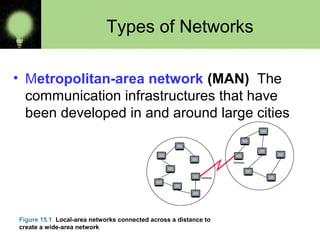
Figure 15.1 Local-area networks connected across a distance to
create a wide-area network
• Metropolitan-area network (MAN) The
communication infrastructures that have
been developed in and around large cities
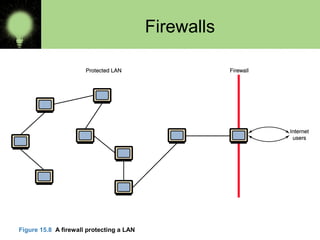
Firewalls
Figure 15.8 A firewall protecting a LAN
Network Addresses
• Network software translates a hostname
into its corresponding IP address
For example
205.39.145.18
• Hostname A unique identification that specifies a
particular computer on the Internet
For example
matisse.csc.villanova.edu
condor.develocorp.com
Network Addresses
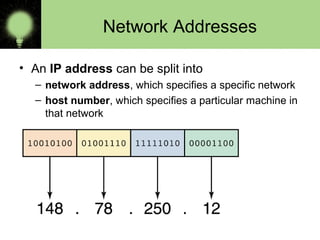
• An IP address can be split into
– network address, which specifies a specific network
– host number, which specifies a particular machine in
that network
Domain Name System
• A hostname consists of the computer name
followed by the domain name
• csc.villanova.edu is the domain name
– A domain name is separated into two or more
sections that specify the organization, and possibly a
subset of an organization, of which the computer is a
part
– Two organizations can have a computer named the
same thing because the domain name makes it clear
which one is being referred to
Domain Name System
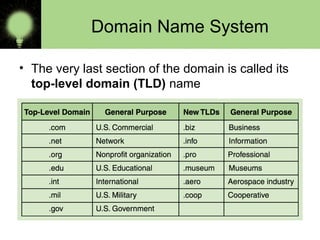
• The very last section of the domain is called its
top-level domain (TLD) name
Domain Name System
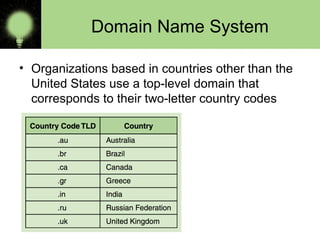
• Organizations based in countries other than the
United States use a top-level domain that
corresponds to their two-letter country codes
Domain Name System
• The domain name system (DNS) is
chiefly used to translate hostnames into
numeric IP addresses
– DNS is an example of a distributed database
– If that server can resolve the hostname, it
does so
– If not, that server asks another domain name
server
Recourses
• Wikipedia
• Journals elsevier
• Coursera
• Class stanford

Computer networks--network

  • 1.
    Done By: FadhelAlhamli Grade 10.A.B Computer Network
  • 2.
    Networking • Computer networkA collection of computing devices that are connected in various ways in order to communicate and share resources • The generic term node or host refers to any device on a network • Data transfer rate The speed with which data is moved from one place on a network to another • Data transfer rate is a key issue in computer networks
  • 3.
    Networking • Computer networkshave opened up an entire frontier in the world of computing called the client/server model Web server A computer dedicated to responding to requests (from the browser client) for web pages File server A computer that stores and manages files for multiple users on a network
  • 4.
    Types of Networks •Local-area network (LAN) A network that connects a relatively small number of machines in a relatively close geographical area
  • 5.
    Types of Networks •Various configurations, called topologies, have been used to administer LANs – Ring topology A configuration that connects all nodes in a closed loop on which messages travel in one direction – Star topology A configuration that centers around one node to which all others are connected and through which all messages are sent – Bus topology All nodes are connected to a single communication line that carries messages in both directions
  • 6.
    Types of Networks •A bus technology called Ethernet has become the industry standard for local-area networks
  • 7.
    Types of Networks •Wide-area network (WAN) A network that connects two or more local-area networks over a potentially large geographic distance Often one particular node on a LAN is set up to serve as a gateway to handle all communication going between that LAN and other networks Communication between networks is called internetworking The Internet, as we know it today, is essentially the ultimate wide-area network, spanning the entire globe
  • 8.
    Types of Networks Figure15.1 Local-area networks connected across a distance to create a wide-area network • Metropolitan-area network (MAN) The communication infrastructures that have been developed in and around large cities
  • 9.
    Firewalls Figure 15.8 Afirewall protecting a LAN
  • 10.
    Network Addresses • Networksoftware translates a hostname into its corresponding IP address For example 205.39.145.18 • Hostname A unique identification that specifies a particular computer on the Internet For example matisse.csc.villanova.edu condor.develocorp.com
  • 11.
    Network Addresses • AnIP address can be split into – network address, which specifies a specific network – host number, which specifies a particular machine in that network
  • 12.
    Domain Name System •A hostname consists of the computer name followed by the domain name • csc.villanova.edu is the domain name – A domain name is separated into two or more sections that specify the organization, and possibly a subset of an organization, of which the computer is a part – Two organizations can have a computer named the same thing because the domain name makes it clear which one is being referred to
  • 13.
    Domain Name System •The very last section of the domain is called its top-level domain (TLD) name
  • 14.
    Domain Name System •Organizations based in countries other than the United States use a top-level domain that corresponds to their two-letter country codes
  • 15.
    Domain Name System •The domain name system (DNS) is chiefly used to translate hostnames into numeric IP addresses – DNS is an example of a distributed database – If that server can resolve the hostname, it does so – If not, that server asks another domain name server
  • 16.
    Recourses • Wikipedia • Journalselsevier • Coursera • Class stanford