
Download to read offline


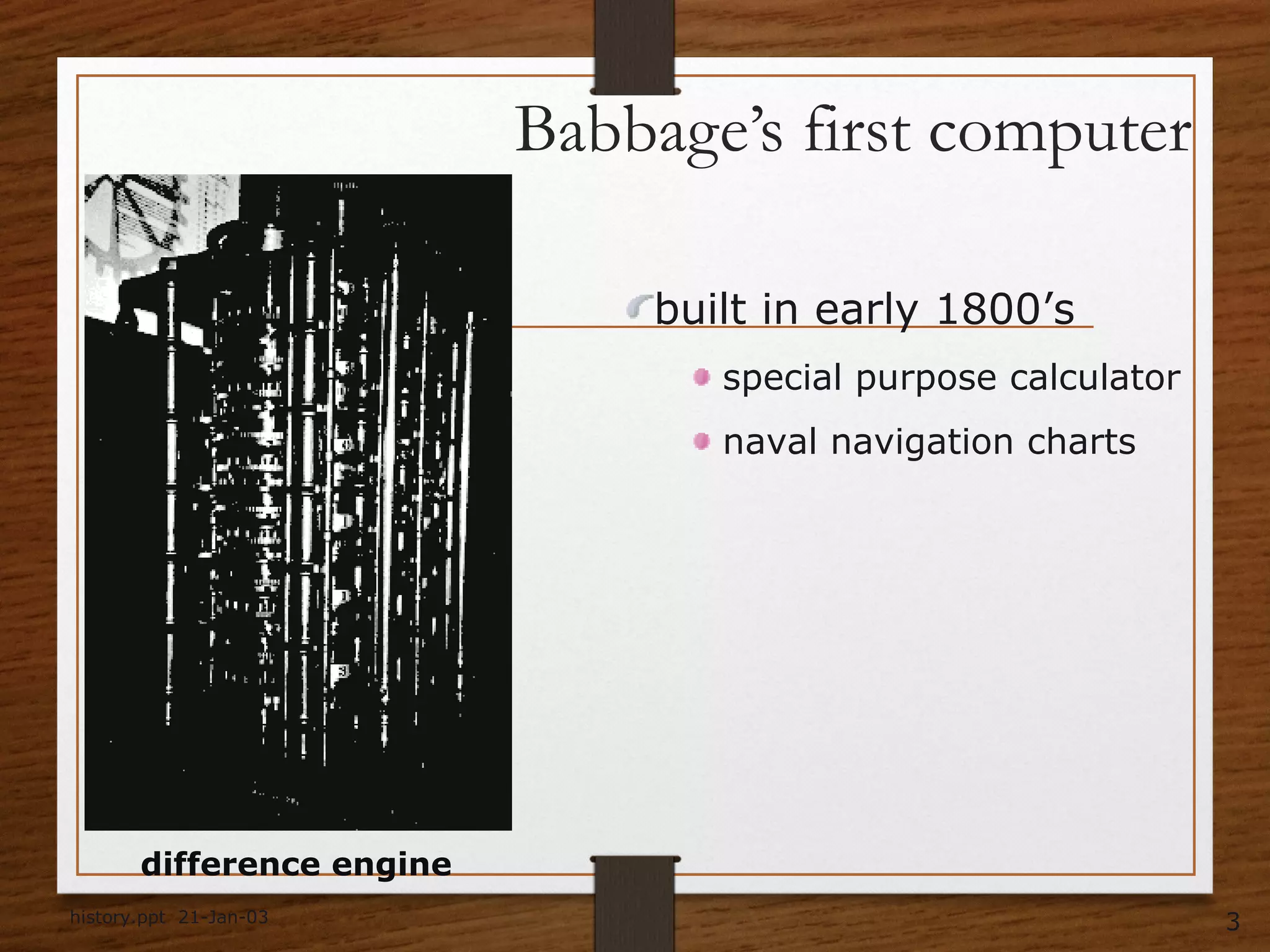


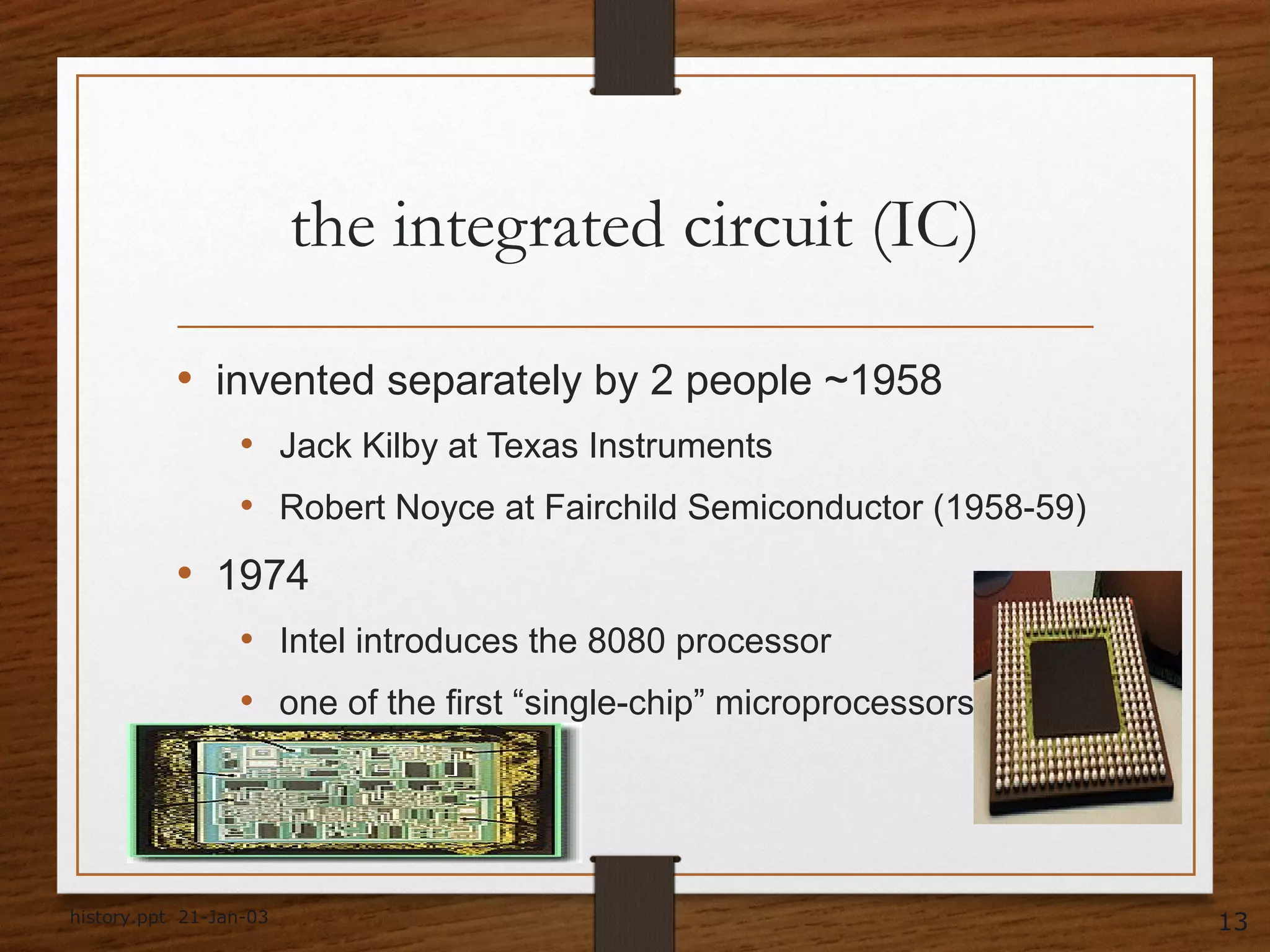


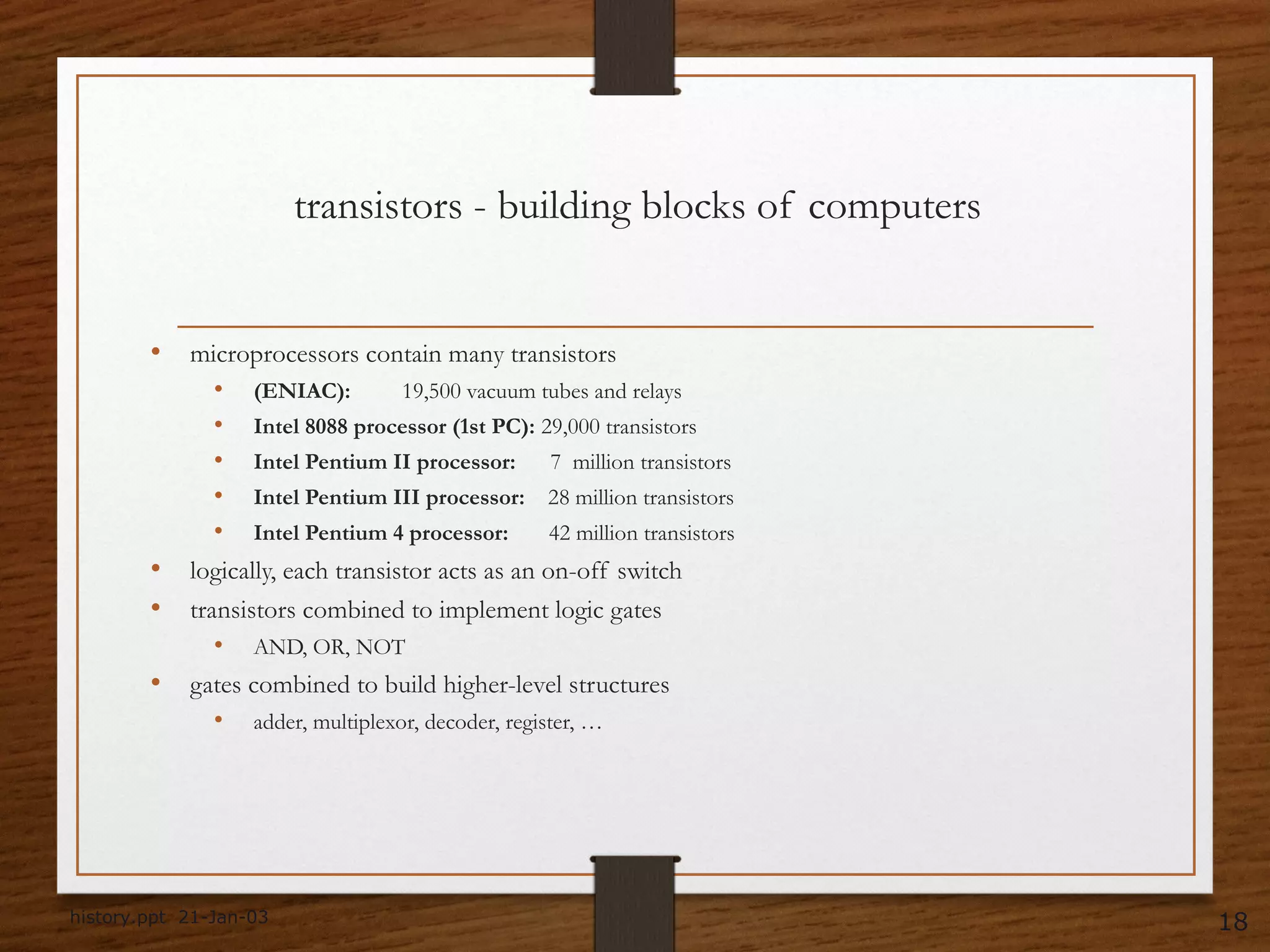
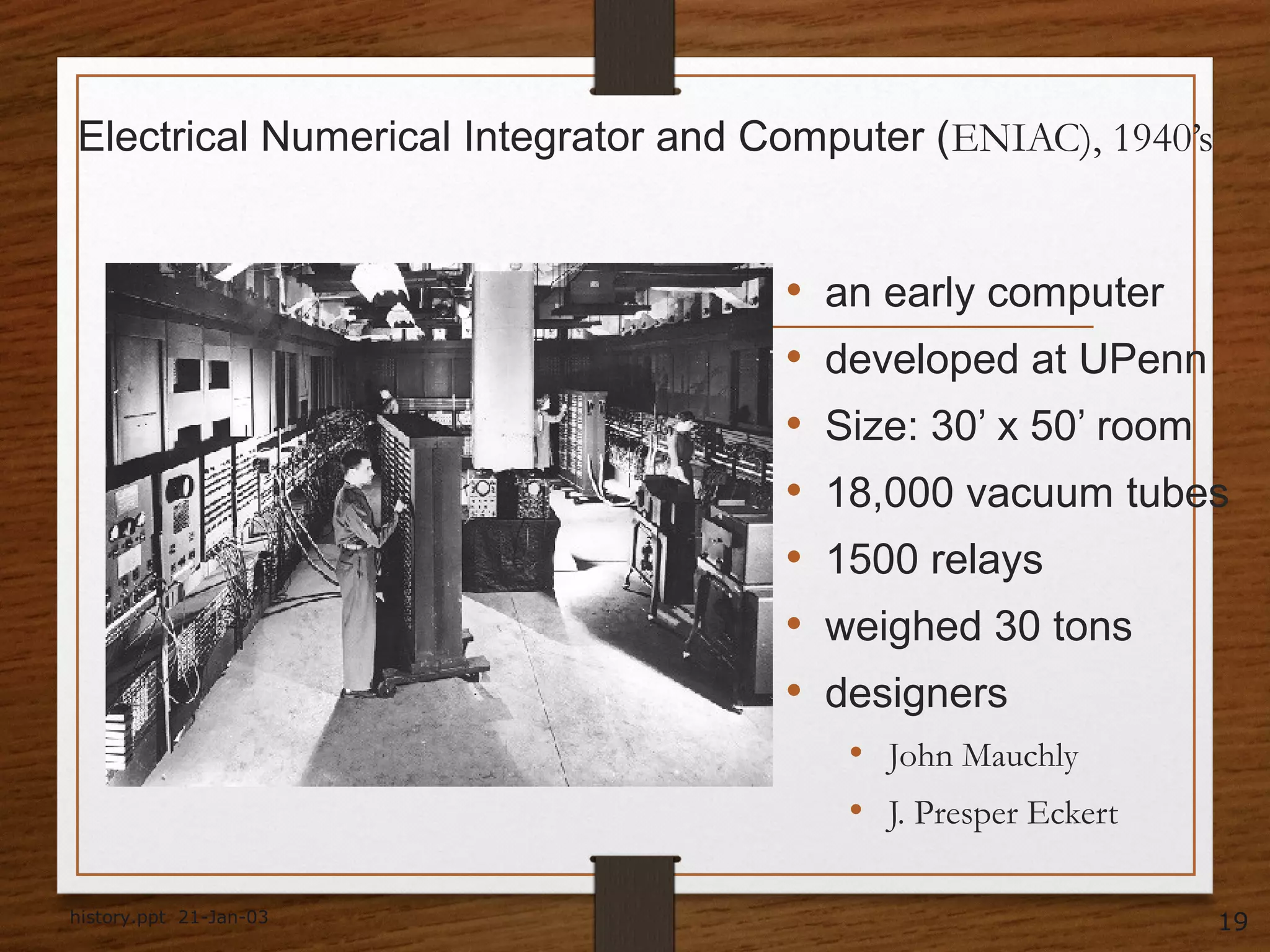


Charles Babbage invented the first mechanical computer in the early 1800s called the Difference Engine, and later worked on the analytical engine, an early general-purpose computer. Over subsequent decades, inventors including Swan, Edison, Fleming, de Forest, Bardeen, Brattain and Shockley contributed breakthroughs like the light bulb, diode, triode vacuum tube, and transistor, advancing electronics. These components drove the development of digital computers, from the room-sized ENIAC in the 1940s to microchips containing millions of transistors today, exemplifying Moore's Law of exponential growth in computing power over time.


