Dr. Ambedkar Institute of Technology.
DEPARTMENT OF MECHANICAL ENGINEERING
Computer Integrated Manufacturing (18ME731)
Internet of Things (IOT)
By :: Roopesh P (1DA20ME074).
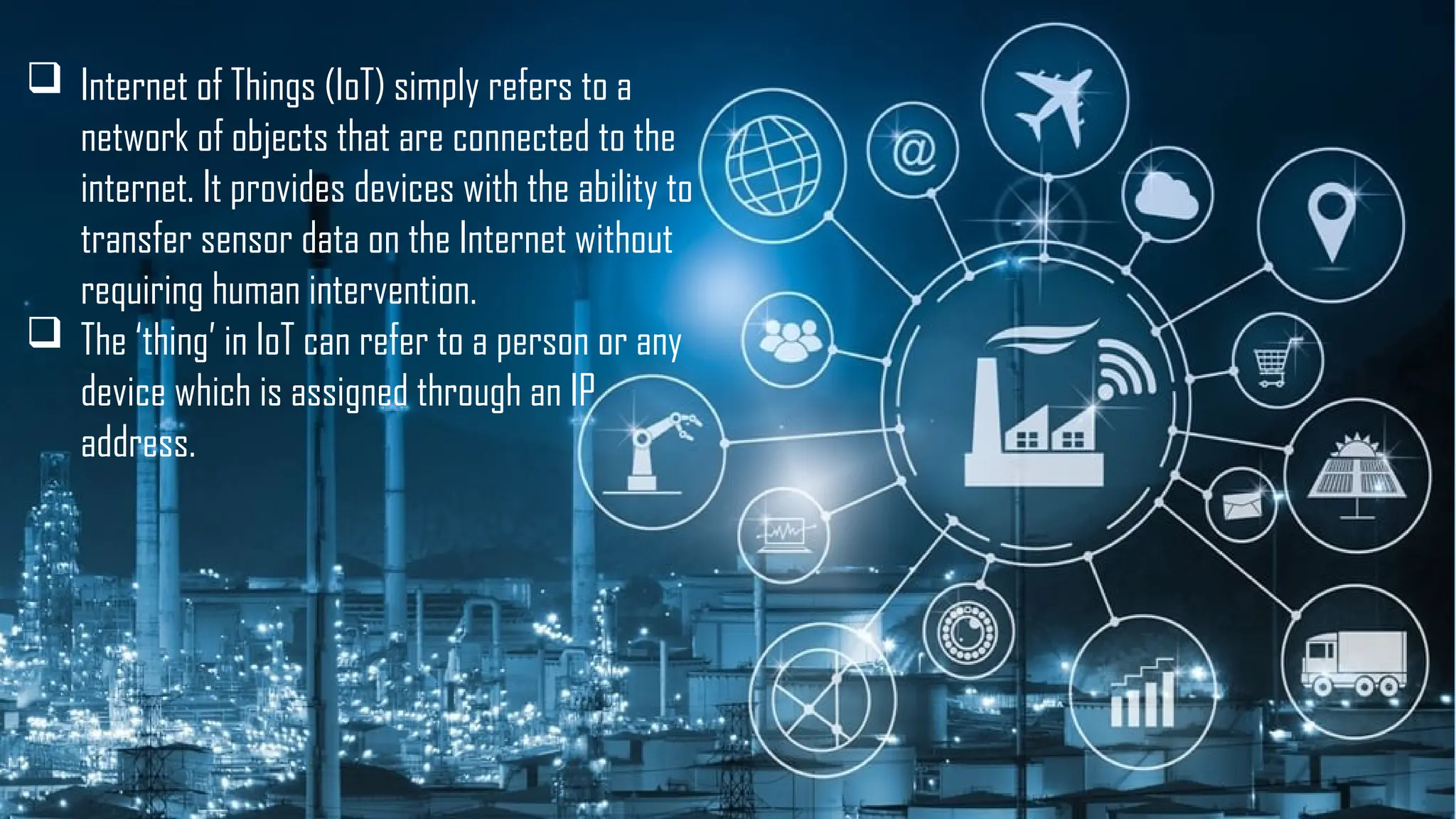
 Internet of Things (IoT) simply refers to a
network of objects that are connected to the
internet. It provides devices with the ability to
transfer sensor data on the Internet without
requiring human intervention.
 The ‘thing’ in IoT can refer to a person or any
device which is assigned through an IP
address.
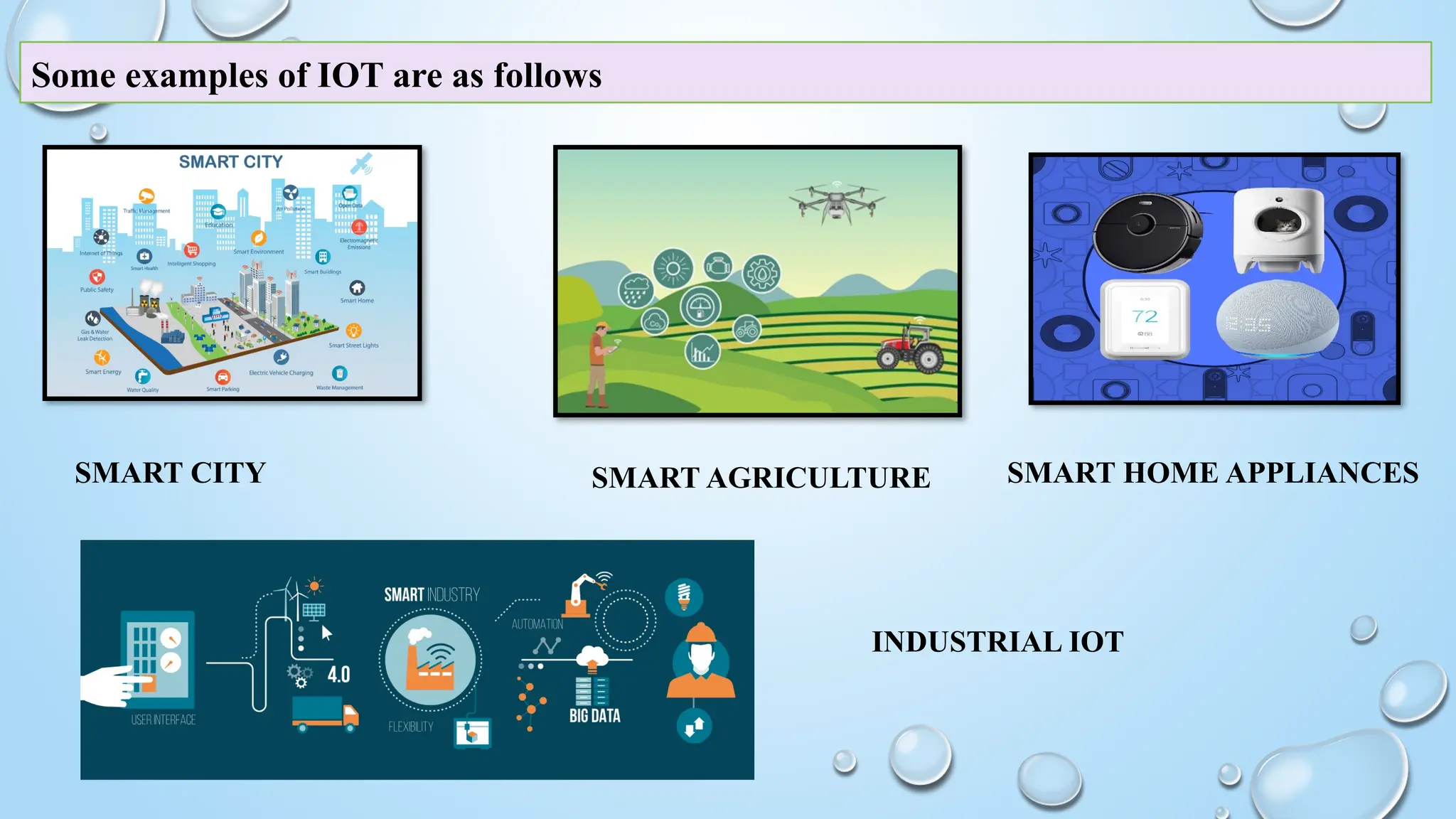
Some examples of IOT are as follows
SMART CITY SMART HOME APPLIANCES
SMART AGRICULTURE
INDUSTRIAL IOT
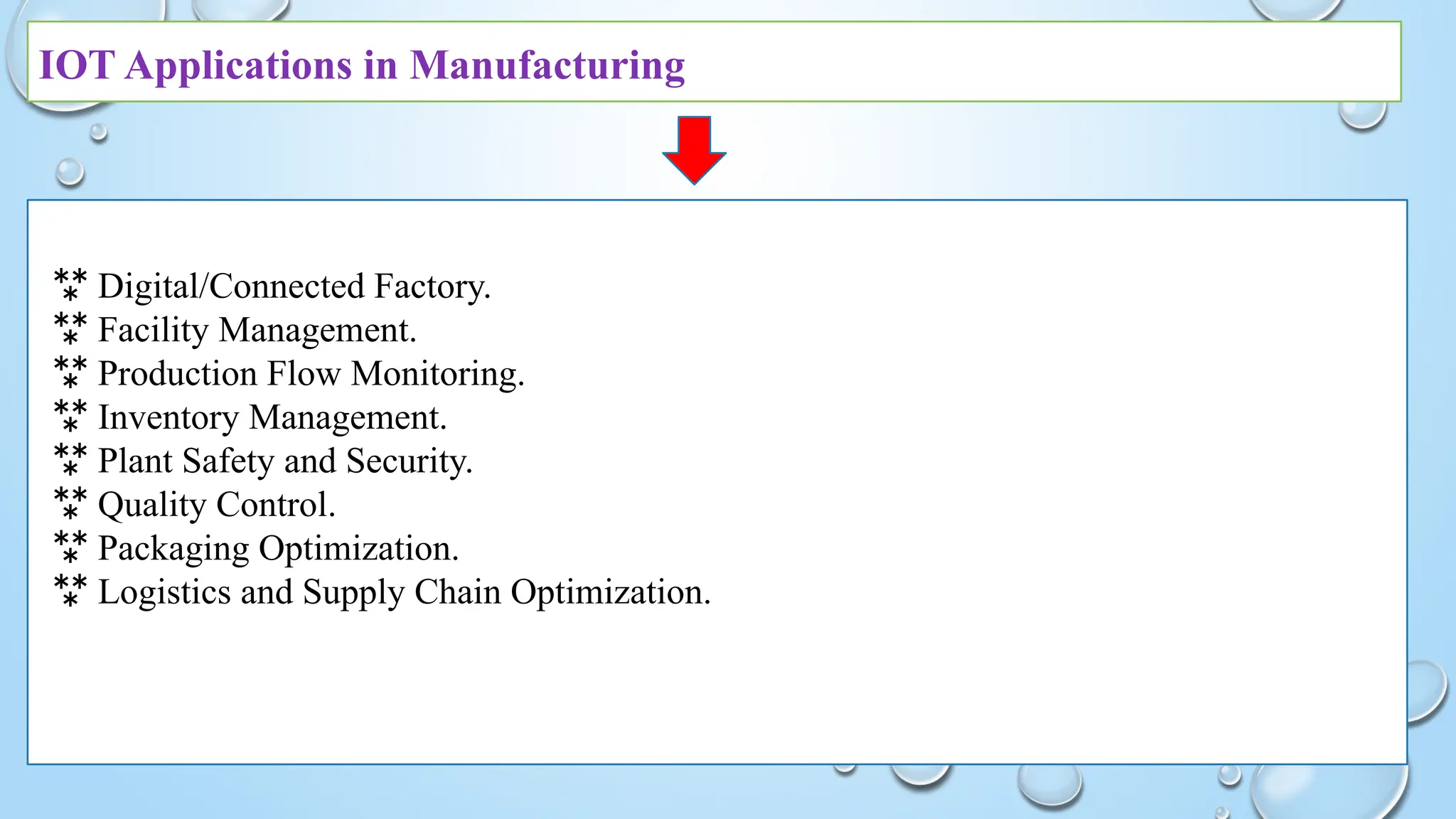
IOT Applications in Manufacturing
 Digital/Connected Factory.
 Facility Management.
 Production Flow Monitoring.
 Inventory Management.
 Plant Safety and Security.
 Quality Control.
 Packaging Optimization.
 Logistics and Supply Chain Optimization.
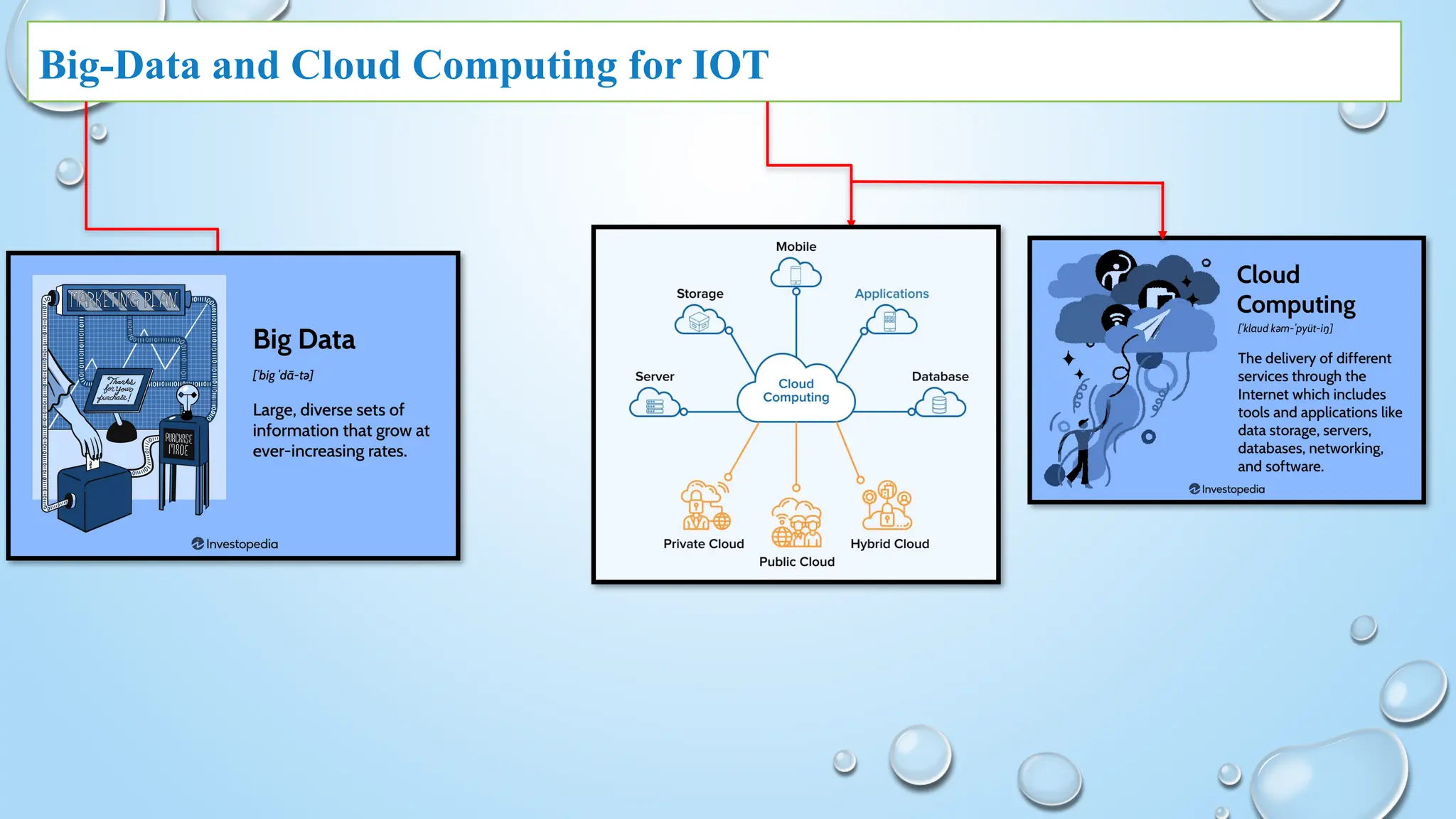
Big-Data and Cloud Computing for IOT
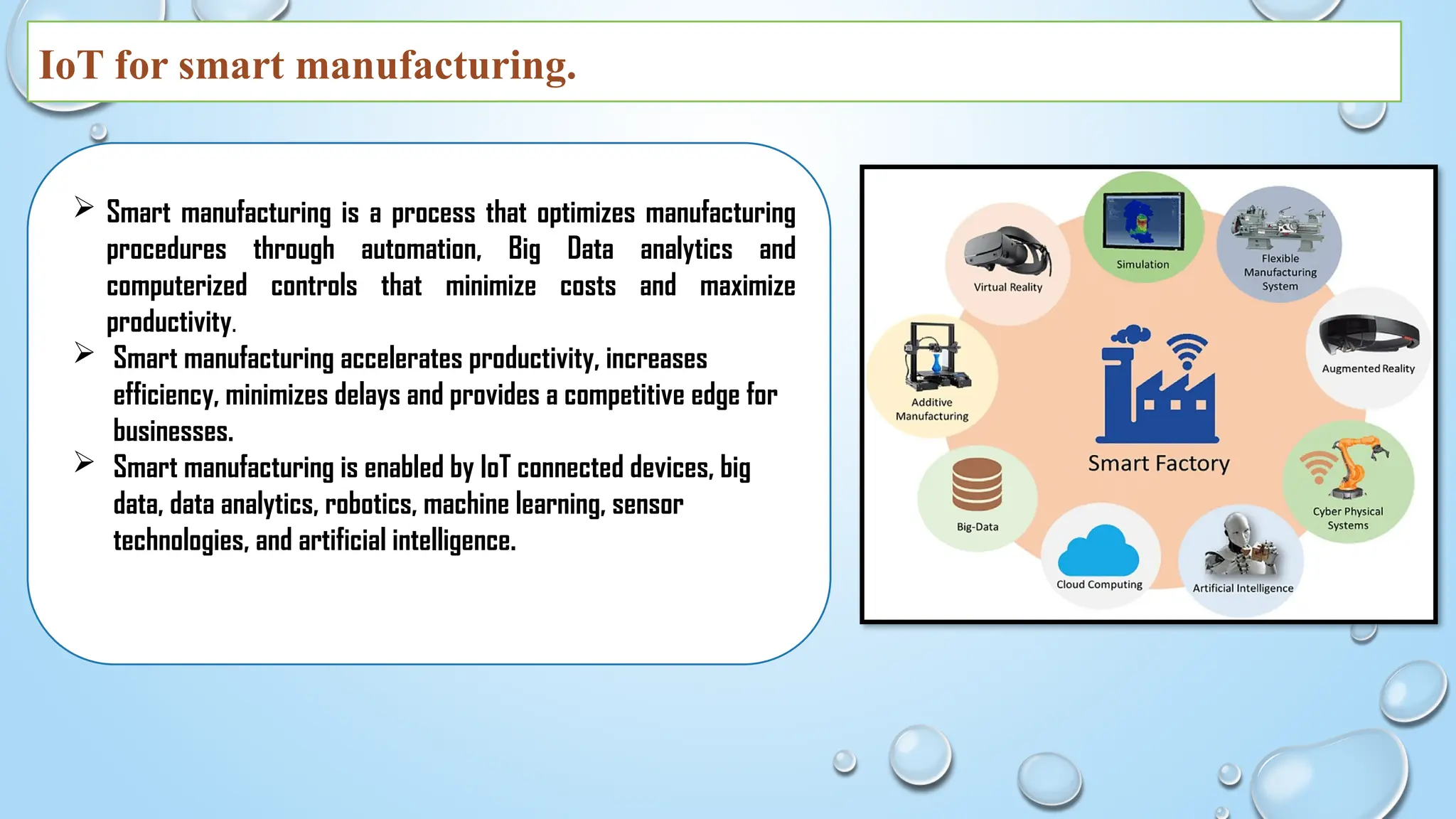
IoT for smart manufacturing.
 Smart manufacturing is a process that optimizes manufacturing
procedures through automation, Big Data analytics and
computerized controls that minimize costs and maximize
productivity.
 Smart manufacturing accelerates productivity, increases
efficiency, minimizes delays and provides a competitive edge for
businesses.
 Smart manufacturing is enabled by IoT connected devices, big
data, data analytics, robotics, machine learning, sensor
technologies, and artificial intelligence.
The potential benefits of smart manufacturing
 Improved employee productivity.
 Asset optimization.
 Reduction of operating costs.
 Improved quality of goods.
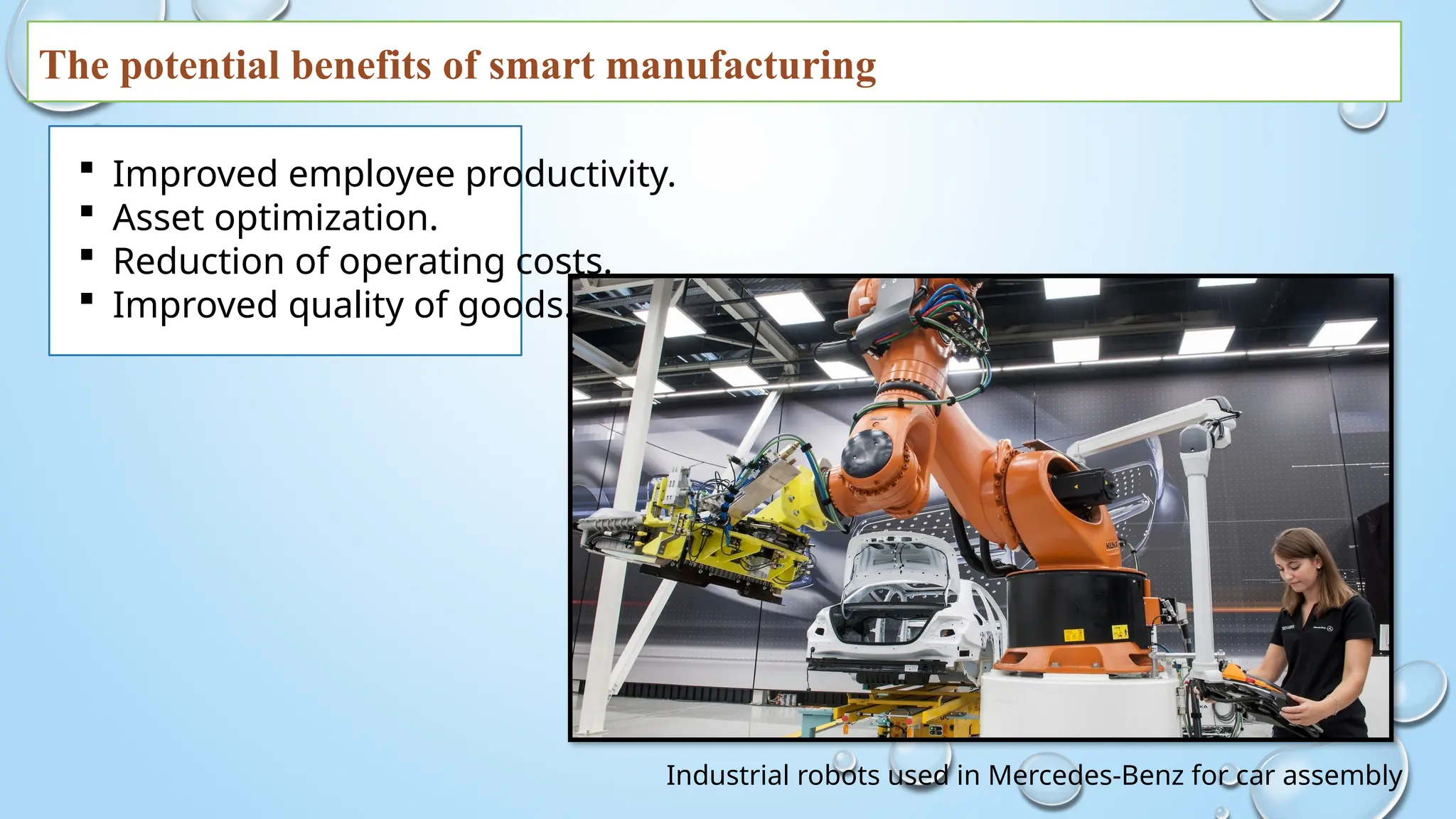
Industrial robots used in Mercedes-Benz for car assembly
Influence of IOT on Industrial Automation.
 IoT plus Industrial Automation would get on together and create IIoT (Industrial IoT.
 IIoT networks of smart intelligent devices allow organizations to connect their employee every time
wirelessly and manage their activity for their safety on factory floor.
 Some companies are already benefiting from the IIoT through cost savings due to predictive
maintenance, improved safety, and other operational efficiencies.
 The new technology would increase efficiency as well as work output.
 The Internet of Things ( helps to create new technologies to solve problems, enhance operations,
and increase productivity.
 Internet of Things ( Impact on Industrial Automation is very high and it makes us to use tablet
computers, smart phones, virtualized systems, and cloud storage of data and so on.
Thank You

Computer Aided Design and manufacturing/ Computer integration testing

  • 1.
    Dr. Ambedkar Instituteof Technology. DEPARTMENT OF MECHANICAL ENGINEERING Computer Integrated Manufacturing (18ME731) Internet of Things (IOT) By :: Roopesh P (1DA20ME074).
  • 2.
     Internet ofThings (IoT) simply refers to a network of objects that are connected to the internet. It provides devices with the ability to transfer sensor data on the Internet without requiring human intervention.  The ‘thing’ in IoT can refer to a person or any device which is assigned through an IP address.
  • 3.
    Some examples ofIOT are as follows SMART CITY SMART HOME APPLIANCES SMART AGRICULTURE INDUSTRIAL IOT
  • 4.
    IOT Applications inManufacturing  Digital/Connected Factory.  Facility Management.  Production Flow Monitoring.  Inventory Management.  Plant Safety and Security.  Quality Control.  Packaging Optimization.  Logistics and Supply Chain Optimization.
  • 5.
    Big-Data and CloudComputing for IOT
  • 6.
    IoT for smartmanufacturing.  Smart manufacturing is a process that optimizes manufacturing procedures through automation, Big Data analytics and computerized controls that minimize costs and maximize productivity.  Smart manufacturing accelerates productivity, increases efficiency, minimizes delays and provides a competitive edge for businesses.  Smart manufacturing is enabled by IoT connected devices, big data, data analytics, robotics, machine learning, sensor technologies, and artificial intelligence.
  • 7.
    The potential benefitsof smart manufacturing  Improved employee productivity.  Asset optimization.  Reduction of operating costs.  Improved quality of goods. Industrial robots used in Mercedes-Benz for car assembly
  • 8.
    Influence of IOTon Industrial Automation.  IoT plus Industrial Automation would get on together and create IIoT (Industrial IoT.  IIoT networks of smart intelligent devices allow organizations to connect their employee every time wirelessly and manage their activity for their safety on factory floor.  Some companies are already benefiting from the IIoT through cost savings due to predictive maintenance, improved safety, and other operational efficiencies.  The new technology would increase efficiency as well as work output.  The Internet of Things ( helps to create new technologies to solve problems, enhance operations, and increase productivity.  Internet of Things ( Impact on Industrial Automation is very high and it makes us to use tablet computers, smart phones, virtualized systems, and cloud storage of data and so on.
  • 9.