Computational Thinking:
Understanding AI in Our World
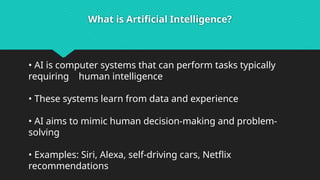
What is Artificial Intelligence?
• AI is computer systems that can perform tasks typically
requiring human intelligence
• These systems learn from data and experience
• AI aims to mimic human decision-making and problem-
solving
• Examples: Siri, Alexa, self-driving cars, Netflix
recommendations
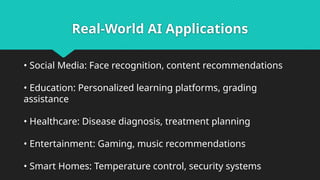
Real-World AI Applications
• Social Media: Face recognition, content recommendations
• Education: Personalized learning platforms, grading
assistance
• Healthcare: Disease diagnosis, treatment planning
• Entertainment: Gaming, music recommendations
• Smart Homes: Temperature control, security systems
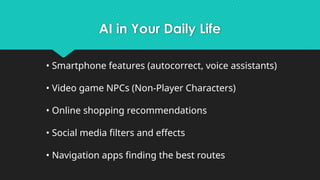
AI in Your Daily Life
• Smartphone features (autocorrect, voice assistants)
• Video game NPCs (Non-Player Characters)
• Online shopping recommendations
• Social media filters and effects
• Navigation apps finding the best routes
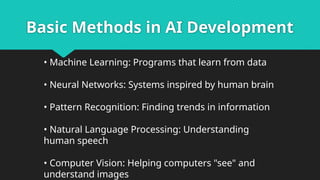
Basic Methods in AI Development
• Machine Learning: Programs that learn from data
• Neural Networks: Systems inspired by human brain
• Pattern Recognition: Finding trends in information
• Natural Language Processing: Understanding
human speech
• Computer Vision: Helping computers "see" and
understand images
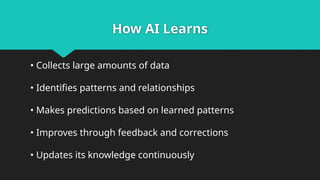
How AI Learns
• Collects large amounts of data
• Identifies patterns and relationships
• Makes predictions based on learned patterns
• Improves through feedback and corrections
• Updates its knowledge continuously
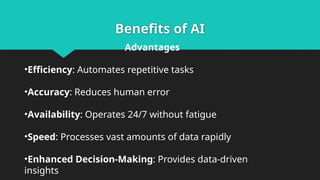
Benefits of AI
Advantages
•Efficiency: Automates repetitive tasks
•Accuracy: Reduces human error
•Availability: Operates 24/7 without fatigue
•Speed: Processes vast amounts of data rapidly
•Enhanced Decision-Making: Provides data-driven
insights
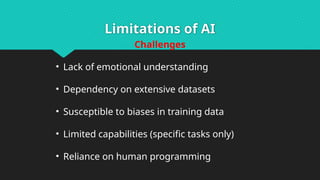
Limitations of AI
Challenges
• Lack of emotional understanding
• Dependency on extensive datasets
• Susceptible to biases in training data
• Limited capabilities (specific tasks only)
• Reliance on human programming
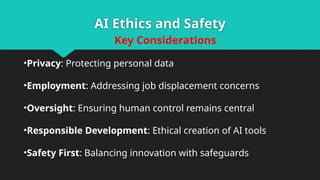
AI Ethics and Safety
Key Considerations
•Privacy: Protecting personal data
•Employment: Addressing job displacement concerns
•Oversight: Ensuring human control remains central
•Responsible Development: Ethical creation of AI tools
•Safety First: Balancing innovation with safeguards
Future of AI
What Lies Ahead
•Greater integration into daily life
•New career paths in AI fields
•Emphasis on ethical and inclusive AI practices
•Collaboration between humans and AI
•Addressing global issues like climate change and
healthcare

Computational Thinking.pptx AI is computer systems that can perform tasks typically requiring human intelligence

  • 1.
  • 2.
    What is ArtificialIntelligence? • AI is computer systems that can perform tasks typically requiring human intelligence • These systems learn from data and experience • AI aims to mimic human decision-making and problem- solving • Examples: Siri, Alexa, self-driving cars, Netflix recommendations
  • 3.
    Real-World AI Applications •Social Media: Face recognition, content recommendations • Education: Personalized learning platforms, grading assistance • Healthcare: Disease diagnosis, treatment planning • Entertainment: Gaming, music recommendations • Smart Homes: Temperature control, security systems
  • 4.
    AI in YourDaily Life • Smartphone features (autocorrect, voice assistants) • Video game NPCs (Non-Player Characters) • Online shopping recommendations • Social media filters and effects • Navigation apps finding the best routes
  • 5.
    Basic Methods inAI Development • Machine Learning: Programs that learn from data • Neural Networks: Systems inspired by human brain • Pattern Recognition: Finding trends in information • Natural Language Processing: Understanding human speech • Computer Vision: Helping computers "see" and understand images
  • 6.
    How AI Learns •Collects large amounts of data • Identifies patterns and relationships • Makes predictions based on learned patterns • Improves through feedback and corrections • Updates its knowledge continuously
  • 7.
    Benefits of AI Advantages •Efficiency:Automates repetitive tasks •Accuracy: Reduces human error •Availability: Operates 24/7 without fatigue •Speed: Processes vast amounts of data rapidly •Enhanced Decision-Making: Provides data-driven insights
  • 8.
    Limitations of AI Challenges •Lack of emotional understanding • Dependency on extensive datasets • Susceptible to biases in training data • Limited capabilities (specific tasks only) • Reliance on human programming
  • 9.
    AI Ethics andSafety Key Considerations •Privacy: Protecting personal data •Employment: Addressing job displacement concerns •Oversight: Ensuring human control remains central •Responsible Development: Ethical creation of AI tools •Safety First: Balancing innovation with safeguards
  • 10.
    Future of AI WhatLies Ahead •Greater integration into daily life •New career paths in AI fields •Emphasis on ethical and inclusive AI practices •Collaboration between humans and AI •Addressing global issues like climate change and healthcare