COMPASSIONATE LEADERSHIP:
How to Do Hard Things in a Human Way
When we are motivated by
compassion and wisdom, the results
of our actions benefit everyone, not
just our individual selves or some
immediate convenience
-Dalai Lama.
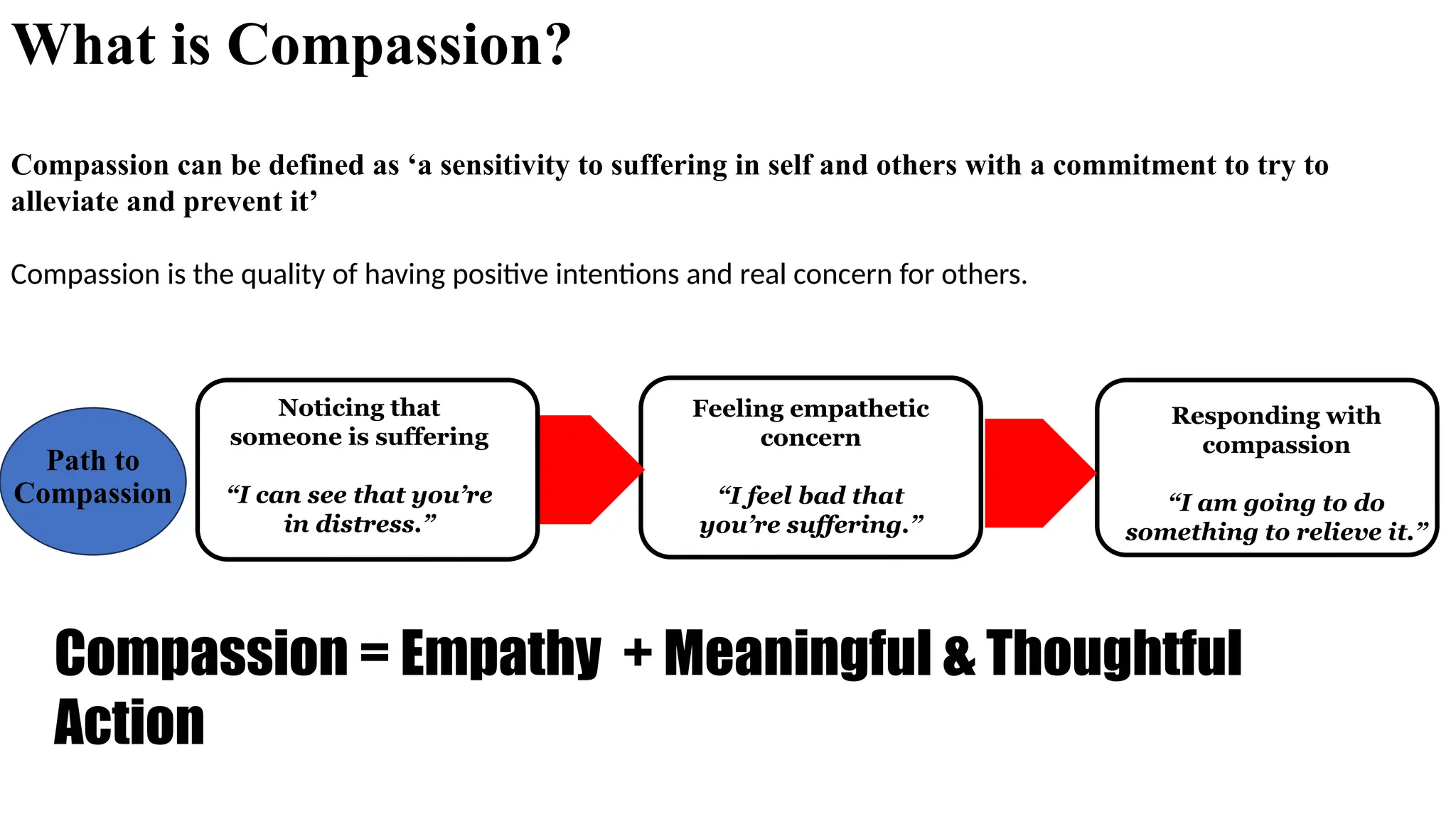
Compassion can be defined as ‘a sensitivity to suffering in self and others with a commitment to try to
alleviate and prevent it’
Compassion is the quality of having positive intentions and real concern for others.
What is Compassion?
Noticing that
someone is suffering
“I can see that you’re
in distress.”
Feeling empathetic
concern
“I feel bad that
you’re suffering.”
Responding with
compassion
“I am going to do
something to relieve it.”
Path to
Compassion
Compassion = Empathy + Meaningful & Thoughtful
Action
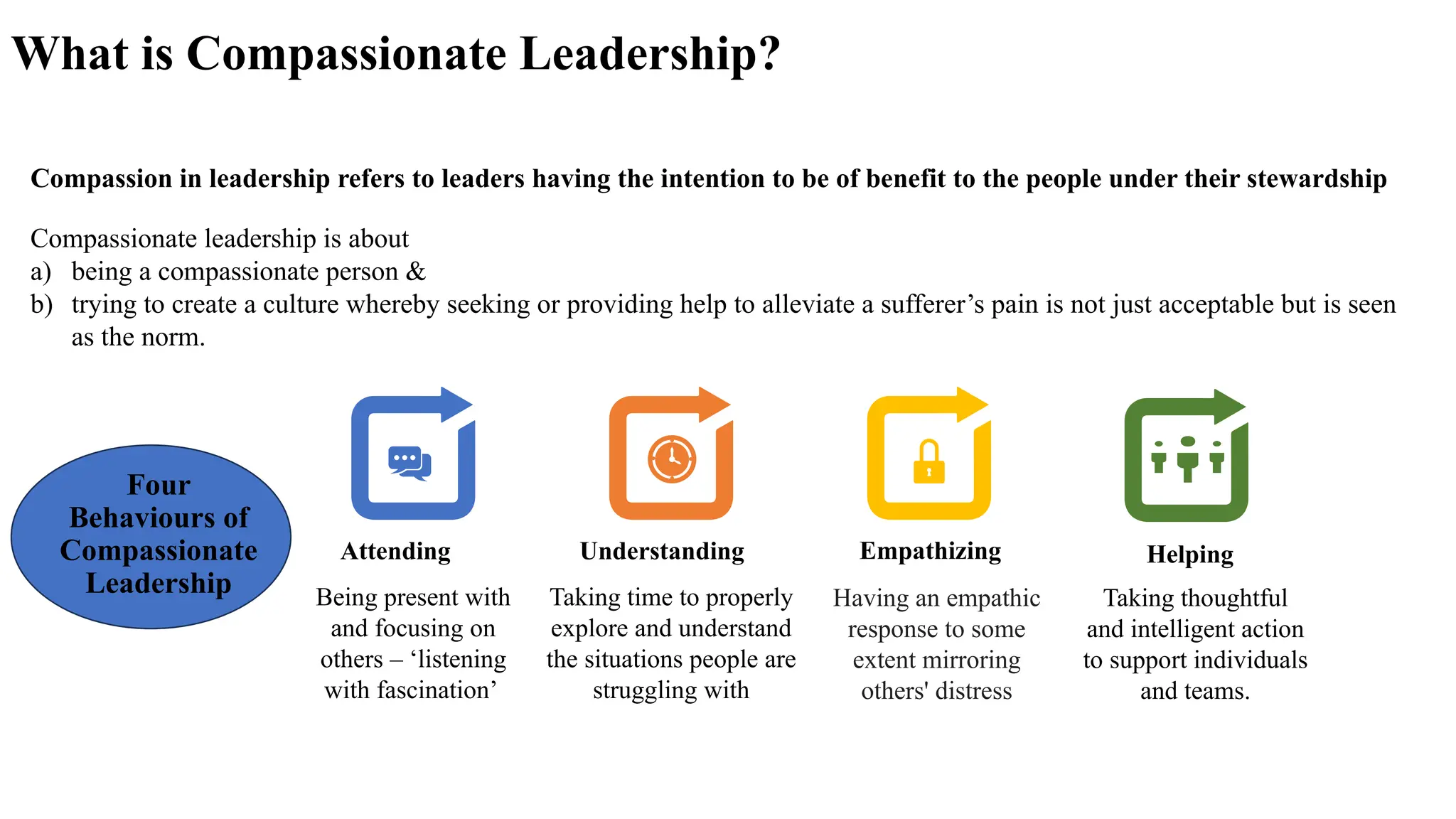
Attending
Being present with
and focusing on
others – ‘listening
with fascination’
Understanding
Taking time to properly
explore and understand
the situations people are
struggling with
Empathizing
Having an empathic
response to some
extent mirroring
others' distress
Compassion in leadership refers to leaders having the intention to be of benefit to the people under their stewardship
Helping
Taking thoughtful
and intelligent action
to support individuals
and teams.
Four
Behaviours of
Compassionate
Leadership
Compassionate leadership is about
a) being a compassionate person &
b) trying to create a culture whereby seeking or providing help to alleviate a sufferer’s pain is not just acceptable but is seen
as the norm.
What is Compassionate Leadership?
Acts of kindness in the workplace impact not only the carer and the receiver, but it also affects the performance culture
as a whole (Brody, 1992)
Organizations where compassion prevails, have employees with reduced stress and more job satisfaction (Fineman,
2000)
It reduces anxiety, the pressure of achieving, and makes them resilient to work stress and burnout (Frost, Dutton,
Worline, & Wilson, 2000)
Exchanging compassion promotes generosity and builds affective commitment of the workers towards their superiors
and the institution as a whole (Shanock & Eisenberger, 2006)
Focusing on compassion at work promotes healthy interpersonal relationships (Dutton & Ragins, 2007)
When people exchange positivity and bond with each other at work, their stress level significantly reduces (Ozaki,
Motohashi, Kaneko, & Fujita, 2012)
Employees who receive empathy, understanding and help from their colleagues and superiors are likely to stay in the
organization for a long period of time and install all their efforts for the benefit of the organization (Van Bommel,
2021)
Is there a business case for Compassionate Leadership?
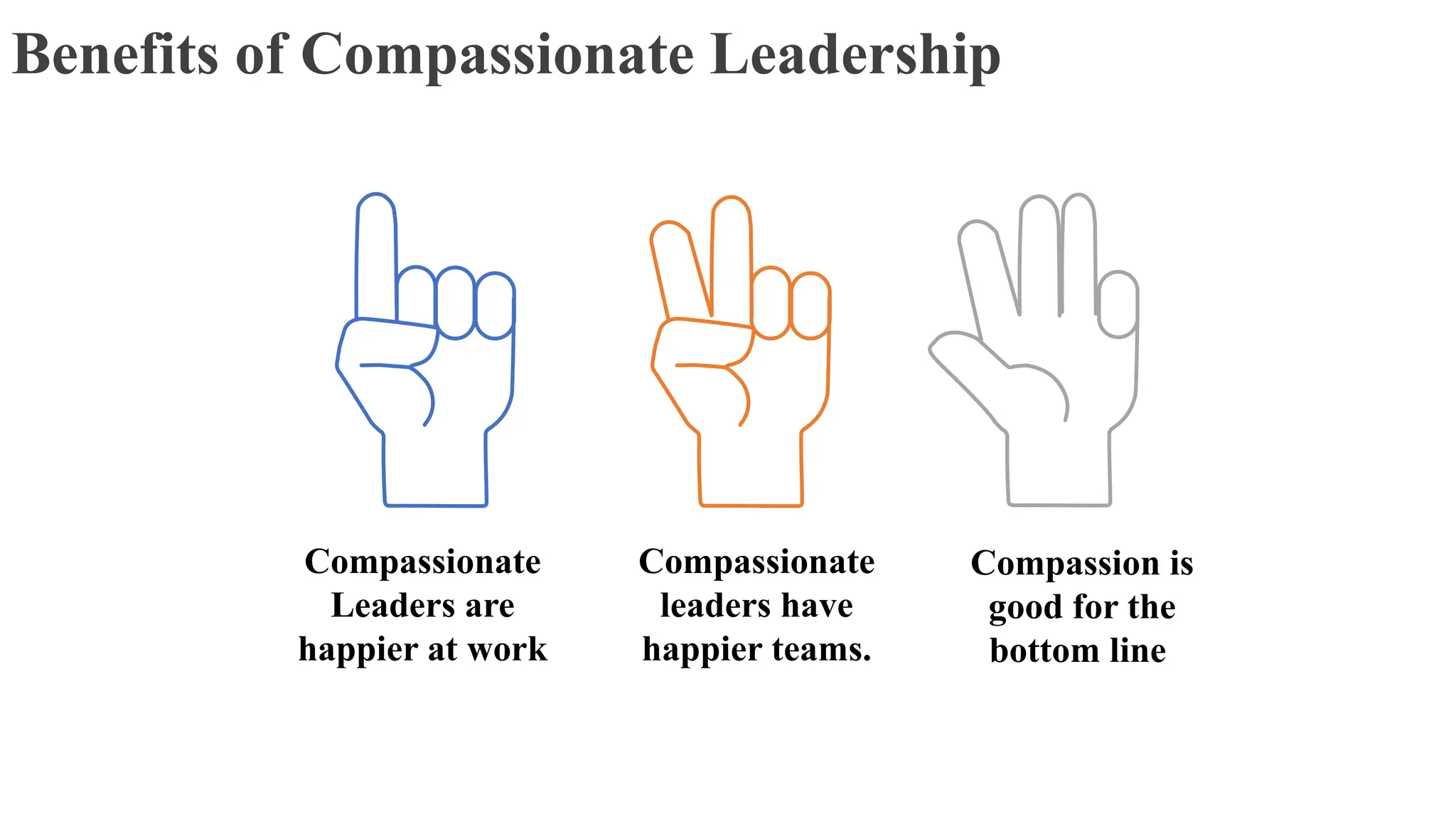
Benefits of Compassionate Leadership
Compassionate
Leaders are
happier at work
Compassionate
leaders have
happier teams.
Compassion is
good for the
bottom line
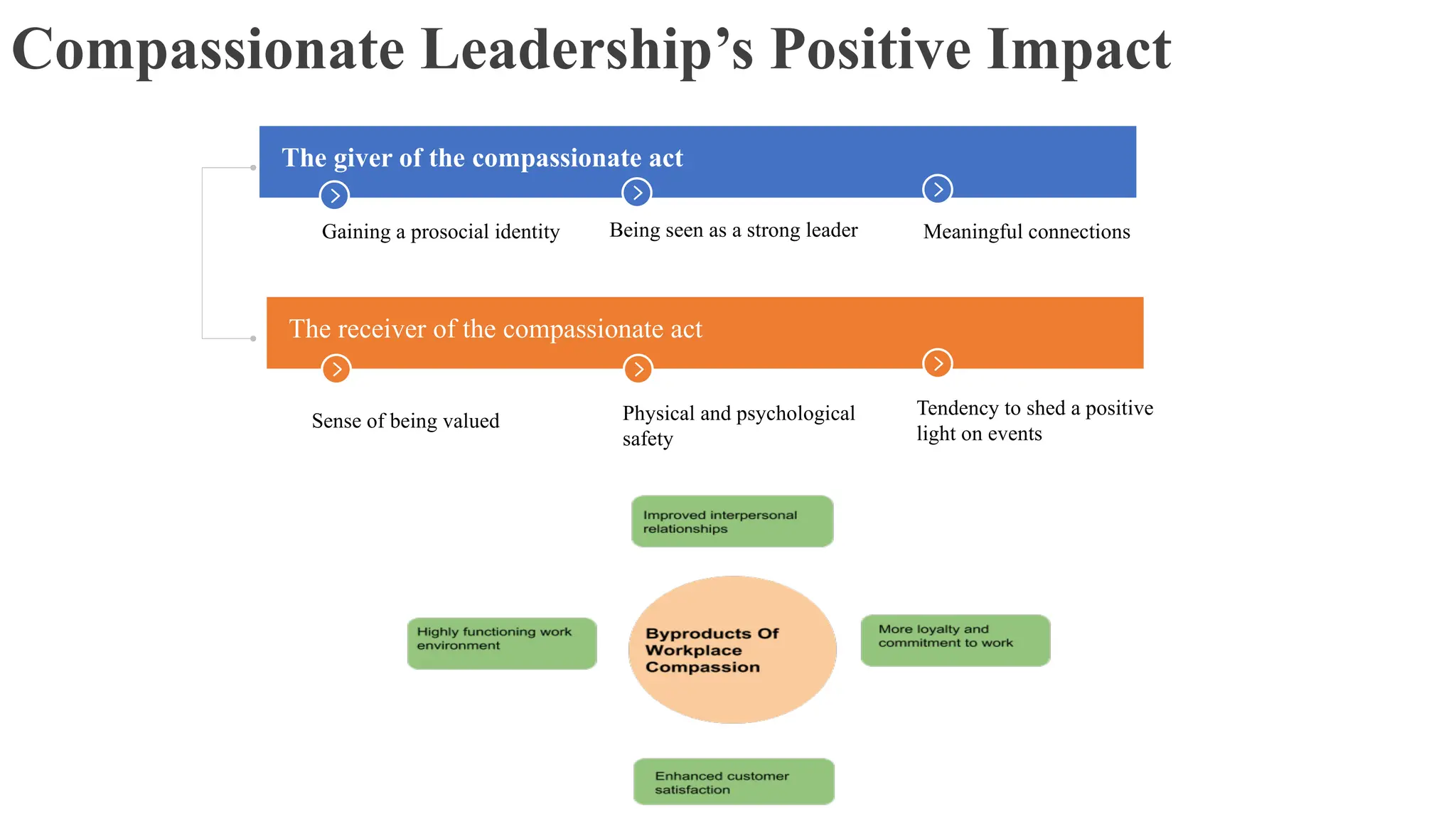
The giver of the compassionate act
Gaining a prosocial identity Being seen as a strong leader Meaningful connections
The receiver of the compassionate act
Sense of being valued Physical and psychological
safety
Compassionate Leadership’s Positive Impact
Tendency to shed a positive
light on events
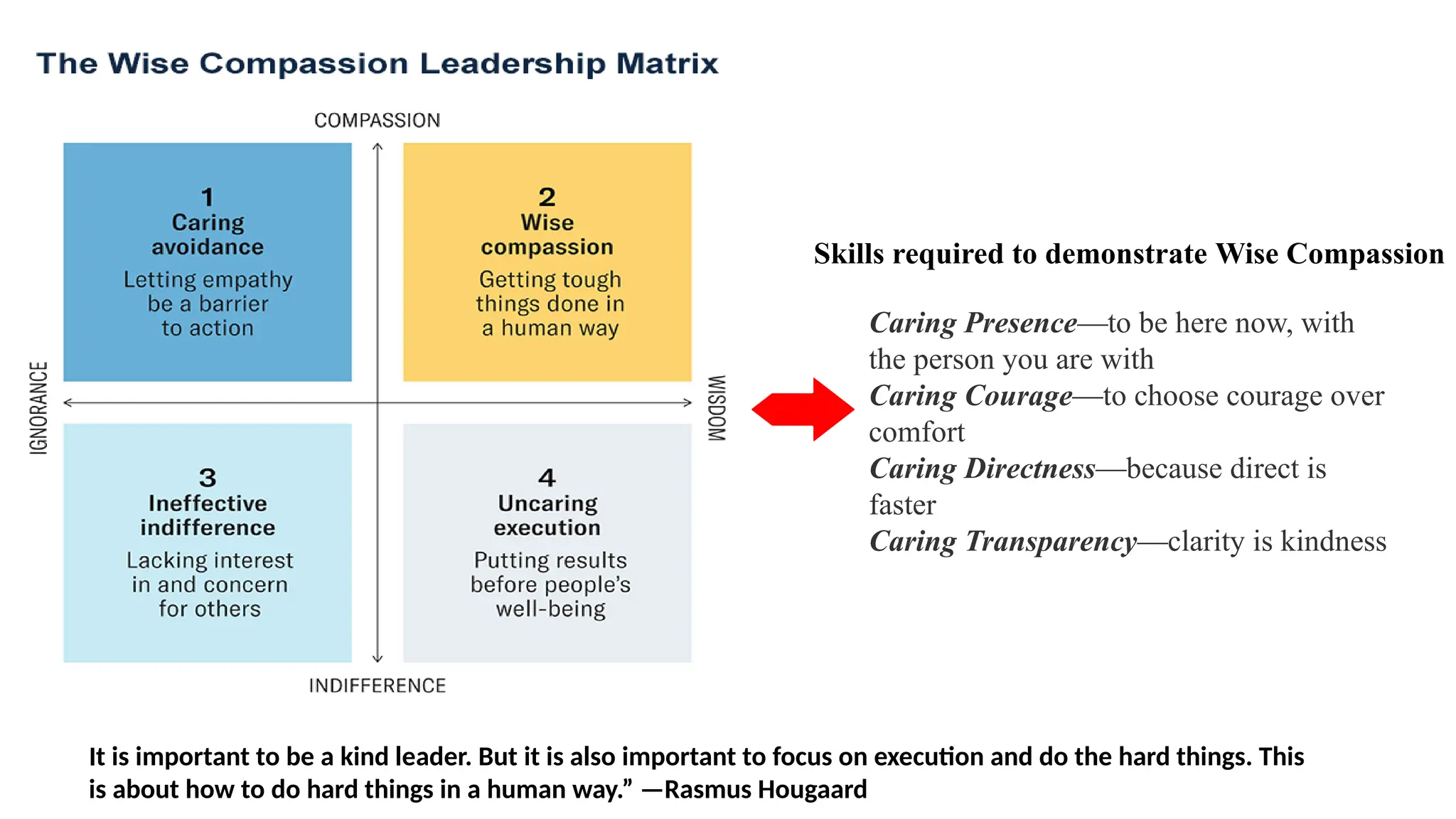
Caring Presence—to be here now, with
the person you are with
Caring Courage—to choose courage over
comfort
Caring Directness—because direct is
faster
Caring Transparency—clarity is kindness
Skills required to demonstrate Wise Compassion
It is important to be a kind leader. But it is also important to focus on execution and do the hard things. This
is about how to do hard things in a human way.” —Rasmus Hougaard
Questions to help leaders identify some of the activities that foster compassion in their team and wider organisation:
1. Do I actively promote a culture in which people trust each other and know that if they talk about their problems, other team members
will not judge them and they will listen and try to help?
2. Do I actively encourage and empower others to respond to a colleague’s suffering?
3. Do I show care and concern towards people in my team?
4. Do I understand the value of sharing problems with others?
5. Do people in my team know that I will try to help them if they have a problem?
6. Are people in my team in regular close contact (e.g. through face to face daily or weekly department meetings)?
7. Is there a strong connection between people in my team which makes them feel joined, seen, felt, known and not alone?
8. When people in my team notice a change in the condition of a colleague, do they feel comfortable about inquiring further?
9. Is it a norm in my team to know about each other’s lives and pay attention to the pain and suffering of a colleague?
10. Do people in my team feel safe in sharing their personal problems, issues and challenges with each other?
Compassion Psychological Safety Trust
Learning
Value creation Improvement & Innovation
Building a
Compassionate
Organisational Culture
Thank You

Compassionate Leadership in the VUCA world.pptx

  • 1.
    COMPASSIONATE LEADERSHIP: How toDo Hard Things in a Human Way When we are motivated by compassion and wisdom, the results of our actions benefit everyone, not just our individual selves or some immediate convenience -Dalai Lama.
  • 2.
    Compassion can bedefined as ‘a sensitivity to suffering in self and others with a commitment to try to alleviate and prevent it’ Compassion is the quality of having positive intentions and real concern for others. What is Compassion? Noticing that someone is suffering “I can see that you’re in distress.” Feeling empathetic concern “I feel bad that you’re suffering.” Responding with compassion “I am going to do something to relieve it.” Path to Compassion Compassion = Empathy + Meaningful & Thoughtful Action
  • 4.
    Attending Being present with andfocusing on others – ‘listening with fascination’ Understanding Taking time to properly explore and understand the situations people are struggling with Empathizing Having an empathic response to some extent mirroring others' distress Compassion in leadership refers to leaders having the intention to be of benefit to the people under their stewardship Helping Taking thoughtful and intelligent action to support individuals and teams. Four Behaviours of Compassionate Leadership Compassionate leadership is about a) being a compassionate person & b) trying to create a culture whereby seeking or providing help to alleviate a sufferer’s pain is not just acceptable but is seen as the norm. What is Compassionate Leadership?
  • 5.
    Acts of kindnessin the workplace impact not only the carer and the receiver, but it also affects the performance culture as a whole (Brody, 1992) Organizations where compassion prevails, have employees with reduced stress and more job satisfaction (Fineman, 2000) It reduces anxiety, the pressure of achieving, and makes them resilient to work stress and burnout (Frost, Dutton, Worline, & Wilson, 2000) Exchanging compassion promotes generosity and builds affective commitment of the workers towards their superiors and the institution as a whole (Shanock & Eisenberger, 2006) Focusing on compassion at work promotes healthy interpersonal relationships (Dutton & Ragins, 2007) When people exchange positivity and bond with each other at work, their stress level significantly reduces (Ozaki, Motohashi, Kaneko, & Fujita, 2012) Employees who receive empathy, understanding and help from their colleagues and superiors are likely to stay in the organization for a long period of time and install all their efforts for the benefit of the organization (Van Bommel, 2021) Is there a business case for Compassionate Leadership?
  • 7.
    Benefits of CompassionateLeadership Compassionate Leaders are happier at work Compassionate leaders have happier teams. Compassion is good for the bottom line
  • 8.
    The giver ofthe compassionate act Gaining a prosocial identity Being seen as a strong leader Meaningful connections The receiver of the compassionate act Sense of being valued Physical and psychological safety Compassionate Leadership’s Positive Impact Tendency to shed a positive light on events
  • 9.
    Caring Presence—to behere now, with the person you are with Caring Courage—to choose courage over comfort Caring Directness—because direct is faster Caring Transparency—clarity is kindness Skills required to demonstrate Wise Compassion It is important to be a kind leader. But it is also important to focus on execution and do the hard things. This is about how to do hard things in a human way.” —Rasmus Hougaard
  • 10.
    Questions to helpleaders identify some of the activities that foster compassion in their team and wider organisation: 1. Do I actively promote a culture in which people trust each other and know that if they talk about their problems, other team members will not judge them and they will listen and try to help? 2. Do I actively encourage and empower others to respond to a colleague’s suffering? 3. Do I show care and concern towards people in my team? 4. Do I understand the value of sharing problems with others? 5. Do people in my team know that I will try to help them if they have a problem? 6. Are people in my team in regular close contact (e.g. through face to face daily or weekly department meetings)? 7. Is there a strong connection between people in my team which makes them feel joined, seen, felt, known and not alone? 8. When people in my team notice a change in the condition of a colleague, do they feel comfortable about inquiring further? 9. Is it a norm in my team to know about each other’s lives and pay attention to the pain and suffering of a colleague? 10. Do people in my team feel safe in sharing their personal problems, issues and challenges with each other?
  • 11.
    Compassion Psychological SafetyTrust Learning Value creation Improvement & Innovation Building a Compassionate Organisational Culture
  • 12.

Editor's Notes

  • #2 Compassion Is not about pleasing others and giving them what they want. Rather, compassion can be tough and direct, such as addressing another person’s behavior if it is out of line. But it is done with the intention that helping them change will ultimately lead to better outcomes for everyone. The idea is to balance wisdom (courage) and compassion and do hard things in a human way. The secret to doing this right is of course, where you as a leader are coming from.
  • #4 Attending- Listening is probably the most important leadership skill and compassionate leaders take time to listen to the challenges, obstacles, frustrations and harms colleagues experience as well as listening to accounts of their successes and joys Understanding- It implies valuing and exploring conflicting perspectives rather than leaders simply imposing their own understanding  Empathizing-being able to feel the distress or frustration of those they lead without being overwhelmed by the emotions and therefore unable to help Helping-Removing obstacles that get in the way of people doing their work (eg, chronic excessive workloads, conflicts between departments) and providing the resources people and services need (eg, staff, equipment, training) are the most important tasks for leaders
  • #5 Compassion can often be thought of as ‘fluffy’ and not of relevance to business performance. Much of the research around compassion suggests otherwise. That said, being compassionate is not purely a case of business benefit, but what is humane and right. Read the Research finding for the group
  • #7 1) Leaders who consider themselves highly compassionate are 66% less stressed than their less-compassionate colleagues, 200% less likely to quit, and 14% more effective.  2) Employees stand to gain a lot from more compassionate leaders. Neuroimaging research shows that people’s brains respond more positively to leaders who demonstrate compassion.  3) In one study, when compassion was deliberately incorporated into the values of a business unit (as determined by its members), those units enjoyed more financial success and executives perceived them as more effective. 4)
  • #9 Quadrant 1 is caring avoidance. We care and wee tend to avoid the hard things. “This can be out of fear of their reaction, or it can be out of empathy, which is different than compassion.” Quadrant 2 is where we want to be—Wise Compassion. Leaders in this zone balance their concern for people with the courage and candor to get the hard things done. Quadrant 3, at the bottom left is the indifferent and ineffective leader. They are too busy to care and often come across as unprofessional. Quadrant 4, leaders have the courage and candor to get hard things done, but lack heart. They put results before people. While we tend to fall in one quadrant over another, we can operate in any of the four depending on “our relationship with the person involved, our level of busyness, or the intensity of the pressure we are facing.” Caring presence-Putting themselves in the other person’s shoes helps leaders imagine how the other person will receive the conversation. How will it affect them? What emotions will arise in them? Caring courage-By default, doing hard things requires courage. It takes courage to go into uncomfortable, awkward, and sometimes confrontational situations. The mantra is “courage over comfort. Caring directness-When engaging in difficult conversations, there is a tendency to sugarcoat and offer the proverbial “compliment sandwich.” It is unnecessary. Direct is faster and more efficient. Say the hard thing right away. The mantra is “bottom line first.” But it’s also important to balance professional candor with personal care. Ruthless honesty is not helpful to anyone. Caring transparency-Tell the truth. While there may be some things a leader cannot share openly, it is important to share as much as possible. The more that is shared, the more the receiver can begin planning the next steps. Treat them like adults.