Comparatives
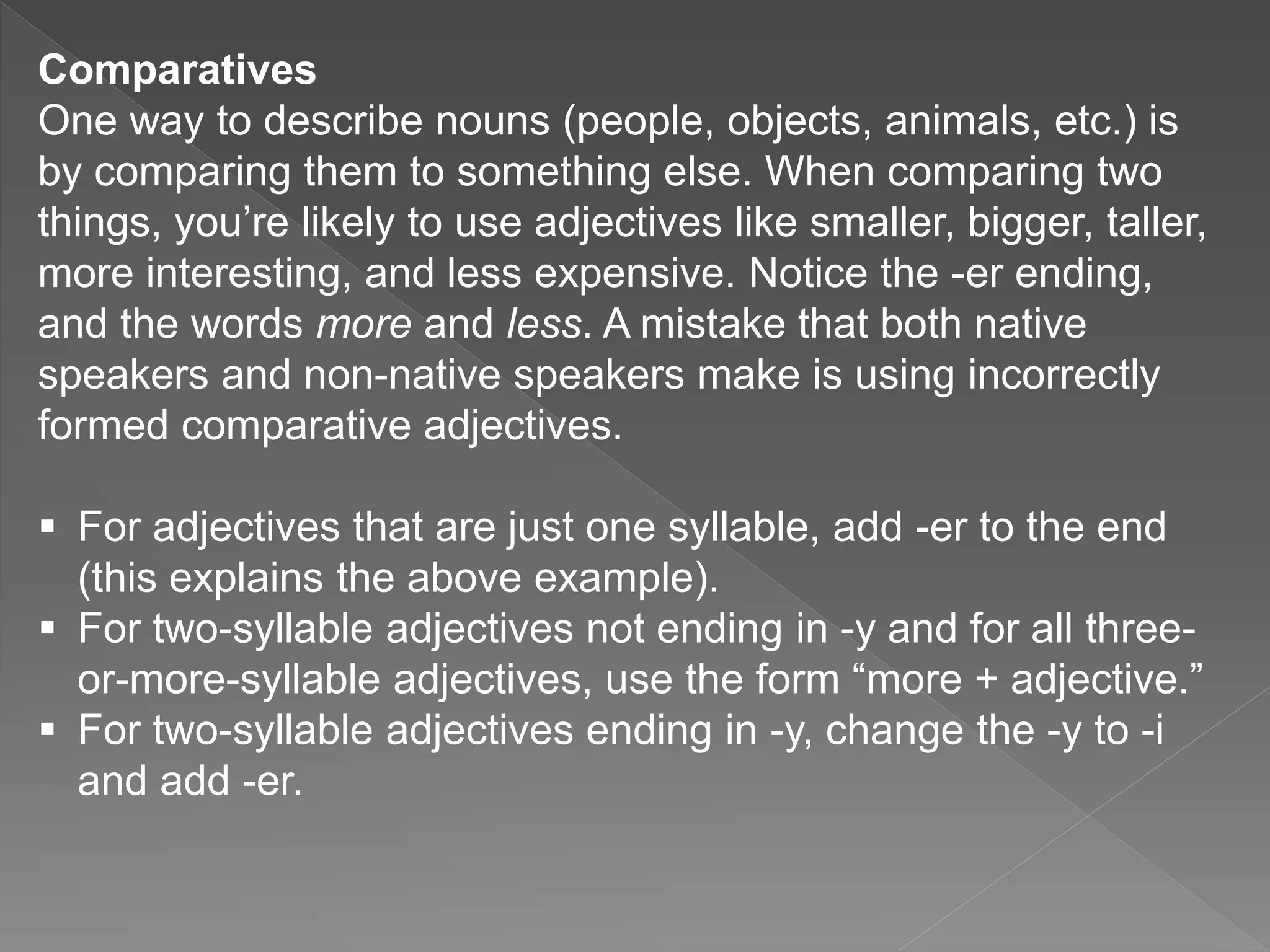
One way to describe nouns (people, objects, animals, etc.) is
by comparing them to something else. When comparing two
things, you’re likely to use adjectives like smaller, bigger, taller,
more interesting, and less expensive. Notice the -er ending,
and the words more and less. A mistake that both native
speakers and non-native speakers make is using incorrectly
formed comparative adjectives.
 For adjectives that are just one syllable, add -er to the end
(this explains the above example).
 For two-syllable adjectives not ending in -y and for all three-
or-more-syllable adjectives, use the form “more + adjective.”
 For two-syllable adjectives ending in -y, change the -y to -i
and add -er.
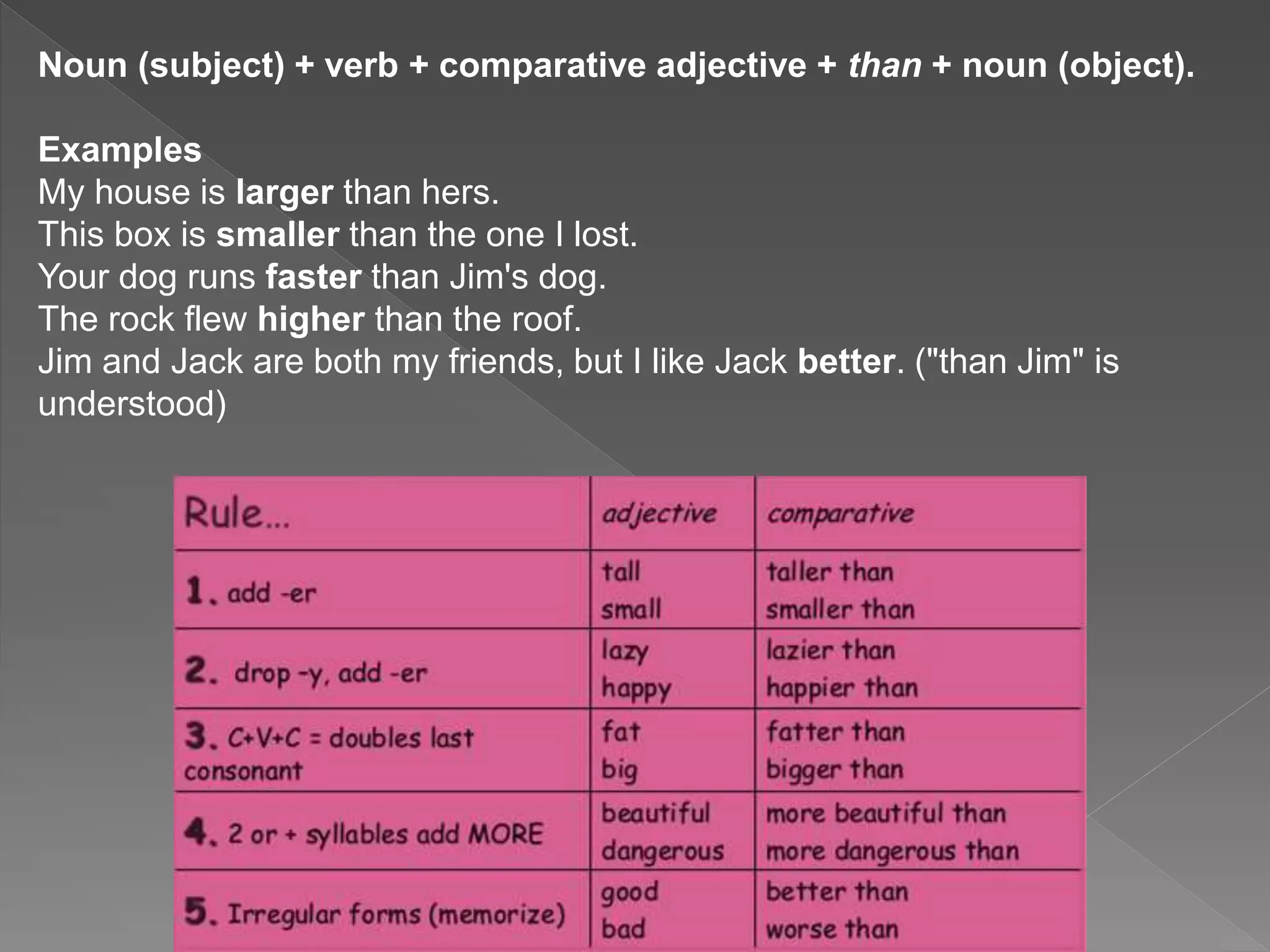
Noun (subject) + verb + comparative adjective + than + noun (object).
Examples
My house is larger than hers.
This box is smaller than the one I lost.
Your dog runs faster than Jim's dog.
The rock flew higher than the roof.
Jim and Jack are both my friends, but I like Jack better. ("than Jim" is
understood)
Superlatives
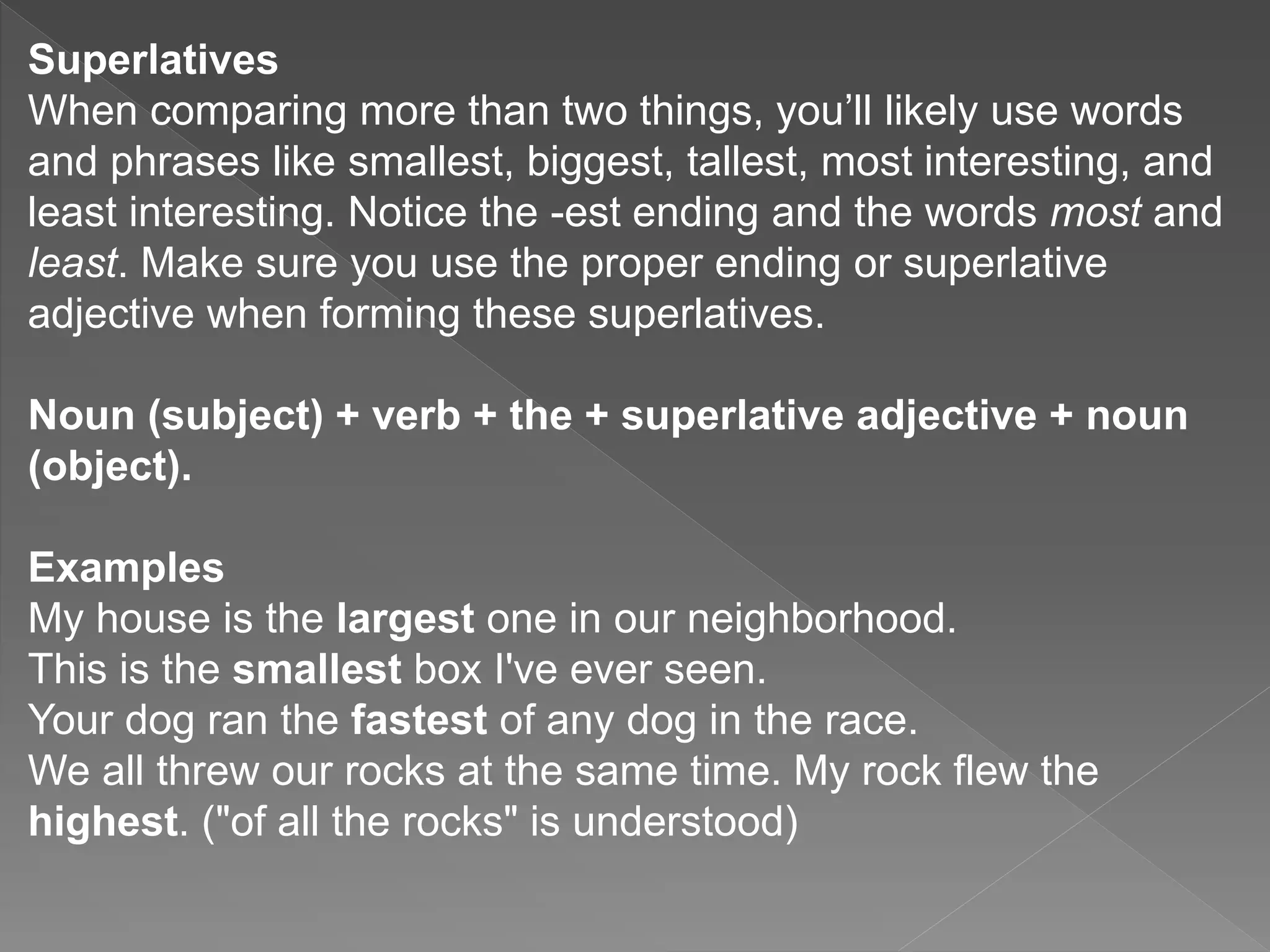
When comparing more than two things, you’ll likely use words
and phrases like smallest, biggest, tallest, most interesting, and
least interesting. Notice the -est ending and the words most and
least. Make sure you use the proper ending or superlative
adjective when forming these superlatives.
Noun (subject) + verb + the + superlative adjective + noun
(object).
Examples
My house is the largest one in our neighborhood.
This is the smallest box I've ever seen.
Your dog ran the fastest of any dog in the race.
We all threw our rocks at the same time. My rock flew the
highest. ("of all the rocks" is understood)
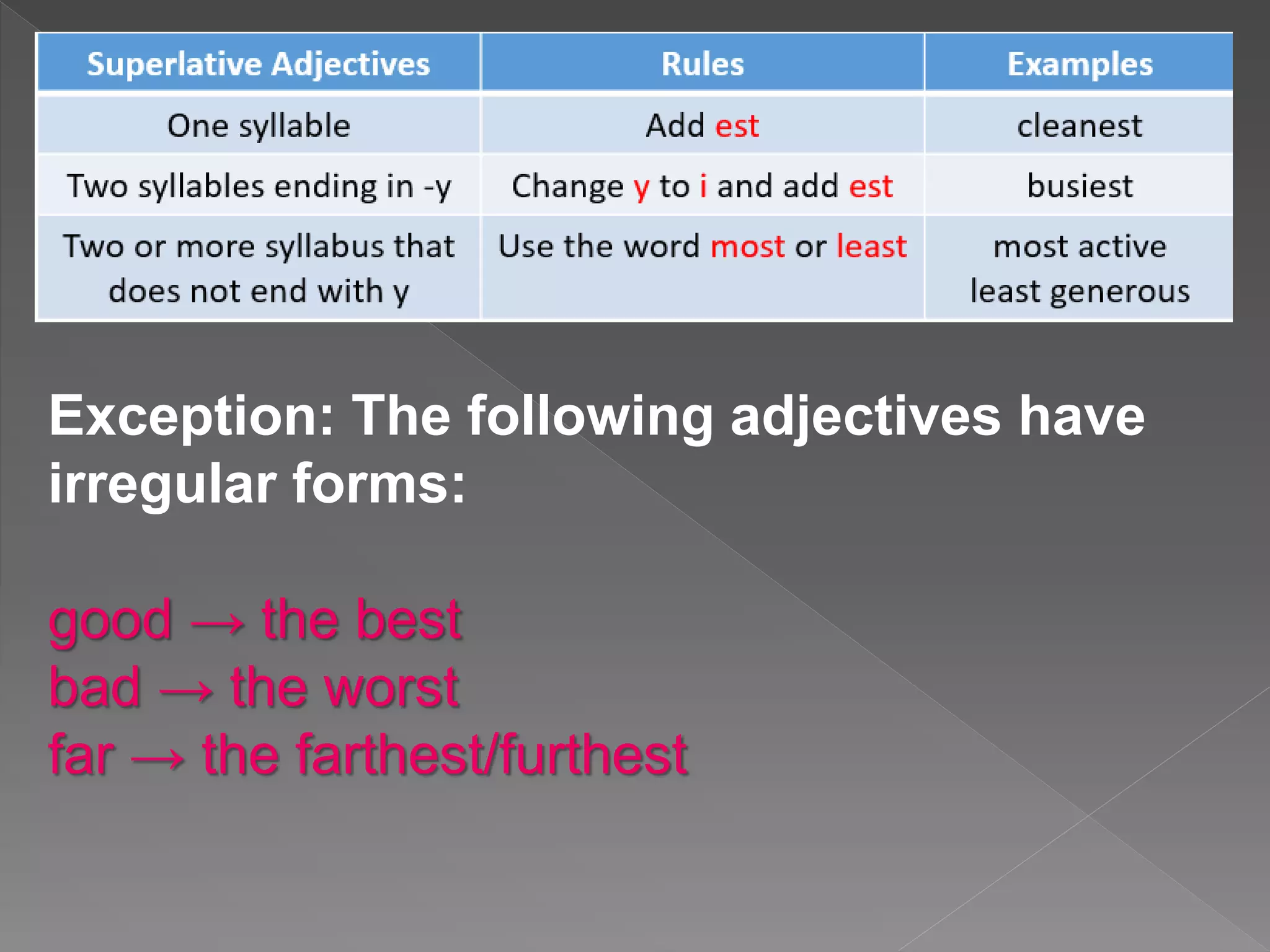
Exception: The following adjectives have
irregular forms:
good → the best
bad → the worst
far → the farthest/furthest
Adjective Comparative Superlative
tall taller tallest
fat fatter fattest
big bigger biggest
sad sadder saddest
One syllable adjectives
Add -er for the comparative and -est for the superlative. If the
adjective has a consonant + single vowel + consonant spelling,
the final consonant must be doubled before adding the ending.
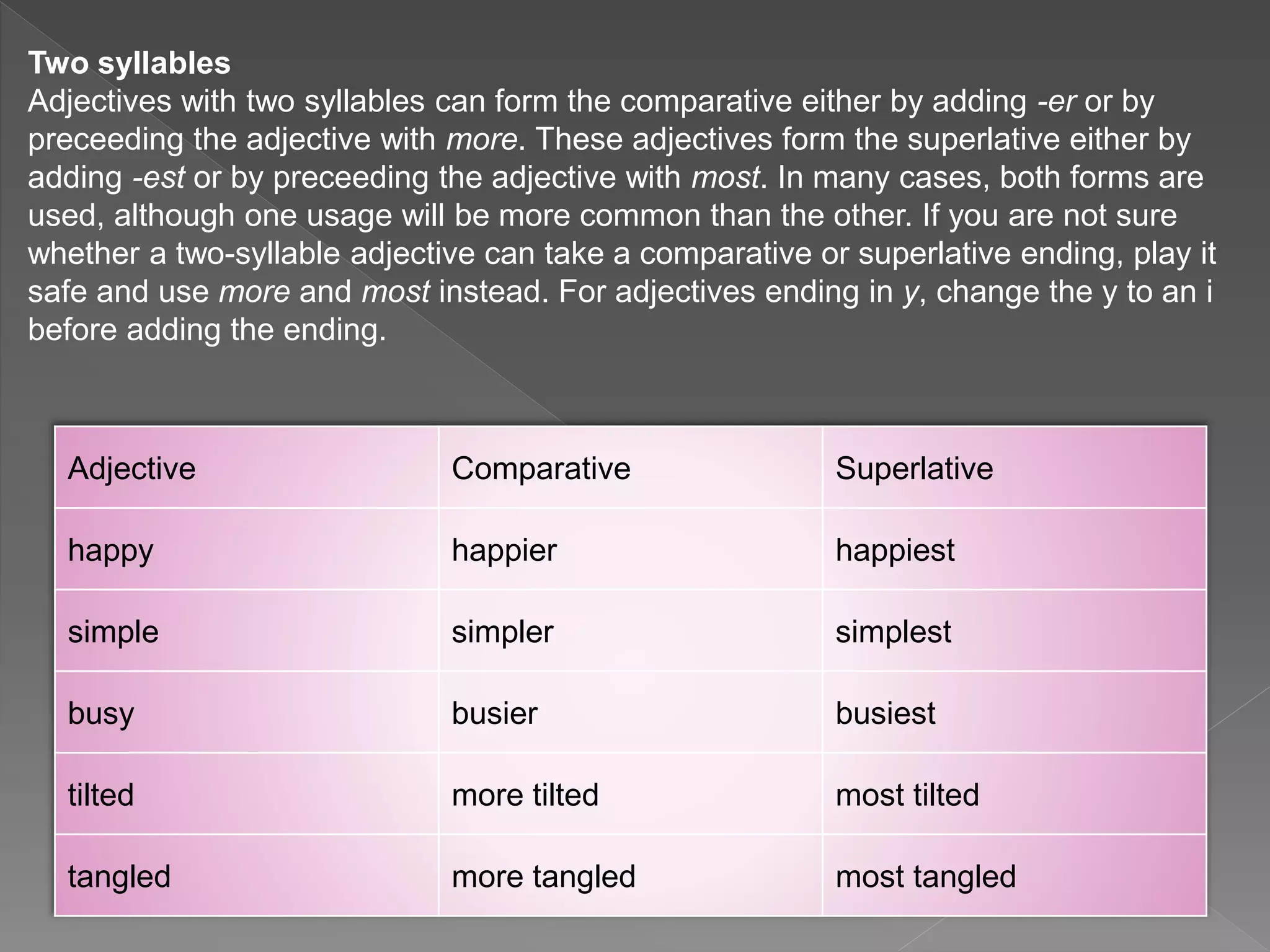
Two syllables
Adjectives with two syllables can form the comparative either by adding -er or by
preceeding the adjective with more. These adjectives form the superlative either by
adding -est or by preceeding the adjective with most. In many cases, both forms are
used, although one usage will be more common than the other. If you are not sure
whether a two-syllable adjective can take a comparative or superlative ending, play it
safe and use more and most instead. For adjectives ending in y, change the y to an i
before adding the ending.
Adjective Comparative Superlative
happy happier happiest
simple simpler simplest
busy busier busiest
tilted more tilted most tilted
tangled more tangled most tangled
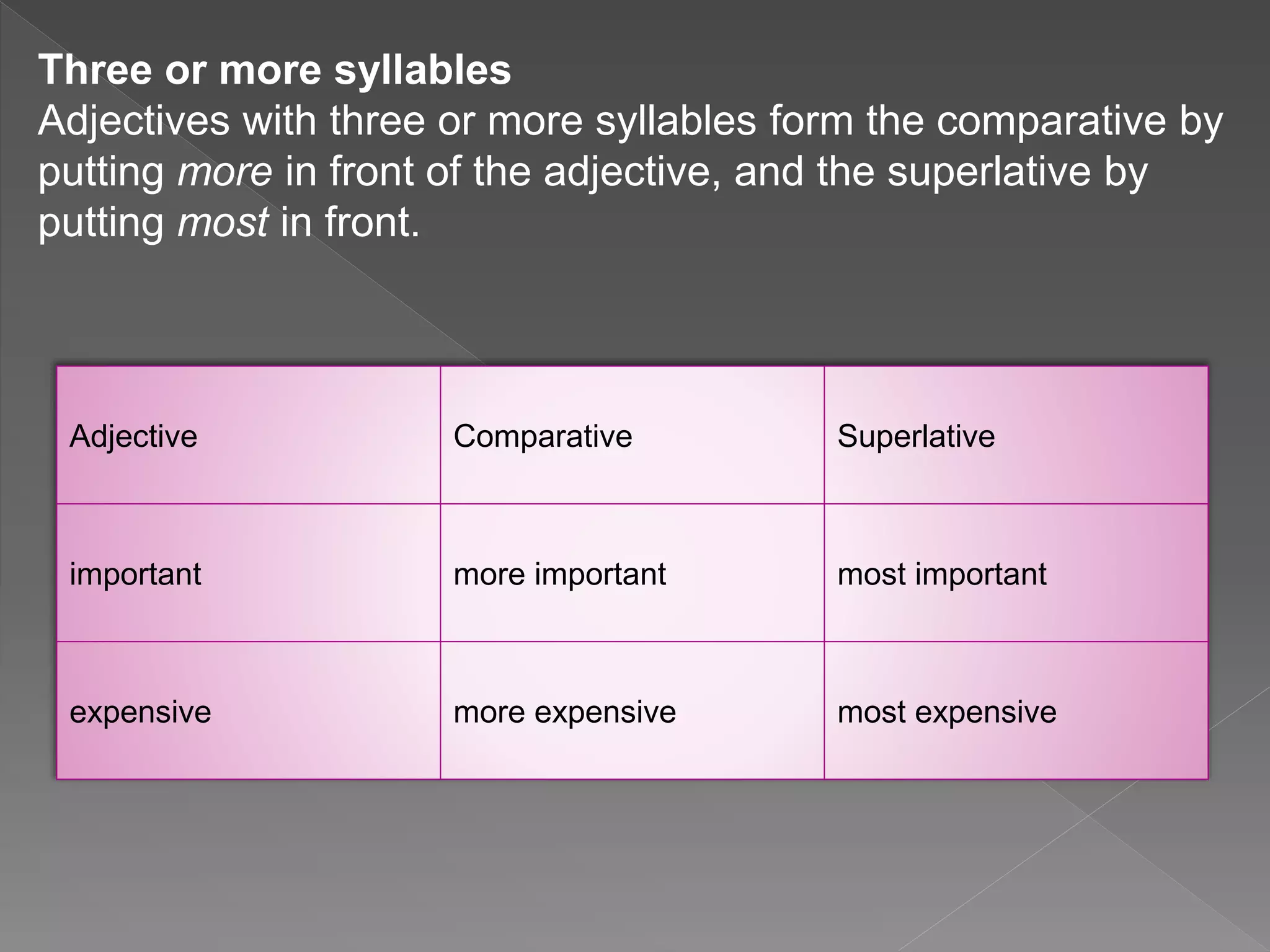
Three or more syllables
Adjectives with three or more syllables form the comparative by
putting more in front of the adjective, and the superlative by
putting most in front.
Adjective Comparative Superlative
important more important most important
expensive more expensive most expensive
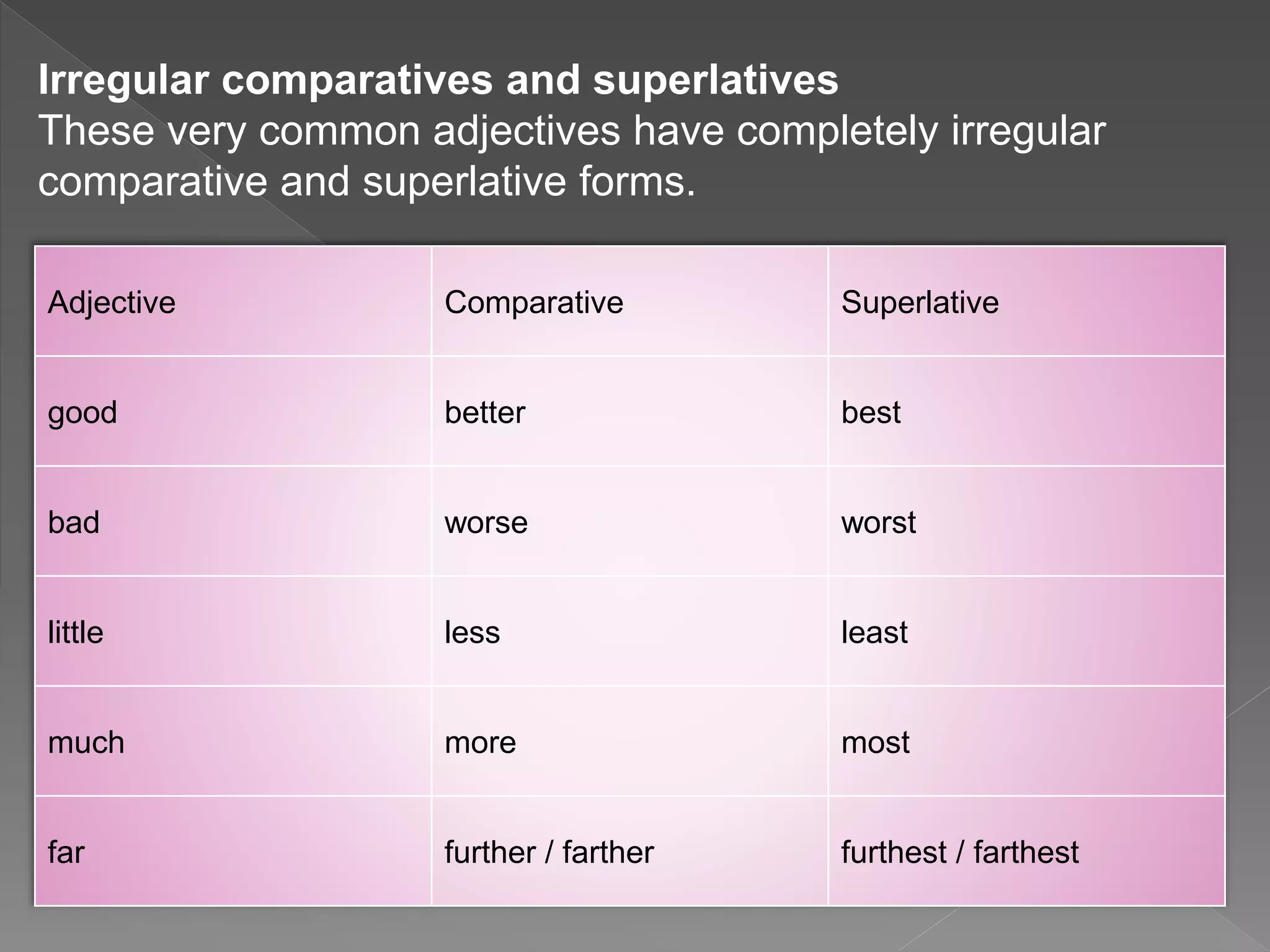
Irregular comparatives and superlatives
These very common adjectives have completely irregular
comparative and superlative forms.
Adjective Comparative Superlative
good better best
bad worse worst
little less least
much more most
far further / farther furthest / farthest

Comparative and Superlative Adjectives.pptx

  • 2.
    Comparatives One way todescribe nouns (people, objects, animals, etc.) is by comparing them to something else. When comparing two things, you’re likely to use adjectives like smaller, bigger, taller, more interesting, and less expensive. Notice the -er ending, and the words more and less. A mistake that both native speakers and non-native speakers make is using incorrectly formed comparative adjectives.  For adjectives that are just one syllable, add -er to the end (this explains the above example).  For two-syllable adjectives not ending in -y and for all three- or-more-syllable adjectives, use the form “more + adjective.”  For two-syllable adjectives ending in -y, change the -y to -i and add -er.
  • 3.
    Noun (subject) +verb + comparative adjective + than + noun (object). Examples My house is larger than hers. This box is smaller than the one I lost. Your dog runs faster than Jim's dog. The rock flew higher than the roof. Jim and Jack are both my friends, but I like Jack better. ("than Jim" is understood)
  • 4.
    Superlatives When comparing morethan two things, you’ll likely use words and phrases like smallest, biggest, tallest, most interesting, and least interesting. Notice the -est ending and the words most and least. Make sure you use the proper ending or superlative adjective when forming these superlatives. Noun (subject) + verb + the + superlative adjective + noun (object). Examples My house is the largest one in our neighborhood. This is the smallest box I've ever seen. Your dog ran the fastest of any dog in the race. We all threw our rocks at the same time. My rock flew the highest. ("of all the rocks" is understood)
  • 5.
    Exception: The followingadjectives have irregular forms: good → the best bad → the worst far → the farthest/furthest
  • 6.
    Adjective Comparative Superlative talltaller tallest fat fatter fattest big bigger biggest sad sadder saddest One syllable adjectives Add -er for the comparative and -est for the superlative. If the adjective has a consonant + single vowel + consonant spelling, the final consonant must be doubled before adding the ending.
  • 7.
    Two syllables Adjectives withtwo syllables can form the comparative either by adding -er or by preceeding the adjective with more. These adjectives form the superlative either by adding -est or by preceeding the adjective with most. In many cases, both forms are used, although one usage will be more common than the other. If you are not sure whether a two-syllable adjective can take a comparative or superlative ending, play it safe and use more and most instead. For adjectives ending in y, change the y to an i before adding the ending. Adjective Comparative Superlative happy happier happiest simple simpler simplest busy busier busiest tilted more tilted most tilted tangled more tangled most tangled
  • 8.
    Three or moresyllables Adjectives with three or more syllables form the comparative by putting more in front of the adjective, and the superlative by putting most in front. Adjective Comparative Superlative important more important most important expensive more expensive most expensive
  • 9.
    Irregular comparatives andsuperlatives These very common adjectives have completely irregular comparative and superlative forms. Adjective Comparative Superlative good better best bad worse worst little less least much more most far further / farther furthest / farthest