
Section 1:
Community Management
Definition:
Community management is the act of building,
growing and managing online communities by
building a channel where they can have valuable
interactions.
Jeremiah Owyang, Principle,
Altimeter Group , 2007
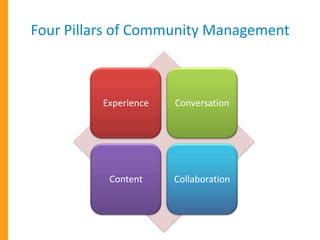
Four Pillars of Community Management
Experience Conversation
Content Collaboration
• The experience should support the unique
needs/expectations of your audience:
• Participants
• Influencers
• Alumni
• Be aware that other audiences may lurk
• Media
• Business
• Competitors
Pillar 1: Experience
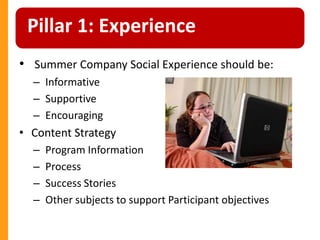
• Summer Company Social Experience should be:
– Informative
– Supportive
– Encouraging
• Content Strategy
– Program Information
– Process
– Success Stories
– Other subjects to support Participant objectives
Pillar 1: Experience
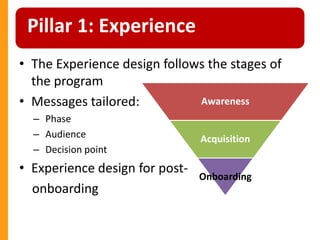
• The Experience design follows the stages of
the program
• Messages tailored:
– Phase
– Audience
– Decision point
• Experience design for post-
onboarding
Pillar 1: Experience
Awareness
Acquisition
Onboarding
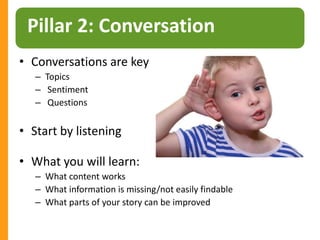
• Conversations are key
– Topics
– Sentiment
– Questions
• Start by listening
• What you will learn:
– What content works
– What information is missing/not easily findable
– What parts of your story can be improved
Pillar 2: Conversation
• Every opportunity to have a conversation
should be evaluated:
– Who is engaging? (Audience)
– What is their motivation? (Emotion)
– What is the expected resolution? (Objective)
– How do we achieve this and maintain our brand?
(Experience)
• Conversations drive engagement
– Demonstrates your commitment to the audience
– Creates value = reason to return
– Drives advocacy
Pillar 2: Conversation
Pillar 3: Content
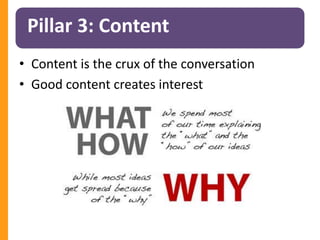
• Content is the crux of the conversation
• Good content creates interest
Pillar 4: Collaboration
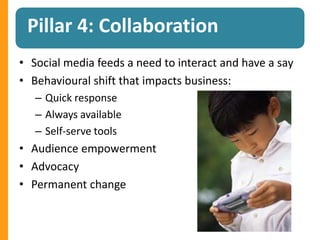
• Social media feeds a need to interact and have a say
• Behavioural shift that impacts business:
– Quick response
– Always available
– Self-serve tools
• Audience empowerment
• Advocacy
• Permanent change
Pillar 4: Collaboration
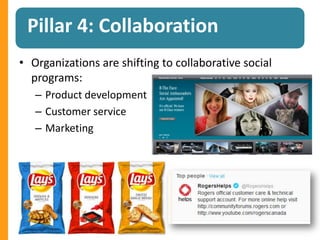
• Organizations are shifting to collaborative social
programs:
– Product development
– Customer service
– Marketing
Questions?

Community management generic overview

  • 1.
  • 2.
    Definition: Community management isthe act of building, growing and managing online communities by building a channel where they can have valuable interactions. Jeremiah Owyang, Principle, Altimeter Group , 2007
  • 3.
    Four Pillars ofCommunity Management Experience Conversation Content Collaboration
  • 4.
    • The experienceshould support the unique needs/expectations of your audience: • Participants • Influencers • Alumni • Be aware that other audiences may lurk • Media • Business • Competitors Pillar 1: Experience
  • 5.
    • Summer CompanySocial Experience should be: – Informative – Supportive – Encouraging • Content Strategy – Program Information – Process – Success Stories – Other subjects to support Participant objectives Pillar 1: Experience
  • 6.
    • The Experiencedesign follows the stages of the program • Messages tailored: – Phase – Audience – Decision point • Experience design for post- onboarding Pillar 1: Experience Awareness Acquisition Onboarding
  • 7.
    • Conversations arekey – Topics – Sentiment – Questions • Start by listening • What you will learn: – What content works – What information is missing/not easily findable – What parts of your story can be improved Pillar 2: Conversation
  • 8.
    • Every opportunityto have a conversation should be evaluated: – Who is engaging? (Audience) – What is their motivation? (Emotion) – What is the expected resolution? (Objective) – How do we achieve this and maintain our brand? (Experience) • Conversations drive engagement – Demonstrates your commitment to the audience – Creates value = reason to return – Drives advocacy Pillar 2: Conversation
  • 9.
    Pillar 3: Content •Content is the crux of the conversation • Good content creates interest
  • 10.
    Pillar 4: Collaboration •Social media feeds a need to interact and have a say • Behavioural shift that impacts business: – Quick response – Always available – Self-serve tools • Audience empowerment • Advocacy • Permanent change
  • 11.
    Pillar 4: Collaboration •Organizations are shifting to collaborative social programs: – Product development – Customer service – Marketing
  • 12.