Community
Building
Blocks…Now
What?Take it
to the Streets
Tim Gleisner, Grand Rapids Public Library
Juliane Morian, Clinton-Macomb Public Library
Jill Porter,Traverse Area District Library
Asset
Based
Community
Development
PLA Leadership Academy
 4-day intensive training
 Mentorship, small-group work, field trips, and lectures
 Strong focus on the leadership skill set and community
stakeholders
 Commitment to develop a project between the library and
community
PROBLEM-FINDING
 Start with your municipality’s strategic plan
 Start with an assumption
 Start with a sobering fact
 Start with a question
 Start with a spark
PROBLEM-FINDING
 Distill your community’s story (using the
Pixar approach)
 Once upon a time there was (blank). Every day,
(blank). One day (blank). Because of that, (blank).
And because of that, (blank). Until finally (blank).
“Pixar story rules (one version)”, Pixar Touch Blog, May 15, 2011,
available at
http://www.pixartouchbook.com/blog/2011/5/15/pixar-story-rules
-one-version.html
HOPES AND DREAMS
OF YOUR COMMUNITY
“Empathy is the difference between
knowledge and understanding. The library
can bridge the difference between
knowledge and understanding.”
-- R.D. Lankes at the PLA Virtual
Spring Symposium, March 30, 2011
FRAME THE PROBLEM
 Strive for clarity
 Double-vision problems
 Do we agree on where we are now?
9
6 TYPES OF ASSETS TO
CONNECT
 Talents and skills of our people
 Associations and network of relationships
 Institutions and professional entities
 Physical Assets: land, property, buildings,
equipment
 Economic Assets: productive work of individuals,
consumer spending power, local business assets
 Community heritage, stories, identity
Asset-Based Community Development Institute (ABCD), Jody Kretzman and Brian
McKnight
SUSTAINABLE ABCD
1 - Find the assets
2 - Connect the assets
3 - Help
establish a vision
LEADERSHIP
Individuals need not be well rounded but teams should be.
Leadership & Team Strength
• Context
• Deliberative
• Developer
• Discipline
• Empathy
• Focus
• Futuristic
• Harmony
• Ideation
• Includer
• Individualization
• Input
• Intellection
• Learner
• Maximizer
• Positivity
• Relator
• Responsibility
• Restorative
• Self-Assurance
• Significance
• Strategic
• Woo
• Achiever
• Activator
• Adaptability
• Analytical
• Arranger
• Belief
• Command
• Communication
• Competition
• Connectedness
• Consistency
Student Success Center @ CMPL
 Idea born out of statistics
 Gained steam from example at Cuyahoga County Public
Library
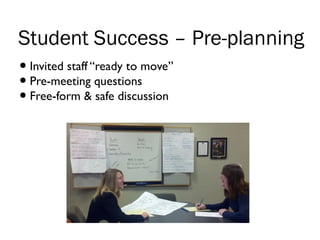
Student Success – Pre-planning
•Invited staff “ready to move”
•Pre-meeting questions
•Free-form & safe discussion
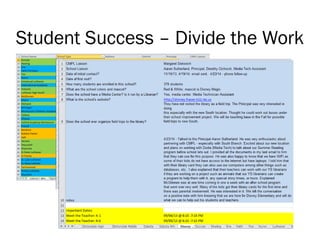
Student Success – Divide the Work
Student Success - Implementation
STUDENT SUCCESS - EVALUATION
Connecting Special Collections to the City
17
Asset-Based Community Development Institute (ABCD), Jody Kretzmann and Brian
McKnight
Neighborhood Needs Map
Asset-Based Community Development Institute (ABCD), Jody Kretzmann and Brian
McKnight
Assets Map
Six Types of Assets to Connect
1. Talents and skills of our people
2. Associations and our network of relationships
3. Institutional and professional entities
4. Physical assets: land, property, buildings,
equipment
5. Economic assets: productive work of individuals,
consumer spending power, local business assets
6. Community heritage, stories, identity
20Asset-Based Community Development Institute (ABCD), Jody Kretzmann and Brian
McKnight
Institutional Assets
 Facilities
 Materials
 Employment Capacity
 Employees
 Political Clout
 Good Connections
 Equipment
 Purchasing Power
 Training and Development Capacity
 Financial Resources
21Asset-Based Community Development Institute (ABCD), Jody Kretzmann and Brian
McKnight
20
Second largest collection of Local History
and Michigan related materials in a public
library in the state of Michigan
Department has been collecting materials
on Grand Rapids and Michigan since 1904
21
Capturing Local Relationships
24Asset-Based Community Development Institute (ABCD), Jody Kretzmann and Brian McKnight
25
Over 32 distinct neighborhoods
in Grand Rapids!
Courtesy of the Community Research Institute
26
25
26
Strong Neighborhood Asset
“Grandville Avenue Arts & Humanities
operates the Cook Arts Center and the
Cook Library Center. Our mission is to
enrich the lives of neighborhood youth
through diverse and engaging programs
at the Cook Arts Center and the Cook
Library Center.”
29Asset-Based Community Development Institute (ABCD), Jody Kretzmann and Brian
McKnight
30
31
32
33
Where to go from here?
 Library Scholars program
 Students will collect contemporary history of their
neighborhood
 Grand Valley State University will train students on how to
conduct oral histories
 Library will direct the collecting and will house the
finished product
34
From Flat to
Flourishing
Turning TADL’s Talking Book Library Around
Jill Porter, Assistant Director for Public Service
Traverse Area District Library
October 2011
• TADL board and director start looking closing TADL’s
Library for the Blind and Physically Handicapped
• State aid covered about 40% of needed revenue
• Were responsible for serving over 800 patrons in 16 counties
• Only 22% of the LBPH patrons lived in TADL District
• Much of staff time spent packaging and shipping items
2012
• February
• TADL Board discusses closure at its
monthly board meeting
2012
• February
• TADL Board discusses closure at its
monthly board meeting
• March
• Community Open forum
• Lansing BTBL offers option of TADL
LBPH becoming an AOC
2012
• February
• TADL Board discusses closure at its
monthly board meeting
• March
• Community Open forum
• Lansing BTBL offers option of TADL
LBPH becoming an AOC
• April
• TADL Board Meeting at IPL – AOC
presentation by BTBL
2012
• May
• Formal AOC proposal given to TADL
board
• LBPH librarian retires
2012
• May
• Formal AOC proposal given to TADL
board
• LBPH librarian retires
• June
• More formal AOC proposal given to
TADL. Key points:
• State Aid would remain the same
• Service area reduced to 8 counties
from 16
2012
• May
• Formal AOC proposal given to TADL
board
• LBPH librarian retires
• June
• More formal AOC proposal given to
TADL. Key points:
• State Aid would remain the same
• Service area reduced to 8 counties
from 16
• July
• AOC Application filed
• Negative editorial
• AOC model approved by Board…at
KBL
October 2012
Our Focus
TBL Open House
World Vision Day
Community Art
Exhibit
Results so far…
• Monthly outreach targets met
• Patron counts higher
• Circulation steady
• Good BARD adoption rate
• Great response to biennial patron survey
• Stronger and new relationships with community organizations
• More interaction between TBL, the rest of the district and the
libraries in areas we serve outside the district
Lessons learned
Utilize Community Building Principles and Action Steps
• Participation and Inclusion
• Focus on Assets
• Civic Responsibility
• Collaboration and Partnership
• Comprehensive (cut across boundaries)
• Embrace Diversity
• Learn
• Focus on Results
From Dan Duncan’s ABCD Toolkit
abcdinstitute.org
Jill Porter
jporter@tadl.org
www.linkedin.com/in/porterjill

Community building blocks - MLA Library as Platform (June 2014)

  • 1.
     Community Building Blocks…Now What?Take it to theStreets Tim Gleisner, Grand Rapids Public Library Juliane Morian, Clinton-Macomb Public Library Jill Porter,Traverse Area District Library
  • 2.
  • 3.
    PLA Leadership Academy 4-day intensive training  Mentorship, small-group work, field trips, and lectures  Strong focus on the leadership skill set and community stakeholders  Commitment to develop a project between the library and community
  • 4.
    PROBLEM-FINDING  Start withyour municipality’s strategic plan  Start with an assumption  Start with a sobering fact  Start with a question  Start with a spark
  • 5.
    PROBLEM-FINDING  Distill yourcommunity’s story (using the Pixar approach)  Once upon a time there was (blank). Every day, (blank). One day (blank). Because of that, (blank). And because of that, (blank). Until finally (blank). “Pixar story rules (one version)”, Pixar Touch Blog, May 15, 2011, available at http://www.pixartouchbook.com/blog/2011/5/15/pixar-story-rules -one-version.html
  • 6.
    HOPES AND DREAMS OFYOUR COMMUNITY “Empathy is the difference between knowledge and understanding. The library can bridge the difference between knowledge and understanding.” -- R.D. Lankes at the PLA Virtual Spring Symposium, March 30, 2011
  • 7.
    FRAME THE PROBLEM Strive for clarity  Double-vision problems  Do we agree on where we are now?
  • 8.
    9 6 TYPES OFASSETS TO CONNECT  Talents and skills of our people  Associations and network of relationships  Institutions and professional entities  Physical Assets: land, property, buildings, equipment  Economic Assets: productive work of individuals, consumer spending power, local business assets  Community heritage, stories, identity Asset-Based Community Development Institute (ABCD), Jody Kretzman and Brian McKnight
  • 9.
    SUSTAINABLE ABCD 1 -Find the assets 2 - Connect the assets 3 - Help establish a vision
  • 10.
    LEADERSHIP Individuals need notbe well rounded but teams should be.
  • 11.
    Leadership & TeamStrength • Context • Deliberative • Developer • Discipline • Empathy • Focus • Futuristic • Harmony • Ideation • Includer • Individualization • Input • Intellection • Learner • Maximizer • Positivity • Relator • Responsibility • Restorative • Self-Assurance • Significance • Strategic • Woo • Achiever • Activator • Adaptability • Analytical • Arranger • Belief • Command • Communication • Competition • Connectedness • Consistency
  • 12.
    Student Success Center@ CMPL  Idea born out of statistics  Gained steam from example at Cuyahoga County Public Library
  • 13.
    Student Success –Pre-planning •Invited staff “ready to move” •Pre-meeting questions •Free-form & safe discussion
  • 14.
    Student Success –Divide the Work
  • 15.
    Student Success -Implementation
  • 16.
  • 17.
  • 18.
    Asset-Based Community DevelopmentInstitute (ABCD), Jody Kretzmann and Brian McKnight Neighborhood Needs Map
  • 19.
    Asset-Based Community DevelopmentInstitute (ABCD), Jody Kretzmann and Brian McKnight Assets Map
  • 20.
    Six Types ofAssets to Connect 1. Talents and skills of our people 2. Associations and our network of relationships 3. Institutional and professional entities 4. Physical assets: land, property, buildings, equipment 5. Economic assets: productive work of individuals, consumer spending power, local business assets 6. Community heritage, stories, identity 20Asset-Based Community Development Institute (ABCD), Jody Kretzmann and Brian McKnight
  • 21.
    Institutional Assets  Facilities Materials  Employment Capacity  Employees  Political Clout  Good Connections  Equipment  Purchasing Power  Training and Development Capacity  Financial Resources 21Asset-Based Community Development Institute (ABCD), Jody Kretzmann and Brian McKnight
  • 22.
    20 Second largest collectionof Local History and Michigan related materials in a public library in the state of Michigan Department has been collecting materials on Grand Rapids and Michigan since 1904
  • 23.
  • 24.
    Capturing Local Relationships 24Asset-BasedCommunity Development Institute (ABCD), Jody Kretzmann and Brian McKnight
  • 25.
    25 Over 32 distinctneighborhoods in Grand Rapids! Courtesy of the Community Research Institute
  • 26.
  • 27.
  • 28.
  • 29.
    “Grandville Avenue Arts& Humanities operates the Cook Arts Center and the Cook Library Center. Our mission is to enrich the lives of neighborhood youth through diverse and engaging programs at the Cook Arts Center and the Cook Library Center.” 29Asset-Based Community Development Institute (ABCD), Jody Kretzmann and Brian McKnight
  • 30.
  • 31.
  • 32.
  • 33.
  • 34.
    Where to gofrom here?  Library Scholars program  Students will collect contemporary history of their neighborhood  Grand Valley State University will train students on how to conduct oral histories  Library will direct the collecting and will house the finished product 34
  • 35.
    From Flat to Flourishing TurningTADL’s Talking Book Library Around Jill Porter, Assistant Director for Public Service Traverse Area District Library
  • 36.
    October 2011 • TADLboard and director start looking closing TADL’s Library for the Blind and Physically Handicapped • State aid covered about 40% of needed revenue • Were responsible for serving over 800 patrons in 16 counties • Only 22% of the LBPH patrons lived in TADL District • Much of staff time spent packaging and shipping items
  • 37.
    2012 • February • TADLBoard discusses closure at its monthly board meeting
  • 38.
    2012 • February • TADLBoard discusses closure at its monthly board meeting • March • Community Open forum • Lansing BTBL offers option of TADL LBPH becoming an AOC
  • 39.
    2012 • February • TADLBoard discusses closure at its monthly board meeting • March • Community Open forum • Lansing BTBL offers option of TADL LBPH becoming an AOC • April • TADL Board Meeting at IPL – AOC presentation by BTBL
  • 40.
    2012 • May • FormalAOC proposal given to TADL board • LBPH librarian retires
  • 41.
    2012 • May • FormalAOC proposal given to TADL board • LBPH librarian retires • June • More formal AOC proposal given to TADL. Key points: • State Aid would remain the same • Service area reduced to 8 counties from 16
  • 42.
    2012 • May • FormalAOC proposal given to TADL board • LBPH librarian retires • June • More formal AOC proposal given to TADL. Key points: • State Aid would remain the same • Service area reduced to 8 counties from 16 • July • AOC Application filed • Negative editorial • AOC model approved by Board…at KBL
  • 43.
  • 44.
  • 45.
  • 46.
  • 47.
    Results so far… •Monthly outreach targets met • Patron counts higher • Circulation steady • Good BARD adoption rate • Great response to biennial patron survey • Stronger and new relationships with community organizations • More interaction between TBL, the rest of the district and the libraries in areas we serve outside the district
  • 48.
    Lessons learned Utilize CommunityBuilding Principles and Action Steps • Participation and Inclusion • Focus on Assets • Civic Responsibility • Collaboration and Partnership • Comprehensive (cut across boundaries) • Embrace Diversity • Learn • Focus on Results From Dan Duncan’s ABCD Toolkit abcdinstitute.org
  • 49.

Editor's Notes

  • #2 History and Special Collections Manager Assistant Director for Public Services Associate Director
  • #3 Handout on the MLA website lists needs and asset maps for your community and continuing reading resources
  • #5 Often we’re focused on problem-solving and haven’t spent enough time on problem-finding. We will fight irrelevance by becoming good problem-finders. Students in Macomb County were getting into college but not completing it. We also saw graduation rates dipping – so there were two different problems both resulting in less college-educated citzens.
  • #6 Refine with the pixar approach One upon a time students were struggling to get through college because it was so expensive. Every day students were racking up more and more loans. One day a librarian created a list of local scholarships. Because of that more students found a way to pay for college expenses. Because of that more students were able to stay in school for longer. Until finally more students completed their coursework and raise the education level of our community.
  • #7 For more information Professor Lankes wrote, “The Atlas of New Librarianship.”
  • #8 Ask yourself the 5-why’s – Students aren’t graduating from high school at the rate they were, school doesn’t interest them, the course-work is boring, teachers are re-tooling their lessons based on common core, state of Michigan wants to promote more critical thinking, critical thinking leads to enterprising citizens. Do we agree on where we are now? Establish the problem and attack it from the same starting point.
  • #10 Figure out who is doing similar things to the library and collaborate/compliment instead of reinvent
  • #11 Need to take some time to really marinate on the problem and what you think the assets/threats are and how to approach your team. Be aware of the strengths you bring to the table and surround yourself with others who complement your weaknesses.
  • #14 Important to allow people to share their ideas and feel like they are being heard (leader can pause and reflect back or distill). One foot in admin strategically move the team in one direction (based on a genuine idea) over another. New pixar story: Once upon a time students were satisfied with quick and easy facts the internet. One day teachers decided to realign their curriculum and began pushing for more thoughtful research. Because of that librarians gave presentations to teachers on ways to extend their resources. And because of that more teachers started to partner with librarians for lessons. Until finally students improved their critical thinking skills.
  • #17 Need to take some time to really marinate on the problem and what you think the assets/threats are and how to approach your team. Be aware of the strengths you bring to the table and surround yourself with others who complement your weaknesses.
  • #27 JP – Tweak Palmer image
  • #47 Six types of assets to connect: Talents and skills of our people - Associations and network of relationships - Institutions and professional entities -Physical Assets: land, property, buildings, equipment - Economic Assets: productive work of individuals, consumer spending power, local business assets - Community heritage, stories, identity