COMMUNICATION
RATraining Module:
Overview:
Setting the Scene
Non-Verbals:
Eye-Contact
Body Language
Listening
Verbals:
AskingQuestions
Reflecting & Paraphrasing
MessagesConveyed: Cues from Residents
Verbals:
Confronting
Setting the Scene
 How will you set up your room?
 Does the environment encourage or discourage residents
from stopping by and sharing with you?
 What do they see when they walk in your room?
 What does your room say about you?
Non-Verbals: Eye Contact
Good Not So Good
 Look at the resident while
they are talking
 Maintain appropriate eye
contact
 Watch for non-verbal cues
the resident gives
 WatchingTV while
resident is talking
to you
 Responding to
texts or friends on
Facebook
 Focusing on the
resident’s unibrow
instead of their
eyes and the
conversation
Non-Verbals: Body Language
Good Not So Good
 Sit or stand facing the
resident
 If sitting, lean toward them
in your chair
 Unfold your arms and legs
(open posture)
 Try not to fiddle with
things in your hands
 Appropriate expressions to
follow the conversation
(nod, smile, frown, etc.)
 Facing your computer,
leaving the resident talking
to your back
 Slouching and leaning back
in your chair
 Crossing your arms and
legs (closed posture)
Non-Verbals: Listening
Good Not So Good
 Listen for tone of voice and
speech rate
 Listen to understand
 Listen for where silence
happens in the
conversation
 Check outTEDTalks: Julian
Treasure: 5 ways to listen
better
 Listening to words but
missing the affect or
attitude behind the words
 Having theTV or music on
in the background
 URL for above link:
http://www.ted.com/talks/julian_treasure
_5_ways_to_listen_better.html
Verbals: Asking Questions
Good Good, but…
 Ask open questions for
explanations:
 Who, what, when, where,
why, how, what else
 i.e. “What happened?”
 Ask closed questions for
specific information:
 Do, is, are
 i.e. “Were you drinking in
your room tonight?”
 Ask one question at a time
 Be careful with how you
use why questions: they
often put your listener on
the defensive
Verbals: Summarizing & Paraphrasing
Good Good, but…
 When resident
finishes, summarize and
repeat back what they said
 Shows you were listening
 Allows them to hear their
story concisely from an
outside perspective
 Allows them to reflect on
what they’ve said and correct
any details you may have
missed
 Be careful with your tone:
try to remain neutral and
unbiased in the
conversation
Conveyed Messages:
Verbal, Visual & Auditory Cues from Residents
 Residents will give you clues to how they are feeling through
their tone of voice, body language , and facial expressions
 Sometimes, those clues don’t match their words and the
things they are telling you
 Check outTEDTalks: Pamela Meyer:
How to spot a liar
 The whole video is good, but for the purposes of
this presentation:
 Start at 9:39 min. & watch to 10:30; move to 11:38
min. & watch to 13:01
 URL for above link:
http://www.ted.com/talks/pamela_meyer_how_to_spot
_a_liar.html
Conveyed Messages:
Verbal, Visual, & Auditory Cues from Residents
 Cues you may see from residents:
 Resident focusing on the
ceiling, floor, their hands or on
something else in their surroundings
 Resident fidgeting or fiddling with
something in their hands
 Resident’s facial expressions don’t
match tone of voice or actual content
of conversation
 i.e. Student talking about failing a test
with a smile and upbeat tones
 When these or others happen…
 (hint: go to next slide)
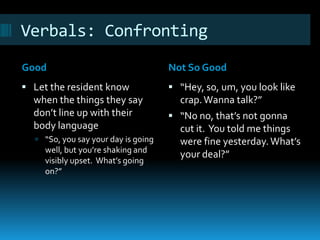
Verbals: Confronting
Good Not So Good
 Let the resident know
when the things they say
don’t line up with their
body language
 “So, you say your day is going
well, but you’re shaking and
visibly upset. What’s going
on?”
 “Hey, so, um, you look like
crap.Wanna talk?”
 “No no, that’s not gonna
cut it. You told me things
were fine yesterday. What’s
your deal?”
And now for something
completely different
 If you have questions about this information, bring
them to training.
 When you are ready, move on to the quiz!

Communication Fall 2013 RA Training

  • 1.
  • 2.
    Overview: Setting the Scene Non-Verbals: Eye-Contact BodyLanguage Listening Verbals: AskingQuestions Reflecting & Paraphrasing MessagesConveyed: Cues from Residents Verbals: Confronting
  • 3.
    Setting the Scene How will you set up your room?  Does the environment encourage or discourage residents from stopping by and sharing with you?  What do they see when they walk in your room?  What does your room say about you?
  • 4.
    Non-Verbals: Eye Contact GoodNot So Good  Look at the resident while they are talking  Maintain appropriate eye contact  Watch for non-verbal cues the resident gives  WatchingTV while resident is talking to you  Responding to texts or friends on Facebook  Focusing on the resident’s unibrow instead of their eyes and the conversation
  • 5.
    Non-Verbals: Body Language GoodNot So Good  Sit or stand facing the resident  If sitting, lean toward them in your chair  Unfold your arms and legs (open posture)  Try not to fiddle with things in your hands  Appropriate expressions to follow the conversation (nod, smile, frown, etc.)  Facing your computer, leaving the resident talking to your back  Slouching and leaning back in your chair  Crossing your arms and legs (closed posture)
  • 6.
    Non-Verbals: Listening Good NotSo Good  Listen for tone of voice and speech rate  Listen to understand  Listen for where silence happens in the conversation  Check outTEDTalks: Julian Treasure: 5 ways to listen better  Listening to words but missing the affect or attitude behind the words  Having theTV or music on in the background  URL for above link: http://www.ted.com/talks/julian_treasure _5_ways_to_listen_better.html
  • 7.
    Verbals: Asking Questions GoodGood, but…  Ask open questions for explanations:  Who, what, when, where, why, how, what else  i.e. “What happened?”  Ask closed questions for specific information:  Do, is, are  i.e. “Were you drinking in your room tonight?”  Ask one question at a time  Be careful with how you use why questions: they often put your listener on the defensive
  • 8.
    Verbals: Summarizing &Paraphrasing Good Good, but…  When resident finishes, summarize and repeat back what they said  Shows you were listening  Allows them to hear their story concisely from an outside perspective  Allows them to reflect on what they’ve said and correct any details you may have missed  Be careful with your tone: try to remain neutral and unbiased in the conversation
  • 9.
    Conveyed Messages: Verbal, Visual& Auditory Cues from Residents  Residents will give you clues to how they are feeling through their tone of voice, body language , and facial expressions  Sometimes, those clues don’t match their words and the things they are telling you  Check outTEDTalks: Pamela Meyer: How to spot a liar  The whole video is good, but for the purposes of this presentation:  Start at 9:39 min. & watch to 10:30; move to 11:38 min. & watch to 13:01  URL for above link: http://www.ted.com/talks/pamela_meyer_how_to_spot _a_liar.html
  • 10.
    Conveyed Messages: Verbal, Visual,& Auditory Cues from Residents  Cues you may see from residents:  Resident focusing on the ceiling, floor, their hands or on something else in their surroundings  Resident fidgeting or fiddling with something in their hands  Resident’s facial expressions don’t match tone of voice or actual content of conversation  i.e. Student talking about failing a test with a smile and upbeat tones  When these or others happen…  (hint: go to next slide)
  • 11.
    Verbals: Confronting Good NotSo Good  Let the resident know when the things they say don’t line up with their body language  “So, you say your day is going well, but you’re shaking and visibly upset. What’s going on?”  “Hey, so, um, you look like crap.Wanna talk?”  “No no, that’s not gonna cut it. You told me things were fine yesterday. What’s your deal?”
  • 12.
    And now forsomething completely different  If you have questions about this information, bring them to training.  When you are ready, move on to the quiz!