Fundamentals of Communication
Course Outlines
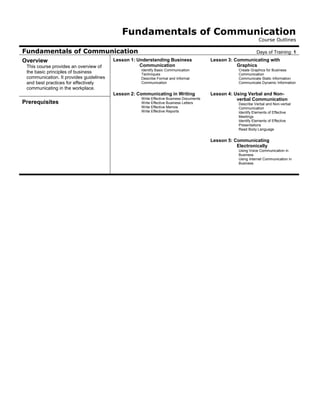
Fundamentals of Communication Days of Training: 1
Overview
This course provides an overview of
the basic principles of business
communication. It provides guidelines
and best practices for effectively
communicating in the workplace.
Lesson 1: Understanding Business
Communication
Identify Basic Communication
Techniques
Describe Formal and Informal
Communication
Lesson 2: Communicating in Writing
Write Effective Business Documents
Write Effective Business Letters
Write Effective Memos
Write Effective Reports
Lesson 3: Communicating with
Graphics
Create Graphics for Business
Communication
Communicate Static Information
Communicate Dynamic Information
Lesson 4: Using Verbal and Non-
verbal Communication
Describe Verbal and Non-verbal
Communication
Identify Elements of Effective
Meetings
Identify Elements of Effective
Presentations
Read Body Language
Lesson 5: Communicating
Electronically
Using Voice Communication in
Business
Using Internet Communication in
Business
Prerequisites
Organizational Communication
Course Outlines
Organizational Communication Days of Training: 1
Overview
In this course, students will learn how
communication flows within an
organization and develop effective
communication skills in different
environment contexts and situations.
Lesson 1: Communication basics
Effective communication
Understanding communication terms
Communicating effectively
Organizational management
Understanding traditional theories of
management
Understanding current theories of
management
Understanding organizational context
Organization types and characteristics
Discussing organization types
Identifying organization characteristics
Discussing organizational
environments
Communication flow
Identifying types of communication
flow
Identifying communication networks
Identifying network roles
Analyzing communication
Lesson 2: Leadership and motivation
Communication and leadership
Distinguishing between managers and
leaders
Discussing management and
leadership theories
Discussing organizational structure
and design
Communication and motivation
Discussing theories of motivation
Identifying motivational tools
Understanding the impact of nonverbal
behavior
Understanding barriers to effective
communication
Lesson 3: Relational context and
organizations
Relational context
Identifying a relational context
Identifying relationship categories
Relationships and organizations
Identifying personality types
Developing individual-organizational
relationships
Lesson 4: Technology in the
workplace
Workplace technology
Identifying categories of
technology
Impact of technology
Identifying the impact of
technology
Preventing communication
overload
Technology guidelines
Discussing technology guidelines
Communicating electronically
Lesson 5: Context, stress, and
managerial tools
Environmental context
Selecting an environmental context
Stress and communication
Managing stress and anger
Resolving interpersonal conflicts
Lesson 6: Innovation and change
Aspects of innovation
Identifying degrees of innovation
Identifying innovation
characteristics
Adopting and encouraging
innovation
Aspects of change
Identifying aspects of change
Discussing communication
strategies
Identifying stages of change
Discussing the effects of
technology and communication
Lesson 7: Power, politics, and
diversity
Power and communication
Discussing power basics
Diversity and communication
Identifying strategies to manage
diversity
Communicating in different
cultures
Empowerment and communication
Identifying steps for empowerment
Identifying guidelines for
empowerment
Advanced Interpersonal Communication
Course Outlines
Advanced Interpersonal Communication Days of Training: 1
Overview
In this course, students will learn how
to develop effective communications
skills that build positive interactions
with others.
Lesson 1: Communication styles and
methods
Communication styles
Identifying primary communication
styles
Identifying secondary communication
styles
Verbal and nonverbal communication
Using verbal communication
Using nonverbal methods
Lesson 2: First impression and building
rapport
The importance of first impressions
Identifying elements of a first
impression
Communicating to build rapport
Building rapport
Establishing credibility
Building positive relationships
Asking questions
Lesson 3: Building relationships
through feedback
The importance of providing feedback
Using paraphrasing
Providing feedback
Providing positive feedback
Providing constructive feedback
Lesson 4: Supervisors
Understanding supervisor styles
Handling ineffective supervisors
Promoting an idea
Handling human resource issues
Negotiating a raise
Handling resignation
Lesson 5: Colleagues and
subordinates
Communicating with colleagues
Responding to a colleague’s idea
Communicating with subordinates
Refusing a subordinate’s request
Handling dismissal
Lesson 6: Customers and vendors
Communicating with customers
Responding to complaints
Communicating with vendors
Rejecting a vendor’s proposal
Complaining to a vendor
Lesson 7: Organizational culture
Understanding organizational
cultures
Adjusting to the culture
Discussing elements of
organizational culture
Identifying organizational culture
Cultural networks
Using cultural networks
Discussing roles in cultural
networks
Managing physical culture
Arranging meeting space
Managing emotional culture
Using positive language
Encouraging initiative

Communication course contents

  • 1.
    Fundamentals of Communication CourseOutlines Fundamentals of Communication Days of Training: 1 Overview This course provides an overview of the basic principles of business communication. It provides guidelines and best practices for effectively communicating in the workplace. Lesson 1: Understanding Business Communication Identify Basic Communication Techniques Describe Formal and Informal Communication Lesson 2: Communicating in Writing Write Effective Business Documents Write Effective Business Letters Write Effective Memos Write Effective Reports Lesson 3: Communicating with Graphics Create Graphics for Business Communication Communicate Static Information Communicate Dynamic Information Lesson 4: Using Verbal and Non- verbal Communication Describe Verbal and Non-verbal Communication Identify Elements of Effective Meetings Identify Elements of Effective Presentations Read Body Language Lesson 5: Communicating Electronically Using Voice Communication in Business Using Internet Communication in Business Prerequisites
  • 2.
    Organizational Communication Course Outlines OrganizationalCommunication Days of Training: 1 Overview In this course, students will learn how communication flows within an organization and develop effective communication skills in different environment contexts and situations. Lesson 1: Communication basics Effective communication Understanding communication terms Communicating effectively Organizational management Understanding traditional theories of management Understanding current theories of management Understanding organizational context Organization types and characteristics Discussing organization types Identifying organization characteristics Discussing organizational environments Communication flow Identifying types of communication flow Identifying communication networks Identifying network roles Analyzing communication Lesson 2: Leadership and motivation Communication and leadership Distinguishing between managers and leaders Discussing management and leadership theories Discussing organizational structure and design Communication and motivation Discussing theories of motivation Identifying motivational tools Understanding the impact of nonverbal behavior Understanding barriers to effective communication Lesson 3: Relational context and organizations Relational context Identifying a relational context Identifying relationship categories Relationships and organizations Identifying personality types Developing individual-organizational relationships Lesson 4: Technology in the workplace Workplace technology Identifying categories of technology Impact of technology Identifying the impact of technology Preventing communication overload Technology guidelines Discussing technology guidelines Communicating electronically Lesson 5: Context, stress, and managerial tools Environmental context Selecting an environmental context Stress and communication Managing stress and anger Resolving interpersonal conflicts Lesson 6: Innovation and change Aspects of innovation Identifying degrees of innovation Identifying innovation characteristics Adopting and encouraging innovation Aspects of change Identifying aspects of change Discussing communication strategies Identifying stages of change Discussing the effects of technology and communication Lesson 7: Power, politics, and diversity Power and communication Discussing power basics Diversity and communication Identifying strategies to manage diversity Communicating in different cultures Empowerment and communication Identifying steps for empowerment Identifying guidelines for empowerment
  • 3.
    Advanced Interpersonal Communication CourseOutlines Advanced Interpersonal Communication Days of Training: 1 Overview In this course, students will learn how to develop effective communications skills that build positive interactions with others. Lesson 1: Communication styles and methods Communication styles Identifying primary communication styles Identifying secondary communication styles Verbal and nonverbal communication Using verbal communication Using nonverbal methods Lesson 2: First impression and building rapport The importance of first impressions Identifying elements of a first impression Communicating to build rapport Building rapport Establishing credibility Building positive relationships Asking questions Lesson 3: Building relationships through feedback The importance of providing feedback Using paraphrasing Providing feedback Providing positive feedback Providing constructive feedback Lesson 4: Supervisors Understanding supervisor styles Handling ineffective supervisors Promoting an idea Handling human resource issues Negotiating a raise Handling resignation Lesson 5: Colleagues and subordinates Communicating with colleagues Responding to a colleague’s idea Communicating with subordinates Refusing a subordinate’s request Handling dismissal Lesson 6: Customers and vendors Communicating with customers Responding to complaints Communicating with vendors Rejecting a vendor’s proposal Complaining to a vendor Lesson 7: Organizational culture Understanding organizational cultures Adjusting to the culture Discussing elements of organizational culture Identifying organizational culture Cultural networks Using cultural networks Discussing roles in cultural networks Managing physical culture Arranging meeting space Managing emotional culture Using positive language Encouraging initiative