Common Ethical Issues in
Research
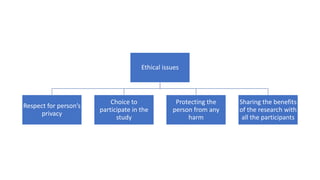
Ethical issues
Respect for person’s
privacy
Choice to
participate in the
study
Protecting the
person from any
harm
Sharing the benefits
of the research with
all the participants
Voluntary participation
• It means that individuals have the right to decide whether or not they want to take part in a research study
without any form of coercion or undue pressure.
• Freedom to decide and withdraw.
Informed Consent
• Inform the participants about the purpose of the research, the anticipated duration of the study, and the
procedures that will be used.
• Inform participants of any potential consequences of participating in the study. This includes any potential
risks, adverse effects, or discomfort that may occur.
Debriefing
• Debriefing is an essential ethical practice in psychology and research, designed to ensure that participants
are treated respectfully and ethically.
• Researchers must conduct debriefing sessions in a timely and supportive manner, providing complete and
clear information while avoiding any form of coercion or pressure.
• Addressing these ethical considerations in debriefing helps maintain the trust and well-being of research
participants.
Sharing the results of the study
• The researcher comes back to his place, analyzes the data, and shares the results of the study with the
participants.
• It is obligatory for the researcher to go back to the results of the study.
Confidentiality of Data Source
• Right to privacy
• Safeguard the privacy by keeping the information provided by the participants in strict confidence
• Code Numbers
Case Study
Background
Dr. Smith is a psychologist conducting a research study on the effects of social
media use on adolescents' self-esteem. She aims to investigate whether the
amount of time spent on social media platforms correlates with self-esteem levels
in teenagers. Dr. Smith has received funding for her study, and she plans to recruit
participants from local high schools.
Ethical Issues
Informed Consent:
• Dr. Smith faces an ethical dilemma regarding informed consent. She plans to collect data from
minors (adolescents under the age of 18) who may not fully understand the implications of the
study. Moreover, she intends to collect data from their social media profiles without explicit
consent from parents or guardians.
Privacy and Confidentiality
• Dr. Smith's study involves accessing and analyzing the participants' social media profiles, which
may contain private information and conversations. Ensuring the privacy and confidentiality of
this data is essential.
Harm and Consent
• There is a potential risk that participants might experience negative emotional effects when their
social media activity and self-esteem are studied. Dr. Smith must consider whether the potential
harm outweighs the benefits of the research.
Deception
• Dr. Smith is contemplating whether to inform participants about the true nature of the study or
employ some level of deception regarding the research objectives. She believes that revealing the
true purpose of the study might influence participants' behavior on social media.
Ethical Resolution
Informed Consent
• Dr. Smith decides to seek informed consent from both the adolescent participants and their
parents or legal guardians. She ensures that consent forms clearly outline the research objectives,
the nature of data collection, and potential risks and benefits. Participants are informed that
participation is voluntary, and they can withdraw at any time without consequences.
Privacy and Confidentiality
• Dr. Smith implements strict measures to protect the privacy and confidentiality of participants'
data. She ensures that social media profiles are anonymized and does not collect any personally
identifiable information. Data are stored securely and accessed only by authorized research
personnel.
Minimizing Harm
• Dr. Smith takes steps to minimize potential harm to participants. She provides resources for
psychological support and counseling in case participants experience distress during or after the
study. Additionally, she closely monitors participants for signs of emotional distress and promptly
addresses any concerns.
Deception
• Dr. Smith decides against using deception in her study. Instead, she informs participants about the
general nature of the research without revealing specific hypotheses or research questions. This
approach ensures transparency while not compromising the validity of the study.
Outcome
This case study underscores the importance of addressing ethical issues in research in psychology,
particularly when working with vulnerable populations such as minors, and highlights the ethical
principles of informed consent, privacy, minimizing harm, and transparency in research.

Common Ethical Issues in Research.pptx

  • 1.
  • 2.
    Ethical issues Respect forperson’s privacy Choice to participate in the study Protecting the person from any harm Sharing the benefits of the research with all the participants
  • 3.
    Voluntary participation • Itmeans that individuals have the right to decide whether or not they want to take part in a research study without any form of coercion or undue pressure. • Freedom to decide and withdraw.
  • 4.
    Informed Consent • Informthe participants about the purpose of the research, the anticipated duration of the study, and the procedures that will be used. • Inform participants of any potential consequences of participating in the study. This includes any potential risks, adverse effects, or discomfort that may occur.
  • 5.
    Debriefing • Debriefing isan essential ethical practice in psychology and research, designed to ensure that participants are treated respectfully and ethically. • Researchers must conduct debriefing sessions in a timely and supportive manner, providing complete and clear information while avoiding any form of coercion or pressure. • Addressing these ethical considerations in debriefing helps maintain the trust and well-being of research participants.
  • 6.
    Sharing the resultsof the study • The researcher comes back to his place, analyzes the data, and shares the results of the study with the participants. • It is obligatory for the researcher to go back to the results of the study.
  • 7.
    Confidentiality of DataSource • Right to privacy • Safeguard the privacy by keeping the information provided by the participants in strict confidence • Code Numbers
  • 8.
    Case Study Background Dr. Smithis a psychologist conducting a research study on the effects of social media use on adolescents' self-esteem. She aims to investigate whether the amount of time spent on social media platforms correlates with self-esteem levels in teenagers. Dr. Smith has received funding for her study, and she plans to recruit participants from local high schools.
  • 9.
    Ethical Issues Informed Consent: •Dr. Smith faces an ethical dilemma regarding informed consent. She plans to collect data from minors (adolescents under the age of 18) who may not fully understand the implications of the study. Moreover, she intends to collect data from their social media profiles without explicit consent from parents or guardians. Privacy and Confidentiality • Dr. Smith's study involves accessing and analyzing the participants' social media profiles, which may contain private information and conversations. Ensuring the privacy and confidentiality of this data is essential.
  • 10.
    Harm and Consent •There is a potential risk that participants might experience negative emotional effects when their social media activity and self-esteem are studied. Dr. Smith must consider whether the potential harm outweighs the benefits of the research. Deception • Dr. Smith is contemplating whether to inform participants about the true nature of the study or employ some level of deception regarding the research objectives. She believes that revealing the true purpose of the study might influence participants' behavior on social media.
  • 11.
    Ethical Resolution Informed Consent •Dr. Smith decides to seek informed consent from both the adolescent participants and their parents or legal guardians. She ensures that consent forms clearly outline the research objectives, the nature of data collection, and potential risks and benefits. Participants are informed that participation is voluntary, and they can withdraw at any time without consequences. Privacy and Confidentiality • Dr. Smith implements strict measures to protect the privacy and confidentiality of participants' data. She ensures that social media profiles are anonymized and does not collect any personally identifiable information. Data are stored securely and accessed only by authorized research personnel.
  • 12.
    Minimizing Harm • Dr.Smith takes steps to minimize potential harm to participants. She provides resources for psychological support and counseling in case participants experience distress during or after the study. Additionally, she closely monitors participants for signs of emotional distress and promptly addresses any concerns. Deception • Dr. Smith decides against using deception in her study. Instead, she informs participants about the general nature of the research without revealing specific hypotheses or research questions. This approach ensures transparency while not compromising the validity of the study.
  • 13.
    Outcome This case studyunderscores the importance of addressing ethical issues in research in psychology, particularly when working with vulnerable populations such as minors, and highlights the ethical principles of informed consent, privacy, minimizing harm, and transparency in research.