Commix
The Command Injector
Who am I ?
Working as an
Application security
Tester
Contact me
@rs.a0007@gmail.co
Agenda
 Introduction to Command Injection
 Why and where Command Injection may Occur?
 Types of Command Injection
 Detection techniques
 Intro to Commix
 Commix Architecture
 Features and modules of commix
 Demo
What is Command Injection ?
 Command injection is an attack in which the goal is
execution of arbitrary commands on the host operating
system via a vulnerable application
 Command injection attacks are possible when an
application passes unsafe user supplied data (forms,
cookies, HTTP headers etc.) to a system shell. The
commands are executed with the privileges of vulnerable
application
Where may command injections exist?
 ADSL SOHO routers (i.e D-Link, TP-Link, Linksys, ....)
 IP Cameras (i.e TP-Link, D-Link, Vivotek, Zero-IP, ...)
 Network Printers (i.e Xerox, ...)
 IP PBX Applications (i.e Asterisk PBX, FreePBX, ...)
 Raspberry PI based Web Applications
 Web Applications (i.e IBM, Sophos, Symantec, LanDesk, Cacti, SquirrelMail, ....)
 Arduino based Web Applications
Why are command injections occur?
 Command Injection attacks are OS-independent
 Can Occur in Windows, Linux, Unix etc.
 Also a programming language independent
 May occur in applications written in various programming languages C,C++,C#, PHP,
Java, Perl, Python, Ruby etc.
 ..or web-based applications written in web app frameworks such as ASP.NET, Python
Django, Ruby on Rails, CGI etc.
Types of Command Injection
 Results-based Command Injection
 The output of the injected command is visible on the vulnerable application
 The attacker can directly infer if the command injection is succeeded or not
 Blind Command Injection
 The vulnerable application does not output the results of the injected
command
 The attacker cannot see the results of the injected commands on the screen
Blind Command Injection - Techniques
There are two techniques to approach on Blind Command Injection
 Time-based Command Injection
 The results of the injected command can be noted by the “time
delays”
 File-based Command Injection tempfile based
 The results of the injected command will be written to a file
accessible on the vulnerable application
How to detect command injection ?
 Use separators like ; : & | , .
Techniques to bypass WAF or any filters
 URL Encoding
 Base64 Encoding
 Wildcard obfuscation
About Commix
 Commix is short for Command Injection Exploiter
 It is designed by Anastasios Stasinopoulos
 It Is aiming at facilitating web developers, penetration testers, security
researchers to test and exploit command injection attacks on the web
applications
 it is very easy to find and exploit a command injection vulnerability on
certain parameters or HTTP headers
 Commix is written in python programming language
 It requires python version 2.6.x or 2.7.x to install it
Supports
 Supported Platforms
 Linux
 Mac OSX
 Windows (experimental)
 Available in below distros
 ArchStrike
 BlackArch Linux
 BackBox
 Kali Linux
 Parrot Security OS
 Weakerthan Linux
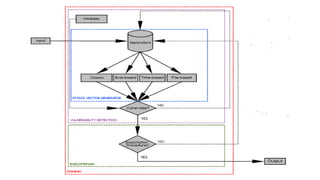
Architecture of Commix
Reduced False Positives
 On results-based command injection
 Prints the results in three lines as
 Type of technique
 Which technique
 Payload
 On blind-based command injection
 Evaluates the average response time of server
 Applies the average time as a time to test
Features of commix
 It allows to provide our own HTTP Headers
 It supports to test via all these headers
 It supports enumeration options like
 Current user
 Current hostname
 User has root privileges or not
 System Information
 System users list etc.
Modules
 The “ICMP exfiltration“ module
 This module is designed to provide a server-side component
to receive and store files, exfiltrated over ICMP echo request
packets
 The 'Shellshock' module
 This module is designed to affect a bash vulnerability which
allows an attacker to remotely execute shell commands by
attaching malicious code in environment variables used by the
operating system.
 Develop and easily import your own modules
 Increase the capabilities of commix and/or adapt it to our needs
It’s Demo Time
Testbeds
 Commix testbed - https://github.com/s4n7h0/xvwa
 Pentester Academy command injection iso -
https://www.vulnhub.com/entry/command-injection-iso-1,81/
 bWAPP(bee-box) - https://www.vulnhub.com/entry/bwapp-bee-
box-v16,53/
 XVWA - https://github.com/s4n7h0/xvwa
 DVWA - http://www.dvwa.co.uk/
 OWASP Mutillidae - https://sourceforge.net/projects/mutillidae/
References
 OWASP -
https://www.owasp.org/index.php/Command_Injection
 Commix- http://www.commixproject.com/
 Usage examples -
https://github.com/commixproject/commix/wiki/Usage-
Examples
Any Questions?

Commix

  • 1.
  • 2.
    Who am I? Working as an Application security Tester Contact me @rs.a0007@gmail.co
  • 3.
    Agenda  Introduction toCommand Injection  Why and where Command Injection may Occur?  Types of Command Injection  Detection techniques  Intro to Commix  Commix Architecture  Features and modules of commix  Demo
  • 4.
    What is CommandInjection ?  Command injection is an attack in which the goal is execution of arbitrary commands on the host operating system via a vulnerable application  Command injection attacks are possible when an application passes unsafe user supplied data (forms, cookies, HTTP headers etc.) to a system shell. The commands are executed with the privileges of vulnerable application
  • 5.
    Where may commandinjections exist?  ADSL SOHO routers (i.e D-Link, TP-Link, Linksys, ....)  IP Cameras (i.e TP-Link, D-Link, Vivotek, Zero-IP, ...)  Network Printers (i.e Xerox, ...)  IP PBX Applications (i.e Asterisk PBX, FreePBX, ...)  Raspberry PI based Web Applications  Web Applications (i.e IBM, Sophos, Symantec, LanDesk, Cacti, SquirrelMail, ....)  Arduino based Web Applications
  • 6.
    Why are commandinjections occur?  Command Injection attacks are OS-independent  Can Occur in Windows, Linux, Unix etc.  Also a programming language independent  May occur in applications written in various programming languages C,C++,C#, PHP, Java, Perl, Python, Ruby etc.  ..or web-based applications written in web app frameworks such as ASP.NET, Python Django, Ruby on Rails, CGI etc.
  • 7.
    Types of CommandInjection  Results-based Command Injection  The output of the injected command is visible on the vulnerable application  The attacker can directly infer if the command injection is succeeded or not  Blind Command Injection  The vulnerable application does not output the results of the injected command  The attacker cannot see the results of the injected commands on the screen
  • 8.
    Blind Command Injection- Techniques There are two techniques to approach on Blind Command Injection  Time-based Command Injection  The results of the injected command can be noted by the “time delays”  File-based Command Injection tempfile based  The results of the injected command will be written to a file accessible on the vulnerable application
  • 9.
    How to detectcommand injection ?  Use separators like ; : & | , . Techniques to bypass WAF or any filters  URL Encoding  Base64 Encoding  Wildcard obfuscation
  • 10.
    About Commix  Commixis short for Command Injection Exploiter  It is designed by Anastasios Stasinopoulos  It Is aiming at facilitating web developers, penetration testers, security researchers to test and exploit command injection attacks on the web applications  it is very easy to find and exploit a command injection vulnerability on certain parameters or HTTP headers  Commix is written in python programming language  It requires python version 2.6.x or 2.7.x to install it
  • 11.
    Supports  Supported Platforms Linux  Mac OSX  Windows (experimental)  Available in below distros  ArchStrike  BlackArch Linux  BackBox  Kali Linux  Parrot Security OS  Weakerthan Linux
  • 12.
  • 14.
    Reduced False Positives On results-based command injection  Prints the results in three lines as  Type of technique  Which technique  Payload  On blind-based command injection  Evaluates the average response time of server  Applies the average time as a time to test
  • 15.
    Features of commix It allows to provide our own HTTP Headers  It supports to test via all these headers  It supports enumeration options like  Current user  Current hostname  User has root privileges or not  System Information  System users list etc.
  • 16.
    Modules  The “ICMPexfiltration“ module  This module is designed to provide a server-side component to receive and store files, exfiltrated over ICMP echo request packets  The 'Shellshock' module  This module is designed to affect a bash vulnerability which allows an attacker to remotely execute shell commands by attaching malicious code in environment variables used by the operating system.  Develop and easily import your own modules  Increase the capabilities of commix and/or adapt it to our needs
  • 17.
  • 18.
    Testbeds  Commix testbed- https://github.com/s4n7h0/xvwa  Pentester Academy command injection iso - https://www.vulnhub.com/entry/command-injection-iso-1,81/  bWAPP(bee-box) - https://www.vulnhub.com/entry/bwapp-bee- box-v16,53/  XVWA - https://github.com/s4n7h0/xvwa  DVWA - http://www.dvwa.co.uk/  OWASP Mutillidae - https://sourceforge.net/projects/mutillidae/
  • 19.
    References  OWASP - https://www.owasp.org/index.php/Command_Injection Commix- http://www.commixproject.com/  Usage examples - https://github.com/commixproject/commix/wiki/Usage- Examples
  • 20.