Combat Against Antibiotic Resistance
Dr. …
Antibiotic Resistance
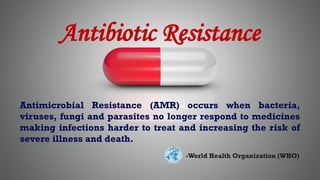
Antimicrobial Resistance (AMR) occurs when bacteria,
viruses, fungi and parasites no longer respond to medicines
making infections harder to treat and increasing the risk of
severe illness and death.
-World Health Organization (WHO)
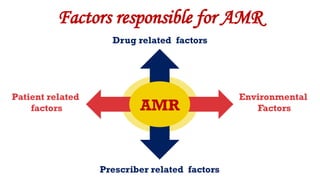
Factors responsible for AMR
AMR
Patient related
factors
Prescriber related factors
Environmental
Factors
Drug related factors
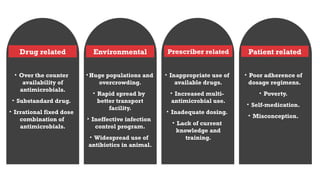
Drug related
• Over the counter
availability of
antimicrobials.
• Substandard drug.
• Irrational fixed dose
combination of
antimicrobials.
Environmental
• Huge populations and
overcrowding.
• Rapid spread by
better transport
facility.
• Ineffective infection
control program.
• Widespread use of
antibiotics in animal.
Prescriber related
• Inappropriate use of
available drugs.
• Increased multi-
antimicrobial use.
• Inadequate dosing.
• Lack of current
knowledge and
training.
Patient related
• Poor adherence of
dosage regimens.
• Poverty.
• Self-medication.
• Misconception.
Burden of
Antimicrobial Resistance
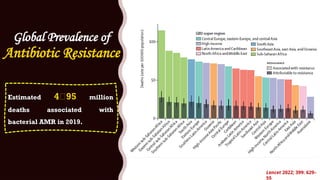
Global Prevalence of
Antibiotic Resistance
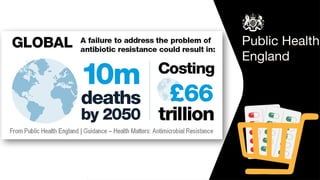
Estimated 4·95 million
deaths associated with
bacterial AMR in 2019.
Lancet 2022; 399: 629–
55
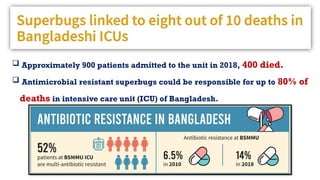
 Approximately 900 patients admitted to the unit in 2018, 400 died.
 Antimicrobial resistant superbugs could be responsible for up to 80% of
deaths in intensive care unit (ICU) of Bangladesh.
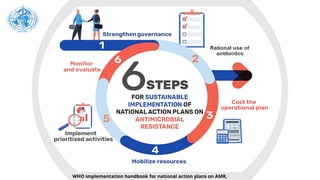
WHO implementation handbook for national action plans on AMR,
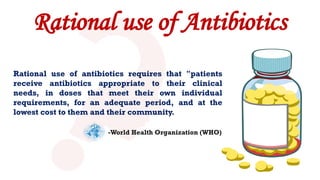
Rational use of Antibiotics
Rational use of antibiotics requires that "patients
receive antibiotics appropriate to their clinical
needs, in doses that meet their own individual
requirements, for an adequate period, and at the
lowest cost to them and their community.
-World Health Organization (WHO)
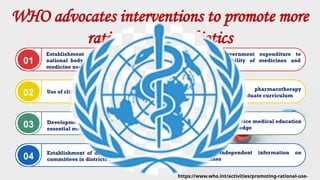
01
Establishment of a multidisciplinary
national body to coordinate policies on
medicine use
02
03
04
WHO advocates interventions to promote more
rational use antibiotics
Use of clinical guidelines
Development and use of national
essential medicines list
Establishment of drug and therapeutics
committees in districts and hospitals
05
Sufficient government expenditure to
ensure availability of medicines and
staff
06
07
08
Problem based pharmacotherapy
training in undergraduate curriculum
Continuing in-service medical education
to improve knowledge
Use of independent information on
medicines
https://www.who.int/activities/promoting-rational-use-
But these interventions
“LONG”
are governmental policy related
We need
“Effective
Pharmacological” solution
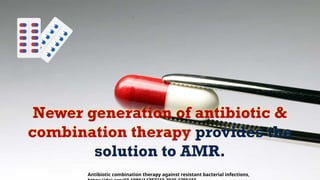
Newer generation of antibiotic &
combination therapy provides the
solution to AMR.
Antibiotic combination therapy against resistant bacterial infections,
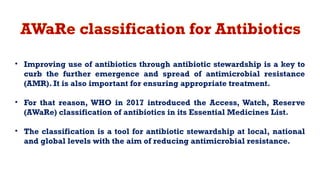
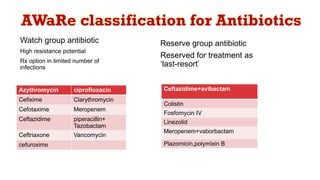
AWaRe classification for Antibiotics
• Improving use of antibiotics through antibiotic stewardship is a key to
curb the further emergence and spread of antimicrobial resistance
(AMR). It is also important for ensuring appropriate treatment.
• For that reason, WHO in 2017 introduced the Access, Watch, Reserve
(AWaRe) classification of antibiotics in its Essential Medicines List.
• The classification is a tool for antibiotic stewardship at local, national
and global levels with the aim of reducing antimicrobial resistance.
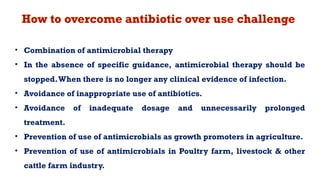
How to overcome antibiotic over use challenge
• Combination of antimicrobial therapy
• In the absence of specific guidance, antimicrobial therapy should be
stopped.When there is no longer any clinical evidence of infection.
• Avoidance of inappropriate use of antibiotics.
• Avoidance of inadequate dosage and unnecessarily prolonged
treatment.
• Prevention of use of antimicrobials as growth promoters in agriculture.
• Prevention of use of antimicrobials in Poultry farm, livestock & other
cattle farm industry.
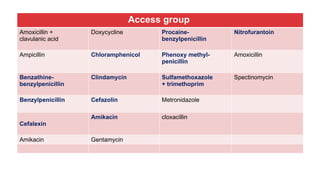
ion Access group
Amoxicillin +
clavulanic acid
Doxycycline Procaine-
benzylpenicillin
Nitrofurantoin
Ampicillin Chloramphenicol Phenoxy methyl-
penicillin
Amoxicillin
Benzathine-
benzylpenicillin
Clindamycin Sulfamethoxazole
+ trimethoprim
Spectinomycin
Benzylpenicillin Cefazolin Metronidazole
Cefalexin
Amikacin cloxacillin
Amikacin Gentamycin
Watch group antibiotic
High resistance potential
Rx option in limited number of
infections
Reserve group antibiotic
Reserved for treatment as
‘last-resort’
Ceftazidime+avibactam
Colistin
Fosfomycin IV
Linezolid
Meropenem+vaborbactam
Plazomicin,polymixin B
Azythromycin ciprofloxacin
Cefixime Clarythromycin
Cefotaxime Meropenem
Ceftazidime piperacillin+
Tazobactam
Ceftriaxone Vancomycin
cefuroxime
AWaRe classification for Antibiotics
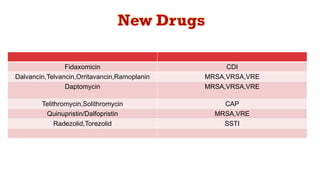
Fidaxomicin CDI
Dalvancin,Telvancin,Orritavancin,Ramoplanin MRSA,VRSA,VRE
Daptomycin MRSA,VRSA,VRE
Telithromycin,Solithromycin CAP
Quinupristin/Dalfopristin MRSA,VRE
Radezolid,Torezolid SSTI
New Drugs
Combat Against Antibiotic Resistance.pptx

Combat Against Antibiotic Resistance.pptx

  • 1.
    Combat Against AntibioticResistance Dr. …
  • 2.
    Antibiotic Resistance Antimicrobial Resistance(AMR) occurs when bacteria, viruses, fungi and parasites no longer respond to medicines making infections harder to treat and increasing the risk of severe illness and death. -World Health Organization (WHO)
  • 3.
    Factors responsible forAMR AMR Patient related factors Prescriber related factors Environmental Factors Drug related factors
  • 4.
    Drug related • Overthe counter availability of antimicrobials. • Substandard drug. • Irrational fixed dose combination of antimicrobials. Environmental • Huge populations and overcrowding. • Rapid spread by better transport facility. • Ineffective infection control program. • Widespread use of antibiotics in animal. Prescriber related • Inappropriate use of available drugs. • Increased multi- antimicrobial use. • Inadequate dosing. • Lack of current knowledge and training. Patient related • Poor adherence of dosage regimens. • Poverty. • Self-medication. • Misconception.
  • 6.
  • 7.
    Global Prevalence of AntibioticResistance Estimated 4·95 million deaths associated with bacterial AMR in 2019. Lancet 2022; 399: 629– 55
  • 10.
     Approximately 900patients admitted to the unit in 2018, 400 died.  Antimicrobial resistant superbugs could be responsible for up to 80% of deaths in intensive care unit (ICU) of Bangladesh.
  • 12.
    WHO implementation handbookfor national action plans on AMR,
  • 13.
    Rational use ofAntibiotics Rational use of antibiotics requires that "patients receive antibiotics appropriate to their clinical needs, in doses that meet their own individual requirements, for an adequate period, and at the lowest cost to them and their community. -World Health Organization (WHO)
  • 14.
    01 Establishment of amultidisciplinary national body to coordinate policies on medicine use 02 03 04 WHO advocates interventions to promote more rational use antibiotics Use of clinical guidelines Development and use of national essential medicines list Establishment of drug and therapeutics committees in districts and hospitals 05 Sufficient government expenditure to ensure availability of medicines and staff 06 07 08 Problem based pharmacotherapy training in undergraduate curriculum Continuing in-service medical education to improve knowledge Use of independent information on medicines https://www.who.int/activities/promoting-rational-use-
  • 15.
    But these interventions “LONG” aregovernmental policy related We need “Effective Pharmacological” solution
  • 16.
    Newer generation ofantibiotic & combination therapy provides the solution to AMR. Antibiotic combination therapy against resistant bacterial infections,
  • 17.
    AWaRe classification forAntibiotics • Improving use of antibiotics through antibiotic stewardship is a key to curb the further emergence and spread of antimicrobial resistance (AMR). It is also important for ensuring appropriate treatment. • For that reason, WHO in 2017 introduced the Access, Watch, Reserve (AWaRe) classification of antibiotics in its Essential Medicines List. • The classification is a tool for antibiotic stewardship at local, national and global levels with the aim of reducing antimicrobial resistance.
  • 18.
    How to overcomeantibiotic over use challenge • Combination of antimicrobial therapy • In the absence of specific guidance, antimicrobial therapy should be stopped.When there is no longer any clinical evidence of infection. • Avoidance of inappropriate use of antibiotics. • Avoidance of inadequate dosage and unnecessarily prolonged treatment. • Prevention of use of antimicrobials as growth promoters in agriculture. • Prevention of use of antimicrobials in Poultry farm, livestock & other cattle farm industry.
  • 19.
    ion Access group Amoxicillin+ clavulanic acid Doxycycline Procaine- benzylpenicillin Nitrofurantoin Ampicillin Chloramphenicol Phenoxy methyl- penicillin Amoxicillin Benzathine- benzylpenicillin Clindamycin Sulfamethoxazole + trimethoprim Spectinomycin Benzylpenicillin Cefazolin Metronidazole Cefalexin Amikacin cloxacillin Amikacin Gentamycin
  • 20.
    Watch group antibiotic Highresistance potential Rx option in limited number of infections Reserve group antibiotic Reserved for treatment as ‘last-resort’ Ceftazidime+avibactam Colistin Fosfomycin IV Linezolid Meropenem+vaborbactam Plazomicin,polymixin B Azythromycin ciprofloxacin Cefixime Clarythromycin Cefotaxime Meropenem Ceftazidime piperacillin+ Tazobactam Ceftriaxone Vancomycin cefuroxime AWaRe classification for Antibiotics
  • 21.
    Fidaxomicin CDI Dalvancin,Telvancin,Orritavancin,Ramoplanin MRSA,VRSA,VRE DaptomycinMRSA,VRSA,VRE Telithromycin,Solithromycin CAP Quinupristin/Dalfopristin MRSA,VRE Radezolid,Torezolid SSTI New Drugs