College Magazine 
EVALUATION 
BY JONATHAN HEAP
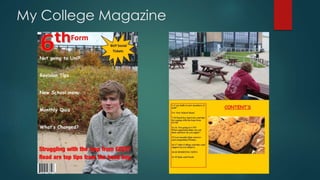
My College Magazine
In what way does your media 
product use, develop or challenge 
forms and conventions of real media 
products?
Conventions 
of a 
magazine. 
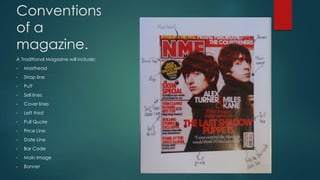
A Traditional Magazine will include: 
• Masthead 
• Strap line 
• Puff 
• Sell lines 
• Cover lines 
• Left third 
• Pull Quote 
• Price Line 
• Date Line 
• Bar Code 
• Main Image 
• Banner
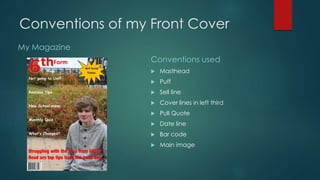
Conventions of my Front Cover 
My Magazine 
Conventions used 
 Masthead 
 Puff 
 Sell line 
 Cover lines in left third 
 Pull Quote 
 Date line 
 Bar code 
 Main image
Developing and challenging 
conventions of a traditional 
magazine.
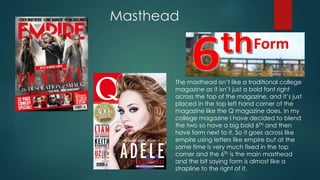
Masthead 
The masthead isn’t like a traditional college 
magazine as it isn’t just a bold font right 
across the top of the magazine, and it’s just 
placed in the top left hand corner of the 
magazine like the Q magazine does. In my 
college magazine I have decided to blend 
the two so have a big bold 6TH and then 
have form next to it. So it goes across like 
empire using letters like empire but at the 
same time is very much fixed in the top 
corner and the 6Th is the main masthead 
and the bit saying form is almost like a 
strapline to the right of it.
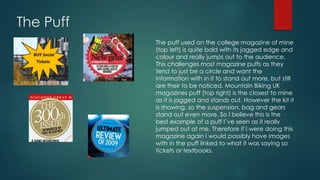
The Puff 
The puff used on the college magazine of mine 
(top left) is quite bold with its jagged edge and 
colour and really jumps out to the audience. 
This challenges most magazine puffs as they 
tend to just be a circle and want the 
information with in it to stand out more, but still 
are their to be noticed. Mountain Biking UK 
magazines puff (top right) is the closest to mine 
as it is jagged and stands out. However the kit it 
is showing, so the suspension, bag and gears 
stand out even more. So I believe this is the 
best example of a puff I’ve seen as it really 
jumped out at me. Therefore if I were doing this 
magazine again I would possibly have images 
with in the puff linked to what it was saying so 
tickets or textbooks.
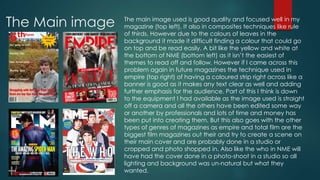
The Main image The main image used is good quality and focused well in my 
magazine (top left). It also in composites techniques like rule 
of thirds. However due to the colours of leaves in the 
background it made it difficult finding a colour that could go 
on top and be read easily. A bit like the yellow and white at 
the bottom of NME (bottom left) as it isn’t the easiest of 
themes to read off and follow. However if I came across this 
problem again in future magazines the technique used in 
empire (top right) of having a coloured strip right across like a 
banner is good as it makes any text clear as well and adding 
further emphasis for the audience. Part of this I think is down 
to the equipment I had available as the image used is straight 
off a camera and all the others have been edited some way 
or another by professionals and lots of time and money has 
been put into creating them. But this also goes with the other 
types of genres of magazines as empire and total film are the 
biggest film magazines out their and try to create a scene on 
their main cover and are probably done in a studio or 
cropped and photo shopped in. Also like the who in NME will 
have had the cover done in a photo-shoot in a studio so all 
lighting and background was un-natural but what they 
wanted.
Traditional Conventions used 
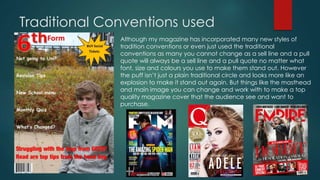
Although my magazine has incorporated many new styles of 
tradition conventions or even just used the traditional 
conventions as many you cannot change as a sell line and a pull 
quote will always be a sell line and a pull quote no matter what 
font, size and colours you use to make them stand out. However 
the puff isn’t just a plain traditional circle and looks more like an 
explosion to make it stand out again. But things like the masthead 
and main image you can change and work with to make a top 
quality magazine cover that the audience see and want to 
purchase.
Contents page
Conventions used 
 Sticks to the theme 
 Images 
 Lists articles 
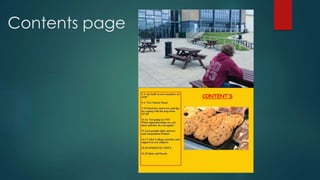
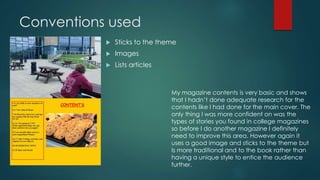
My magazine contents is very basic and shows 
that I hadn’t done adequate research for the 
contents like I had done for the main cover. The 
only thing I was more confident on was the 
types of stories you found in college magazines 
so before I do another magazine I definitely 
need to improve this area. However again it 
uses a good image and sticks to the theme but 
Is more traditional and to the book rather than 
having a unique style to entice the audience 
further.
How does your media 
product represent particular 
social groups?
Images 
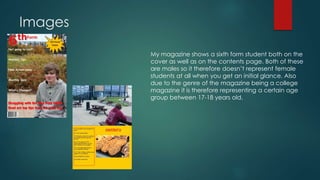
My magazine shows a sixth form student both on the 
cover as well as on the contents page. Both of these 
are males so it therefore doesn’t represent female 
students at all when you get an initial glance. Also 
due to the genre of the magazine being a college 
magazine it is therefore representing a certain age 
group between 17-18 years old.
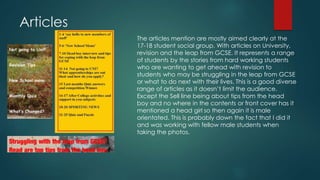
Articles 
The articles mention are mostly aimed clearly at the 
17-18 student social group. With articles on University, 
revision and the leap from GCSE. It represents a range 
of students by the stories from hard working students 
who are wanting to get ahead with revision to 
students who may be struggling in the leap from GCSE 
or what to do next with their lives. This is a good diverse 
range of articles as it doesn’t limit the audience. 
Except the Sell line being about tips from the head 
boy and no where in the contents or front cover has it 
mentioned a head girl so then again it is male 
orientated. This is probably down the fact that I did it 
and was working with fellow male students when 
taking the photos.
What kind of media 
institution might distribute 
your product and why?
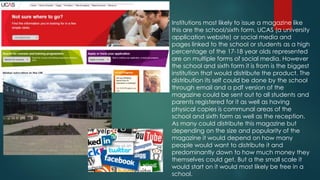
Institutions most likely to issue a magazine like 
this are the school/sixth form, UCAS (a university 
application website) or social media and 
pages linked to the school or students as a high 
percentage of the 17-18 year olds represented 
are on multiple forms of social media. However 
the school and sixth form it is from is the biggest 
institution that would distribute the product. The 
distribution its self could be done by the school 
through email and a pdf version of the 
magazine could be sent out to all students and 
parents registered for it as well as having 
physical copies is communal areas of the 
school and sixth form as well as the reception. 
As many could distribute this magazine but 
depending on the size and popularity of the 
magazine it would depend on how many 
people would want to distribute it and 
predominantly down to how much money they 
themselves could get. But a the small scale it 
would start on it would most likely be free in a 
school.
Who would be the audience 
for your media product?
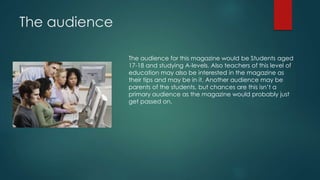
The audience 
The audience for this magazine would be Students aged 
17-18 and studying A-levels. Also teachers of this level of 
education may also be interested in the magazine as 
their tips and may be in it. Another audience may be 
parents of the students, but chances are this isn’t a 
primary audience as the magazine would probably just 
get passed on.
How did you attract/ 
address your audience?
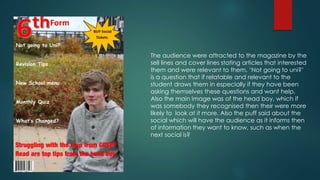
The audience were attracted to the magazine by the 
sell lines and cover lines stating articles that interested 
them and were relevant to them. ‘Not going to uni?’ 
is a question that if relatable and relevant to the 
student draws them in especially if they have been 
asking themselves these questions and want help. 
Also the main image was of the head boy, which if 
was somebody they recognised then their were more 
likely to look at it more. Also the puff said about the 
social which will have the audience as it informs then 
of information they want to know, such as when the 
next social is?
What have you learnt about 
technologies from the 
process of constructing this 
product?
Technology 
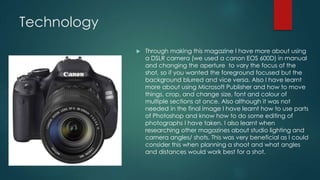
 Through making this magazine I have more about using 
a DSLR camera (we used a canon EOS 600D) in manual 
and changing the aperture to vary the focus of the 
shot, so if you wanted the foreground focused but the 
background blurred and vice versa. Also I have learnt 
more about using Microsoft Publisher and how to move 
things, crop, and change size, font and colour of 
multiple sections at once. Also although it was not 
needed in the final image I have learnt how to use parts 
of Photoshop and know how to do some editing of 
photographs I have taken. I also learnt when 
researching other magazines about studio lighting and 
camera angles/ shots. This was very beneficial as I could 
consider this when planning a shoot and what angles 
and distances would work best for a shot.
By Jonathan Heap 
Blogs  www.jaheap1.blogspot.com 
Magazine production

College magazine evaluation

  • 1.
    College Magazine EVALUATION BY JONATHAN HEAP
  • 2.
  • 3.
    In what waydoes your media product use, develop or challenge forms and conventions of real media products?
  • 4.
    Conventions of a magazine. A Traditional Magazine will include: • Masthead • Strap line • Puff • Sell lines • Cover lines • Left third • Pull Quote • Price Line • Date Line • Bar Code • Main Image • Banner
  • 5.
    Conventions of myFront Cover My Magazine Conventions used  Masthead  Puff  Sell line  Cover lines in left third  Pull Quote  Date line  Bar code  Main image
  • 6.
    Developing and challenging conventions of a traditional magazine.
  • 7.
    Masthead The mastheadisn’t like a traditional college magazine as it isn’t just a bold font right across the top of the magazine, and it’s just placed in the top left hand corner of the magazine like the Q magazine does. In my college magazine I have decided to blend the two so have a big bold 6TH and then have form next to it. So it goes across like empire using letters like empire but at the same time is very much fixed in the top corner and the 6Th is the main masthead and the bit saying form is almost like a strapline to the right of it.
  • 8.
    The Puff Thepuff used on the college magazine of mine (top left) is quite bold with its jagged edge and colour and really jumps out to the audience. This challenges most magazine puffs as they tend to just be a circle and want the information with in it to stand out more, but still are their to be noticed. Mountain Biking UK magazines puff (top right) is the closest to mine as it is jagged and stands out. However the kit it is showing, so the suspension, bag and gears stand out even more. So I believe this is the best example of a puff I’ve seen as it really jumped out at me. Therefore if I were doing this magazine again I would possibly have images with in the puff linked to what it was saying so tickets or textbooks.
  • 9.
    The Main imageThe main image used is good quality and focused well in my magazine (top left). It also in composites techniques like rule of thirds. However due to the colours of leaves in the background it made it difficult finding a colour that could go on top and be read easily. A bit like the yellow and white at the bottom of NME (bottom left) as it isn’t the easiest of themes to read off and follow. However if I came across this problem again in future magazines the technique used in empire (top right) of having a coloured strip right across like a banner is good as it makes any text clear as well and adding further emphasis for the audience. Part of this I think is down to the equipment I had available as the image used is straight off a camera and all the others have been edited some way or another by professionals and lots of time and money has been put into creating them. But this also goes with the other types of genres of magazines as empire and total film are the biggest film magazines out their and try to create a scene on their main cover and are probably done in a studio or cropped and photo shopped in. Also like the who in NME will have had the cover done in a photo-shoot in a studio so all lighting and background was un-natural but what they wanted.
  • 10.
    Traditional Conventions used Although my magazine has incorporated many new styles of tradition conventions or even just used the traditional conventions as many you cannot change as a sell line and a pull quote will always be a sell line and a pull quote no matter what font, size and colours you use to make them stand out. However the puff isn’t just a plain traditional circle and looks more like an explosion to make it stand out again. But things like the masthead and main image you can change and work with to make a top quality magazine cover that the audience see and want to purchase.
  • 11.
  • 12.
    Conventions used Sticks to the theme  Images  Lists articles My magazine contents is very basic and shows that I hadn’t done adequate research for the contents like I had done for the main cover. The only thing I was more confident on was the types of stories you found in college magazines so before I do another magazine I definitely need to improve this area. However again it uses a good image and sticks to the theme but Is more traditional and to the book rather than having a unique style to entice the audience further.
  • 13.
    How does yourmedia product represent particular social groups?
  • 14.
    Images My magazineshows a sixth form student both on the cover as well as on the contents page. Both of these are males so it therefore doesn’t represent female students at all when you get an initial glance. Also due to the genre of the magazine being a college magazine it is therefore representing a certain age group between 17-18 years old.
  • 15.
    Articles The articlesmention are mostly aimed clearly at the 17-18 student social group. With articles on University, revision and the leap from GCSE. It represents a range of students by the stories from hard working students who are wanting to get ahead with revision to students who may be struggling in the leap from GCSE or what to do next with their lives. This is a good diverse range of articles as it doesn’t limit the audience. Except the Sell line being about tips from the head boy and no where in the contents or front cover has it mentioned a head girl so then again it is male orientated. This is probably down the fact that I did it and was working with fellow male students when taking the photos.
  • 16.
    What kind ofmedia institution might distribute your product and why?
  • 17.
    Institutions most likelyto issue a magazine like this are the school/sixth form, UCAS (a university application website) or social media and pages linked to the school or students as a high percentage of the 17-18 year olds represented are on multiple forms of social media. However the school and sixth form it is from is the biggest institution that would distribute the product. The distribution its self could be done by the school through email and a pdf version of the magazine could be sent out to all students and parents registered for it as well as having physical copies is communal areas of the school and sixth form as well as the reception. As many could distribute this magazine but depending on the size and popularity of the magazine it would depend on how many people would want to distribute it and predominantly down to how much money they themselves could get. But a the small scale it would start on it would most likely be free in a school.
  • 18.
    Who would bethe audience for your media product?
  • 19.
    The audience Theaudience for this magazine would be Students aged 17-18 and studying A-levels. Also teachers of this level of education may also be interested in the magazine as their tips and may be in it. Another audience may be parents of the students, but chances are this isn’t a primary audience as the magazine would probably just get passed on.
  • 20.
    How did youattract/ address your audience?
  • 21.
    The audience wereattracted to the magazine by the sell lines and cover lines stating articles that interested them and were relevant to them. ‘Not going to uni?’ is a question that if relatable and relevant to the student draws them in especially if they have been asking themselves these questions and want help. Also the main image was of the head boy, which if was somebody they recognised then their were more likely to look at it more. Also the puff said about the social which will have the audience as it informs then of information they want to know, such as when the next social is?
  • 22.
    What have youlearnt about technologies from the process of constructing this product?
  • 23.
    Technology  Throughmaking this magazine I have more about using a DSLR camera (we used a canon EOS 600D) in manual and changing the aperture to vary the focus of the shot, so if you wanted the foreground focused but the background blurred and vice versa. Also I have learnt more about using Microsoft Publisher and how to move things, crop, and change size, font and colour of multiple sections at once. Also although it was not needed in the final image I have learnt how to use parts of Photoshop and know how to do some editing of photographs I have taken. I also learnt when researching other magazines about studio lighting and camera angles/ shots. This was very beneficial as I could consider this when planning a shoot and what angles and distances would work best for a shot.
  • 24.
    By Jonathan Heap Blogs  www.jaheap1.blogspot.com Magazine production