DEPARTMENT OF ECONOMIC DEVELOPMENT
AND TOURISM: WESTERN CAPE PROVINCIAL
GOVERNMENT
Managing a MultiManaging a Multi--Cluster ProgrammeCluster Programme
ISEBE LOPHUHLISO LWEZOQOQOSHO NEZOKHENKETHO 1
TCI Conference
Cape Town October 2008
Presented by: Nigel Gwynne-Evans
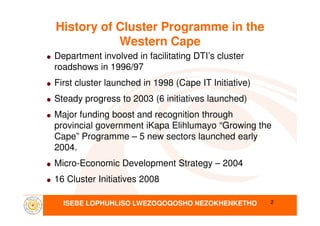
History of Cluster Programme in the
Western Cape
Department involved in facilitating DTI’s cluster
roadshows in 1996/97
First cluster launched in 1998 (Cape IT Initiative)
Steady progress to 2003 (6 initiatives launched)
Major funding boost and recognition through
ISEBE LOPHUHLISO LWEZOQOQOSHO NEZOKHENKETHO
Major funding boost and recognition through
provincial government iKapa Elihlumayo “Growing the
Cape” Programme – 5 new sectors launched early
2004.
Micro-Economic Development Strategy – 2004
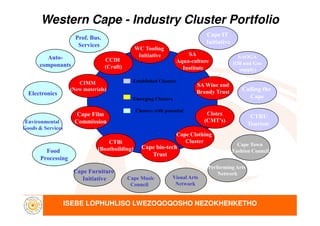
16 Cluster Initiatives 2008
2
CCDI
(Craft) Institute
SA
Aqua-culture
Institute
SAOGA
(Oil and Gas
supply)
WC Tooling
Initiative
SA Wine and
Brandy Trust
SA Wine and
Brandy Trust( ew materials)
CIMM
( ew materials)
Electronics
Clotex
Cape IT
Initiative
Calling the
Cape
Prof. Bus.
Services
Established Clusters
Emerging Clusters
Cape Film
componants
Auto-
componants
CTRU
Clusters with potential
Western Cape - Industry Cluster Portfolio
ISEBE LOPHUHLISO LWEZOQOQOSHO NEZOKHENKETHO
Cape ClothingCape Clothing
Cluster
Visual Arts
etwork
(Boatbuilding)
CTBi
(Boatbuilding)
Clotex
(CMT’s)
Food
Processing
Cape FurnitureCape Furniture
Initiative
Environmental
Goods & Services
Environmental
Goods & Services
Commission
Cape Film
Commission
Performing ArtsPerforming Arts
etwork
Cape bio techCape bio-tech
Trust
CTRU
Tourism
Clusters with potential
Cape Music
Council
Fashion Council
Cape Town
Fashion Council
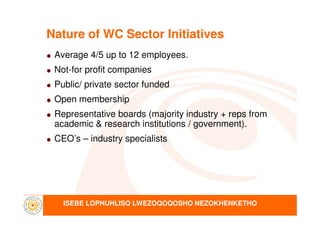
Nature of WC Sector Initiatives
Average 4/5 up to 12 employees.
Not-for profit companies
Public/ private sector funded
Open membership
Representative boards (majority industry + reps from
ISEBE LOPHUHLISO LWEZOQOQOSHO NEZOKHENKETHO
Representative boards (majority industry + reps from
academic & research institutions / government).
CEO’s – industry specialists
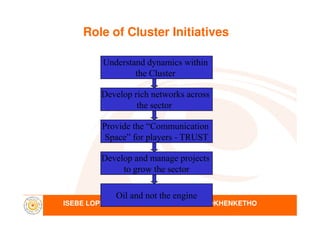
Role of Cluster Initiatives
Understand dynamics within
the Cluster
Develop rich networks across
the sector
ISEBE LOPHUHLISO LWEZOQOQOSHO NEZOKHENKETHO
Provide the “Communication
Space” for players - TRUST
Develop and manage projects
to grow the sector
Oil and not the engine
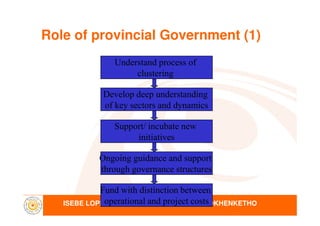
Role of provincial Government (1)
Understand process of
clustering
Develop deep understanding
of key sectors and dynamics
ISEBE LOPHUHLISO LWEZOQOQOSHO NEZOKHENKETHO
Support/ incubate new
initiatives
Ongoing guidance and support
through governance structures
Fund with distinction between
operational and project costs
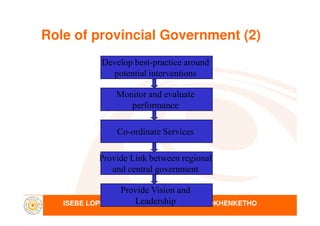
Role of provincial Government (2)
Develop best-practice around
potential interventions
Monitor and evaluate
performance
ISEBE LOPHUHLISO LWEZOQOQOSHO NEZOKHENKETHO
Co-ordinate Services
Provide Link between regional
and central government
Provide Vision and
Leadership
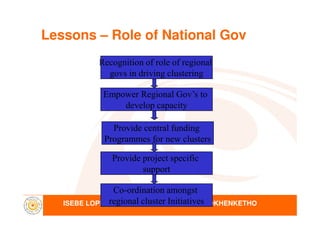
Lessons – Role of National Gov
Recognition of role of regional
govs in driving clustering
Empower Regional Gov’s to
develop capacity
ISEBE LOPHUHLISO LWEZOQOQOSHO NEZOKHENKETHO
Provide central funding
Programmes for new clusters
Provide project specific
support
Co-ordination amongst
regional cluster Initiatives
Key Challenges – Emerging
Programme
Building Sectoral Capability within gov.
Understanding local economy
Where to start – priority or dynamic clusters?
Ringfencing Programmatic allocations
ISEBE LOPHUHLISO LWEZOQOQOSHO NEZOKHENKETHO
Defining Outcomes – Gov. KPI’s
Long term nature of CI’s
Key Challenges – Mature Programme
SECTORAL FOCUS – is there an optimal number –
6, 10, 15, 20?
Bureaucratic Creep – Justified?
Corporate Governance within CI’s – A double-edged
sword
ISEBE LOPHUHLISO LWEZOQOQOSHO NEZOKHENKETHO
Dealing with poorly performing initiatives
Dealing with political change
LT nature of clustering
Policy Implications
Building sectoral capacity within government key.
Work with what exists – difficult to create industry from scratch /
private sector not energised
Clear differentiation between annual operational costs and
projects.
Self-sustainability unlikely – most will remain dependent on some
form of gov. support.
ISEBE LOPHUHLISO LWEZOQOQOSHO NEZOKHENKETHO
form of gov. support.
Initial funding requirement to launch regional cluster programme
does not need to be excessive: (+- R5m per year to initiate
process).
To conclude:
From the Western Cape experience developing a
broad-based cluster programme has provided a
ISEBE LOPHUHLISO LWEZOQOQOSHO NEZOKHENKETHO
broad-based cluster programme has provided a
solid platform for a regional government to build
institutional “thickness” in targeted sectors, and is
the key vehicle to encourage industrial
restructuring.
Thank you!
ISEBE LOPHUHLISO LWEZOQOQOSHO NEZOKHENKETHO
Nigel Gwynne-Evans
Ngwynne@pgwc.gov.za

Cluster basics: Managing a Multi-Cluster Programme

  • 1.
    DEPARTMENT OF ECONOMICDEVELOPMENT AND TOURISM: WESTERN CAPE PROVINCIAL GOVERNMENT Managing a MultiManaging a Multi--Cluster ProgrammeCluster Programme ISEBE LOPHUHLISO LWEZOQOQOSHO NEZOKHENKETHO 1 TCI Conference Cape Town October 2008 Presented by: Nigel Gwynne-Evans
  • 2.
    History of ClusterProgramme in the Western Cape Department involved in facilitating DTI’s cluster roadshows in 1996/97 First cluster launched in 1998 (Cape IT Initiative) Steady progress to 2003 (6 initiatives launched) Major funding boost and recognition through ISEBE LOPHUHLISO LWEZOQOQOSHO NEZOKHENKETHO Major funding boost and recognition through provincial government iKapa Elihlumayo “Growing the Cape” Programme – 5 new sectors launched early 2004. Micro-Economic Development Strategy – 2004 16 Cluster Initiatives 2008 2
  • 3.
    CCDI (Craft) Institute SA Aqua-culture Institute SAOGA (Oil andGas supply) WC Tooling Initiative SA Wine and Brandy Trust SA Wine and Brandy Trust( ew materials) CIMM ( ew materials) Electronics Clotex Cape IT Initiative Calling the Cape Prof. Bus. Services Established Clusters Emerging Clusters Cape Film componants Auto- componants CTRU Clusters with potential Western Cape - Industry Cluster Portfolio ISEBE LOPHUHLISO LWEZOQOQOSHO NEZOKHENKETHO Cape ClothingCape Clothing Cluster Visual Arts etwork (Boatbuilding) CTBi (Boatbuilding) Clotex (CMT’s) Food Processing Cape FurnitureCape Furniture Initiative Environmental Goods & Services Environmental Goods & Services Commission Cape Film Commission Performing ArtsPerforming Arts etwork Cape bio techCape bio-tech Trust CTRU Tourism Clusters with potential Cape Music Council Fashion Council Cape Town Fashion Council
  • 4.
    Nature of WCSector Initiatives Average 4/5 up to 12 employees. Not-for profit companies Public/ private sector funded Open membership Representative boards (majority industry + reps from ISEBE LOPHUHLISO LWEZOQOQOSHO NEZOKHENKETHO Representative boards (majority industry + reps from academic & research institutions / government). CEO’s – industry specialists
  • 5.
    Role of ClusterInitiatives Understand dynamics within the Cluster Develop rich networks across the sector ISEBE LOPHUHLISO LWEZOQOQOSHO NEZOKHENKETHO Provide the “Communication Space” for players - TRUST Develop and manage projects to grow the sector Oil and not the engine
  • 6.
    Role of provincialGovernment (1) Understand process of clustering Develop deep understanding of key sectors and dynamics ISEBE LOPHUHLISO LWEZOQOQOSHO NEZOKHENKETHO Support/ incubate new initiatives Ongoing guidance and support through governance structures Fund with distinction between operational and project costs
  • 7.
    Role of provincialGovernment (2) Develop best-practice around potential interventions Monitor and evaluate performance ISEBE LOPHUHLISO LWEZOQOQOSHO NEZOKHENKETHO Co-ordinate Services Provide Link between regional and central government Provide Vision and Leadership
  • 8.
    Lessons – Roleof National Gov Recognition of role of regional govs in driving clustering Empower Regional Gov’s to develop capacity ISEBE LOPHUHLISO LWEZOQOQOSHO NEZOKHENKETHO Provide central funding Programmes for new clusters Provide project specific support Co-ordination amongst regional cluster Initiatives
  • 9.
    Key Challenges –Emerging Programme Building Sectoral Capability within gov. Understanding local economy Where to start – priority or dynamic clusters? Ringfencing Programmatic allocations ISEBE LOPHUHLISO LWEZOQOQOSHO NEZOKHENKETHO Defining Outcomes – Gov. KPI’s Long term nature of CI’s
  • 10.
    Key Challenges –Mature Programme SECTORAL FOCUS – is there an optimal number – 6, 10, 15, 20? Bureaucratic Creep – Justified? Corporate Governance within CI’s – A double-edged sword ISEBE LOPHUHLISO LWEZOQOQOSHO NEZOKHENKETHO Dealing with poorly performing initiatives Dealing with political change LT nature of clustering
  • 11.
    Policy Implications Building sectoralcapacity within government key. Work with what exists – difficult to create industry from scratch / private sector not energised Clear differentiation between annual operational costs and projects. Self-sustainability unlikely – most will remain dependent on some form of gov. support. ISEBE LOPHUHLISO LWEZOQOQOSHO NEZOKHENKETHO form of gov. support. Initial funding requirement to launch regional cluster programme does not need to be excessive: (+- R5m per year to initiate process).
  • 12.
    To conclude: From theWestern Cape experience developing a broad-based cluster programme has provided a ISEBE LOPHUHLISO LWEZOQOQOSHO NEZOKHENKETHO broad-based cluster programme has provided a solid platform for a regional government to build institutional “thickness” in targeted sectors, and is the key vehicle to encourage industrial restructuring.
  • 13.
    Thank you! ISEBE LOPHUHLISOLWEZOQOQOSHO NEZOKHENKETHO Nigel Gwynne-Evans Ngwynne@pgwc.gov.za