Downloaded 10 times
![Strengthening SC Resilience
Supply Chain as Strategic Asset[1]
There is a strong need to treat Supply Chain as a Strategic Asset.
The World can be viewed as one large supply chain
In recent years supply chains have increased in importance across
many industries, as management recognizes that the supply chain is
the channel for delivery of its products to its customers
50 – 70% of sales revenue is total SCM cost
While the supply chain is a major strategic asset, but still based on
survey it is not managed as such in some companies.
Supply chain is both a direct and an indirect asset
For many companies, the supply chain is by far the largest asset it
“owns,” and is very strategic to the company’s ability to succeed both
financially and in the market.
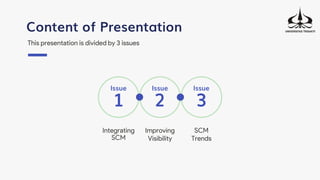
Integrating SCM Improving Visibility SCM Trends
4 Dimension of Integrated SC Integrated SC Advantages](https://image.slidesharecdn.com/tugaskelscm3-clinicalintegratedscm-fajarsigit-final-210708070105/85/Clinically-Integrated-Supply-Chain-4-320.jpg)
![Global Supply Chain Disruption[2]
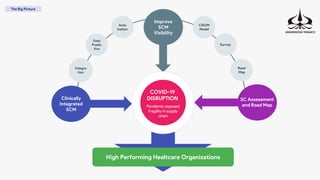
How pandemic exposed fragility in supply chain (especially healthcare industry)
Lack of preparedness
There are fear and uncertainty, lack of confidence, directives changed
frequently, needs of transparency of supply chain data management.
Material Shortages
‘Me first’ export policies, no ability to identify alternative products
Lack of Data Infrastructure
Contact tracing, linking patients, standards adoption limited, testing
& high risk populations
Strengthening SC Resilience
Integrating SCM Improving Visibility SCM Trends
4 Dimension of Integrated SC Integrated SC Advantages](https://image.slidesharecdn.com/tugaskelscm3-clinicalintegratedscm-fajarsigit-final-210708070105/85/Clinically-Integrated-Supply-Chain-5-320.jpg)
![Strengthening SC Resilience
Integrating SCM Improving Visibility SCM Trends
4 Dimension of Integrated SC Integrated SC Advantages
Strengthening Supply Chain Resilience[2]
By clinically integrating supply chain management
Clinically Integrated SCM is ability to track
and to trace every product every care
process delivered to every patient,
identifying every provider team delivering
that care where that data flows
automatically right at the point of care in
every clinical setting and that data upload
to every individual patient care record](https://image.slidesharecdn.com/tugaskelscm3-clinicalintegratedscm-fajarsigit-final-210708070105/85/Clinically-Integrated-Supply-Chain-6-320.jpg)
![Strengthening SC Resilience
Integrating SCM Improving Visibility SCM Trends
4 Dimension of Integrated SC Integrated SC Advantages
Strengthening Supply Chain Resilience[2]
By clinically integrating supply chain management
ERP
Supply Chain
Data
EMR
Patient Data
Integrated Data
Set
Analytics Engine
Predictive
Analytic
Procurement Best Practice Informed by real world
evidence from supply chain data, identities solution,
product which work best for patients
Real world informs solution and innovation priorities, for
specific patient segments, to enable procurement teams
to procure priority solution that offer best outcomes for
patients
Enable proactive risk
management,
personalized, to population
segments](https://image.slidesharecdn.com/tugaskelscm3-clinicalintegratedscm-fajarsigit-final-210708070105/85/Clinically-Integrated-Supply-Chain-7-320.jpg)
![Four Dimensions[2]
Of clinically integrated supply chain
Automation Work Environments
Minimize burden on clinicians, flow data to
the point of care
Clinical Integration
Clinicians work with supply chain teams to
ensure best quality and value for patients
Predictive Data Analytics
Transform data into knowledge and insight
to inform decisions
Governance and Leadership
Supply chain as a strategic asset that
creates data informed decisions
High Performing Healtcare Organizations
Strengthening SC Resilience
Integrating SCM Improving Visibility SCM Trends
4 Dimension of Integrated SC Integrated SC Advantages](https://image.slidesharecdn.com/tugaskelscm3-clinicalintegratedscm-fajarsigit-final-210708070105/85/Clinically-Integrated-Supply-Chain-8-320.jpg)
![Strengthening SC Resilience
Integrating SCM Improving Visibility SCM Trends
4 Dimension of Integrated SC Integrated SC Advantages
Automation Work Environments[2]
Minimize burden on clinicians, flow data to the point of care
Point of Care Capture Data
Using standardized database to capture all kind data (such as
product data, procedure data, service data, or patient data)
Transparency of product availability
Easier product replacement
Online adverse event reporting and analytics
Alerting clinician when something critical happens
Automated recall and expiry alerts
Monitor inventory effortless](https://image.slidesharecdn.com/tugaskelscm3-clinicalintegratedscm-fajarsigit-final-210708070105/85/Clinically-Integrated-Supply-Chain-9-320.jpg)
![Integrating SCM
Clinical Integration[2]
Clinicians work with supply chain teams to ensure best quality and value for patients
Digital tools, data, analytics
are mobilized
At the point of care to inform
clinicians of risk, alert to expired /
incorrect input
Supply chain integrated
into clinician teams
Data mobilized to support quality
and safety
Strengthening SC Resilience
Improving Visibility SCM Trends
4 Dimension of Integrated SC Integrated SC Advantages
Transparency:
confidence among clinician teams
Procurement decisions:
informed by evidence of value not
lowest cost
Outcomes Tracking:
Reduce errors & never events
Standardization of Care:
Reduce variation
Real world evidence:
Of outcomes and value
OUTCOMES](https://image.slidesharecdn.com/tugaskelscm3-clinicalintegratedscm-fajarsigit-final-210708070105/85/Clinically-Integrated-Supply-Chain-10-320.jpg)
![Integrating SCM
Predictive Data Analytics[2]
Transform data into knowledge and insight to inform decisions
Strengthening SC Resilience
Improving Visibility SCM Trends
4 Dimension of Integrated SC Integrated SC Advantages](https://image.slidesharecdn.com/tugaskelscm3-clinicalintegratedscm-fajarsigit-final-210708070105/85/Clinically-Integrated-Supply-Chain-11-320.jpg)
![Integrating SCM
Governance and Leadership[2]
Supply chain as a strategic asset that creates data informed decisions
Strengthening SC Resilience
Improving Visibility SCM Trends
4 Dimension of Integrated SC Integrated SC Advantages](https://image.slidesharecdn.com/tugaskelscm3-clinicalintegratedscm-fajarsigit-final-210708070105/85/Clinically-Integrated-Supply-Chain-12-320.jpg)
![Integrating SCM
Clinically Integrated SC Benefit[2]
Both for patients (customer) and for clinicians (stakeholder)
Strengthening SC Resilience
Improving Visibility SCM Trends
4 Dimension of Integrated SC Integrated SC Advantages
For Patients
• Automated Work Environments
• Seamless flow of data to the point of care
• Integrated analytics automates workflow,
reduces documentation time
• Proactively cues clinicians to risk to enable
preventive measures
• Safety and Quality of Care
• Visibility to critical products on hand,
utilization
• Confidence in work environment
• Transparency of practice variation
For Clinicians and Provider Teams
• Transparency
• Patients can access all of their data
• Can track their progress and outcomes
• Report their progress and outcomes
• Can readily identify risk and respond
proactively
• Safety
• Point of care alerts to potential errors
wrong medication, wrong surgery, allergic
risk
• Evidence of 70% reduction of ‘Never
Events’](https://image.slidesharecdn.com/tugaskelscm3-clinicalintegratedscm-fajarsigit-final-210708070105/85/Clinically-Integrated-Supply-Chain-13-320.jpg)
![Integrating SCM
Impact of Clinically Integrated SC[2]
Based on supply chain data from 10 hospitals in North America
Strengthening SC Resilience
Improving Visibility SCM Trends
4 Dimension of Integrated SC Integrated SC Advantages
• Work environments are much more automated, workflows
streamlined
• Near real time flow of data at the point of care
• Greater Transparency
• Alerts of risk to reduce error
• Utilization tracking of critical/ high cost products
• Product / care procedure performance linked to patient outcomes](https://image.slidesharecdn.com/tugaskelscm3-clinicalintegratedscm-fajarsigit-final-210708070105/85/Clinically-Integrated-Supply-Chain-14-320.jpg)
![Integrating SCM
Impact of Clinically Integrated SC[2]
Return on investment from 3 global health systems
Strengthening SC Resilience
Improving Visibility SCM Trends
4 Dimension of Integrated SC Integrated SC Advantages](https://image.slidesharecdn.com/tugaskelscm3-clinicalintegratedscm-fajarsigit-final-210708070105/85/Clinically-Integrated-Supply-Chain-15-320.jpg)
![Integrating SCM
Impact of Clinically Integrated SC[2]
Advancing Quadruple Aim
Strengthening SC Resilience
Improving Visibility SCM Trends
4 Dimension of Integrated SC Integrated SC Advantages](https://image.slidesharecdn.com/tugaskelscm3-clinicalintegratedscm-fajarsigit-final-210708070105/85/Clinically-Integrated-Supply-Chain-16-320.jpg)
![Integrating SCM
Product Visibility in Supply Chain[2]
Product visibility is a crucial component as product move through every step of value chain
Improving Visibility SCM Trends
Overview Before Arrival After Arrival SC Automation Assessment
How your products move through supply chain?
How visible your product moves in supply chain?
How to improve visibility in supply chain?](https://image.slidesharecdn.com/tugaskelscm3-clinicalintegratedscm-fajarsigit-final-210708070105/85/Clinically-Integrated-Supply-Chain-17-320.jpg)
![Integrating SCM
Supply Chain Visibility[2]
Find visibility at every step of the supply chain
-
Improving Visibility SCM Trends
Overview Before Arrival After Arrival SC Automation Assessment](https://image.slidesharecdn.com/tugaskelscm3-clinicalintegratedscm-fajarsigit-final-210708070105/85/Clinically-Integrated-Supply-Chain-18-320.jpg)
![Integrating SCM
Demand Planning[2]
Gather data to inform your purchasing decision and demand plans
Improving Visibility SCM Trends
Overview Before Arrival After Arrival
Key data to look
• Retroactive views of supply flow
• Reports that compare current product availability to
historic utilization needs
• Predictive supply flow insights
SC Automation Assessment](https://image.slidesharecdn.com/tugaskelscm3-clinicalintegratedscm-fajarsigit-final-210708070105/85/Clinically-Integrated-Supply-Chain-19-320.jpg)
![Integrating SCM
Manufacturer[2]
Leverage manufacturer insight to help support the operational and financial goals at your facility
Improving Visibility SCM Trends
Overview Before Arrival After Arrival
Key data to look
• Predictive utilization models based on regional and local
trends
SC Automation Assessment](https://image.slidesharecdn.com/tugaskelscm3-clinicalintegratedscm-fajarsigit-final-210708070105/85/Clinically-Integrated-Supply-Chain-20-320.jpg)
![Integrating SCM
Distributor[2]
Optimized your distributor’s tools, capabilities, and solutions
Improving Visibility SCM Trends
Overview Before Arrival After Arrival
Key data to look
• Insight into product usage within specific departments
SC Automation Assessment](https://image.slidesharecdn.com/tugaskelscm3-clinicalintegratedscm-fajarsigit-final-210708070105/85/Clinically-Integrated-Supply-Chain-21-320.jpg)
![Integrating SCM
Transportation[2]
Look for advanced technology capabilities
Improving Visibility SCM Trends
Overview Before Arrival After Arrival
Key data to look
• Tracking devices on your shipments that can provide real
time logistic insight such as exactly where the product is in
transit
• Leveraging machine learning technology to further inform
more accurate ETA’s for future shipments
SC Automation Assessment](https://image.slidesharecdn.com/tugaskelscm3-clinicalintegratedscm-fajarsigit-final-210708070105/85/Clinically-Integrated-Supply-Chain-22-320.jpg)
![Integrating SCM
Arrival at Hospital[2]
Continually evaluate data to build insights and make recommendation to optimized program
Improving Visibility SCM Trends
Overview Before Arrival After Arrival
Key data to look
• Tools to optimized Par levels at your facility, based on
average daily usage
• Product standardization insight based on your facilities
utilization within a certain product category
SC Automation Assessment](https://image.slidesharecdn.com/tugaskelscm3-clinicalintegratedscm-fajarsigit-final-210708070105/85/Clinically-Integrated-Supply-Chain-23-320.jpg)
![Integrating SCM
Using Automation in Supply Chain[2]
Automation is a huge step on your journey to an integrated supply chain
Improving Visibility SCM Trends
Overview Before Arrival After Arrival SC Automation Assessment
• Data tracked for all
products via global
standarts to alert to item
status
• Identify and remove at-risk
products, including expiry
and recalled items
• Monitor costs per case and
physician
• Identify product variations in
similar case types, providing
opportunities for
standardization
• Hands free data capture
to document and tracks
product usage
• Decrement inventory &
trigger automated
purchase orders based
on par levels
• Clinical system
interfaces to connect
product usage to
patient records](https://image.slidesharecdn.com/tugaskelscm3-clinicalintegratedscm-fajarsigit-final-210708070105/85/Clinically-Integrated-Supply-Chain-24-320.jpg)
![Integrating SCM
Supply Outcomes Model[3]
Start from measuring what you have achieved so far
Improving Visibility SCM Trends
Overview Before Arrival After Arrival SC Automation Assessment
The CISOM Criteria
The CISOM (Clinically Integrated Supply Outcomes Model) is an eight
stage model (0-7) with distinct criteria for every stage.
Stage 7
Clinically integrated supply chain achieved, enabling:
• Precision and personalized healthcare service delivery
• Real world evidence of patient outcomes from
traceability of care processes and products Stage 6
• Transparency across the patient journey of care
• Automated traceability of patient care processes and
products
• Provider team care delivery linked to individual patient
outcomes](https://image.slidesharecdn.com/tugaskelscm3-clinicalintegratedscm-fajarsigit-final-210708070105/85/Clinically-Integrated-Supply-Chain-25-320.jpg)
![Integrating SCM
Supply Outcomes Model[3]
Start from measuring what you have achieved so far
Improving Visibility SCM Trends
Overview Before Arrival After Arrival SC Automation Assessment
The CISOM Criteria
Stage 5
• Supply chain processes are automated and integrated at
the point of care
• Complete traceability of products and care processes
• Automated tracking of adverse events and product
recalls
Stage 4
• Integration of supply chain processes into clinical
programs
• Optimization of inventory management linked to patient
care needs](https://image.slidesharecdn.com/tugaskelscm3-clinicalintegratedscm-fajarsigit-final-210708070105/85/Clinically-Integrated-Supply-Chain-26-320.jpg)
![Integrating SCM
Supply Outcomes Model[3]
Start from measuring what you have achieved so far
Improving Visibility SCM Trends
Overview Before Arrival After Arrival SC Automation Assessment
The CISOM Criteria
Stage 3
• Supply chain strategy creates visibility of inventory
across the organization
• Automation of financial processes linked to product
procurement
• Evidence Informed product standardization
Stage 2
• Inventory tracking and automation
• Optimization of supply costs and inventory management](https://image.slidesharecdn.com/tugaskelscm3-clinicalintegratedscm-fajarsigit-final-210708070105/85/Clinically-Integrated-Supply-Chain-27-320.jpg)
![Integrating SCM
Supply Outcomes Model[3]
Start from measuring what you have achieved so far
Improving Visibility SCM Trends
Overview Before Arrival After Arrival SC Automation Assessment
The CISOM Criteria
Stage 1
• Basic supply chain processes are established as a
business function of the organization
Stage 0
• Inventory and supply processes are manual
• There is no supply chain strategy identified for the
organization](https://image.slidesharecdn.com/tugaskelscm3-clinicalintegratedscm-fajarsigit-final-210708070105/85/Clinically-Integrated-Supply-Chain-28-320.jpg)
![Integrating SCM
Model Evaluation Process[2]
How to evaluate your current supply chain model
Improving Visibility SCM Trends
Overview Before Arrival After Arrival SC Automation Assessment](https://image.slidesharecdn.com/tugaskelscm3-clinicalintegratedscm-fajarsigit-final-210708070105/85/Clinically-Integrated-Supply-Chain-29-320.jpg)
![Integrating SCM
Supply Chain Road Map[2]
Pathway to personalized, precision health care delivery
Improving Visibility SCM Trends
Overview Before Arrival After Arrival SC Automation Assessment](https://image.slidesharecdn.com/tugaskelscm3-clinicalintegratedscm-fajarsigit-final-210708070105/85/Clinically-Integrated-Supply-Chain-30-320.jpg)
![Integrating SCM
Supply Chain Trend[1]
That will keep supply chain & logistics business ahead of the curve in 2019
Digitization of the Supply Chain
It possible to share, automate, and analyze
the information. People, things, and services,
technology embedded in almost everything
(such as IoT, Machine Learning). It will
improve the speed, dynamics, and resiliency
of the supply chain operations
Supplier & Customer Visibility
Supply chain visibility allows partners to see
orders & material movements from source to
destination in real time, informing things like
schedule & quality. With this clear visibility,
partners can respond more quickly to
unexpected situations and manage by
exception.
Warehouse Robotics
Amazon India being a prime example of a
company that uses technology to become
more efficient in warehouse management.
Stronger collab in the SC process
Solid procurement practices and stronger
relationships with suppliers will be
considered a priority in the supply chain
process.
Supply Chain Integration
Most of activities in supply chain have their
own system and not connected. There is a
need to integrate these systems to provide
real-time data and analytics.
Improving Visibility SCM Trends
5 Trends in Supply Chain Supply Chain 4.0](https://image.slidesharecdn.com/tugaskelscm3-clinicalintegratedscm-fajarsigit-final-210708070105/85/Clinically-Integrated-Supply-Chain-31-320.jpg)
![Integrating SCM
Supply Chain 4.0 (Smart Supply Chain)[1]
Industry 4.0 creates a disruption & requires to rethink how companies design their supply chain
-
It is the application of Industry 4.0 technologies
i.e. the Internet of Things, the use of advanced robotics, and the application of
advanced analytics of big data in supply chain management & place sensors in
everything, create networks everywhere, automate anything, and analyze
everything to significantly improve performance and customer satisfaction
Supply Chain 4.0 is the highest maturity level, leveraging all data
available for improved, faster, and more granular support of decision
making. Advanced algorithms are leveraged and a broad team of data
scientists works within the organization, following a clear development
path towards digital mastery
5 Trends in Supply Chain
Improving Visibility SCM Trends
Supply Chain 4.0](https://image.slidesharecdn.com/tugaskelscm3-clinicalintegratedscm-fajarsigit-final-210708070105/85/Clinically-Integrated-Supply-Chain-32-320.jpg)

![Reference
All sources that used to make this presentation
[1] Krishan K. Batra, 2020, Supply Chain is a major strategic asset, https://www.et-edge.com/2019/05/29/supply-chain-is-a-
major-strategic-asset/.
[2] Anne Snowdon, Matt B., Christina T., 2021, Not Just Operations: How Your Supply Chain can be a Strategic Asset.
https://www.youtube.com/watch?v=9kFz2kEVabE.
[3] HIMSS Analytics, CISOM: A Model to Drive Clinically Integrated Supply Chain Maturity,
https://www.himssanalytics.org/news/cisom-model-drive-clinically-integrated-supply-chain-maturity](https://image.slidesharecdn.com/tugaskelscm3-clinicalintegratedscm-fajarsigit-final-210708070105/85/Clinically-Integrated-Supply-Chain-34-320.jpg)

This document discusses improving supply chain resilience in the healthcare industry. It discusses how the COVID-19 pandemic exposed fragility in supply chains and a lack of preparedness. It proposes clinically integrating supply chain management by tracking products and services delivered to patients, and ensuring supply chain data flows to clinical settings. This would improve visibility, automation, predictive analytics, and governance. Benefits would include reduced errors, standardized care, and using real-world evidence to inform decisions. Case studies showed impacts like improved workflows and transparency. Overall, clinical integration of supply chains can advance the quadruple aim of improving patient outcomes, lowering costs, enhancing patient and provider experiences.


