Climate Change andIts Impact
on the Philippines
A Study on the Urgency of Mitigation and
Adaptation Efforts
Your Name
Date
2.
Introduction to ClimateChange
• What is Climate Change?
• - Long-term changes in global climate (e.g., warming
weather, stronger storms, and droughts).
• - Human activities as the main cause (burning fossil
fuels, deforestation).
• Impacts of Climate Change:
• - Increased global temperatures.
• - Disruption to ecosystems and human livelihoods.
3.
Climate Change inthe Philippines
• Increased Vulnerability:
• - Frequent typhoons, floods, and droughts.
• - Typhoon Nika (November 2024): Intensified storms
due to rising sea levels and warmer oceans.
• Affected Sectors:
• - Agriculture (crops destroyed, infrastructure damaged).
• - Local communities (flooding, landslides, and storm
surges).
4.
Local and NationalClimate Actions
• Philippine Efforts:
• - Renewable Energy Act (2008): Promotes
renewable energy sources.
• - National Climate Change Action Plan
(NCCAP): Reforestation, climate resilience.
• Challenges:
• - High infrastructure costs, deforestation, and
weak policy enforcement.
5.
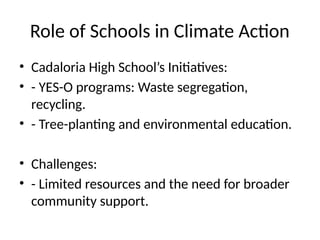
Role of Schoolsin Climate Action
• Cadaloria High School’s Initiatives:
• - YES-O programs: Waste segregation,
recycling.
• - Tree-planting and environmental education.
• Challenges:
• - Limited resources and the need for broader
community support.
6.
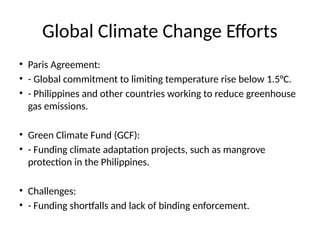
Global Climate ChangeEfforts
• Paris Agreement:
• - Global commitment to limiting temperature rise below 1.5°C.
• - Philippines and other countries working to reduce greenhouse
gas emissions.
• Green Climate Fund (GCF):
• - Funding climate adaptation projects, such as mangrove
protection in the Philippines.
• Challenges:
• - Funding shortfalls and lack of binding enforcement.
7.
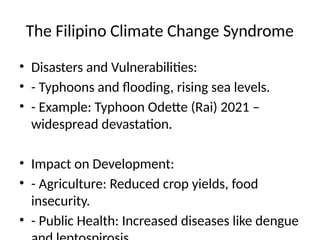
The Filipino ClimateChange Syndrome
• Disasters and Vulnerabilities:
• - Typhoons and flooding, rising sea levels.
• - Example: Typhoon Odette (Rai) 2021 –
widespread devastation.
• Impact on Development:
• - Agriculture: Reduced crop yields, food
insecurity.
• - Public Health: Increased diseases like dengue
9.
Addressing the FilipinoClimate Change
Syndrome
• What Needs to Be Done:
• - Invest in climate-resilient infrastructure (e.g., flood
barriers).
• - Promote renewable energy and disaster preparedness.
• - Educate the public on sustainable practices.
• Global Cooperation:
• - Participate in international climate summits.
• - Secure funding and technological support for climate
resilience.
10.
Challenges to ClimateChange Mitigation
• Main Issues:
• - Lack of prioritization of sustainability initiatives.
• - Limited awareness among decision-makers and
employees.
• Examples in Organizations:
• - Delay in solar panel installation despite long-term
cost savings.
• - Low adherence to waste segregation protocols.
11.
Conclusion
• Key Takeaways:
•- Climate change is a critical issue that impacts
agriculture, health, and development in the
Philippines.
• - Strengthening disaster resilience, adopting
renewable energy, and raising public
awareness are essential.
• - Collective action is necessary at the local,
national, and global levels to ensure a
sustainable and secure future.



![[NSSP+4-Module+6]+Dr+Villar+-+Security+and+the+Environment+in+the+Philippines...](https://cdn.slidesharecdn.com/ss_thumbnails/nssp4-module6drvillar-securityandtheenvironmentinthephilippinesebv-230427050055-0b6f7c48-thumbnail.jpg?width=640&height=640&fit=bounds)


