THE FUNDAMENTAL UNIT OF
LIFE- “THE CELL”
Learning Objectives
 Students will be able to learn about discovery
and definition of cell.
 Students will be able to understand the type of
cells.
 Student will be able to differentiate between
prokaryotic and eukaryotic cells.
Discovery of the cell
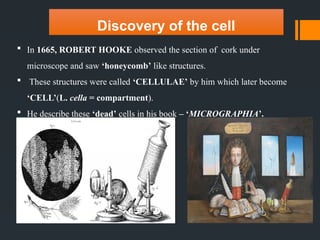
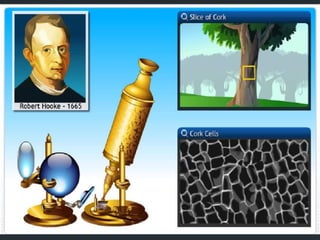
 In 1665, ROBERT HOOKE observed the section of cork under
microscope and saw ‘honeycomb’ like structures.
 These structures were called ‘CELLULAE’ by him which later become
‘CELL’(L. cella = compartment).
 He describe these ‘dead’ cells in his book – ‘MICROGRAPHIA’.
Discovery of the cell
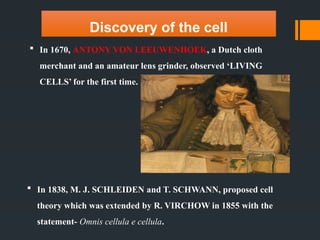
 In 1670, ANTONY VON LEEUWENHOEK, a Dutch cloth
merchant and an amateur lens grinder, observed ‘LIVING
CELLS’ for the first time.
 In 1838, M. J. SCHLEIDEN and T. SCHWANN, proposed cell
theory which was extended by R. VIRCHOW in 1855 with the
statement- Omnis cellula e cellula.
Definition of the cell
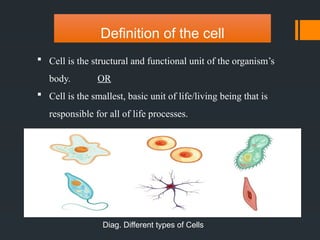
 Cell is the structural and functional unit of the organism’s
body. OR
 Cell is the smallest, basic unit of life/living being that is
responsible for all of life processes.
Diag. Different types of Cells
Who discovered the living cells
for the first time? Can you write
the name ?
Lets find out..
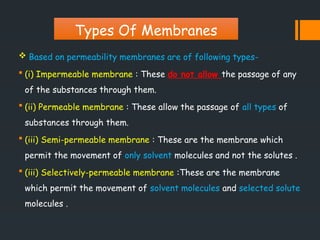
 Based on permeability membranes are of following types-
 (i) Impermeable membrane : These do not allow the passage of any
of the substances through them.
 (ii) Permeable membrane : These allow the passage of all types of
substances through them.
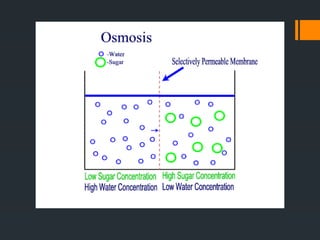
 (iii) Semi-permeable membrane : These are the membrane which
permit the movement of only solvent molecules and not the solutes .
 (iii) Selectively-permeable membrane :These are the membrane
which permit the movement of solvent molecules and selected solute
molecules .
Types Of Membranes
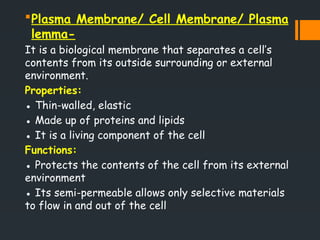
Plasma Membrane/ Cell Membrane/ Plasma
lemma-
It is a biological membrane that separates a cell’s
contents from its outside surrounding or external
environment.
Properties:
● Thin-walled, elastic
● Made up of proteins and lipids
● It is a living component of the cell
Functions:
● Protects the contents of the cell from its external
environment
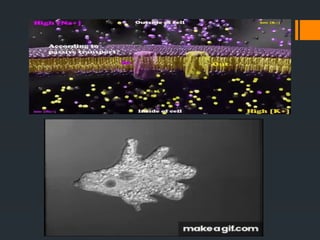
● Its semi-permeable allows only selective materials
to flow in and out of the cell
TYPES OF THE CELL
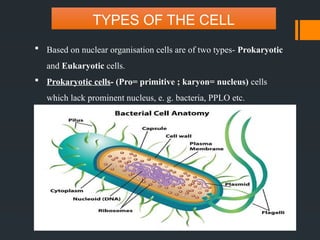
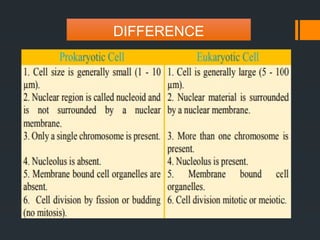
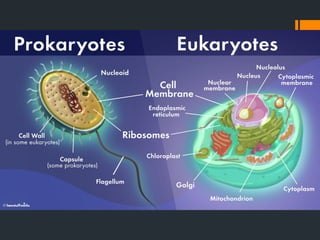
 Based on nuclear organisation cells are of two types- Prokaryotic
and Eukaryotic cells.
 Prokaryotic cells- (Pro= primitive ; karyon= nucleus) cells
which lack prominent nucleus, e. g. bacteria, PPLO etc.
TYPES OF THE CELL
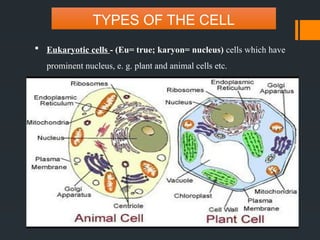
 Eukaryotic cells - (Eu= true; karyon= nucleus) cells which have
prominent nucleus, e. g. plant and animal cells etc.
Quiz Time
• Who discovered the living cells for the first time ?
• What is a cell?
• How will you differentiate between prokaryotic and
eukaryotic cells?
We know that all
living organism are
made of cell but
what are the
constituents of a
Cell?
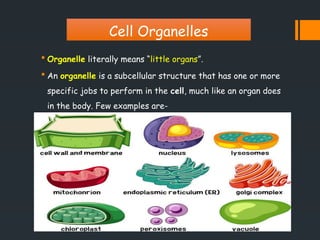
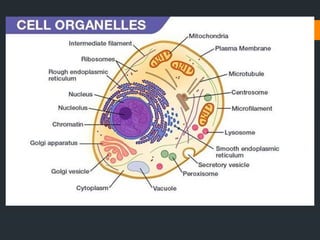
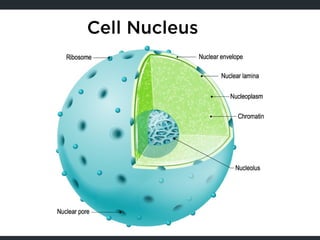
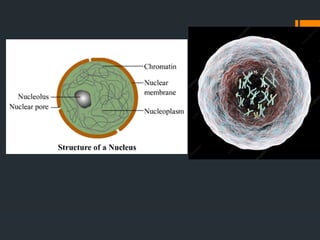
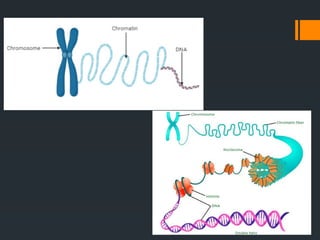
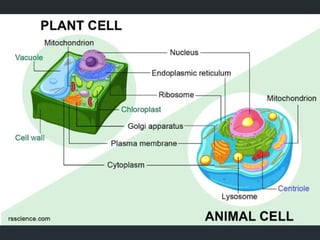
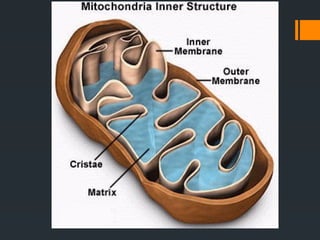
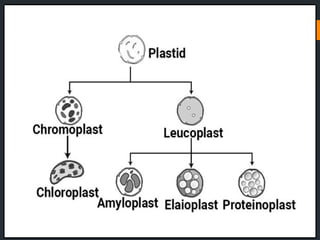
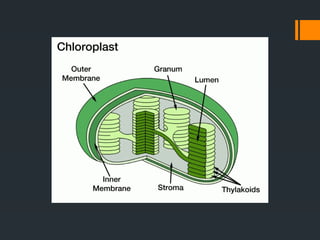
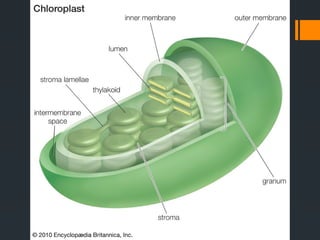
 Organelle literally means “little organs”.
 An organelle is a subcellular structure that has one or more
specific jobs to perform in the cell, much like an organ does
in the body. Few examples are-
Cell Organelles
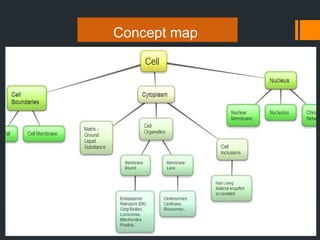
Concept map
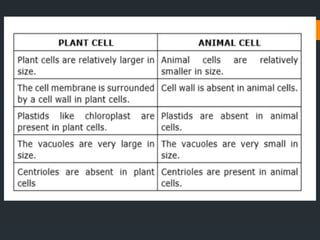
DIFFERENCE
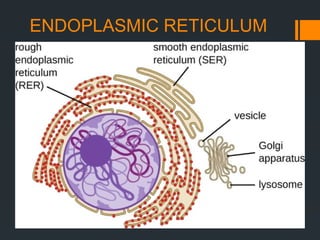
ENDOPLASMIC RETICULUM
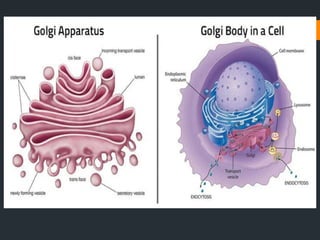
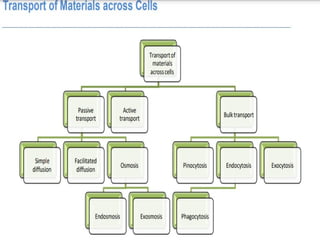
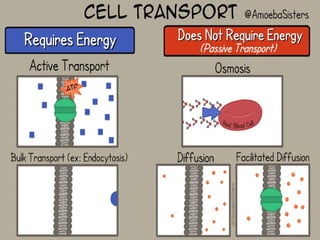
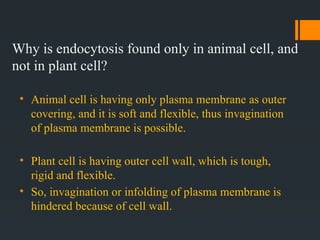
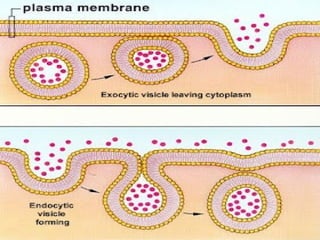
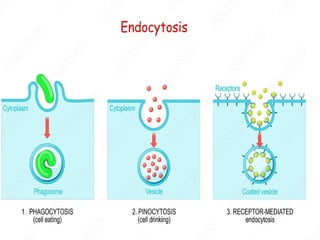
Why is endocytosis found only in animal cell, and
not in plant cell?
• Animal cell is having only plasma membrane as outer
covering, and it is soft and flexible, thus invagination
of plasma membrane is possible.
• Plant cell is having outer cell wall, which is tough,
rigid and flexible.
• So, invagination or infolding of plasma membrane is
hindered because of cell wall.
CLASS IX THE CELL.pptx for exam preparation.

CLASS IX THE CELL.pptx for exam preparation.

  • 1.
    THE FUNDAMENTAL UNITOF LIFE- “THE CELL”
  • 2.
    Learning Objectives  Studentswill be able to learn about discovery and definition of cell.  Students will be able to understand the type of cells.  Student will be able to differentiate between prokaryotic and eukaryotic cells.
  • 3.
    Discovery of thecell  In 1665, ROBERT HOOKE observed the section of cork under microscope and saw ‘honeycomb’ like structures.  These structures were called ‘CELLULAE’ by him which later become ‘CELL’(L. cella = compartment).  He describe these ‘dead’ cells in his book – ‘MICROGRAPHIA’.
  • 5.
    Discovery of thecell  In 1670, ANTONY VON LEEUWENHOEK, a Dutch cloth merchant and an amateur lens grinder, observed ‘LIVING CELLS’ for the first time.  In 1838, M. J. SCHLEIDEN and T. SCHWANN, proposed cell theory which was extended by R. VIRCHOW in 1855 with the statement- Omnis cellula e cellula.
  • 6.
    Definition of thecell  Cell is the structural and functional unit of the organism’s body. OR  Cell is the smallest, basic unit of life/living being that is responsible for all of life processes. Diag. Different types of Cells
  • 7.
    Who discovered theliving cells for the first time? Can you write the name ? Lets find out..
  • 9.
     Based onpermeability membranes are of following types-  (i) Impermeable membrane : These do not allow the passage of any of the substances through them.  (ii) Permeable membrane : These allow the passage of all types of substances through them.  (iii) Semi-permeable membrane : These are the membrane which permit the movement of only solvent molecules and not the solutes .  (iii) Selectively-permeable membrane :These are the membrane which permit the movement of solvent molecules and selected solute molecules . Types Of Membranes
  • 10.
    Plasma Membrane/ CellMembrane/ Plasma lemma- It is a biological membrane that separates a cell’s contents from its outside surrounding or external environment. Properties: ● Thin-walled, elastic ● Made up of proteins and lipids ● It is a living component of the cell Functions: ● Protects the contents of the cell from its external environment ● Its semi-permeable allows only selective materials to flow in and out of the cell
  • 15.
    TYPES OF THECELL  Based on nuclear organisation cells are of two types- Prokaryotic and Eukaryotic cells.  Prokaryotic cells- (Pro= primitive ; karyon= nucleus) cells which lack prominent nucleus, e. g. bacteria, PPLO etc.
  • 16.
    TYPES OF THECELL  Eukaryotic cells - (Eu= true; karyon= nucleus) cells which have prominent nucleus, e. g. plant and animal cells etc.
  • 17.
    Quiz Time • Whodiscovered the living cells for the first time ? • What is a cell? • How will you differentiate between prokaryotic and eukaryotic cells?
  • 18.
    We know thatall living organism are made of cell but what are the constituents of a Cell?
  • 19.
     Organelle literallymeans “little organs”.  An organelle is a subcellular structure that has one or more specific jobs to perform in the cell, much like an organ does in the body. Few examples are- Cell Organelles
  • 20.
  • 25.
  • 27.
  • 39.
    Why is endocytosisfound only in animal cell, and not in plant cell? • Animal cell is having only plasma membrane as outer covering, and it is soft and flexible, thus invagination of plasma membrane is possible. • Plant cell is having outer cell wall, which is tough, rigid and flexible. • So, invagination or infolding of plasma membrane is hindered because of cell wall.