
CIVIL & CRIMINAL LIABILITY
Legal Issues:Dr. Mears
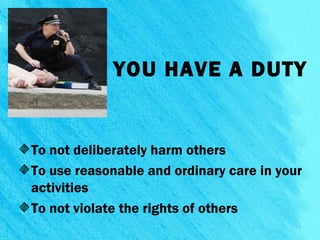
YOU HAVE A DUTY
To not deliberately harm others
To use reasonable and ordinary care in your
activities
To not violate the rights of others
2
PERFORMANCE
OBJECTIVES
Explain what is meant by the term:
“reasonable and ordinary care”
Identify what rights are protected under
42 United States Code, Section 1983
Explain what is meant by the phrase:
“deliberate indifference”
Describe the 3 types of damages
awarded in lawsuits
3
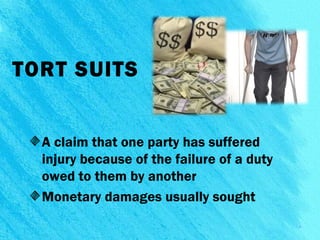
TORT SUITS
A claim that one party has suffered
injury because of the failure of a duty
owed to them by another
Monetary damages usually sought
4
REASONABLE AND
ORDINARY CARE
…means using the same care
and accepted methods that a
reasonable person would use in
the same circumstances
5
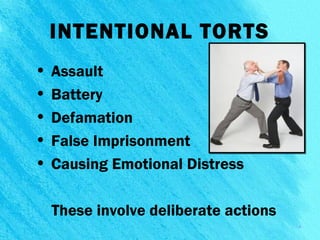
• Assault
• Battery
• Defamation
• False Imprisonment
• Causing Emotional Distress
These involve deliberate actions
6
INTENTIONAL TORTS
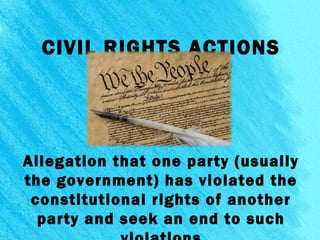
Allegation that one party (usually
the government) has violated the
constitutional rights of another
party and seek an end to such 7
CIVIL RIGHTS ACTIONS
“UNITED STATES CODE, Vol.
42, SECTION 1983”
Every person, who under color of any statute,
ordinance, regulation, custom, or usage of any
state or territory, subjects or causes to be subject,
any citizen of the United States or any other
person within jurisdiction thereof to the
deprivation of any rights, privileges or immunities
secured by the Constitution and laws, shall be
liable to the party injured in an action at law, suit
in equity, or other proper proceeding for address.
8
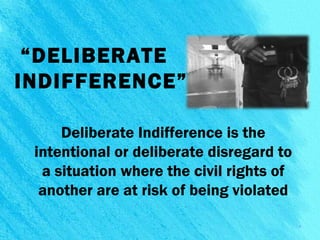
“DELIBERATE
INDIFFERENCE”
Deliberate Indifference is the
intentional or deliberate disregard to
a situation where the civil rights of
another are at risk of being violated
9
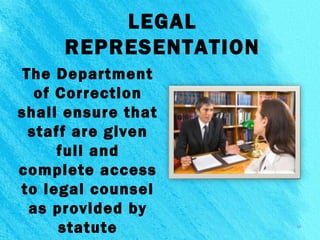
LEGAL
REPRESENTATION
The Department
of Correction
shall ensure that
staff are given
full and
complete access
to legal counsel
as provided by
statute 10
GOOD
FAITH…
Absence of fraud
Absence of deceit
Absence of intentional misconduct
Absence of personal, criminal, or
evil intent
11
 NOMINAL
[token amount ($1.00), violation occurred,
no damage]
 COMPENSATORY
[compensate actual loss]
 PUNITIVE
[person acted with intentional misconduct or
willful
disregard for consequences of his/her actions or
inactions]
12
DAMAGES
CRIMINAL
LIABILITY
Your volunteering with the Department of
Correction will not insulate you from
prosecution for criminal acts
The Attorney General cannot represent
you if you are charged with a criminal act
13
WAYS TO AVOID LIABILITY
Follow written and verbal
instructions carefully
When in doubt seek clarification
Review rules, procedures regularly
Be sure you know what is expected of you
14
WAYS TO AVOID
LIABILITY
Maintain good records
Report all unusual occurrences and document
your reporting of these
Take prompt corrective action if a policy and
procedure is violated or ignored
Request written order from supervisor when
verbal is contrary to rules or laws
15

Civil and Criminal Liability

  • 1.
    CIVIL & CRIMINALLIABILITY Legal Issues:Dr. Mears
  • 2.
    YOU HAVE ADUTY To not deliberately harm others To use reasonable and ordinary care in your activities To not violate the rights of others 2
  • 3.
    PERFORMANCE OBJECTIVES Explain what ismeant by the term: “reasonable and ordinary care” Identify what rights are protected under 42 United States Code, Section 1983 Explain what is meant by the phrase: “deliberate indifference” Describe the 3 types of damages awarded in lawsuits 3
  • 4.
    TORT SUITS A claimthat one party has suffered injury because of the failure of a duty owed to them by another Monetary damages usually sought 4
  • 5.
    REASONABLE AND ORDINARY CARE …meansusing the same care and accepted methods that a reasonable person would use in the same circumstances 5
  • 6.
    • Assault • Battery •Defamation • False Imprisonment • Causing Emotional Distress These involve deliberate actions 6 INTENTIONAL TORTS
  • 7.
    Allegation that oneparty (usually the government) has violated the constitutional rights of another party and seek an end to such 7 CIVIL RIGHTS ACTIONS
  • 8.
    “UNITED STATES CODE,Vol. 42, SECTION 1983” Every person, who under color of any statute, ordinance, regulation, custom, or usage of any state or territory, subjects or causes to be subject, any citizen of the United States or any other person within jurisdiction thereof to the deprivation of any rights, privileges or immunities secured by the Constitution and laws, shall be liable to the party injured in an action at law, suit in equity, or other proper proceeding for address. 8
  • 9.
    “DELIBERATE INDIFFERENCE” Deliberate Indifference isthe intentional or deliberate disregard to a situation where the civil rights of another are at risk of being violated 9
  • 10.
    LEGAL REPRESENTATION The Department of Correction shallensure that staff are given full and complete access to legal counsel as provided by statute 10
  • 11.
    GOOD FAITH… Absence of fraud Absenceof deceit Absence of intentional misconduct Absence of personal, criminal, or evil intent 11
  • 12.
     NOMINAL [token amount($1.00), violation occurred, no damage]  COMPENSATORY [compensate actual loss]  PUNITIVE [person acted with intentional misconduct or willful disregard for consequences of his/her actions or inactions] 12 DAMAGES
  • 13.
    CRIMINAL LIABILITY Your volunteering withthe Department of Correction will not insulate you from prosecution for criminal acts The Attorney General cannot represent you if you are charged with a criminal act 13
  • 14.
    WAYS TO AVOIDLIABILITY Follow written and verbal instructions carefully When in doubt seek clarification Review rules, procedures regularly Be sure you know what is expected of you 14
  • 15.
    WAYS TO AVOID LIABILITY Maintaingood records Report all unusual occurrences and document your reporting of these Take prompt corrective action if a policy and procedure is violated or ignored Request written order from supervisor when verbal is contrary to rules or laws 15