Cisco
Helping Successful
      People
 Get Even Better
     Dr. Marshall
      Goldsmith

 Marshall@MarshallGoldsmith.com
www.MarshallGoldsmithLibrary.com
Teaching leaders what to
          STOP
  “We spend a lot of time
   helping leaders learn
        what to do,
  we don’t spend enough
time helping leaders learn
      what to stop.”

           Peter Drucker
Goals
• Know how to use ‘what to stop’ in
  our personal development.
• Practice and be ready to use
  feedforward.
• Learn a proven model that you can
  use to develop yourself.
• Be better able to help others change
  behavior.
• Discuss peer coaching – how to do it
  – and why it can be so effective.
Classic challenges for
      successful people
• Winning too much
• Adding too much value
• Telling the world how smart
  we really are
• “I already knew that”
• Passing judgment
What percent of all interpersonal
communication time is spent on…

• People talking about how smart,
  special or wonderful they are (or
  listening to someone do this) - or
• People talking about how stupid,
  inept or bad someone else is (or
  listening to someone do this)?
Using small amounts of money
to create large changes in behavior

• No, but, however
• Great, but (however)
• Destructive comments
Feedforward
• The feedforward exercise
• Letting go of the past
• Listening to suggestions without
  judging
• Learning as much as you can
• Helping as much as you can
• Learning points to help you be a
  great coach
Peer coaching practice
• What is your behavior for change?
• What did you learn in the
  feedforward process?
• What are you going to do about it?
• Solicit ideas that will help to ensure
  ‘back on the job’ execution
• Repeat the process with your
  partner
Developing yourself
    as a leader and partner
•   ASK
•   LISTEN
•   THINK
•   THANK
•   RESPOND
•   INVOLVE
•   CHANGE
•   FOLLOW-UP
“Leadership is a
        Contact Sport”
•   Summary impact research
•   Over 86,000 participants
•   Eight major corporations
•   Published in
    Strategy+Business
The eight corporations
•   Aerospace / defense
•   Financial services
•   Electronic manufacturing
•   Diversified services
•   Media
•   Telecommunications
•   Pharmaceutical / healthcare
•   High-tech manufacturing
Commonalities
•   Multi-rater feedback
•   Feedback consultant
•   One to three areas for improvement
•   Discussion with co-workers
•   On-going follow up
•   Custom-designed mini-survey
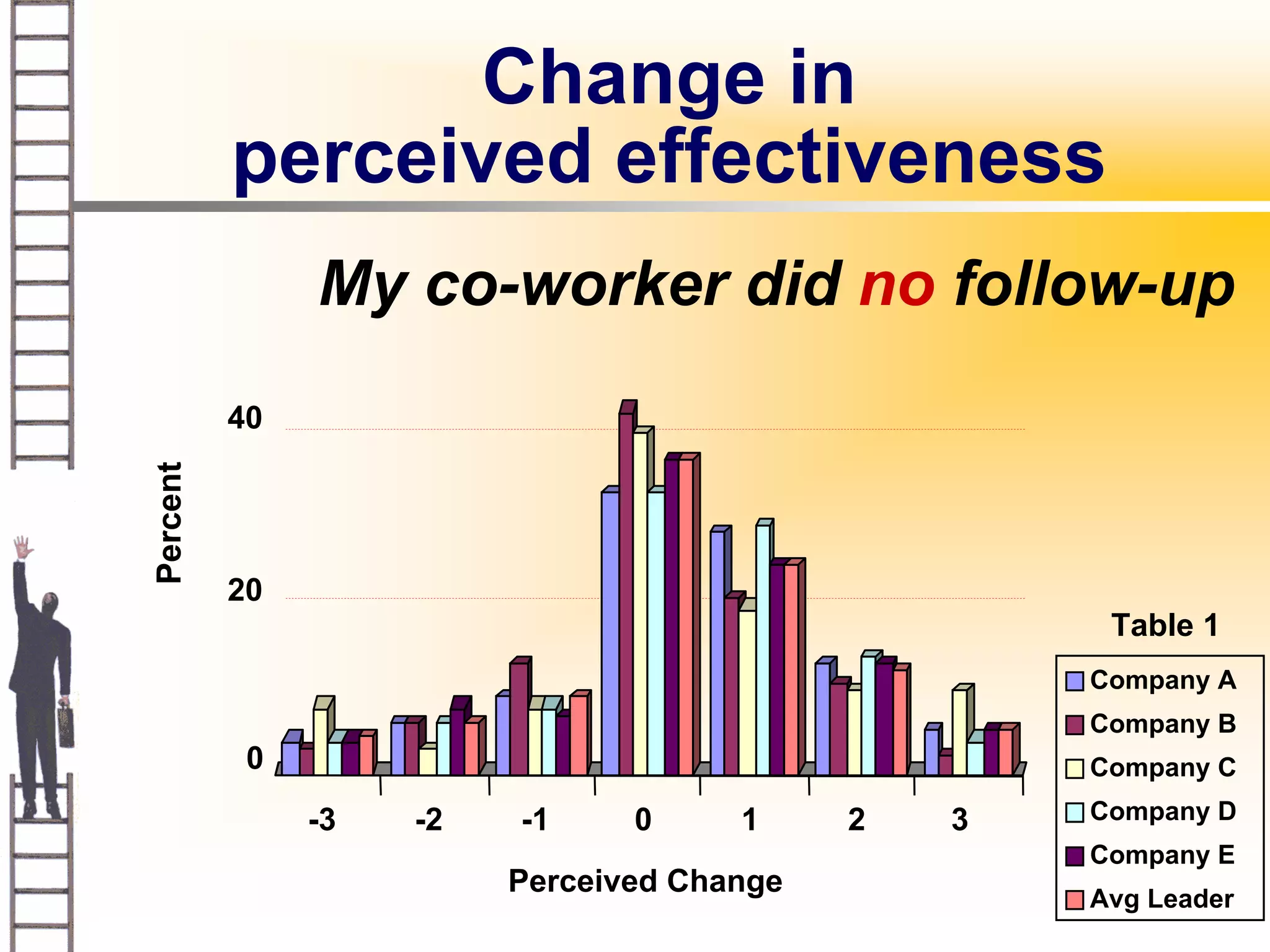
Change in
          perceived effectiveness
               My co-worker did no follow-up
          40
Percent


          20
                                                     Table 1
                                                    Company A
                                                    Company B
           0                                        Company C

               -3   -2   -1     0     1     2   3   Company D
                                                    Company E
                         Perceived Change
                                                    Avg Leader
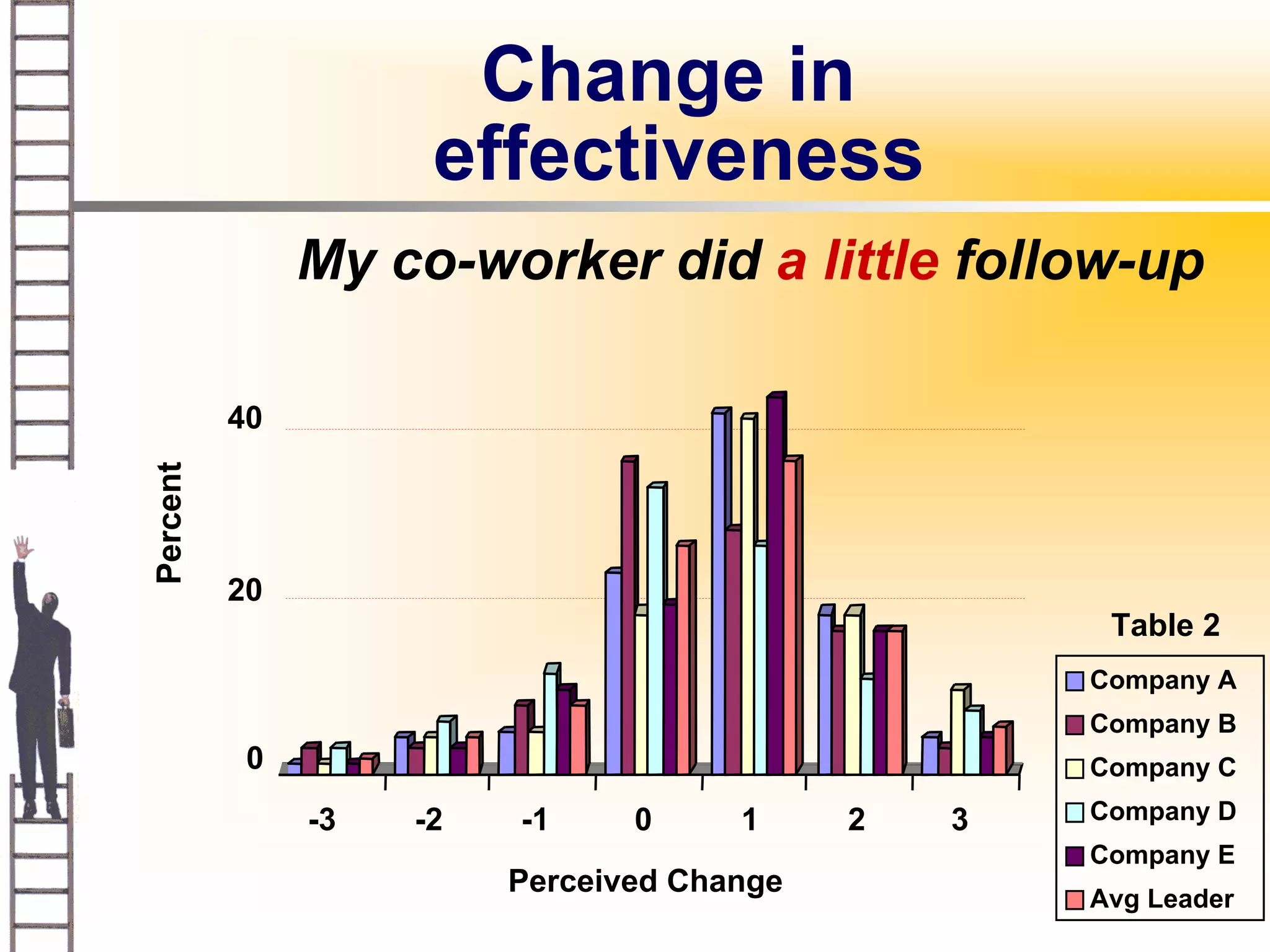
Change in
                     effectiveness
               My co-worker did a little follow-up

          40
Percent


          20
                                                     Table 2
                                                    Company A
                                                    Company B
           0                                        Company C

               -3   -2   -1     0     1     2   3   Company D
                                                    Company E
                         Perceived Change
                                                    Avg Leader
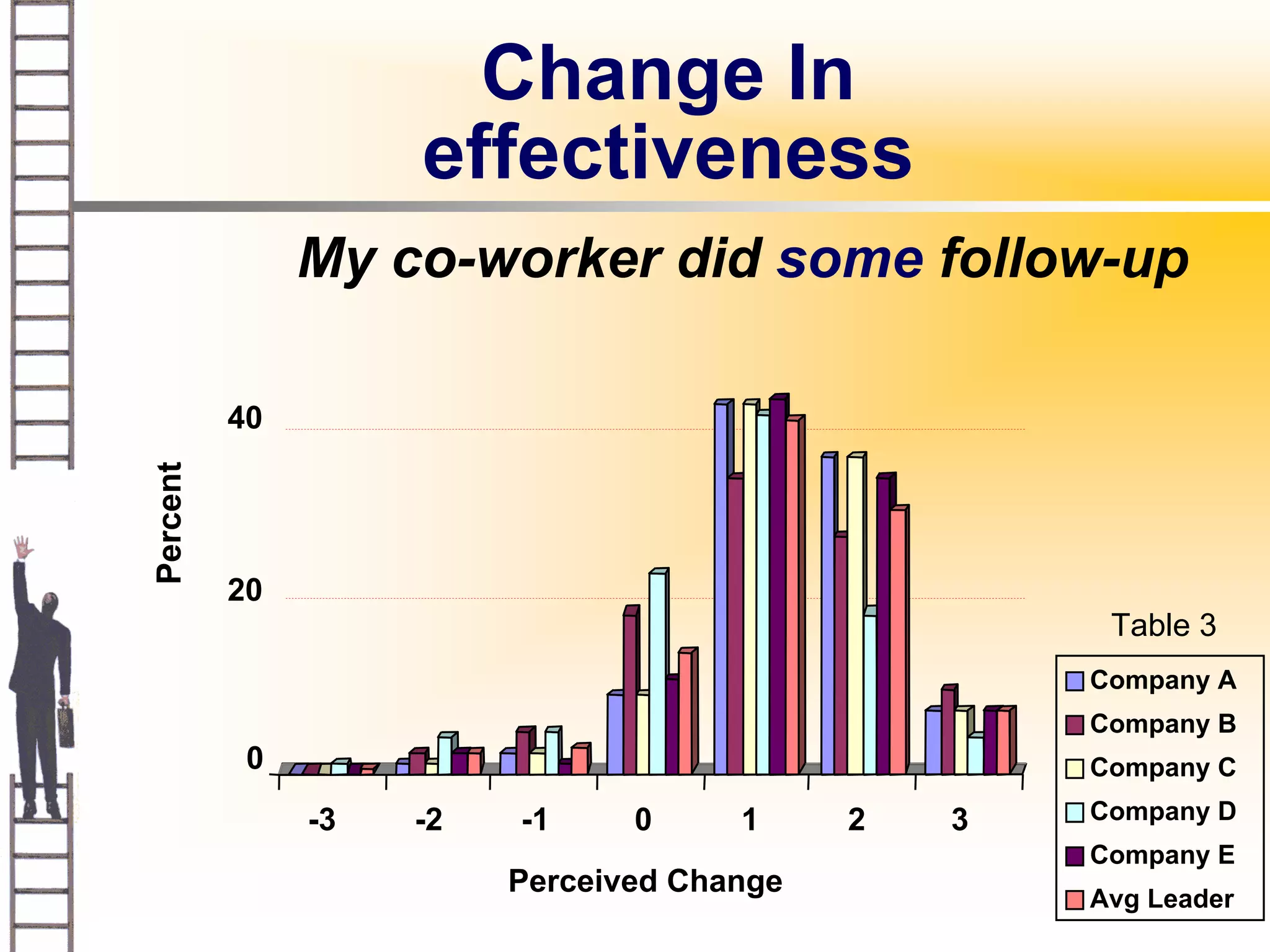
Change In
                    effectiveness
               My co-worker did some follow-up

          40
Percent


          20
                                                     Table 3
                                                    Company A
                                                    Company B
           0                                        Company C

               -3   -2   -1     0     1     2   3   Company D
                                                    Company E
                         Perceived Change
                                                    Avg Leader
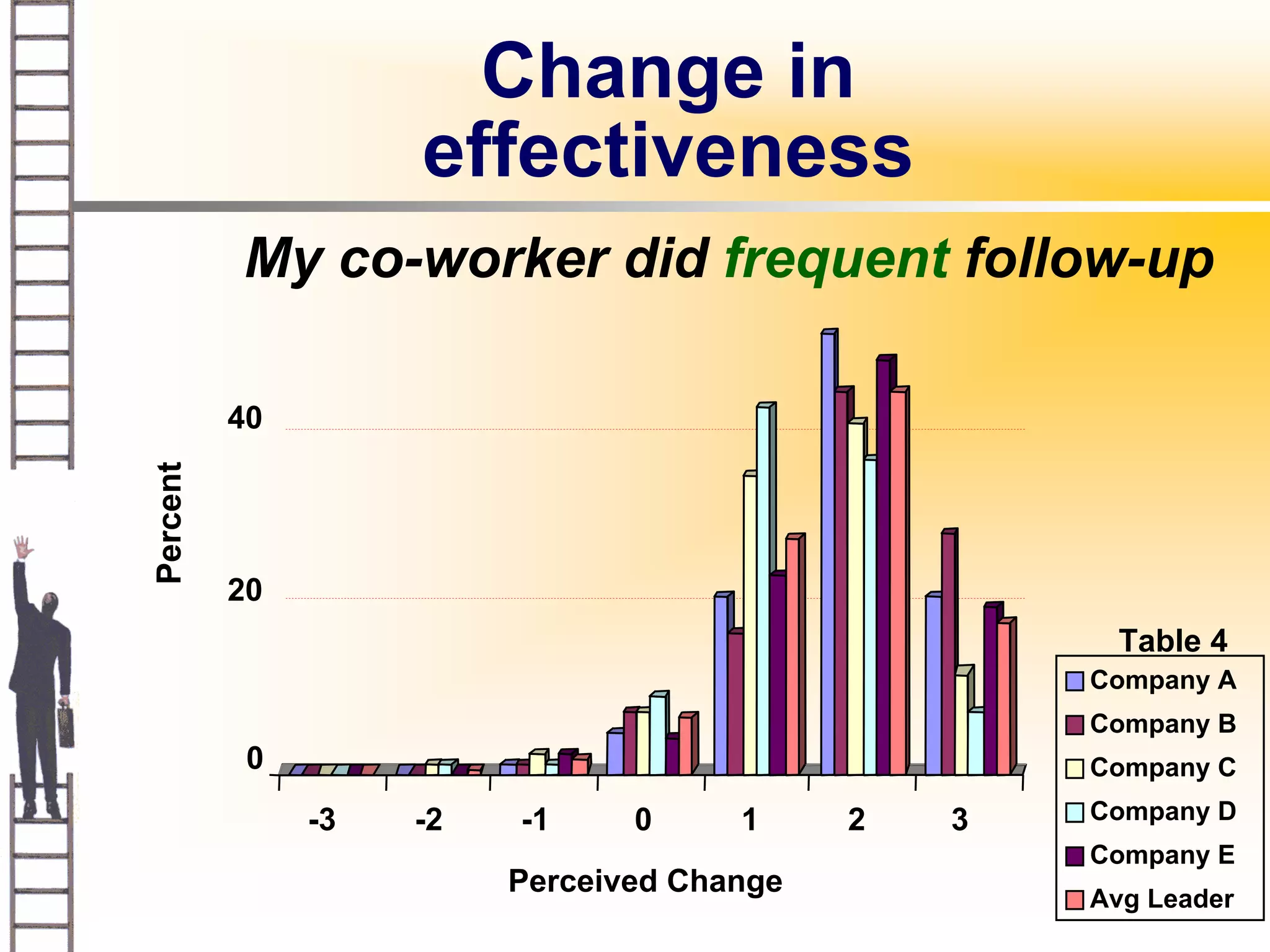
Change in
                    effectiveness
          My co-worker did frequent follow-up

          40
Percent


          20
                                                     Table 4
                                                    Company A
                                                    Company B
           0                                        Company C

               -3   -2   -1     0     1     2   3   Company D
                                                    Company E
                         Perceived Change
                                                    Avg Leader
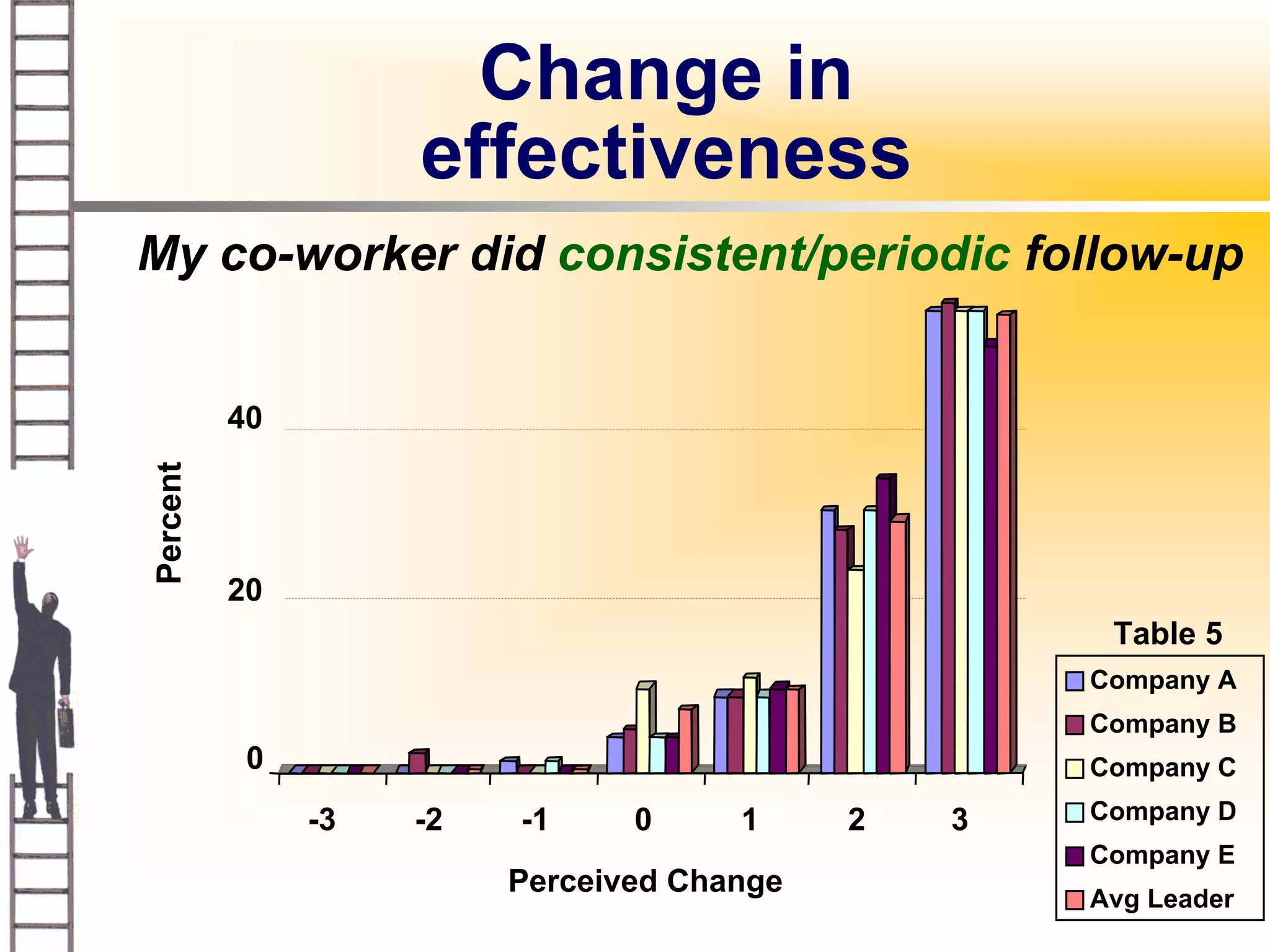
Change in
                    effectiveness
My co-worker did consistent/periodic follow-up


          40
Percent


          20
                                                     Table 5
                                                    Company A
                                                    Company B
           0                                        Company C

               -3   -2   -1     0     1     2   3   Company D
                                                    Company E
                         Perceived Change
                                                    Avg Leader
Key learnings
• Follow-up works.
• The “program of the year” doesn’t work.
• This process works around the world.
• Many training and development programs
  measure the wrong things!
• This process works at home as well as work.
• There is no reason that internal or peer
  coaches cannot be as effective – or even
  more effective – than external coaches!
The ‘daily question’ process
• Writing your questions
• Daily follow-up
• Ensuring that your daily behavior
  is aligned with your values
Determining what is really
 important for you to change

• As a person
• As a professional
Determining what is really
 important for you to change

• As a person
• As a professional
Determining what is really
 important for you to change

• As a person
• As a professional

Cisco Ps2009 Marshall Goldsmith

  • 1.
    Cisco Helping Successful People Get Even Better Dr. Marshall Goldsmith Marshall@MarshallGoldsmith.com www.MarshallGoldsmithLibrary.com
  • 2.
    Teaching leaders whatto STOP “We spend a lot of time helping leaders learn what to do, we don’t spend enough time helping leaders learn what to stop.” Peter Drucker
  • 3.
    Goals • Know howto use ‘what to stop’ in our personal development. • Practice and be ready to use feedforward. • Learn a proven model that you can use to develop yourself. • Be better able to help others change behavior. • Discuss peer coaching – how to do it – and why it can be so effective.
  • 4.
    Classic challenges for successful people • Winning too much • Adding too much value • Telling the world how smart we really are • “I already knew that” • Passing judgment
  • 5.
    What percent ofall interpersonal communication time is spent on… • People talking about how smart, special or wonderful they are (or listening to someone do this) - or • People talking about how stupid, inept or bad someone else is (or listening to someone do this)?
  • 6.
    Using small amountsof money to create large changes in behavior • No, but, however • Great, but (however) • Destructive comments
  • 7.
    Feedforward • The feedforwardexercise • Letting go of the past • Listening to suggestions without judging • Learning as much as you can • Helping as much as you can • Learning points to help you be a great coach
  • 8.
    Peer coaching practice •What is your behavior for change? • What did you learn in the feedforward process? • What are you going to do about it? • Solicit ideas that will help to ensure ‘back on the job’ execution • Repeat the process with your partner
  • 9.
    Developing yourself as a leader and partner • ASK • LISTEN • THINK • THANK • RESPOND • INVOLVE • CHANGE • FOLLOW-UP
  • 10.
    “Leadership is a Contact Sport” • Summary impact research • Over 86,000 participants • Eight major corporations • Published in Strategy+Business
  • 11.
    The eight corporations • Aerospace / defense • Financial services • Electronic manufacturing • Diversified services • Media • Telecommunications • Pharmaceutical / healthcare • High-tech manufacturing
  • 12.
    Commonalities • Multi-rater feedback • Feedback consultant • One to three areas for improvement • Discussion with co-workers • On-going follow up • Custom-designed mini-survey
  • 13.
    Change in perceived effectiveness My co-worker did no follow-up 40 Percent 20 Table 1 Company A Company B 0 Company C -3 -2 -1 0 1 2 3 Company D Company E Perceived Change Avg Leader
  • 14.
    Change in effectiveness My co-worker did a little follow-up 40 Percent 20 Table 2 Company A Company B 0 Company C -3 -2 -1 0 1 2 3 Company D Company E Perceived Change Avg Leader
  • 15.
    Change In effectiveness My co-worker did some follow-up 40 Percent 20 Table 3 Company A Company B 0 Company C -3 -2 -1 0 1 2 3 Company D Company E Perceived Change Avg Leader
  • 16.
    Change in effectiveness My co-worker did frequent follow-up 40 Percent 20 Table 4 Company A Company B 0 Company C -3 -2 -1 0 1 2 3 Company D Company E Perceived Change Avg Leader
  • 17.
    Change in effectiveness My co-worker did consistent/periodic follow-up 40 Percent 20 Table 5 Company A Company B 0 Company C -3 -2 -1 0 1 2 3 Company D Company E Perceived Change Avg Leader
  • 18.
    Key learnings • Follow-upworks. • The “program of the year” doesn’t work. • This process works around the world. • Many training and development programs measure the wrong things! • This process works at home as well as work. • There is no reason that internal or peer coaches cannot be as effective – or even more effective – than external coaches!
  • 19.
    The ‘daily question’process • Writing your questions • Daily follow-up • Ensuring that your daily behavior is aligned with your values
  • 20.
    Determining what isreally important for you to change • As a person • As a professional
  • 21.
    Determining what isreally important for you to change • As a person • As a professional
  • 22.
    Determining what isreally important for you to change • As a person • As a professional