CIRCULATORY
SYSTEM
Internal Transport Systems
 All animals must keep their cells supplied with
nutrients and oxygen, and all must get rid of
cellular wastes.
 Some invertebrates, including flatworms, rely
on diffusion alone.
 Diffusion only works over short distances to
move materials quickly.
Internal Transport Systems
 A circulatory system is an organ system that
speeds the distribution of materials within an
animal body.
 It includes one or more hearts (muscular
pumps) that propel blood (the circulatory
fluid) through vessels that extend through the
body.
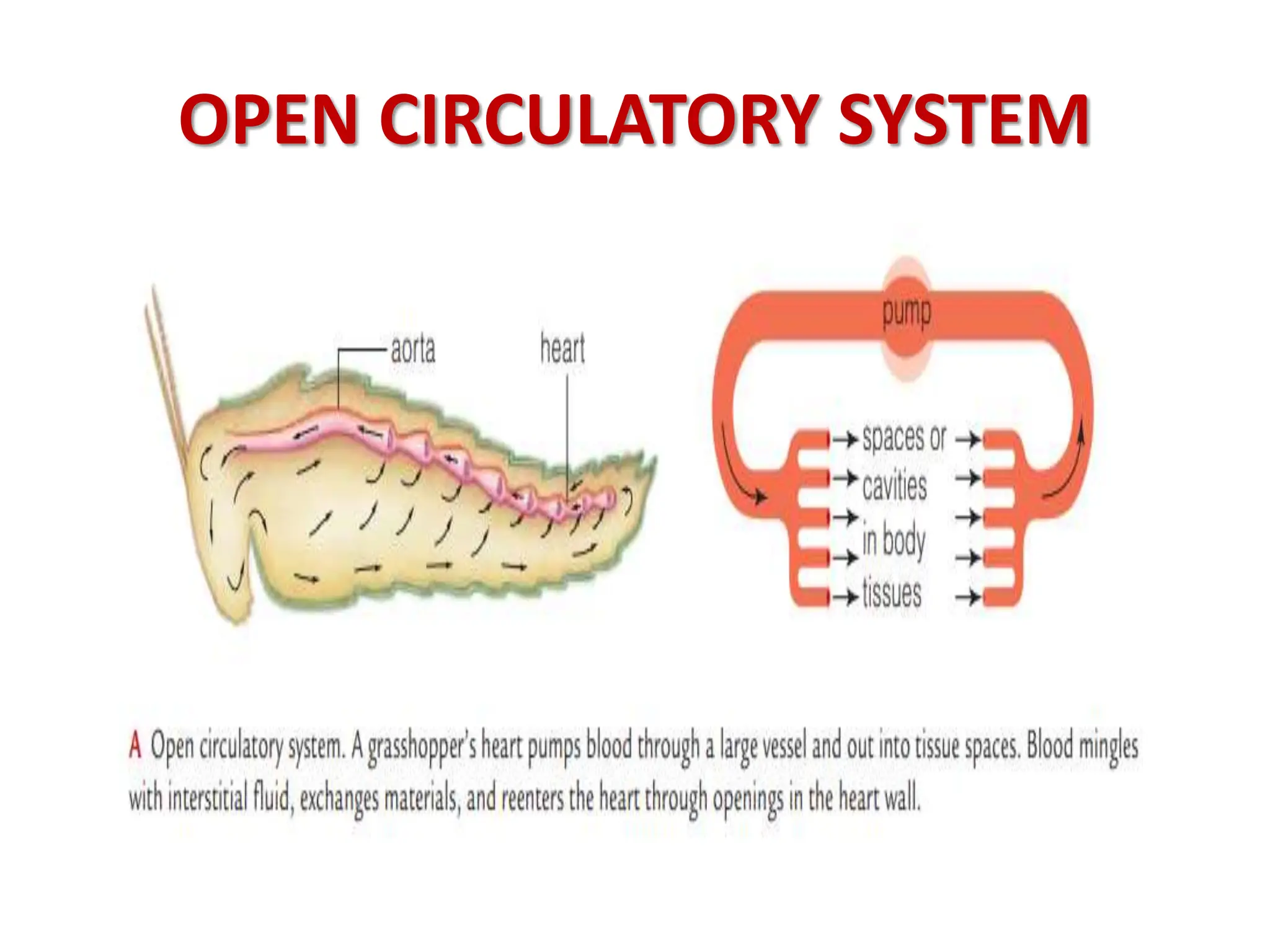
OPEN CIRCULATORY SYSTEM
 A heart or hearts pump blood into large
vessels that empty into spaces around body
tissues.
 The blood of an open circulatory system mixes
with the interstitial fluid and makes direct
exchanges with cells before it gets drawn back
into the heart.
OPEN CIRCULATORY SYSTEM
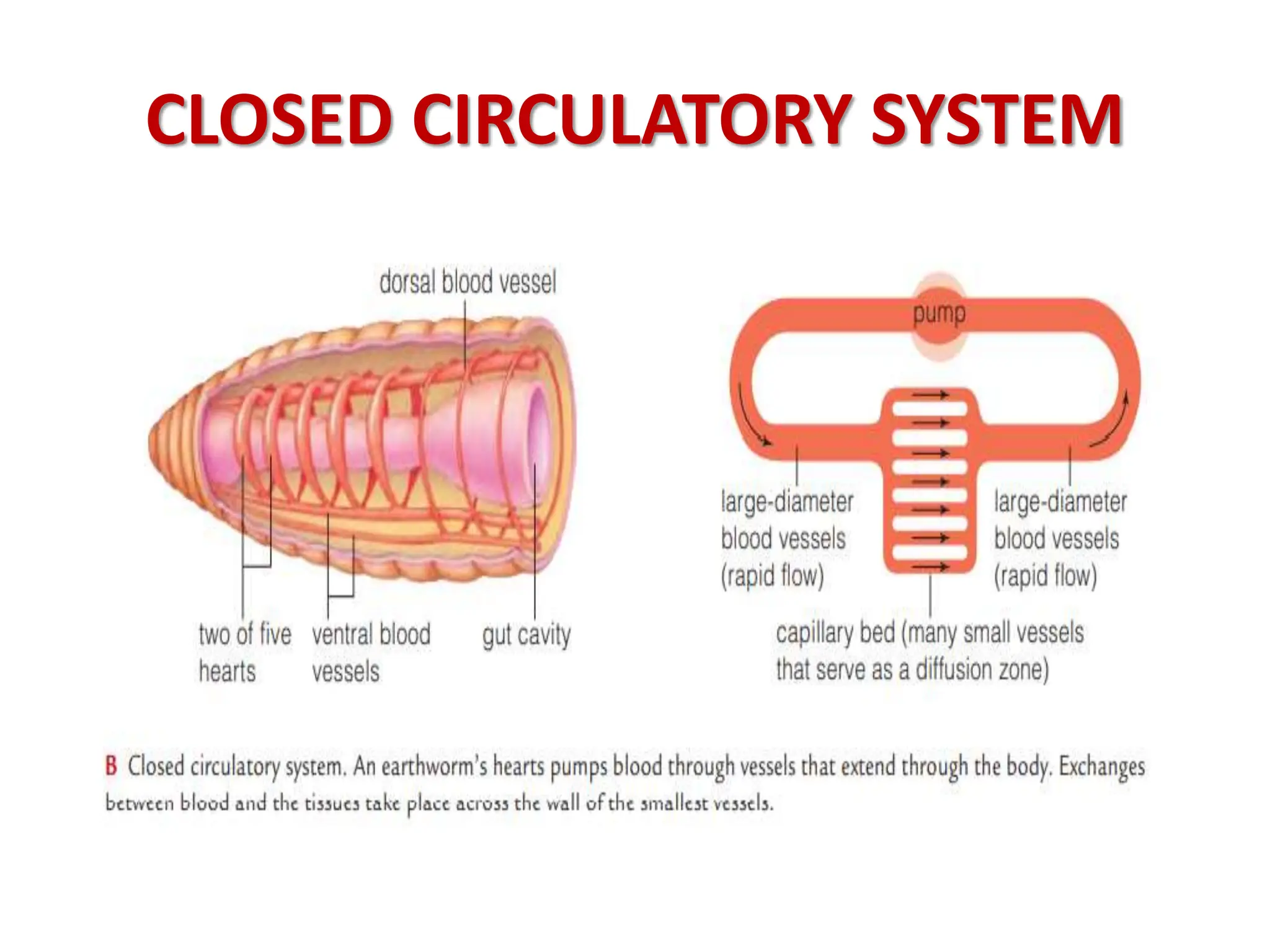
CLOSED CIRCULATORY SYSTEM
 A heart or hearts pump blood through a
continuous series of vessels.
 Distributes substances faster than an open
one.
 “Closed” because blood does not flow out of
blood vessels to bathe the tissues.
 Diffusion across the smallest-diameter blood
vessels, the capillaries.
CLOSED CIRCULATORY SYSTEM
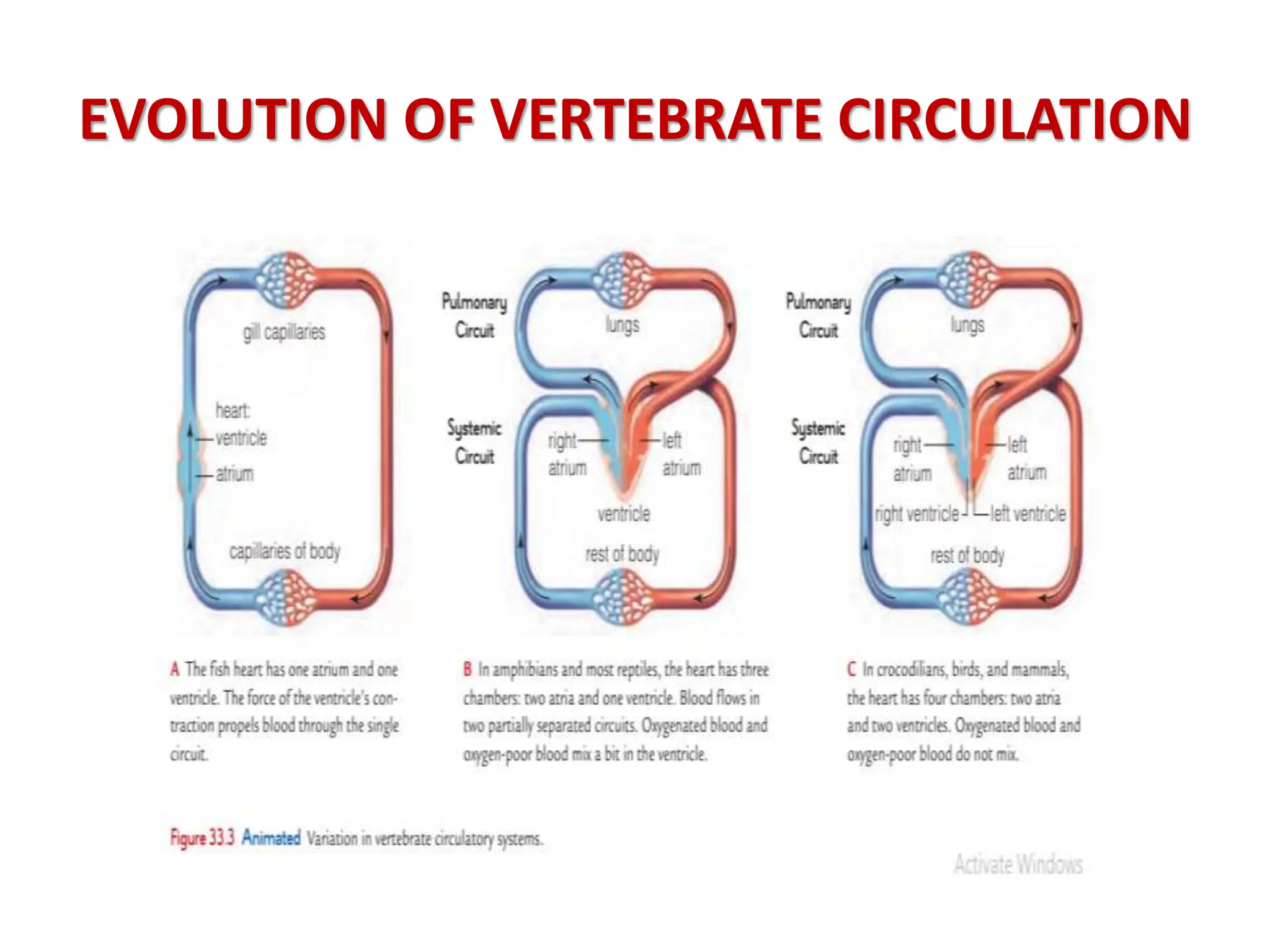
EVOLUTION OF VERTEBRATE CIRCULATION
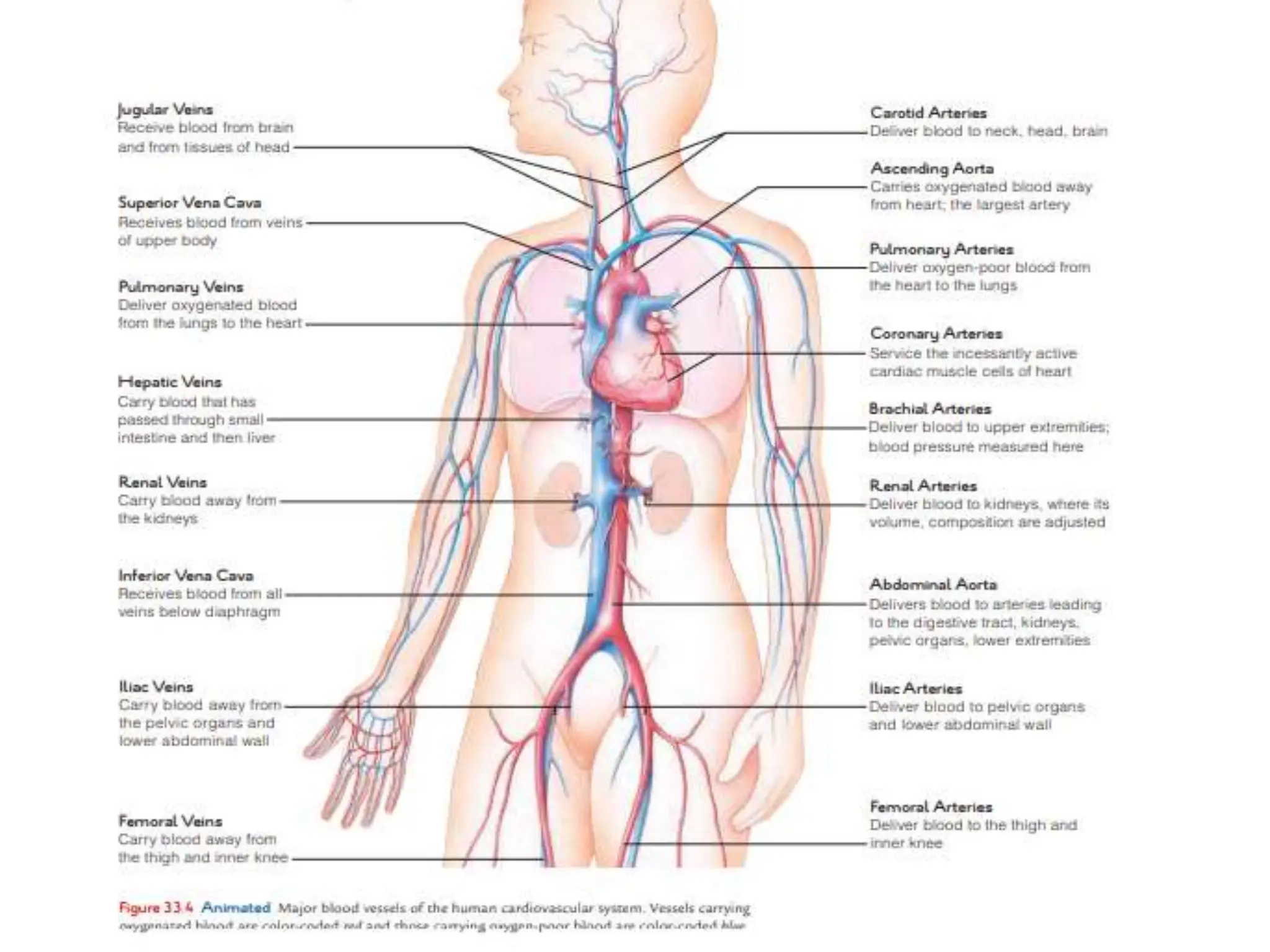
THE HUMAN CARDIOVASCULAR SYSTEM
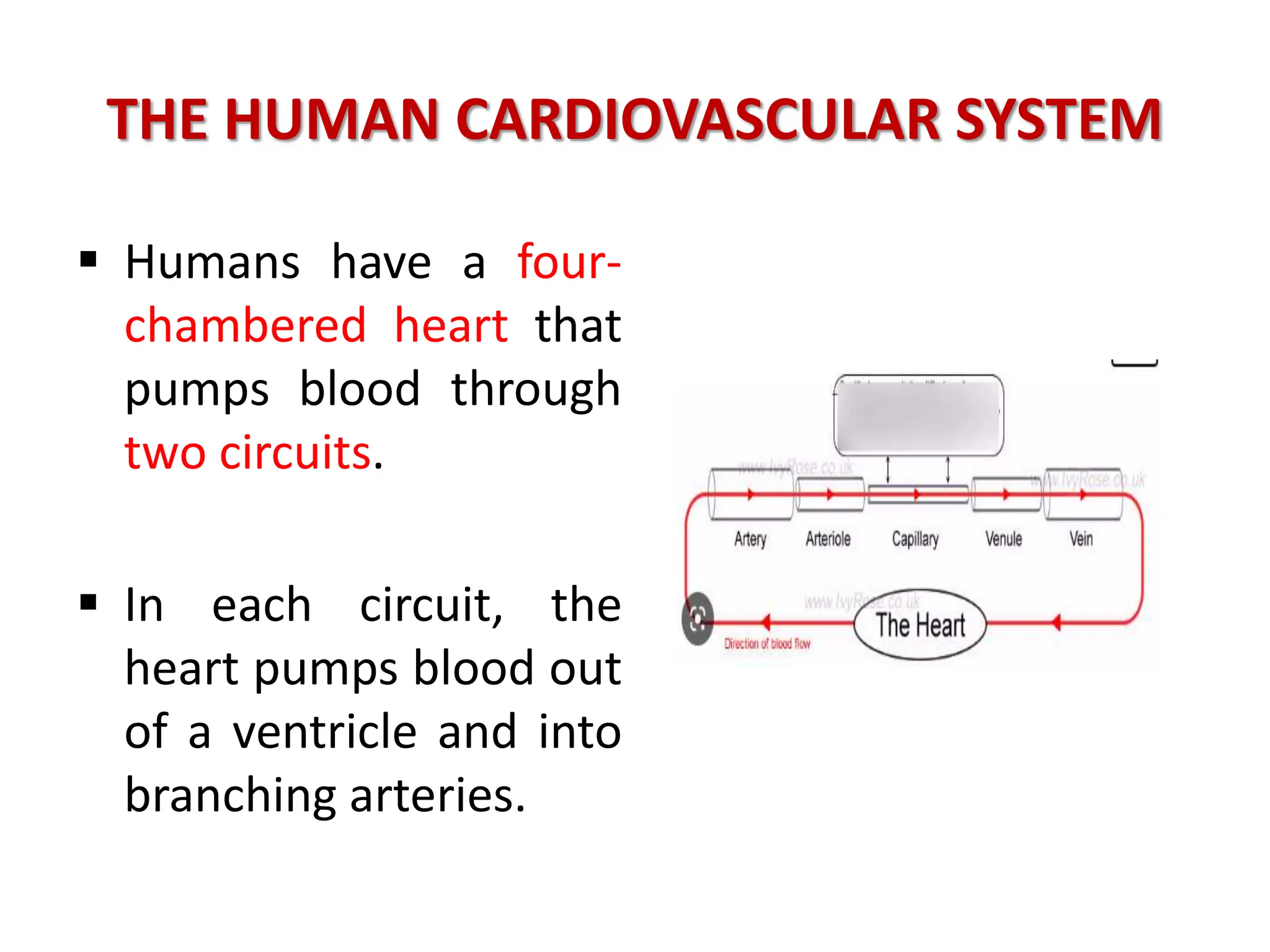
 Humans have a four-
chambered heart that
pumps blood through
two circuits.
 In each circuit, the
heart pumps blood out
of a ventricle and into
branching arteries.
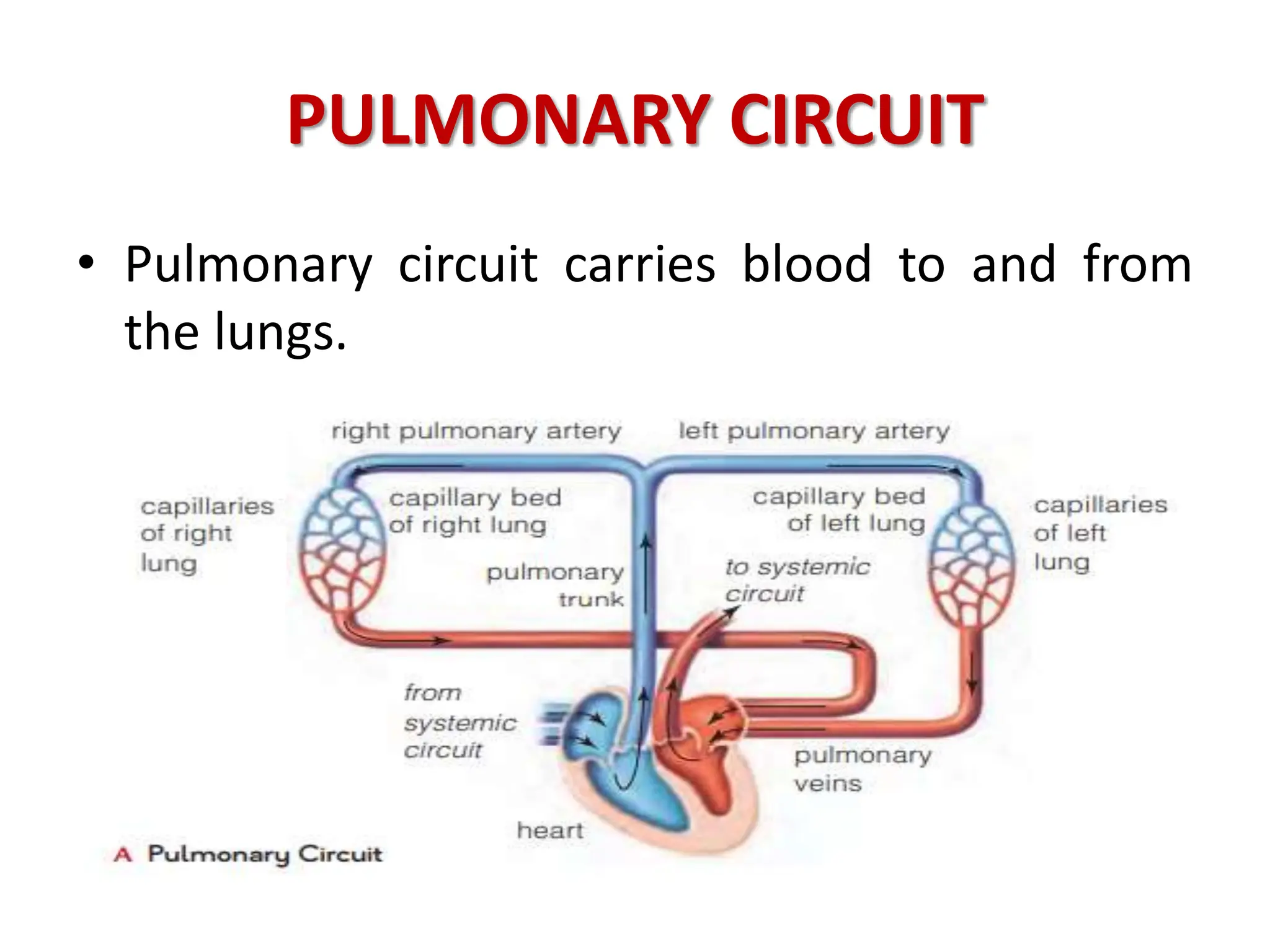
PULMONARY CIRCUIT
• Pulmonary circuit carries blood to and from
the lungs.
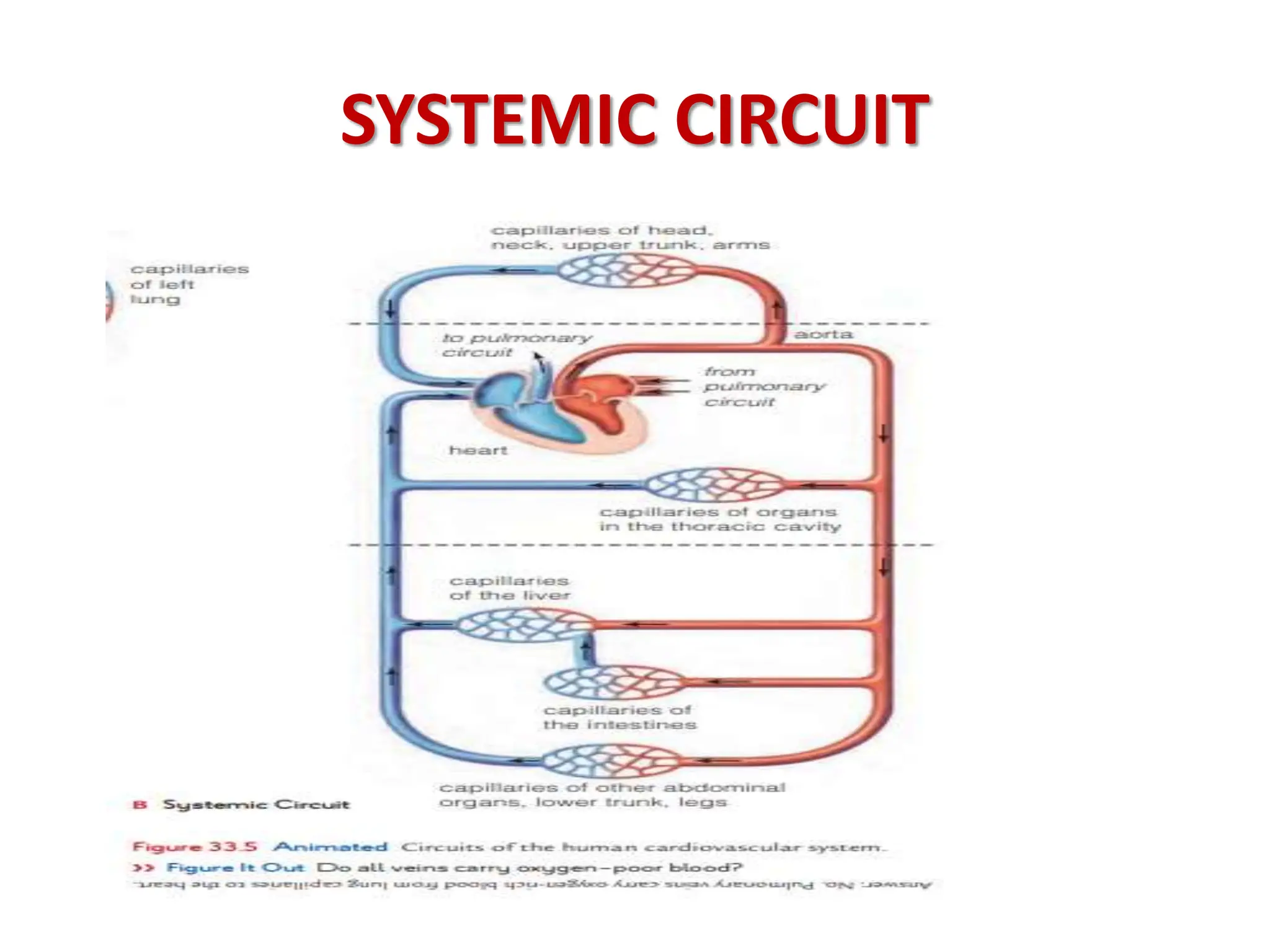
SYSTEMIC CIRCUIT
THE HUMAN CARDIOVASCULAR SYSTEM
Two-capillary journey
STRUCTURE OF THE HEART
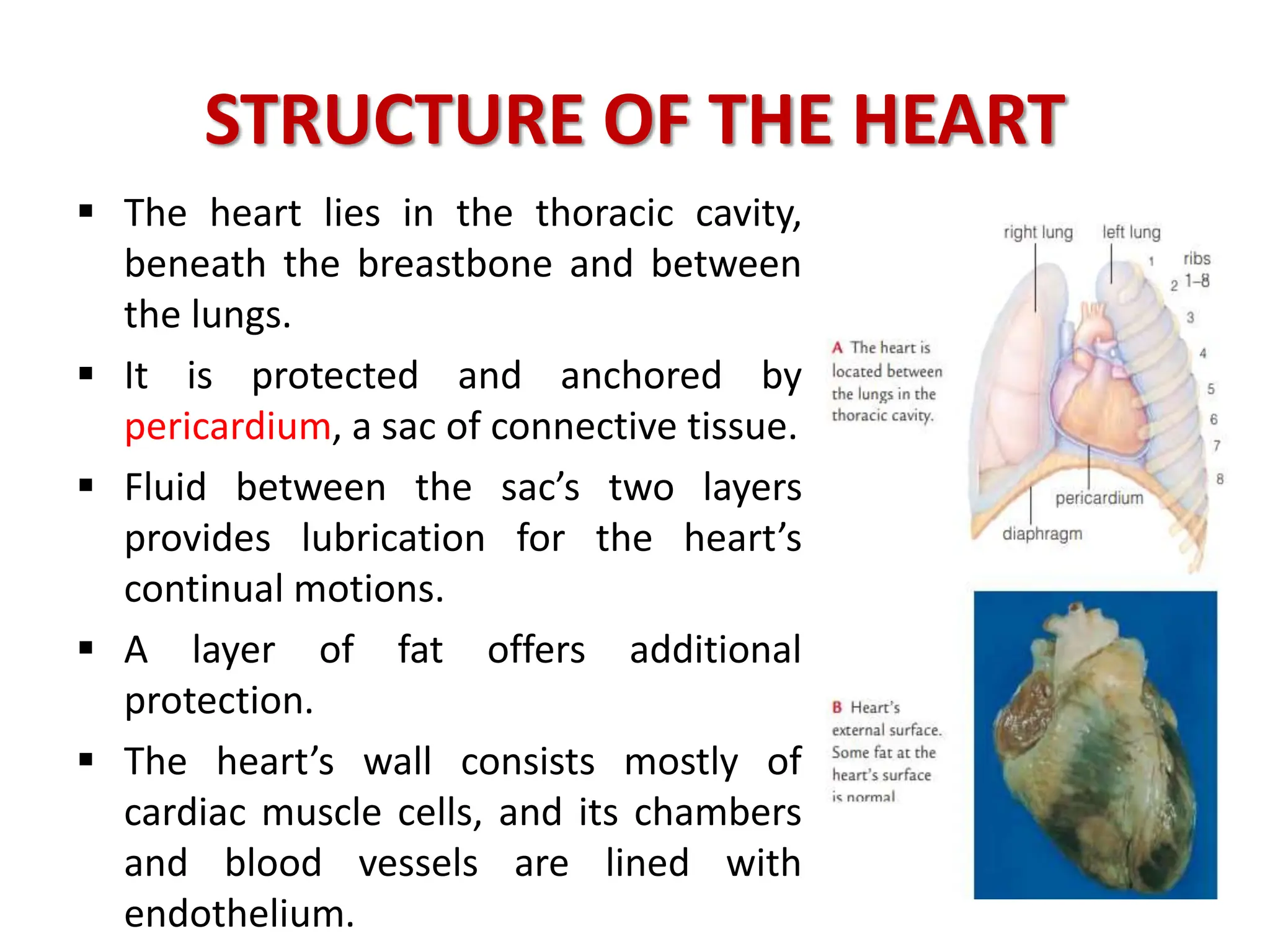
 The heart lies in the thoracic cavity,
beneath the breastbone and between
the lungs.
 It is protected and anchored by
pericardium, a sac of connective tissue.
 Fluid between the sac’s two layers
provides lubrication for the heart’s
continual motions.
 A layer of fat offers additional
protection.
 The heart’s wall consists mostly of
cardiac muscle cells, and its chambers
and blood vessels are lined with
endothelium.
STRUCTURE OF THE HEART
 Each side of the human heart has two
chambers: An atrium receives blood from
veins, and a ventricle pumps blood into
arteries.
 Pressure-sensitive valves function like one-
way doors to control the flow of blood
through the heart.
 High fluid pressure forces a valve open.
FLOW TO, THROUGH, AND FROM THE HEART
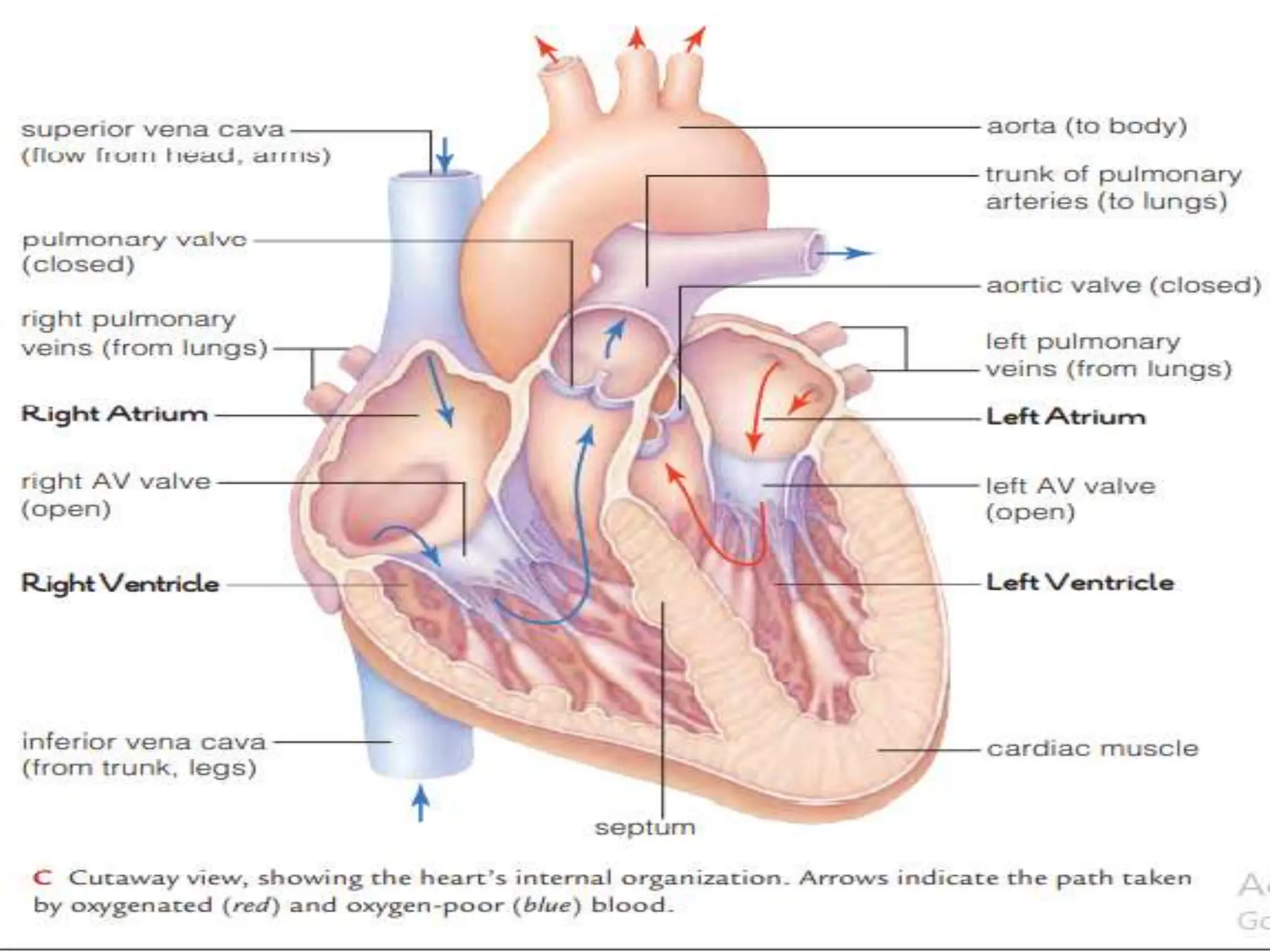
 Two big veins deliver oxygen-poor blood from
the body to the right atrium.
 Superior vena cava delivers blood from the
upper regions of the body.
 Inferior vena cava delivers blood from lower
regions.
FLOW TO, THROUGH, AND FROM THE HEART
 Blood from the right atrium flows through the
right atrioventricular (AV) valve into the right
ventricle.
 The right ventricle pumps it through the
pulmonary valve and into the pulmonary
trunk, a vessel that branches into two
pulmonary arteries.
 Each pulmonary artery carries blood to a lung.
FLOW TO, THROUGH, AND FROM THE HEART
 After passing through the lung, the now-
oxygenated blood returns to the left atrium
via pulmonary veins.
 The blood then flows through the left
atrioventricular (AV) valve into the left
ventricle.
 The left ventricle pumps the blood through
the aortic valve into the aorta, and from there
it flows to tissues of the body.
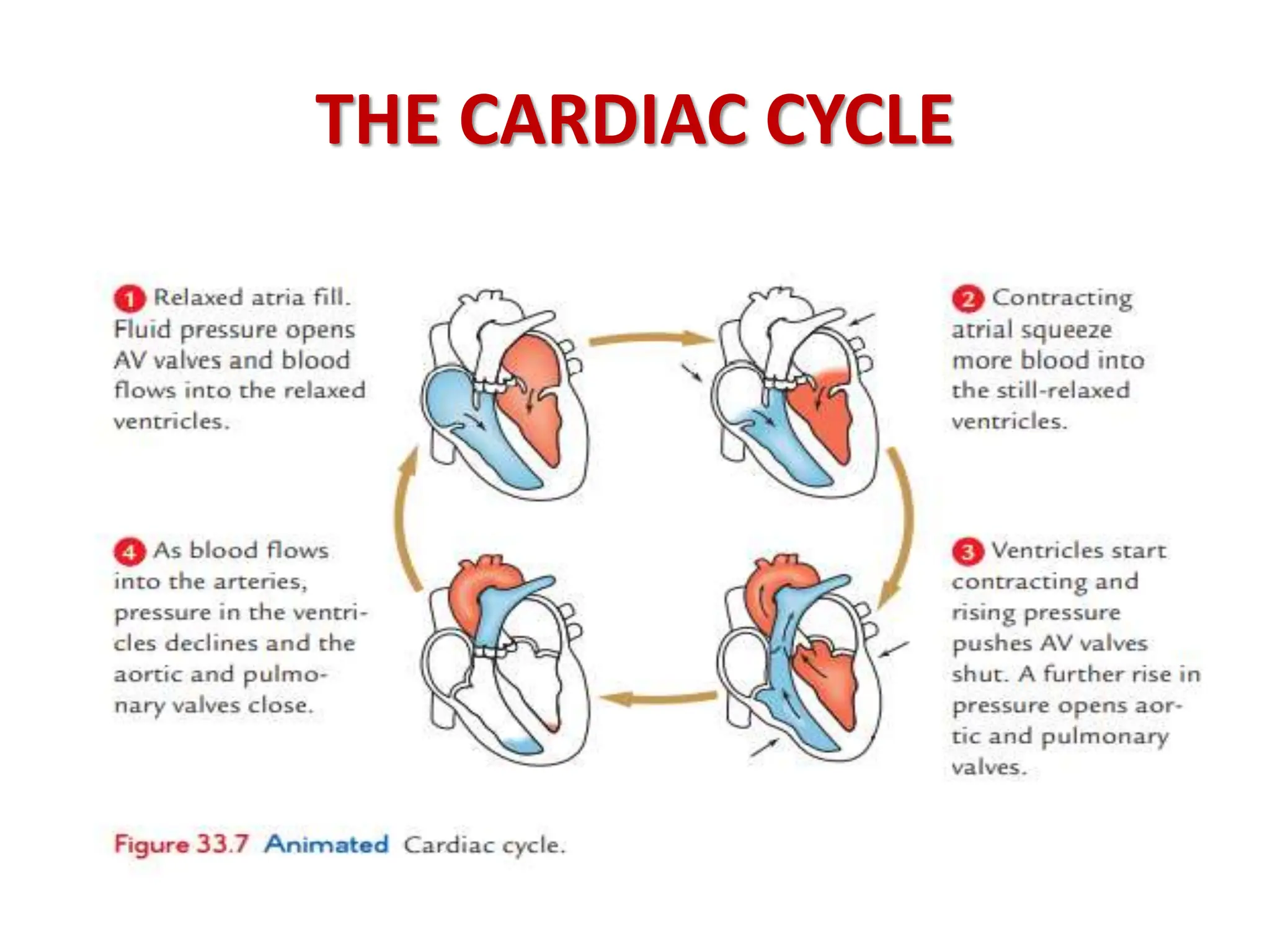
THE CARDIAC CYCLE
 The events that occur from the onset of one
heartbeat to another are collectively called
the cardiac cycle.
 During this cycle, the heart’s chambers
alternate through diastole (relaxation) and
systole (contraction).
THE CARDIAC CYCLE
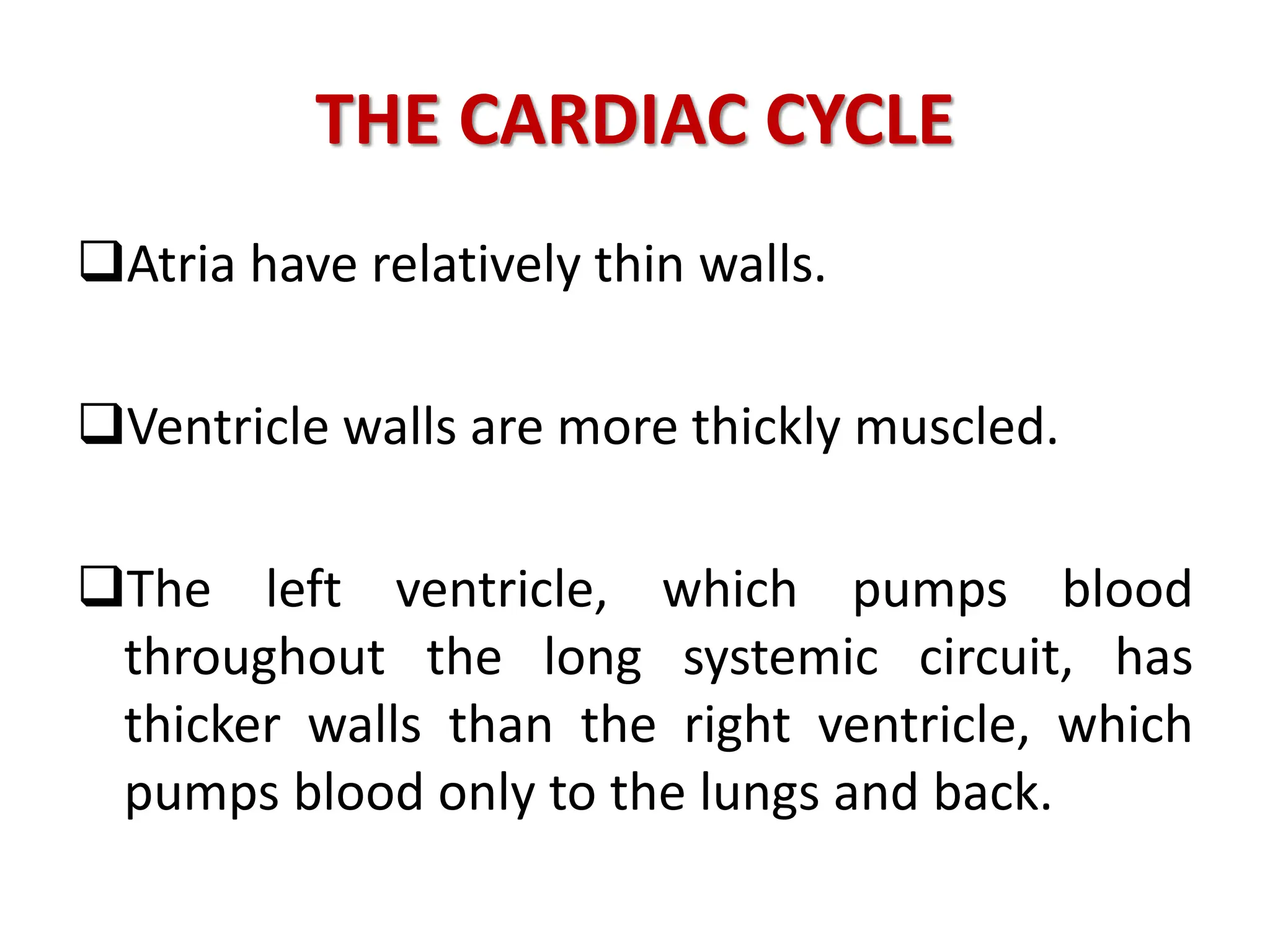
THE CARDIAC CYCLE
Atria have relatively thin walls.
Ventricle walls are more thickly muscled.
The left ventricle, which pumps blood
throughout the long systemic circuit, has
thicker walls than the right ventricle, which
pumps blood only to the lungs and back.
BLOOD PRESSURE
 Blood pressure is pressure exerted by
blood against the wall of the vessel that
encloses it.
 Blood pressure is highest in arteries,
and declines as blood flows through the
circuit, being lowest in veins.
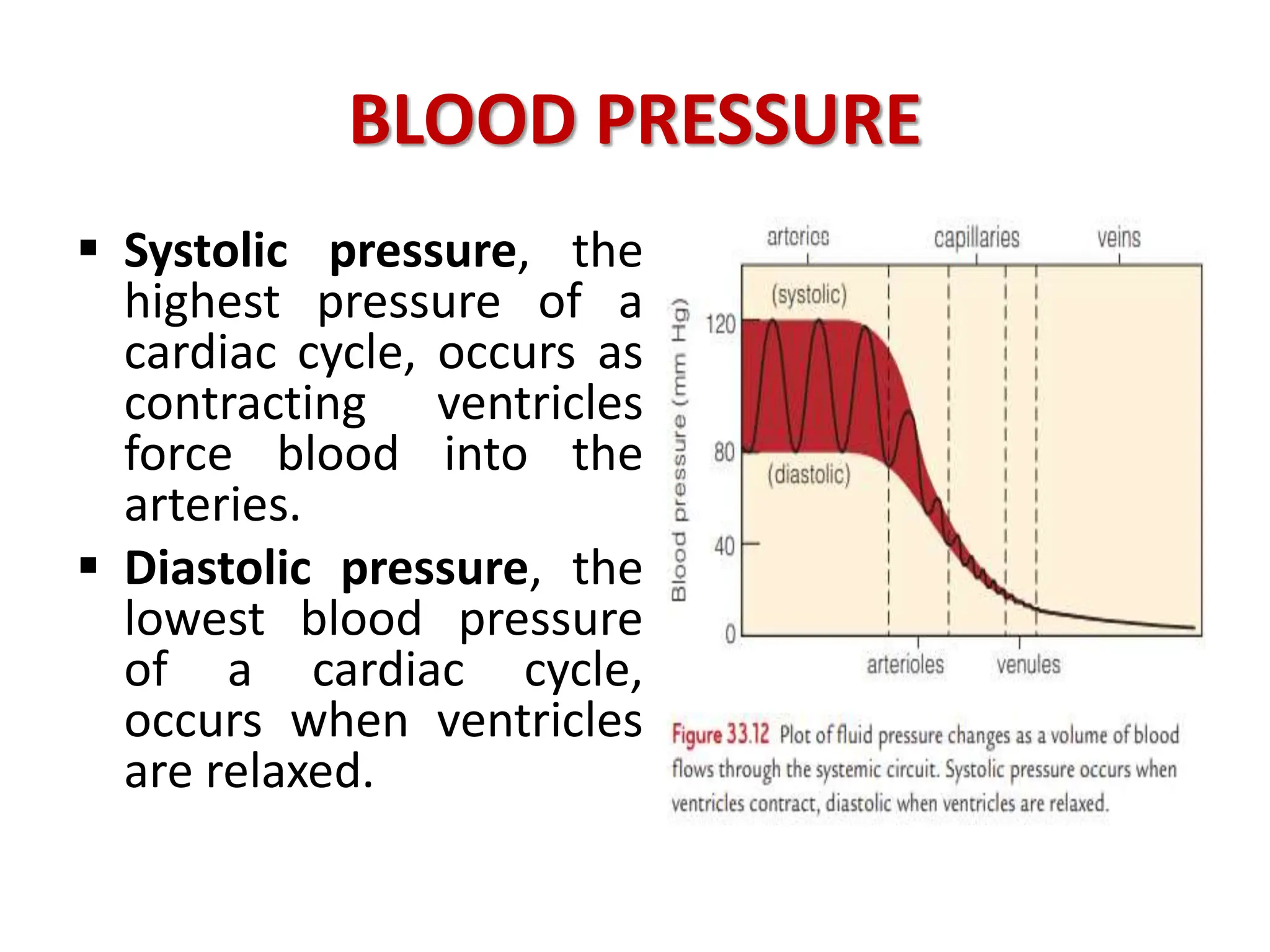
BLOOD PRESSURE
 Systolic pressure, the
highest pressure of a
cardiac cycle, occurs as
contracting ventricles
force blood into the
arteries.
 Diastolic pressure, the
lowest blood pressure
of a cardiac cycle,
occurs when ventricles
are relaxed.
CARDIOVASCULAR DISORDERS
RHYTHMS AND ARRHYTHMIAS
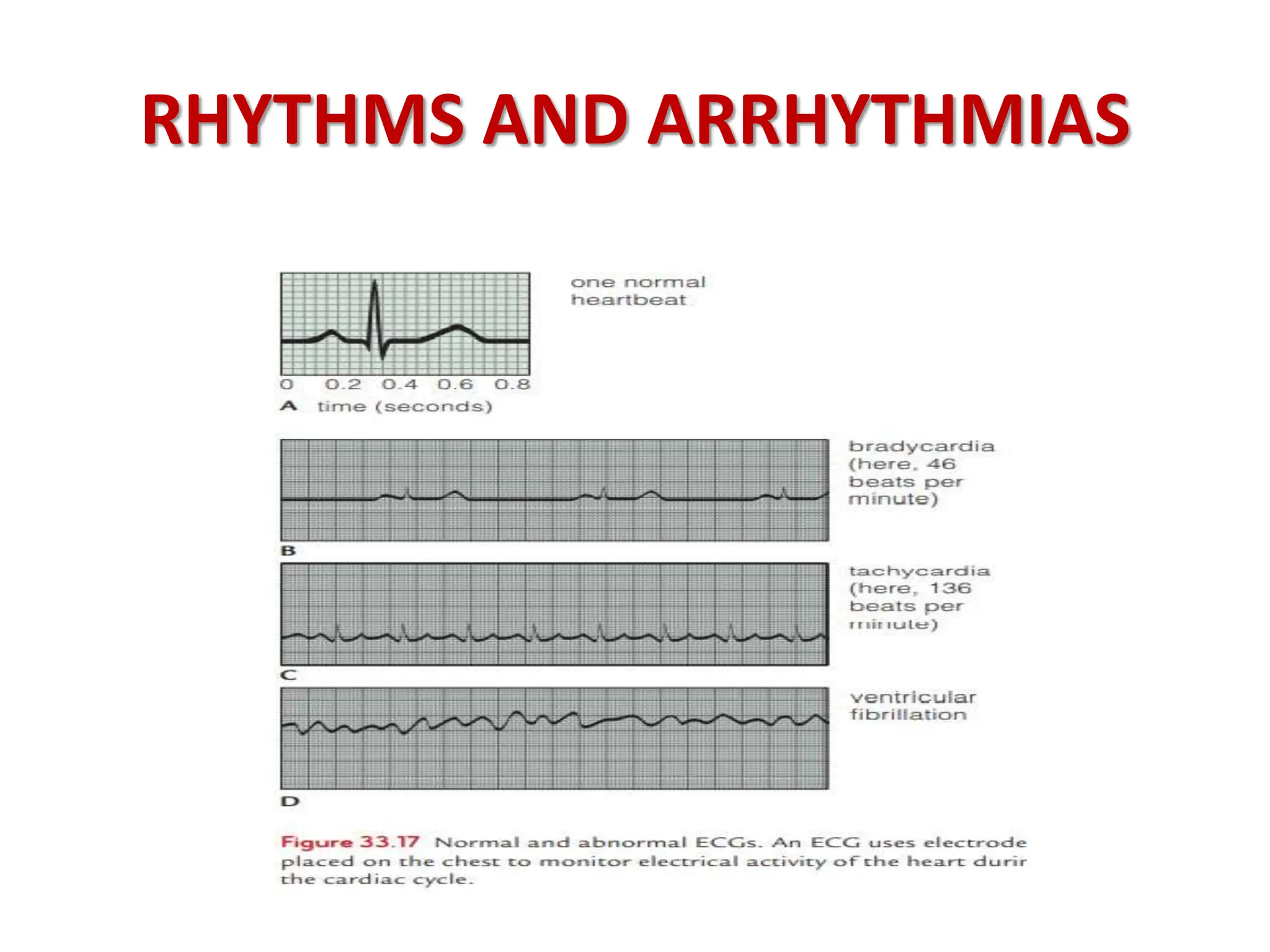
 Electrocardiograms, or ECGs, record the
electrical activity of a beating heart.
 Malfunction of the SA node causes
arrhythmias.
 Sinoatrial (SA) node: Cardiac pacemaker;
group of heart cells that spontaneously emits
rhythmic signals that cause contraction.
RHYTHMS AND ARRHYTHMIAS
 Bradycardia is a below-average resting cardiac
rate.
 Implanting an artificial pacemaker can speed
the heart rate if it falls to the point where slow
flow impairs health.
RHYTHMS AND ARRHYTHMIAS
 Tachycardia is a faster than normal heart rate.
 Many people experience palpitations, or
occasional episodes of tachycardia.
 Palpitations can be brought on by stress, drugs
such as caffeine, an overactive thyroid, or an
underlying heart problem.
RHYTHMS AND ARRHYTHMIAS
 Atrial fibrillation is an arrhythmia in which the
atria do not contract normally, but instead quiver.
 This slows blood flow and increases the risk of
clot formation.
 People with atrial fibrillation are often given
anticlotting medication to lower their risk of
stroke.
 A stroke is an interruption of blood flow that kills
brain cells. Most strokes arise when a clot blocks
a blood vessel in the brain.
RHYTHMS AND ARRHYTHMIAS
 Ventricular fibrillation is an even more
dangerous arrhythmia.
 Ventricles quiver, and pumping falters or
stops, causing loss of consciousness and—if a
normal rhythm is not restored—death.
A defibrillator often can restore the heart’s
normal rhythm by resetting the SA node.
RHYTHMS AND ARRHYTHMIAS
ATHEROSCLEROSIS AND HEART DISEASE
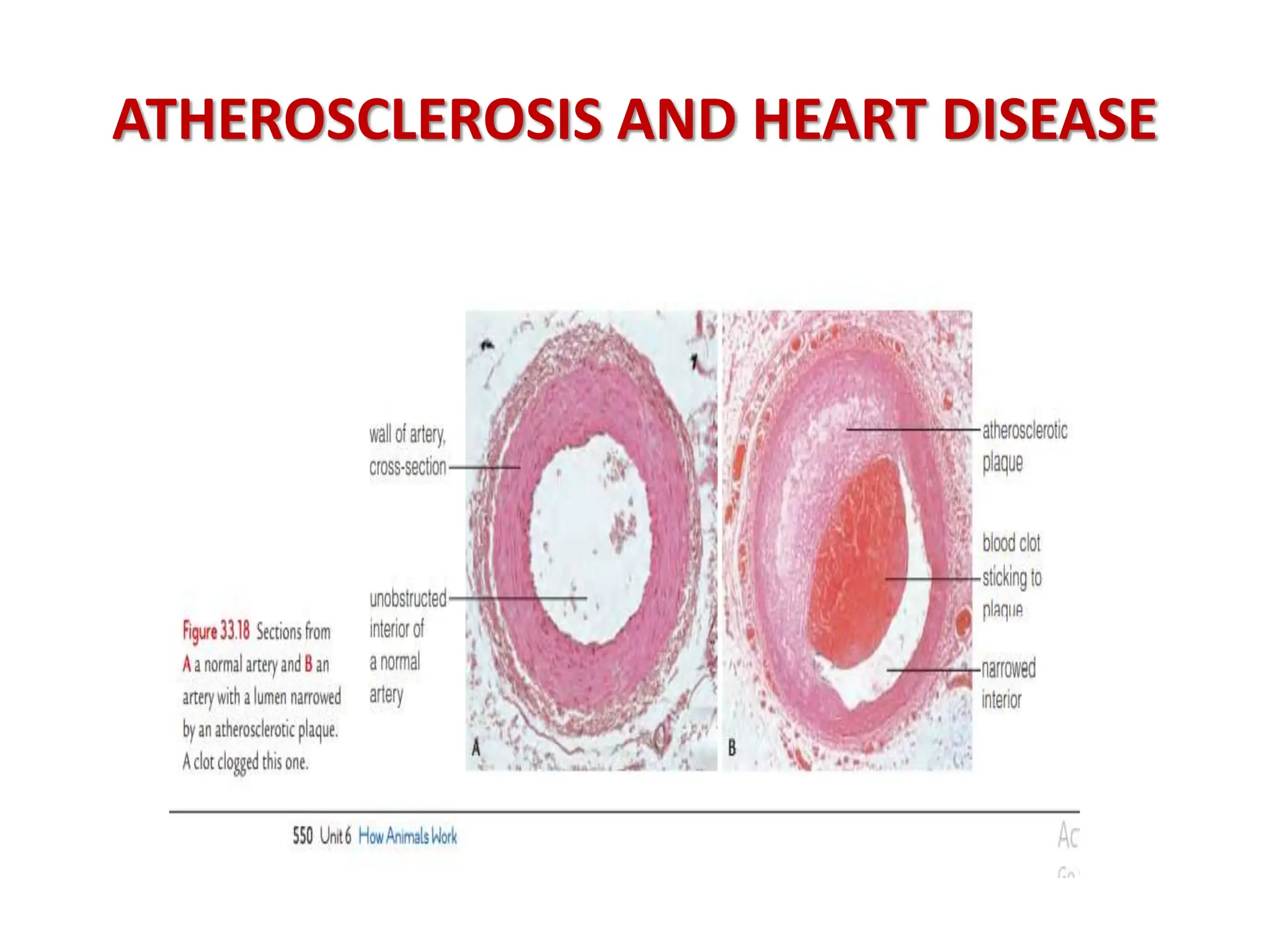
 In atherosclerosis, buildup of lipids in the arterial wall
narrows the lumen, or space inside the vessel.
 Cholesterol plays a role in this “hardening of the
arteries.”
 The human body requires cholesterol to make cell
membranes, myelin sheaths, bile salts, and steroid
hormones.
 The liver makes enough cholesterol to meet these
needs, but more is absorbed from food in the gut.
 Genetics affects how different people’s bodies deal
with an excess of dietary cholesterol.
ATHEROSCLEROSIS AND HEART DISEASE
Low-density lipoproteins, or LDLs
High-density lipoproteins, or HDLs
ATHEROSCLEROSIS AND HEART DISEASE
 When the LDL level in blood rises, so does the
risk of atherosclerosis.
 A buildup of lipids in an artery’s endothelial
lining.
 Fibrous connective tissue proliferates in the
affected area.
 Eventually, a mass, called an atherosclerotic
plaque, bulges into the vessel’s interior,
narrowing its diameter and slowing blood flow.
 A hardened plaque can abrade an artery wall,
thereby triggering clot formation.
ATHEROSCLEROSIS AND HEART DISEASE
 With heart disease, atherosclerosis affects vessels
that supply blood to heart muscle.
 A heart attack occurs when a coronary artery is
completely blocked, most commonly by a clot.
 If the blockage is not removed fast, cardiac
muscle cells die.
 Clot-dissolving drugs can restore blood flow if
they are given within an hour of the onset of an
attack.
ATHEROSCLEROSIS AND HEART DISEASE
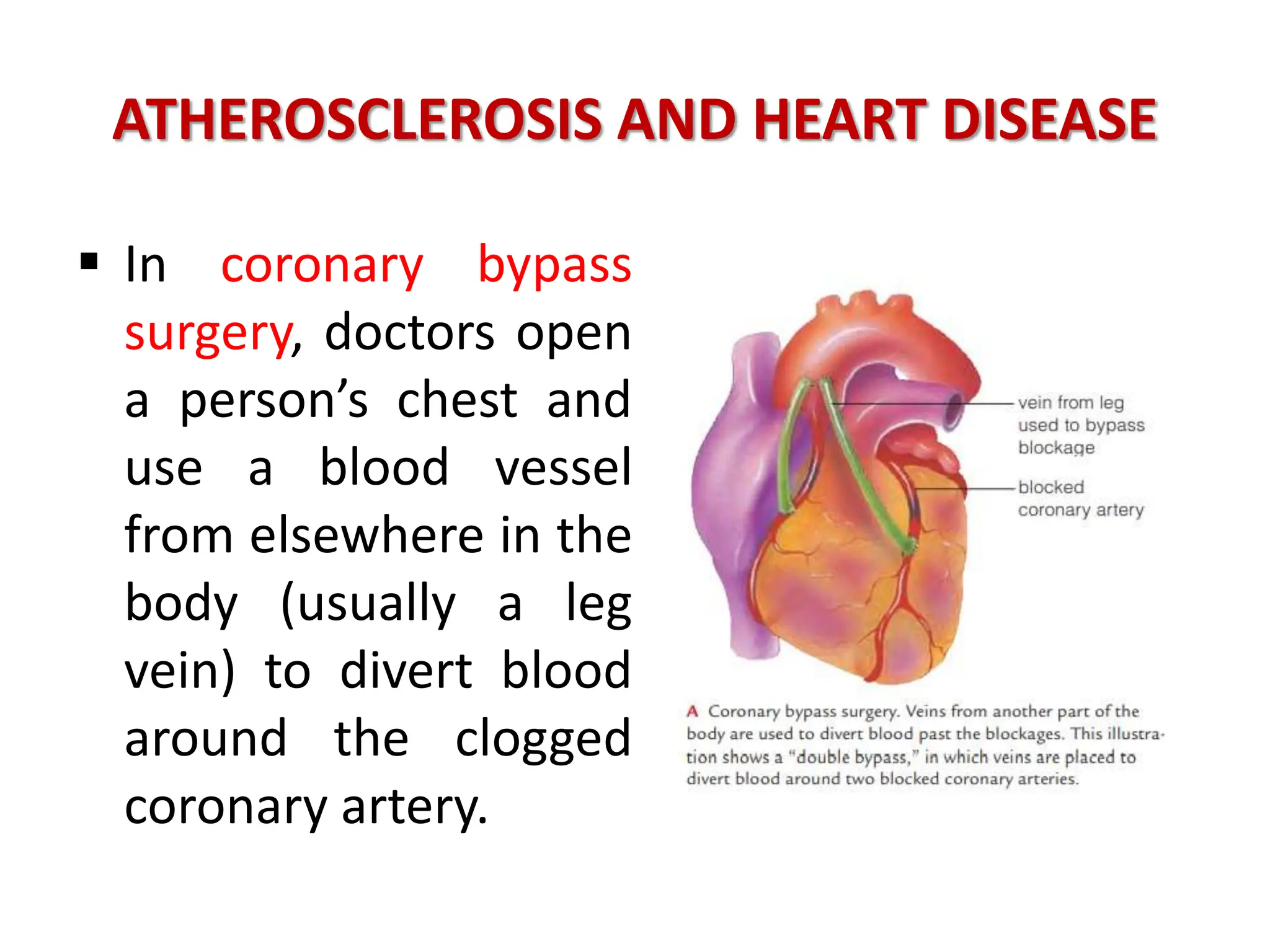
 In coronary bypass
surgery, doctors open
a person’s chest and
use a blood vessel
from elsewhere in the
body (usually a leg
vein) to divert blood
around the clogged
coronary artery.
ATHEROSCLEROSIS AND HEART DISEASE
 In laser angioplasty,
laser beams vaporize
plaques.
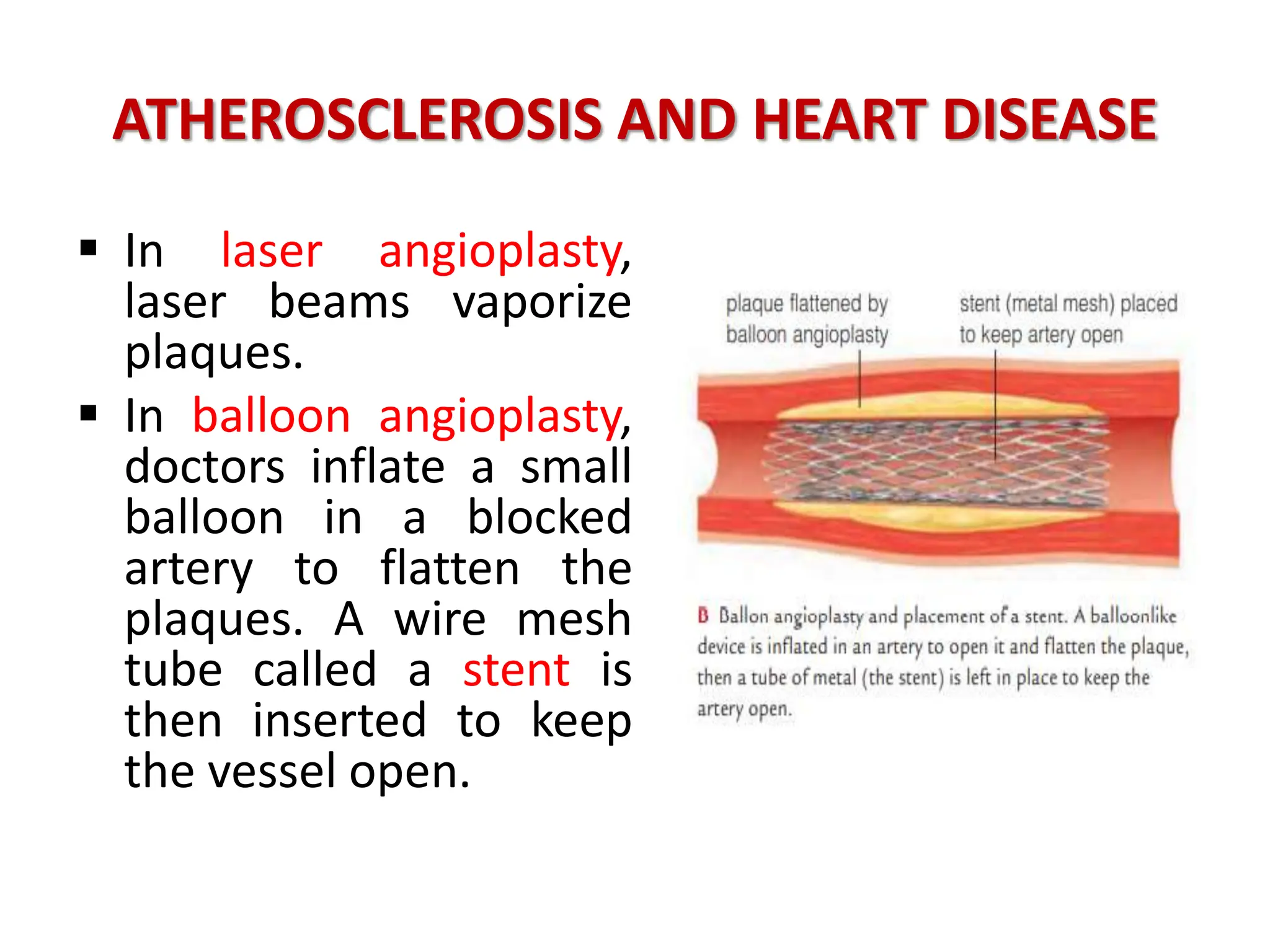
 In balloon angioplasty,
doctors inflate a small
balloon in a blocked
artery to flatten the
plaques. A wire mesh
tube called a stent is
then inserted to keep
the vessel open.
And Then My Heart Stood Still
 Heart is the body’s most durable muscle.
 An electrical signal generated by a natural
pacemaker in the heart wall sets each
heartbeat in motion.
And Then My Heart Stood Still
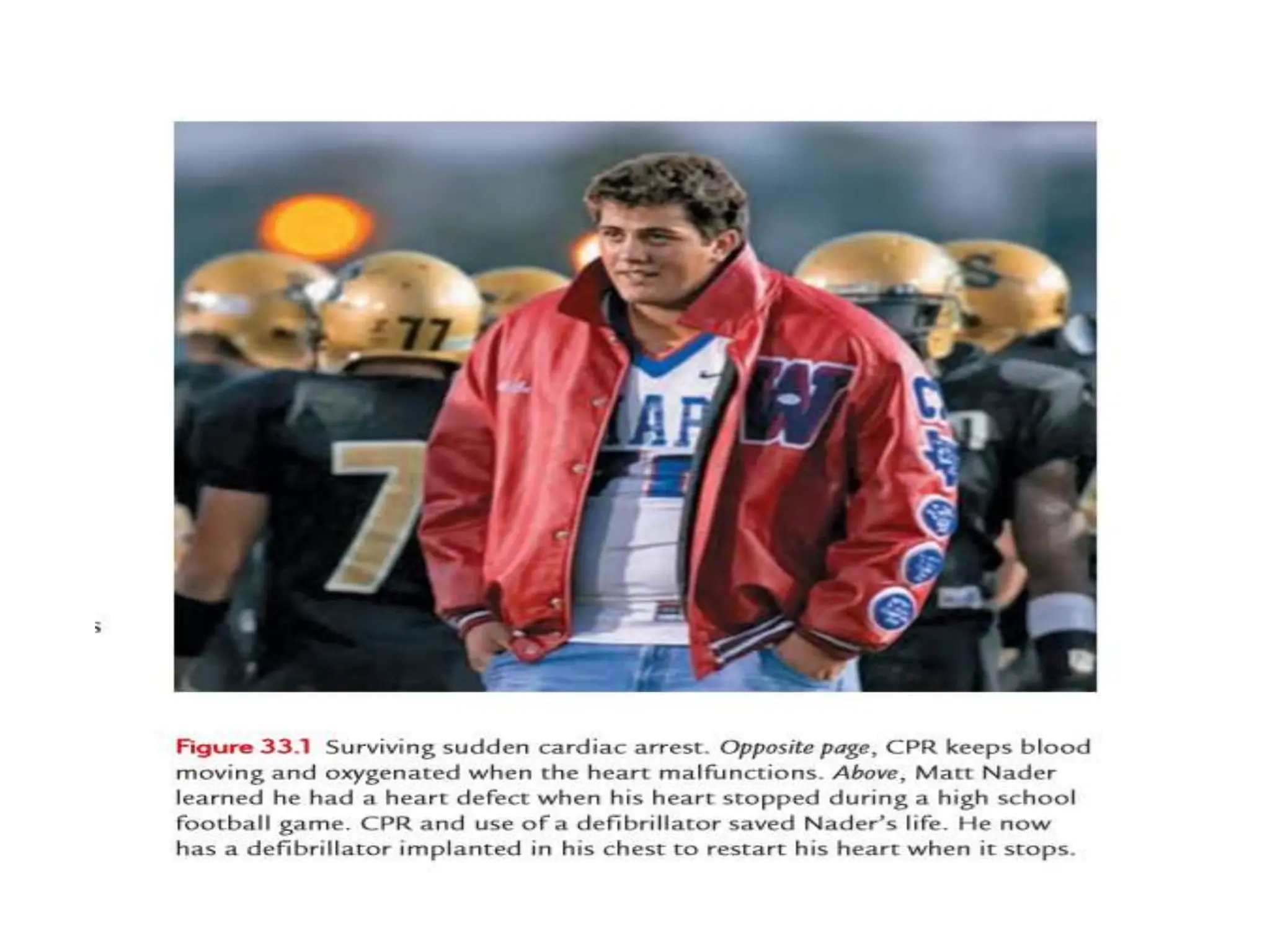
 Cardiac arrest: natural pacemaker
malfunctions, electrical signaling is
disrupted, the heart stops beating, and
blood flow halts.
 An inborn heart defect causes most
cardiac arrests in people under age 35. In
older people, heart disease usually causes
the heart to stop functioning.
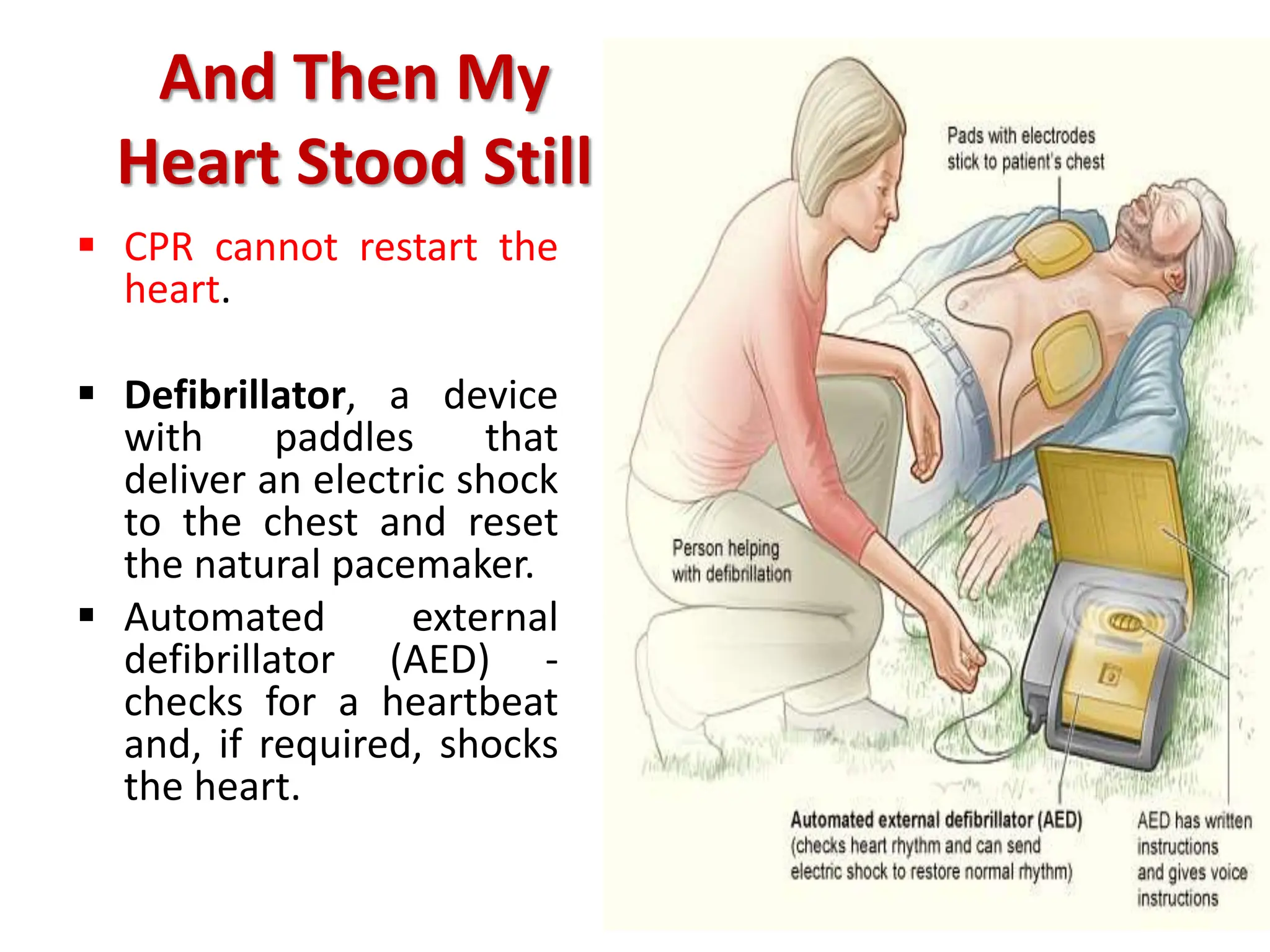
 Cardiopulmonary resuscitation (CPR) –
keeps a victim’s blood moving.
 The chance of surviving sudden cardiac
arrest rises by 50 percent when CPR is
started within four to six minutes of the
arrest.
And Then My
Heart Stood Still
 CPR cannot restart the
heart.
 Defibrillator, a device
with paddles that
deliver an electric shock
to the chest and reset
the natural pacemaker.
 Automated external
defibrillator (AED) -
checks for a heartbeat
and, if required, shocks
the heart.
RISK FACTORS
Tobacco smoking
Family history of such disorders, hypertension, a
high cholesterol level, diabetes mellitus, and
obesity
Physical inactivity
Gender and age also play a role:
Until about age fifty, males are at greater risk.
In both sexes, the risk of cardiovascular
disorders increases with age.

Circulatory system of human being its structure function types and comparison of open and closed circulatory system

  • 1.
  • 2.
    Internal Transport Systems All animals must keep their cells supplied with nutrients and oxygen, and all must get rid of cellular wastes.  Some invertebrates, including flatworms, rely on diffusion alone.  Diffusion only works over short distances to move materials quickly.
  • 3.
    Internal Transport Systems A circulatory system is an organ system that speeds the distribution of materials within an animal body.  It includes one or more hearts (muscular pumps) that propel blood (the circulatory fluid) through vessels that extend through the body.
  • 4.
    OPEN CIRCULATORY SYSTEM A heart or hearts pump blood into large vessels that empty into spaces around body tissues.  The blood of an open circulatory system mixes with the interstitial fluid and makes direct exchanges with cells before it gets drawn back into the heart.
  • 5.
  • 6.
    CLOSED CIRCULATORY SYSTEM A heart or hearts pump blood through a continuous series of vessels.  Distributes substances faster than an open one.  “Closed” because blood does not flow out of blood vessels to bathe the tissues.  Diffusion across the smallest-diameter blood vessels, the capillaries.
  • 7.
  • 8.
  • 9.
    THE HUMAN CARDIOVASCULARSYSTEM  Humans have a four- chambered heart that pumps blood through two circuits.  In each circuit, the heart pumps blood out of a ventricle and into branching arteries.
  • 11.
    PULMONARY CIRCUIT • Pulmonarycircuit carries blood to and from the lungs.
  • 12.
  • 13.
    THE HUMAN CARDIOVASCULARSYSTEM Two-capillary journey
  • 14.
    STRUCTURE OF THEHEART  The heart lies in the thoracic cavity, beneath the breastbone and between the lungs.  It is protected and anchored by pericardium, a sac of connective tissue.  Fluid between the sac’s two layers provides lubrication for the heart’s continual motions.  A layer of fat offers additional protection.  The heart’s wall consists mostly of cardiac muscle cells, and its chambers and blood vessels are lined with endothelium.
  • 15.
    STRUCTURE OF THEHEART  Each side of the human heart has two chambers: An atrium receives blood from veins, and a ventricle pumps blood into arteries.  Pressure-sensitive valves function like one- way doors to control the flow of blood through the heart.  High fluid pressure forces a valve open.
  • 16.
    FLOW TO, THROUGH,AND FROM THE HEART  Two big veins deliver oxygen-poor blood from the body to the right atrium.  Superior vena cava delivers blood from the upper regions of the body.  Inferior vena cava delivers blood from lower regions.
  • 17.
    FLOW TO, THROUGH,AND FROM THE HEART  Blood from the right atrium flows through the right atrioventricular (AV) valve into the right ventricle.  The right ventricle pumps it through the pulmonary valve and into the pulmonary trunk, a vessel that branches into two pulmonary arteries.  Each pulmonary artery carries blood to a lung.
  • 18.
    FLOW TO, THROUGH,AND FROM THE HEART  After passing through the lung, the now- oxygenated blood returns to the left atrium via pulmonary veins.  The blood then flows through the left atrioventricular (AV) valve into the left ventricle.  The left ventricle pumps the blood through the aortic valve into the aorta, and from there it flows to tissues of the body.
  • 20.
    THE CARDIAC CYCLE The events that occur from the onset of one heartbeat to another are collectively called the cardiac cycle.  During this cycle, the heart’s chambers alternate through diastole (relaxation) and systole (contraction).
  • 21.
  • 22.
    THE CARDIAC CYCLE Atriahave relatively thin walls. Ventricle walls are more thickly muscled. The left ventricle, which pumps blood throughout the long systemic circuit, has thicker walls than the right ventricle, which pumps blood only to the lungs and back.
  • 23.
    BLOOD PRESSURE  Bloodpressure is pressure exerted by blood against the wall of the vessel that encloses it.  Blood pressure is highest in arteries, and declines as blood flows through the circuit, being lowest in veins.
  • 24.
    BLOOD PRESSURE  Systolicpressure, the highest pressure of a cardiac cycle, occurs as contracting ventricles force blood into the arteries.  Diastolic pressure, the lowest blood pressure of a cardiac cycle, occurs when ventricles are relaxed.
  • 25.
  • 26.
    RHYTHMS AND ARRHYTHMIAS Electrocardiograms, or ECGs, record the electrical activity of a beating heart.  Malfunction of the SA node causes arrhythmias.  Sinoatrial (SA) node: Cardiac pacemaker; group of heart cells that spontaneously emits rhythmic signals that cause contraction.
  • 27.
    RHYTHMS AND ARRHYTHMIAS Bradycardia is a below-average resting cardiac rate.  Implanting an artificial pacemaker can speed the heart rate if it falls to the point where slow flow impairs health.
  • 28.
    RHYTHMS AND ARRHYTHMIAS Tachycardia is a faster than normal heart rate.  Many people experience palpitations, or occasional episodes of tachycardia.  Palpitations can be brought on by stress, drugs such as caffeine, an overactive thyroid, or an underlying heart problem.
  • 29.
    RHYTHMS AND ARRHYTHMIAS Atrial fibrillation is an arrhythmia in which the atria do not contract normally, but instead quiver.  This slows blood flow and increases the risk of clot formation.  People with atrial fibrillation are often given anticlotting medication to lower their risk of stroke.  A stroke is an interruption of blood flow that kills brain cells. Most strokes arise when a clot blocks a blood vessel in the brain.
  • 30.
    RHYTHMS AND ARRHYTHMIAS Ventricular fibrillation is an even more dangerous arrhythmia.  Ventricles quiver, and pumping falters or stops, causing loss of consciousness and—if a normal rhythm is not restored—death. A defibrillator often can restore the heart’s normal rhythm by resetting the SA node.
  • 31.
  • 32.
    ATHEROSCLEROSIS AND HEARTDISEASE  In atherosclerosis, buildup of lipids in the arterial wall narrows the lumen, or space inside the vessel.  Cholesterol plays a role in this “hardening of the arteries.”  The human body requires cholesterol to make cell membranes, myelin sheaths, bile salts, and steroid hormones.  The liver makes enough cholesterol to meet these needs, but more is absorbed from food in the gut.  Genetics affects how different people’s bodies deal with an excess of dietary cholesterol.
  • 33.
    ATHEROSCLEROSIS AND HEARTDISEASE Low-density lipoproteins, or LDLs High-density lipoproteins, or HDLs
  • 34.
    ATHEROSCLEROSIS AND HEARTDISEASE  When the LDL level in blood rises, so does the risk of atherosclerosis.  A buildup of lipids in an artery’s endothelial lining.  Fibrous connective tissue proliferates in the affected area.  Eventually, a mass, called an atherosclerotic plaque, bulges into the vessel’s interior, narrowing its diameter and slowing blood flow.  A hardened plaque can abrade an artery wall, thereby triggering clot formation.
  • 35.
  • 36.
    ATHEROSCLEROSIS AND HEARTDISEASE  With heart disease, atherosclerosis affects vessels that supply blood to heart muscle.  A heart attack occurs when a coronary artery is completely blocked, most commonly by a clot.  If the blockage is not removed fast, cardiac muscle cells die.  Clot-dissolving drugs can restore blood flow if they are given within an hour of the onset of an attack.
  • 37.
    ATHEROSCLEROSIS AND HEARTDISEASE  In coronary bypass surgery, doctors open a person’s chest and use a blood vessel from elsewhere in the body (usually a leg vein) to divert blood around the clogged coronary artery.
  • 38.
    ATHEROSCLEROSIS AND HEARTDISEASE  In laser angioplasty, laser beams vaporize plaques.  In balloon angioplasty, doctors inflate a small balloon in a blocked artery to flatten the plaques. A wire mesh tube called a stent is then inserted to keep the vessel open.
  • 40.
    And Then MyHeart Stood Still  Heart is the body’s most durable muscle.  An electrical signal generated by a natural pacemaker in the heart wall sets each heartbeat in motion.
  • 41.
    And Then MyHeart Stood Still  Cardiac arrest: natural pacemaker malfunctions, electrical signaling is disrupted, the heart stops beating, and blood flow halts.  An inborn heart defect causes most cardiac arrests in people under age 35. In older people, heart disease usually causes the heart to stop functioning.  Cardiopulmonary resuscitation (CPR) – keeps a victim’s blood moving.  The chance of surviving sudden cardiac arrest rises by 50 percent when CPR is started within four to six minutes of the arrest.
  • 42.
    And Then My HeartStood Still  CPR cannot restart the heart.  Defibrillator, a device with paddles that deliver an electric shock to the chest and reset the natural pacemaker.  Automated external defibrillator (AED) - checks for a heartbeat and, if required, shocks the heart.
  • 43.
    RISK FACTORS Tobacco smoking Familyhistory of such disorders, hypertension, a high cholesterol level, diabetes mellitus, and obesity Physical inactivity Gender and age also play a role: Until about age fifty, males are at greater risk. In both sexes, the risk of cardiovascular disorders increases with age.