INIA-CIP taller sobre GLIS 08 Feb 2018
La perspectiva de un clone
para los DOI
Dave Ellis
Head of Genebank
Leader of the Program for Conserving Biodiversity for the Future
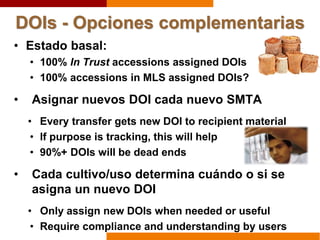
DOIs - Opciones complementarias
• Estado basal:
• 100% In Trust accessions assigned DOIs
• 100% accessions in MLS assigned DOIs?
• Asignar nuevos DOI cada nuevo SMTA
• Every transfer gets new DOI to recipient material
• If purpose is tracking, this will help
• 90%+ DOIs will be dead ends
• Cada cultivo/uso determina cuándo o si se
asigna un nuevo DOI
• Only assign new DOIs when needed or useful
• Require compliance and understanding by users
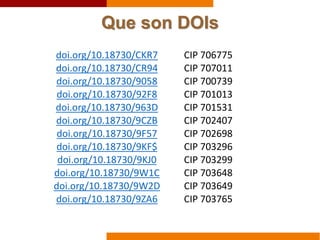
Que son DOIs
doi.org/10.18730/CKR7
doi.org/10.18730/CR94
doi.org/10.18730/9058
doi.org/10.18730/92F8
doi.org/10.18730/963D
doi.org/10.18730/9CZB
doi.org/10.18730/9F57
doi.org/10.18730/9KF$
doi.org/10.18730/9KJ0
doi.org/10.18730/9W1C
doi.org/10.18730/9W2D
doi.org/10.18730/9ZA6
CIP 706775
CIP 707011
CIP 700739
CIP 701013
CIP 701531
CIP 702407
CIP 702698
CIP 703296
CIP 703299
CIP 703648
CIP 703649
CIP 703765
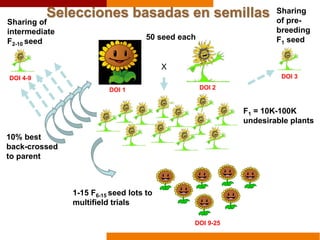
Selecciones basadas en semillas
50 seed each
X
F1 = 10K-100K
undesirable plants
10% best
back-crossed
to parent
1-15 F6-15 seed lots to
multifield trials
DOI 1 DOI 2
DOI 3
Sharing
of pre-
breeding
F1 seed
DOI 4-9
Sharing of
intermediate
F2-10 seed
DOI 9-25
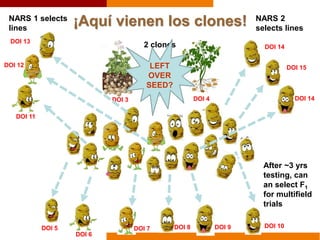
¡Aquí vienen los clones!
DOI 3 DOI 4
2 clones
After ~3 yrs
testing, can
an select F1
for multifield
trials
DOI 5
DOI 6
DOI 7 DOI 8 DOI 9 DOI 10
X
DOI 11
DOI 12
DOI 13
NARS 1 selects
lines
NARS 2
selects lines
DOI 14
DOI 15
DOI 14
LEFT
OVER
SEED?
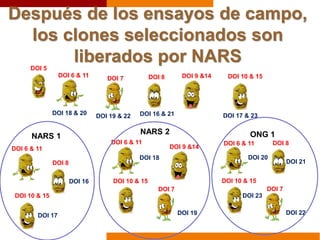
Después de los ensayos de campo,
los clones seleccionados son
liberados por NARSDOI 5
DOI 6 & 11 DOI 7 DOI 8 DOI 9 &14 DOI 10 & 15
DOI 16
DOI 17
NARS 2
DOI 6 & 11
DOI 10 & 15
DOI 18
DOI 9 &14
DOI 7
DOI 19
DOI 18 & 20 DOI 19 & 22 DOI 16 & 21 DOI 17 & 23
NARS 1
DOI 6 & 11
DOI 8
DOI 10 & 15
ONG 1
DOI 6 & 11
DOI 10 & 15
DOI 20
DOI 7
DOI 22
DOI 23
DOI 8
DOI 21
¿Cuál es el estado de las colecciones?
• Increasing reports of mixes in GR
collections
• Arabidopsis seed germplasm, genetic stocks,
mapping populations, tagged lines, etc.
• Not unique to plants – also huge challenge in
medical and microbial fields
• The GLIS is only as good as the information
provided to it
• Errors not only jeaprodize the GLIS but also
the BSF
• If there is distrust, people will not use it
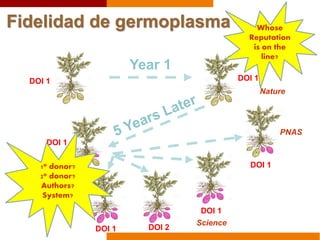
Fidelidad de germoplasma
Year 1
DOI 1 DOI 1
DOI 1
Nature
Science
PNAS
Whose
Reputation
is on the
line?
1o donor?
2o donor?
Authors?
System?
DOI 1
DOI 2DOI 1
DOI 1
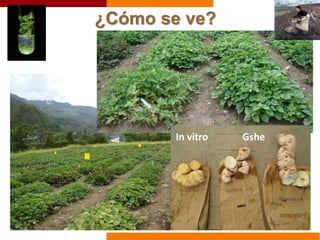
¿Cómo se ve?
¿Cuándo y cómo ocurren los
errores?
• Absolutely no clue when or how the mix-
ups happened
• No correlation with anything we can find
• All collections affected – todos
• If the Material is wrong, the associated
information may also be wrong
• And the information in GLIS will be wrong
DOIs y la verificacion de identidad
• Would DOIs have helped our misidentity
situation?
• Likely, no
• However DOIs would have allowed us to know
when this problem happened!
• The entire in vitro (clonal) CIP potato and
sweetpotato collections are now DNA
fingerprinted
• Enabling DOIs to be linked to these DNA
fingerprints into perpetuity
• This will add genetic fidelity to the GLIS
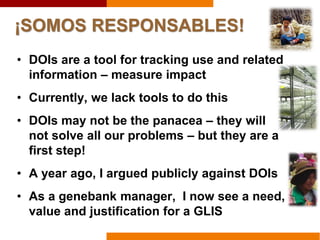
¡SOMOS RESPONSABLES!
• DOIs are a tool for tracking use and related
information – measure impact
• Currently, we lack tools to do this
• DOIs may not be the panacea – they will
not solve all our problems – but they are a
first step!
• A year ago, I argued publicly against DOIs
• As a genebank manager, I now see a need,
value and justification for a GLIS
En resumen
• It is in our best interests to ensure DOIs work
• It will not be “If we build it they will come”
• It will be a very, very hard sell to fully implement
• We will have to take users by the hand, pamper
them, bribe them, show it to them
• Look at the “easy SMTA”
• We need to show users the benefit of using
DOIs = show impact
• How will it help users?
• Talk is not enough
• For me, >60% tracking & <40% identity

CIP DOI Presentation by Dave Ellis

  • 1.
    INIA-CIP taller sobreGLIS 08 Feb 2018 La perspectiva de un clone para los DOI Dave Ellis Head of Genebank Leader of the Program for Conserving Biodiversity for the Future
  • 2.
    DOIs - Opcionescomplementarias • Estado basal: • 100% In Trust accessions assigned DOIs • 100% accessions in MLS assigned DOIs? • Asignar nuevos DOI cada nuevo SMTA • Every transfer gets new DOI to recipient material • If purpose is tracking, this will help • 90%+ DOIs will be dead ends • Cada cultivo/uso determina cuándo o si se asigna un nuevo DOI • Only assign new DOIs when needed or useful • Require compliance and understanding by users
  • 3.
  • 4.
    Selecciones basadas ensemillas 50 seed each X F1 = 10K-100K undesirable plants 10% best back-crossed to parent 1-15 F6-15 seed lots to multifield trials DOI 1 DOI 2 DOI 3 Sharing of pre- breeding F1 seed DOI 4-9 Sharing of intermediate F2-10 seed DOI 9-25
  • 5.
    ¡Aquí vienen losclones! DOI 3 DOI 4 2 clones After ~3 yrs testing, can an select F1 for multifield trials DOI 5 DOI 6 DOI 7 DOI 8 DOI 9 DOI 10 X DOI 11 DOI 12 DOI 13 NARS 1 selects lines NARS 2 selects lines DOI 14 DOI 15 DOI 14 LEFT OVER SEED?
  • 6.
    Después de losensayos de campo, los clones seleccionados son liberados por NARSDOI 5 DOI 6 & 11 DOI 7 DOI 8 DOI 9 &14 DOI 10 & 15 DOI 16 DOI 17 NARS 2 DOI 6 & 11 DOI 10 & 15 DOI 18 DOI 9 &14 DOI 7 DOI 19 DOI 18 & 20 DOI 19 & 22 DOI 16 & 21 DOI 17 & 23 NARS 1 DOI 6 & 11 DOI 8 DOI 10 & 15 ONG 1 DOI 6 & 11 DOI 10 & 15 DOI 20 DOI 7 DOI 22 DOI 23 DOI 8 DOI 21
  • 7.
    ¿Cuál es elestado de las colecciones? • Increasing reports of mixes in GR collections • Arabidopsis seed germplasm, genetic stocks, mapping populations, tagged lines, etc. • Not unique to plants – also huge challenge in medical and microbial fields • The GLIS is only as good as the information provided to it • Errors not only jeaprodize the GLIS but also the BSF • If there is distrust, people will not use it
  • 8.
    Fidelidad de germoplasma Year1 DOI 1 DOI 1 DOI 1 Nature Science PNAS Whose Reputation is on the line? 1o donor? 2o donor? Authors? System? DOI 1 DOI 2DOI 1 DOI 1
  • 9.
  • 10.
    ¿Cuándo y cómoocurren los errores? • Absolutely no clue when or how the mix- ups happened • No correlation with anything we can find • All collections affected – todos • If the Material is wrong, the associated information may also be wrong • And the information in GLIS will be wrong
  • 11.
    DOIs y laverificacion de identidad • Would DOIs have helped our misidentity situation? • Likely, no • However DOIs would have allowed us to know when this problem happened! • The entire in vitro (clonal) CIP potato and sweetpotato collections are now DNA fingerprinted • Enabling DOIs to be linked to these DNA fingerprints into perpetuity • This will add genetic fidelity to the GLIS
  • 12.
    ¡SOMOS RESPONSABLES! • DOIsare a tool for tracking use and related information – measure impact • Currently, we lack tools to do this • DOIs may not be the panacea – they will not solve all our problems – but they are a first step! • A year ago, I argued publicly against DOIs • As a genebank manager, I now see a need, value and justification for a GLIS
  • 13.
    En resumen • Itis in our best interests to ensure DOIs work • It will not be “If we build it they will come” • It will be a very, very hard sell to fully implement • We will have to take users by the hand, pamper them, bribe them, show it to them • Look at the “easy SMTA” • We need to show users the benefit of using DOIs = show impact • How will it help users? • Talk is not enough • For me, >60% tracking & <40% identity