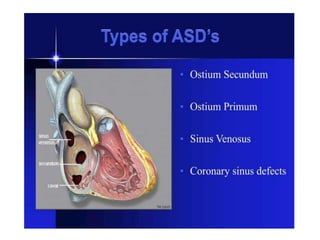
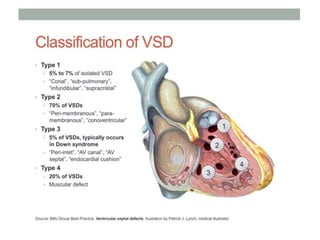
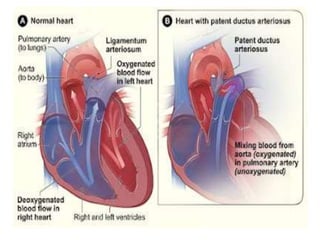
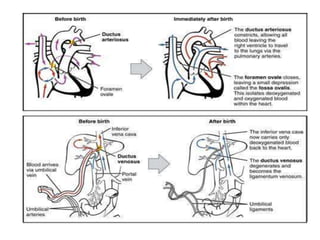
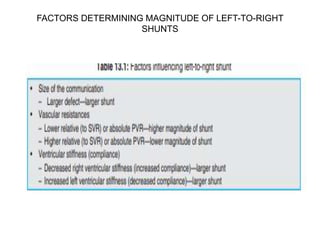
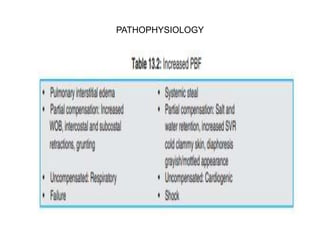
This document discusses left-to-right shunts, which involve recirculation of oxygenated blood back to the lungs. Common examples include atrial and ventricular septal defects as well as patent ductus arteriosus. The magnitude of shunting is determined by pulmonary and systemic vascular resistances, which change in the perinatal period. Large shunts can cause heart failure due to increased pulmonary blood flow and pressure overload on the left side of the heart. Medical management includes diuretics to reduce preload and afterload-reducing agents. Some smaller shunts may close spontaneously over time as pulmonary pressures decrease.