CHEMICAL
KINETICS
*Chemical kinetics is the study of the
rate and the mechanism of chemical
reactions, proceeding under given
conditions of temperature, pressure,
concentration etc.
*The study of chemical kinetics not only
help us to determine the rate of a
chemical reaction, but also useful in
optimizing the process conditions of
industrial manufacturing processes,
organic and inorganic synthesis etc.
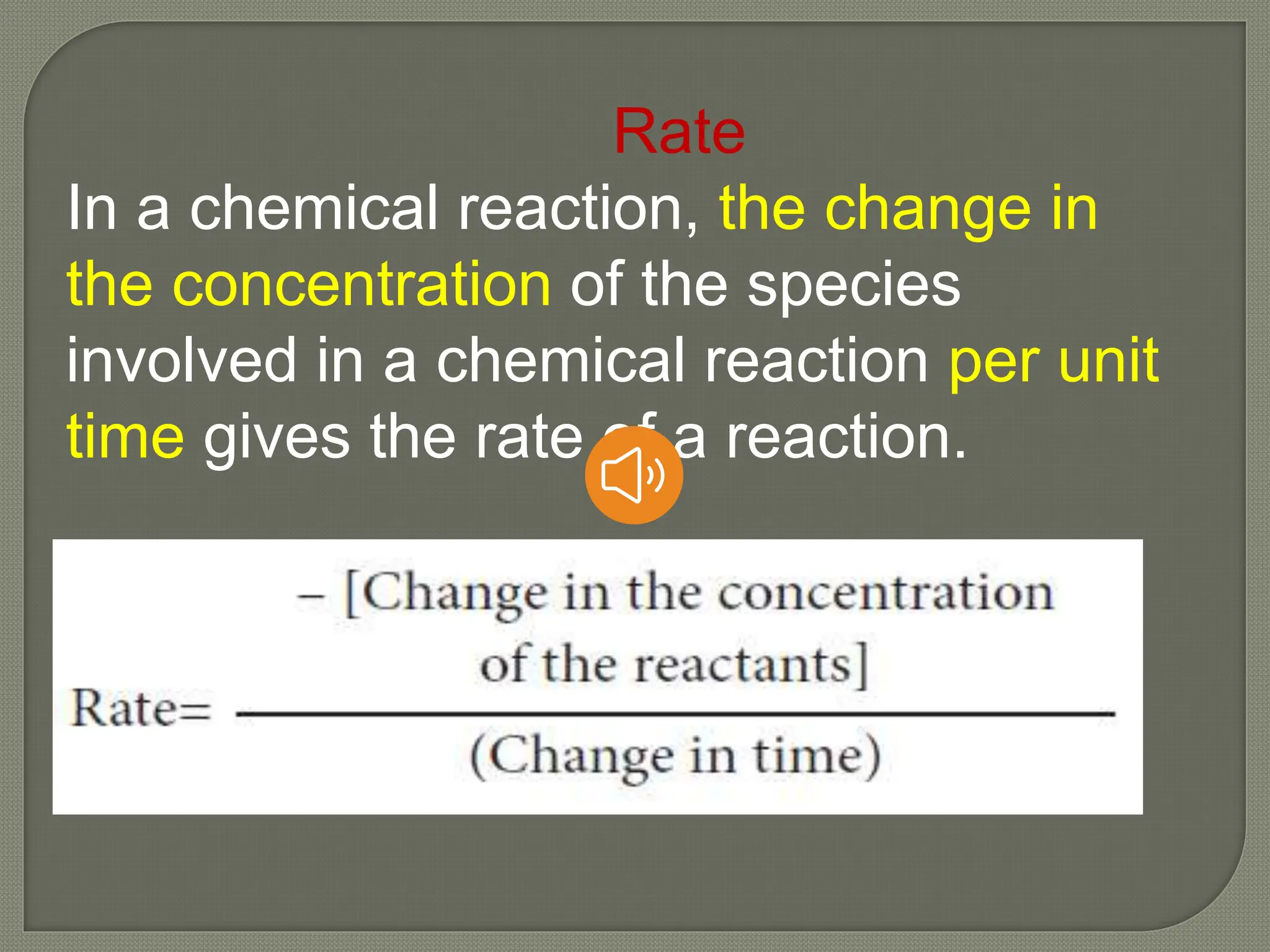
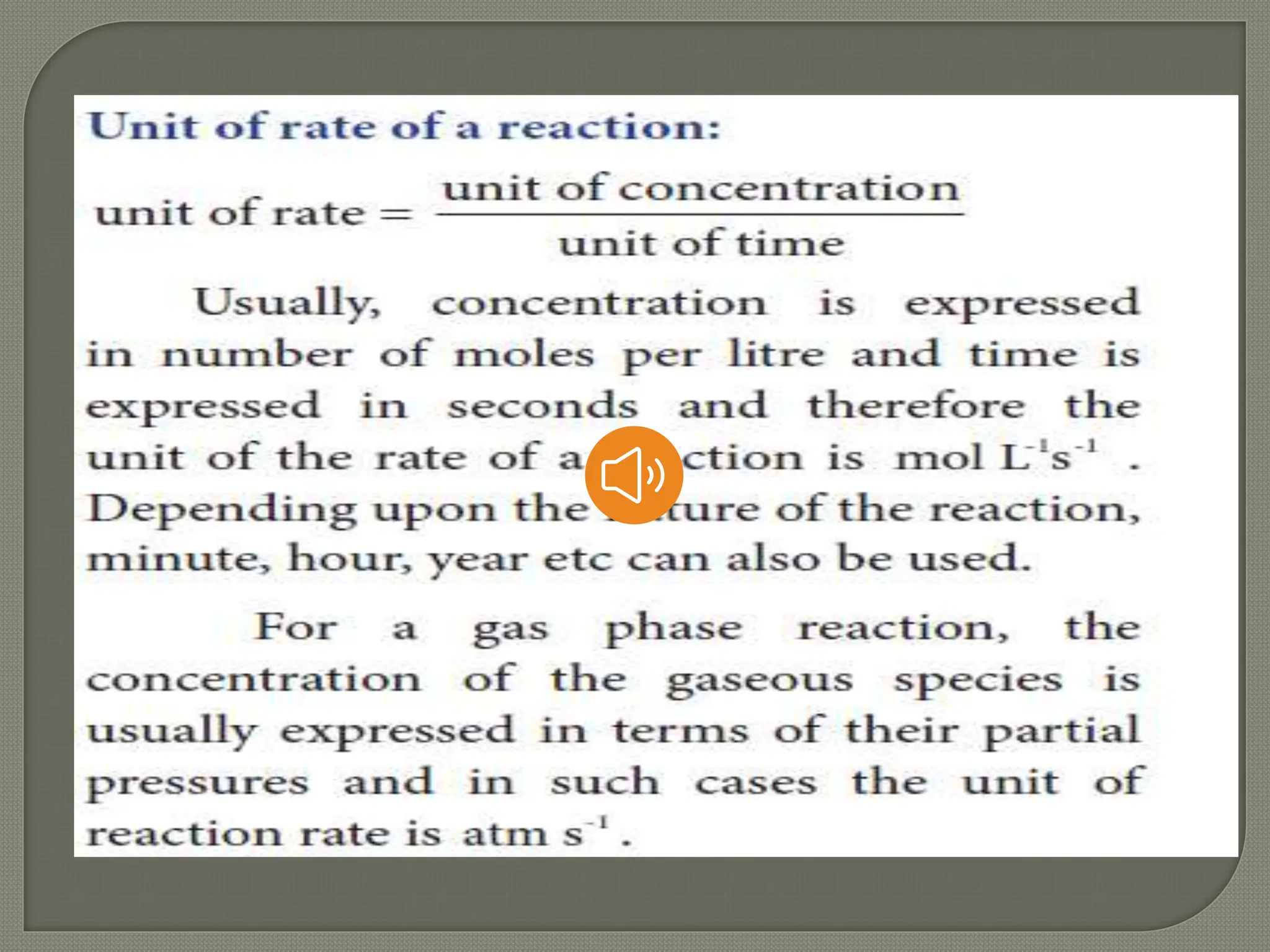
Rate
In a chemical reaction, the change in
the concentration of the species
involved in a chemical reaction per unit
time gives the rate of a reaction.
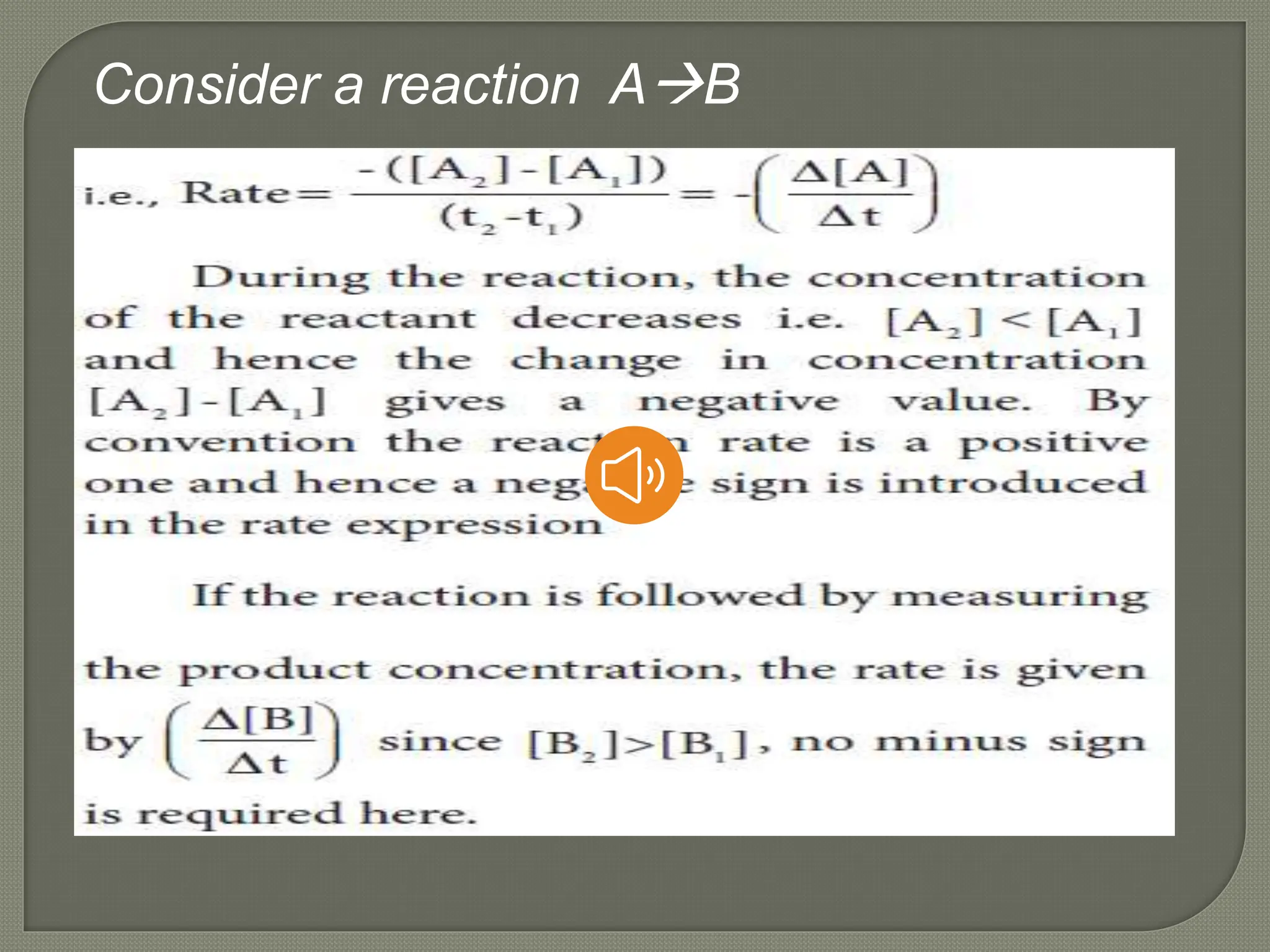
Consider a reaction AB
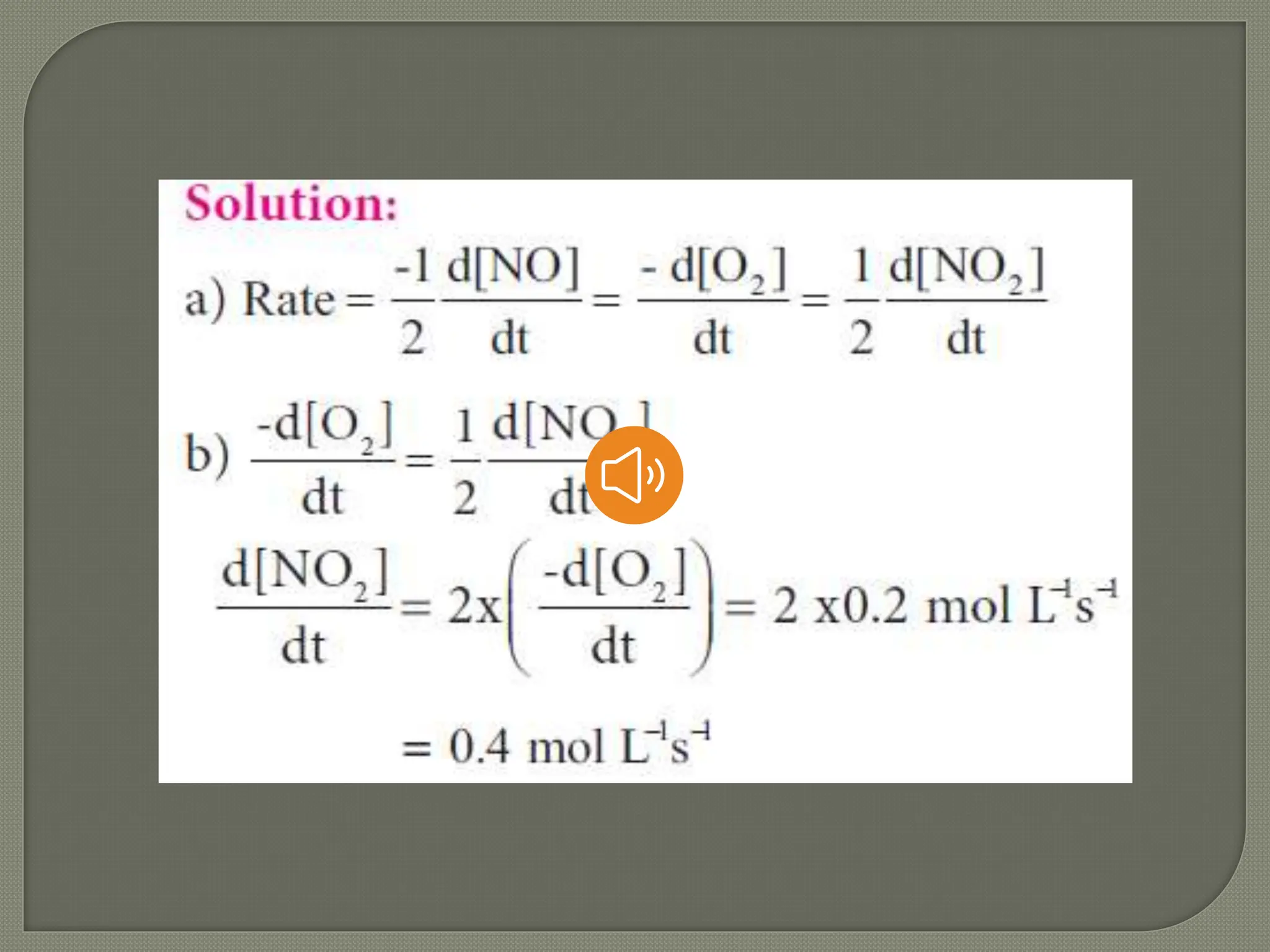
Stoichiometry and rate of reaction
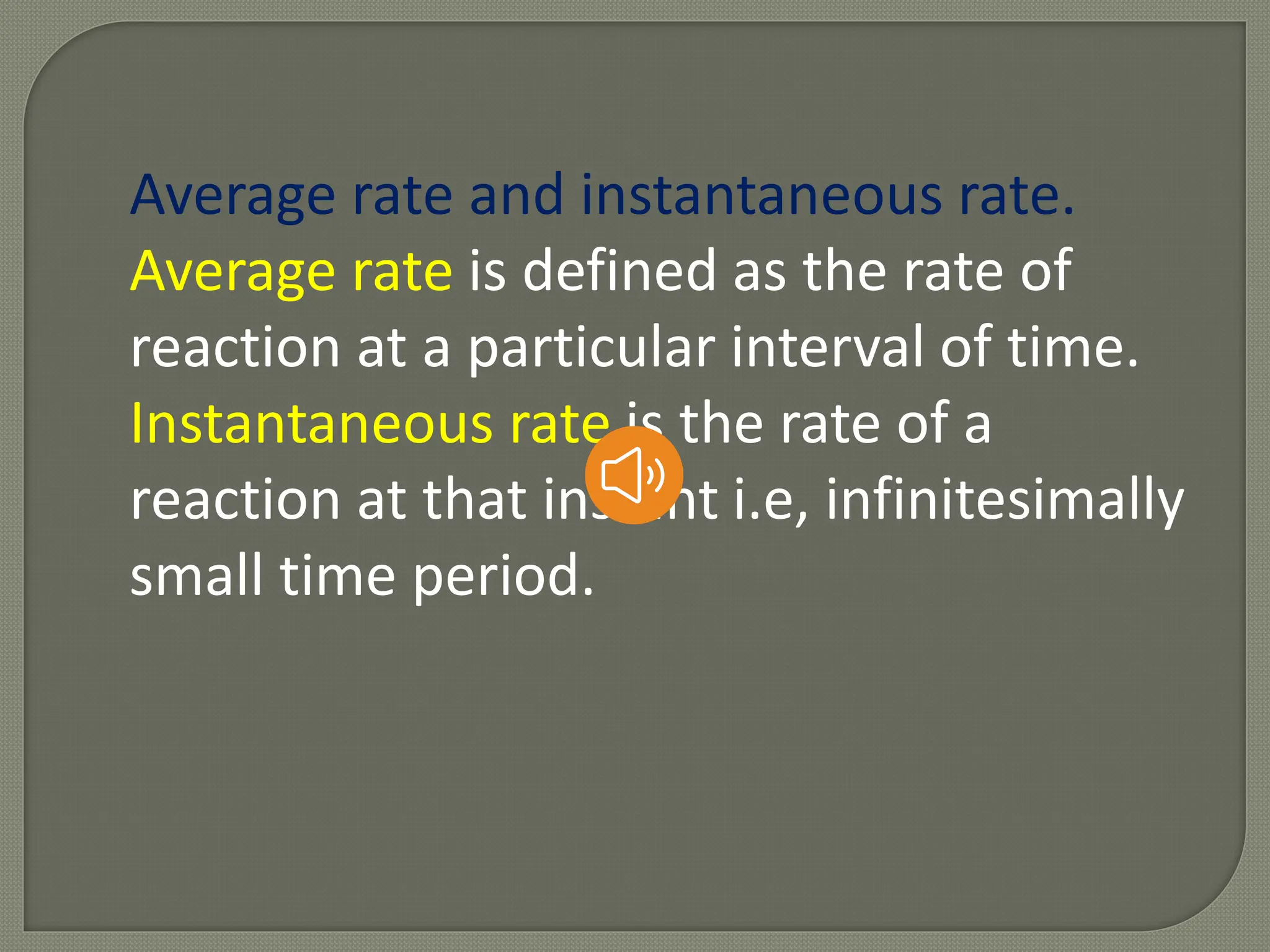
Average rate and instantaneous rate.
Average rate is defined as the rate of
reaction at a particular interval of time.
Instantaneous rate is the rate of a
reaction at that instant i.e, infinitesimally
small time period.
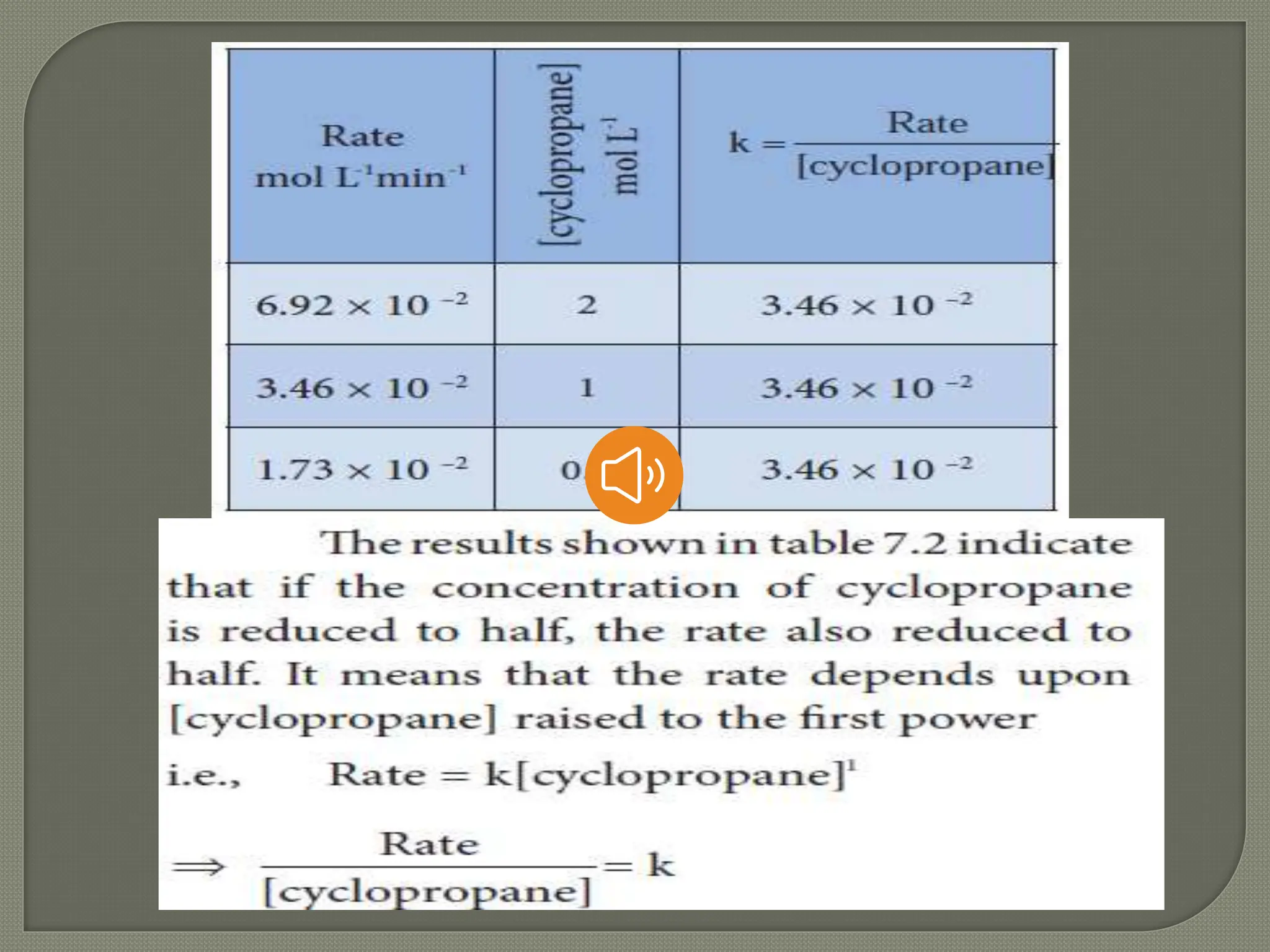
Rate law and Rate constant.
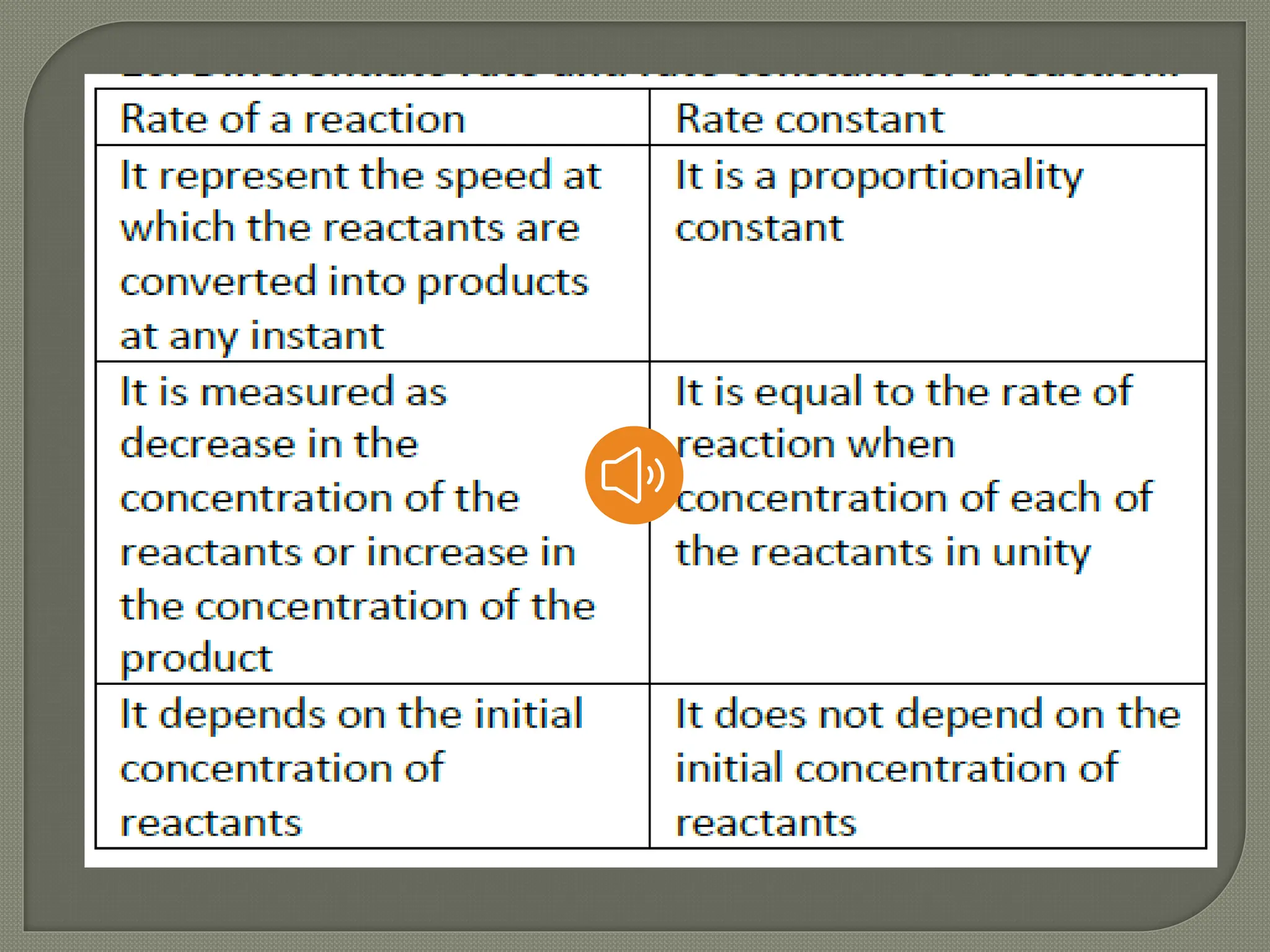
Rate law which relate rate of a reaction
with rate constant and concentration of
reactant.
Ex. A+B --> c ; For this reaction rate law is
written as r = k [A] [B]
Rate constant is equal to rate of the
reaction when concentration of all the
reactants kept unity.
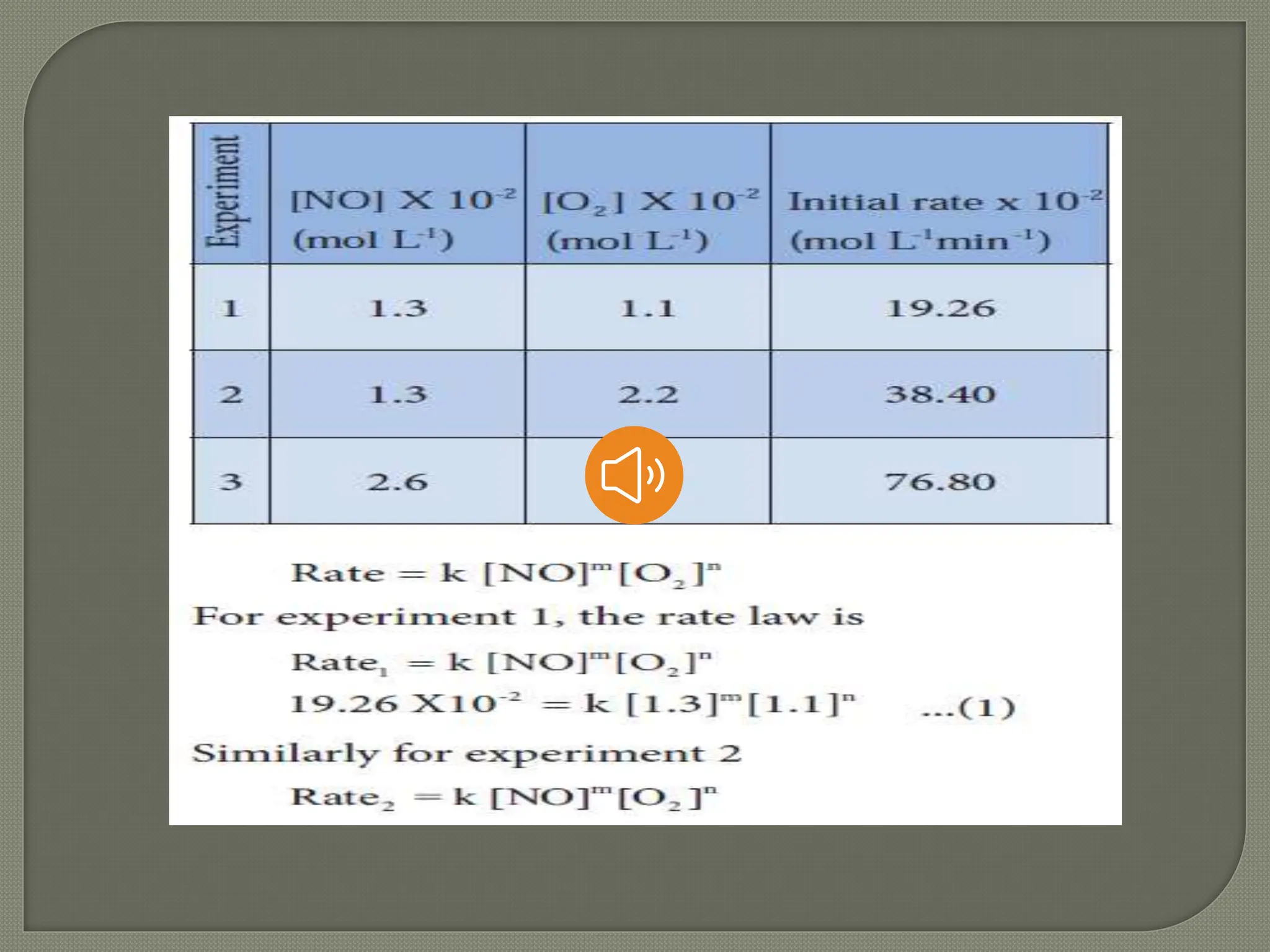
order
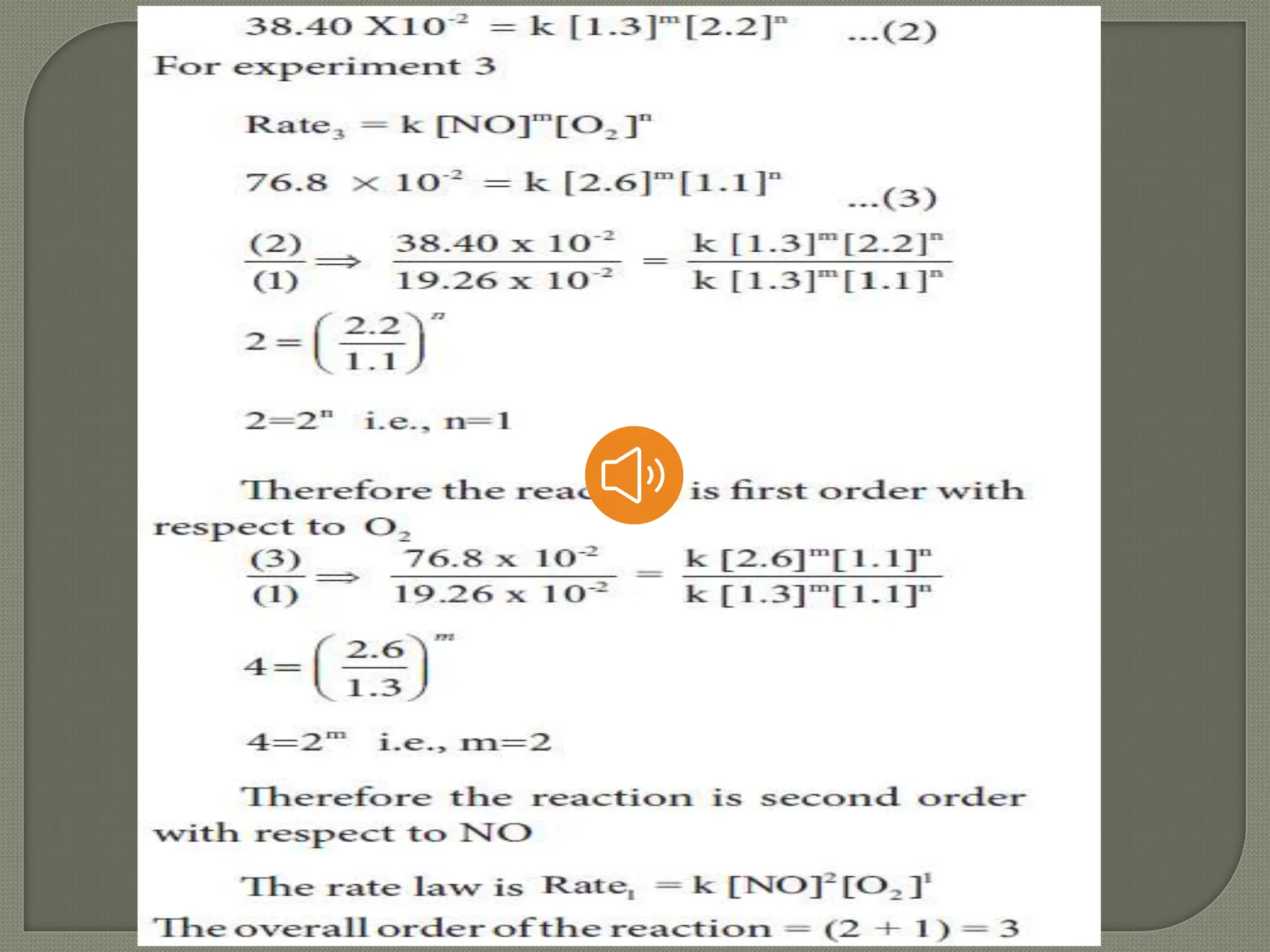
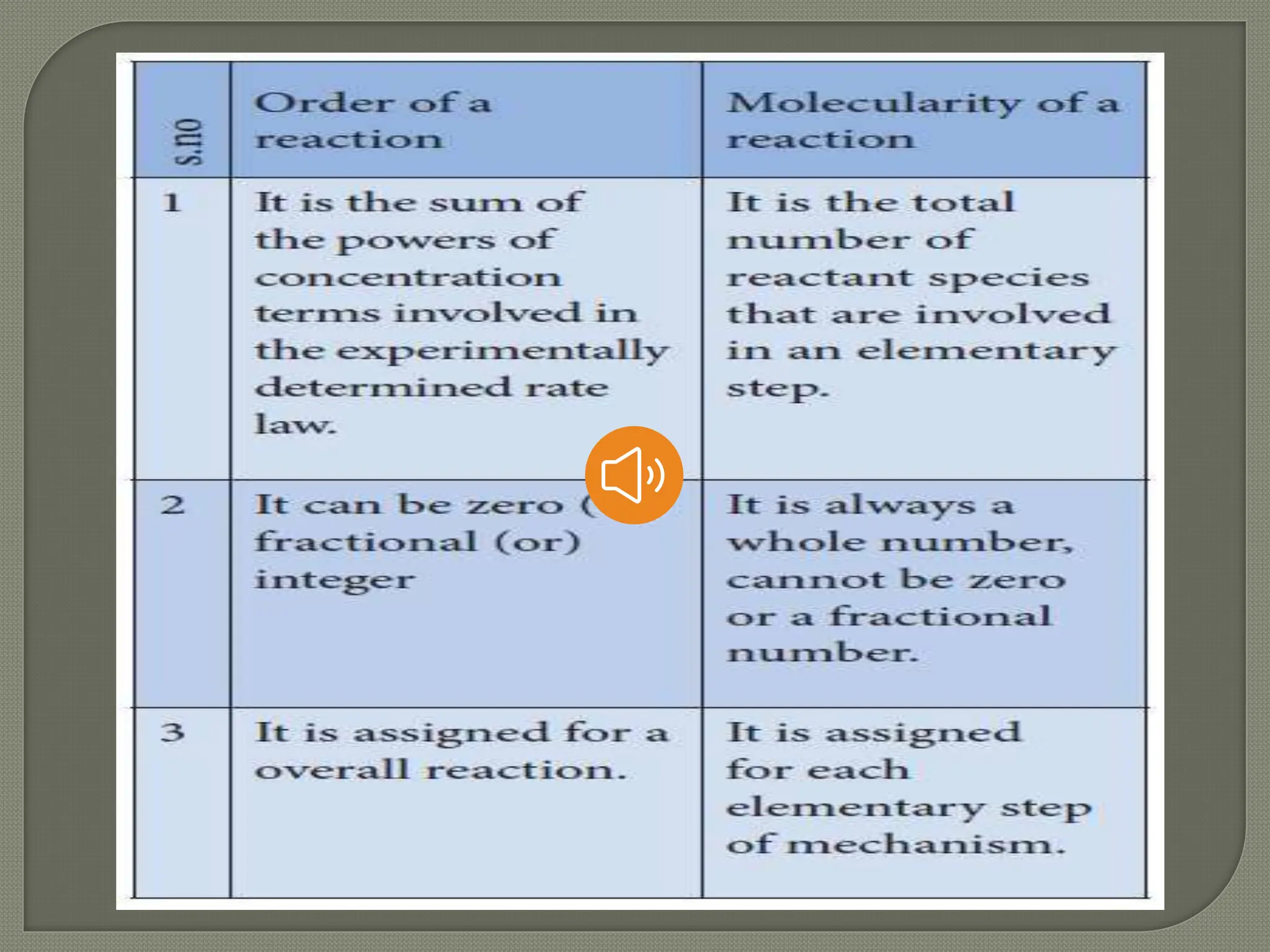
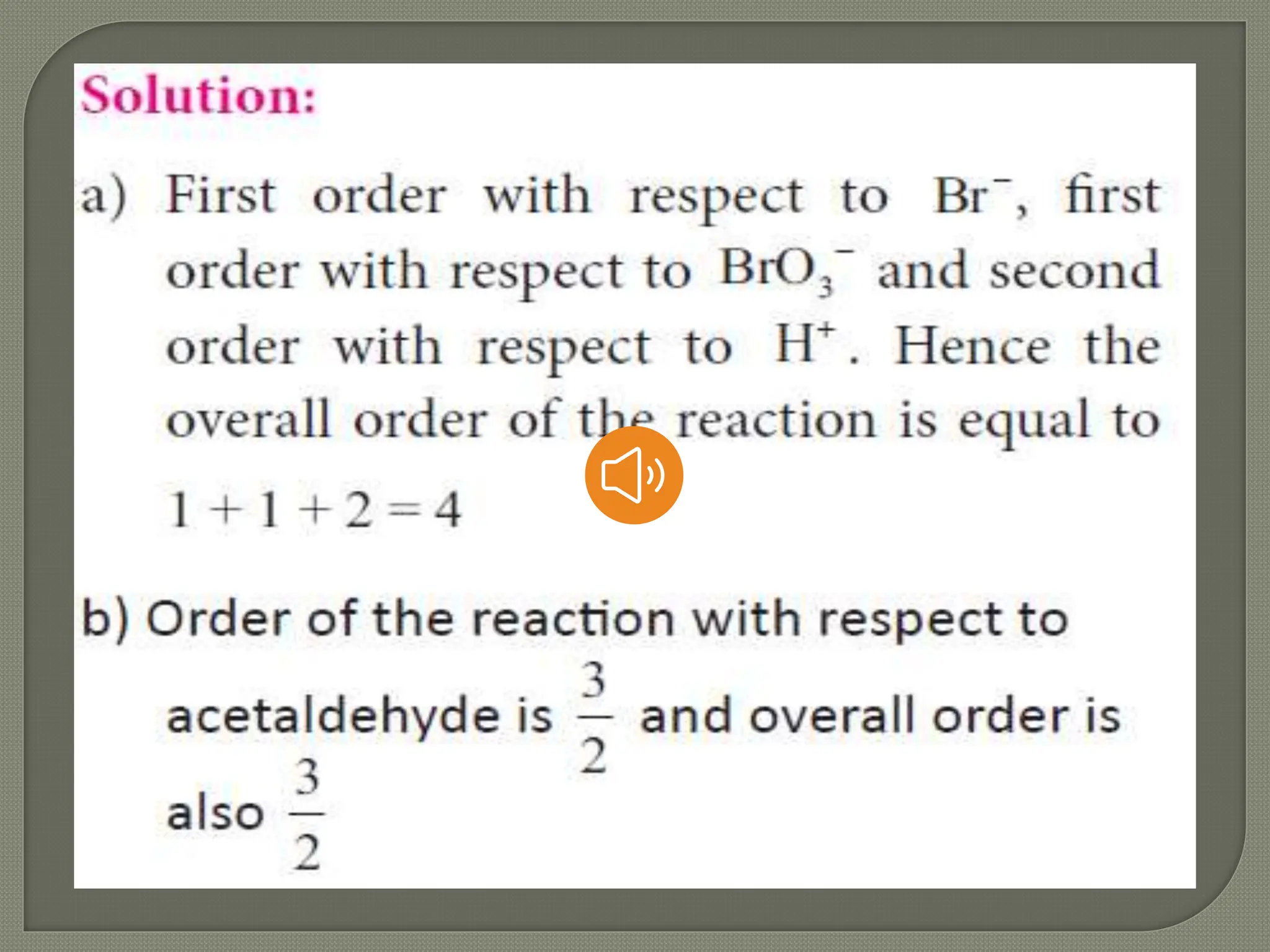
It is defined as sum of the power of
concentration term that involved in rate
equation.
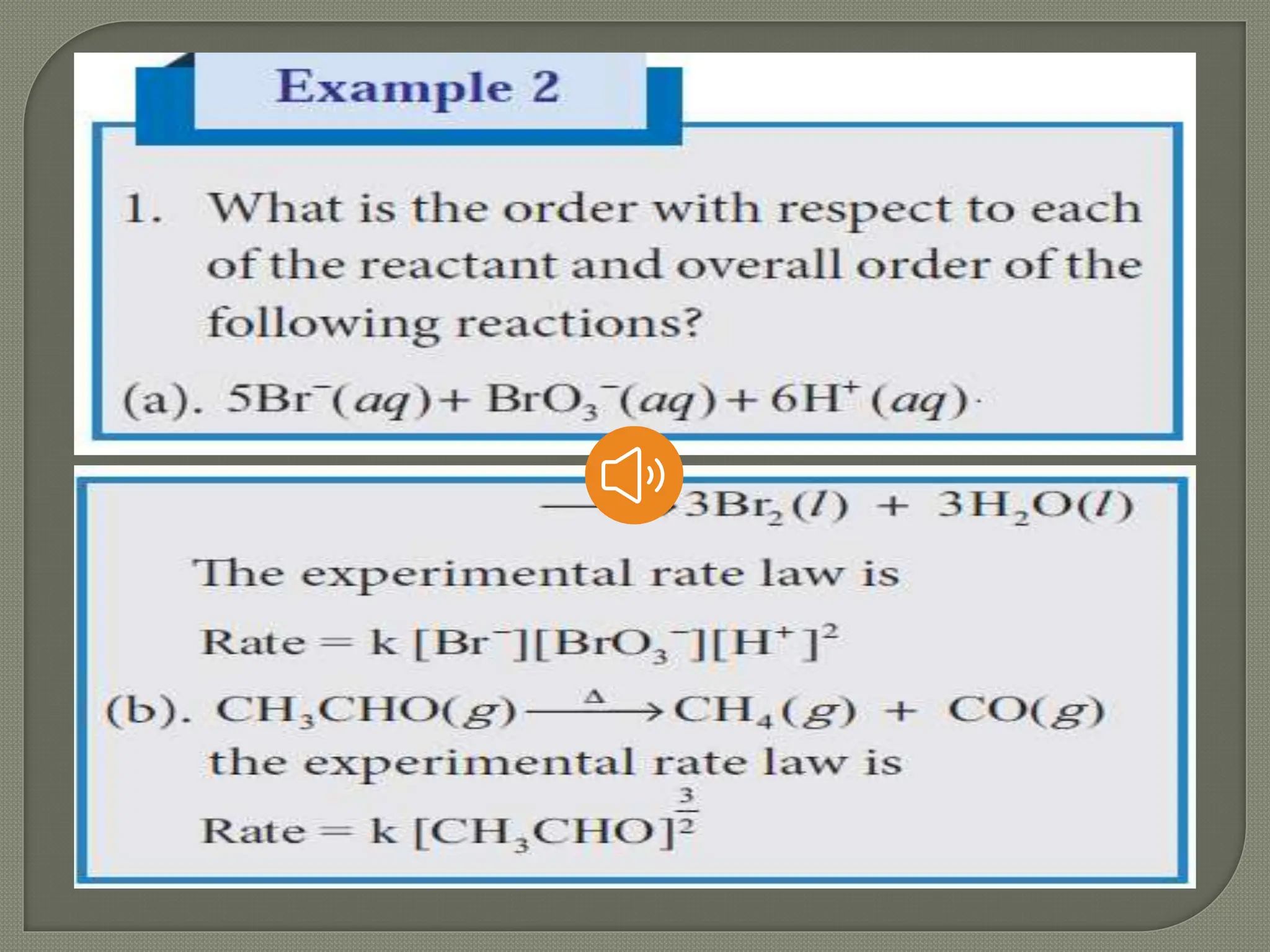
The rate law for the reaction
aA + bB----> Product
Rate = K [ A ]a [ B ]b
Order = a + b
Molecularity is the total number of
reactants present in the elementary step.
Rate determining step with examples
Slowest step is the rate determining step in the
series of chemical reaction which occurs
simultaneously.
Consider a reaction A--------> C
The product formed in two steps.
A--->B (slow) -------step:1
B-->C (fast) -------- step:2
Among these step 1 is slow step and it is rate
determining step.
CHEMICAL KINETICS Part 1 Slide show Presentation

CHEMICAL KINETICS Part 1 Slide show Presentation

  • 1.
  • 2.
    *Chemical kinetics isthe study of the rate and the mechanism of chemical reactions, proceeding under given conditions of temperature, pressure, concentration etc. *The study of chemical kinetics not only help us to determine the rate of a chemical reaction, but also useful in optimizing the process conditions of industrial manufacturing processes, organic and inorganic synthesis etc.
  • 3.
    Rate In a chemicalreaction, the change in the concentration of the species involved in a chemical reaction per unit time gives the rate of a reaction.
  • 4.
  • 6.
  • 7.
    Average rate andinstantaneous rate. Average rate is defined as the rate of reaction at a particular interval of time. Instantaneous rate is the rate of a reaction at that instant i.e, infinitesimally small time period.
  • 8.
    Rate law andRate constant. Rate law which relate rate of a reaction with rate constant and concentration of reactant. Ex. A+B --> c ; For this reaction rate law is written as r = k [A] [B] Rate constant is equal to rate of the reaction when concentration of all the reactants kept unity.
  • 9.
    order It is definedas sum of the power of concentration term that involved in rate equation. The rate law for the reaction aA + bB----> Product Rate = K [ A ]a [ B ]b Order = a + b
  • 14.
    Molecularity is thetotal number of reactants present in the elementary step. Rate determining step with examples Slowest step is the rate determining step in the series of chemical reaction which occurs simultaneously. Consider a reaction A--------> C The product formed in two steps. A--->B (slow) -------step:1 B-->C (fast) -------- step:2 Among these step 1 is slow step and it is rate determining step.