Check In 

Wellbeing Program
David Pyman
St. Peters College, Adelaide
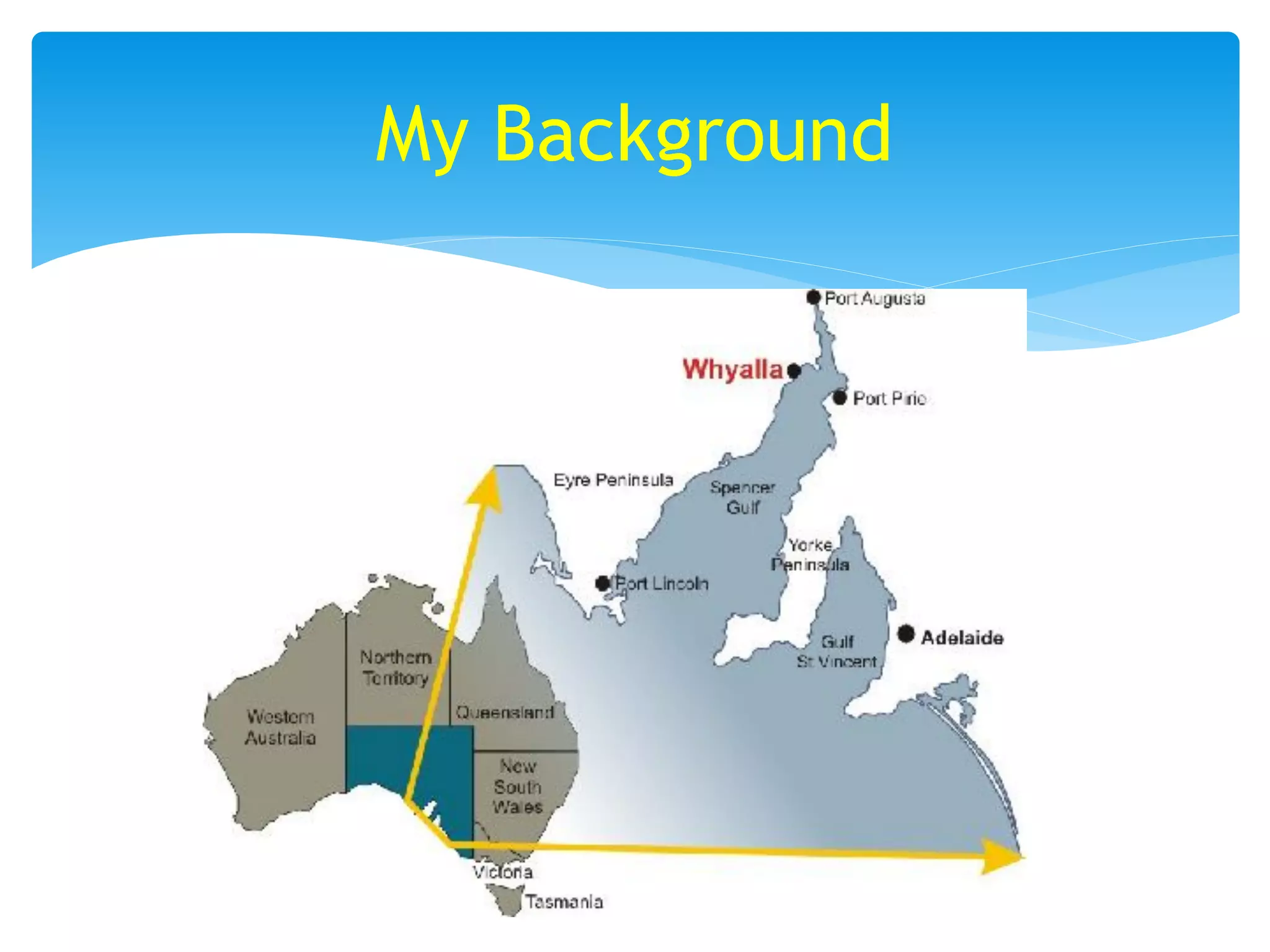
My Background
Whyalla, South Australia
St. Peter’s College
School & Allen Boarding
∗ 90 boys from Yr 7 – 12
∗ Boys split into Mentor Groups of approximately 15
boys
∗ Yr 7&8 group
∗ 5 Yr 9-12 Mentor Groups. Each one supervised by a
teaching member of the boarding house
School & Allen Boarding House
∗ From Pastoral Care to Wellbeing
∗ Why the change?
Wellbeing
∗ 3 million Australians are currently living with
depression or anxiety
∗ 45% of Australians will experience a mental illness
in their lifetime
∗ 65% of people with mental illness do not access
any treatment
∗ 1 in 5 Australians between the age of 15-85
experience a mental illness in any given year
Wellbeing
Wellbeing
Wellbeing
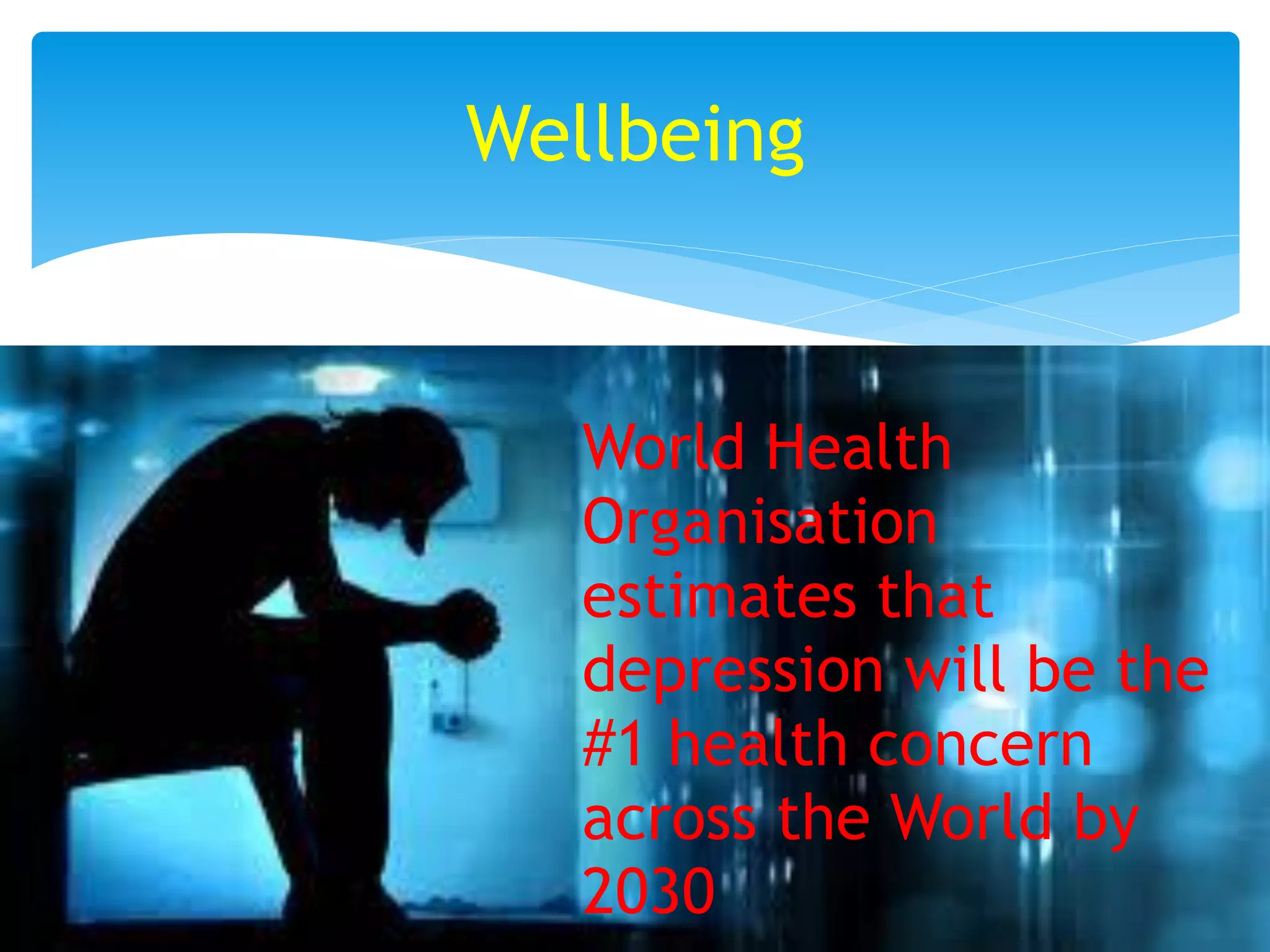
World Health
Organisation
estimates that
depression will be the
#1 health concern
across the World by
2030
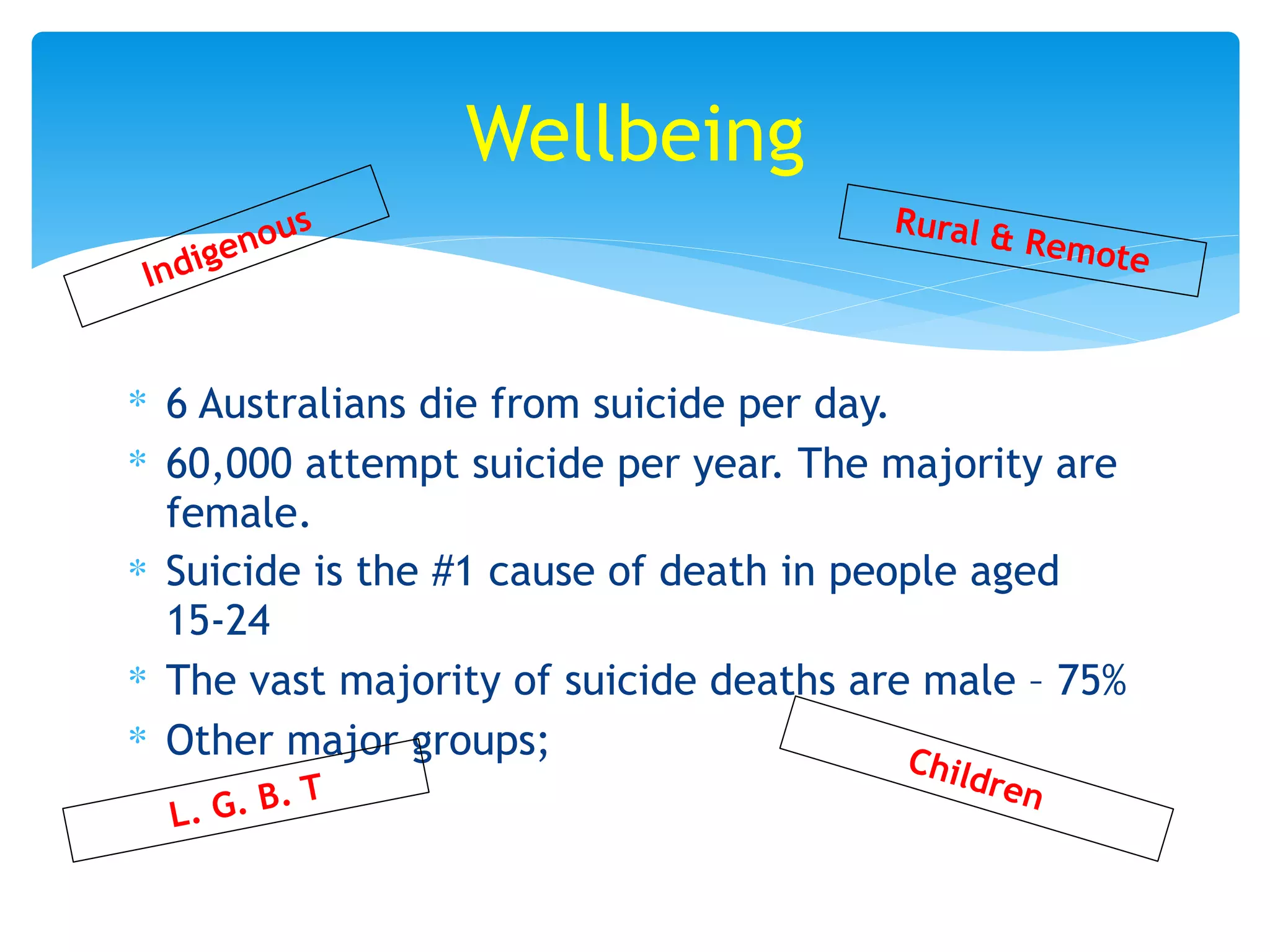
∗ 6 Australians die from suicide per day.
∗ 60,000 attempt suicide per year. The majority are
female.
∗ Suicide is the #1 cause of death in people aged
15-24
∗ The vast majority of suicide deaths are male – 75%
∗ Other major groups;
Wellbeing
Indigenous Rural & Remote
L. G. B. T
Children
∗ Even among young people with the most severe
mental health problems, only about 50% receive
professional help
∗ The ‘Kevin Factor’
Talking to Teenagers
∗ A method of ‘Checking in’ daily on the mental
health of the students.
∗ Monitoring for changes in outlook and patterns of
responses
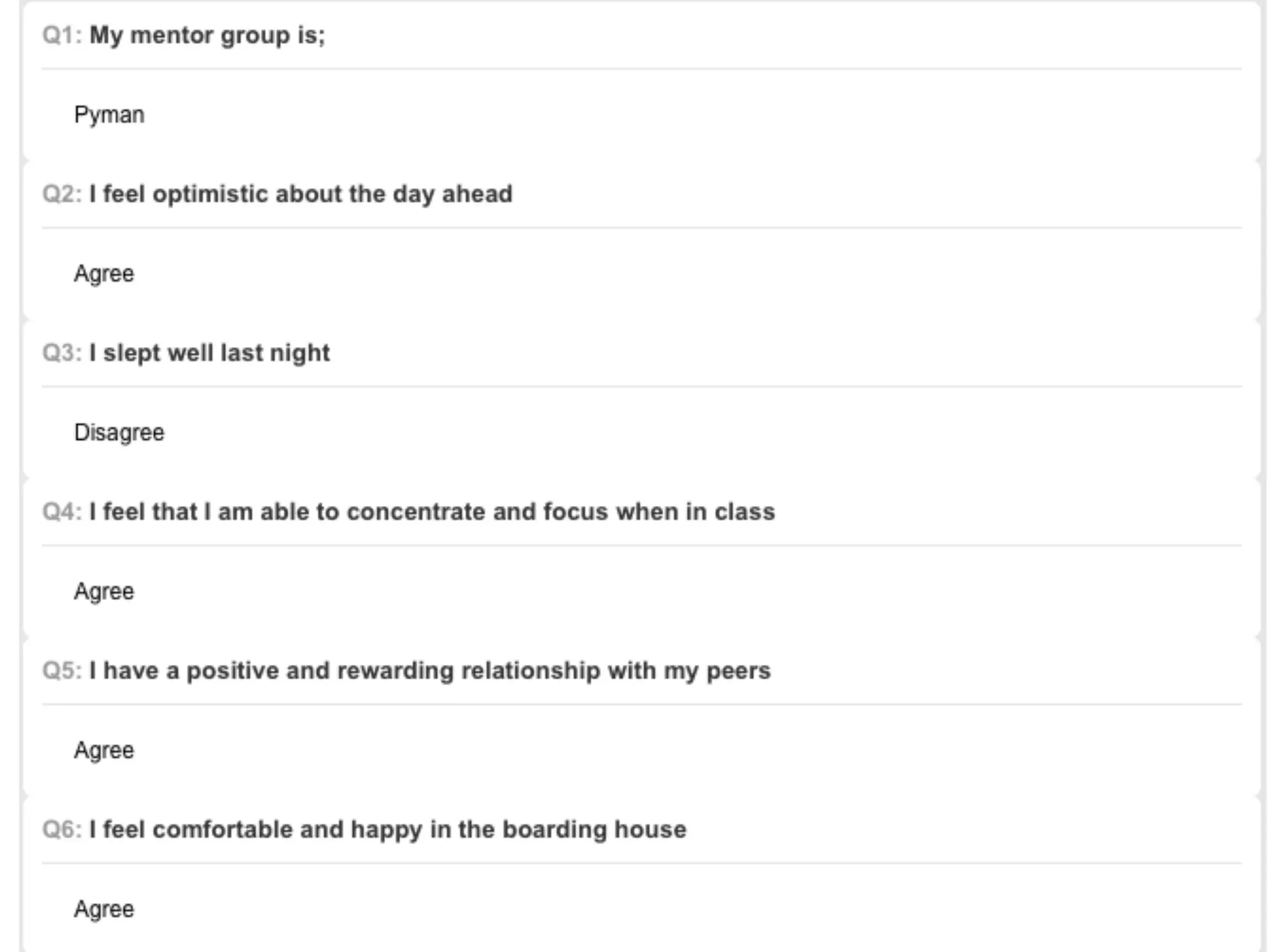
∗ Students given 5 statements to which they respond
Strongly Disagree, Disagree, Agree or Strongly
Agree
Check In program
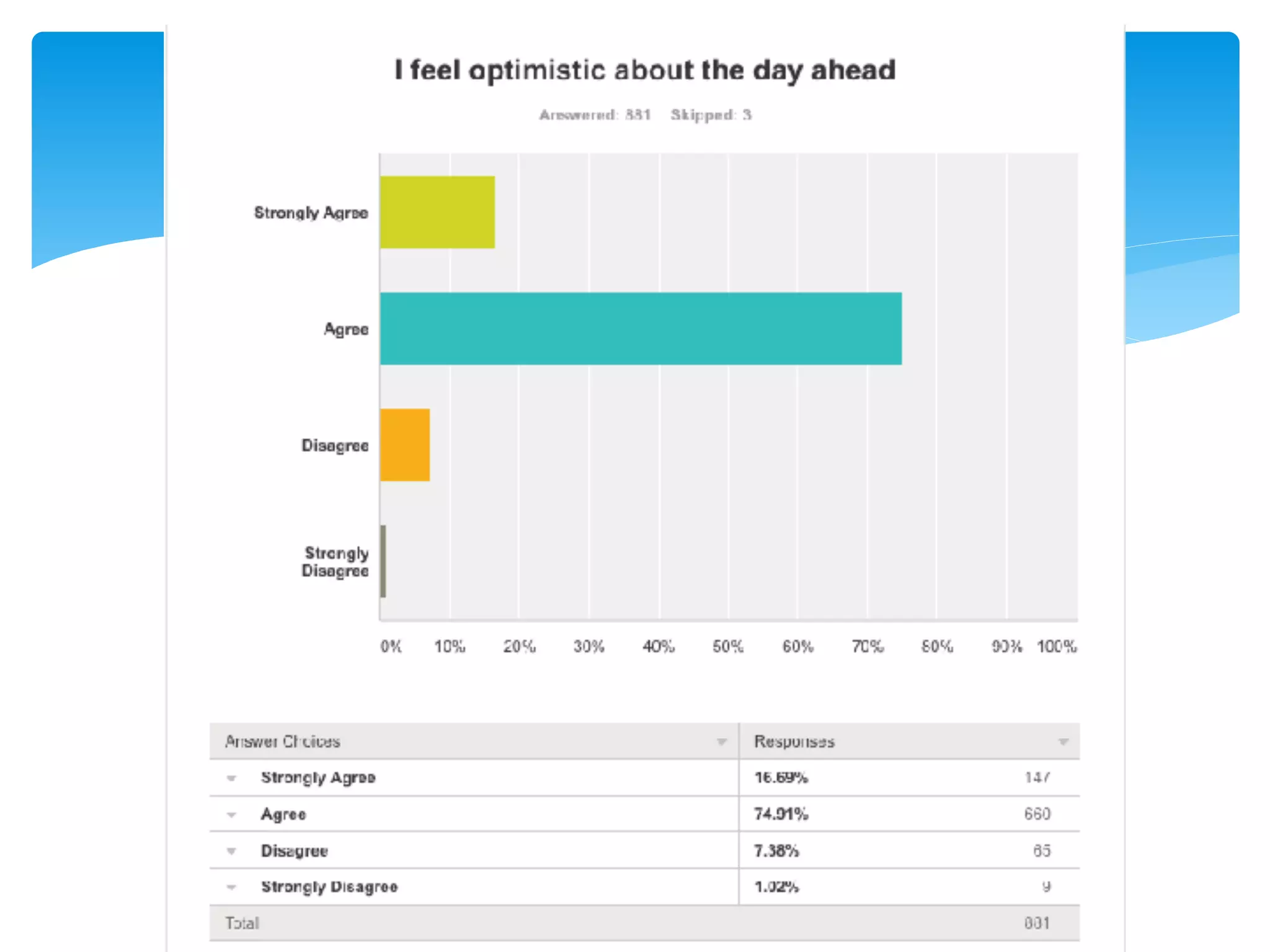
∗ I feel optimistic about the day ahead
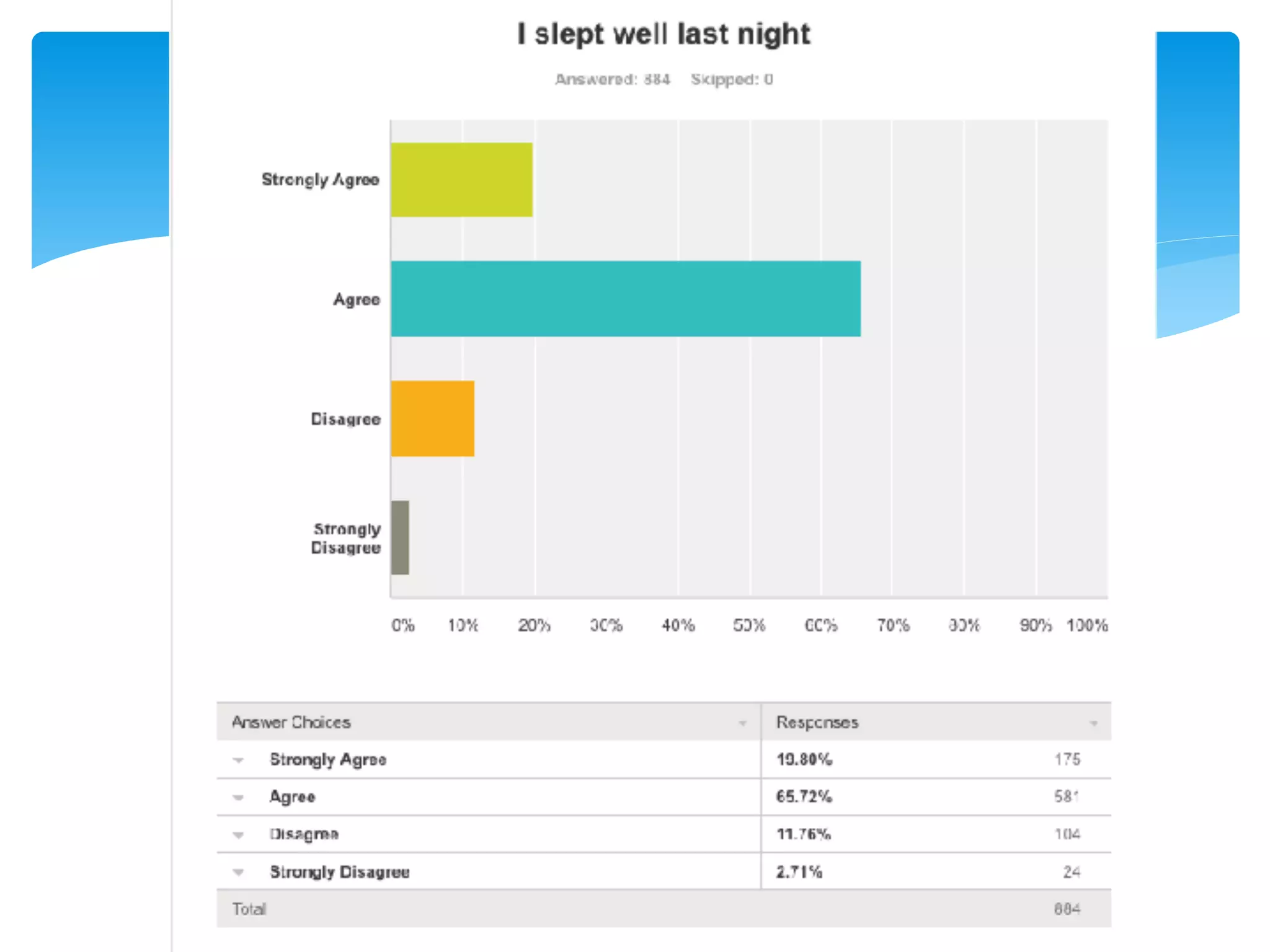
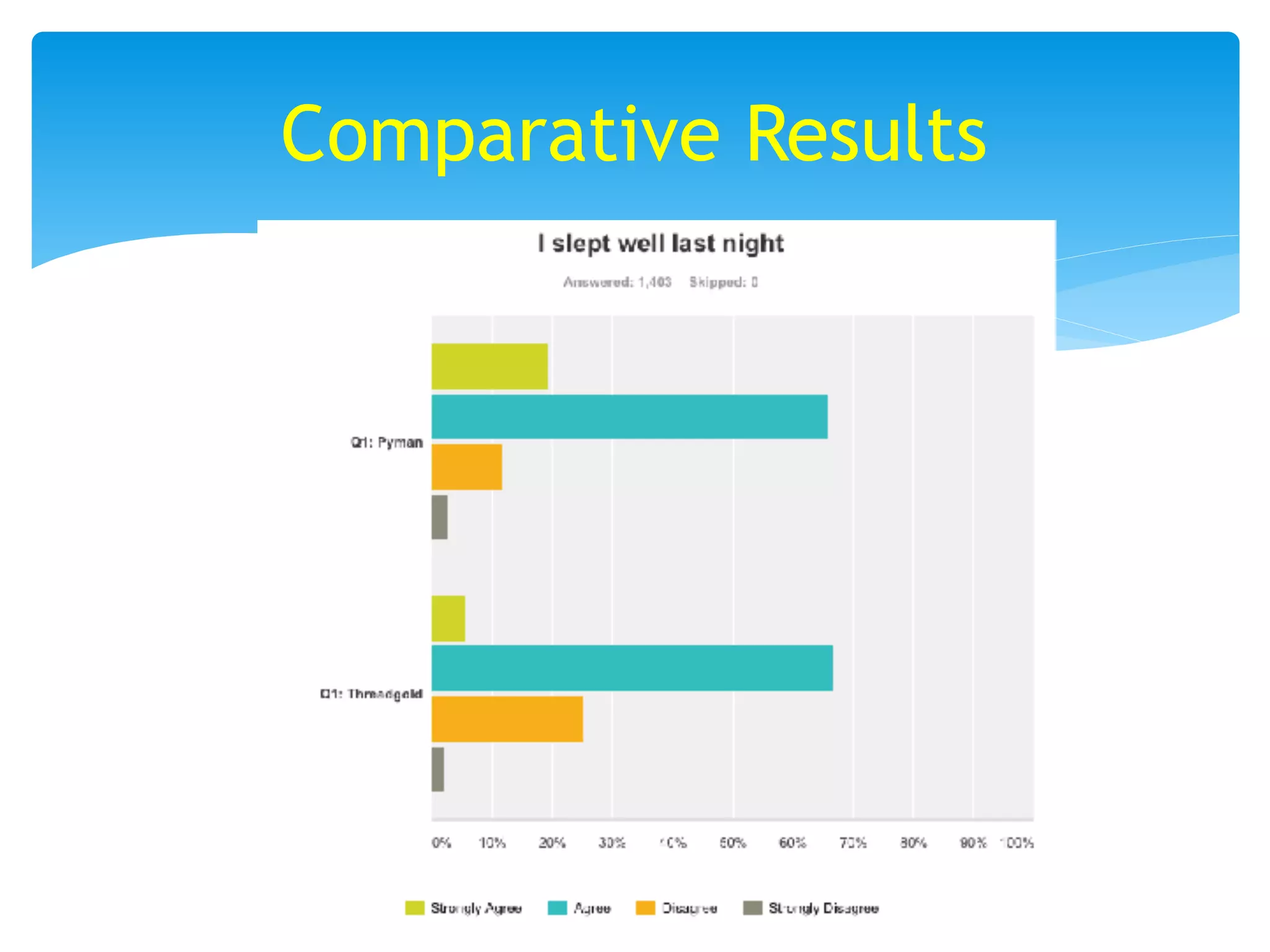
∗ I slept well last night
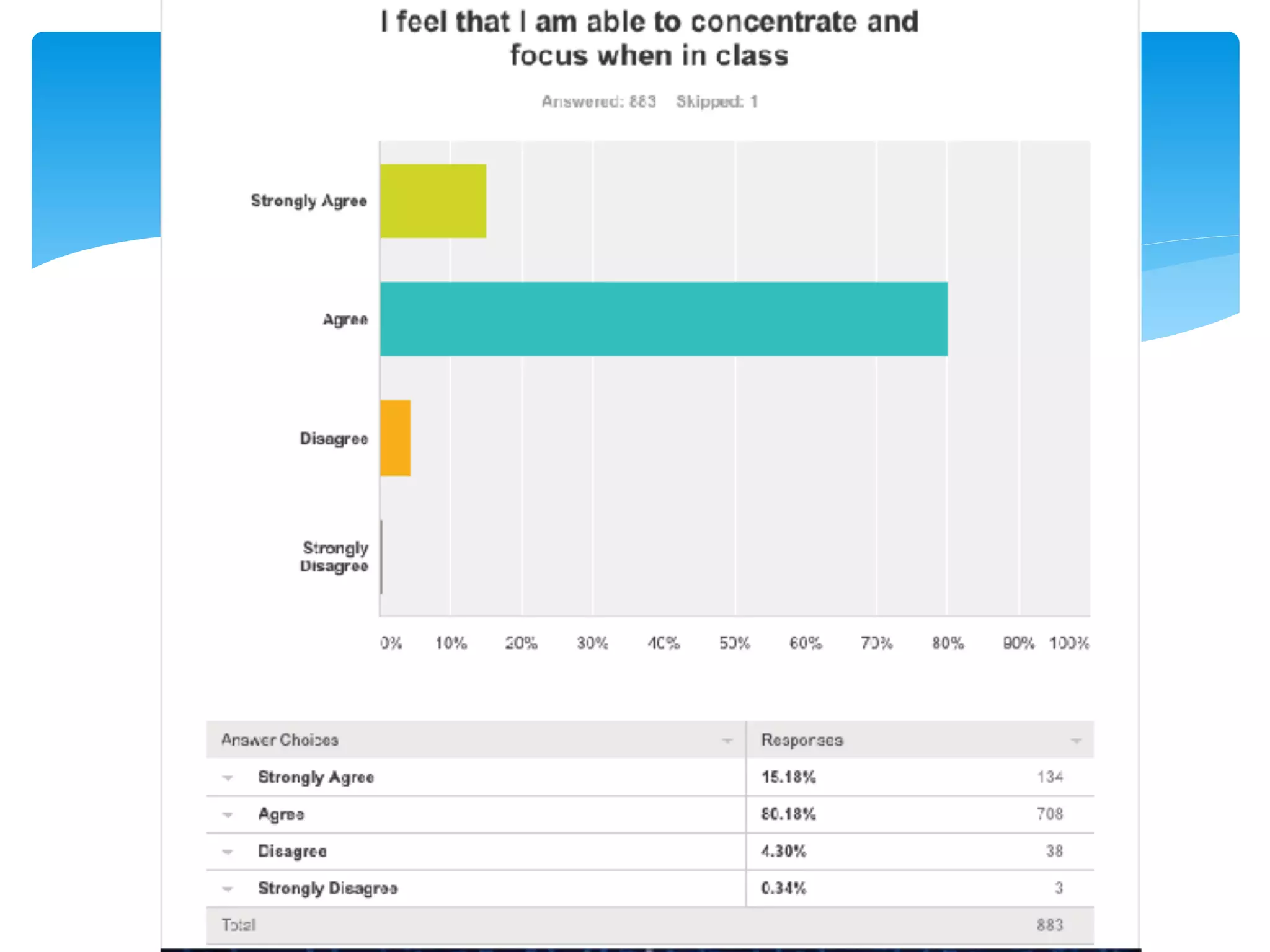
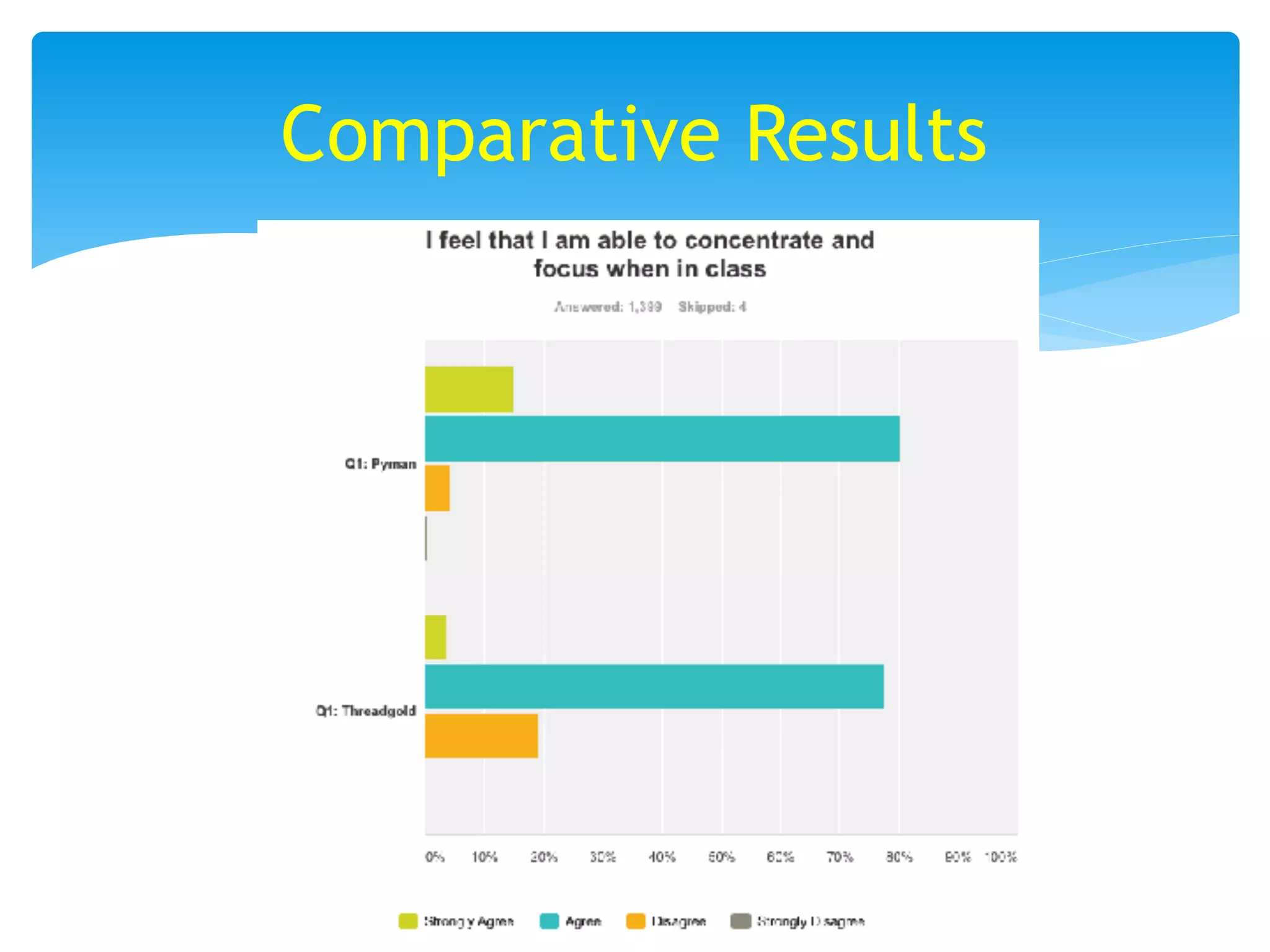
∗ I feel that I am able to concentrate and focus
when in class
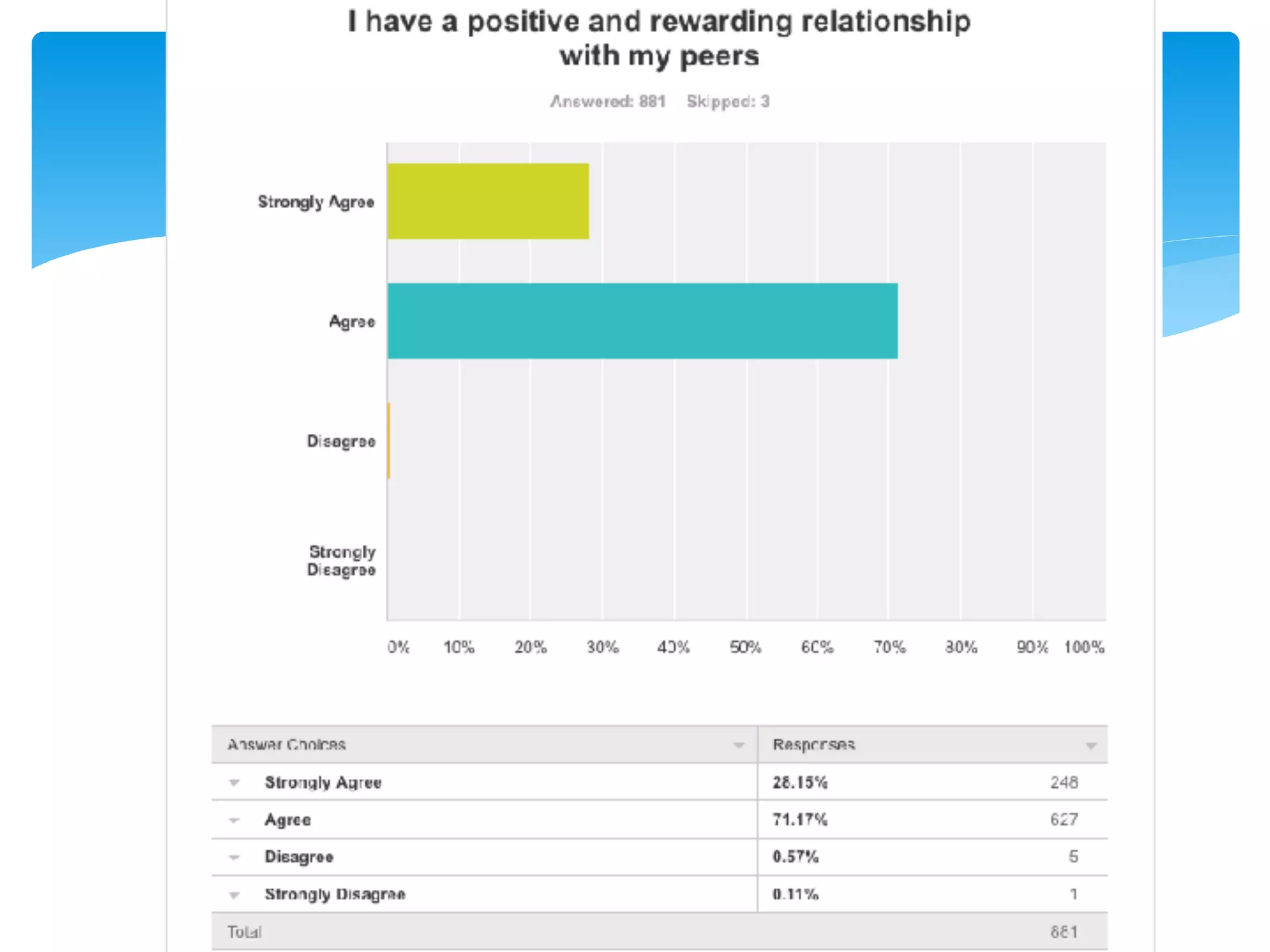
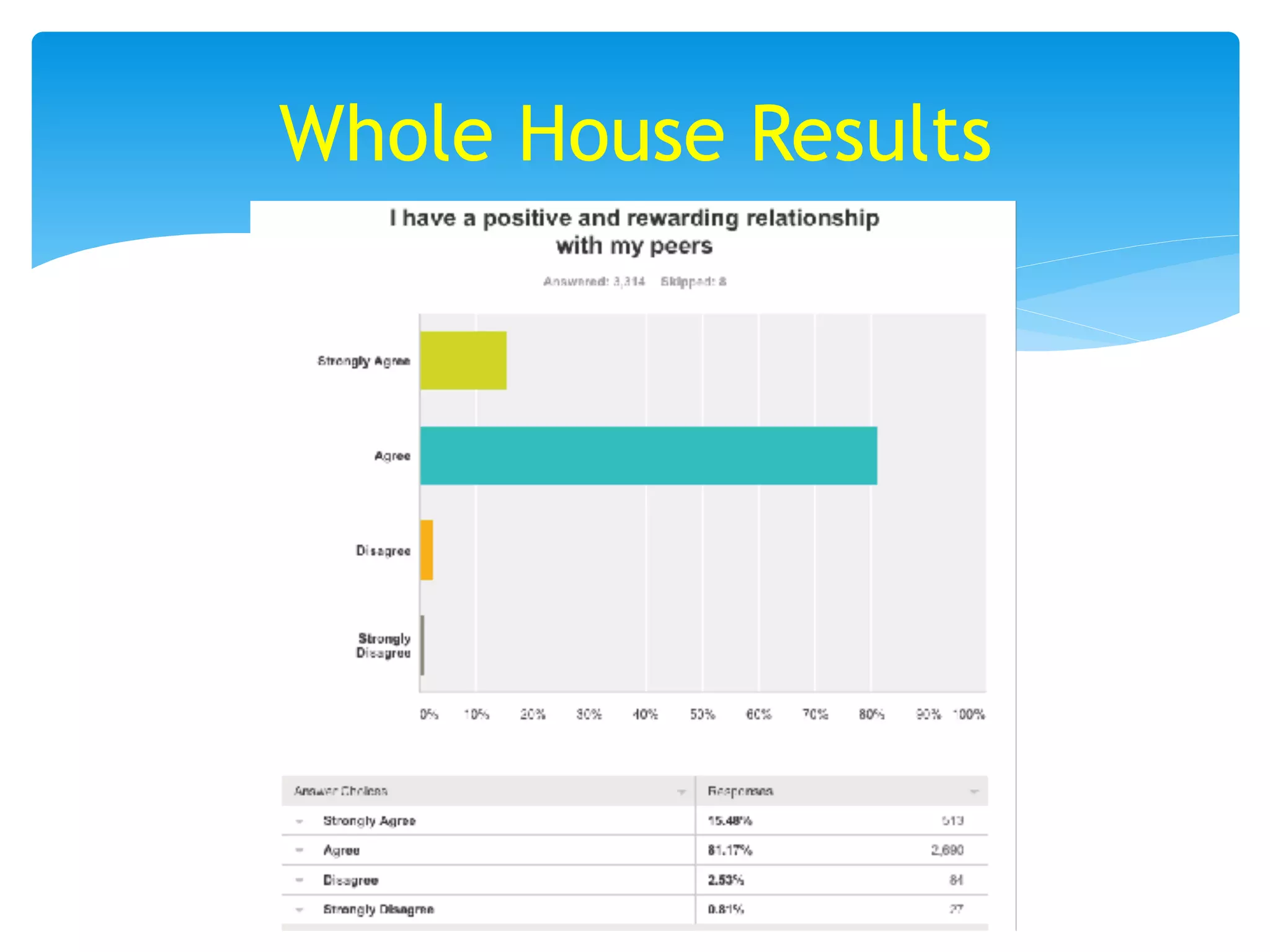
∗ I have a positive and rewarding relationship with
my peers
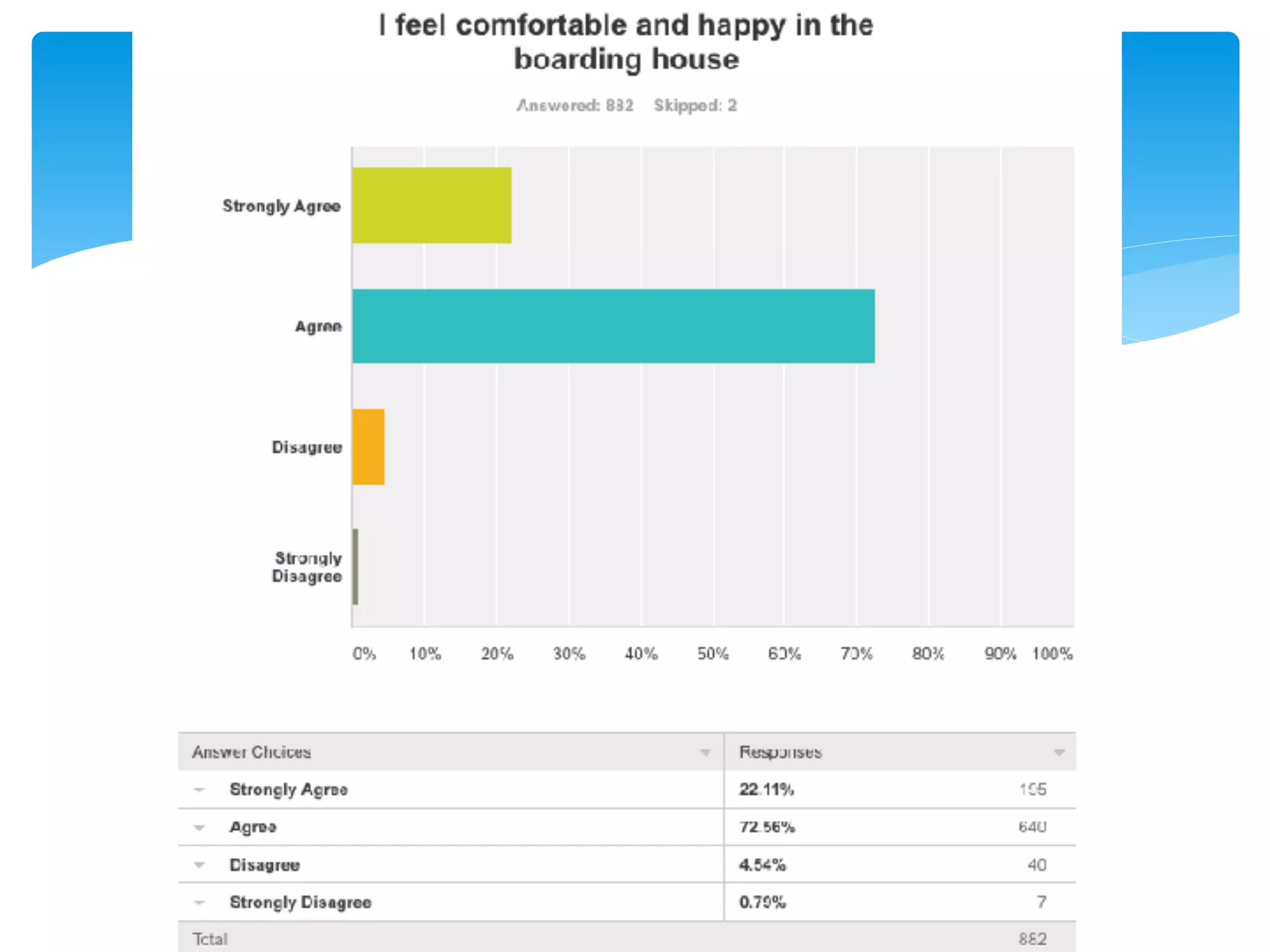
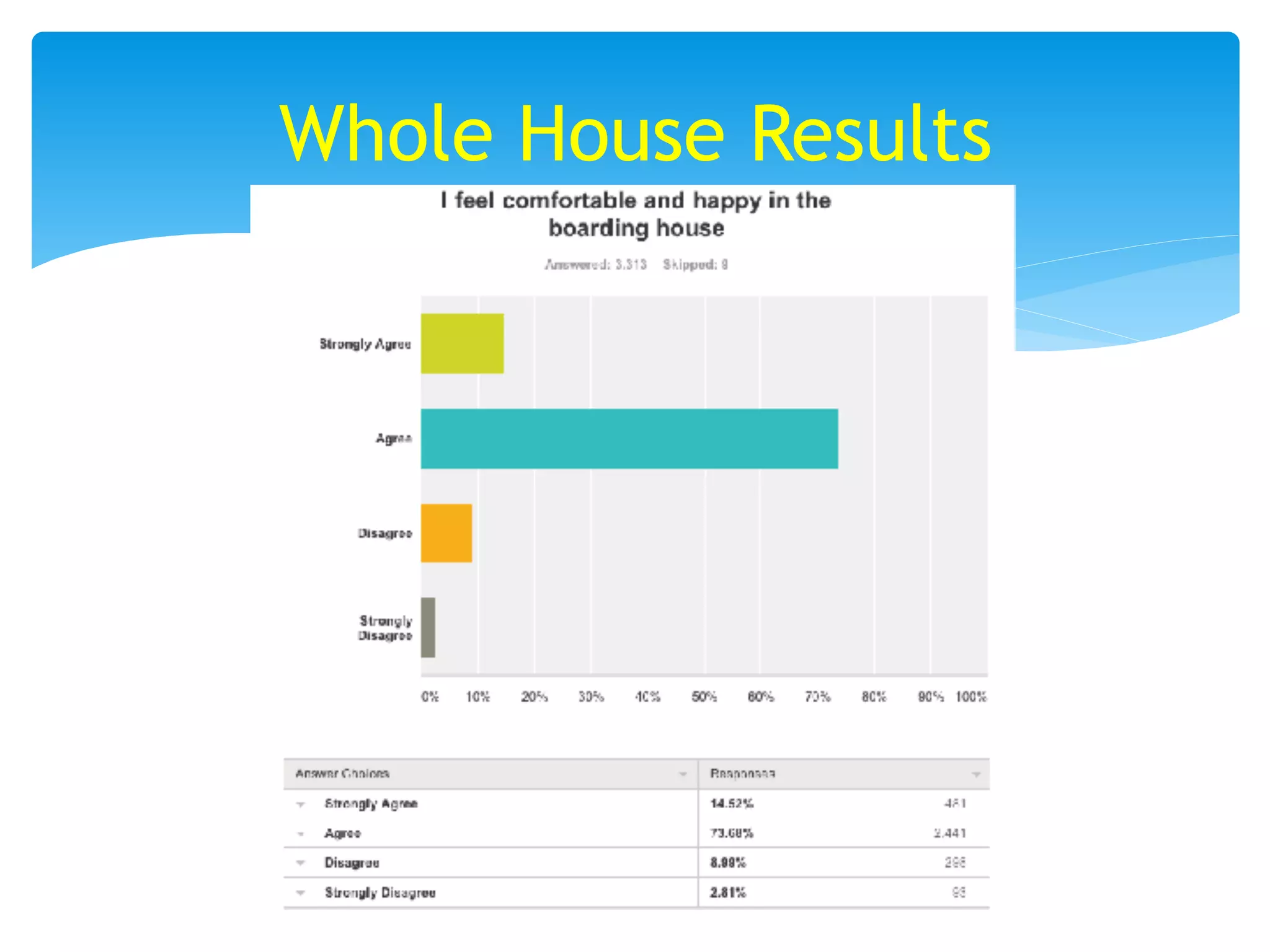
∗ I feel happy and comfortable in the boarding house
The Statements
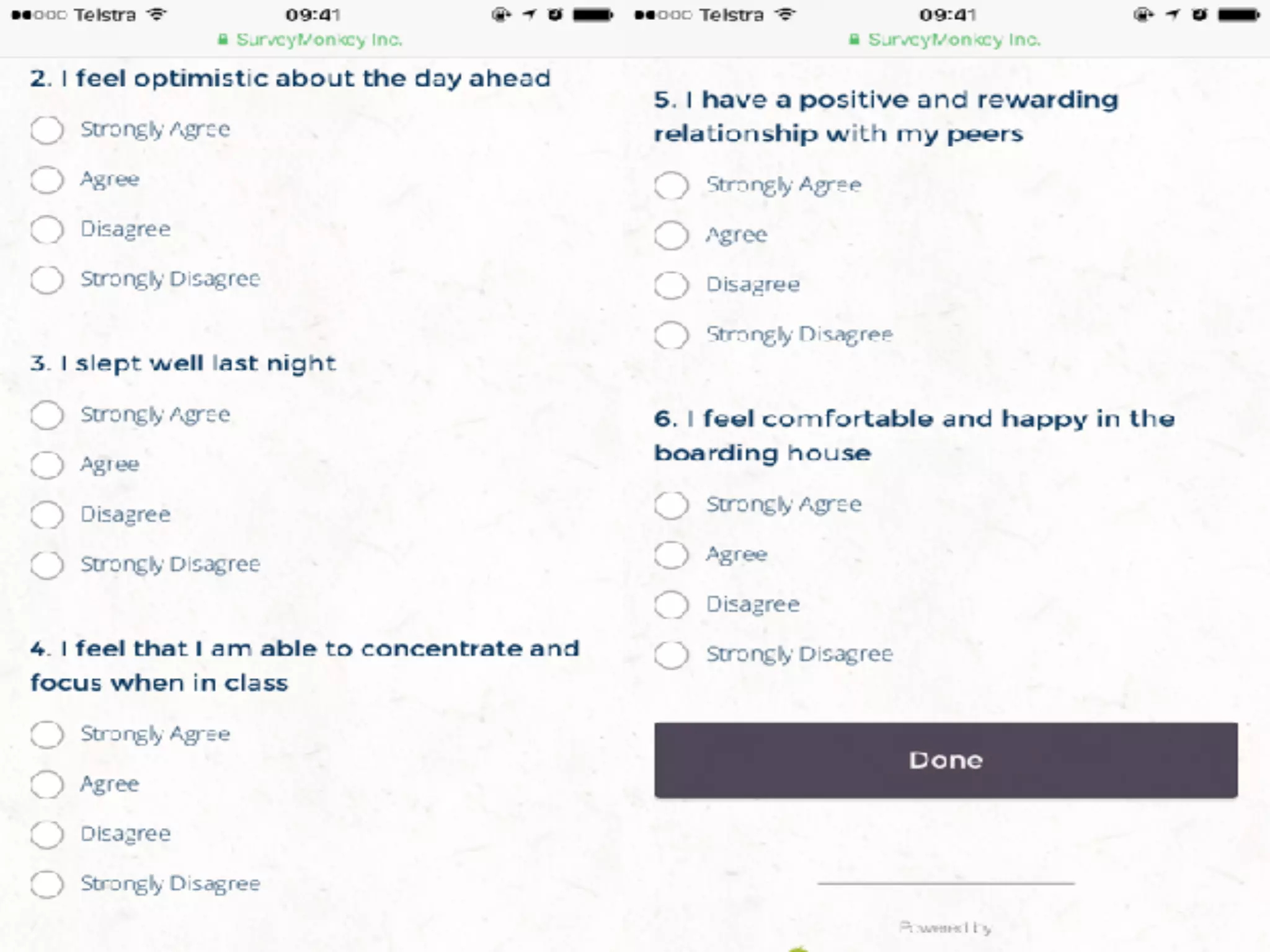
What it looks like
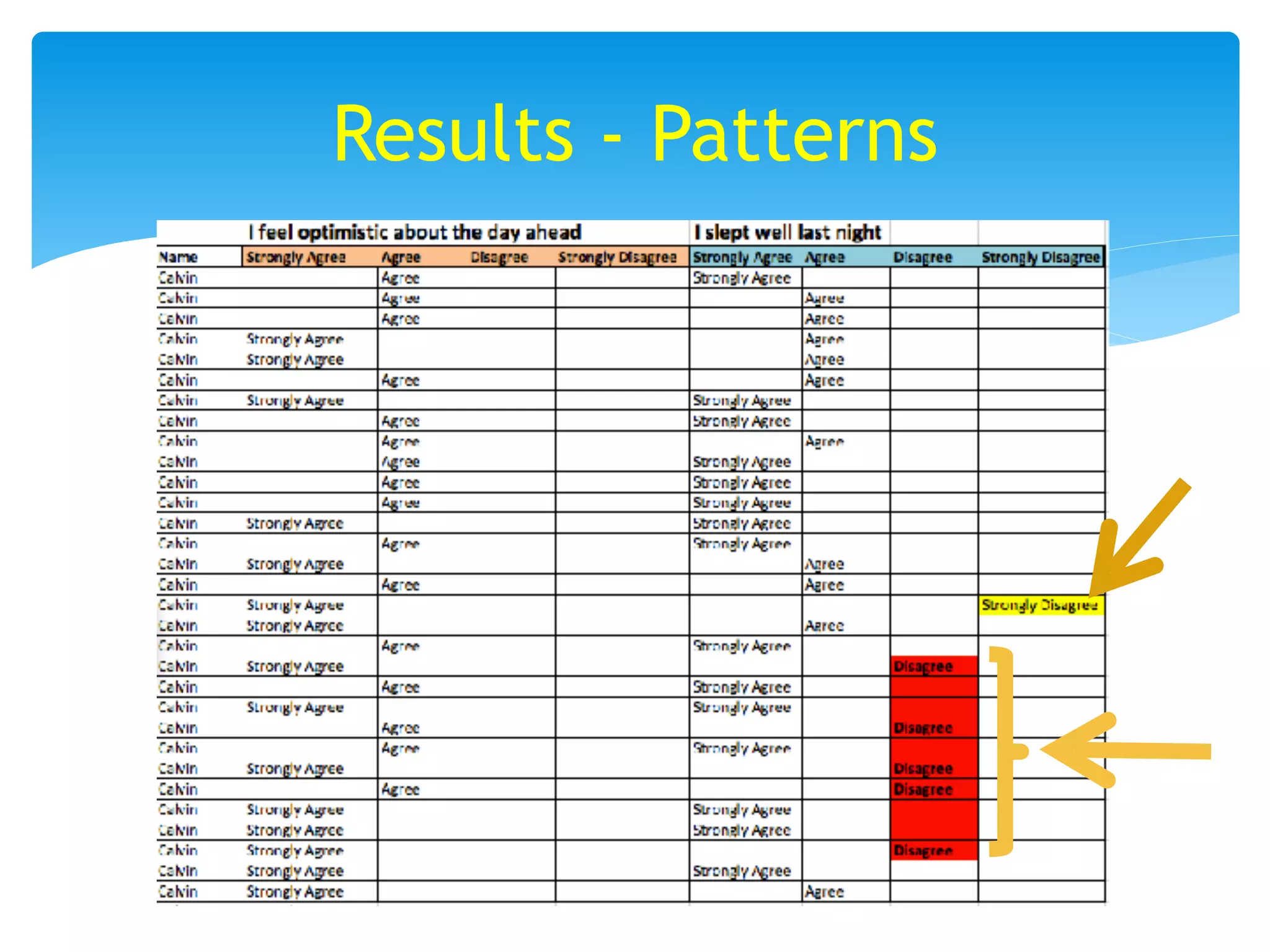
∗ Results can be analysed at an individual level or as
a group
The Results
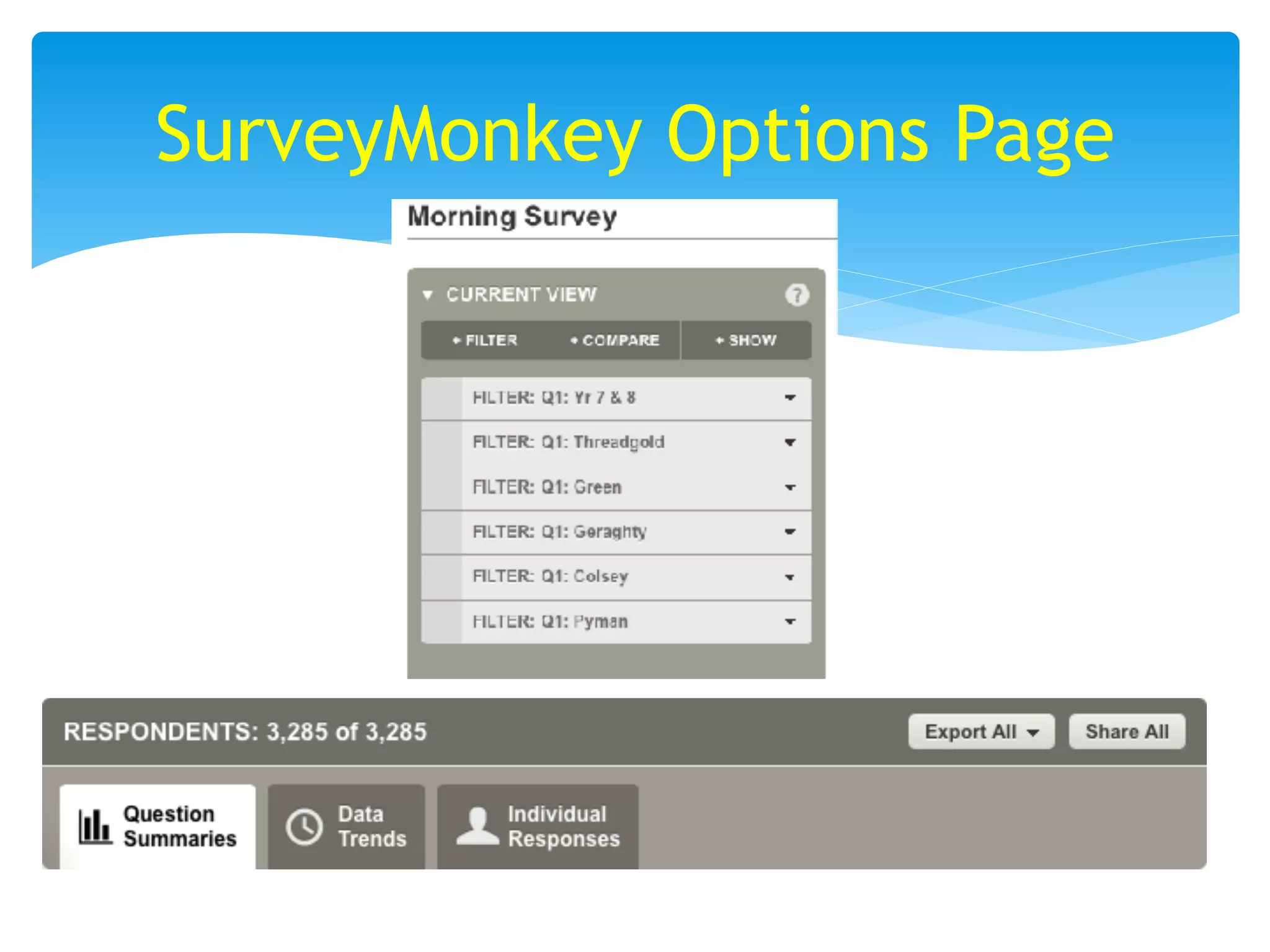
SurveyMonkey Options Page
The Results
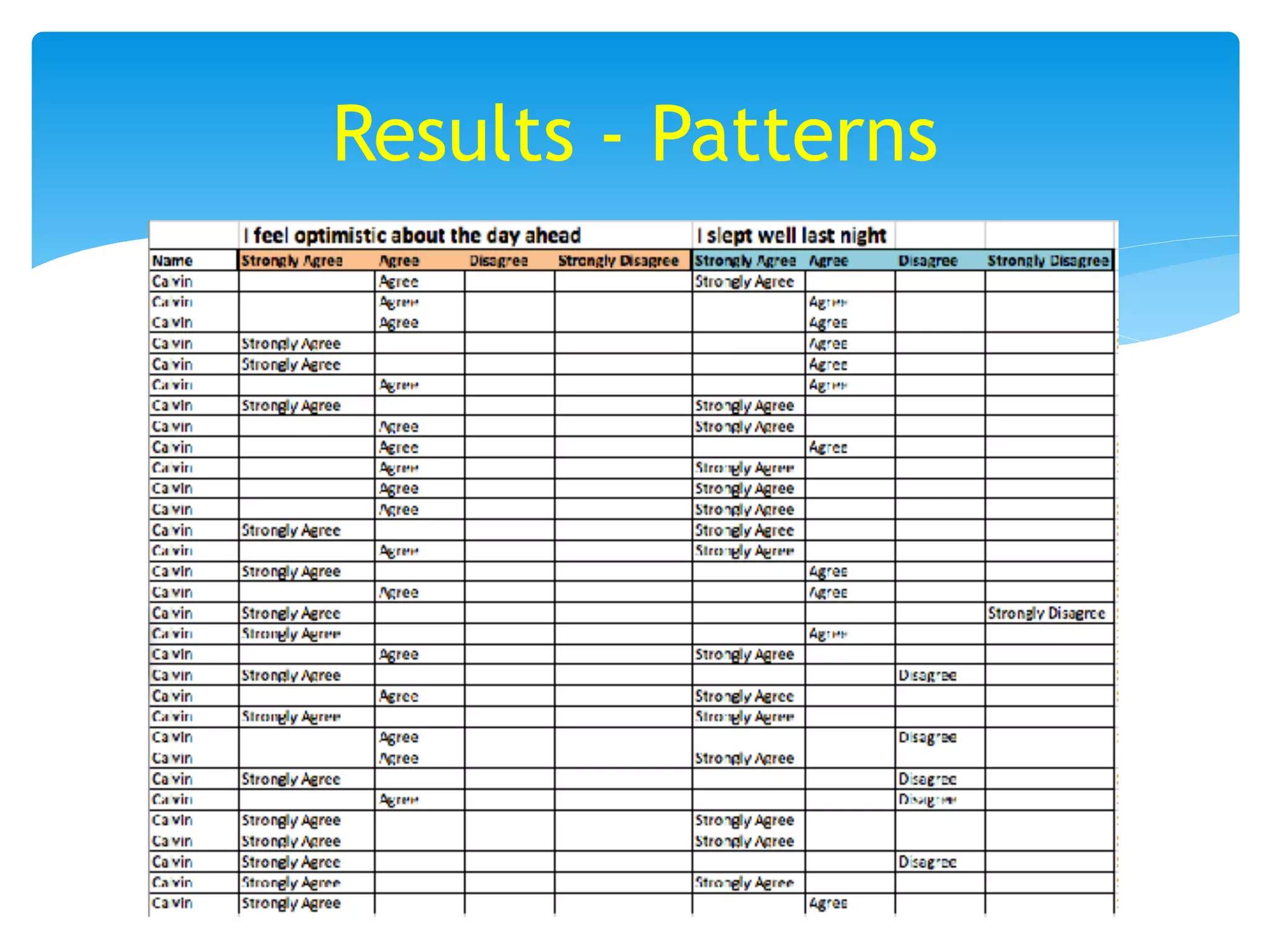
Results - Patterns
Results - Patterns
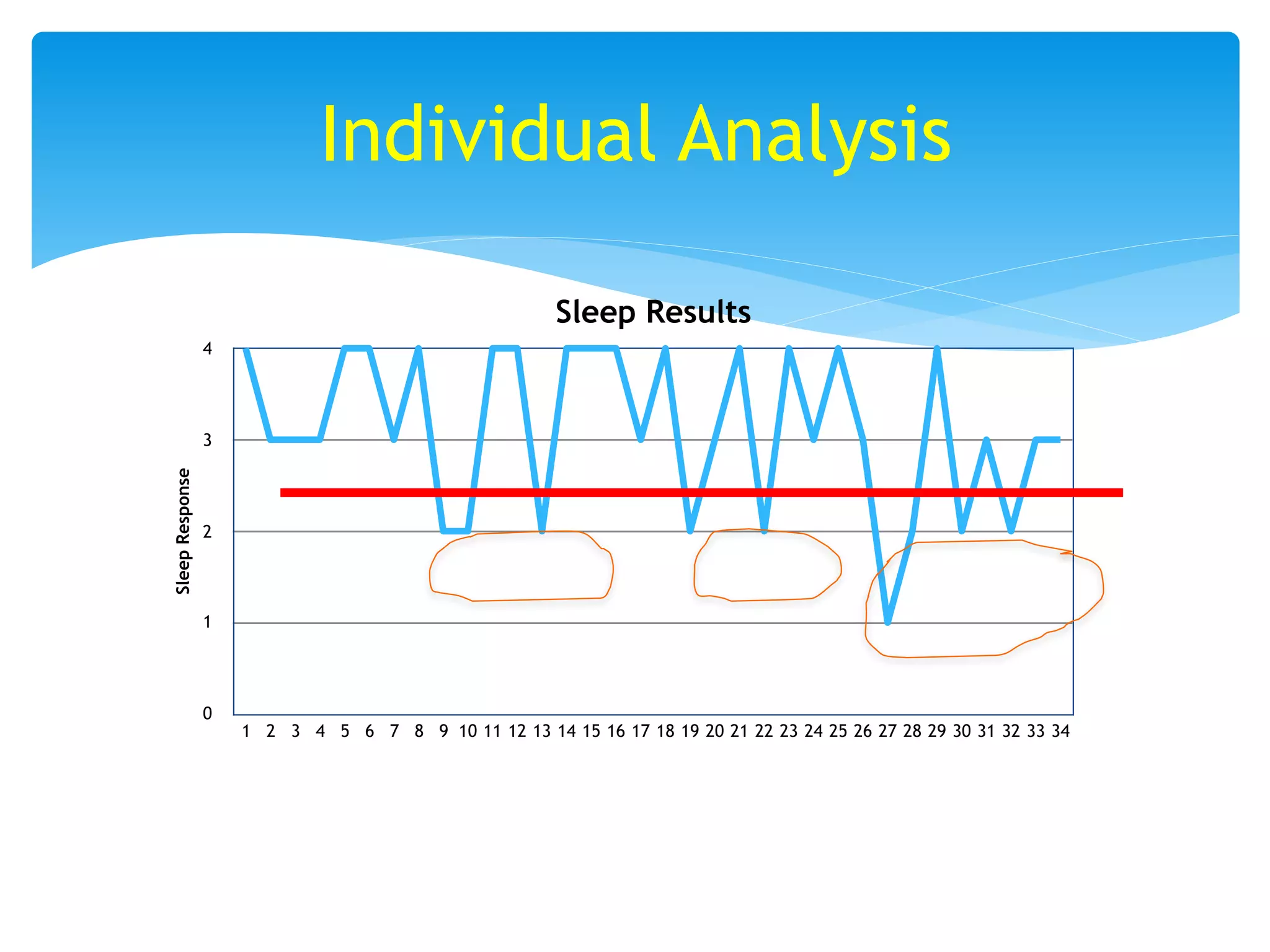
Individual Analysis
Sleep Results
SleepResponse
0
1
2
3
4
1 2 3 4 5 6 7 8 9 10 11 12 13 14 15 16 17 18 19 20 21 22 23 24 25 26 27 28 29 30 31 32 33 34
Group Results
Group Results
Group Results
Group Results
Group Results
Comparative Results
Comparative Results
Whole House Results
Whole House Results
∗ Do the students give rote answers?
∗ Are we asking the right questions?
∗ Who can see the data?
∗ What is the data used for?
∗ Scaled responses? Can we compare?
∗ Forced participation?
∗ Permissions?
The Questions
∗ Do the students give rote answers?
∗ Daily responses may increase likelihood of rote
answers. However, across a pattern of responses,
changes to the rote answers are a strong indicator
of change of feeling.
The Answers
∗ Are we asking the right questions?
∗ The 5 statements used were overseen by our
school Psychiatrist and are based on evidence as
seen in Positive Psychology publications
The Answers
∗ Who can see the data?
∗ Our responses are available to be viewed by Head
of Boarding and the Teaching staff only. Boys are
advised of this in advance.
The Answers
∗ What is the data used for?
∗ The student responses are used as a guide only. It
is a conversation starter and does not replace
normal staff supervision of wellbeing.
∗ The data is not used to make judgments – i.e.
House Leaders, awards etc…
The Answers
∗ Scaled Responses? Can we compare?
∗ The responses provided are not quantitative nor
standardised. We cannot reliably say what one
students response indicates about their wellbeing.
It is a guide only.
∗ Likewise we cannot compare responses between
students. One students Strongly Disagree may be
the same as another students Disagree. Knowing
your students is critical.
The Answers
∗ Forced Participation?
∗ All responses have been voluntary.
∗ Pyman mentor group responded at a rate above
95% over 12 months.
∗ Wider boarding house has been approximately 55%.
The Answers
∗ Permissions?
∗ Collection of data of this kind requires clear
permissions. Must ensure permission from School
and parents.
The Answers
∗ What if?
∗ Worse case scenario.
∗ Legal issues
∗ Evidence of action
The Big Issue
∗ dpyman@stpeters.sa.edu.au
∗ LinkedIn – David Pyman
Questions

Check In Presentation 2016 David Pyman

  • 1.
    Check In 
 WellbeingProgram David Pyman St. Peters College, Adelaide
  • 2.
  • 3.
  • 4.
  • 5.
  • 6.
    ∗ 90 boysfrom Yr 7 – 12 ∗ Boys split into Mentor Groups of approximately 15 boys ∗ Yr 7&8 group ∗ 5 Yr 9-12 Mentor Groups. Each one supervised by a teaching member of the boarding house School & Allen Boarding House
  • 7.
    ∗ From PastoralCare to Wellbeing ∗ Why the change? Wellbeing
  • 8.
    ∗ 3 millionAustralians are currently living with depression or anxiety ∗ 45% of Australians will experience a mental illness in their lifetime ∗ 65% of people with mental illness do not access any treatment ∗ 1 in 5 Australians between the age of 15-85 experience a mental illness in any given year Wellbeing
  • 9.
  • 10.
    Wellbeing World Health Organisation estimates that depressionwill be the #1 health concern across the World by 2030
  • 11.
    ∗ 6 Australiansdie from suicide per day. ∗ 60,000 attempt suicide per year. The majority are female. ∗ Suicide is the #1 cause of death in people aged 15-24 ∗ The vast majority of suicide deaths are male – 75% ∗ Other major groups; Wellbeing Indigenous Rural & Remote L. G. B. T Children
  • 12.
    ∗ Even amongyoung people with the most severe mental health problems, only about 50% receive professional help ∗ The ‘Kevin Factor’ Talking to Teenagers
  • 13.
    ∗ A methodof ‘Checking in’ daily on the mental health of the students. ∗ Monitoring for changes in outlook and patterns of responses ∗ Students given 5 statements to which they respond Strongly Disagree, Disagree, Agree or Strongly Agree Check In program
  • 14.
    ∗ I feeloptimistic about the day ahead ∗ I slept well last night ∗ I feel that I am able to concentrate and focus when in class ∗ I have a positive and rewarding relationship with my peers ∗ I feel happy and comfortable in the boarding house The Statements
  • 15.
  • 16.
    ∗ Results canbe analysed at an individual level or as a group The Results
  • 17.
  • 18.
  • 19.
  • 20.
  • 21.
    Individual Analysis Sleep Results SleepResponse 0 1 2 3 4 12 3 4 5 6 7 8 9 10 11 12 13 14 15 16 17 18 19 20 21 22 23 24 25 26 27 28 29 30 31 32 33 34
  • 22.
  • 23.
  • 24.
  • 25.
  • 26.
  • 27.
  • 28.
  • 29.
  • 30.
  • 31.
    ∗ Do thestudents give rote answers? ∗ Are we asking the right questions? ∗ Who can see the data? ∗ What is the data used for? ∗ Scaled responses? Can we compare? ∗ Forced participation? ∗ Permissions? The Questions
  • 32.
    ∗ Do thestudents give rote answers? ∗ Daily responses may increase likelihood of rote answers. However, across a pattern of responses, changes to the rote answers are a strong indicator of change of feeling. The Answers
  • 33.
    ∗ Are weasking the right questions? ∗ The 5 statements used were overseen by our school Psychiatrist and are based on evidence as seen in Positive Psychology publications The Answers
  • 34.
    ∗ Who cansee the data? ∗ Our responses are available to be viewed by Head of Boarding and the Teaching staff only. Boys are advised of this in advance. The Answers
  • 35.
    ∗ What isthe data used for? ∗ The student responses are used as a guide only. It is a conversation starter and does not replace normal staff supervision of wellbeing. ∗ The data is not used to make judgments – i.e. House Leaders, awards etc… The Answers
  • 36.
    ∗ Scaled Responses?Can we compare? ∗ The responses provided are not quantitative nor standardised. We cannot reliably say what one students response indicates about their wellbeing. It is a guide only. ∗ Likewise we cannot compare responses between students. One students Strongly Disagree may be the same as another students Disagree. Knowing your students is critical. The Answers
  • 37.
    ∗ Forced Participation? ∗All responses have been voluntary. ∗ Pyman mentor group responded at a rate above 95% over 12 months. ∗ Wider boarding house has been approximately 55%. The Answers
  • 38.
    ∗ Permissions? ∗ Collectionof data of this kind requires clear permissions. Must ensure permission from School and parents. The Answers
  • 39.
    ∗ What if? ∗Worse case scenario. ∗ Legal issues ∗ Evidence of action The Big Issue
  • 40.