The document summarizes the main messages, target audience, strategies, and methods of an RSPCA campaign. The RSPCA aims to help unwanted animals find homes and persuade the public to donate or adopt through emotional videos, posters, and TV ads that elicit sympathy. While they target families overall, they particularly focus on children who are more likely to want to adopt cute pets. The campaign has been successful in rehoming many animals in need, like Sophie the 10-year-old dog and Bouncer the stressed kennel dog, thanks to matching each pet to the right owner.
The Main Messagesor Ideas behind the Campaign
The purpose of the RSPCA is to help all unwanted animals that may
have a chance at getting another home with another family that wants
them. So it’s almost like adopting however an animal, that would still
join your family. So the main message is to donate and help these
poor, harmless and defensiveness animals to a clearer and brighter
future also give the animals a home. The RSPCA want to persuade and
inform the public to donate to the animals or adopt an animal to make
a change for the better in their lives and yours.It's RSPCA’s vision to
work for a world in which all humans respect and live in harmony with
all other members of the animal kingdom.
Who Does RSPCA Target As There Audience?
The target audience could be teenagers, pensioners, children, family
or a named person, such as an MP. However families are the mostly
aimed target audience,as they are more likely to adopt a dog to join
the family and more likely to give the dog a better life style. Although
children stand out within the family target audience because they are
more attracted to dogs and find them cute, also treat them more as a
friend by sharing their love and loyalty with the pet.
2.
The Strategy ofthe Campaign
The Strategy used is to persuade their target audience through using
sympathy, being emotive and making the public feeling guilty for the
poor animals. This is used when they promote their campaign through;
videos, posters and TV Adverts. This is effective and a strong strategy
as it makes the audience feel affection, also has the audience on the
feet and show sympathy upon the harmless animals who deserve to be
adopted.
The Methods Used To Reach the Target Audience
The Methods used to reach the target audience was to use persuasive
techniques against the public; sympathy, emotional language and
emotional techniques. This is shown mostly through the images they
portray to the public in an emotional way, so the public shows
sympathy then towards the animal. It’s a clever technique to use if you
think about it so why not use that technique when I’m going to do my
campaign. The audience with the biggest hearts are children as they
show sympathy towards everything they see cute so RSPCA has used
this against their audience. This is so the younger generation then go
tell their parents to adopt a poor, cute and attractive pet to give it a
better life.
3.
The Success ofthe Campaign in Achieving Its Aims
There is nothing quite like the feeling we get from successfully
rehoming an animal.
Especially when so many of the ones we see have been abandoned,
abused or neglected. We carefully match each pet to the right new
owner, so that each animal is a rehoming success.
It's great to think we have helped make a difference to an animal's life.
Here are just some of our success stories.
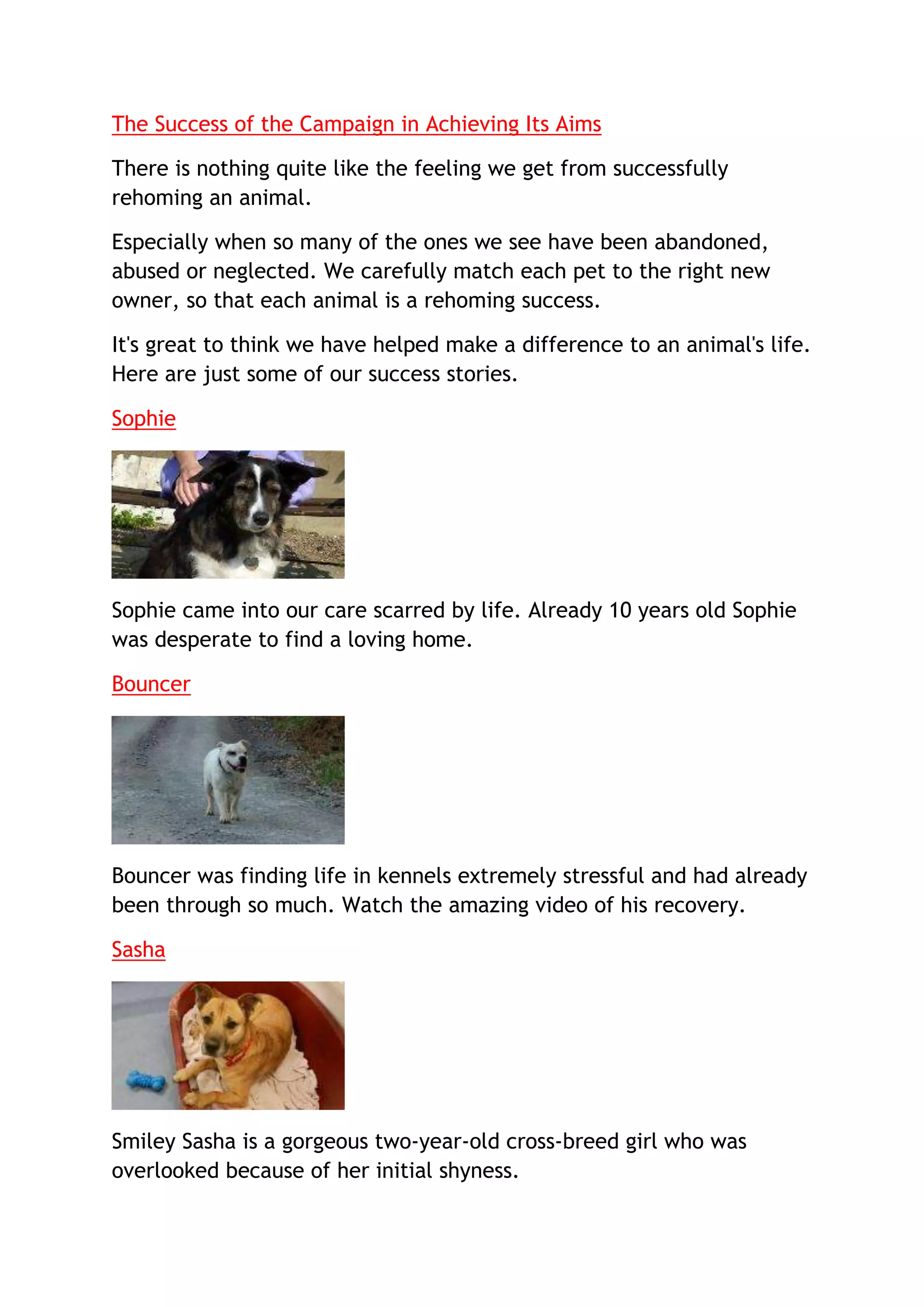
Sophie
Sophie came into our care scarred by life. Already 10 years old Sophie
was desperate to find a loving home.
Bouncer
Bouncer was finding life in kennels extremely stressful and had already
been through so much. Watch the amazing video of his recovery.
Sasha
Smiley Sasha is a gorgeous two-year-old cross-breed girl who was
overlooked because of her initial shyness.
4.
Tigger
Two-year-old Tigger spenteight months in our care before finally
finding his perfect match.
Daisy
Daisy came into our care as a very poorly kitten. Thanks to her foster
carer Daisy now has a loving permanent home.
Max and Paddy
Max and Paddy’s shyness and devotion to each other meant that the
pair was being overlooked.
Paulie
5.
Older cat Pauliehas finally found a comfy sofa to call his own - and an
owner to go with it!
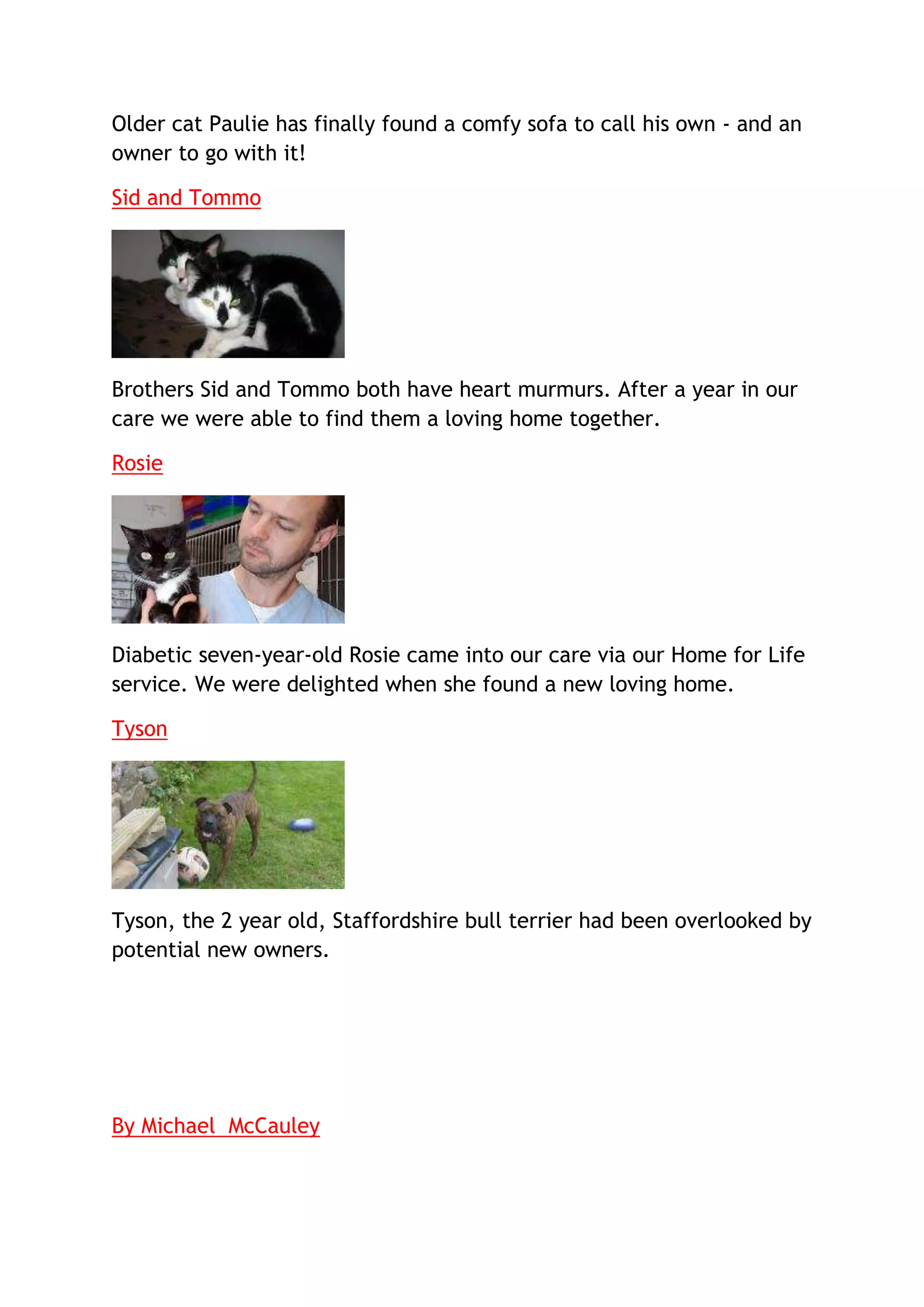
Sid and Tommo
Brothers Sid and Tommo both have heart murmurs. After a year in our
care we were able to find them a loving home together.
Rosie
Diabetic seven-year-old Rosie came into our care via our Home for Life
service. We were delighted when she found a new loving home.
Tyson
Tyson, the 2 year old, Staffordshire bull terrier had been overlooked by
potential new owners.
By Michael McCauley