CHARISMATIC
THEORY
OF LEADERSHIP
What is Charismatic Leadership?
Charismatic leadership is defined by a
leader who uses his or her
communication skills, persuasiveness,
and charm to influence others.
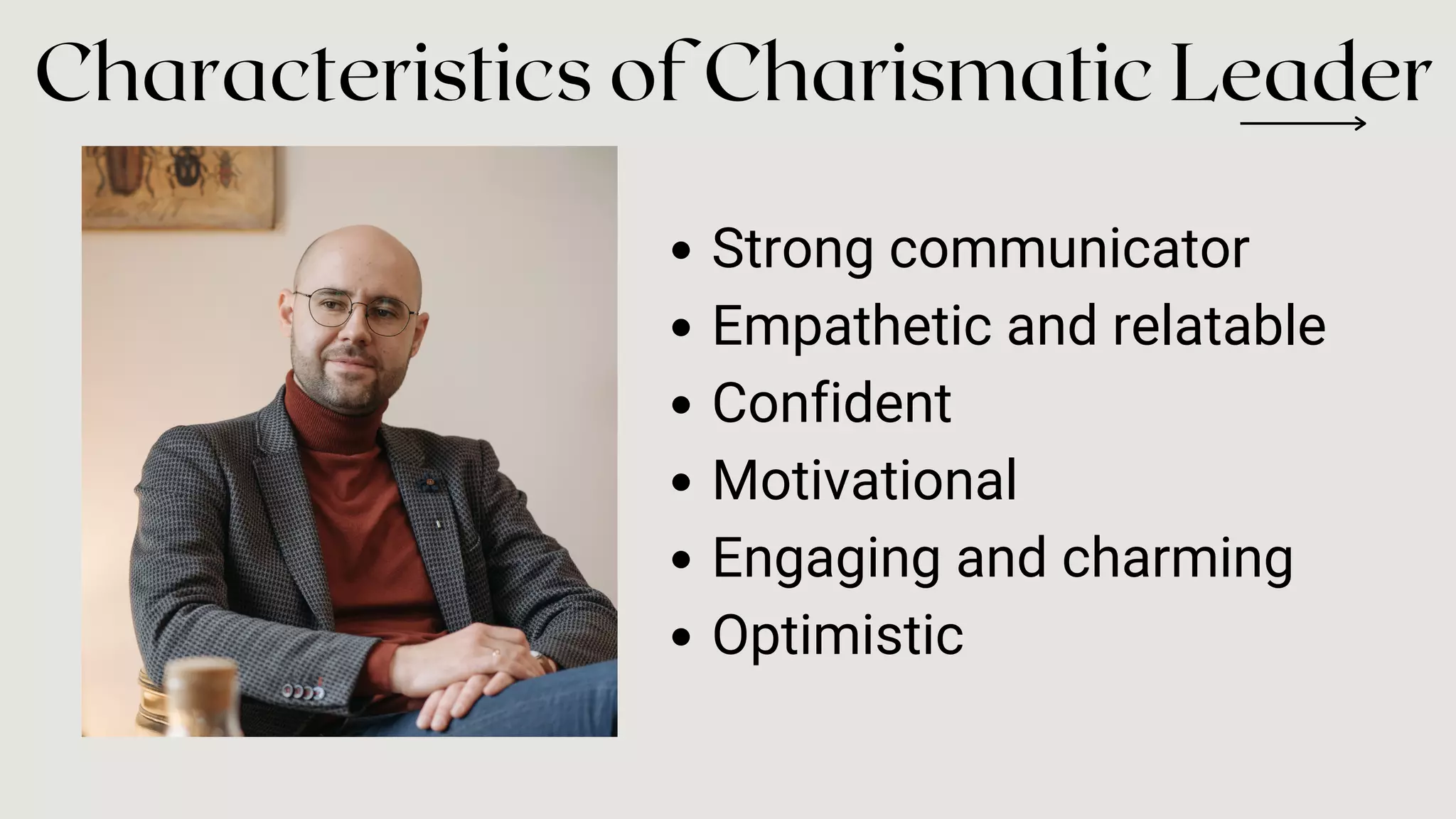
Strong communicator
Empathetic and relatable
Confident
Motivational
Engaging and charming
Optimistic
Characteristics of Charismatic Leader
What are the pros and cons of
charismatic leadership?
Highly inspirational and
motivating
Encourages a sense of
camaraderie, collaboration, and
union
Makes followers feel heard and
understood
Creates movement toward
positive change
Pros
What are the pros and cons of
charismatic leadership?
Can become more focused on
themselves than their people
Has the potential to become self
serving
Frequently viewed as shallow or
disingenuous
Cons
How to apply charismatic
leadership
Practice vulnerability
Develop your Listenig Skills
Be Transparent
Example of Charismatic Leader
Martin Luther King Jr
Adolf Hitler
Barack Obama
Indra Nooyi
TRANSACTIONAL THEORY
OF LEADERSHIP
What is Transactional Leadership?
Transactional leadership focuses on results,
conforms to the existing structure of an
organization and measures success
according to that organization’s system of
rewards and penalties. Transactional leaders
have formal authority and positions of
responsibility in an organization.
Transactional
leadership style
Focused on short-term goals
Favor structured policies and
procedures
Thrive on following rules and doing
things correctly
Revel in efficiency
Very left-brained
Tend to be inflexible
Opposed to change
Rewards those who are motivated by self-
interest to follow instructions
Provides an unambiguous structure for large
organizations, systems requiring repetitive
tasks and infinitely reproducible
environments
Achieves short-term goals quickly
Rewards and penalties are clearly defined for
workers
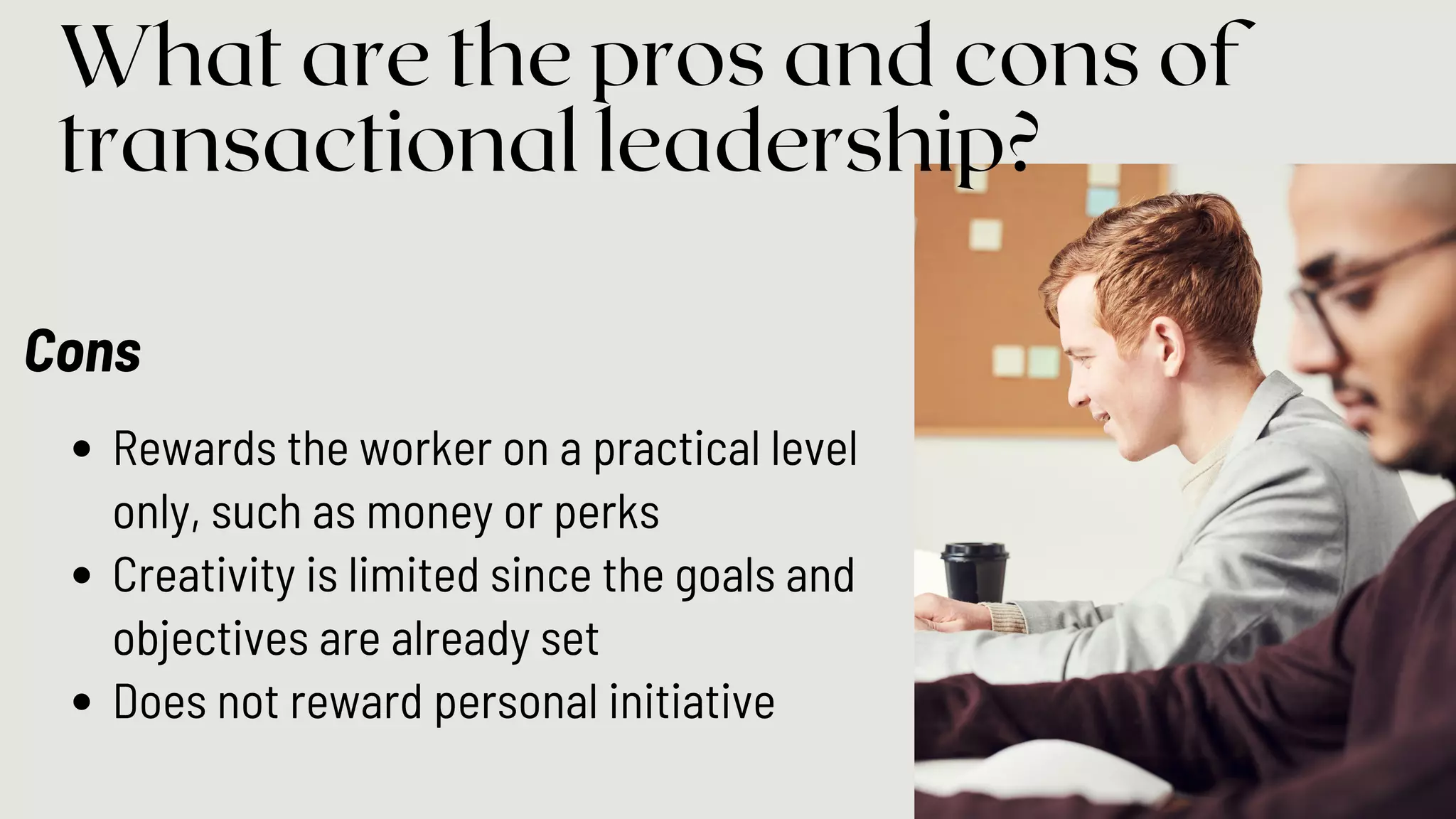
What are the pros and cons of
transactional leadership?
Pros
Rewards the worker on a practical level
only, such as money or perks
Creativity is limited since the goals and
objectives are already set
Does not reward personal initiative
What are the pros and cons of
transactional leadership?
Cons
Benefits of transactional leadership
There is definitely a place for
transactional leadership in the
world today.
•One of its best uses is in
multinational corporations
where not all of the workers
speak the same language. Once
the structure and the
requirements are learned, it is
easy for workers to complete
tasks successfully.
Benefits of transactional leadership
•The military, policing
organizations, and first
responders use this style
of leadership so that all
areas of the organization
are consistent.
Example of Transactional Leader
Martin Luther Kinr
Vince Lombardi
Barack Obama
Indra Nooyi
References:
https://torch.io/blog/what-is-charismatic-
leadership/#:~:text=Charismatic%20leadership%20is%20d
efined%20by,are%20struggling%20to%20move%20forwar
d.
https://online.stu.edu/degrees/education/what-is-
transactional-leadership/

Charismatic and transactional theories

  • 1.
  • 2.
    What is CharismaticLeadership? Charismatic leadership is defined by a leader who uses his or her communication skills, persuasiveness, and charm to influence others.
  • 3.
    Strong communicator Empathetic andrelatable Confident Motivational Engaging and charming Optimistic Characteristics of Charismatic Leader
  • 4.
    What are thepros and cons of charismatic leadership? Highly inspirational and motivating Encourages a sense of camaraderie, collaboration, and union Makes followers feel heard and understood Creates movement toward positive change Pros
  • 5.
    What are thepros and cons of charismatic leadership? Can become more focused on themselves than their people Has the potential to become self serving Frequently viewed as shallow or disingenuous Cons
  • 6.
    How to applycharismatic leadership Practice vulnerability Develop your Listenig Skills Be Transparent
  • 7.
    Example of CharismaticLeader Martin Luther King Jr Adolf Hitler Barack Obama Indra Nooyi
  • 8.
  • 9.
    What is TransactionalLeadership? Transactional leadership focuses on results, conforms to the existing structure of an organization and measures success according to that organization’s system of rewards and penalties. Transactional leaders have formal authority and positions of responsibility in an organization.
  • 10.
    Transactional leadership style Focused onshort-term goals Favor structured policies and procedures Thrive on following rules and doing things correctly Revel in efficiency Very left-brained Tend to be inflexible Opposed to change
  • 11.
    Rewards those whoare motivated by self- interest to follow instructions Provides an unambiguous structure for large organizations, systems requiring repetitive tasks and infinitely reproducible environments Achieves short-term goals quickly Rewards and penalties are clearly defined for workers What are the pros and cons of transactional leadership? Pros
  • 12.
    Rewards the workeron a practical level only, such as money or perks Creativity is limited since the goals and objectives are already set Does not reward personal initiative What are the pros and cons of transactional leadership? Cons
  • 13.
    Benefits of transactionalleadership There is definitely a place for transactional leadership in the world today. •One of its best uses is in multinational corporations where not all of the workers speak the same language. Once the structure and the requirements are learned, it is easy for workers to complete tasks successfully.
  • 14.
    Benefits of transactionalleadership •The military, policing organizations, and first responders use this style of leadership so that all areas of the organization are consistent.
  • 15.
    Example of TransactionalLeader Martin Luther Kinr Vince Lombardi Barack Obama Indra Nooyi
  • 16.