Characteristics of Research
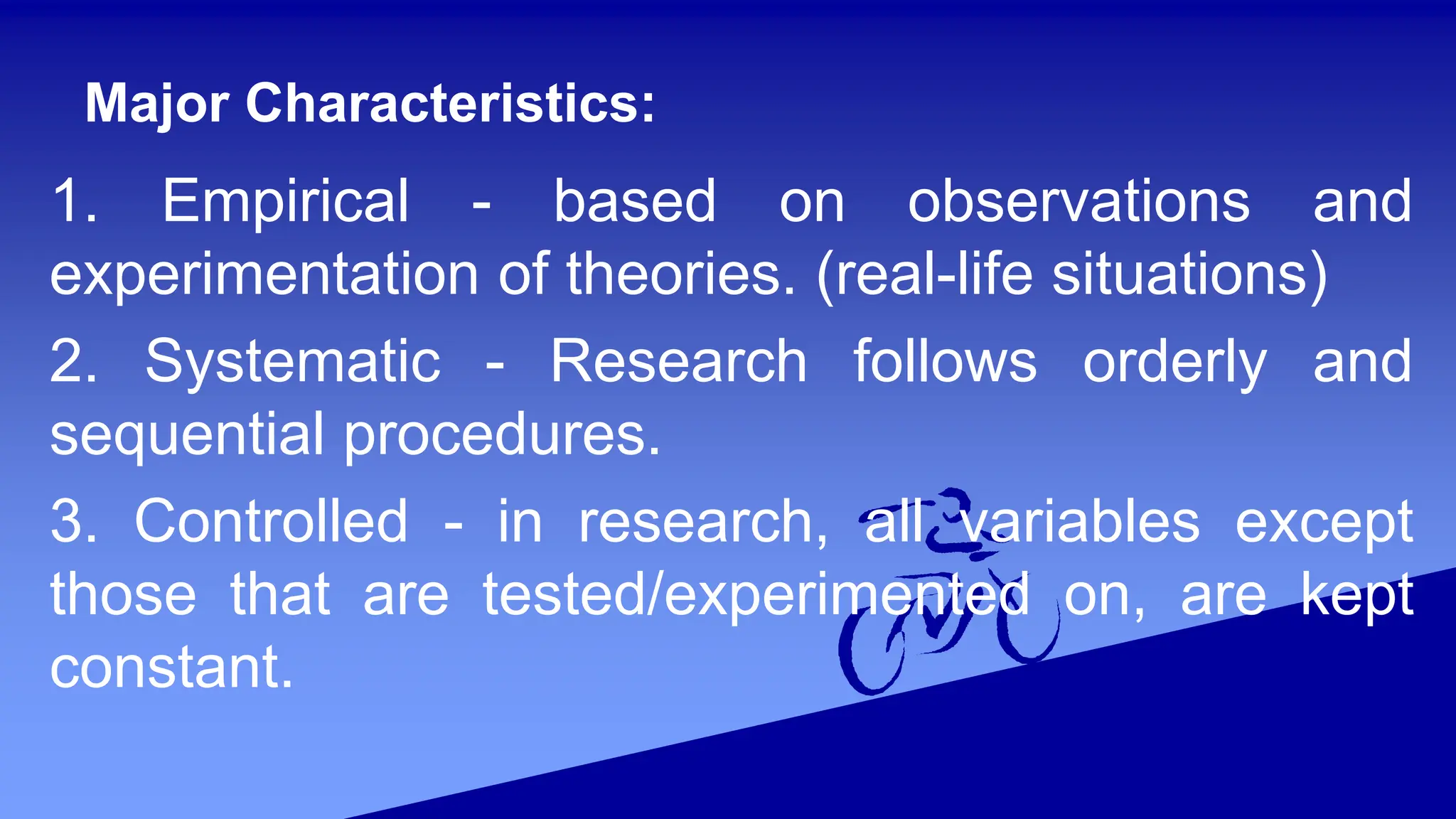
Major Characteristics:
1. Empirical - based on observations and
experimentation of theories. (real-life situations)
2. Systematic - Research follows orderly and
sequential procedures.
3. Controlled - in research, all variables except
those that are tested/experimented on, are kept
constant.
4. Employ hypothesis - guides the investigation
process.
5. Analytical - Critical analysis of all data used so
that there is no error in the researcher's
interpretations.
6. Objective - unbiased and logical.
7. Original work - requires effort to get at the
researcher's own investigation and produce data
needed to complete the study.
Other characteristics:
1. Concern for context and meaning
-Human experience takes its meaning from social,
historical, political and cultural influences.
2. Naturally occuring settings
-research studies behavior as it happens naturally in a
school, classroom, community or an organization.
3. Humans as instruments
- The researcher is the primary instrument for gathering
and analyzing data.
4. Descriptive data
-data used in qualitative studies are in
the form of words or pictures or other
visuals rather than numbers and
statistics.
5. Emergent Design
-design canoot be finalized at the onset
Types of Research
1. Library Research - done primarily in the
library
2. Field Research - done in natural setting such
as barangay, school, or factory
3. Laboratory Research - conducted in artificial
or controlled conditions
Strength and Weakness of a Research
• Strength - using human insight and
experience
• Weakness - being so heavily dependent
on the researcher's skill, training,
intellect, discipline and creativity.
Ethics and Research
• Ethics - norms for conduct that distinguish between
acceptable and unacceptable behavior.
• a method, procedure or perspective for deciding how to
act and for analyzing complex problems and issues.
• Researchers have the duty to ensure that they do not
deliberately mislead participants as to the nature of the
research.
• Maintain privacy of participants including confidentiality
and anonymity for their identity.
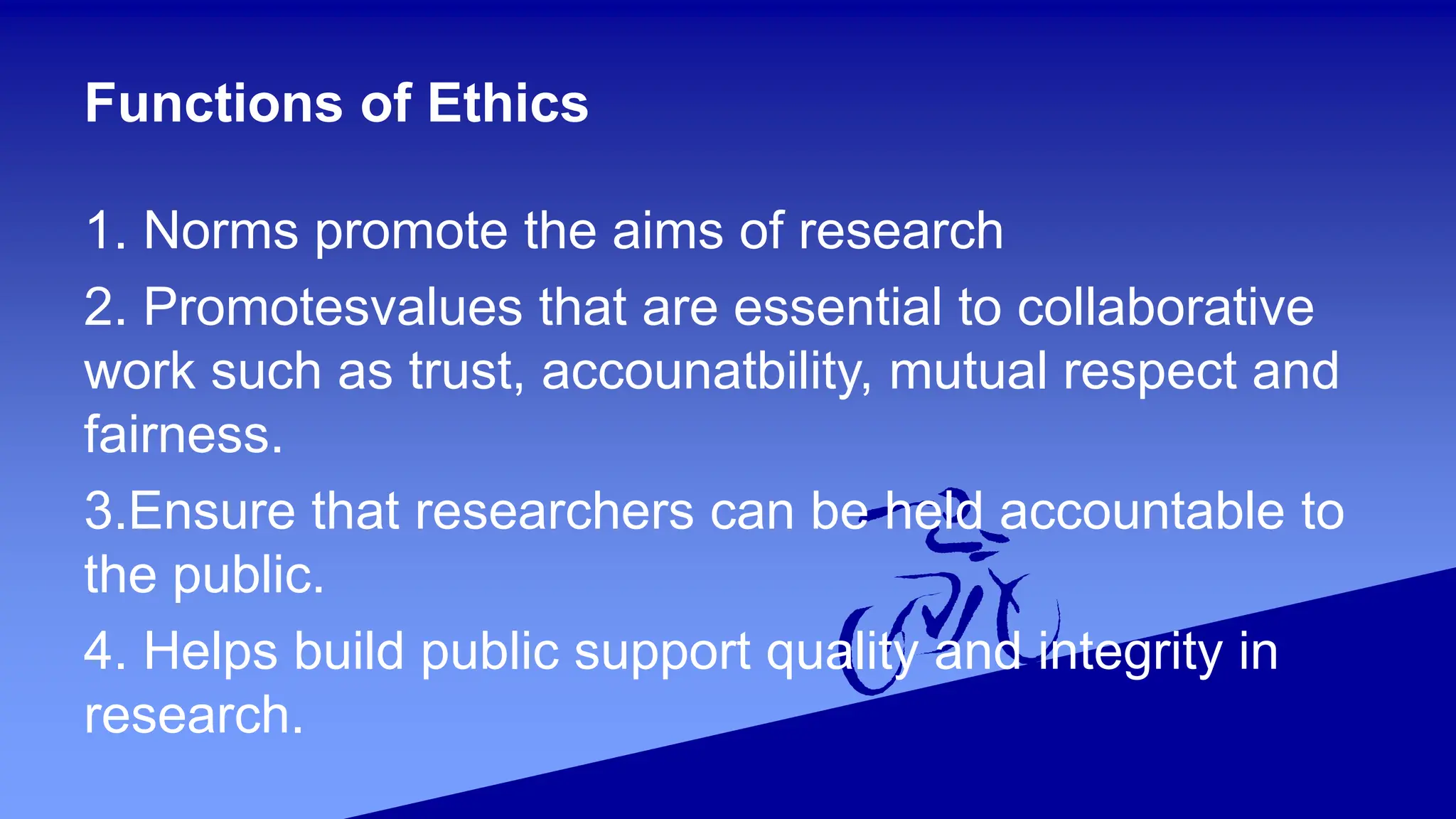
Functions of Ethics
1. Norms promote the aims of research
2. Promotesvalues that are essential to collaborative
work such as trust, accounatbility, mutual respect and
fairness.
3.Ensure that researchers can be held accountable to
the public.
4. Helps build public support quality and integrity in
research.
Ethical Principles
• Honesty Social Responsibility
• Objectivity Non- discrimination
• Integrity Competence
• Carefulness Legality
• Openness
• Respect for intellectual property
• Confidentiality
• Responsible publication
• Respect for colleagues
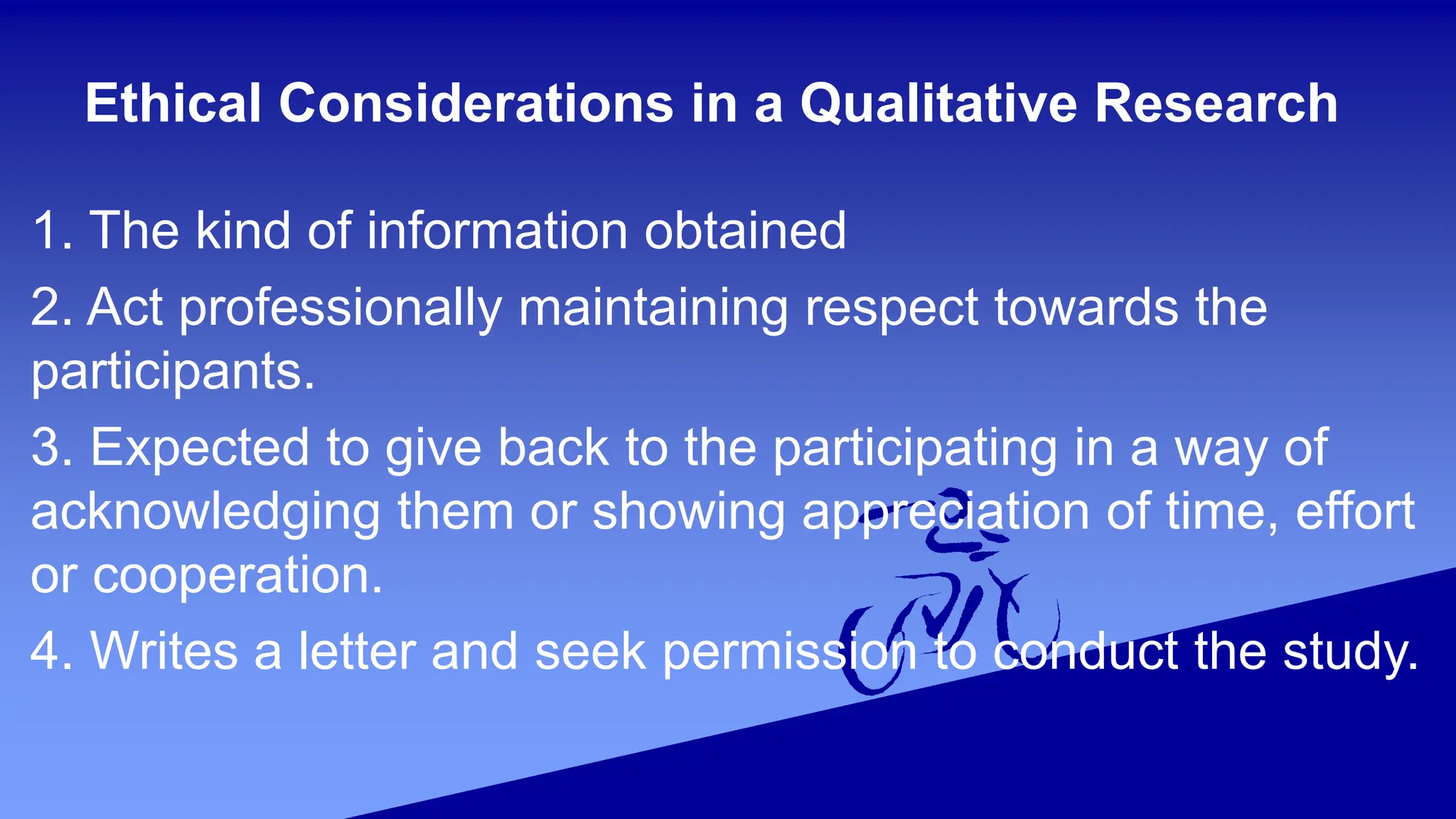
Ethical Considerations in a Qualitative Research
1. The kind of information obtained
2. Act professionally maintaining respect towards the
participants.
3. Expected to give back to the participating in a way of
acknowledging them or showing appreciation of time, effort
or cooperation.
4. Writes a letter and seek permission to conduct the study.

Characteristics-of- Qualitative Research.ppt

  • 1.
  • 2.
    Major Characteristics: 1. Empirical- based on observations and experimentation of theories. (real-life situations) 2. Systematic - Research follows orderly and sequential procedures. 3. Controlled - in research, all variables except those that are tested/experimented on, are kept constant.
  • 3.
    4. Employ hypothesis- guides the investigation process. 5. Analytical - Critical analysis of all data used so that there is no error in the researcher's interpretations. 6. Objective - unbiased and logical. 7. Original work - requires effort to get at the researcher's own investigation and produce data needed to complete the study.
  • 4.
    Other characteristics: 1. Concernfor context and meaning -Human experience takes its meaning from social, historical, political and cultural influences. 2. Naturally occuring settings -research studies behavior as it happens naturally in a school, classroom, community or an organization. 3. Humans as instruments - The researcher is the primary instrument for gathering and analyzing data.
  • 5.
    4. Descriptive data -dataused in qualitative studies are in the form of words or pictures or other visuals rather than numbers and statistics. 5. Emergent Design -design canoot be finalized at the onset
  • 6.
    Types of Research 1.Library Research - done primarily in the library 2. Field Research - done in natural setting such as barangay, school, or factory 3. Laboratory Research - conducted in artificial or controlled conditions
  • 7.
    Strength and Weaknessof a Research • Strength - using human insight and experience • Weakness - being so heavily dependent on the researcher's skill, training, intellect, discipline and creativity.
  • 8.
    Ethics and Research •Ethics - norms for conduct that distinguish between acceptable and unacceptable behavior. • a method, procedure or perspective for deciding how to act and for analyzing complex problems and issues. • Researchers have the duty to ensure that they do not deliberately mislead participants as to the nature of the research. • Maintain privacy of participants including confidentiality and anonymity for their identity.
  • 9.
    Functions of Ethics 1.Norms promote the aims of research 2. Promotesvalues that are essential to collaborative work such as trust, accounatbility, mutual respect and fairness. 3.Ensure that researchers can be held accountable to the public. 4. Helps build public support quality and integrity in research.
  • 10.
    Ethical Principles • HonestySocial Responsibility • Objectivity Non- discrimination • Integrity Competence • Carefulness Legality • Openness • Respect for intellectual property • Confidentiality • Responsible publication • Respect for colleagues
  • 11.
    Ethical Considerations ina Qualitative Research 1. The kind of information obtained 2. Act professionally maintaining respect towards the participants. 3. Expected to give back to the participating in a way of acknowledging them or showing appreciation of time, effort or cooperation. 4. Writes a letter and seek permission to conduct the study.